
[REQUIRED READING] Trout Fishing in America
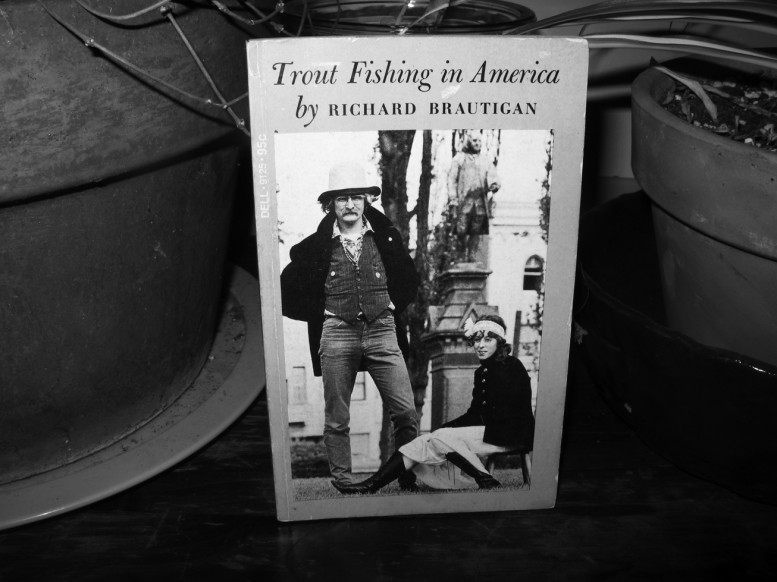
Trout Fishing in America is not at all about trout fishing. Trout fishing is merely an ambiguous metaphor. The cover of the book is a photograph of Richard Brautigan and a friend identified as Michaela Le Grand, whom he referred to as his "Muse." The photo was taken in San Francisco's Washington Square Park in front of the Benjamin Franklin statue. The first chapter of the book is an extended and fanciful description of this photo. Richard Brautigan was a seminal figure in 196os literature. He died of a self-inflicted .44 Magnum gunshot wound to the head. He left a suicide note that simply read: "Messy, isn't it?"
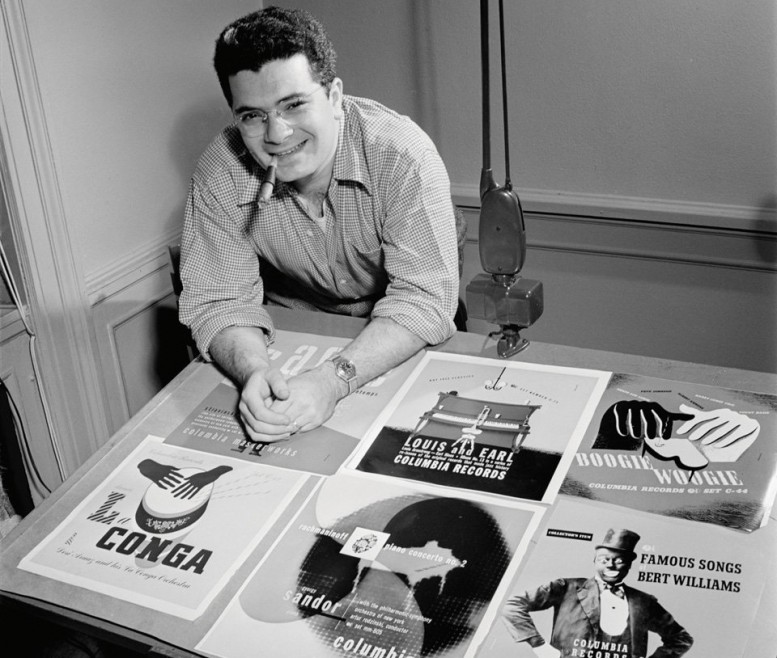
R.I.P. ALEX STEINWEISS - Inventor of the Graphic Album Cover
 [
[Pulp Art: The Robert Lesser Collection
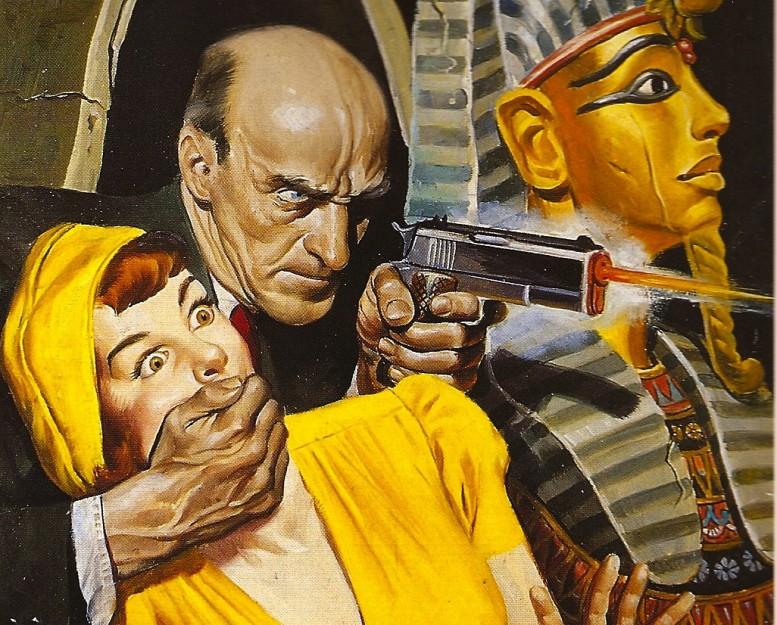
blood-on-my-doorstep_Pulp Art-The_Robert_Lesser_Collection
Robert Lesser began collecting pulp paintings, comic books, and comic-character toys in the 1950s. As a student at the University of Chicago, Lesser’s literature studies combined with his fascination with popular culture kindled his interest in studying and collecting pulp art and comic memorabilia....In 1975 he wrote A Celebration of Comic Art and Memorabilia, an informational collectors guide; in 1997 he published Pulp Art: Original Cover Paintings for the Great American Pulp Magazines, a full-color collection of pulp paintings and history that includes expert interpretation. The style of artwork created for pulp magazines is often compared to Norman Rockwell’s cover designs for the “Saturday Evening Post,” but the character of the paintings was quite disparate from Rockwell’s jovial depictions of everyday life. Pulp Art flaunted unsettling images of violence, racism, sex, and crime. The publishing houses that produced pulp fiction such as Popular Publications, Street & Smith, Condé Nast, and Frank A. Munsey Company destroyed much of the artwork produced for the magazines after printing. The images weren’t suitable for display in homes or museums so artists and auctioneers deemed them worthless. Tens of thousands of pulp paintings were created, out of which only a small number survive today.The 90 works on display at the Museum of American Illustration are now a part of the collection of the New Britain Museum of American Art, promised gift of Robert Lesser. Now on view until July 31. www.societyillustrators.com
Listen to M83 "Midnight City"
'Midnight City' is the first track from M83's forthcoming album 'Hurry Up, We're Dreaming'. Download the track here.
Photographs by Maxwell Snow
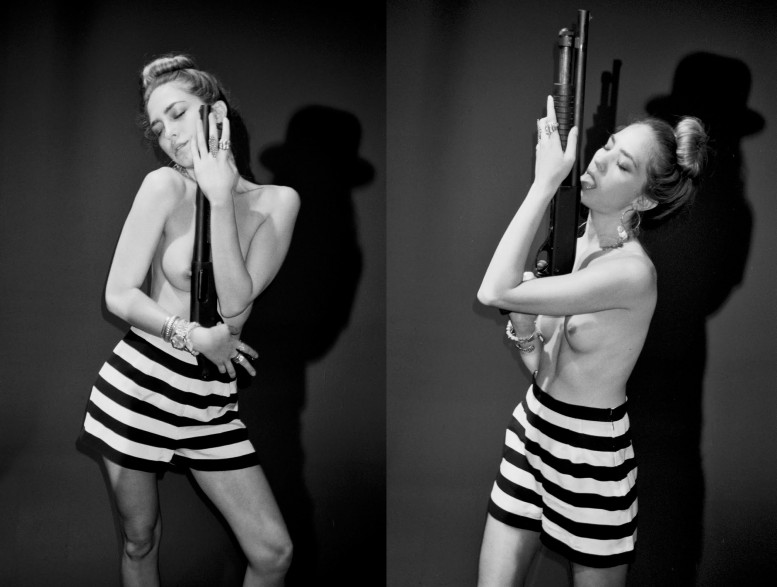
Gaga + Araki

Lady-Gaga-Bondage_araki
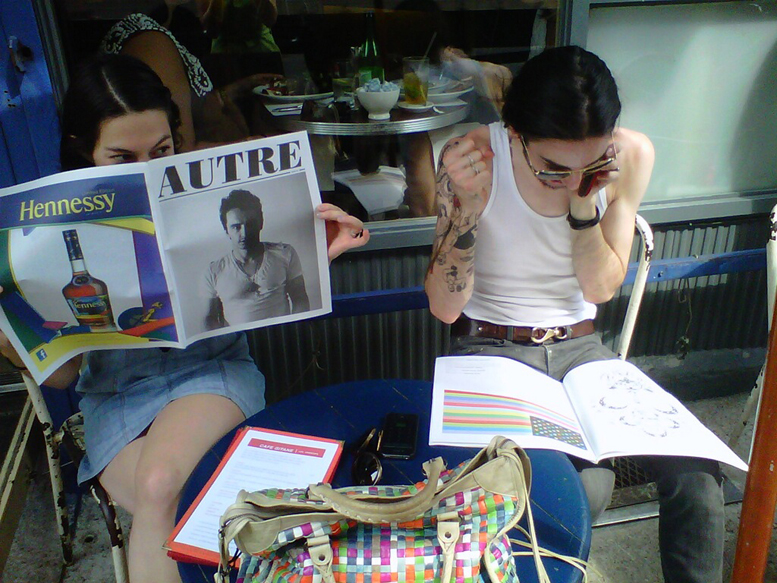
Enjoying Autre Outside Cafe Gitane in NYC
Marc Brandenburg: Drawings
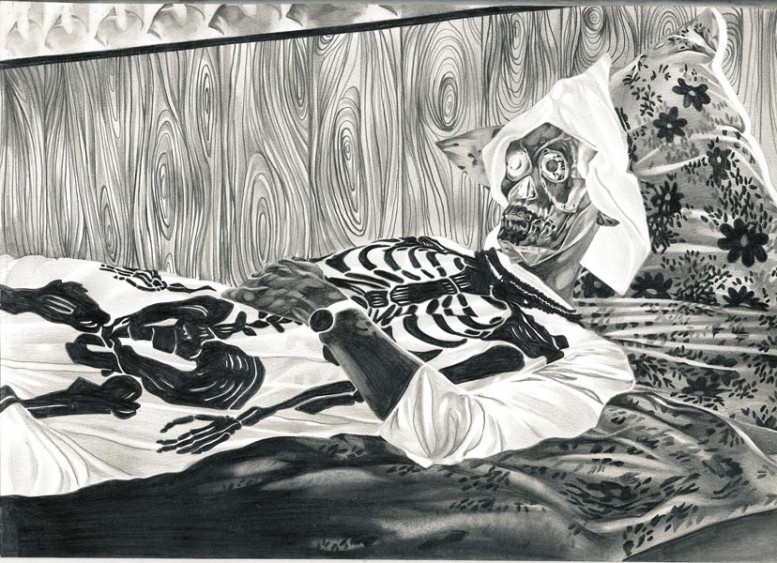
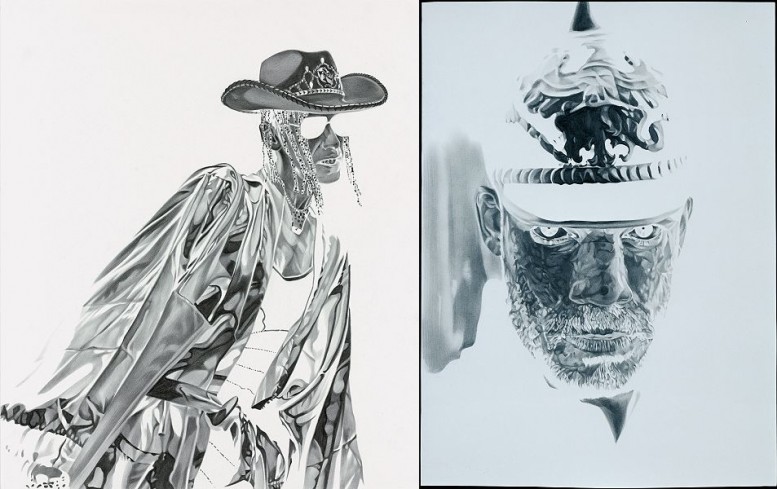
Berlin-based artist Marc Brandenburg (born 1965) has recently emerged as one of the best-known draftsmen of his generation. Influenced by the pop and punk culture of the 1960s and 80s, Brandenburg’s graphite drawings document Berlin’s subversive nightlife, portraits of friends or extremely zoomed-in details of banal, ordinary objects. Brandenburg is fascinated by the velocity and movement in the scene images of today, but also the simplicity and beauty of a laconic Christmas ball, for example, or a fairground carousel. He deliberately makes use of these fast images only to freeze them, in black and white, by means of a lengthy, obsessive drawing process. Brandenburg draws from his own photos and images from magazines, which he distorts using a photocopier, converts to negative images with the computer and then traces. These reversals have a stunning effect: portraits or images distorted to the point of abstraction take on an intensity and sharpness that alienates the subject while lending them a ruthless precision at the same time. Nevertheless, Brandenburg does not believe in the power of the ultimate, singular image – instead he often hangs his drawings close together in a manner that resembles film sequences. According to Brandenburg, it is through this series of images that a dialogue emerges between the individual pictures: “It’s about what cannot be depicted; it’s about the aura, the spaces in between.” Marc Brandenburg: Drawings is now on view at the Kunsthalle in Hamburg, Germany until October 9. www.hamburger-kunsthalle.com
[MUSIC VIDEO] Alexander - Truth
"Truth" from Alexander's Debut Self-Titled Album. Directed by Tao Ruspoli.
Polka Dots Are a Way to Infinity: Yayoi Kusama
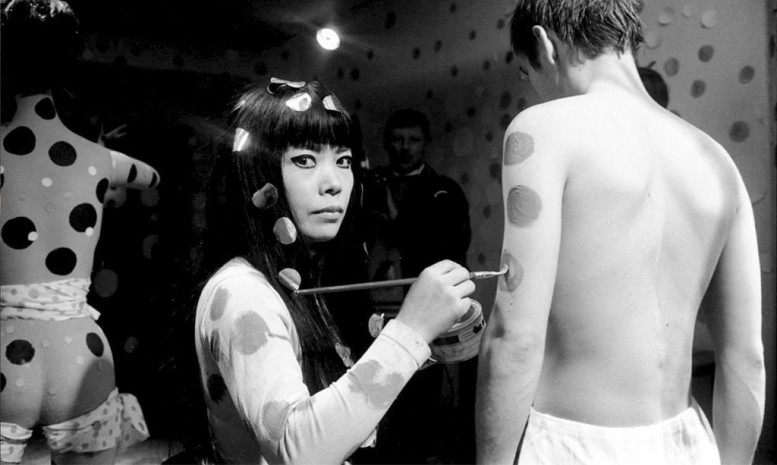
In the next year we'll be hearing a lot about Yayoi Kusama. The Japanese artist Yayoi Kusama, who Yoko Ono sites as an influence, was born in Japan in 1929 and at the age of ten started to paint her infamous polka-dots and net motifs. In a Yayoi Kusama universe things would look like what the world would look like if an obsessive compulsive God on a mushroom trip created it. Yayoi Kusama says about polk-dots: "...a polka-dot has the form of the sun, which is a symbol of the energy of the whole world and our living life, and also the form of the moon, which is calm. Round, soft, colorful, senseless and unknowing. Polka-dots become movement... Polka dots are a way to infinity." Kusama has also published many books including Manhattan Suicide Addict - a photographic and typographic treatise on the isolation of exile through the pure formation of art. On view now at the Museo Nacional Centro de Arte Reina Sofía in Madrid many of Yayoi Kusama's most personal works on view until September. The exhibition will then move to the Centre Pompidou in París, then to the Tate in London, and finally to the Whitney in New York. www.museoreinasofia.es
Text by Oliver Maxwell Kupper for Pas Un Autre
MATTHEW STONE / RULES FOREVER (PART II)
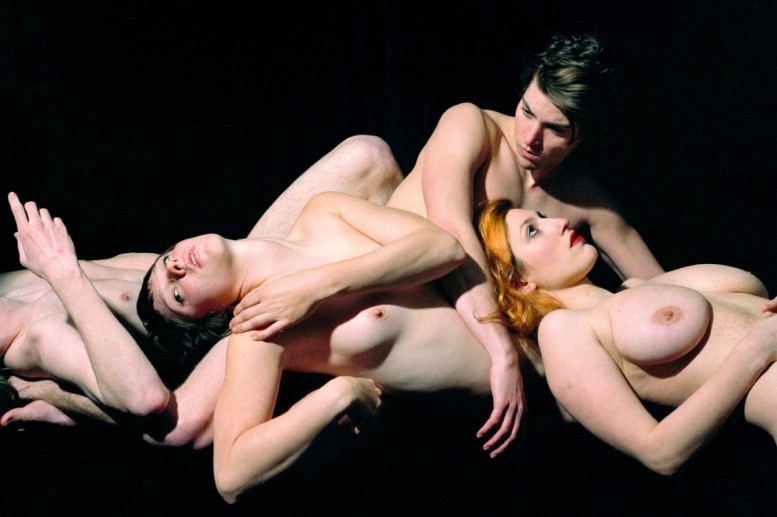
In Stone's last exhibition at Union Gallery Forever Rules (Part I), Stone presented a single sculpture in the center of the gallery and 3 photo-collage works on wood. The sculpture and also main focus of the exhibition was an oak and birch floor-based sculpture, a structure entirely hand built by the artist, titled “Forever Rules”. The sculpture was formed in part by an open sided, oak dodecahedron, its pentagonal facets creating a complex, net-like form. In Plato's divine geometry, the dodecahedron is described as a perfect solid. Historically it has been attached to the concept of a fifth element, namely Ether (Aether) or Universe. It has represented the perfect mediation of the infinite and the finite, the sphere and the cube. For his second part exhibition Rules Forever (Part II), Stone will continue honoring Plato and will present a much larger sculptural element comprising four oak structures, but instead of a large photographic nude, cut into hundreds of wooden squares that passes through the structure, as in the show before, the artist has decided to cluster the structure with photographic collages, printed directly onto birch plywood. These digitally collaged configurations of torso and limb, show bodies intertwined and connected. Unmistakable as Stone's work, the gestures and classical poses of his languorous figures are intersected by areas of new color, cut, if only to reconnect, along unnatural, directional and geometric bias. On view until July 30 at the Union Gallery in the UK. www.union-gallery.com
Adarsha Benjamin: Self Portrait

Adarsha Benjamin
Adarsha Benjamin, Self Portrait. "Covered in Orange Paint at 6am in Brooklyn, NY. Self Portrait shot on Impossible PX600 UV Instant Film" Look out for more in the first issue of AUTRE.
Inside Autre: Issue One
Autre

The first issue of Autre Quarterly is here.
Van at the Plant
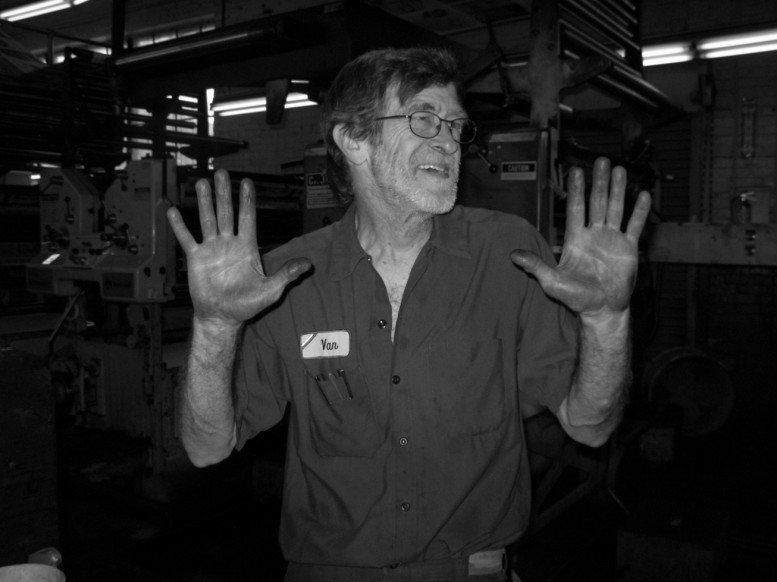
Van at the plant with hands covered in ink. Thanks Van. Autre Quarterly is here.
[BOOKS] Rebels in Paradise

"Los Angeles, 1960: There was no modern art museum and there were few galleries, which is exactly what a number of daring young artists liked about it, among them Ed Ruscha, David Hockney, Robert Irwin, Bruce Nauman, Judy Chicago and John Baldessari. Freedom from an established way of seeing, making, and marketing art fueled their creativity, which in turn inspired the city. Today Los Angeles has four museums dedicated to contemporary art, around one hundred galleries, and thousands of artists. Here, at last, is the book that tells the saga of how the scene came into being, why a prevailing Los Angeles permissiveness, 1960s-style, spawned countless innovations, including Andy Warhol's first exhibition, Marcel Duchamp's first retrospective, Frank Gehry's mind-bending architecture, Rudi Gernreich's topless bathing suit, Dennis Hopper's Easy Rider, even the Beach Boys, the Byrds, the Doors, and other purveyors of a California style. In the 1960s, Los Angeles was the epicenter of cool." You can purchase the book here.
Liu Bolin: Invisible Man

Fotografiska presents the first exhibition of Chinese artist Liu Bolin in Scandinavia. Liu Bolin is renown for his series of images entitled Hiding in the City. What makes these images unique is that Liu Bolin literally paints himself into each scene. His body resembles “camouflage”, thereby making Liu Bolin both present and absent in each photograph. These cleverly orchestrated images have earned him the name, the invisible man. However, the story of how these images came about is less than lighthearted. More....
Josh Vanover for Serum Versus Venom
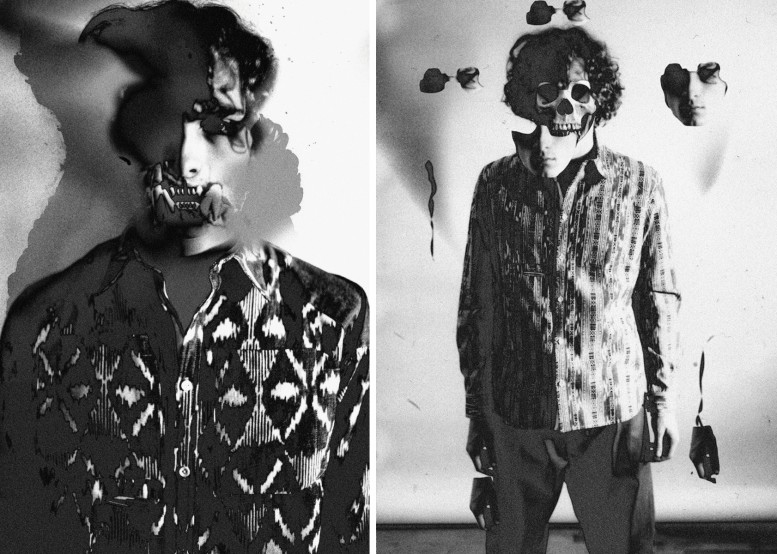
KDU Partner and renowned artist Josh Vanover teamed with SVSV Founder David Gensler to produce a dark body of work entitled Graphical Degradation. The collaboration is set to continue throughout the year, exploring the darker side of the brand's personality. www.serumvenom.com
[MUSIC VIDEO] Cults "GO OUTSIDE"
Premier of Cults' music video for "Go Outside", directed by Isaiah Seret.