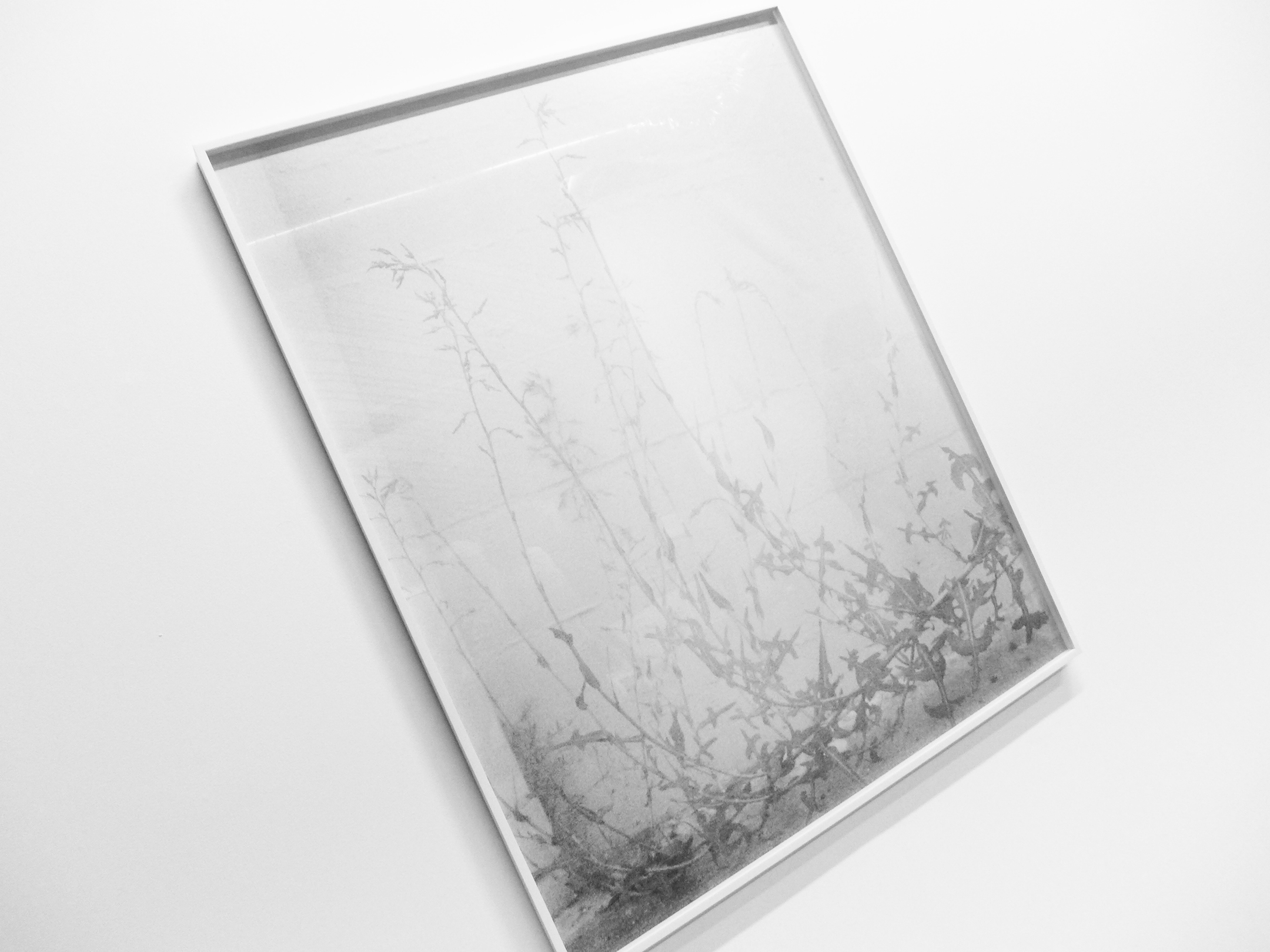
Sterling Ruby’s Atropa Explores the Duality of Life @ Sprüth Magers New York

Atropa by Sterling Ruby, Sprüth Magers New York, 2026. Photo: Isabella Bernabeo.

text and photographs by Isabella Bernabeo

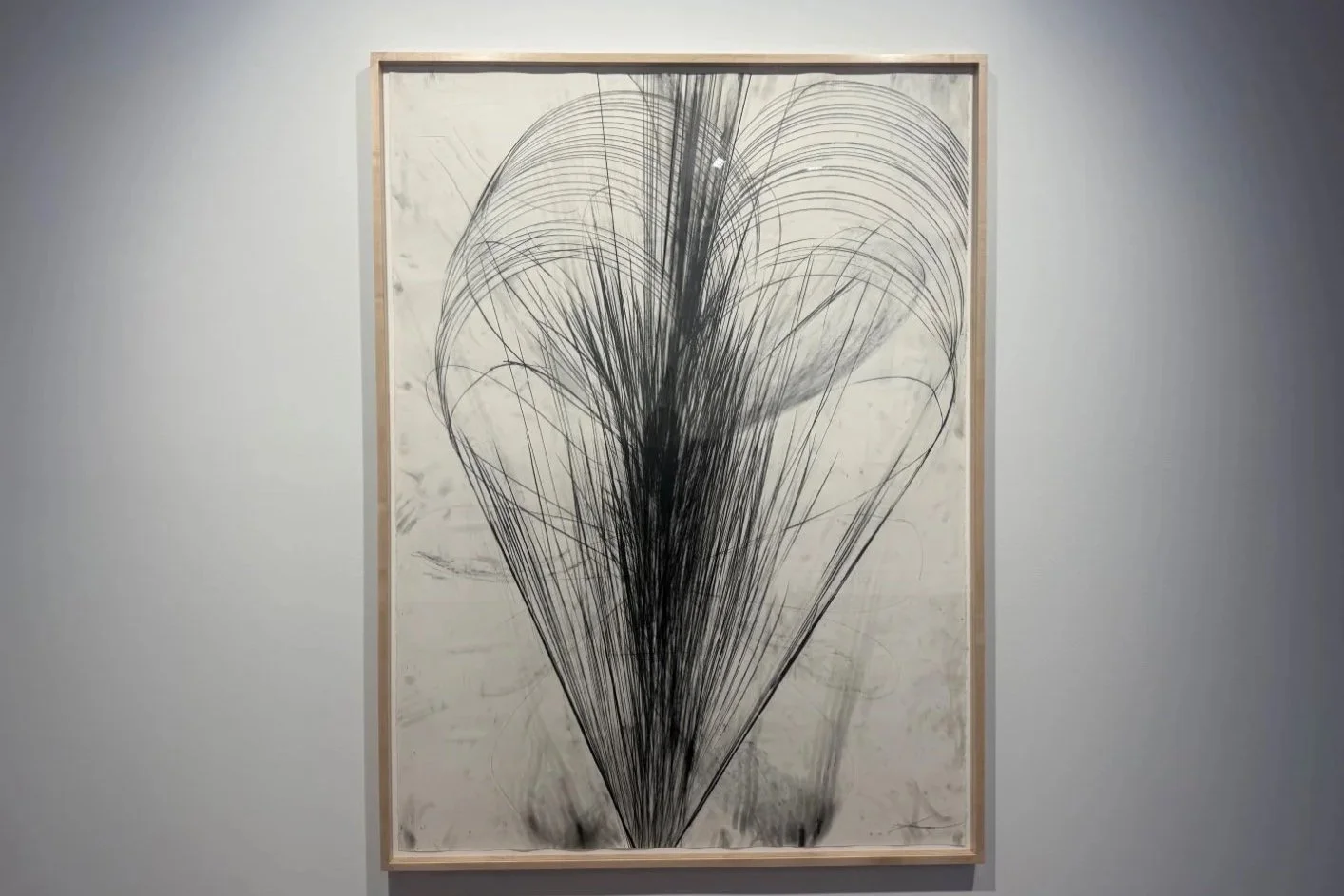
Hidden away on the second floor of an old Upper East Side building, Sterling Ruby’s Atropa explores the duality of life through unconventional artistic methods. Named after the nightshade genus, more commonly known as deadly nightshade, Atropa also references Atropos, a Greek Fate and the eldest daughter of Zeus and Themis. She is the goddess who cuts the thread of life, allowing her to decide the time and manner of a mortal’s death.

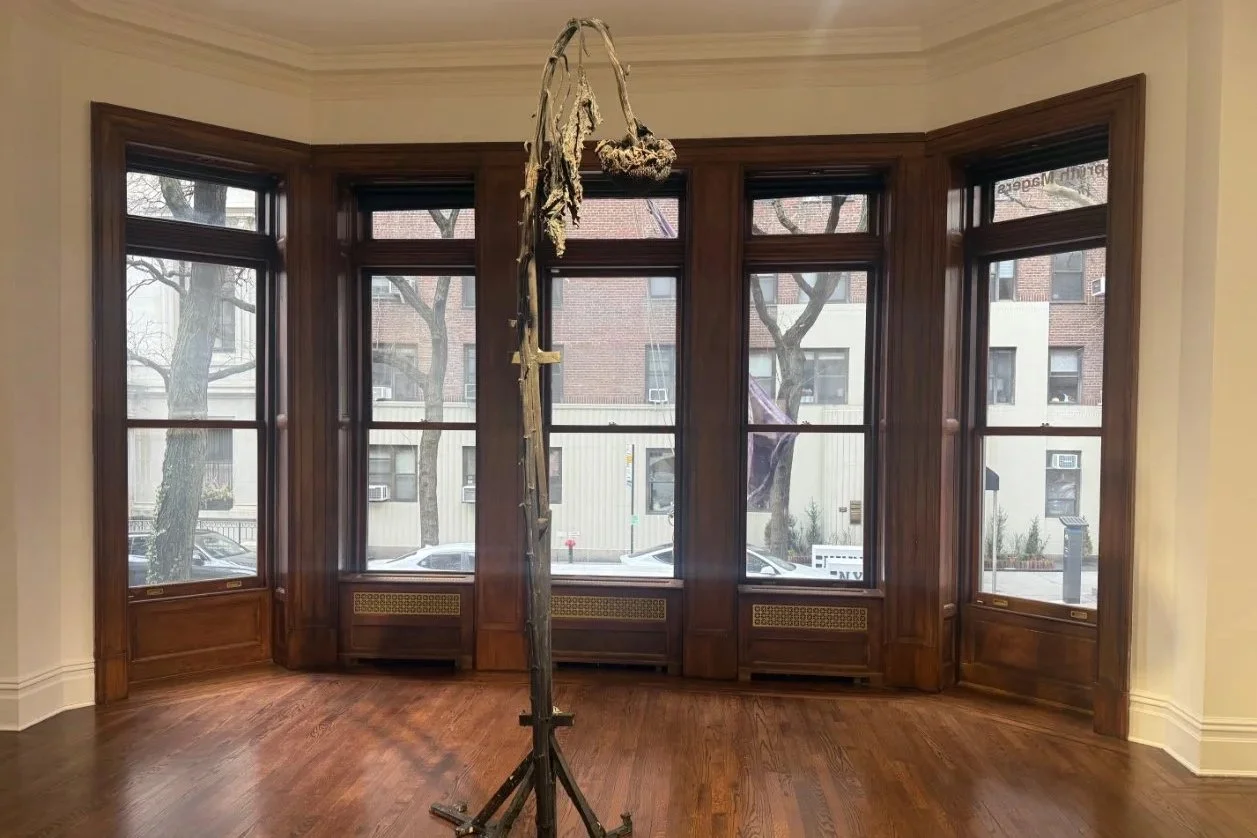
After climbing up an old, rickety staircase, we enter what appears to be an empty apartment flat. The sleek white walls and dark brown hardwood floors dominate the space until they are met by tiny, intricate black lines within pale wood frames, arranged along the walls. 

Atropa by Sterling Ruby, Sprüth Magers New York, 2026. Photo: Isabella Bernabeo.

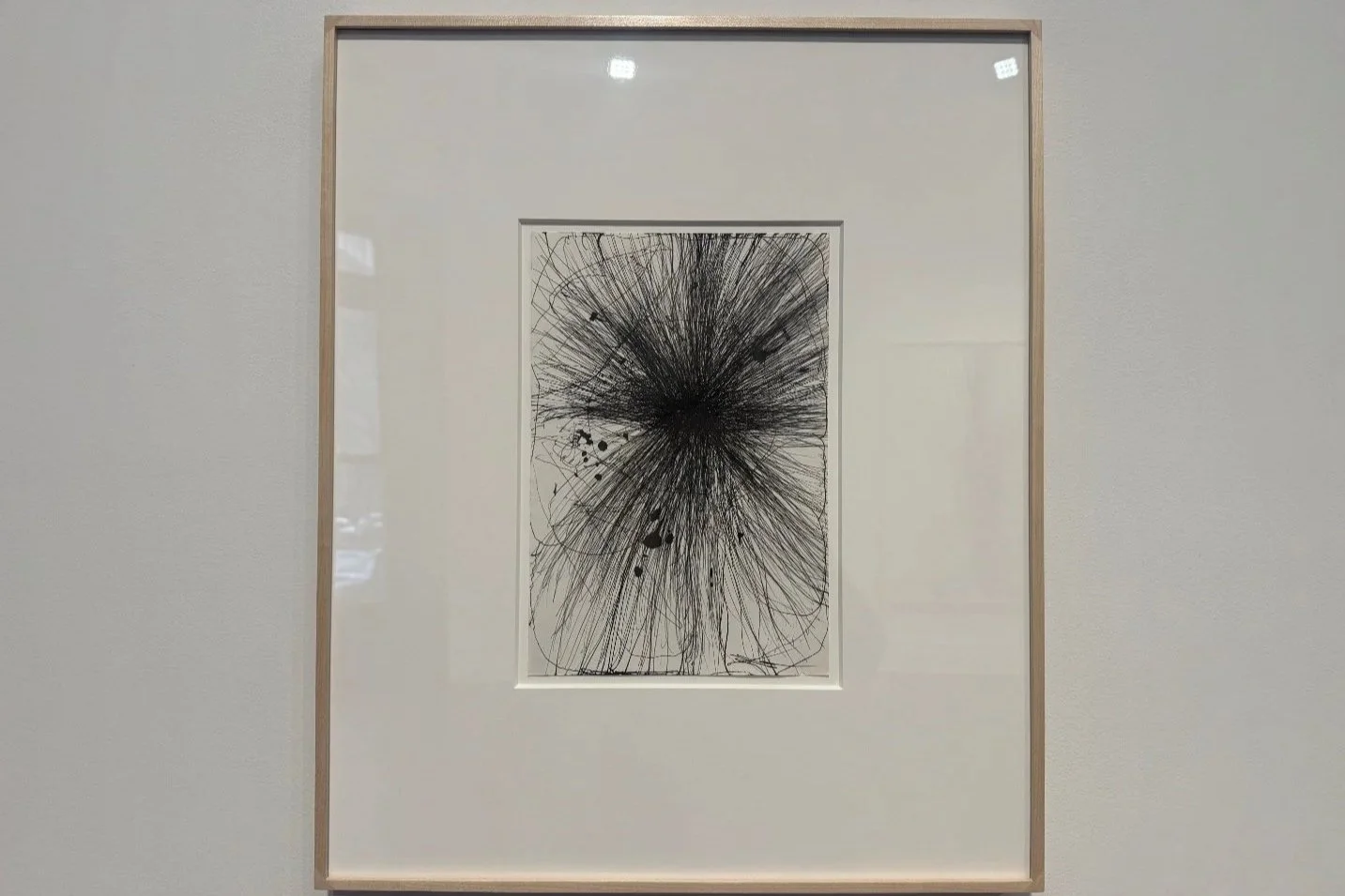
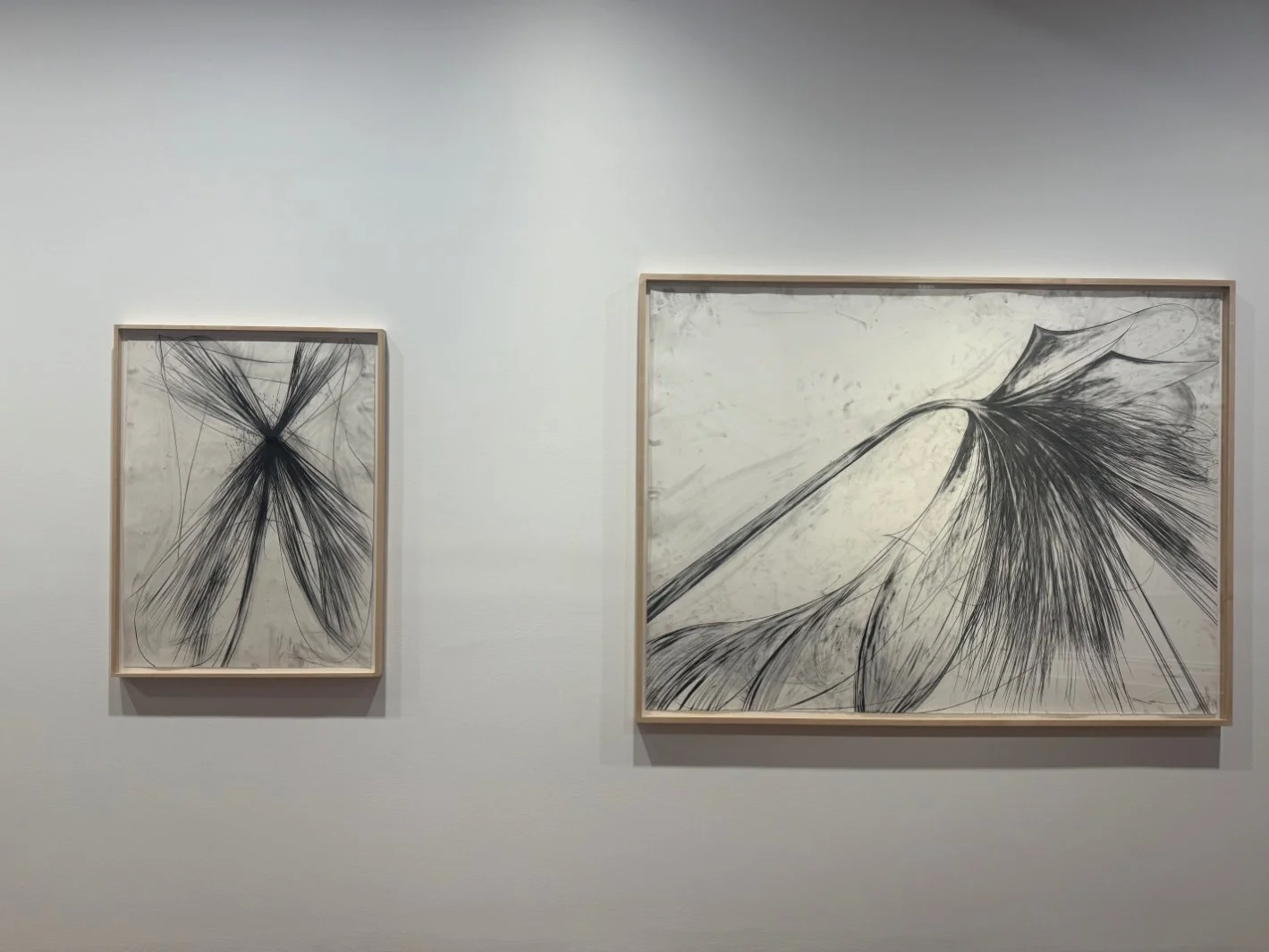
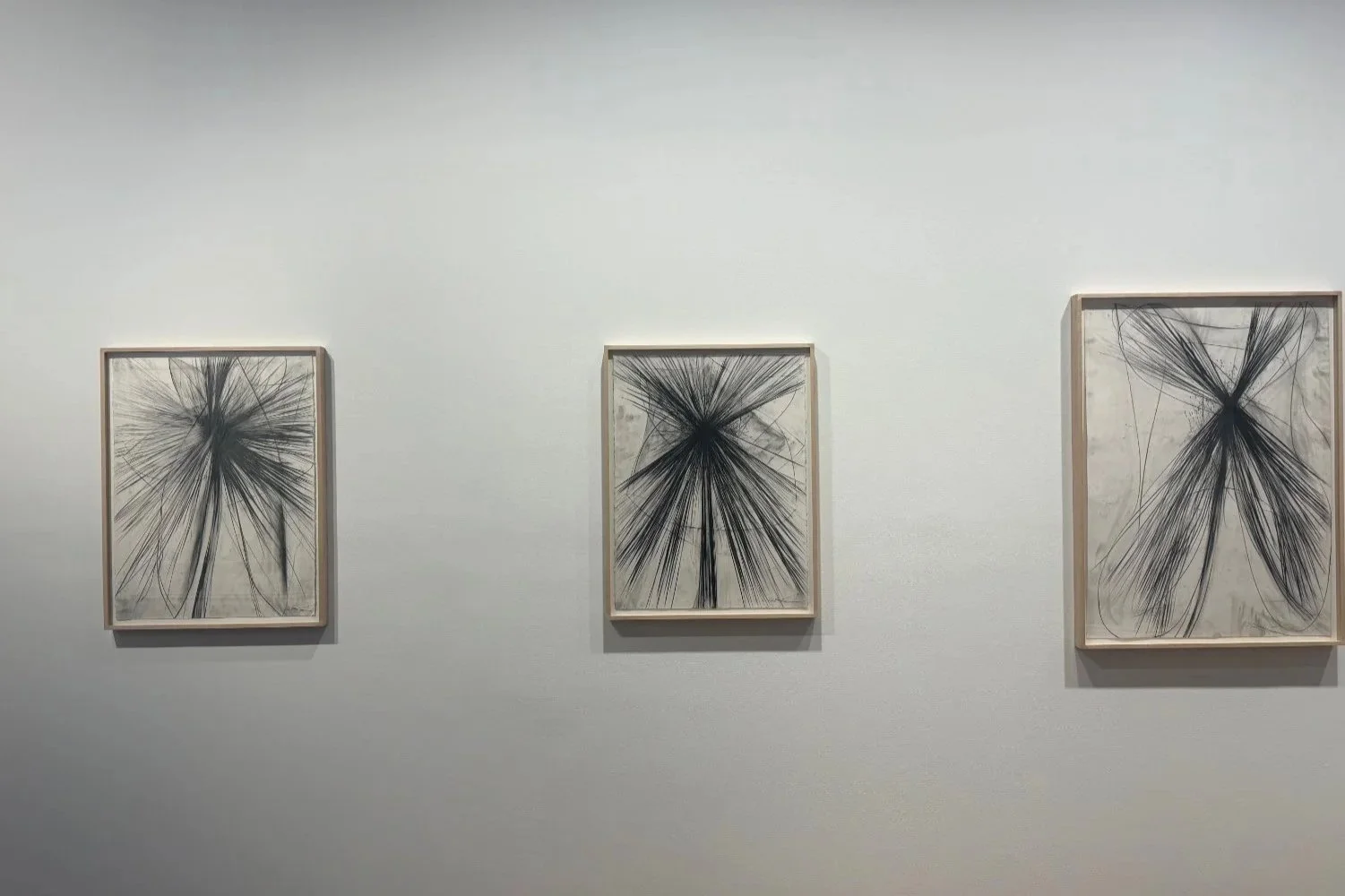
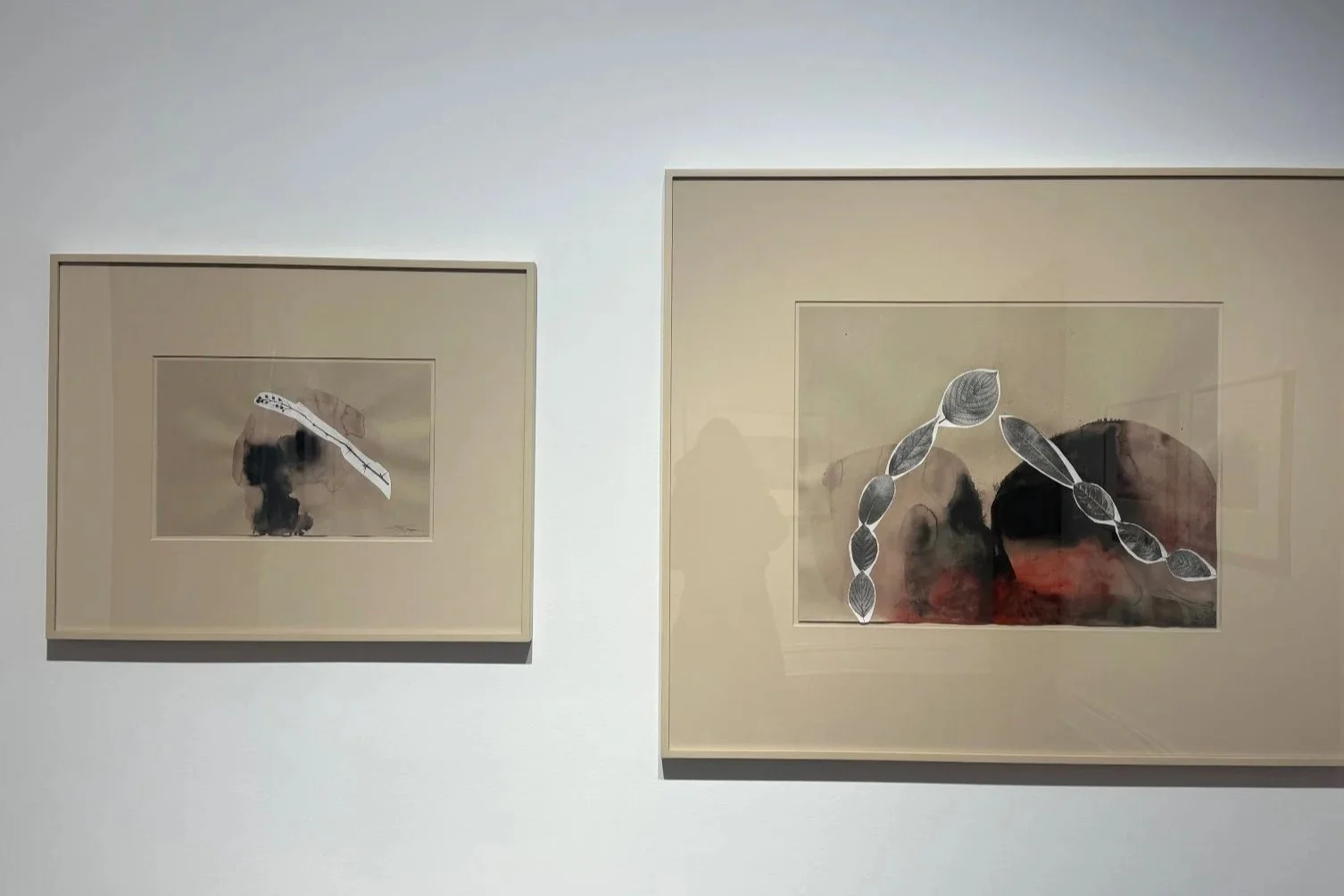
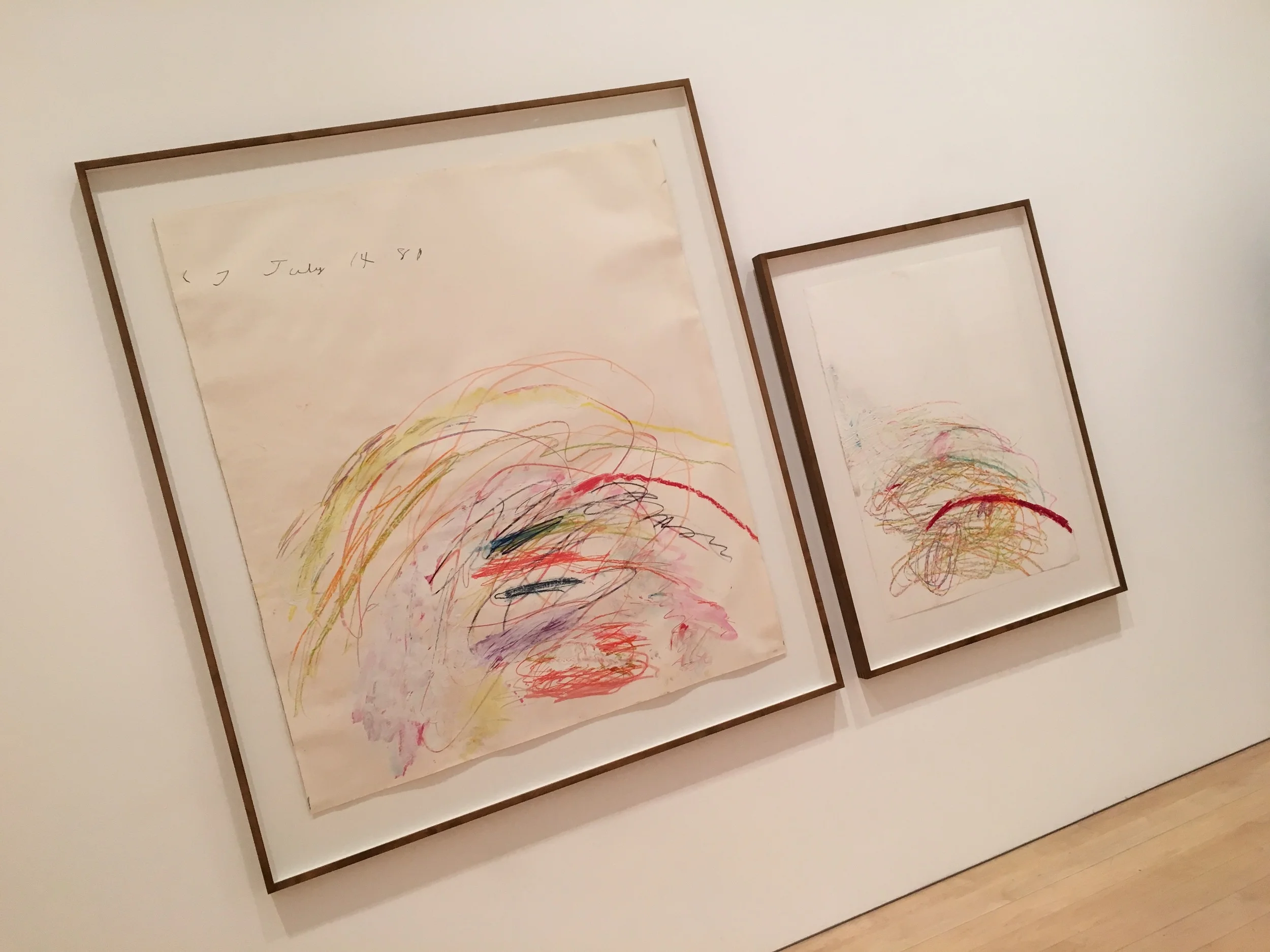
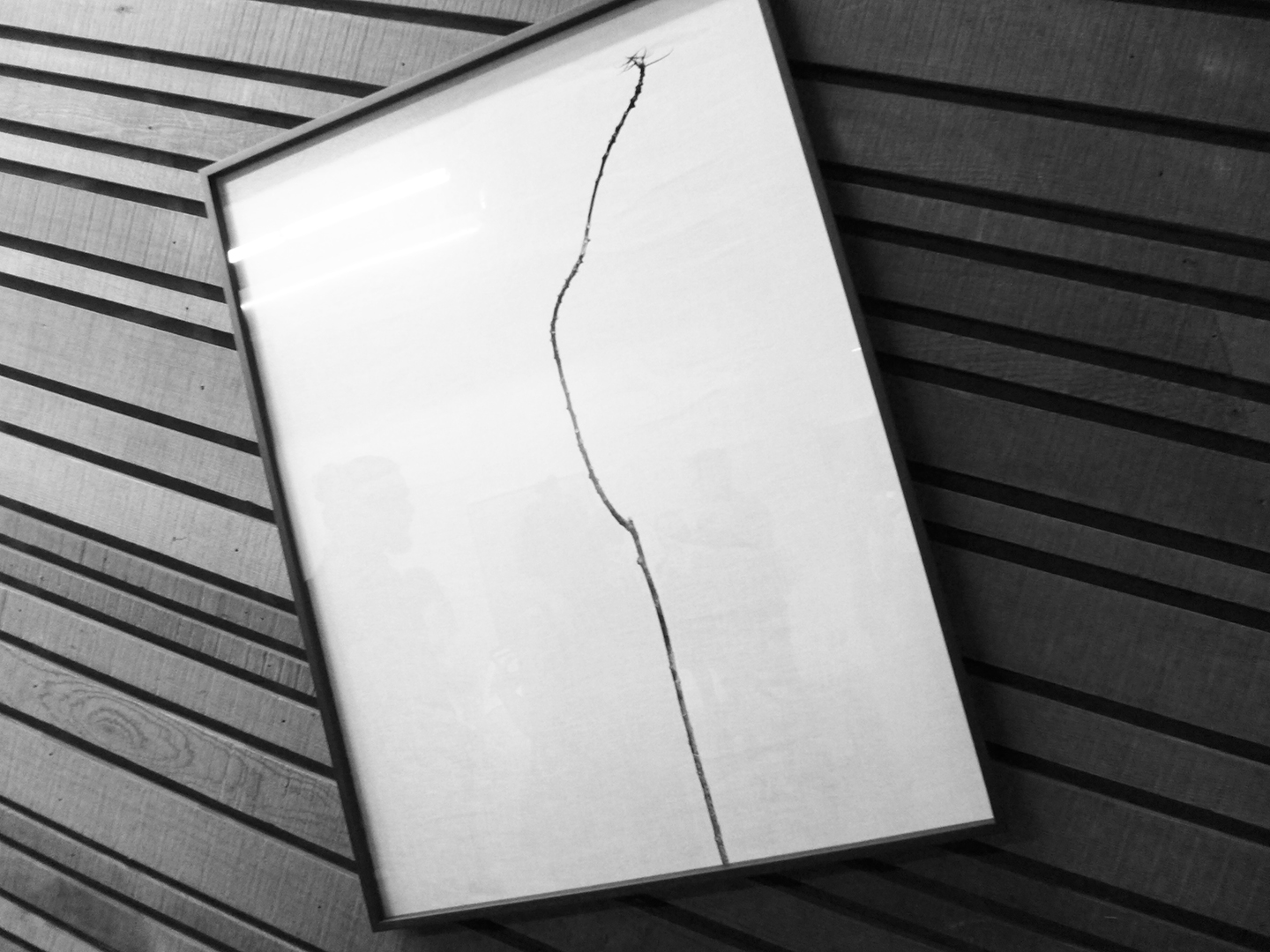
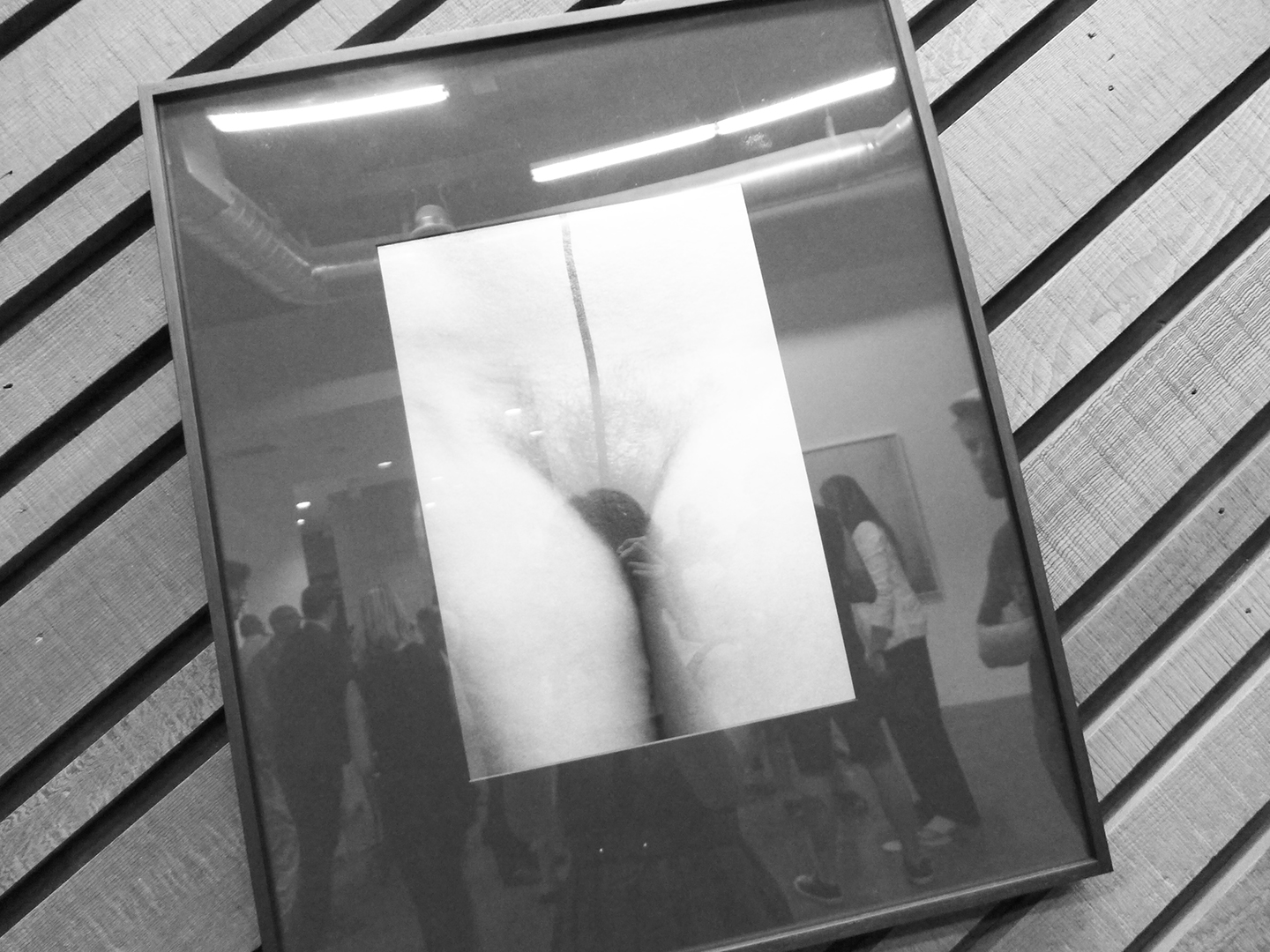
These graphite and pen-on-paper drawings seem to shift and move, their lines twisting fluidly like a worm wiggling to life. Though they were made just last year, these pieces trace back to a series that Ruby began working on thirty years ago. Each of them is drawn with instinctive human gestures rather than the controlled mark-making characteristic of a traditional representational practice. 

All eight drawings are also named after a flower – from Henbane in the nightshade family to Bleeding Hearts in the poppy family to Morning Glory in the convolvulaceae family – many of which are highly poisonous plants. 
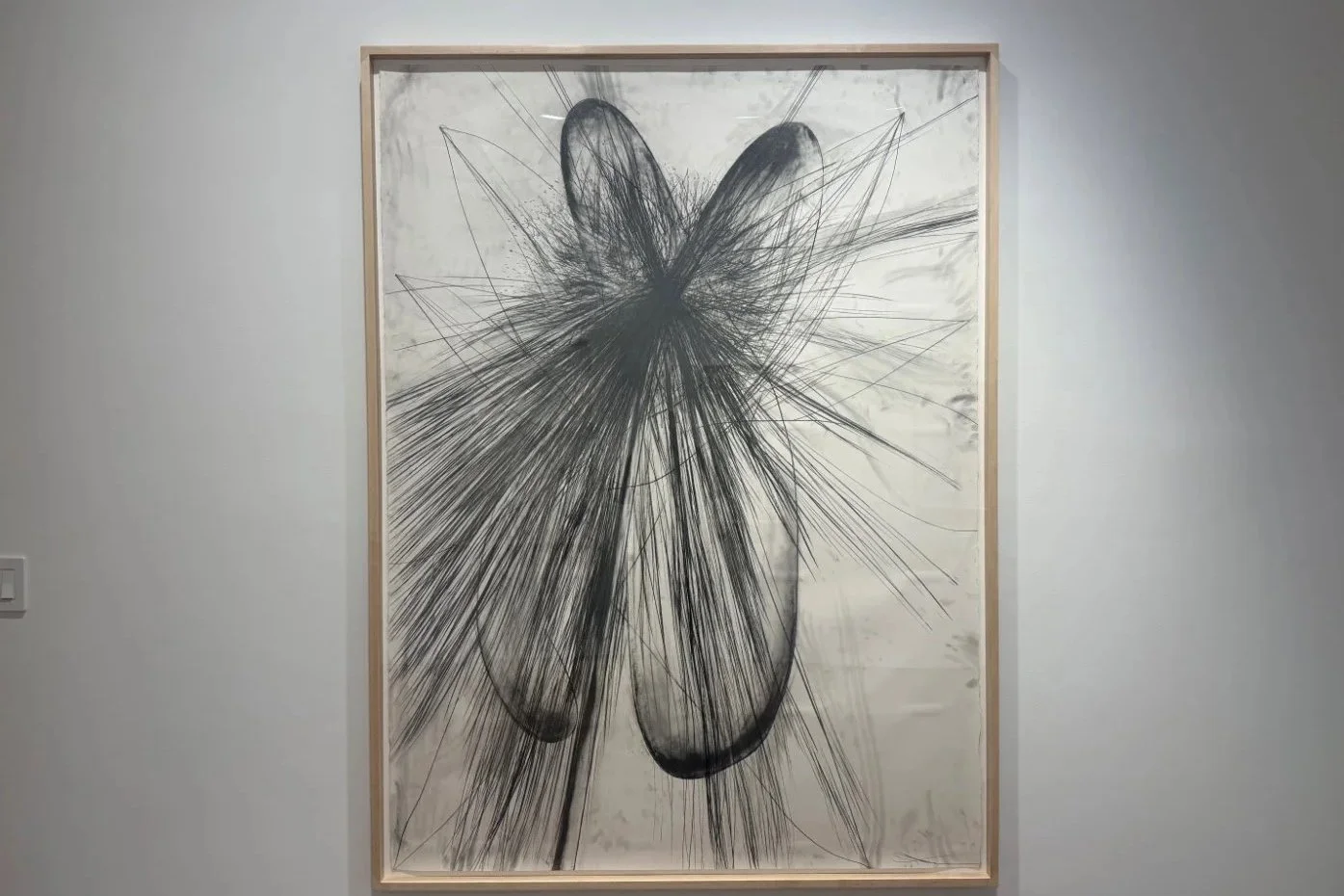
The artworks, each with a dark void near the center of the penwork, seem to represent the endless dangers that accompany the natural world, yet the black, scrawled lines from the void seem to reach beyond the page, yearning to reconnect with the land of the living. The pieces showcase the true paradox nature embodies: the destructive venoms of a flower alongside its medicinal properties, the beauty humans create alongside the destructive instincts that surface daily. 

Atropa by Sterling Ruby, Sprüth Magers New York, 2026. Photo: Isabella Bernabeo.

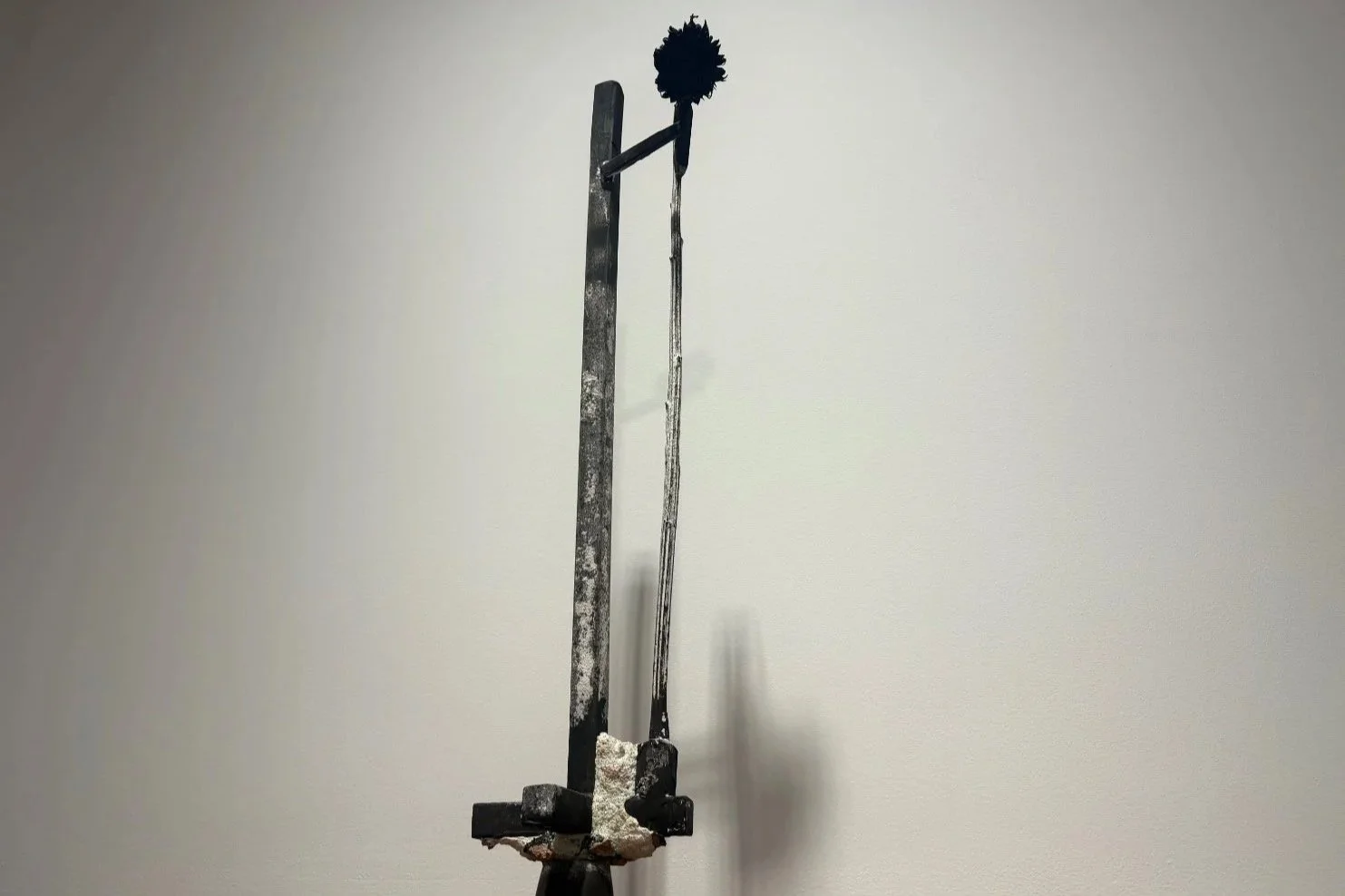
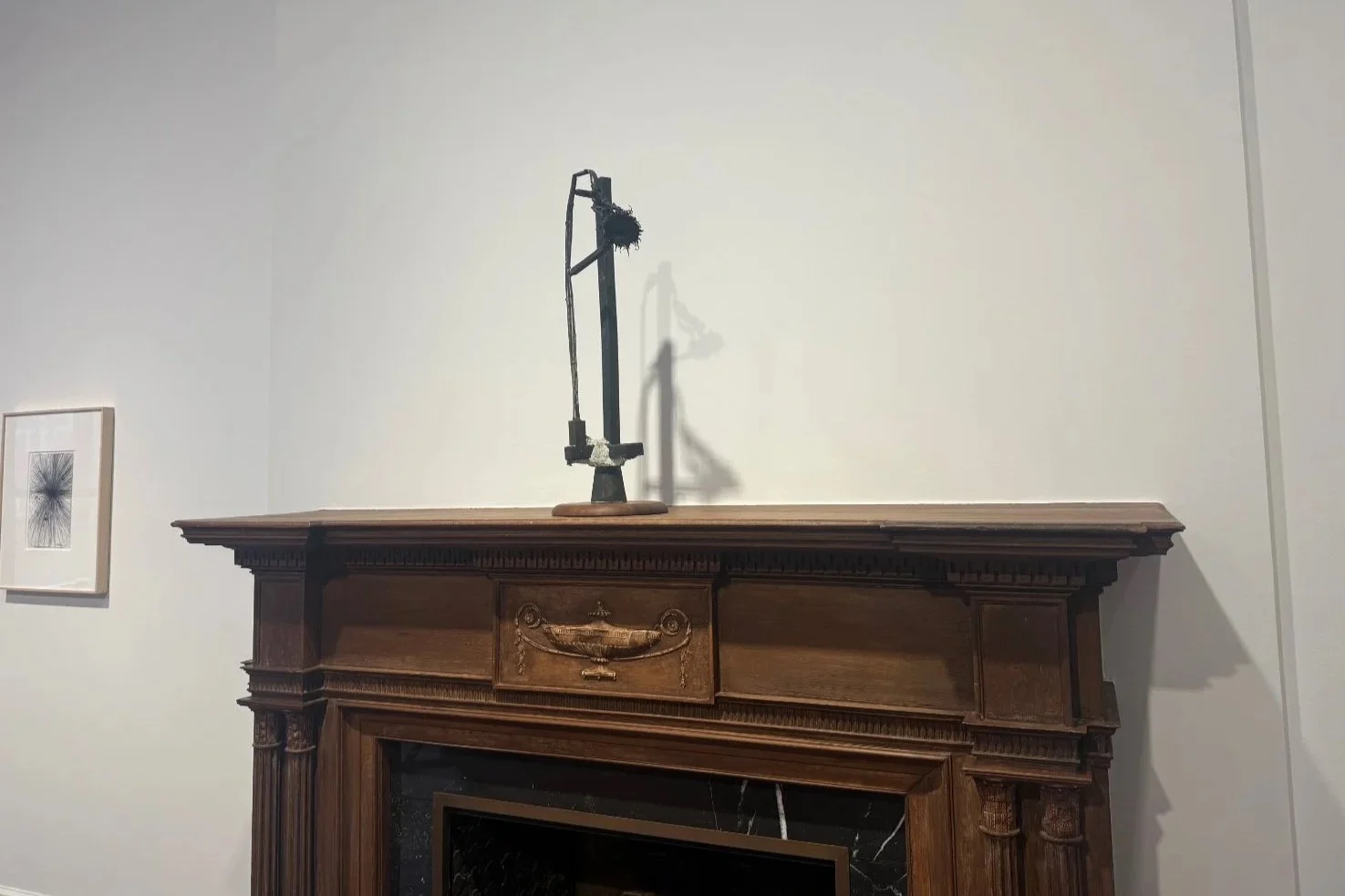
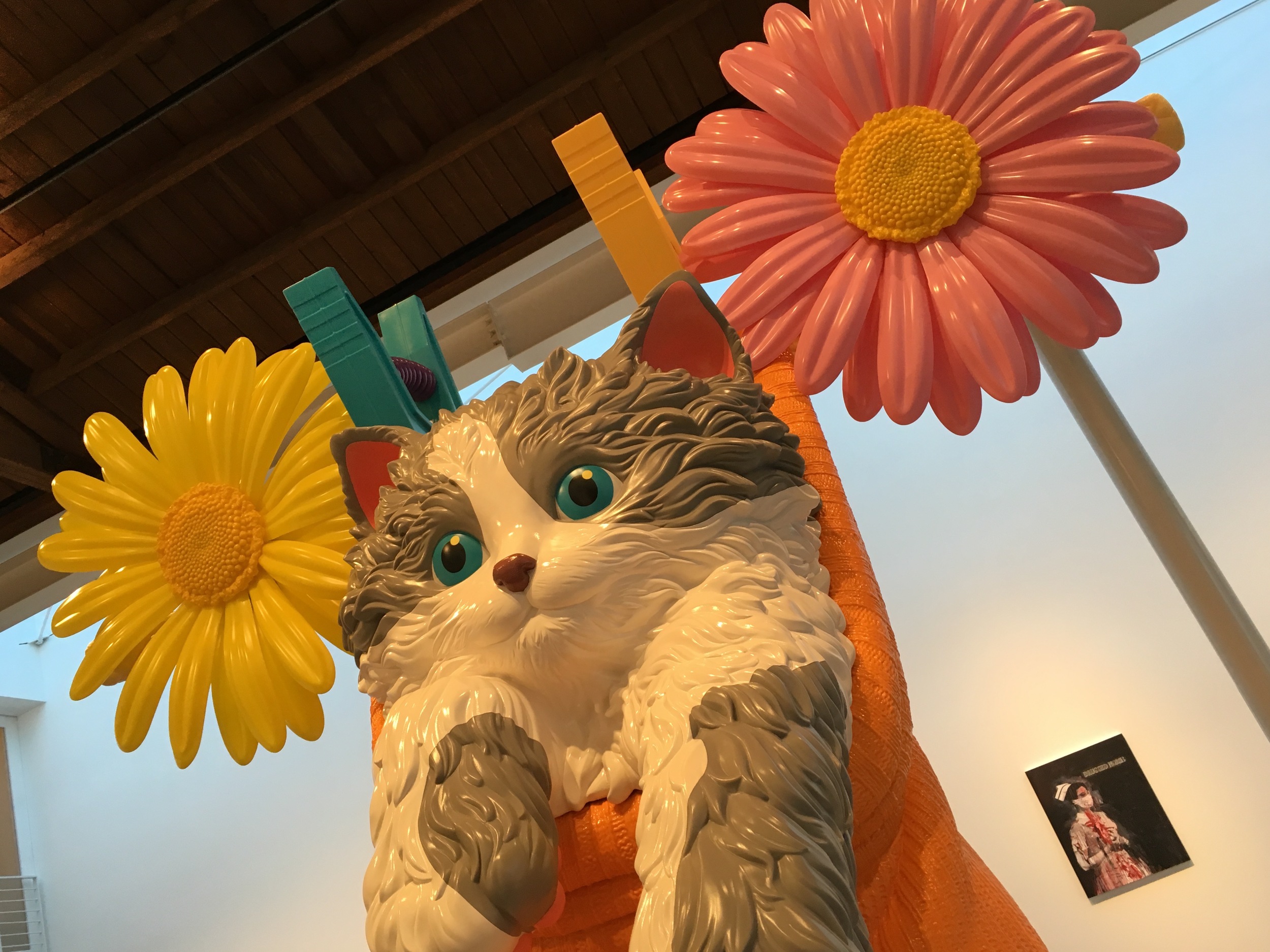
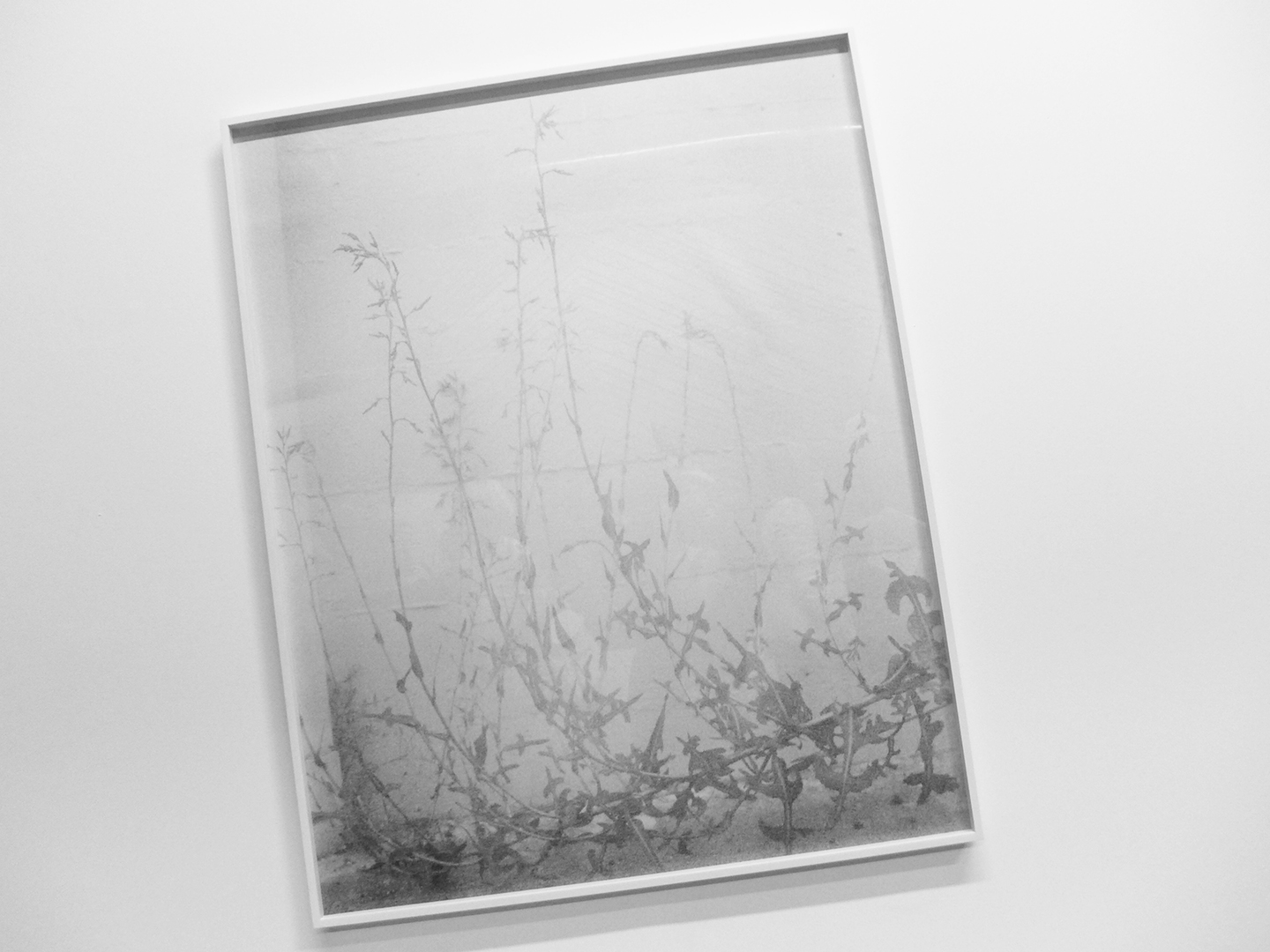
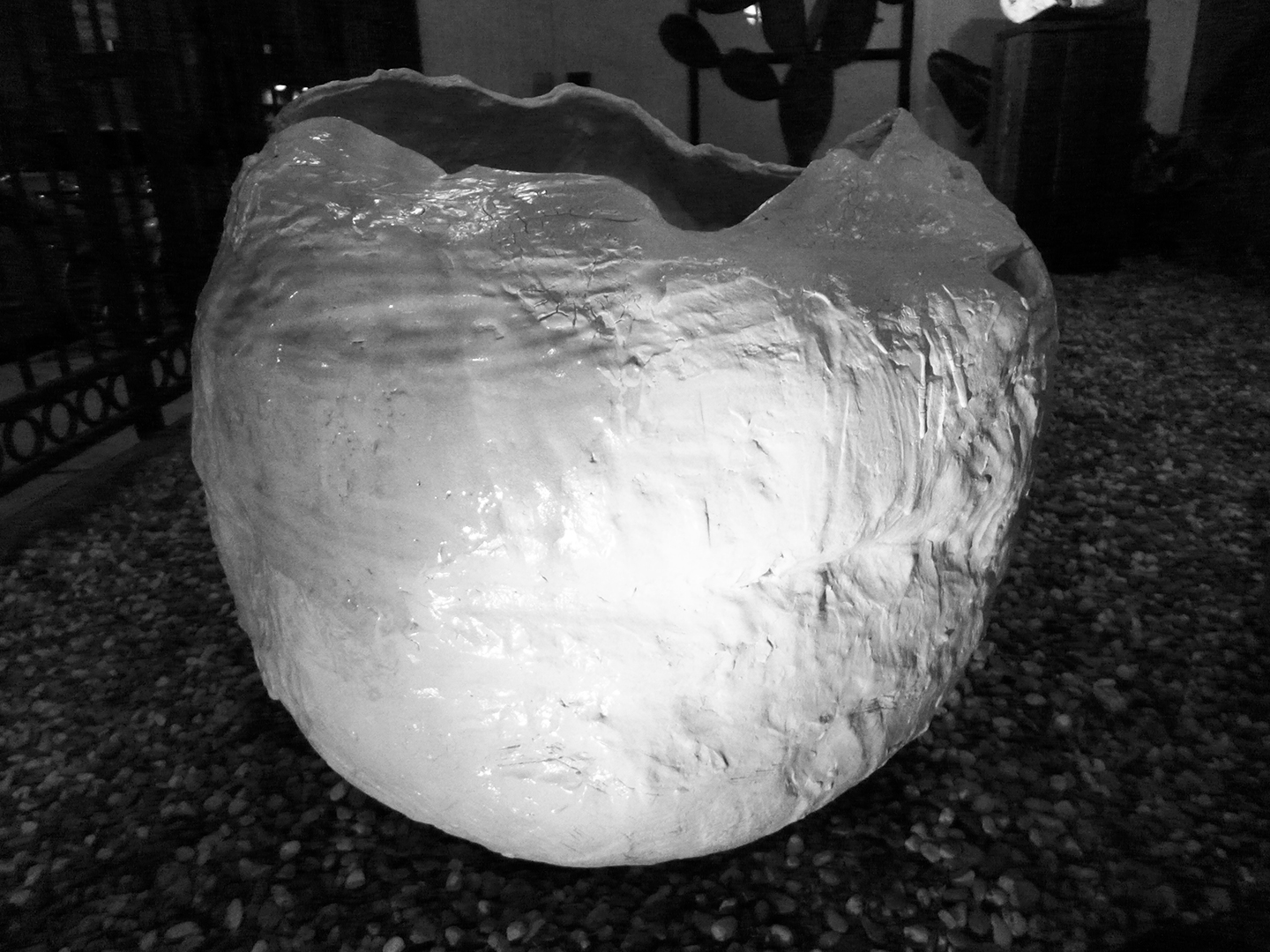
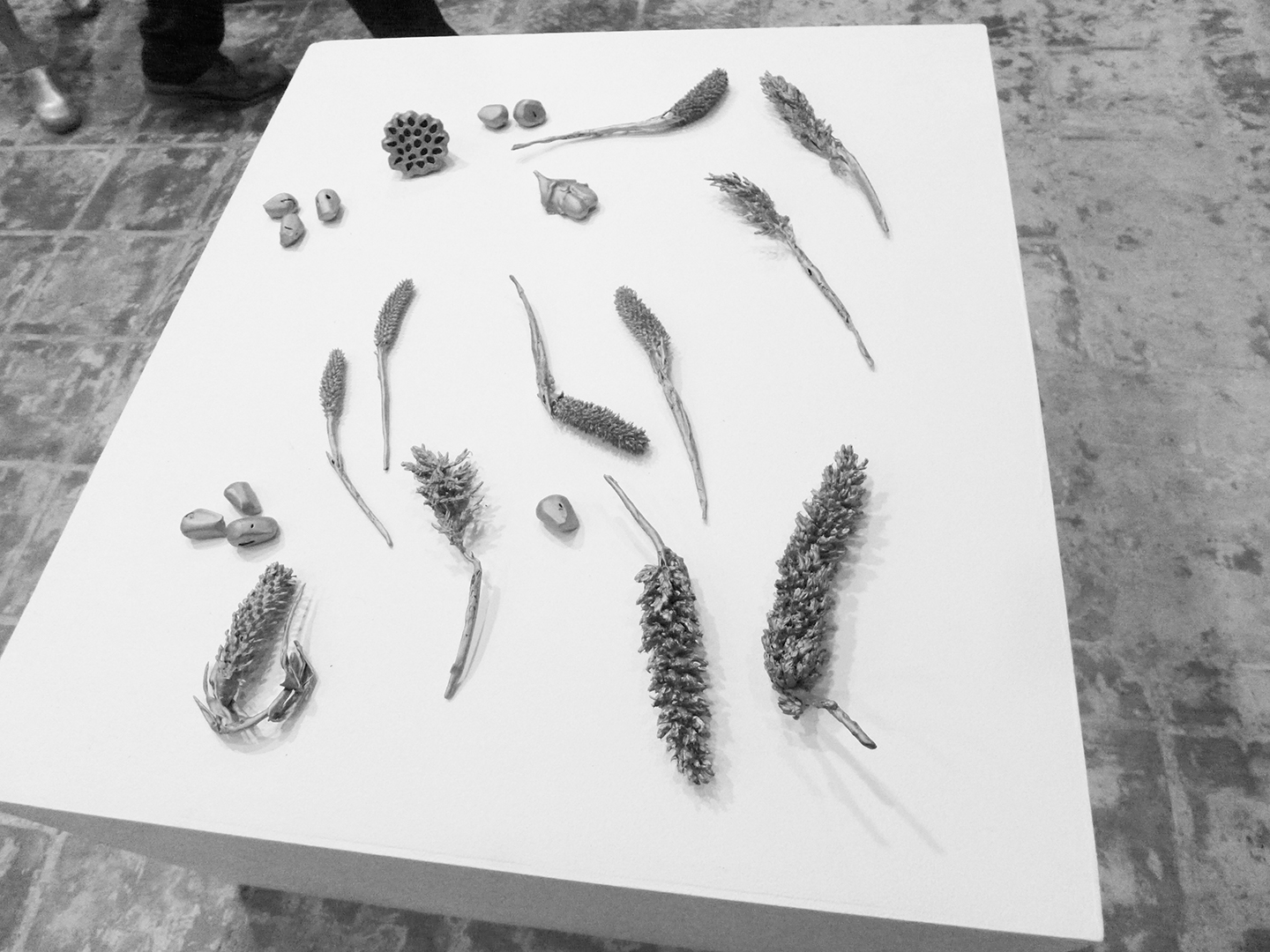
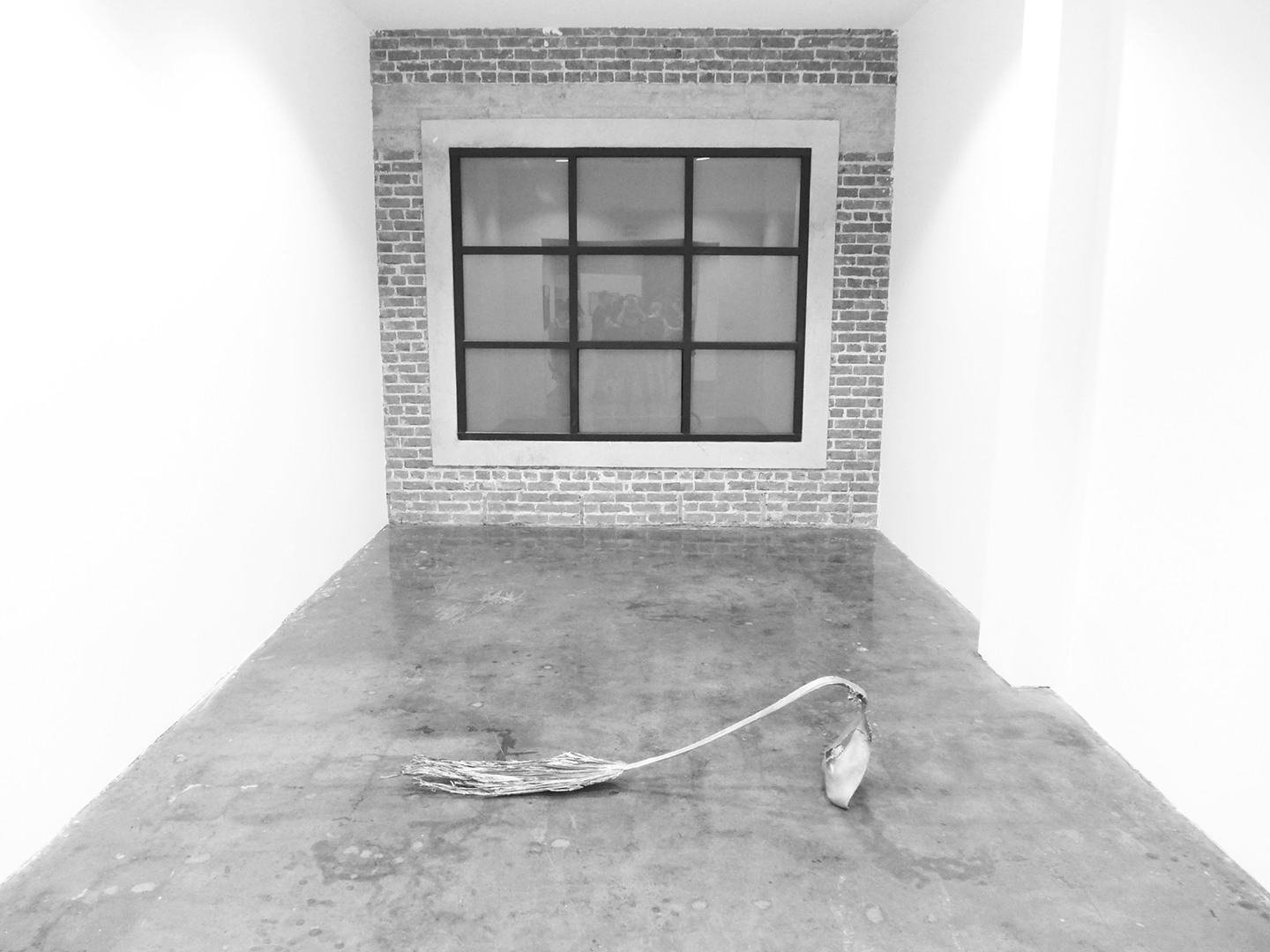
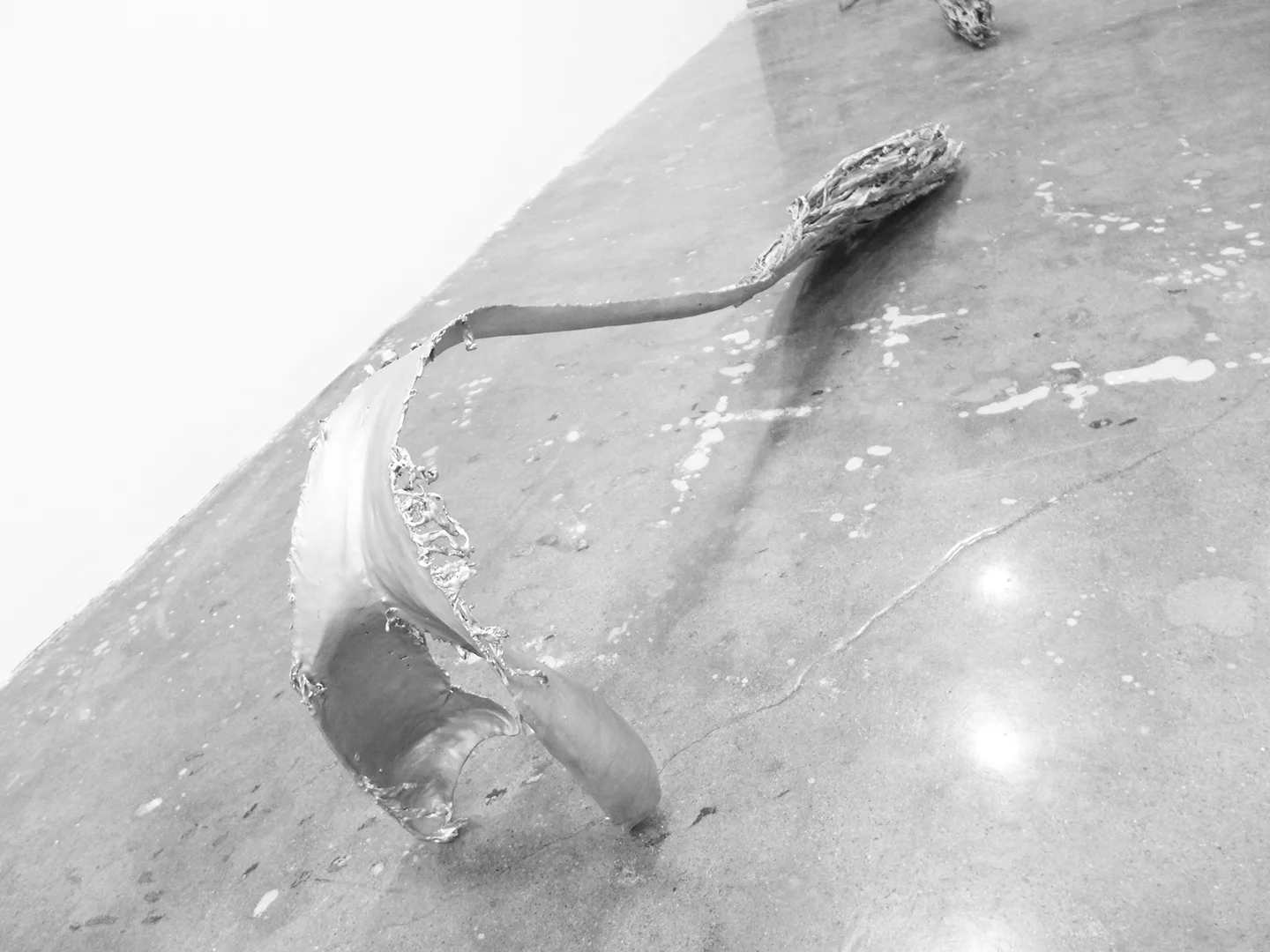
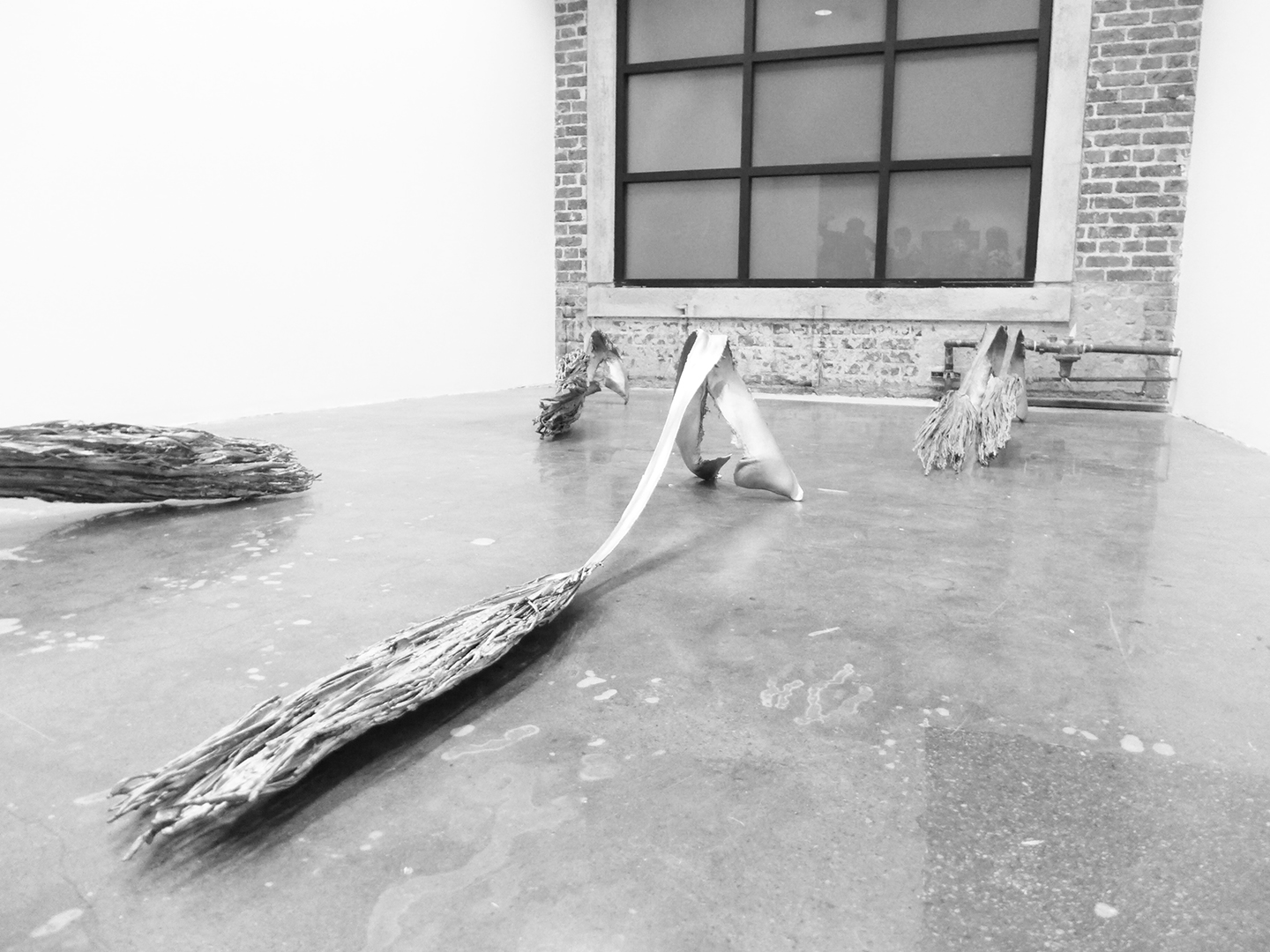
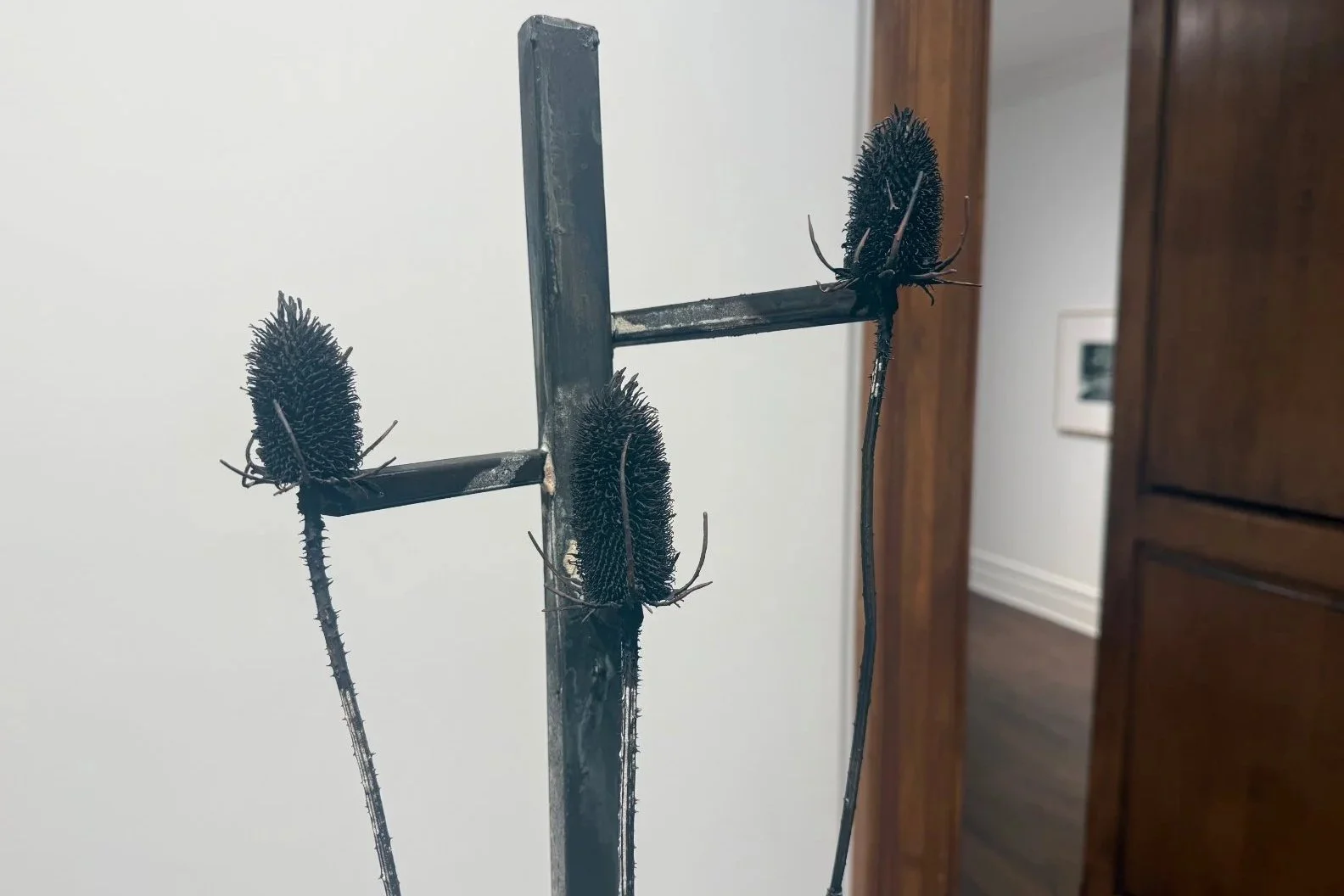
Settled between the drawings are six bronzed flowers, some resting upon dark brown mantels, others stationed on white podiums, and one even large enough to stand on its own: a lone slouched sunflower waiting for the sun to rise. 

All of these flowers, which are the exhibition’s sole sculptural component, are made in Ruby’s studio after being cut, dried, and cast. The burnout process fully incinerates the flower, leaving behind only a bronze mold of what it once was. These sculptures each reveal the flowers in various states of blooming and decay, underscoring once again the bewitching parallels of life. 
It’s only then that you turn around and spot a small square opening leading into a second room, just now realizing that Ruby’s exhibit is separated into two parts. The second section clearly contrasts with the first space; the endless whites, blacks, and browns are now replaced with vibrant splashes of blue, purple, and green. 
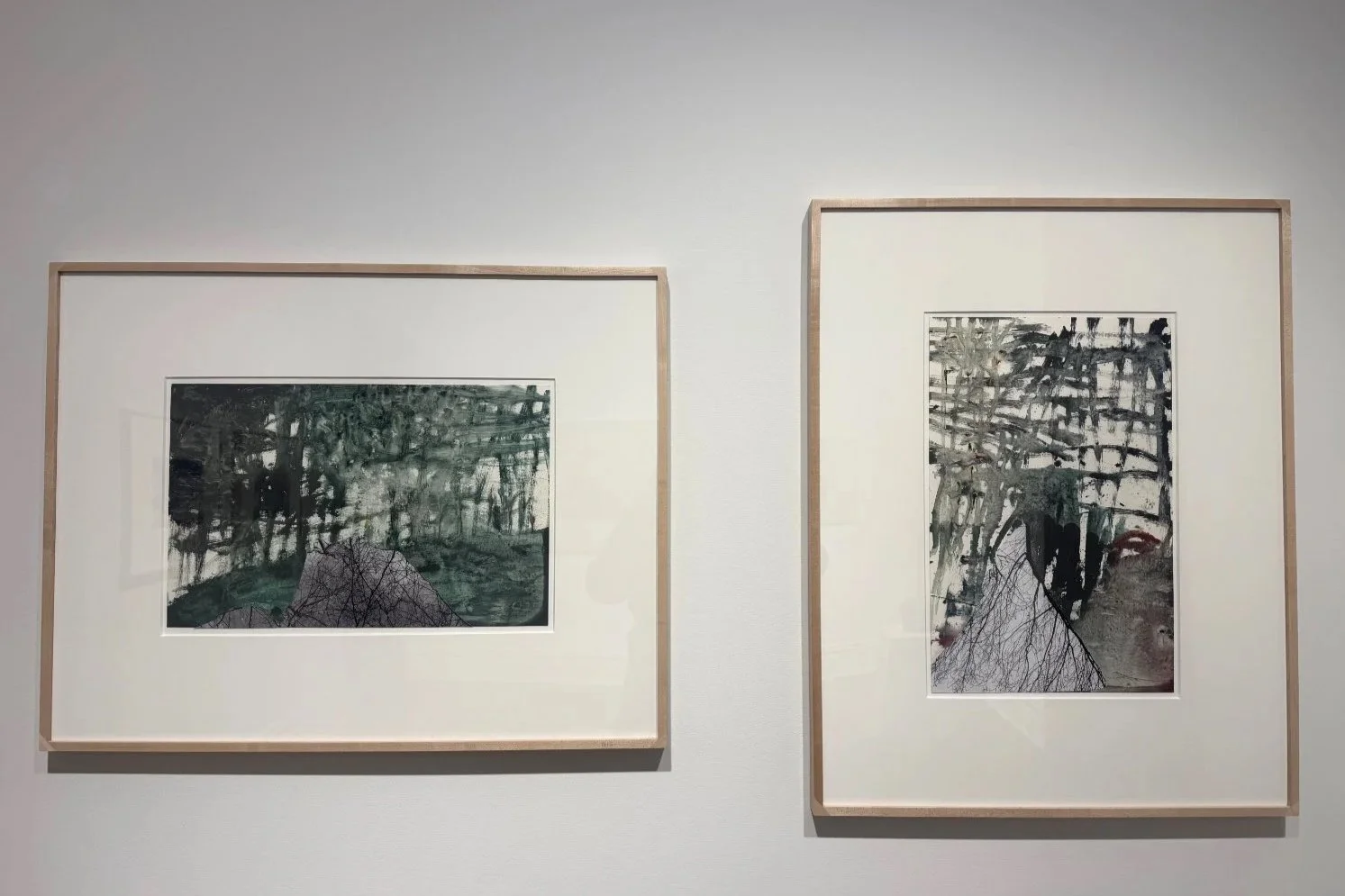
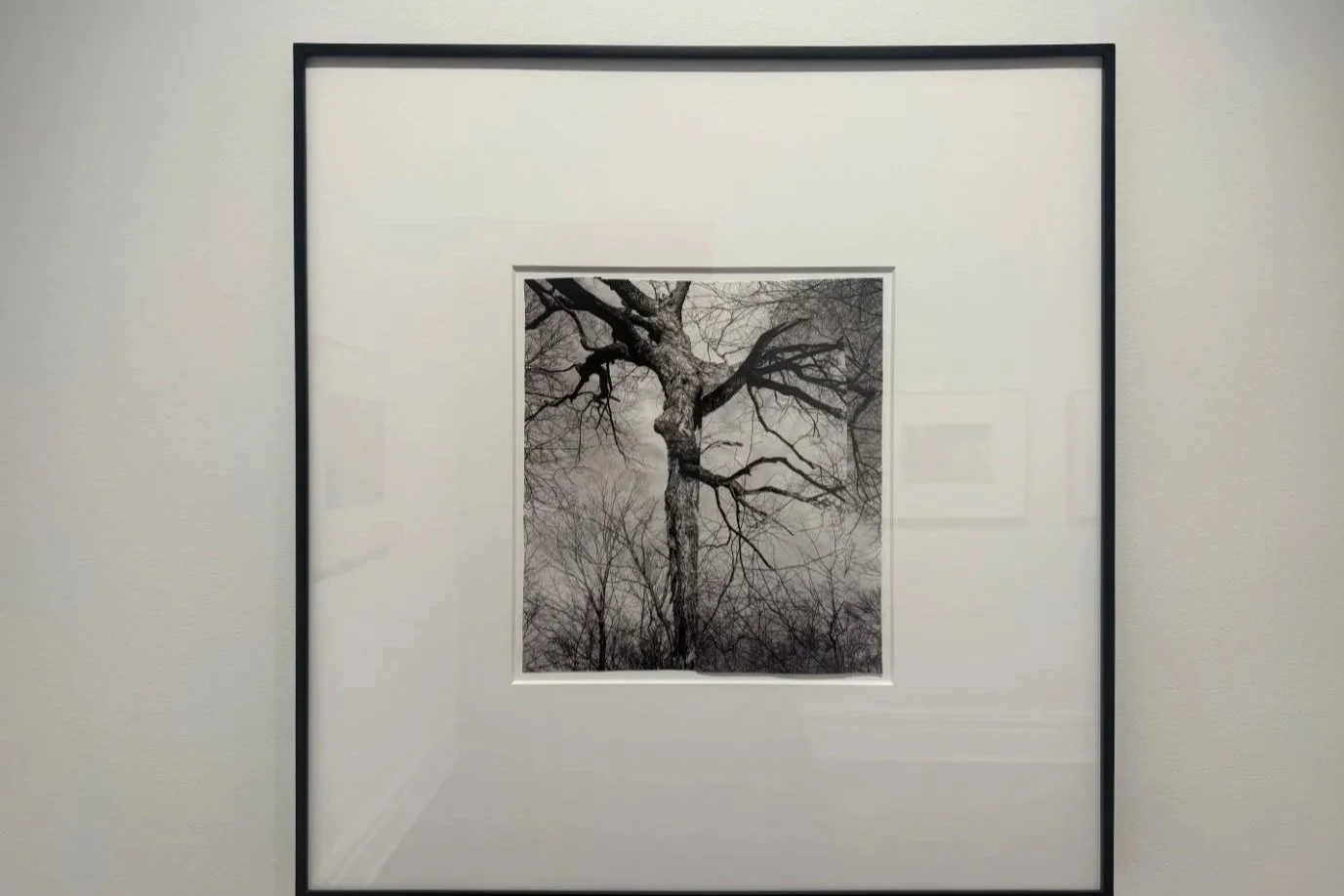
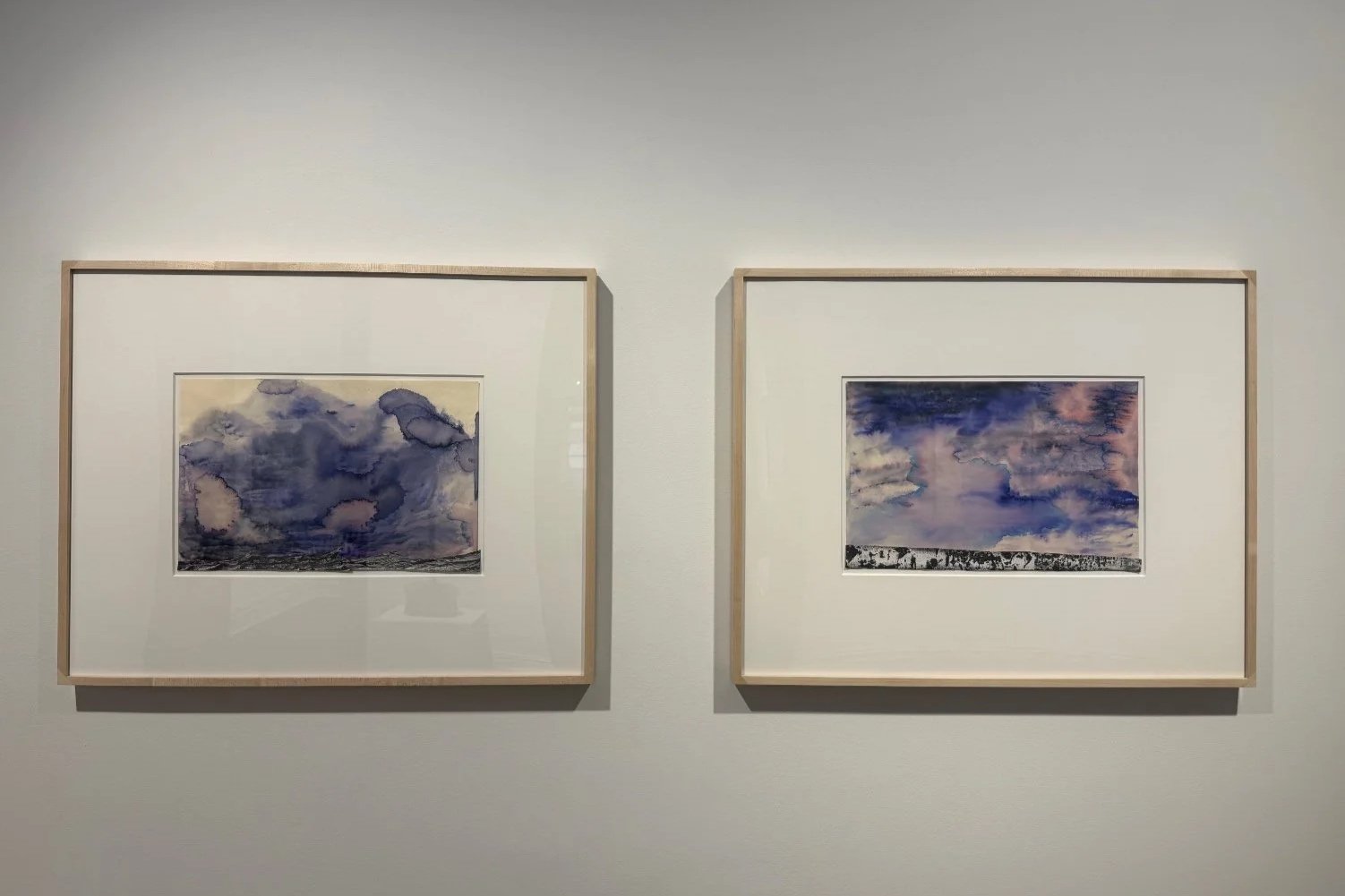
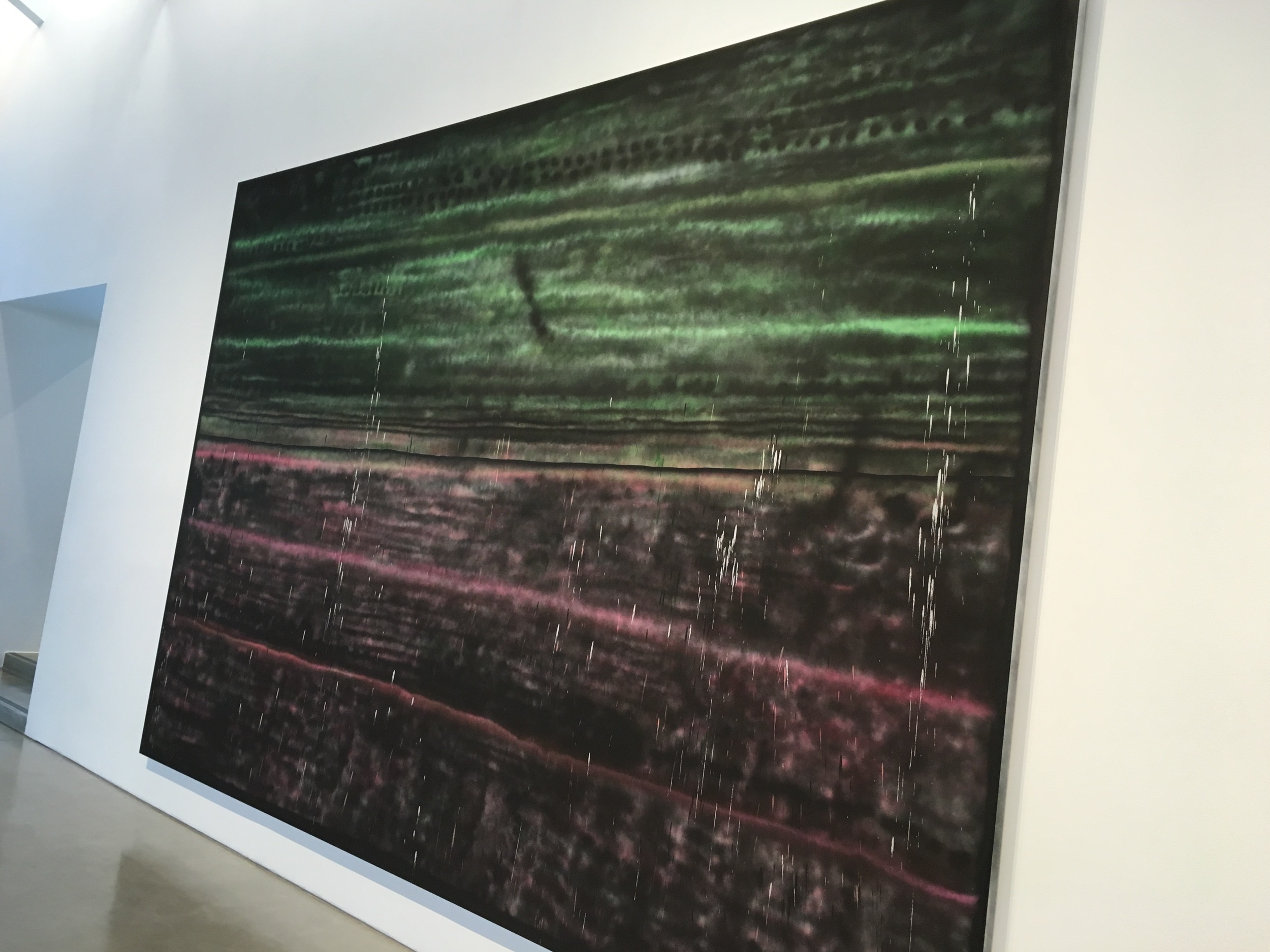
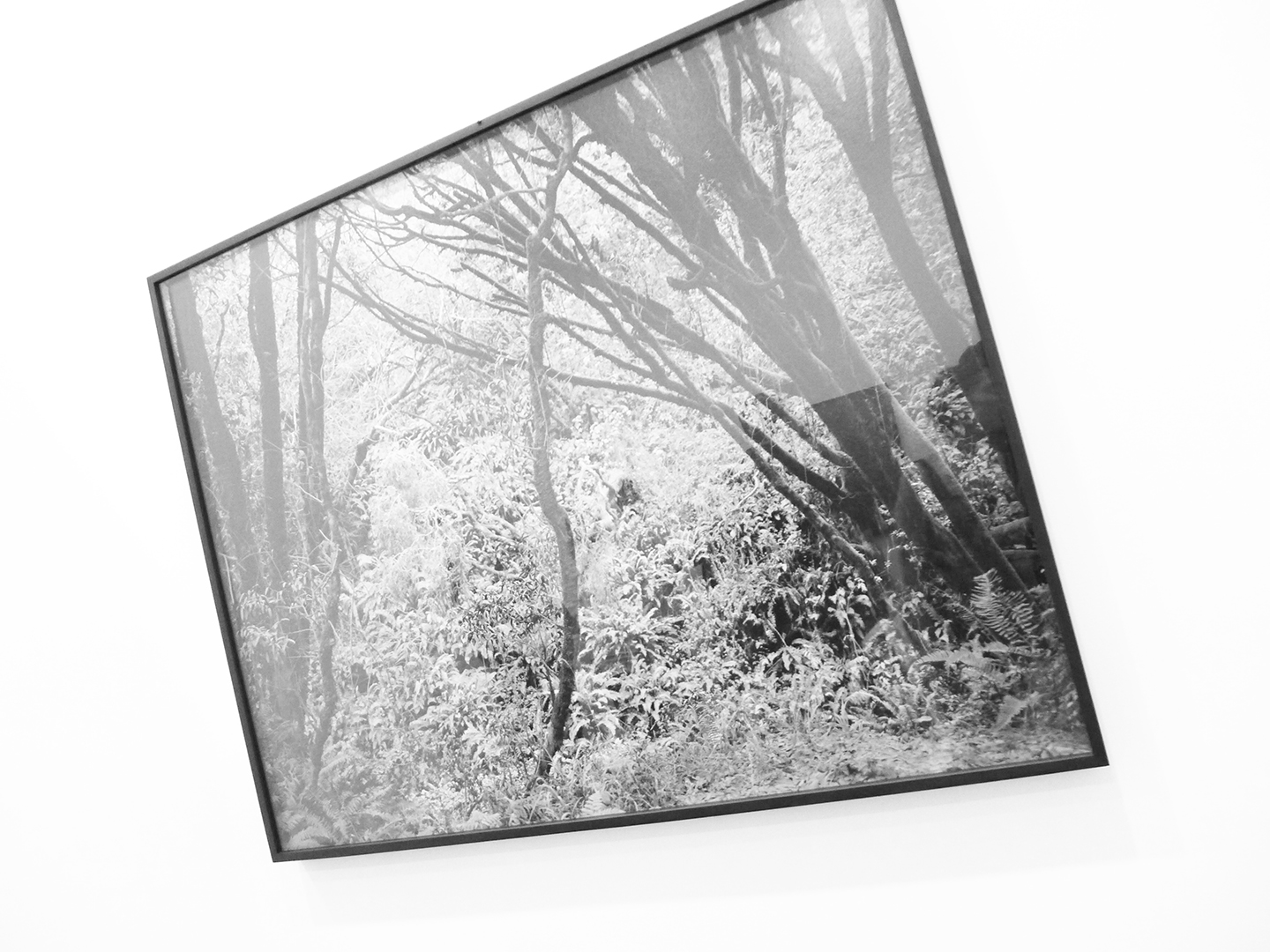
This compact rectangular room is filled with watercolor collages. Hanging on the wall to the right are three black-and-white photographs of overgrown trees whose branches split off in every direction. One of the images, SPLITTING, remains as simple as that, whereas the two others are engulfed in a spray of green lines that design a checkered pattern. On the adjacent wall hang two very similar works, yet instead of black-and-white photographs of trees, it’s a flat landscape. Painted above the curvy hills are clouds of purples, pinks, and blues, creating a stunning winter sunset. 

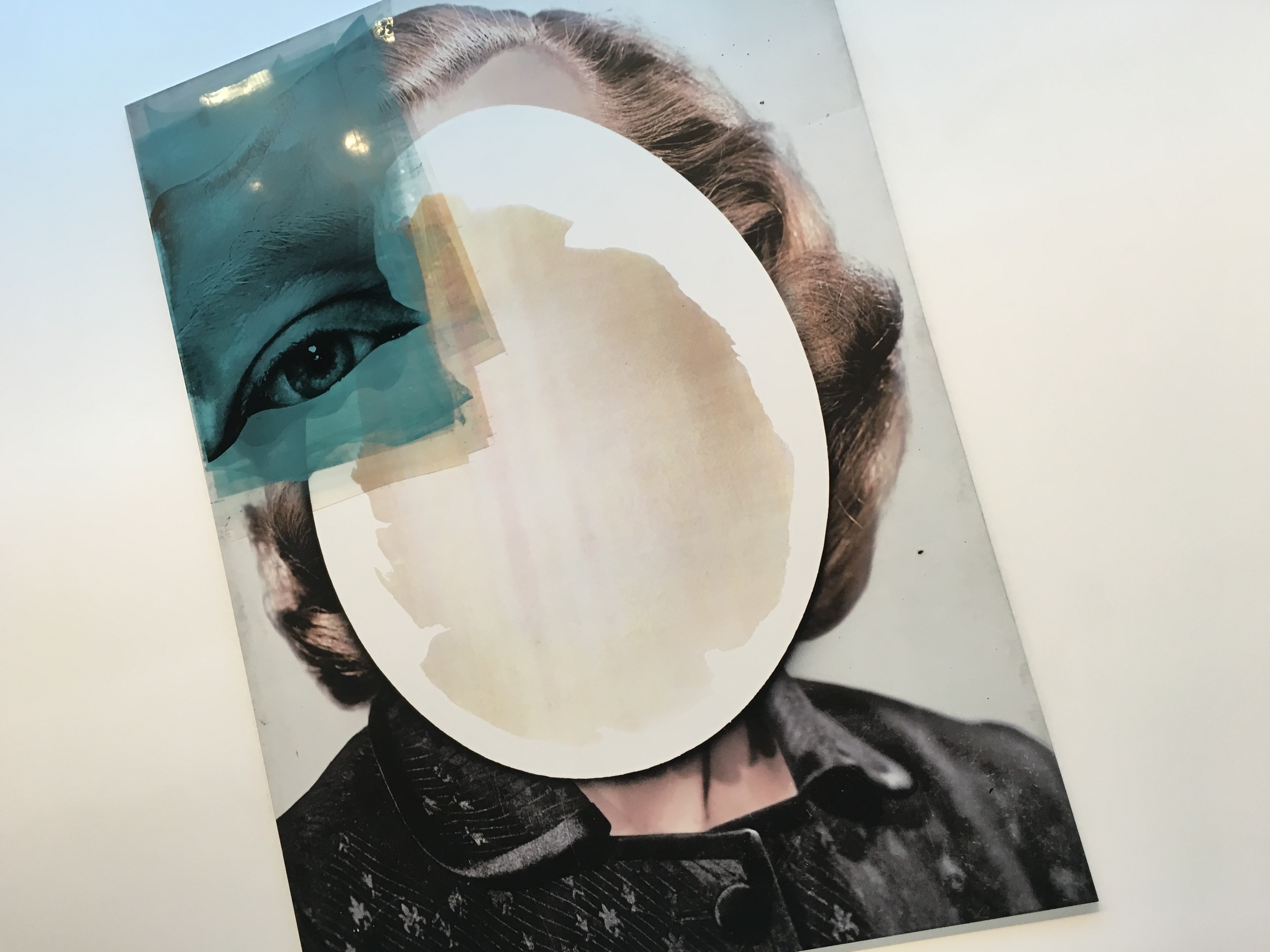
Across from this scene, beige and aqua take over, as two final collages hang next to a wood and bronze sculpture. The sculpture, Vestige, appears to be a curved sword or feather thrust into a stone. The handle, a light burl wood, slowly morphs into an aqua blade. The collages, Hippies and Kissing Hippies, apply large black watercolor stains on a beige background to create human faces, both crowned with wreaths of leaves and flowers. 
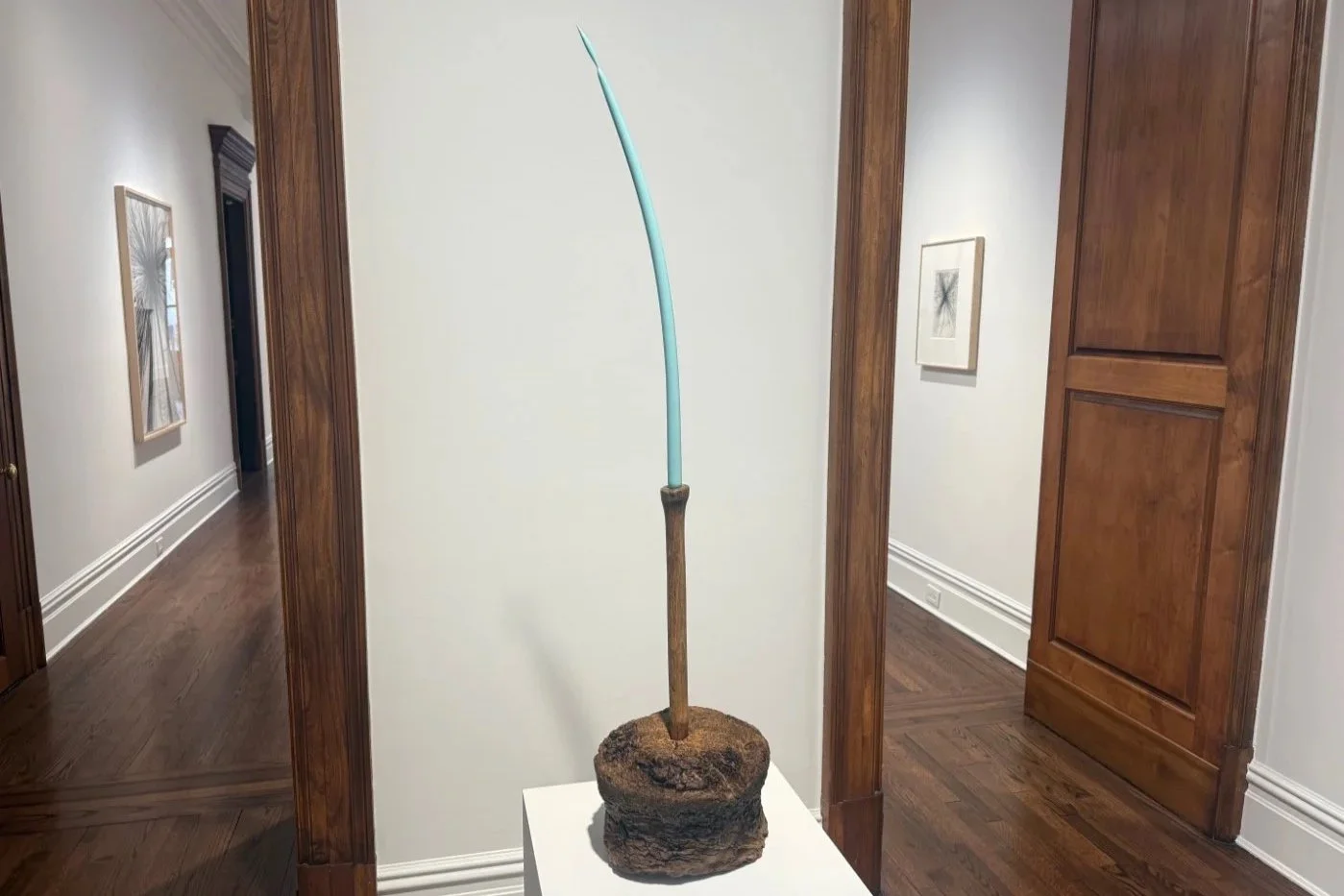
Whereas Ruby’s first room encapsulates the natural decay of an environment, this room embodies an exuberance of life. Atropa collocates mortality within two separate encounters, balancing the pleasant beauties and agonizing inevitables that life has to offer.

Atropa is on view through March 28 @ Sprüth Magers 22 E 80 Street, New York
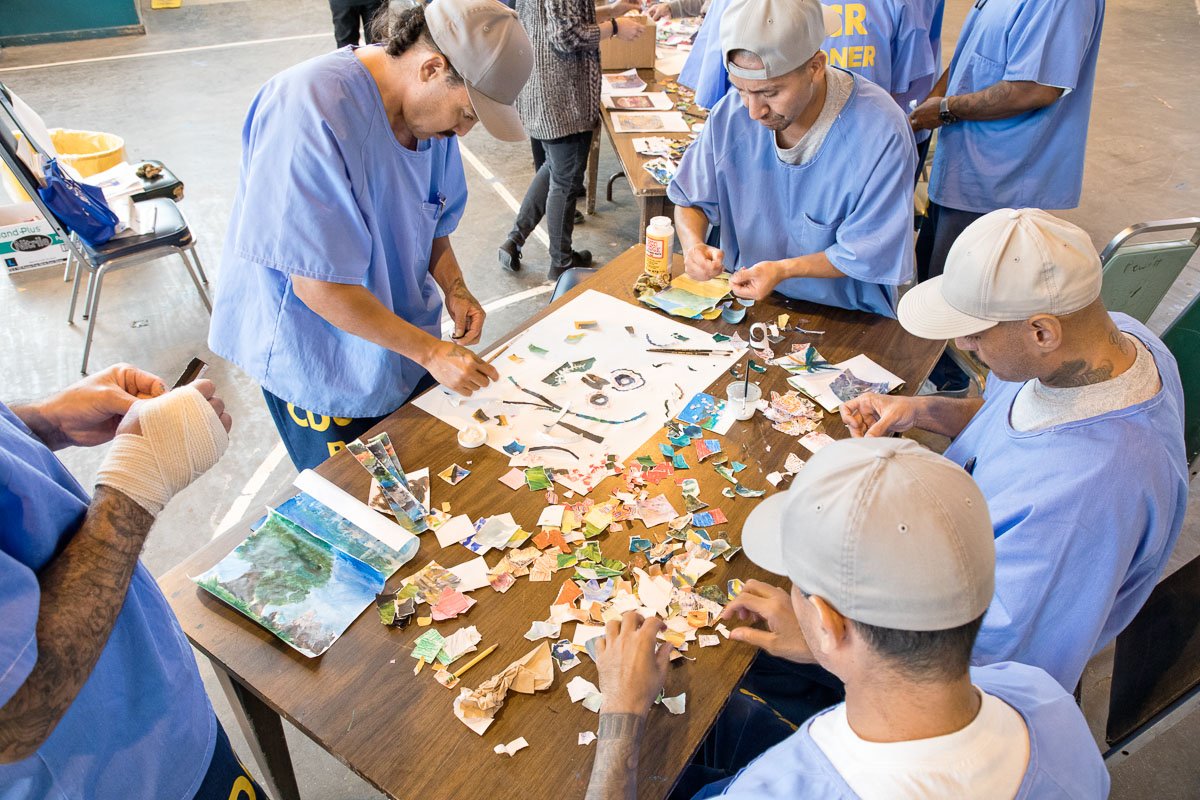
Sterling Ruby And More Guest Artists Team Up With Prison Arts Collective

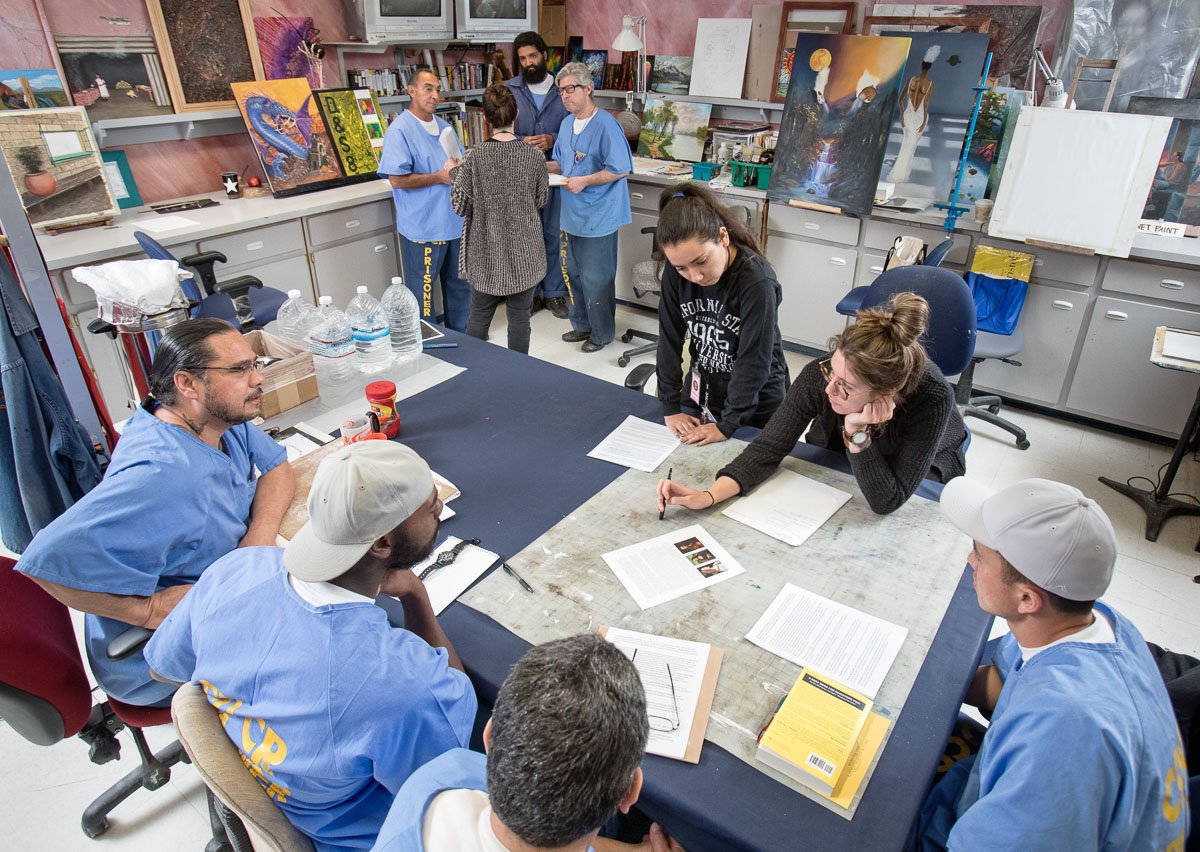
Huxley, the global talent agency announce their collaboration with the California-based organization Prison Arts Collective (PAC), a university-based, non-profit program offering a multidisciplinary arts curriculum in 12 California State prisons. PAC is headquartered at San Diego State University. Throughout 2021, Huxley has worked with PAC to design a guest artist program, made up of 15 individual lessons over 15 weeks. This fall, PAC will teach the new program in one prison, and eventually bring it to the 12 men’s and women’s California State Prisons where PAC holds programming. By providing multidisciplinary arts programming in correctional institutions, PAC supports the development of self-expression, reflection, communication, and empathy through collaboration and mutual learning. Guest artists include photographer Tyler Mitchell, creator of the Wim Hof Method Wim Hof, American artist Sterling Ruby, British fine artist Issy Wood, cartoonist David Ostow, creative and art directors Willo Perron and Brian Roettinger, and more as contributors. Guest artist lessons focus on a range of topics, including logo design and typography, scriptwriting and creative storytelling, cartooning and illustration, collage making, creative mindfulness, and more. Click here to learn more.

Watch S.R. Studio's Debut "Apparitions" For Paris Haute Couture Week

California Couture. A collection created in America, reflecting America. Shot in Los Angeles on January 19, 2021, the last day of the Trump presidency. 

The Puritan and Pilgrims, traveling to America in the 17th century, viewed the United States as a “Redeemer Nation” — a belief in the country’s divinely ordained redemptive role in the world. It is a narrative being profoundly questioned today, inseparable from the enduring inequalities and ongoing threat of violence framed as patriotism.  

Responding to the history of the United States — imagined and real — Sterling Ruby explores the intersection of fashion, art, craft and culture for this first haute couture collection created at the invitation of the Fédération de la Haute Couture et de la Mode, Paris. Silhouettes, shapes, garment archetypes reference American heritage: Puritan collars, styles of dress inextricable from colonialism, neocolonialism, and religious persecution. These contrast with the uniforms of modern America: references to skate wear, workwear, business wear. 

creative direction and editing by Ruby

Selections from the Permanent Collection: Sterling Ruby "Soft Works" @ The Geffen Contemporary at MOCA in Los Angeles

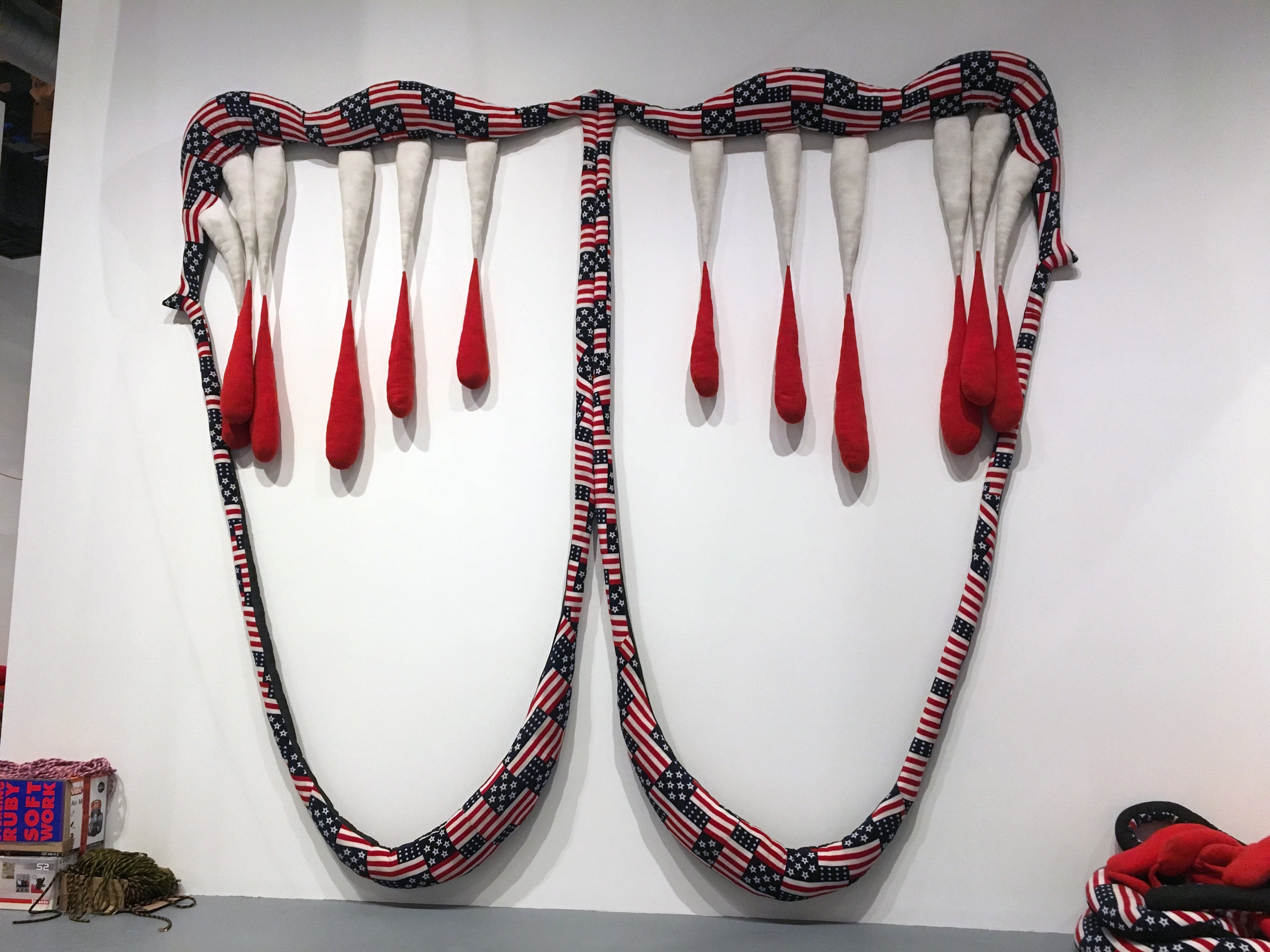
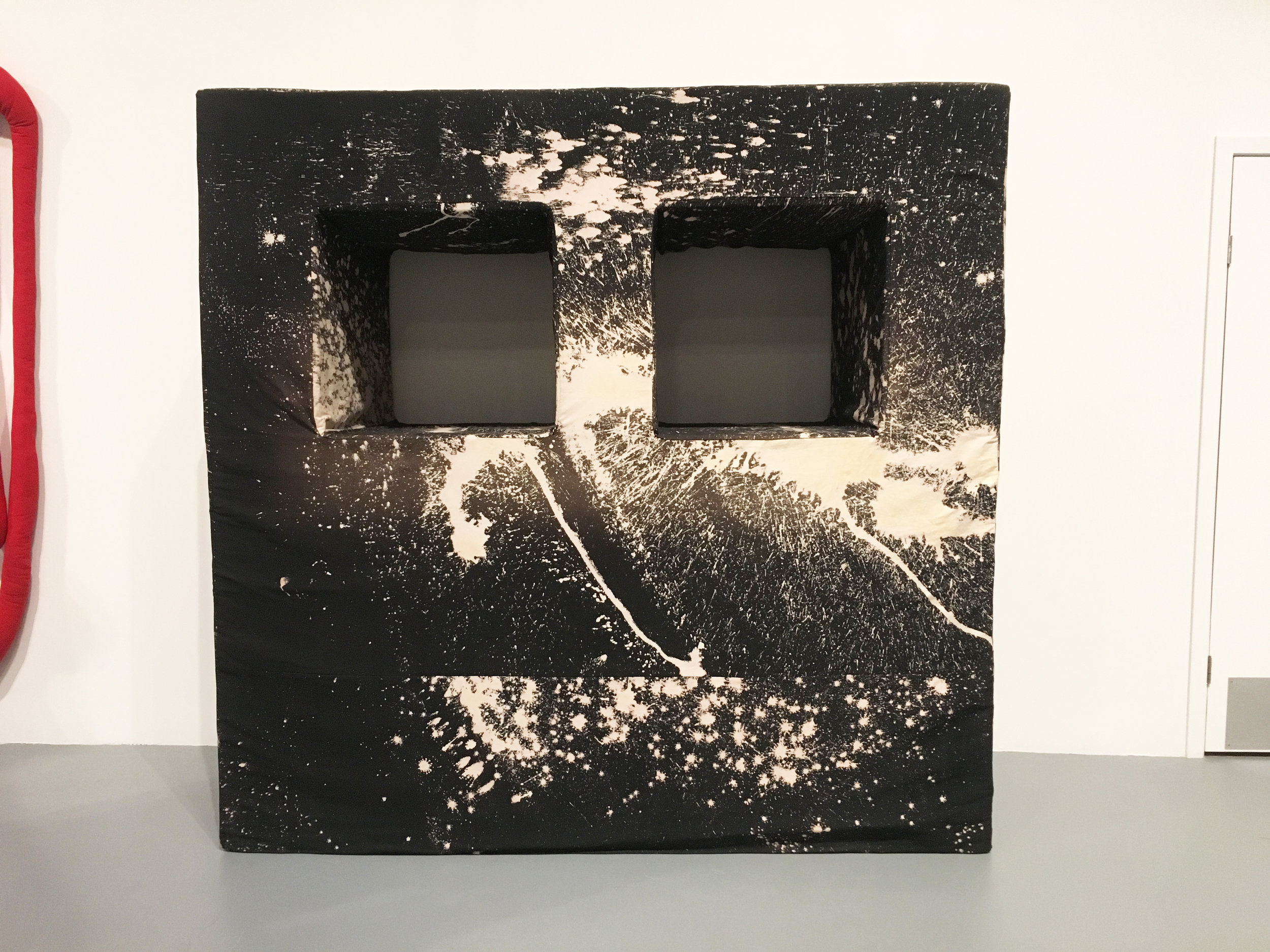
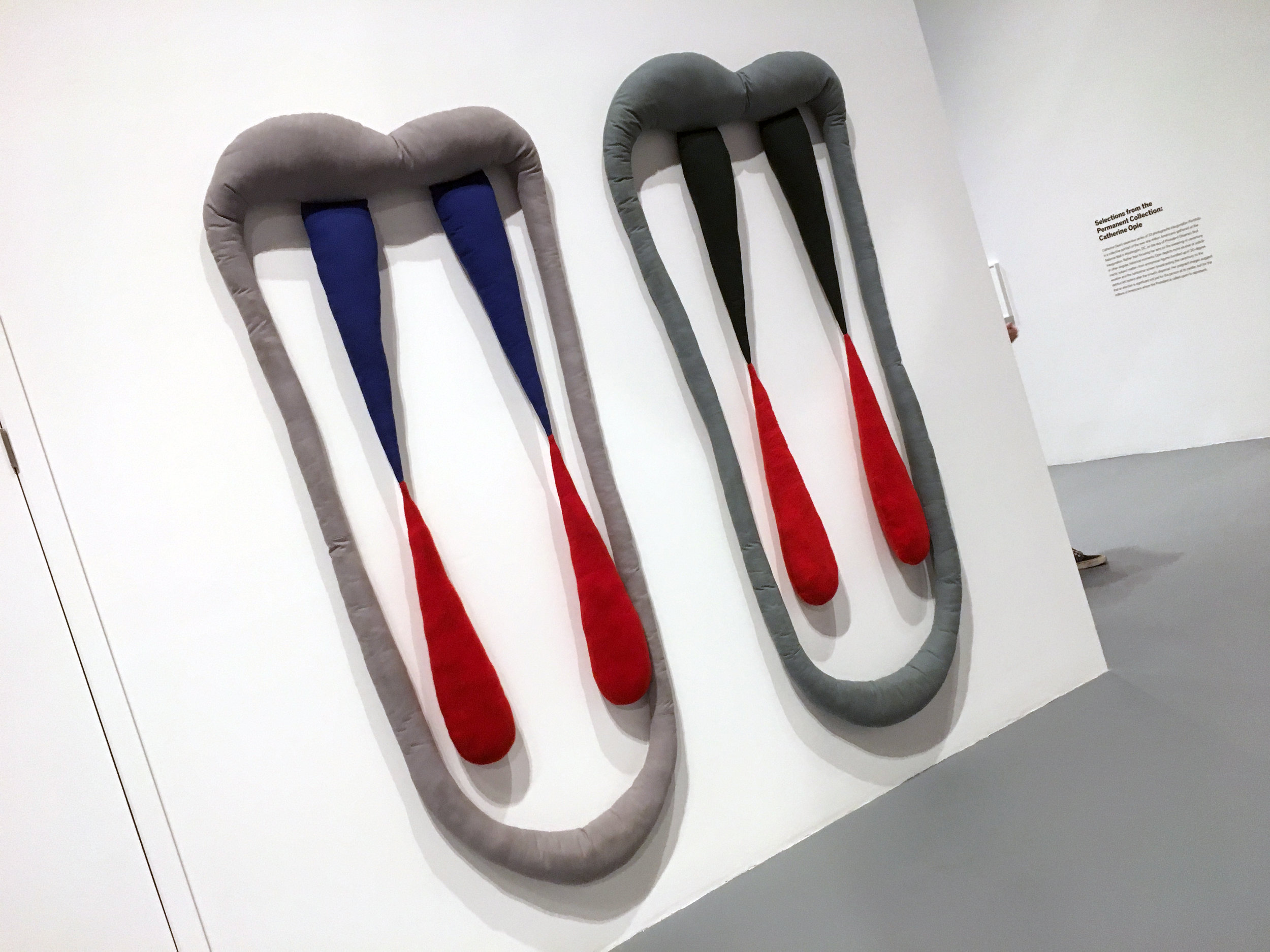
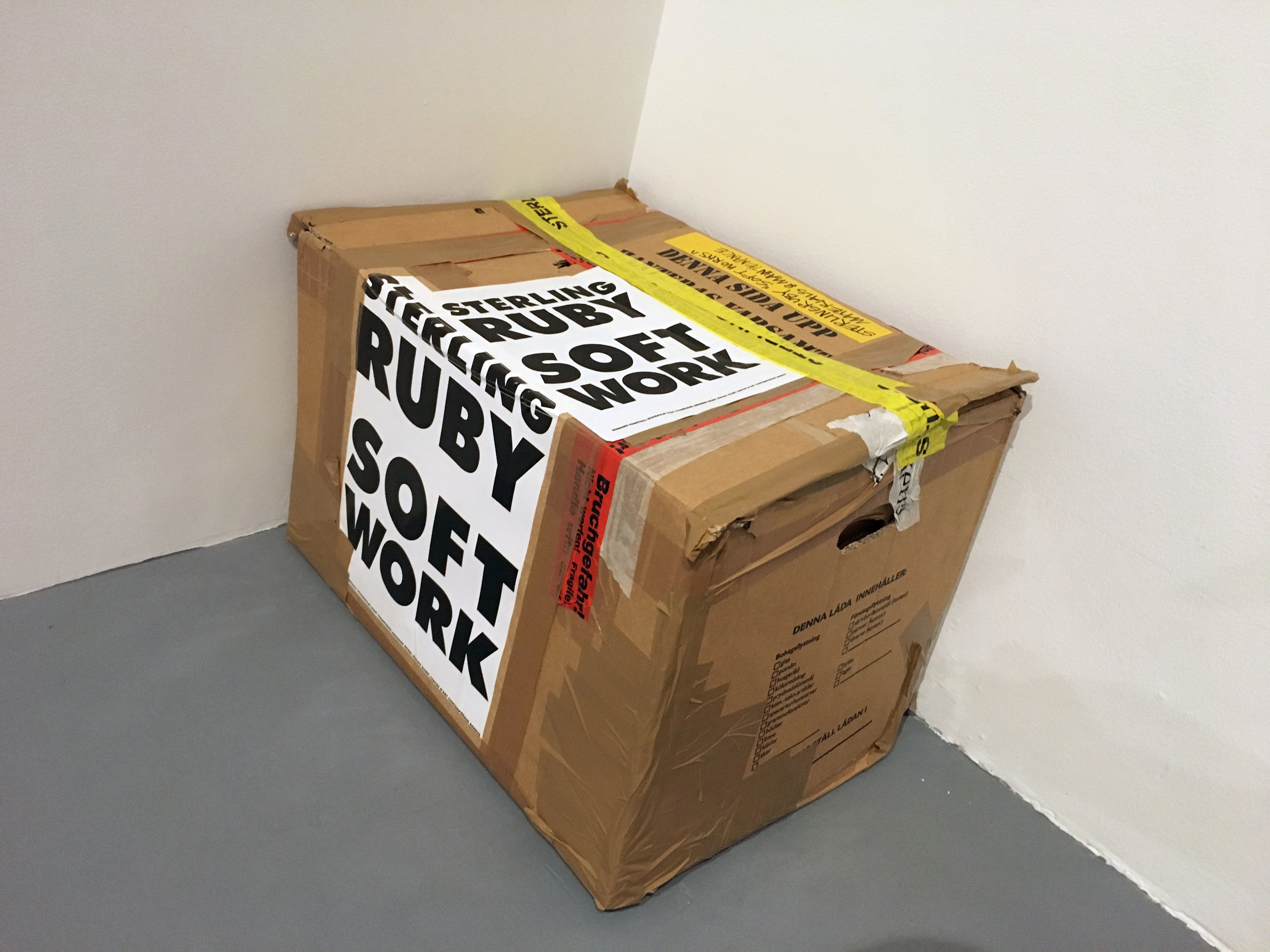
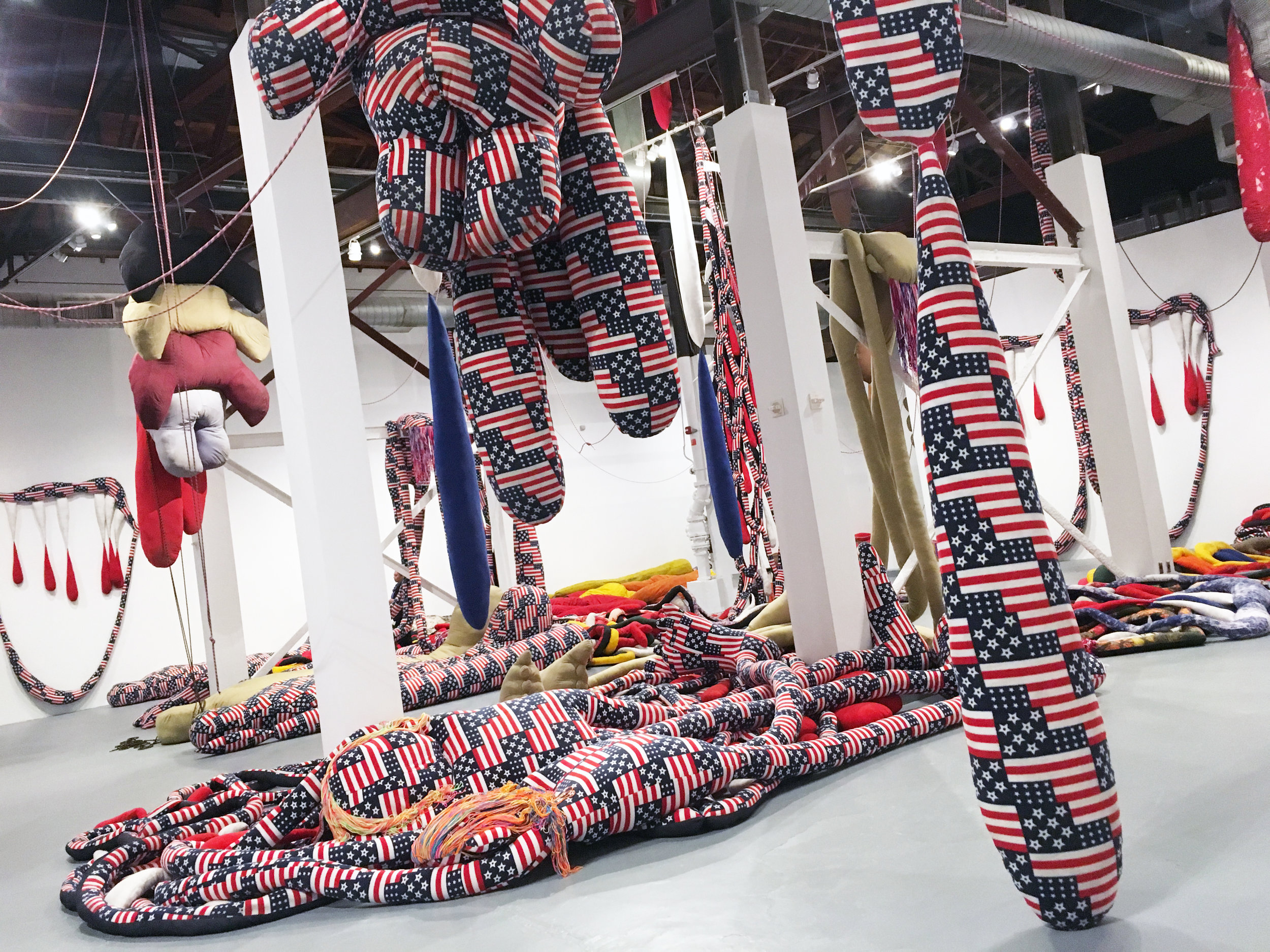
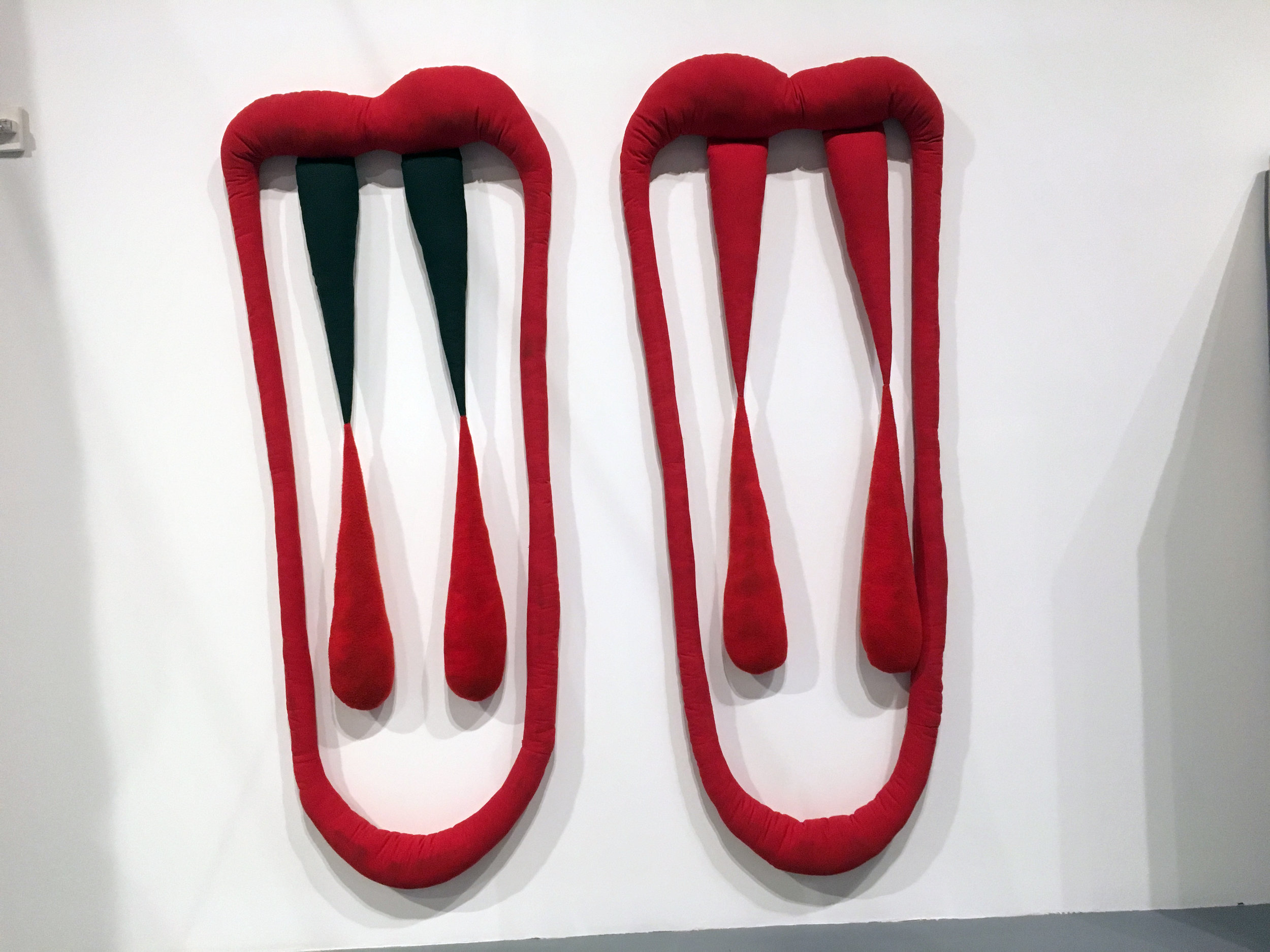
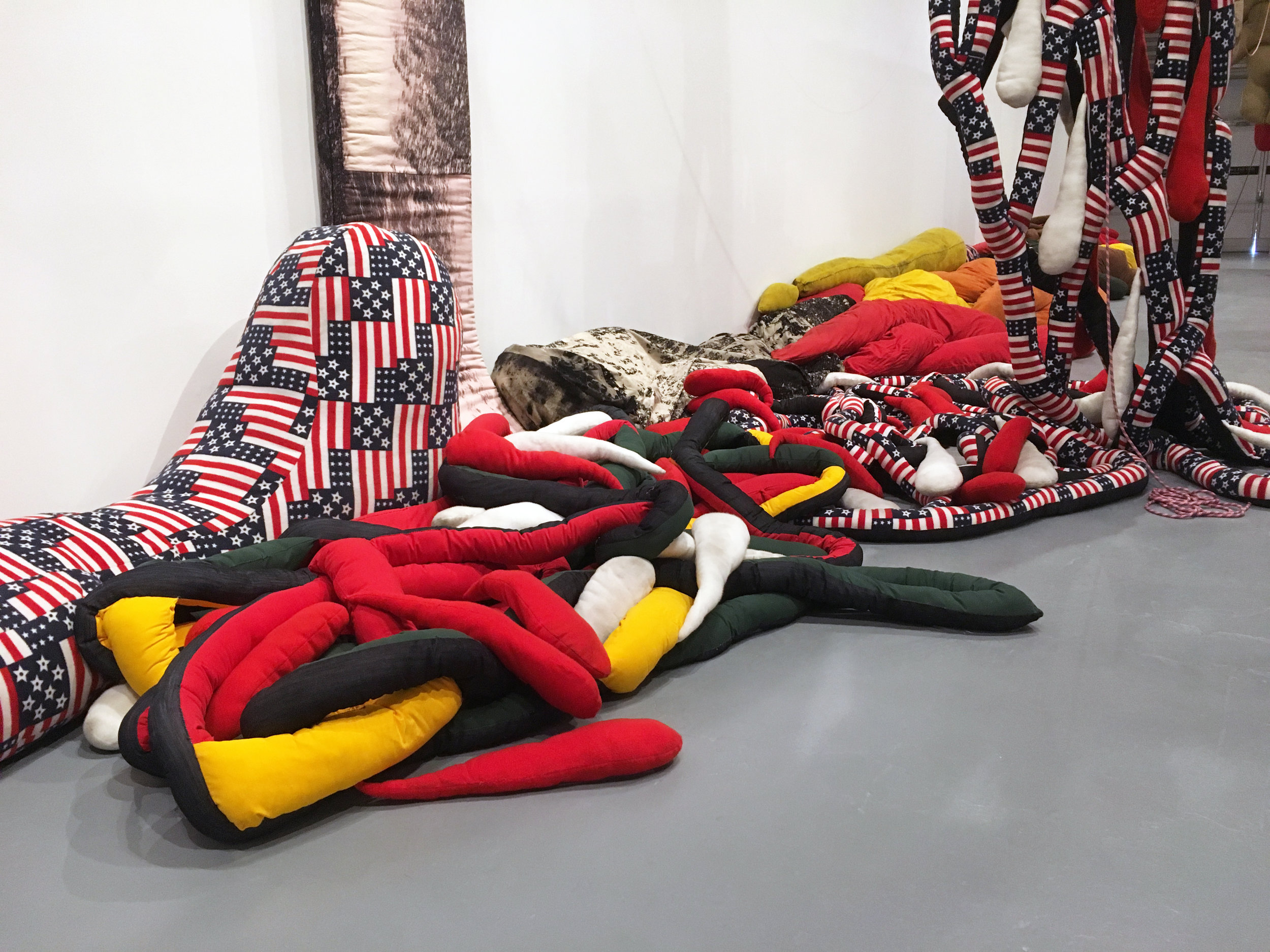
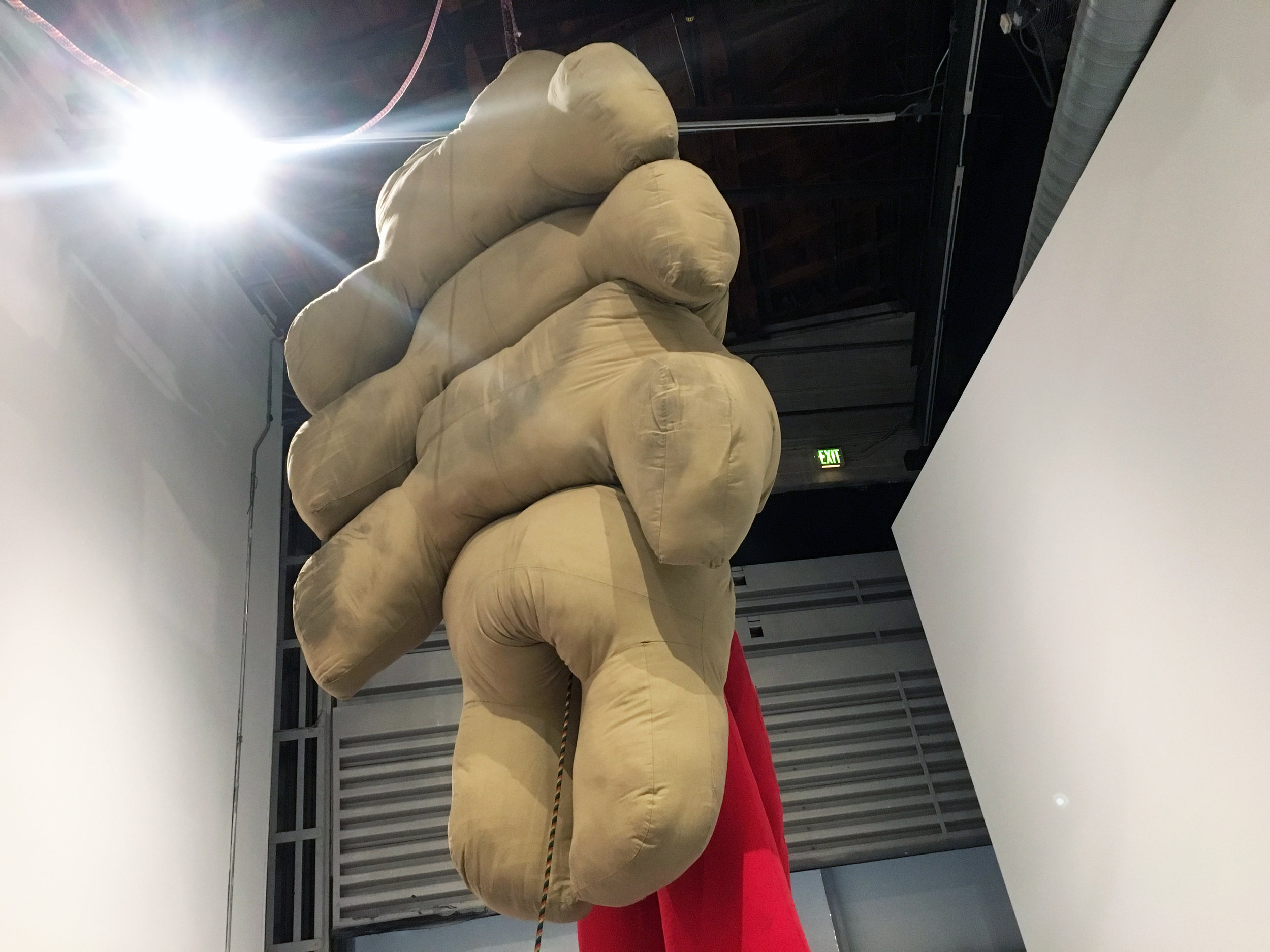
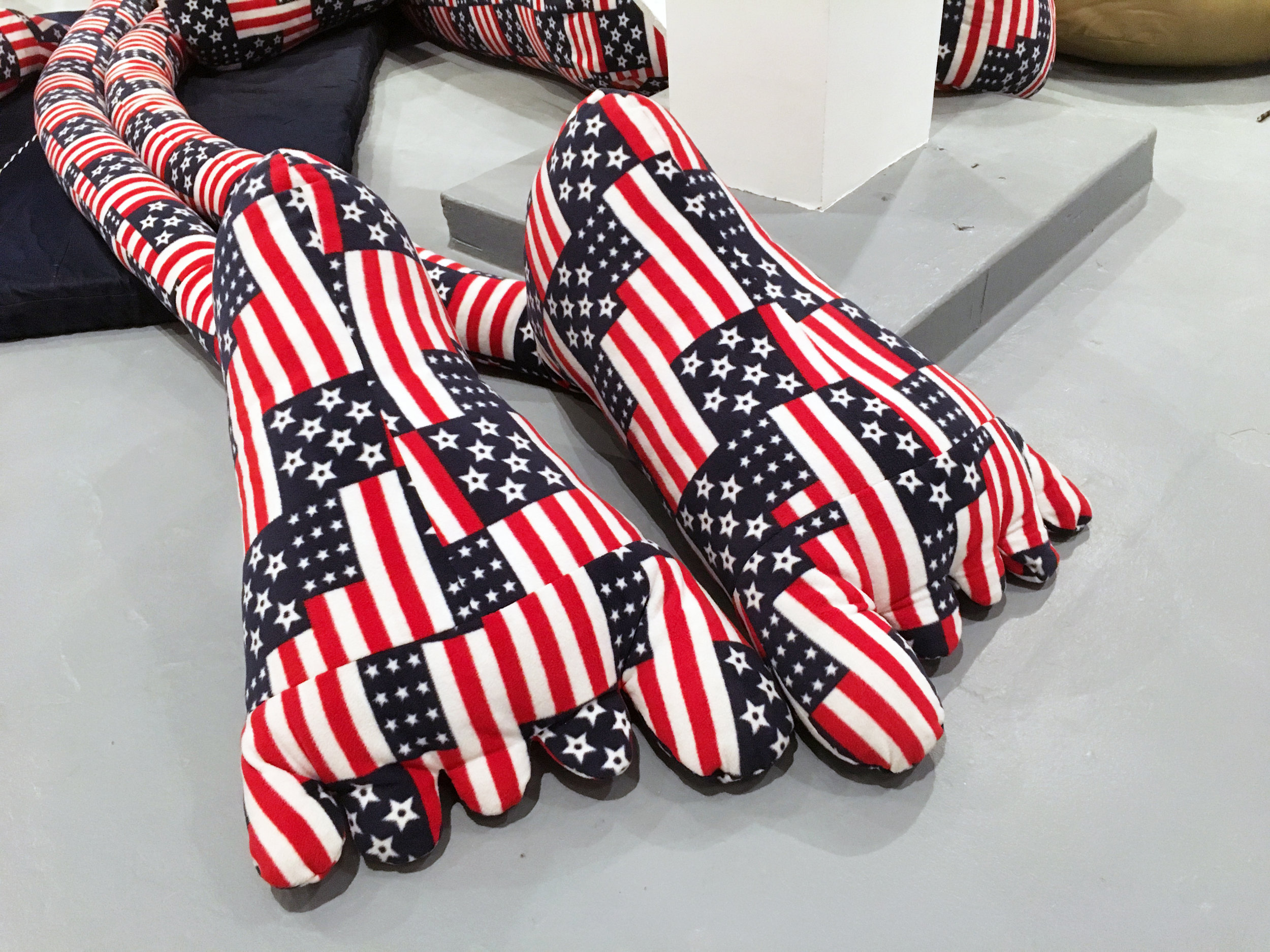
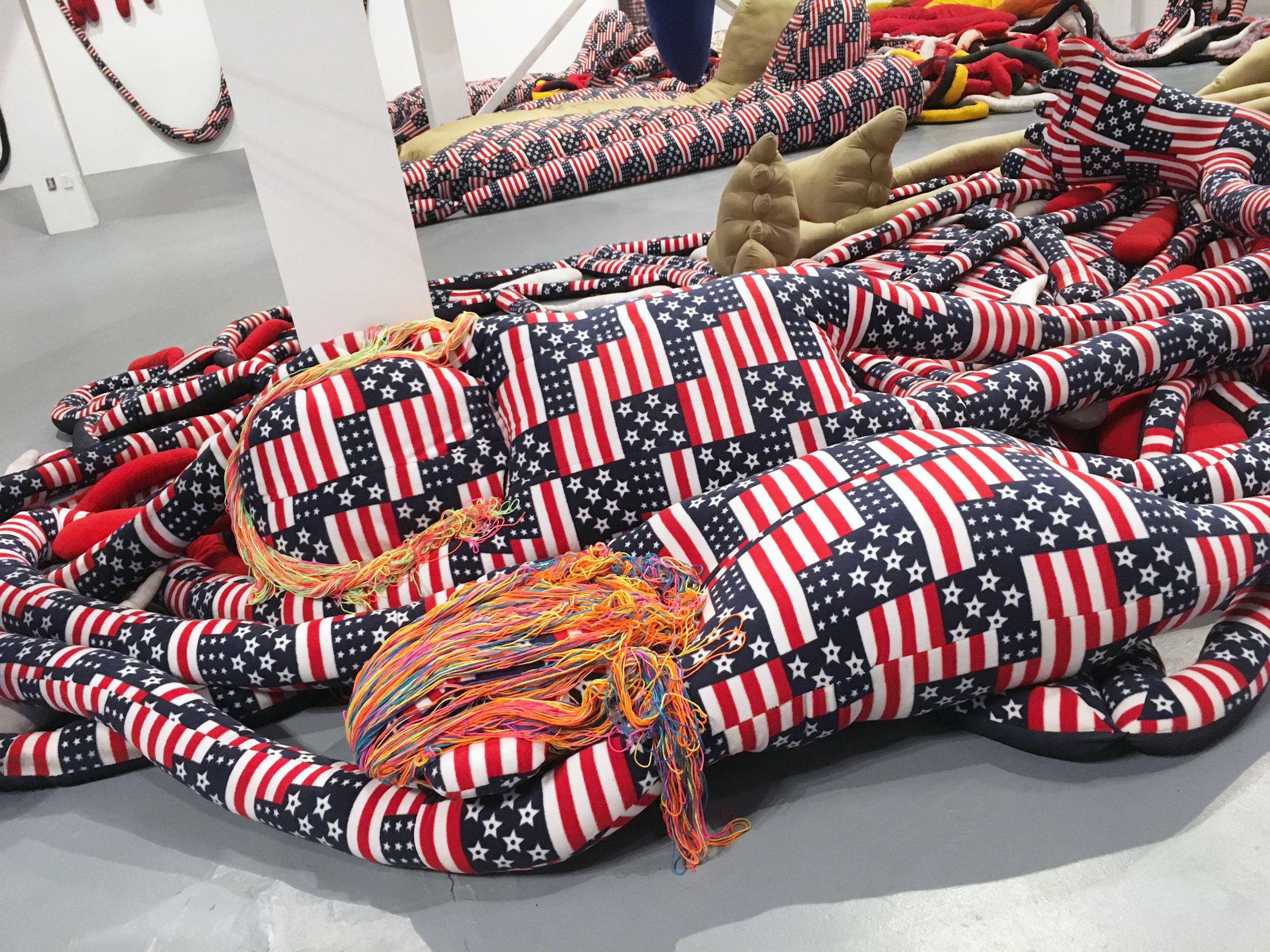
Shown in the United States for the first time, Ruby’s SOFT WORK is a large-scale installation of stuffed fabric sculptures in unsettling biomorphic forms. Appendaged cushions and gaping, fang-filled mouths are manically arranged as sausage link–like drips from the ceiling, coiled heaps across the floor, and slumping, abject forms throughout the space. Using textiles that evoke the colors and motifs of the American flag, the sprawling installation offers up that iconic symbol of national pride as an intensely visceral experience—a political scene filled with performative “bodies” that seem to manifest both theater and playground simultaneously. On view until June 12, 2017 at The Geffen Contemporary at MOCA in Los Angeles. photographs by Oliver Kupper

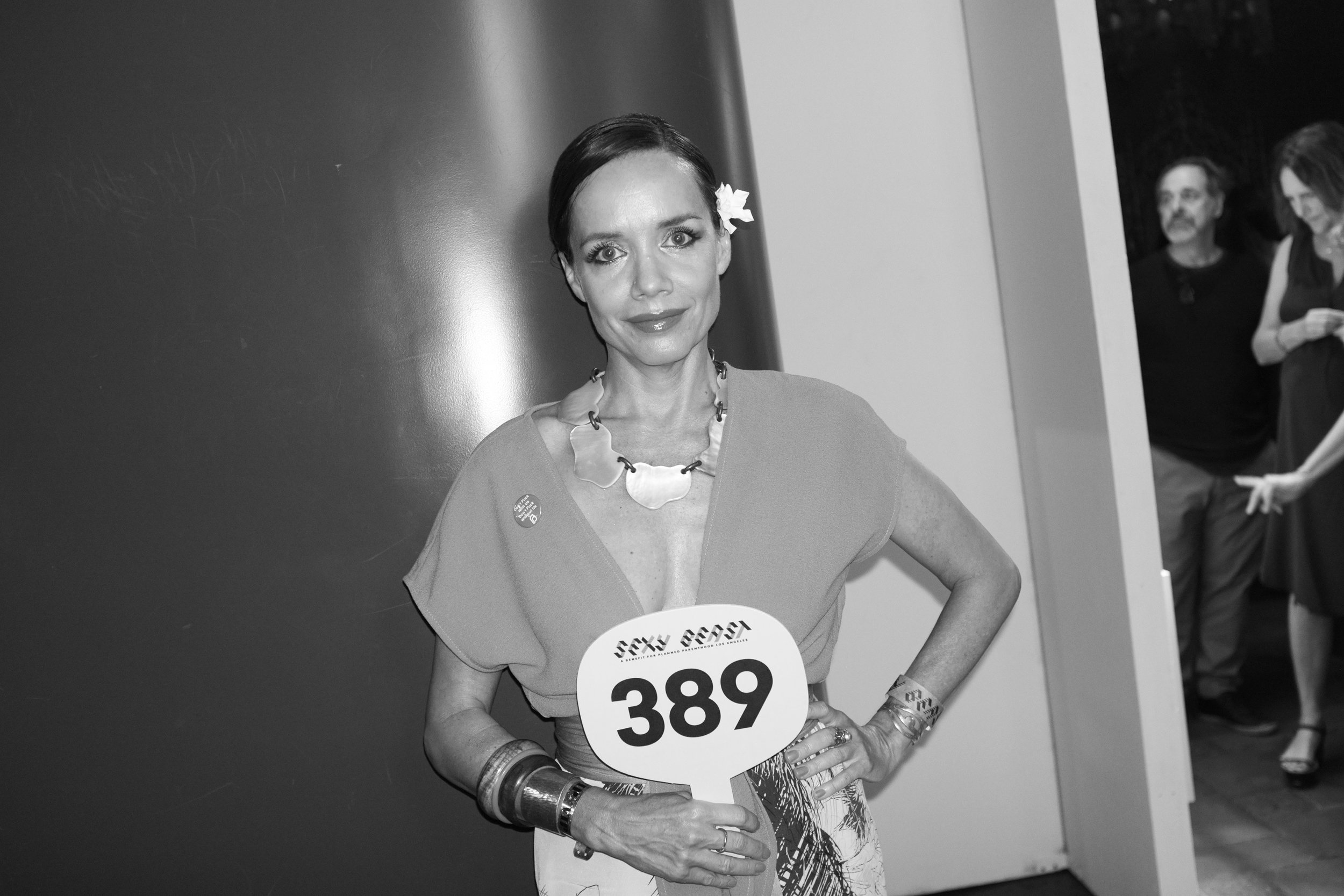
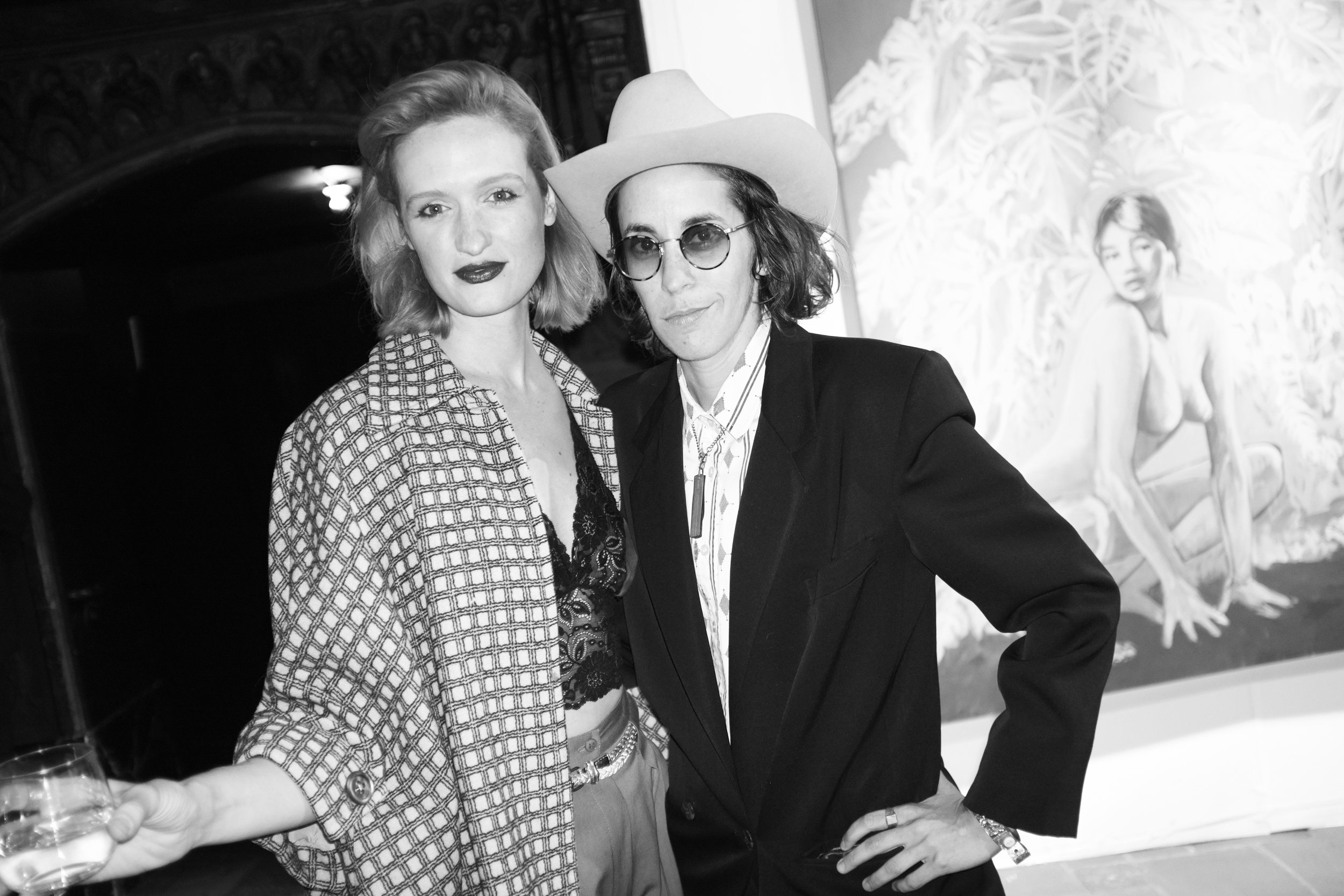
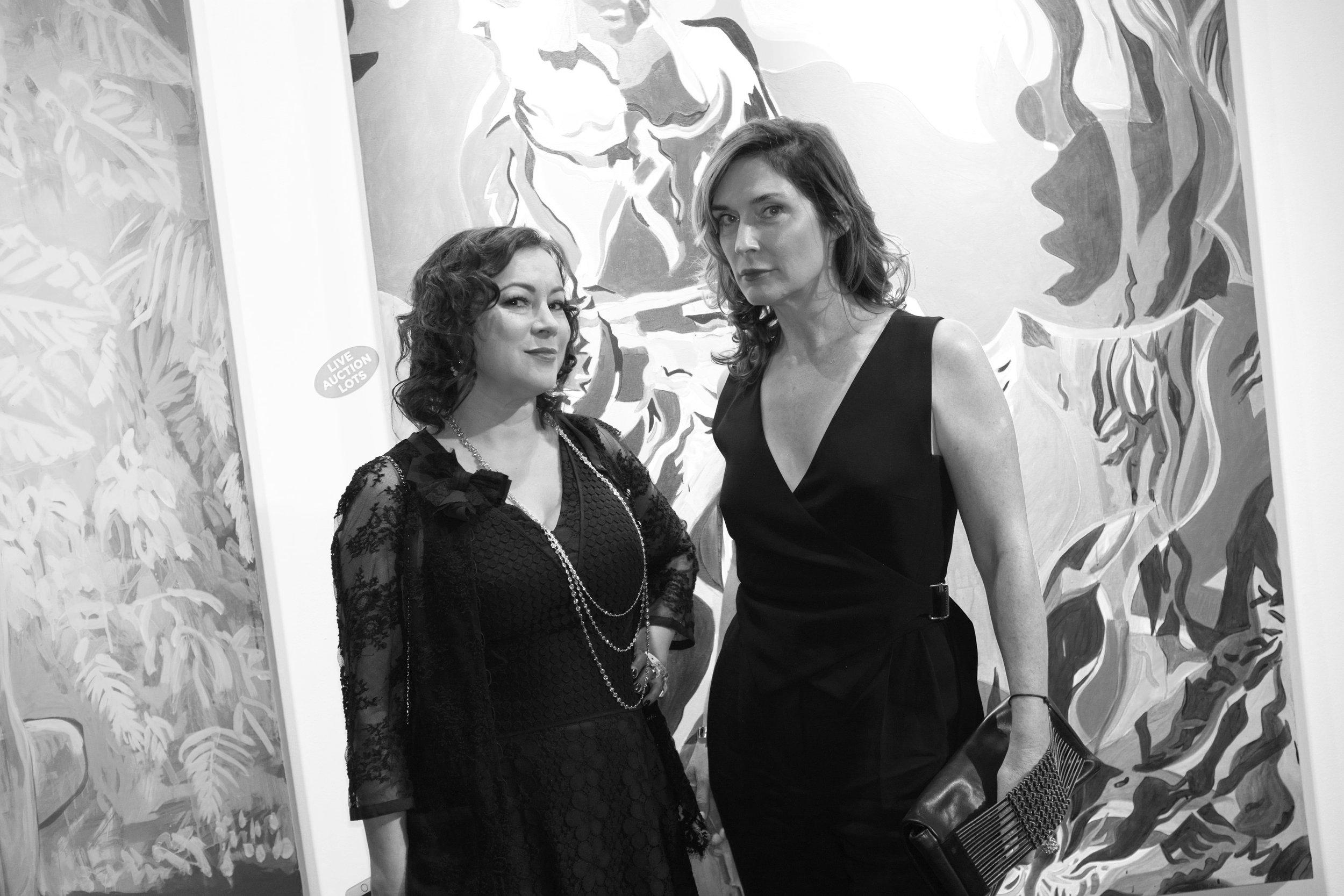
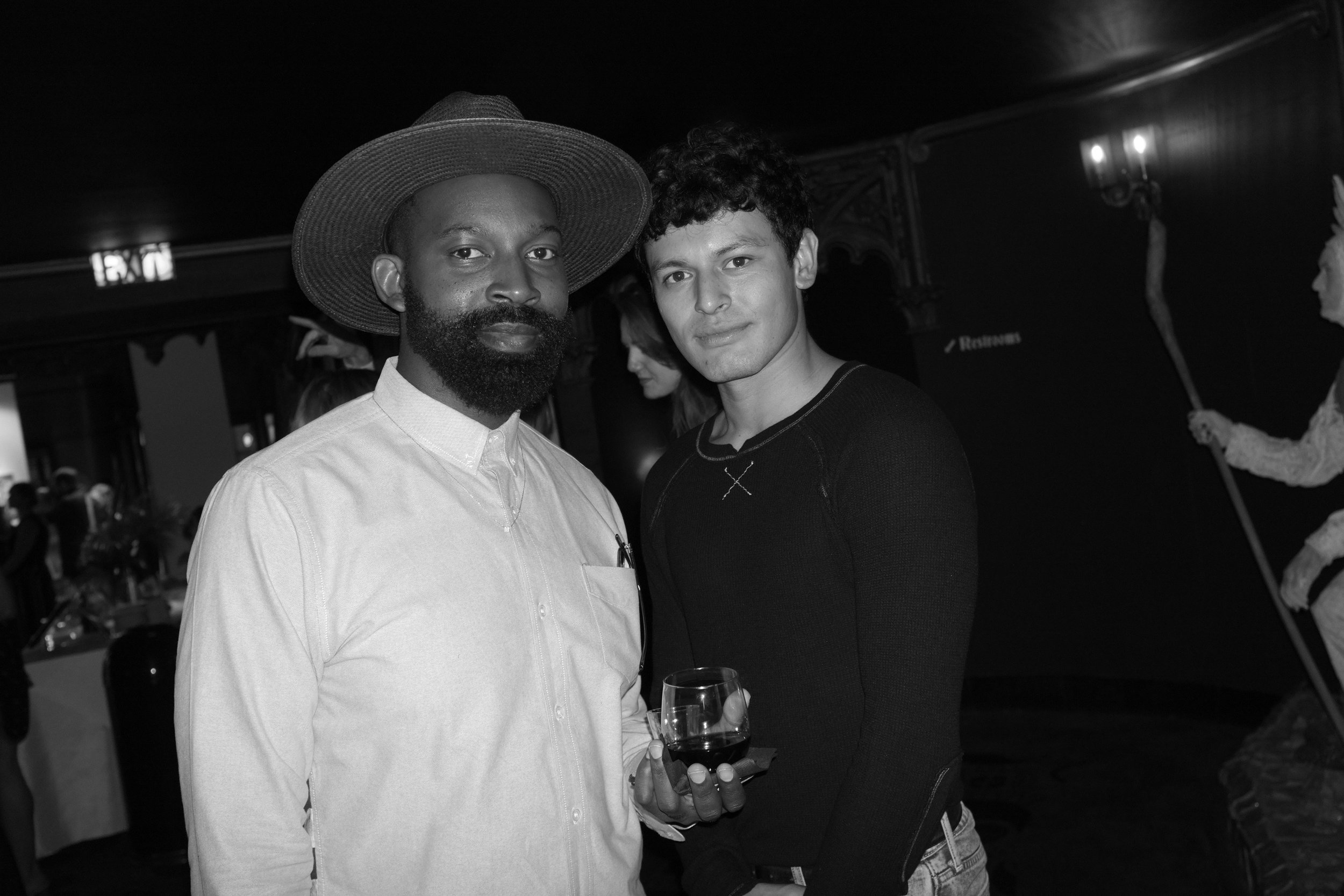
Sexy Beast Benefit For Planned Parenthood Los Angeles Hosted By Andy Richter @ The Theatre at Ace Hotel

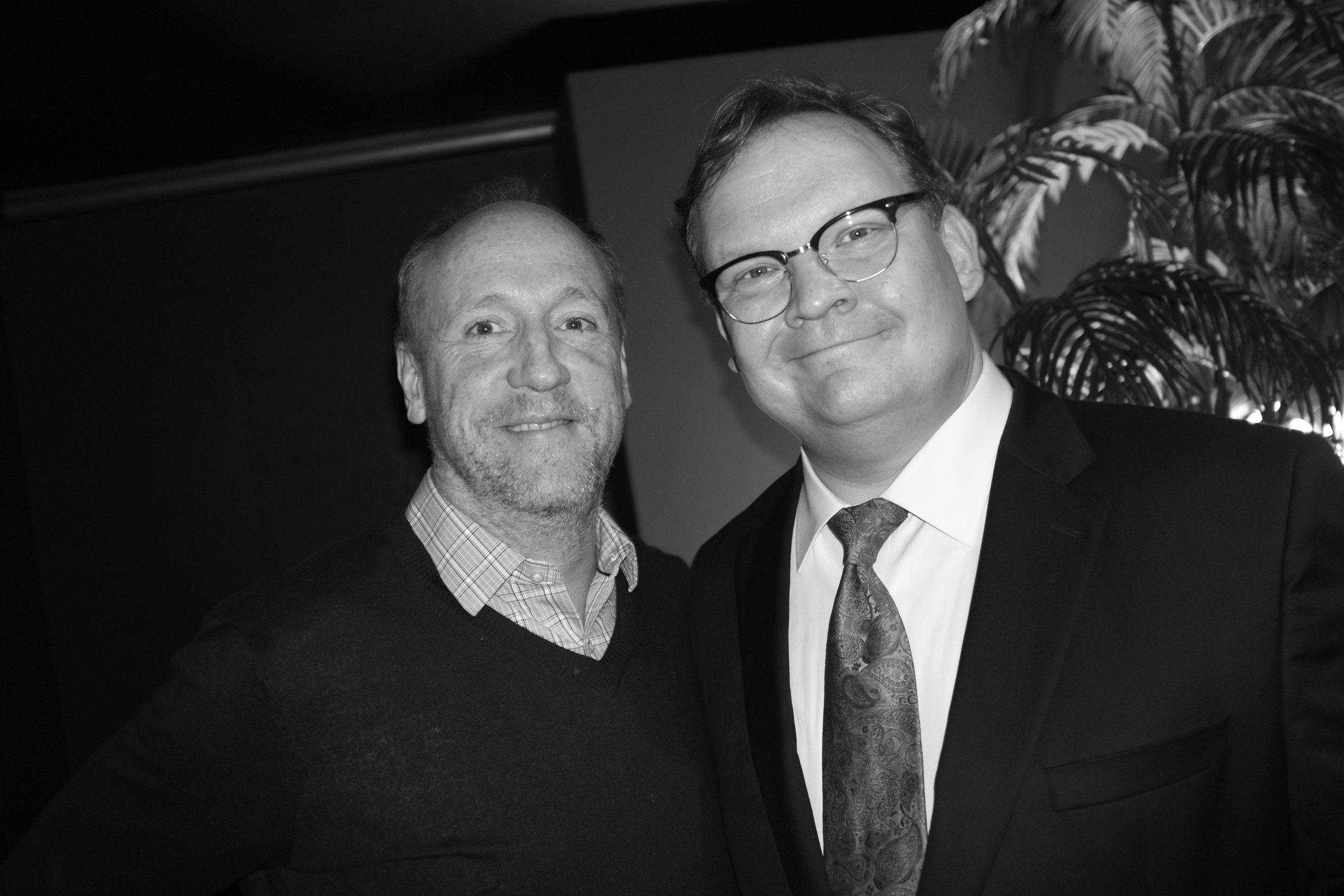
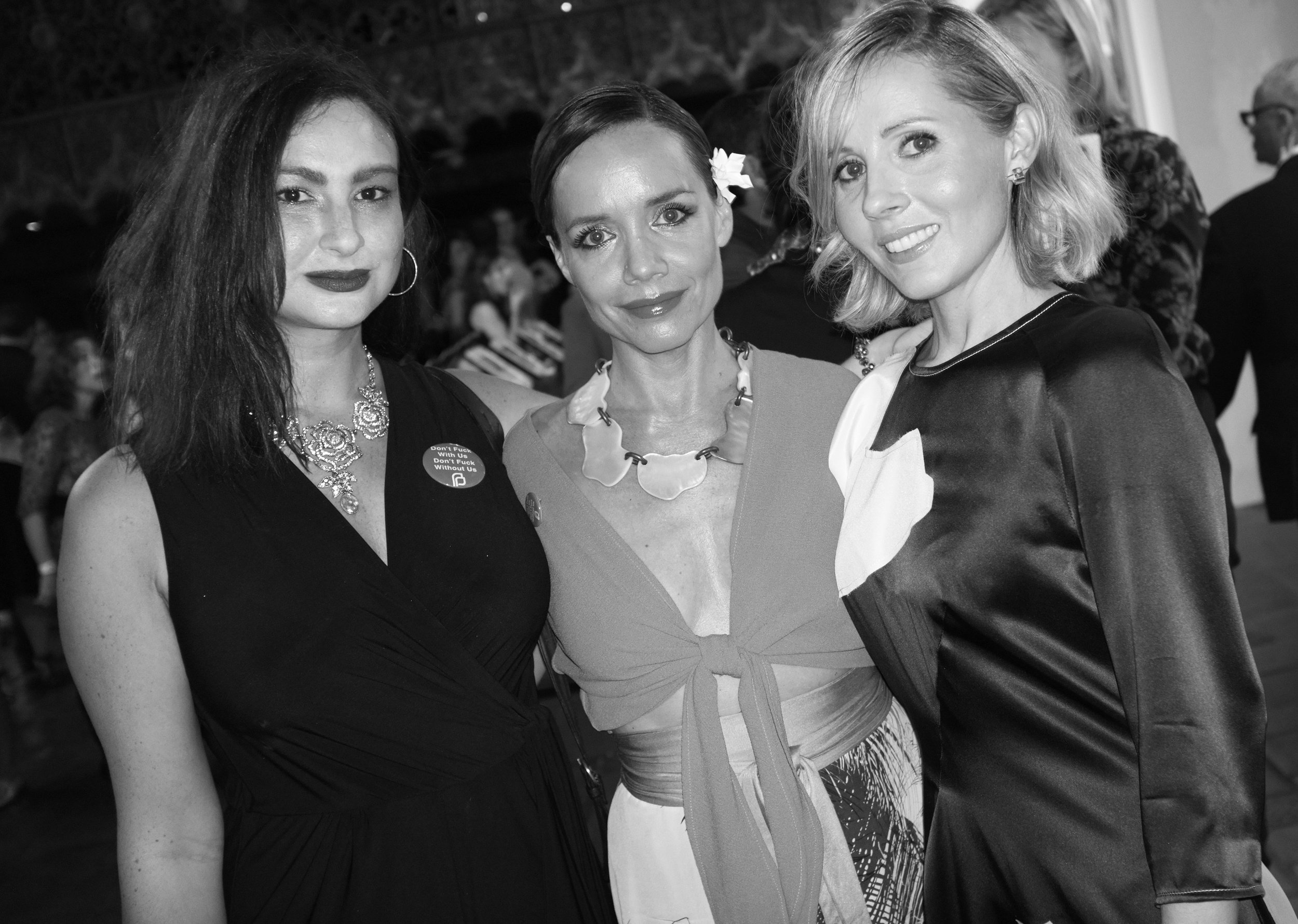
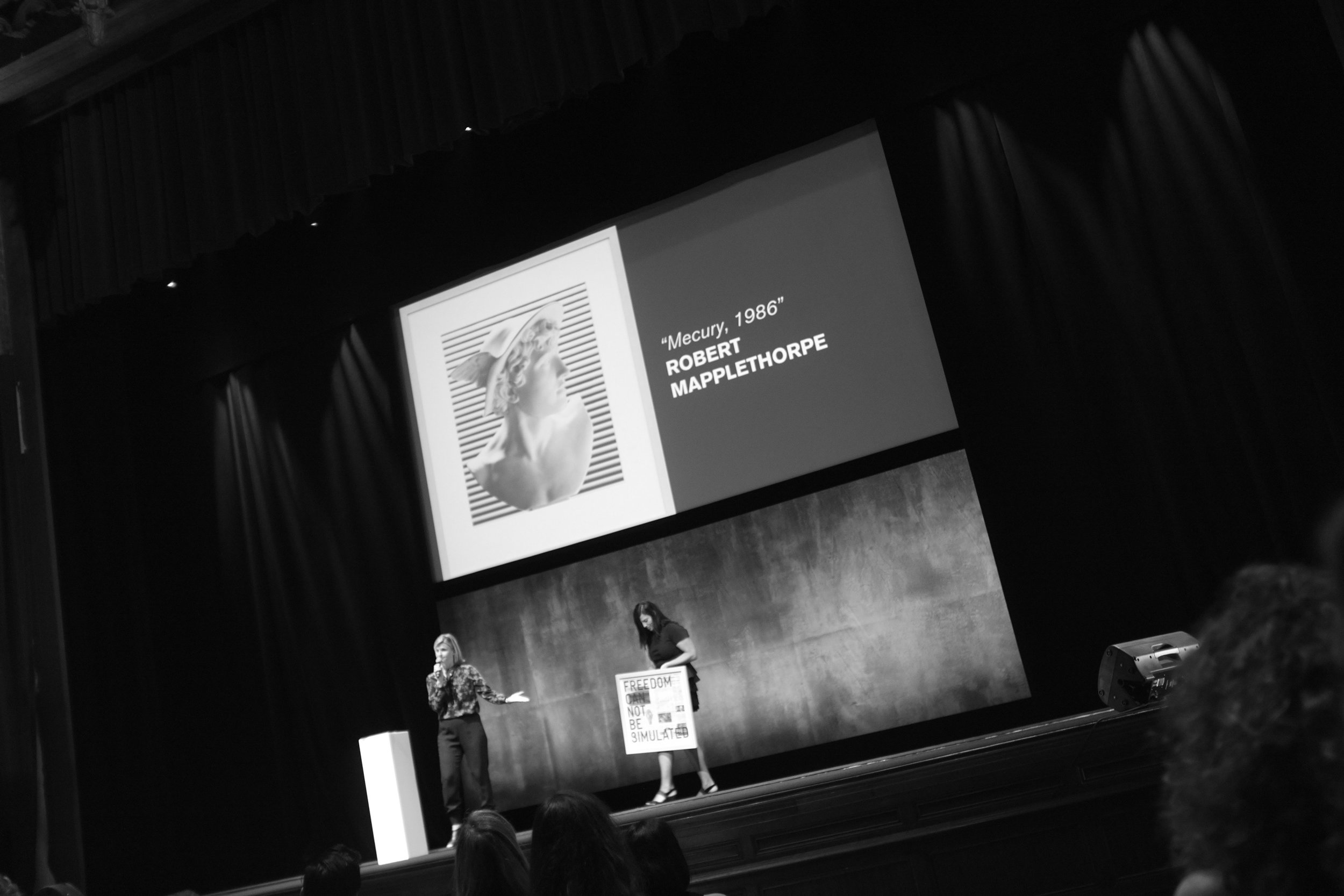
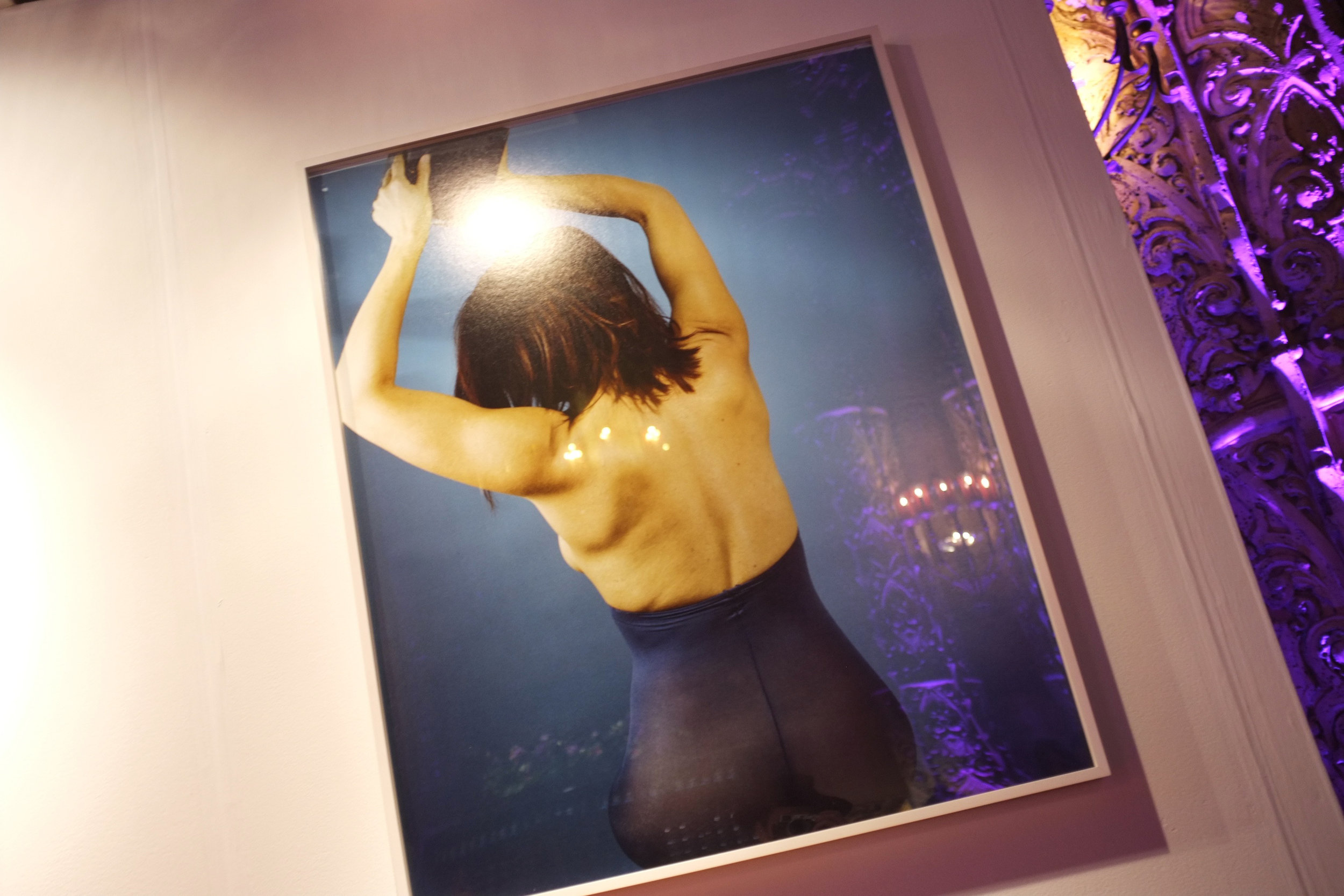
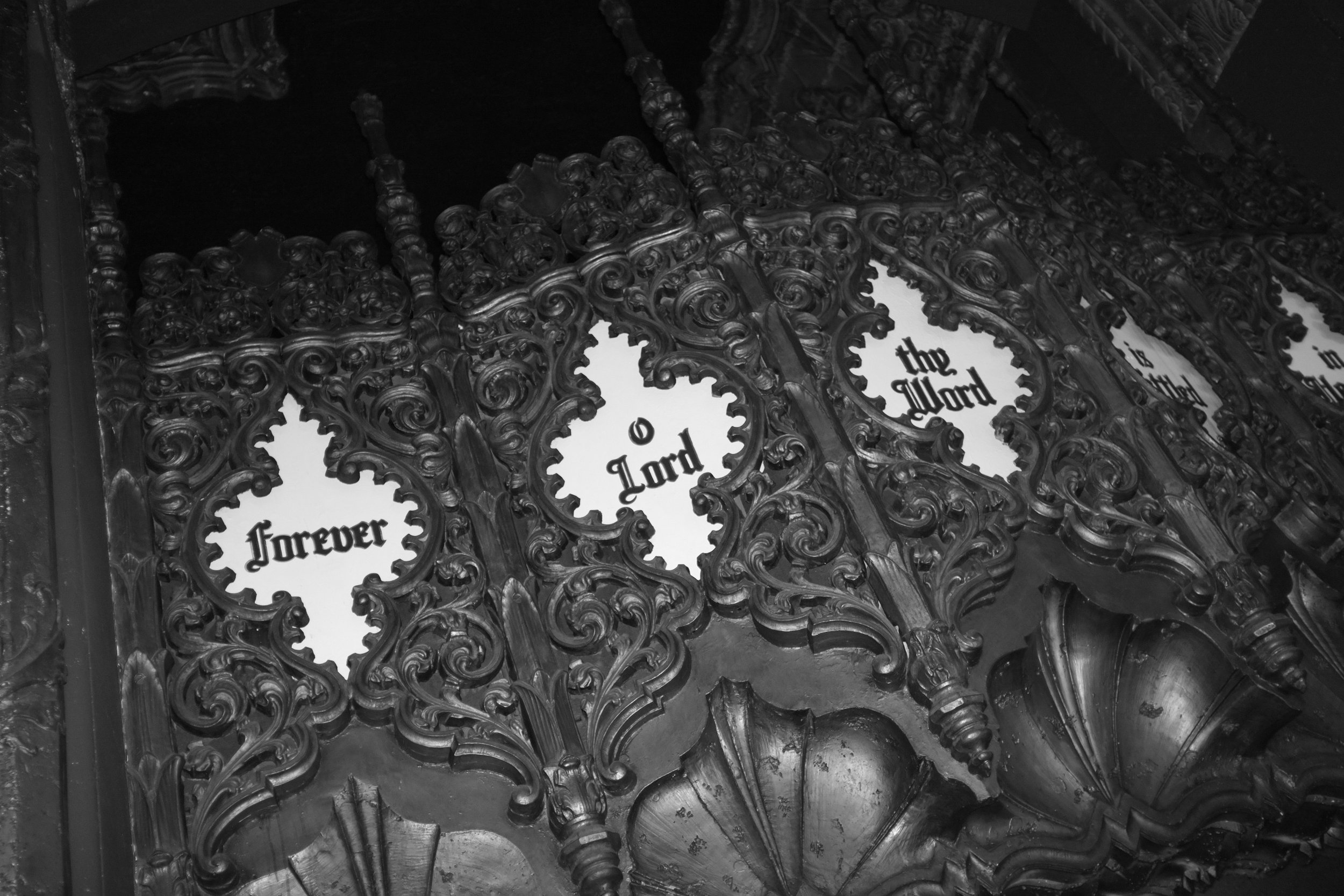
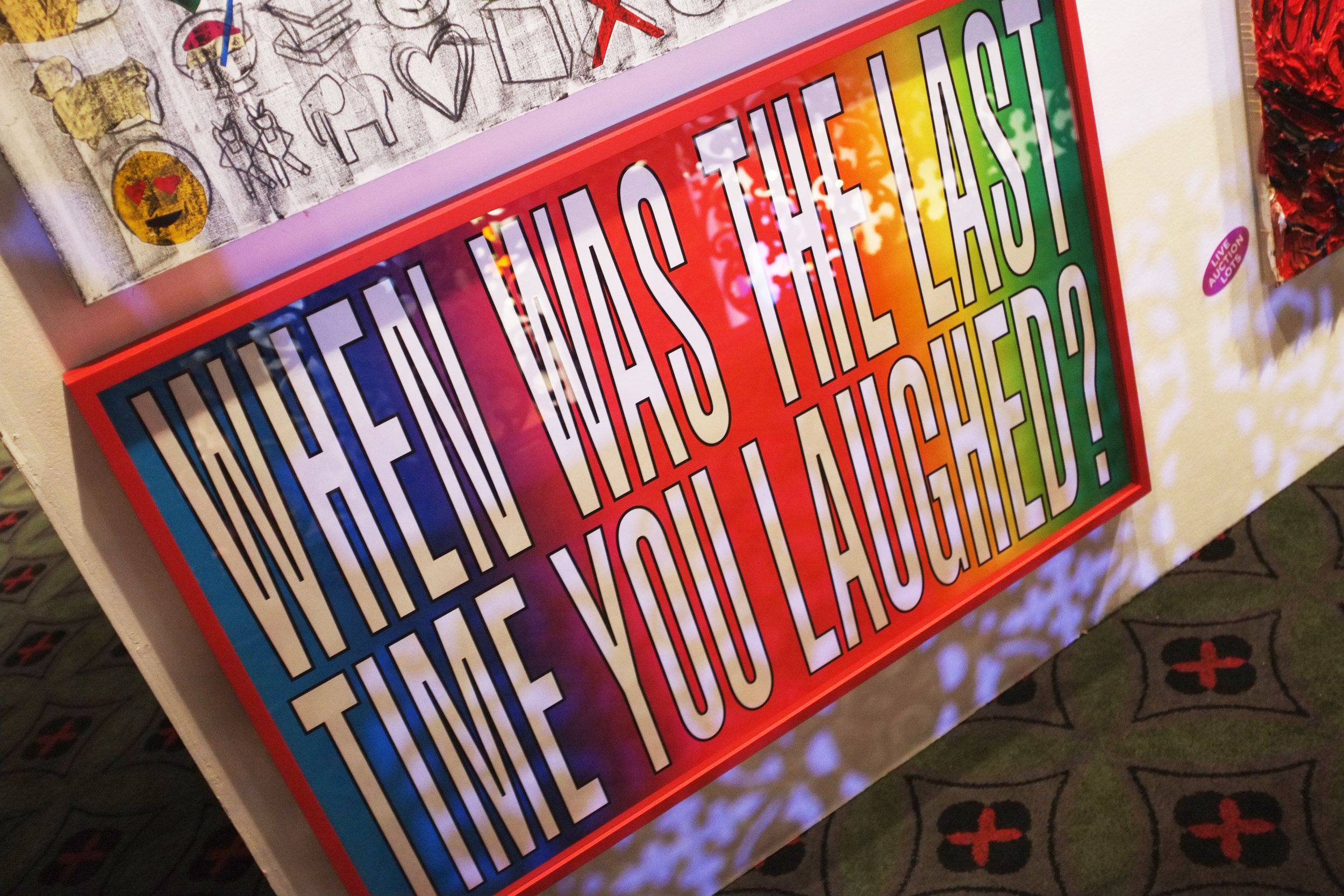
The second edition of Sexy Beast, supporting Planned Parenthood Los Angeles (PPLA), was hosted by Andy Richter at the historic Theatre at Ace Hotel. Works by Barbara Kruger, Marilyn Minter, Julie Mehretu, Ed Ruscha, Robert Mapplethorpe, and Sterling Ruby were up for auction to support PPLA.  photographs by Oliver Maxwell Kupper

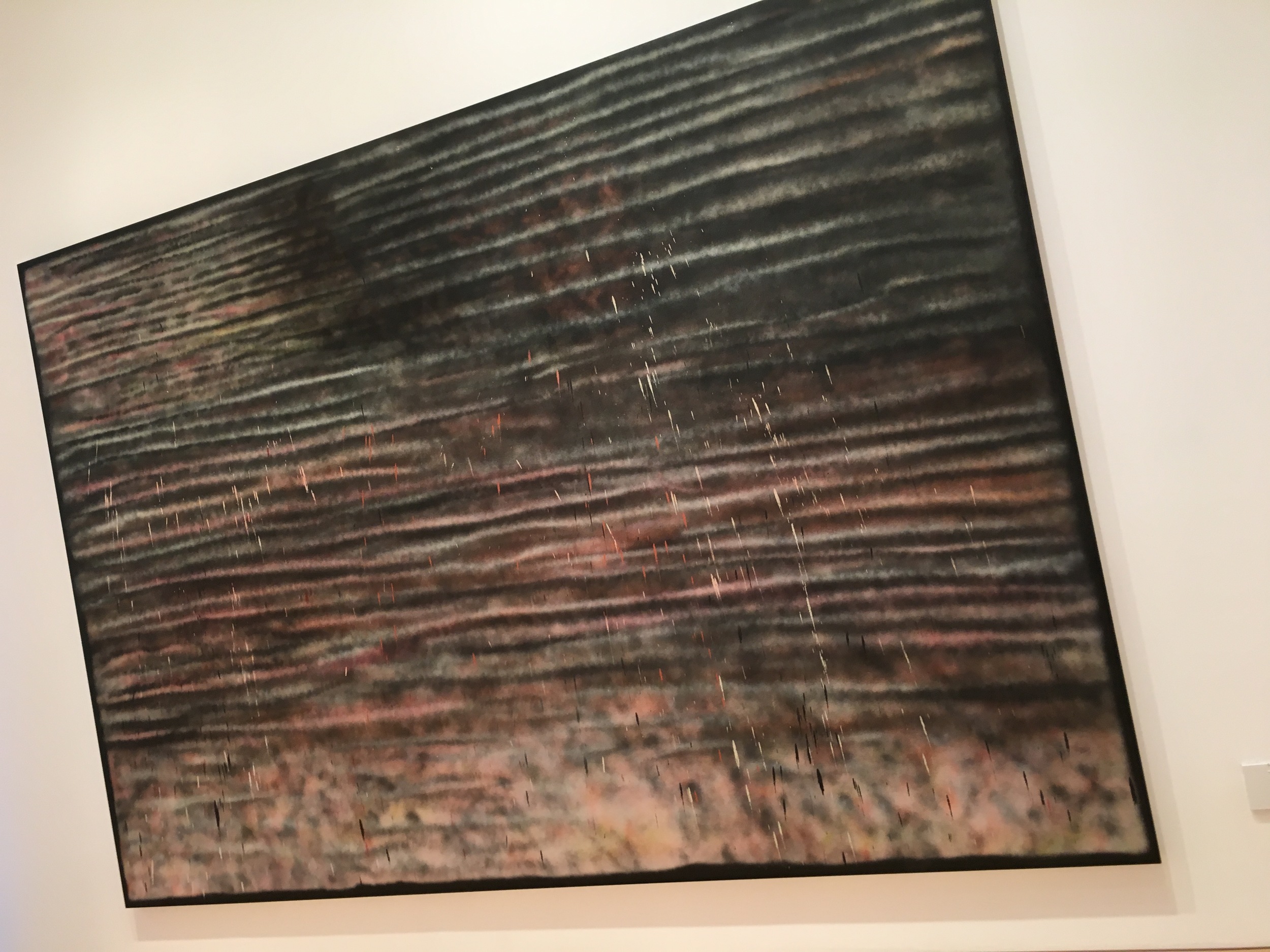
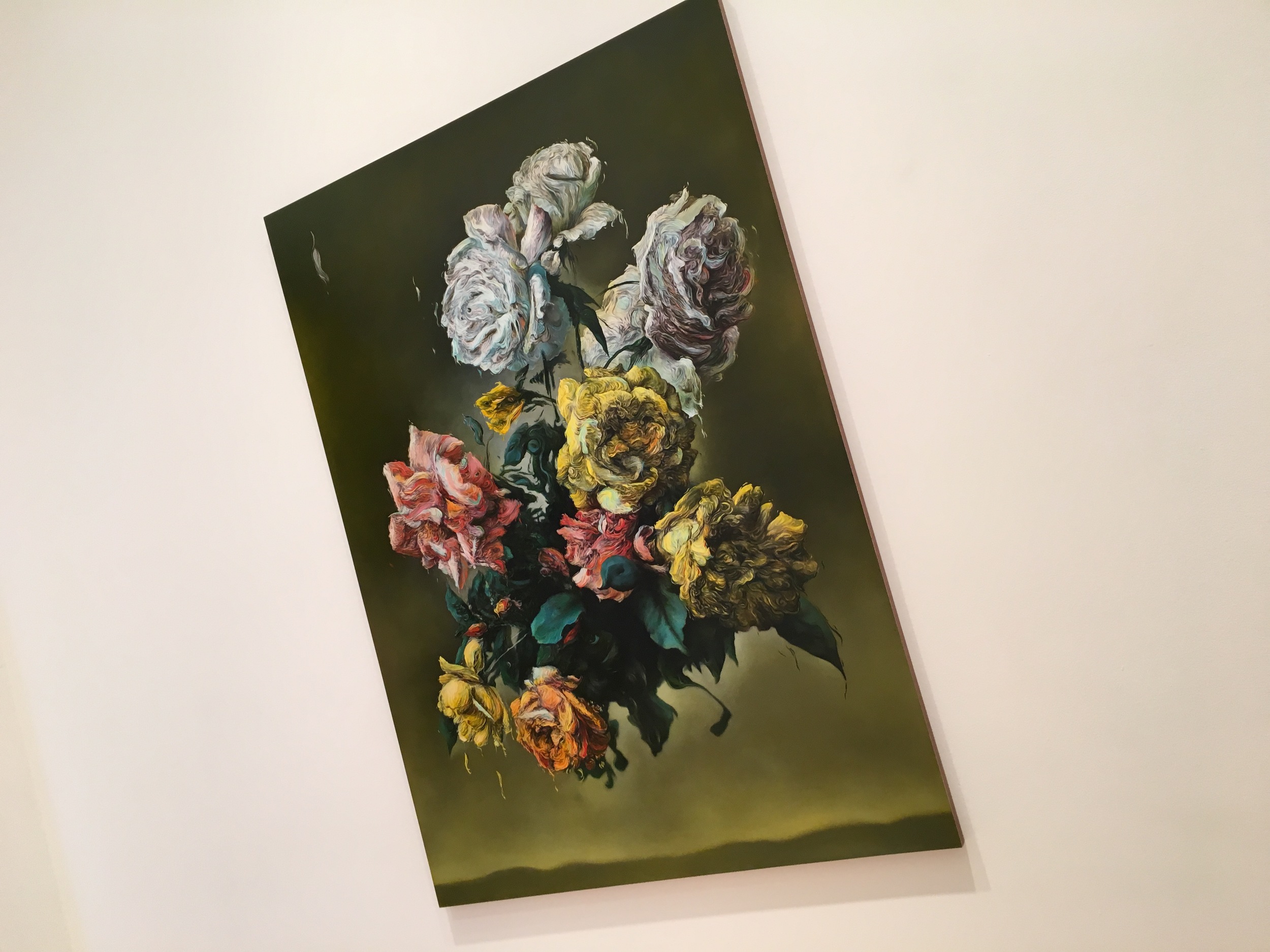
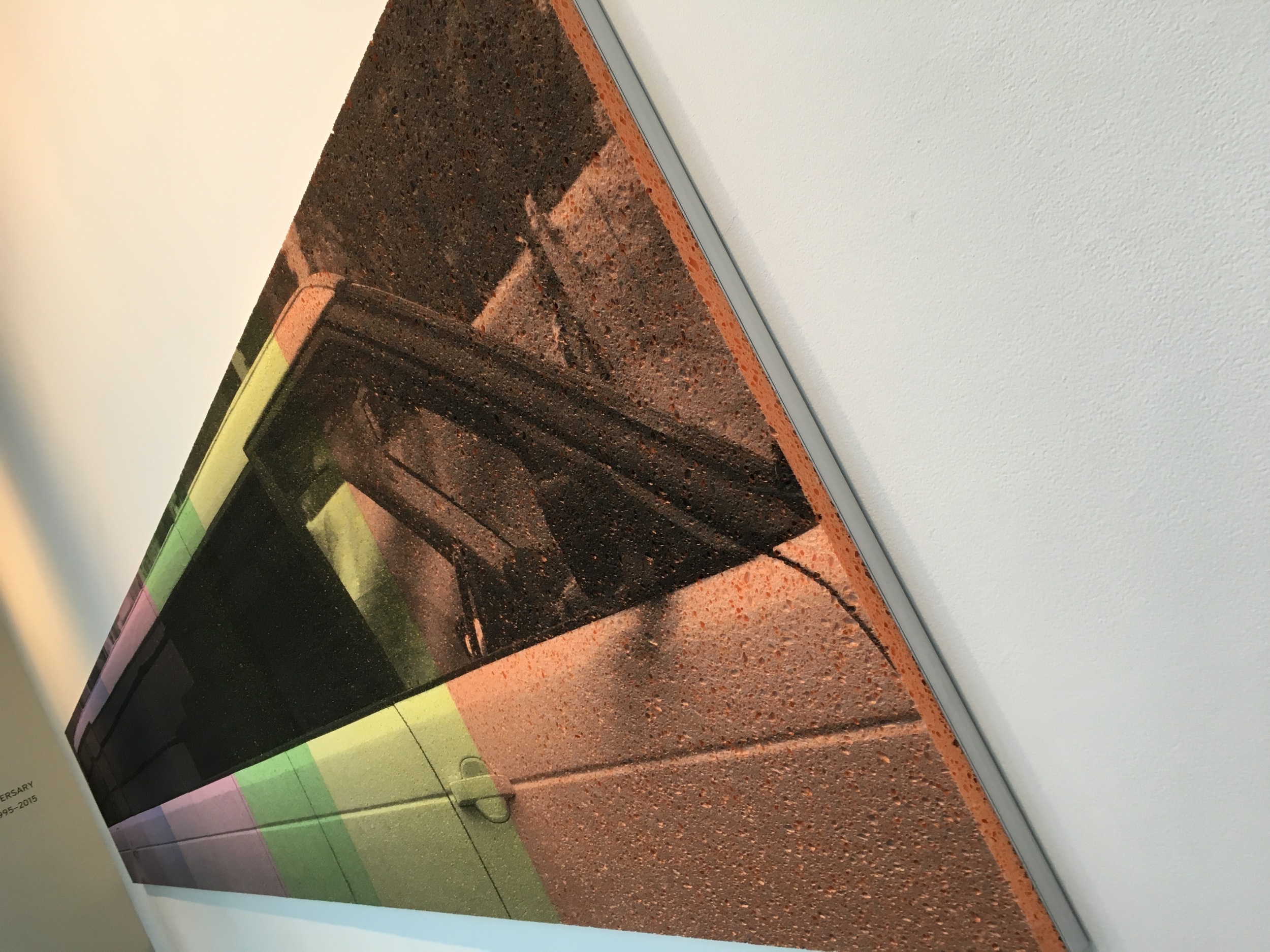
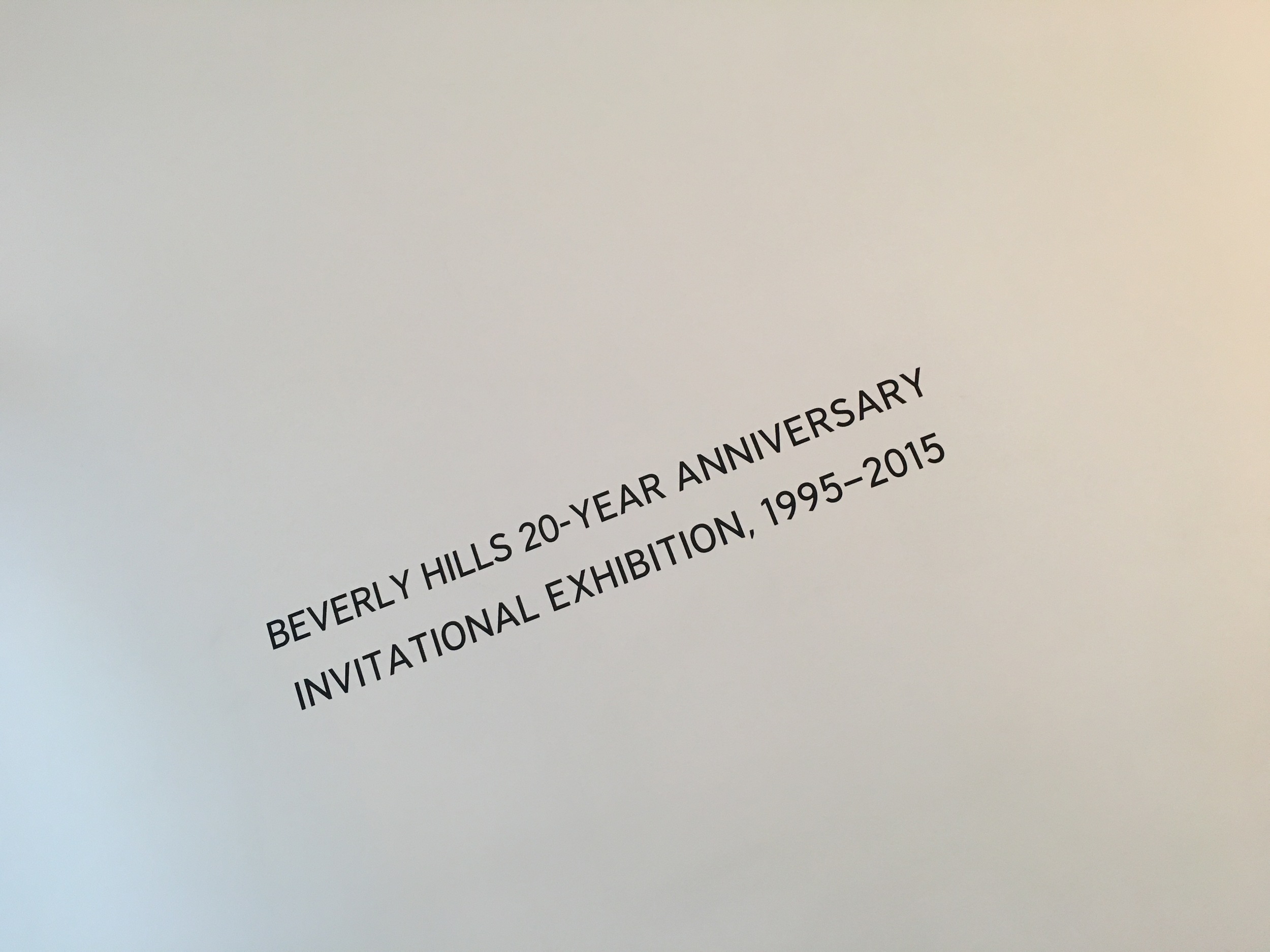
Gagosian Beverly Hills 20-Year Anniversary Invitational Exhibition in Los Angeles

To mark the twentieth anniversary of Gagosian Gallery Beverly Hills on North Camden Drive, founder Larry Gagosian has selected a special exhibition of works by more than thirty artists spanning three generations. Born in Los Angeles, Gagosian opened his first galleries on Almont Drive and Robertson Boulevard in the early 1980s. Chris Burden and Jean-Michel Basquiat were among the first artists to be exhibited. Drawing on the city's abundance of talented artists, Gagosian was at the forefront of developing a bicoastal model for contemporary art galleries—the beginning of a global expansion that now numbers fifteen galleries in three continents—when he moved to New York in 1985 and opened his first gallery there, in collaboration with Leo Castelli. Los Angeles provided both artists and galleries with an ideal infrastructure for creating and exhibiting diverse bodies of artwork, sometimes on a very large scale, and in 1995 Gagosian Gallery Beverly Hills, designed by acclaimed American architect Richard Meier, opened with new sculptures by Frank Stella. The Beverly Hills 20-Year Anniversary Invitational Exhibition will be on view until December 19, at Gagosian Beverly Hills, 456 North Camden Drive Beverly Hills, CA
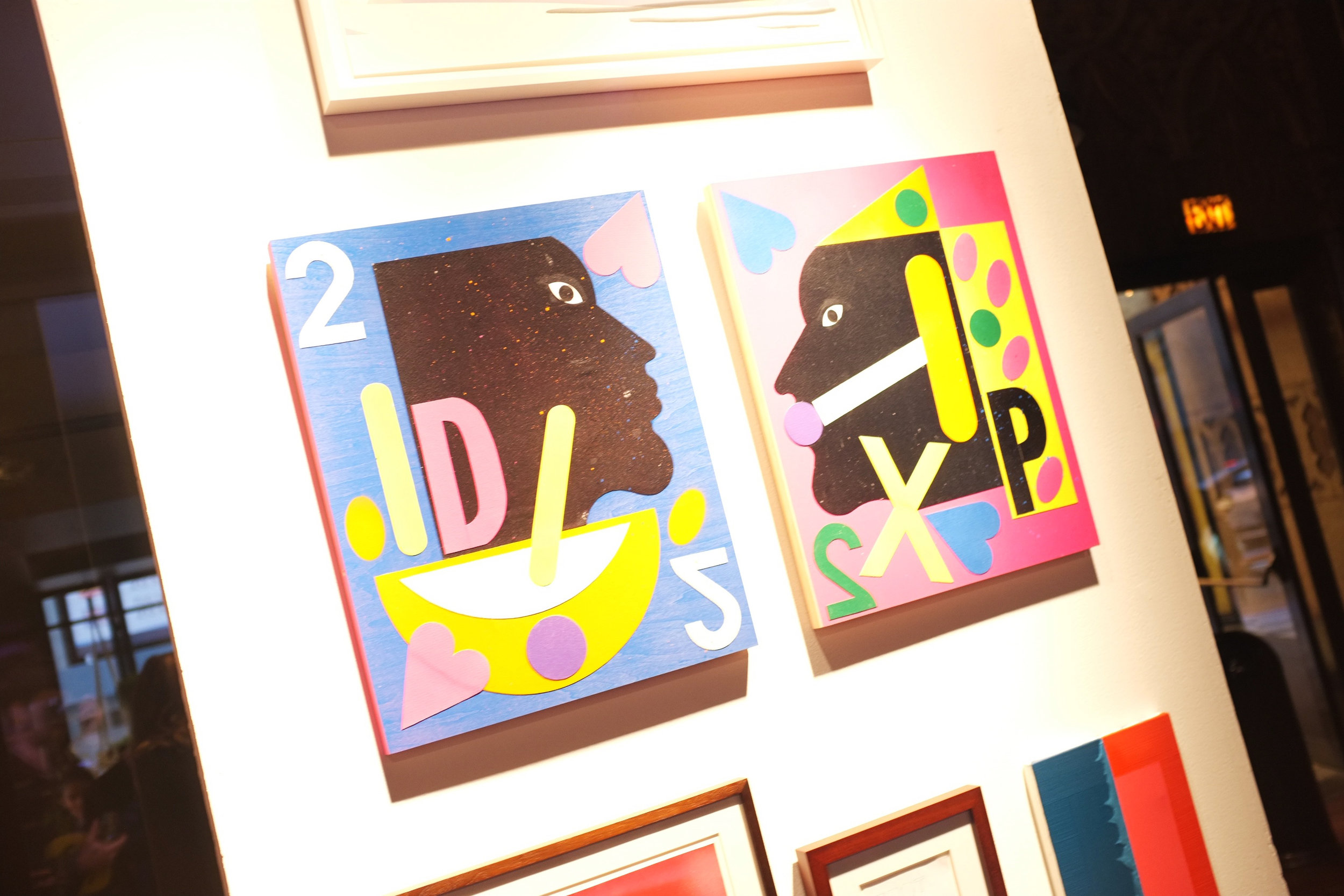
Melanie Schiff, Zoe Crosher, Galia Linn and Mark Hagen @ LAXArt In Los Angeles

LAXArts presents an exhibition of work by Melanie Schiff (a series of photographs entitled Pains), Zoe Crosher (from her LA-Like: Prospecting Palm Fronds series), a sculpture installation of Vessels by Galia Linn and a modular wall sculpture by Mark Hagan. These exhibitions will be on view until October 24 at LAXArt, 7000 Santa Monica Blvd. Hollywood, C. photographs by Oliver Maxwell Kupper