Ken Layne: Take Care, It's a Desert Out There

text by Oliver Misraje
photography by Michael Tyrone Delaney
illustrations by Isabelle Adams

It’s 10:30 PM and we’re much deeper into the Mojave than where we met Ken Layne at the Joshua Tree visitor center. It’s full dark. No stars—yet. Clouds drifted in an hour ago, making for bad UFO hunting weather, but if we drive far enough east, we might beat the overcast. Rachmaninoff’s Piano Concerto No.2 is playing from the speaker system in his Subaru. “What’s that?” Ken Layne interjects suddenly in his characteristic sandpaper drawl, “It’s very low, it just went out.”

“I saw it,” says Isabelle Adams from the backseat. She’s an LA-based painter and inaugural member of our off-brand Scooby gang. “If you look in the corner near the base of the mountain … oh wait it’s gone.” Michael Tyrone, the photographer, and I strain our eyes to no avail.

“Was it blinking?” He asks, "if it blinks, it’s probably just a navigation light for aircrafts.” He tells us that most sightings of unidentified flying objects are easily explained; extraordinary things rarely happen when you’re looking for them. Twinkling lights are usually just planets. Stationary orbs that blink out after ten minutes are probably military flares (the Marine Corps Air Ground Combat Center carries out frequent training drills nearby). Then, there's an aerial phenomenon that isn’t as easily explained, “now and then you see something that simply doesn’t make any sense,” he says, “It’s just silly. It’s not dramatic.” The third kind of sighting (not to be confused with the Hyneck’s scale commonly used by ufologists) are experiences so awesome—in the biblical sense of the word—that you brush up against something ephemeral and undeniably original. Ken has only experienced this once in his life. In 2001, he was driving down Highway 395 with his then-wife in the passenger’s seat when they noticed a light to the north. It seemed innocuous enough, though something felt off. It moved erratically as though untethered from the horizon. The pair debated what it might be for a few moments, when suddenly and without warning, it was gone and in its place a large black triangle, about 200 feet in diameter. Its corners glowed and a spotlight emanated from its center, illuminating the desert floor below with a brilliant intensity, like a “great, unblinking eye” as Ken described it. He hit the gas. The car got nearer. But when he pulled to the curb and rushed out— the mysterious triangle was gone, vanished without a trace or residue to affirm its presence.

Life above a fault line can be a perilous thing—the threat of the San Andreas fault swallowing the county notwithstanding, the constant tremors seem to inform the psyche of those living above it. Ken is something of an antenna himself for the murmurs and reverberations of California’s inland desert, picking up and broadcasting tales of the uncanny to all the lot lizards, and hippies, and hipsters, and occultists who color the landscape. On his radio show and newsletter, The Desert Oracle, for which he has attracted a cult following since its genesis in 2015, Ken adopts the cadence of an old time-y creep show host, but with a folklorist’s edge. His stories—whether they be about haunted petroglyphs, the Yucca Man, or missing tourists—are about the cryptids as much as they are about the people who encountered them. It’s the vestiges of his past career as a journalist, including a stint as a crime writer in Oceanside, that appeals to his more skeptical readers.

Ken grew up in New Orleans but moved to Phoenix when he was in middle school. His formative years in the Sonoran Desert are visible in the structures of his narratives. They unravel like a meandering stroll in the desert—winding, and seemingly aimless, until you reach the open expanse of a question mark where you were expecting a period. It’s that big, looming uncertainty that is so tantalizing; the suggestion that maybe, there really is something out there lurking in the dark. “Storytelling, which is the oldest form of human entertainment, probably after sex and mushrooms, has to involve set and setting,” Ken says to us after pointing out the rusted exoskeleton of an incinerated car next to a sign welcoming us to Wonder Valley, “To tell a story by a fire is one of the most primal things, a perfect setting. There’s not a lot of hyperbole in a good campfire story, you should just tell the narrative and the place, and everybody’s personal experiences all conspire together to make something greater than the parts.”


We reach a roadblock. Michael suggests we utilize the dim glow of the traffic cone to take some portraits. “We are now officially in the wilderness,” Ken says, stepping out to the dazzling, unobstructed spine of the milky way. Izzy and I take turns holding flashlights pointed towards Ken, casting ominous shadows on his face. He’s a natural model. No longer Ken Layne, this is the Desert Oracle in action. An Odin-like picture of rude health, he holds his trusty wooden staff and smolders into the camera, framed by the dark silhouettes of the mountains in the distance. His gaze twinkles with a discreet intrigue that softens his otherwise shrouded face. The alter-ego has itself become an integral part of the mythos of Joshua Tree; an archetypical wandering stage that retains fragments of his heroes, like Edward Abbey of The Desert Solitaire and Art Bell. Between camera flashes, Ken tells us about his closest companion, a German Shorthair Pointer dog. It’s a breed of hunting dog that are usually cast away for their aggression, but Ken is drawn to outcasts.

As we get back into his car, I ask Ken about that aforementioned journalistic scrutiny. He pauses a beat, then says, “a story, warts and all, is much more interesting than the kind the UFO fanatics tell, which is something like ‘Oh, a person of the most unimpeachable character, never touched liquor, blah blah blah.’ Like, c’mon . He’s already sounding really weird. When stories gauge the reality of the human condition, they’re naturally more real. They resonate. No one’s trying to sell you anything along the way. No one’s trying to convince you the government is covering up aliens eating strawberry ice cream in an underground base somewhere.”

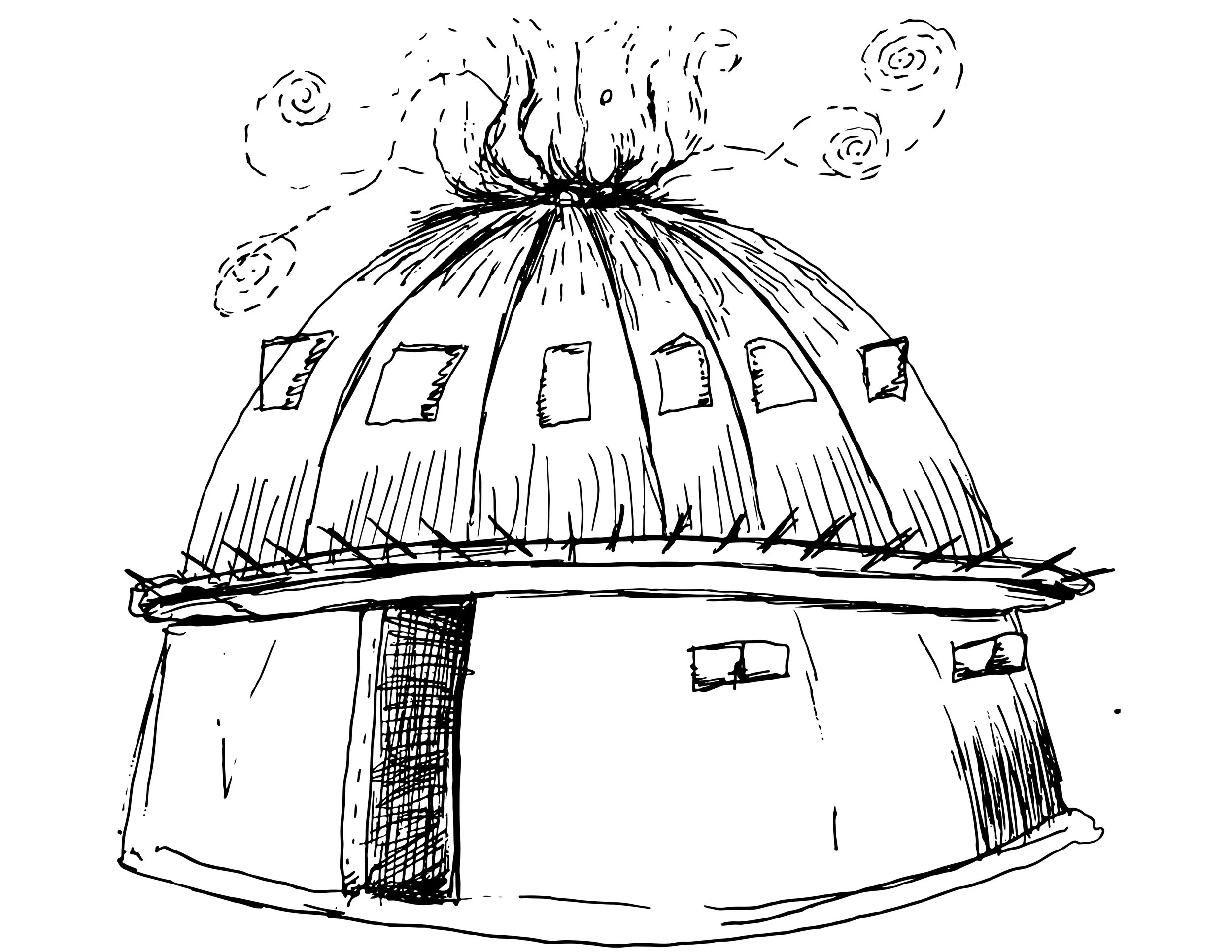
“Weren’t you on Ancient Aliens?” Michael asks from the backseat. Ken laughs. “Touché. I’ve repented down in the river for that.” And in his defense, he was only in two episodes. One was a history lesson on the Integratron out in Landers, a cupola structure built by aviation engineer and ufologist George Van Tassel, allegedly capable of generating enough electrostatic energy to suspend gravity, extend our life spans, and facilitate time travel. The other segment was a cultural debriefing on the viral meme about storming area 51 to see dem’ aliens.
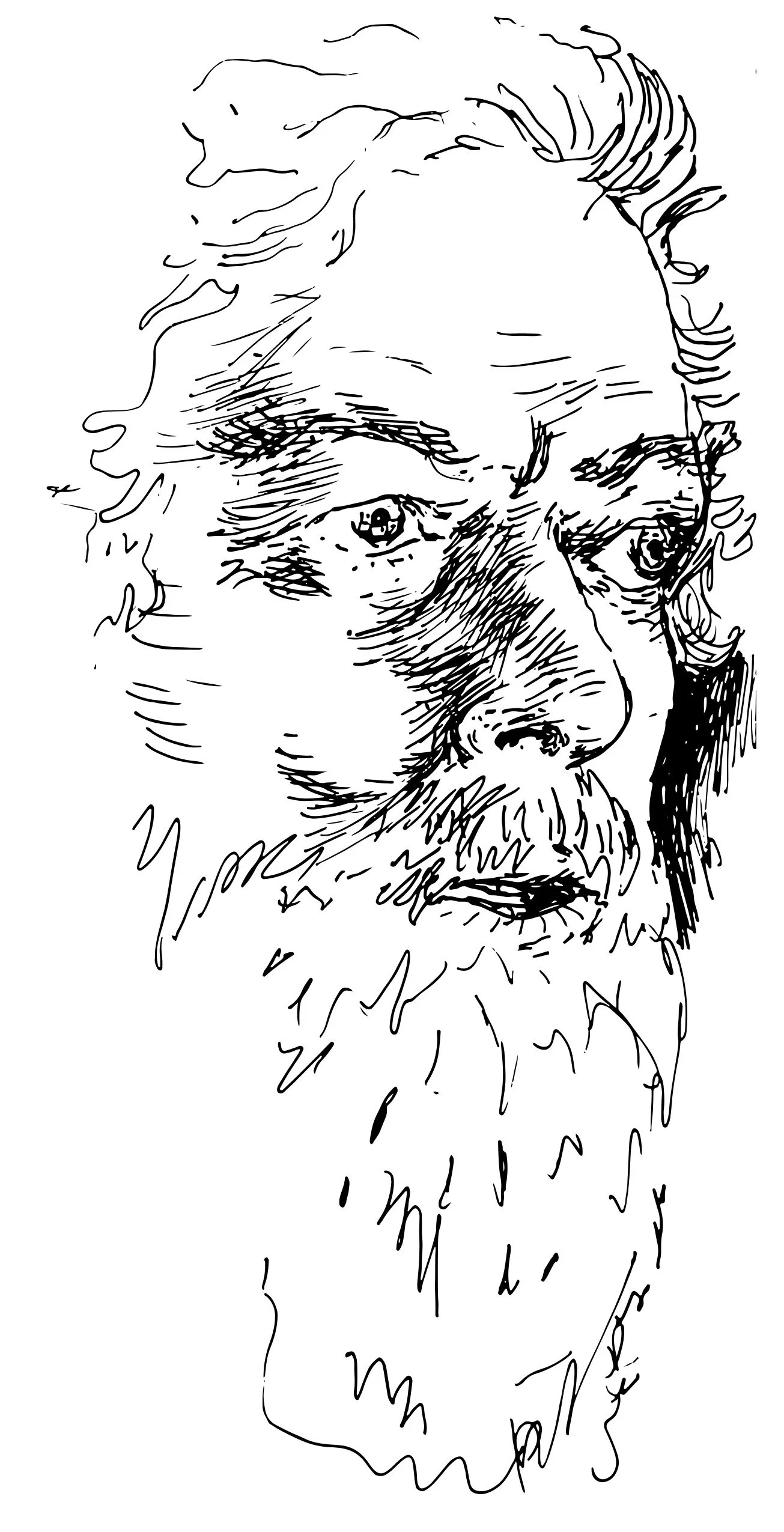


Fans of The Desert Oracle often occupy a more cosmopolitan demographic, which some journalists have attributed to the “escapism” of his stories. Escapism is a misnomer. The appeal lies in the return to meaning and a resistance to the sinking feeling of post-modernity that we are losing our archetypes—the haunted house at the end of the street, knowing how to differentiate between good and bad winds, which roads a ghostly woman in white frequents. I grew up in Sun City, a small town in the desert not terribly far from Ken’s haunts. Like him, my dispositions were shaped by the landscape. I discovered The Desert Oracle my senior year of college while working on my thesis, a hauntological study of our local monster, Taquitch—a shape-shifting, child-eating, “meteor spirit” that prowls the San Jacinto Mountains. Taquitch originally appeared in the mythology of the Payómkawichum tribes who still occupy the area, but legends persist today. I was interested in the ways these paranormal stories were a metaphorical vehicle for sociological phenomena. The Inland Empire is riddled with poverty, addiction and despair, and as a result, experiences higher rates of domestic violence and lower child expectancies. It is haunted either way you look at it. Ken talked about Taquitch in the twenty-first episode of his radio show. On our way back to Joshua Tree, we make a stop at Roy’s Motel and Cafe, a defunct relic of Googie architecture. While poking around abandoned motel rooms, we discuss the merits of the hauntological approach. Ken ultimately disagrees with the notion of trauma as a prerequisite for a haunting; some things are older than us and more original to this world than we can comprehend. Even so, he is well aware of the ‘cultural dressings,’ as he puts it, often applied to paranormal phenomena. Take UFO sightings—while observed across cultures since time immemorial, explanations of such often reflect the dispositions of the times. He tells us that there’s nothing actually connecting UFOs to extraterrestrials. The theory appeared in conjunction with the Cold War and the space race. During the industrial age, many explained them as the inventions of eccentric, steampunk robber barons. In Medieval times they were thought to be witches with lanterns hanging from their broomsticks.

The fault line that the Inland Empire (which includes Joshua Tree) sits upon, demarcates it geographically, as well as symbolically. To the Western imagination, it is the ultimate nowhere; a psychic space to project its dreams, ideals, anxieties, and nightmares. The idea of the desert as barren is a colonial project, one that has historically been used to justify its desecration since the frontier period. We’re driving through Amboy when Ken tells me, “one of the biggest misconceptions about the desert is that it’s barren. Desert means wilderness. It’s Greek, borrowed from the Latin deserto. Not arid, not barren, but untamed, uncultivated wilderness. It’s where Pan ran around in the primal wilderness. Ancient Greece was the desert. Civilization is born in the desert.” The Desert Oracle repopulates the landscape. While his documentation of hibernating birds native to the Southwest might seem mundane in comparison to shape-shifting monsters, it's where his Transcendentalist musings are most poignant, revealing a gentle, more meditative side to Ken.

Cultivating a sense of awe for the desert is an important part of its conservation. Advocates for environmental personhood also seek to reimbue the landscape with soulfulness. In 2020, tractors in Arizona leveled the earth for the construction of the US-Mexico border wall, unceremoniously demolishing 200-year-old Saguaro cacti in the process. The Saguaro are sacred to the Hia-Ced O’odham tribe, whose ancestral grounds lay 00 yards away from the site. After fiercely resisting the construction, the tribe successfully passed a resolution affirming the legal personhood of the Saguaro. In an op-ed piece for Emergence Magazine, tribal member and activist Lorraine Eiler wrote, “When something is acknowledged as a person with rights, it is much more difficult to overlook the infliction of harm. This resolution has brought us one step closer to bridging our spiritual understanding of how to sustain life with the practices of the dominating culture.”

We’re driving down Amboy Road when Ken stops the car. He pulls the keys out of the ignition. The road is empty, beyond the receding taillights of a distant car far behind us. “I had us meet up on a weekday because I wanted to avoid the traffic going into Death Valley. You lose the mystery when it’s filled with Audis.” He tells us to watch the taillights until they disappear beyond the bend. We oblige. After several minutes, the lights blink out.

“It’s a long way, right? About ten or eleven miles. One night, I was coming back from Death Valley and I was the only car on the road. Moonless night just like tonight. I’m doing 65 or something. It’s a 55 limit so you’re always watching for that occasional CHP dispatch. Suddenly, I see what seems to be a car’s lights appear, and what I notice in my rearview, is that it is racing, like Roadrunner, Coyote cartoon speed. I'm driving, and my first thought, of course, is it’s a cop, so I slow down, and it keeps on coming up-up-up-up,” Ken says, stressing the word up like a rapid-fire machine gun. “It’s like the brightest high beams, and it comes right up to my ass. So now, I’m thinking it’s just some jackasses coming back from Vegas. I start slowing down to let the car can pass me. I’ve come to a complete stop. And it’s still there, just blinding me. I turn around to look out, and this is the first time it occurs to me: the lights aren’t attached to anything, they're just floating there, and I have just a moment to try and rationalize it, when the lights retreat at the same speed they came up ZUUUUUUUUERRR. It doesn’t turn around. No sound. No nothing. All the way down, until it blinks out in the end.” Ken lets the story dangle in the air for a moment. Beethoven’s Symphony no. 13 opus. 135 plays quietly from his sound system, lending itself to the eerie atmosphere.

We stop at Out There Bar in 29 Palms for a nightcap. It’s neon-lit inside and the walls are painted with murals of varying cowboy iconography. The bartender and several straggling patrons look at Ken with a glimmer of recognition. I forgot my ID card at home but the bartender winks at us and says she’ll make an exception just this once. While Izzy and Michael go head to head in shuffleboard, Ken and I drink tequila at a table and talk about the Puritan origins of the environmental movement; how theologians like Emerson and Thoreau saw corruption in all things made by man, so they glorified nature as the true expression of god. When I mention that my father was a pastor, he tells me, “There’s nothing better in the world for maneuvering through life than a semi-educated, literate redneck.” Afterwards, the four of us take pictures in a photo booth (Michael sits on Ken’s lap) then Ken drives us to the Joshua Tree Visitor Center where we left our car. On the way, we share stories of our respective encounters with the Otherworldly. Michael tells us about a night in Griffith Park when he saw a coyote stand upright on its hind legs and run off into the chaparral. A few weeks later, the tale of the Coyote Man appears in The Desert Oracle.

As Izzy drives us home to our remote outpost in Landers, the absence of Ken is palpable. Peggy Lee croons on the radio and the shadows cast by the Joshua trees look a bit more animated; the world a bit more occupied.
Casa Orgánica: Javier Senosiain & Dakin Hart in Conversation


in conversation with curator Dakin Hart
interview by Oliver Kupper
photography by Olivia Lopez

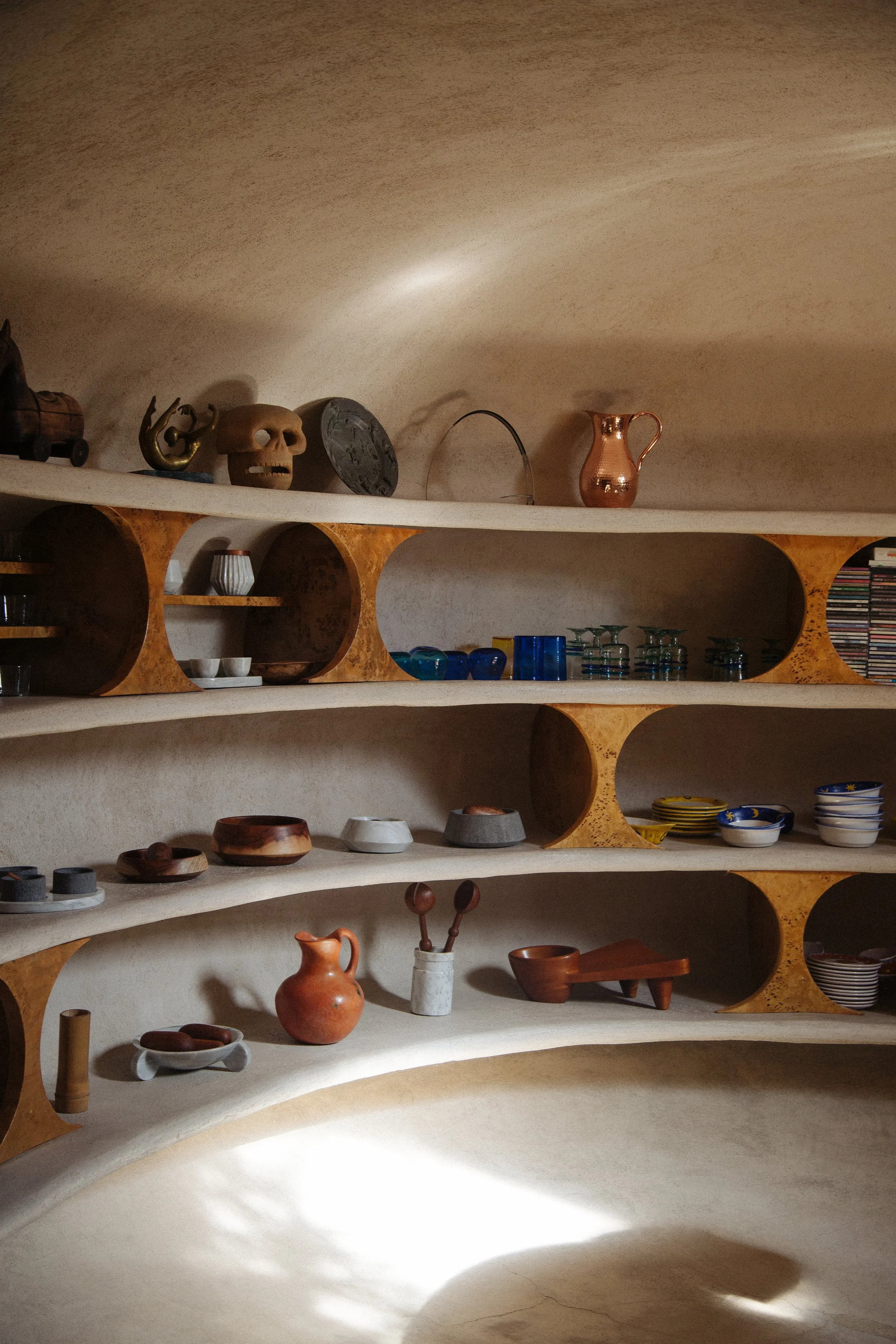
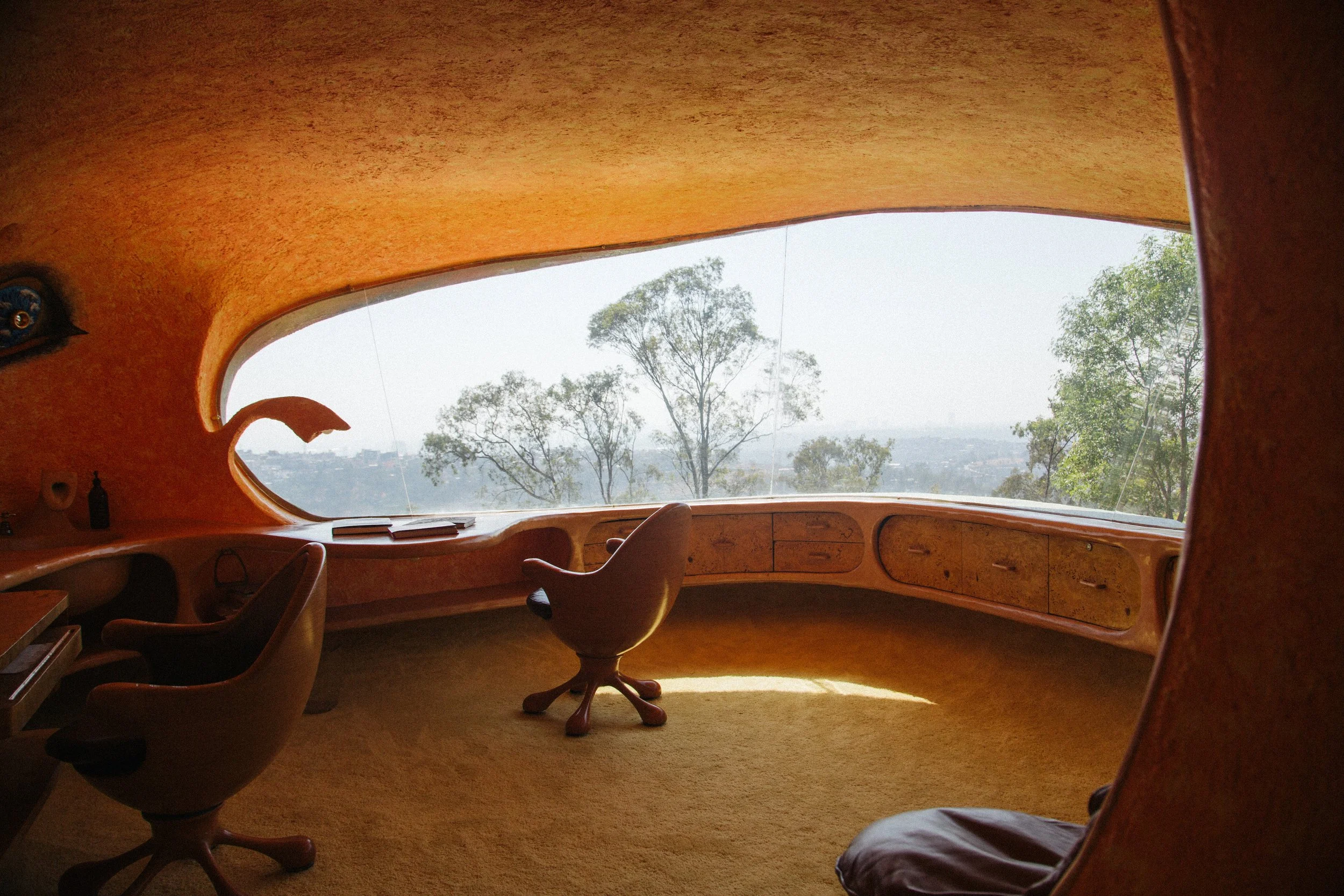
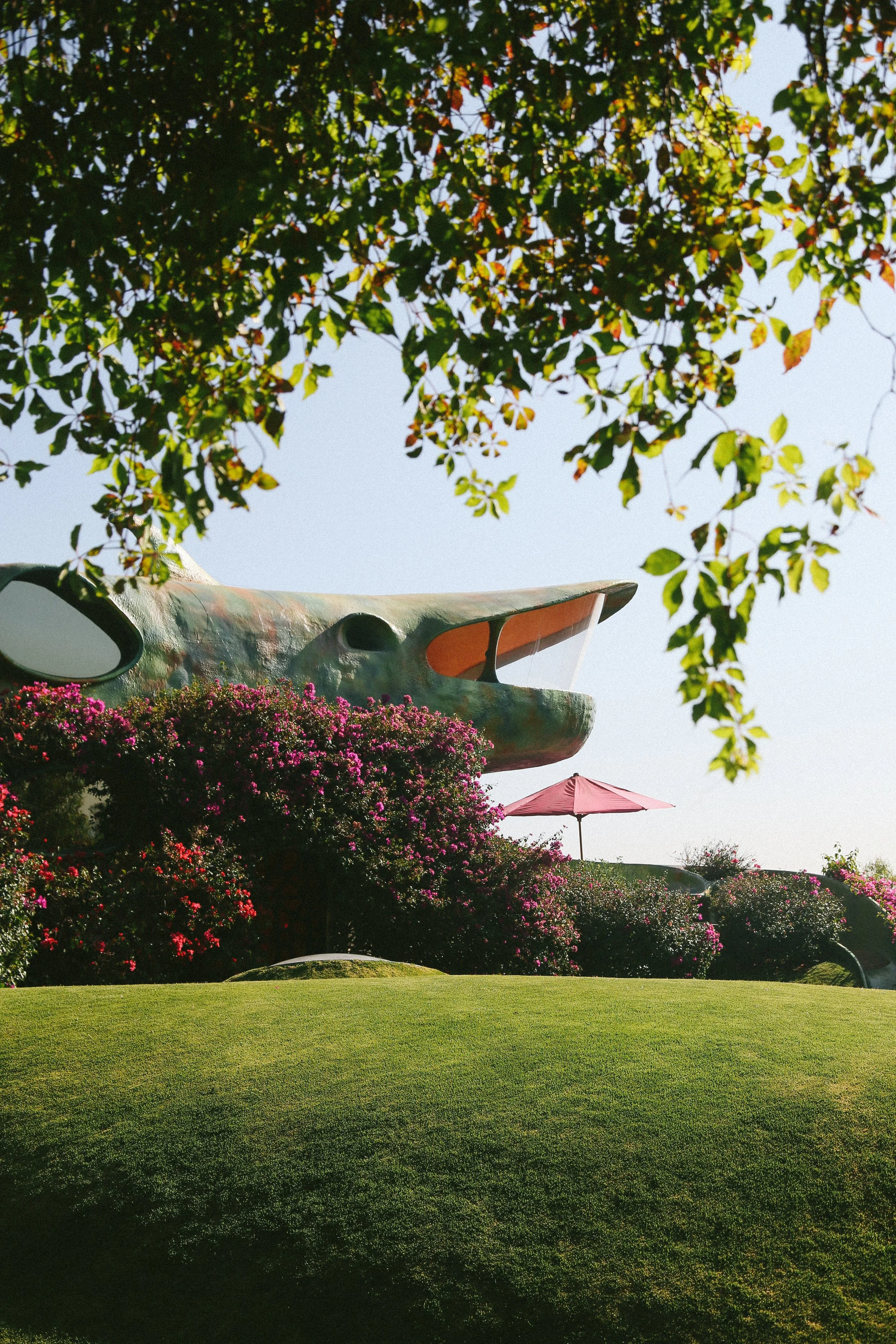
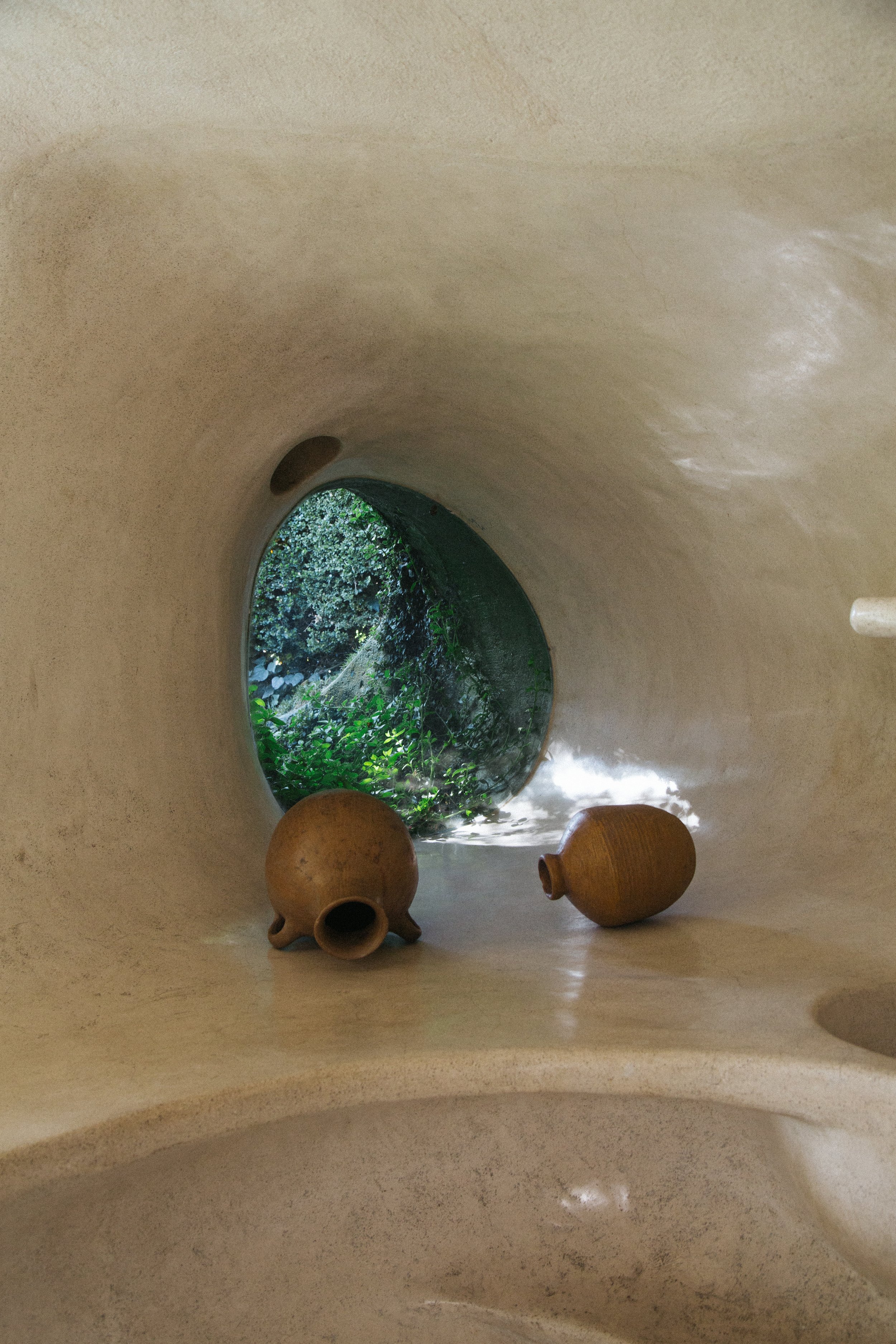
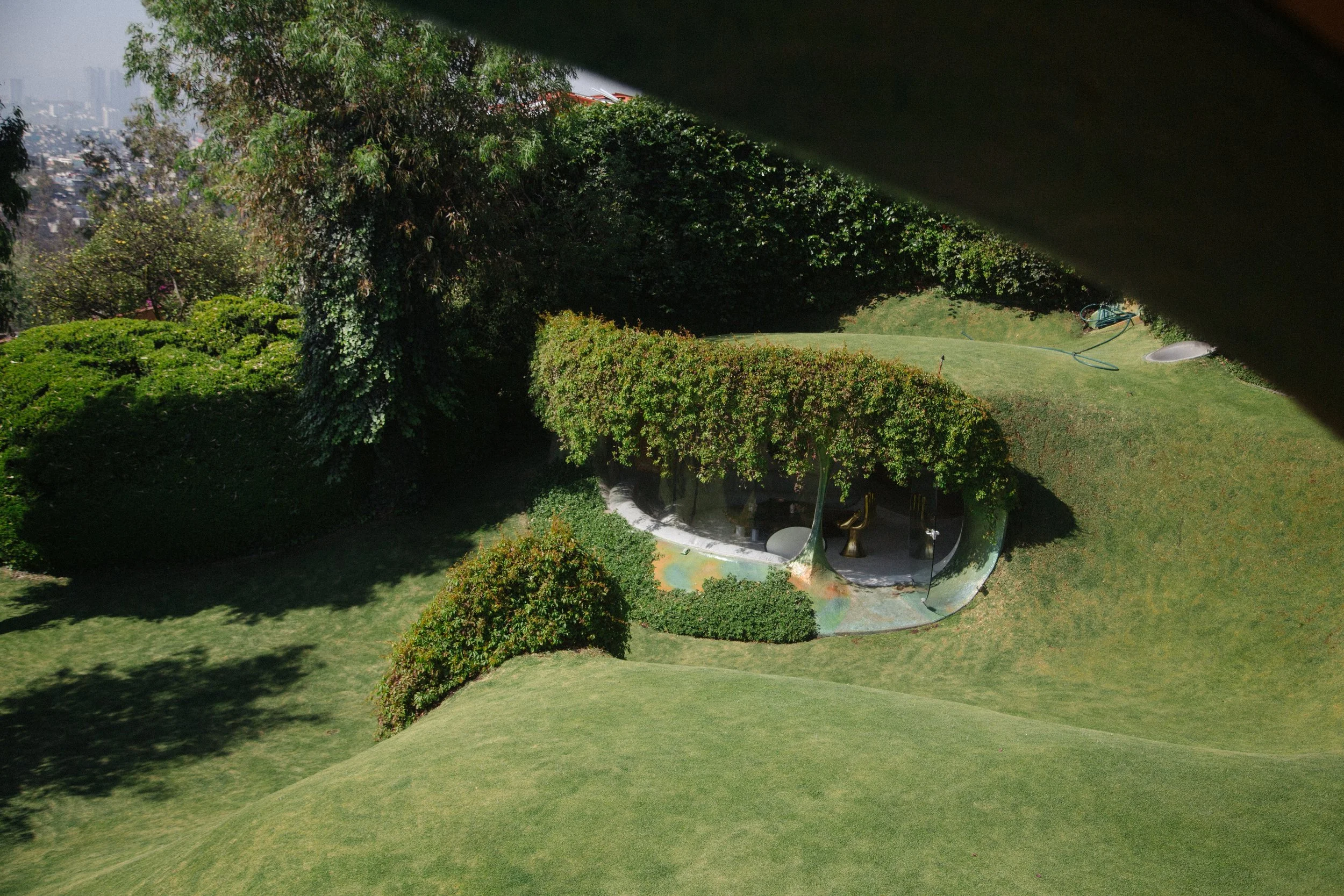
Casa Orgánica is a romantic elegy to living in harmony with the natural world and natural forms. Built by Mexican architect Javier Senosiain Aguilar in 1985, the house is located in Naucalpan de Juarez, a stone’s throw from Mexico City. Senosiain’s architectural philosophy was to build a home that more closely resembled the habitats of animals and prehistoric humans: a cave, a womb, a snail’s shell, an igloo. Sinuous earth-tone tunnels lead to different living chambers, giving the feeling of entering the earth. From the exterior, the domicile is barely visible through layers of grass, trees, shrubs and flowers, which, by evopotranspiration, produce oxygen, reject pollution and filter dust and carbon dioxide creating a unique microclimate. The house and work of Senosiain was recently featured in a landmark exhibition at The Noguchi Museum, entitled In Praise of Caves, which was organized by Ricardo Suárez Haro and curated by Dakin Hart. Alongside projects by Mexican architect Carlos Lazo, Mathias Goeritz, Juan O’Gorman, the exhibition was a metaphor for reexamining how we live on planet Earth.  

OLIVER KUPPER: We should start with the connection between utopia and organic architecture.  

DAKIN HART: One of the interesting things about organic architecture for me, is that to some extent, it offers a path back to Eden. It suggests an entirely alternative family tree of development—of the idea of how we live on the planet—that could have departed from the one that we’ve ended up on very early in human history. So, it’s nice to think about following it backwards the way that Javier does in his scholarship, and if you think about utopia as an umbrella category for a way of living that we might recapture, one that has different characteristics and a different value set, that seems really interesting to me. 

JAVIER SENOSIAIN: In the case of organic architecture, I believe that utopia could be a reality. 

OK: The exhibition catalog goes back to the original cave dwellings, which is the prehistoric idea of organic architecture. 

DH: Every time modern architecture has tried to address the idea of utopia, it runs into such trouble because the version of abstraction that it leans on is mathematical. And that doesn’t really have to do with life, it has to do with a kind of pure notion of what life could be or should be. Maybe it’s fundamentally religious or spiritual too, which is also highly problematic, because it gives it this messianic quality. Organic architecture potentially offers a salve to that. 

NATALIA SENOSIAIN: Modern architecture involves a lot of technology. When you think of sci-fi movies, it’s all about technology and not really about humans. 

DH: Right. The closer we can get to stainless steel, the better everything will be is sort of the premise of modern, International Style, architecture. Javier, what kind of utopia do you think organic architecture could build in contrast to something like the Corbusian notion of utopia, which is total uniformity, total cleanliness, total purity. 

JS: We are in a very difficult world situation now, mostly because of climate change, and to solve really big issues, we need big solutions. Corbusier used to say that the house is a “machine for living.” That statement doesn’t really apply anymore, it would be better if we thought of the house as the nature of living. Maybe going back to our origins can take us closer to utopia, even if it sounds weird.  

OK: I’m curious about how the exhibition came to be, how it was curated based on Javier’s work, and why the Noguchi Museum? 

DH: Ricardo Haro was thinking about this lineage of organic architecture that Javier has invested so much of his life and career in, in terms of scholarship and practice. And I think he just intuitively recognized that this group of artists could work really well at the Noguchi Museum. So, Ricardo just sent us an email out of the blue in 2018, and part of what we do with these exhibitions at the Noguchi Museum is we try to treat the museum like nature. We treat it like a park or a natural environment. So, we started trying to put together a structure that could work at the museum, and this was a perfect opportunity to show a different side of it. We're always trying to split the Noguchi beam into different aspects, or peel the onion. I had never even heard of the term ‘organic architecture’ before Ricardo wrote, and while it’s not an ‘ism’ that’s currently in art history textbooks, it may well be in the near future because there’s obviously a strong seedbed of interest, which our exhibition proved. I think it may be the most popular show that we've done in the last ten years. The response to it was just extraordinary, and really worldwide too. It was exciting to have hundreds of young architects and architecture students coming to see the show. We don't know how exactly it's going to ripple out, but young architects want different solutions. They’re not satisfied with the status quo, and here is a serious body of work that's well rooted in history, and cultural traditions, and a landscape, and building traditions, and it's still current. It's being taught and practiced by somebody incredibly inspiring. I think it has a real chance to offer an important counterpoint to what most people are learning in architecture school, and when they come out into their own practices or go to a big firm, they're still expected to do whatever it is they choose to do. 

OK: Javier, when did you first start developing your scholarship around organic architecture? 

JS: When I give a lecture, I start by showing the students a couple of projects I did when I was at the university, which already had some resemblance to organic architecture. I was very lucky because I had Matías Goeritz as my teacher. At a school where all of the other teachers were very rigid, he was very abstract and he would let us do very free work. When I went to do my social service in a small village, I proposed a sports and cultural center with square shapes and then realized that I could start working with more freedom. That was when I started thinking about curves and realizing that curved spaces are far more human. I started doing research on the natural shape of a human being. This is one of the features of my architecture—the continuity and the space. When you walk through the space, you can see the continuity and the flow. So, organic architecture has a lot of that. 

DH: The difference between that and someone like Frank Gehry, who's a contemporary of Javier’s, or Zaha Hadid, a generation behind, is that Javier’s architecture is organic from the inside out. It's based on organic models, and it's developed in a craft methodology that emphasizes the connection between the eyes, the hands and the brain. From the outside, those other structures look organic in that they’re not strictly quadratic anymore, but that's just an expression of technology. They demonstrate what modeling programs were gradually able to accomplish over time as they pushed the technology, but that form of abstraction isn’t any more inherently organic than square buildings. Javier is starting from a completely different premise that isn't CAD models, or what a manufacturer can do. He’s using thousand-year-old technology to approach building as an expression of our innate, human instinct, as opposed to just putting the latest processor through its paces in coordination with modern manufacturing. I just read that article about the Lucas Museum of Narrative Art, and all of its delays in LA. A lot of them have to do with the complexity of fabricating those fiber panels that cover the whole thing because every one of them is unique throughout the entire structure. It's one of those examples of trying to push beyond what modern manufacturing can do. It looks like a spaceship, or a fish, but it’s not really organic, even though it's not rectilinear.  


OK: Casa Orgánica truly is a masterpiece example of contemporary organic architecture. Can we talk about that? 

RICARDO SUÁREZ HARO: Natalia grew up in it, and it seems utopian when you visit it. I can only imagine the type of brain connections it forms to grow up in that house, as opposed to the one that I grew up in, which was a California tract house. 

NS: It was my normalcy. But, when my friends used to come visit, I could see their reactions—the way they loved the house and instantly wanted to play and everything. Now that I'm grown up, I can see the impact that it has. My father always says that he wanted to create a more humane architecture, and now I believe that he accomplished it because all types of people want to go visit the house. You can be an engineer or a mathematician and still find it remarkable. But, I believe that I did grow up with a different mindset, just because of living in that house. Once, when my sister was in kindergarten, the assignment was to draw your house. So, she (laughs) just painted grass and round windows, and the teacher was confused. She called the school psychologist, and then the psychologist decided to talk to my mother, and my mother was like “Oh no, it's just that my husband is an architect and he does this really different type of architecture.” And the psychologist said, “Oh, maybe I should be speaking to your husband.” (laughs) 

OK: So, where did the idea for the house come from? I've read so many different things about where the ideas came from around its shape. 

JS: The idea was to take into account the physical aspects, environmental aspects, cultural aspects, and the necessities of the human being. It was part of an investigation in which I took all these aspects into account, while putting aside the very rigid aspects that are taught in university. The idea is sort of like a peanut, but in some interviews it has been misunderstood. I had the concept and the philosophy of the spaces that were needed to live, and there are two spaces: one is the day space, which is much more social, and then the night space, which is more intimate. The zoning was like a peanut because there were two spaces, but it was sort of shapeless. We adapted that peanut into the shape of the house, taking into account the topography of the land, and there was a big eucalyptus tree that was in the middle, so the house surrounded the tree. There was a lot of stone on that land, so originally the idea was that the walls were made out of stone, and the roof was made out of wood, but I didn’t like it because there was no continuity in the material. That’s when I came up with this constructive method of ferrocement. It’s a very noble constructive system that can allow you to build practically any shape and respect that continuity. 

DH: Javier gave this beautiful talk at the opening of the exhibition about the Casa Orgánica and the way that once we leave the womb, we end up living and dying in a series of boxes. If you think about it, it's a form of torture, to go from the womb into a shipping container. And that’s essentially what modern architecture is; just a series of hard, square spaces. The whole philosophy of organic architecture offers an alternative to that regime, and that's where the humanity comes from. The Casa Orgánica is a nest. It's the most enveloping and natural form. When I walked through, I couldn’t help thinking about what it would have been like to grow up in those bedrooms, the way that using the faucet is like starting and stopping a stream. It really is like living in a forest glen. It's the ultimate fort. All kids try to achieve that by building forts out of pillows and blankets, but at seven you don't have the resources to do what Javier accomplished with the Casa Orgánica. It’s the most sophisticated version of what we all want as children. 

OK: So, how do we protect organic architecture, especially when we're so obsessed with putting people in these boxes? Of course, the Casa Cueva [built by Juan O’Gorman] was tragically ruined, but also, how do we cement its importance in the history books and in scholarship? 

JS: I believe they're very isolated examples of organic architecture. O’Gorman's house and Carlos Lazo's house were made in the ‘50s. Now, with the climate crisis and with people being much more conscious about the planet, these houses could be more affordable than regular housing. They're also much more resilient in certain climates, and in response to natural disasters, like earthquakes. So, they could possibly become more commercial in the way that they're built. 

NS: When I lived in the Casa Orgánica, I remember my friends really enjoying the house and telling their parents, “Can we live in a house like this, please!” And the parents would be like “Okay, yeah, it's interesting, but I would never live in a place like this.” I believe that the generations are changing, so people will look more for these types of experiences. 

RH: What’s interesting about exhibiting organic architecture in museums is that in a typical painting exhibition, the audience is passive, and they only contemplate whatever they're looking at. But when you see these kinds of shows, you realize that we can all be active players in our own homes. Just moving the furniture from one side to another, you can see if you feel better, if you gain more natural light, if it makes more sense. We can start interacting and see how we feel, and that's something very organic as well. 

DH: That's really what Noguchi's work is about—empirical intelligence—trying to train us to think better through our bodies, to think better physically. We've all been taught that the use of language is the highest expression of intelligence, but it's just one expression of intelligence. There are many others, and we would all be better served if we had more empirical literacy. The neat thing about organic architecture is that it's one discipline for doing that, and if you live with it, it formats your brain differently. You have different expectations, which leaves you open to different solutions. The Noguchi Museum is trying to do just that; to open up a universe of other solutions. And organic architecture is an extraordinary example of that, one that's incredibly important to society. 

Ant Farm: An Interview Of Chip Lord

Cadillac Ranchby Ant Farm (Lord, Marquez, Michels) under construction, June 19th, 1974.Amarillo, Texas. Courtesy Chip Lord

interview by Oliver Kupper

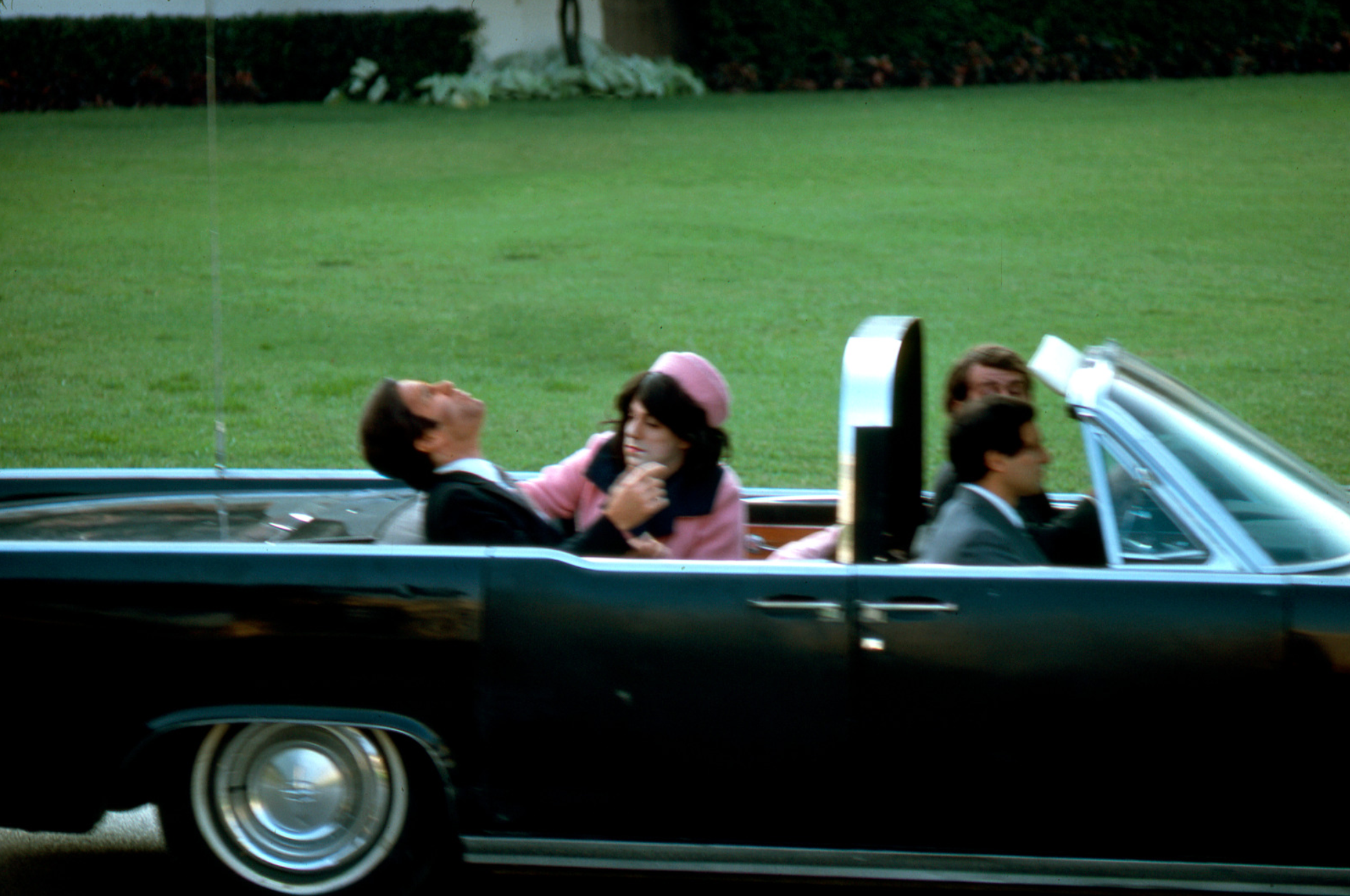
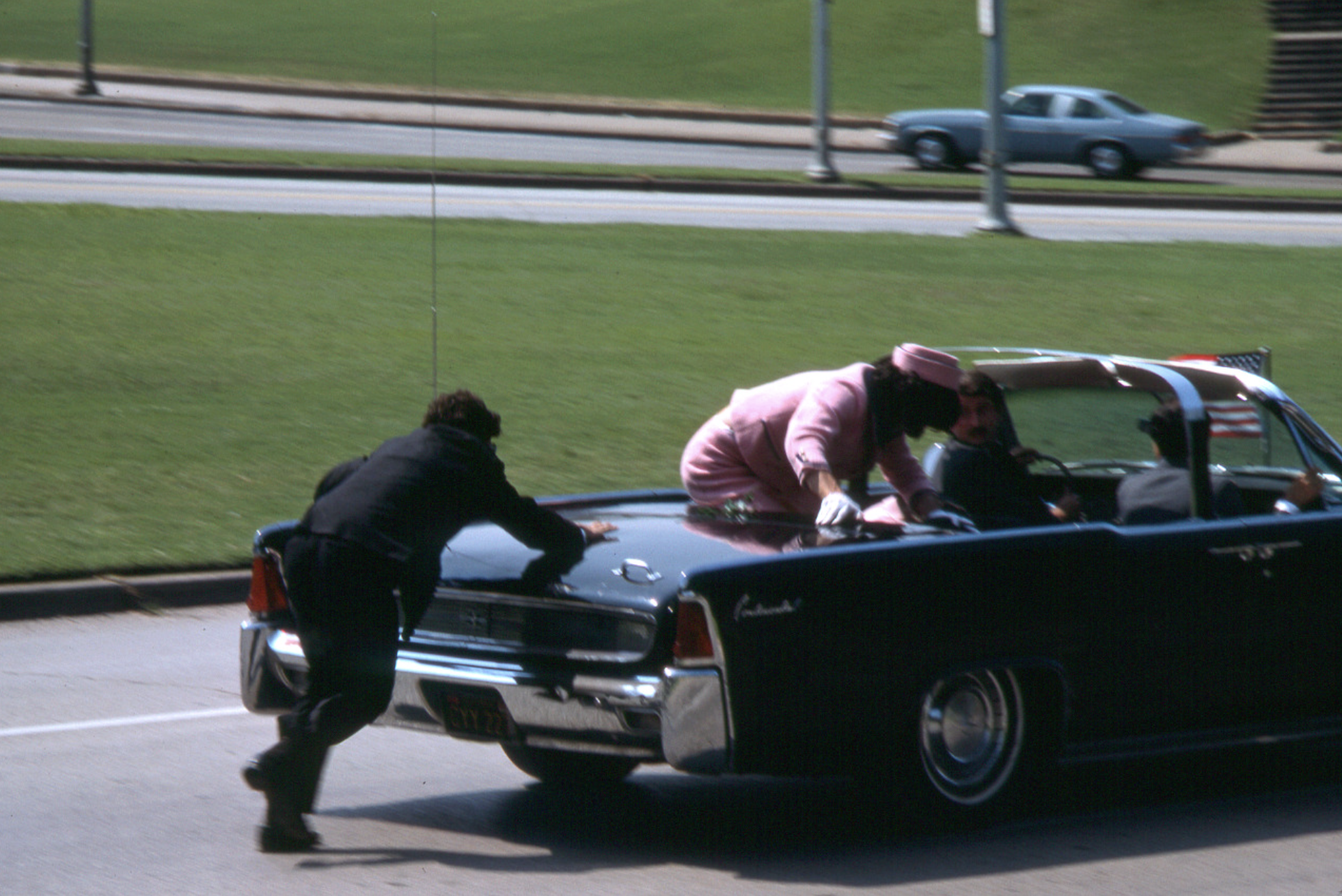
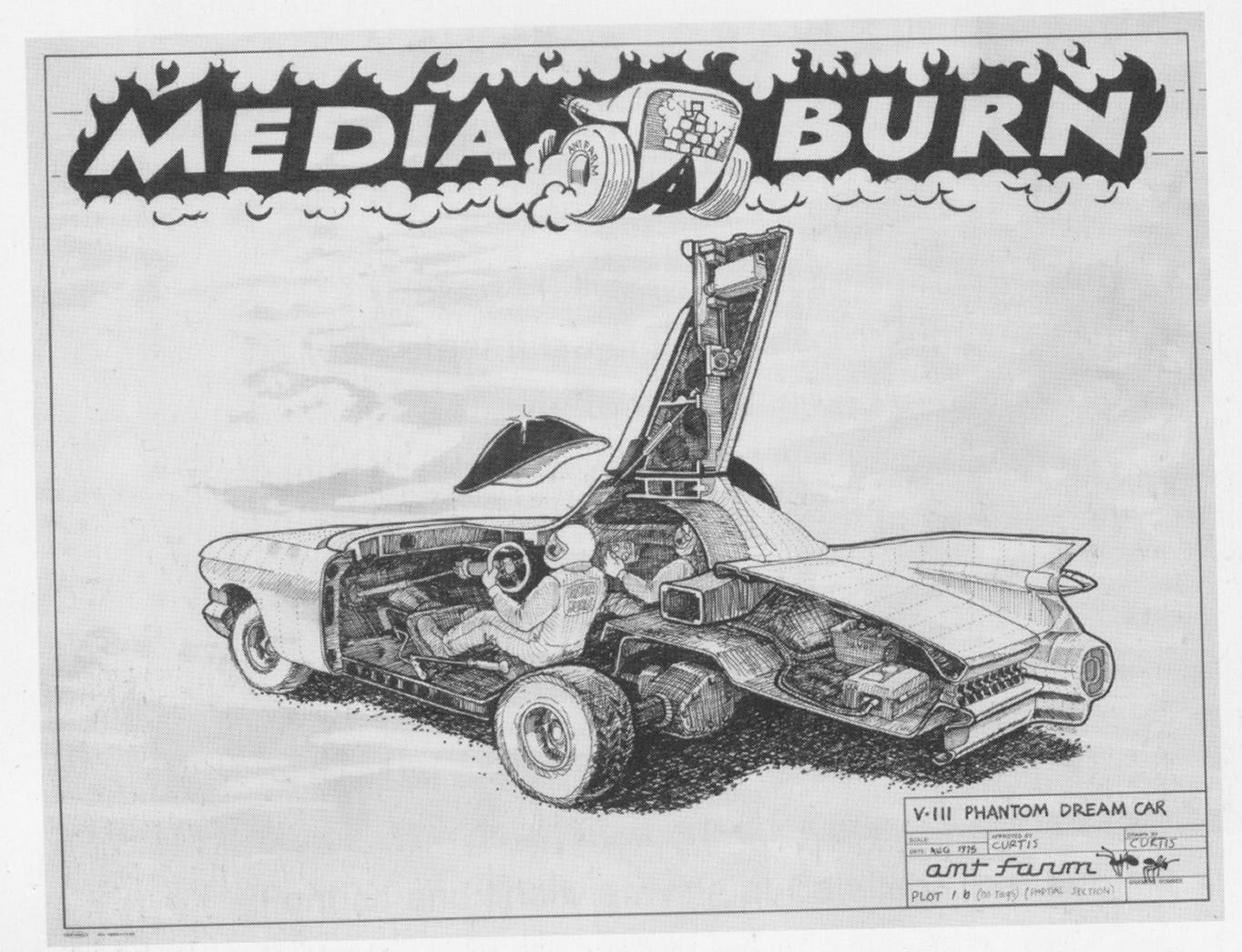
In 1975, Ant Farm—the techno-utopian multidisciplinary architecture collective founded in San Francisco by Chip Lord and Doug Michels (joined later by Hudson Marquez and Curtis Schreier)—launched a customized 1959 Cadillac, renamed the Phantom Dream Car, at full speed into a wall of flaming television sets. Media Burn was an excoriation of Post-War American popular culture, mythos, and the consumerist imagination, particularly our obsession with broadcast media. This singularly powerful act came to exemplify Ant Farm’s irreverent architectural examinations, where the blueprint was the message itself. Armed with portable videotape cameras, Ant Farm turned the gaze back on those wielding the power in a time when America was entering its mirror stage, and millions of young people were realizing the country’s intrinsic hypocrisies and instincts for violence. From its inception in 1968 to its dissolution in 1978—from the last flickering embers of the hippie love fests to the early days of disco—Ant Farm experimented with alternative modes of living with detailed cookbooks for building inflatable shelters and a Truck Stop Network for flower children searching other flower children out on the open road. Ant Farm also buried Cadillacs in the Texas sand, reenacted John F. Kennedy’s assassination, and they had plans for an embassy where humans could communicate with dolphins. In the end, a fire at their studio was a symbolic curtain closing for the underground collective whose prophetic visions of the future can be witnessed today in a digital epoch of surveillance capitalism, artificial intelligence and the twenty-four hour news cycle. 

OLIVER KUPPER: I want to start off with talking about the day you kidnapped Buckminster Fuller. I think it says a lot about your generation’s fascination with his mode of utopian thinking, and it set the tone for the radical, utopian antics of Ant Farm.

CHIP LORD: The kidnapping? Well, Doug Michels [co-founder of Ant Farm] and I were teaching at the University of Houston. It was the spring semester of 1969. I don’t think Ant Farm was at all well-known at that point in time. We heard that Buckminster Fuller was coming to speak to the engineering school at the U of H, so Doug basically called Fuller’s office and said, “We’ll be coming to pick you up, and this is what we look like.” And then, he called the engineering school and said, “I’m calling from Buckminster Fuller’s office, and he won’t need a ride in from the airport.” (laughs) And so that’s what we did. We met the plane, and I think we were fumbling in my turquoise Mercury Comet. And we drove him to the campus of St. Thomas University, where there was the machine show exhibition [The Machine as Seen at the End of the Mechanical Age]. And in the machine show was the Dymaxion car [1933]. At that point, he said, “Oh, I don’t want to see it, that was a bad episode.” (laughs) But we took him in anyway, and when he did see it, he was very excited. The front seat cushion, the back part had fallen, and he reached in to make a little correction, and of course, a guard came over and said, “You can’t touch the art.” And that was about it. But then, we took him over to U of H and delivered him to the engineering school.

KUPPER: Obviously, his thinking about the world was hugely inspirational, but what was it about Buckminster Fuller? Where did you learn about his ideas?

LORD: For me, it was through Whole Earth Catalog. Every issue, for several years, began by publishing something by Buckminster Fuller. I didn’t really have that personal connection to specific ideas until I started reading Whole Earth Catalog, which was a graduate education. Because a degree in architecture is not really an intellectual degree. It’s an art degree, basically, and there was no theory introduced into architecture during the 1960s.

KUPPER: What brought you to architecture?

LORD: As a high school kid, I was more interested in customizing cars and hot-rodding, but for my parents, that would not lead to a career. I also liked walking around in houses that were under construction in my neighborhood in St Petersburg, Florida. Especially when the walls had gone up, but they weren't solid yet, they were just the studs and you could walk through walls. Out of that experience, I thought, well, maybe architecture would satisfy both the creative instincts I have toward cars and yet, its a more professional career. I mean, that decision was made kind of at the last minute, so I went to Tulane. For an undergraduate architecture degree, you start right as a frosh, embedded in a culture that’s based around drawing and the studio, which was exciting at the time. But later, I realized I didn’t really get that much of a broad education out of going to college.

“There was a lot behind what we were doing as Ant Farm that came from the knowledge that there was a much bigger community exploring alternatives.

KUPPER You were also at the forefront of witnessing the post-war boom of the American economy—car culture, and the suburbs—which must have been fascinating.

LORD: When I was eleven, we moved from a small town in Connecticut to St. Petersburg Florida, and that was a huge transition. It was not really a subdivision, it wasn’t Levittown, but a nice, small development. Not really knowing it at the time, I was embedded in the world of advertising around the automobile in the mid-1950s, the tail fin era.

KUPPER: Politically, right around the time you started Ant Farm—the late 1960s—Kennedy was dead, modernism was proving its failures, pollution, Manson, Vietnam. There’s a lot going on. What was the ultimate epiphany that turned the youth to this kind of radicalism and distrust of the system? Can you talk a little about the sociopolitical miasma that was happening during that time? 

LORD: On a personal level, of course, it was the Vietnam War; how to make a personal choice. I really didn’t want to go. I actually was in the Navy Reserve program. I was a year behind in school, and it was the only way I could finish without being drafted and losing my college deferment. But once I had graduated, more than ever, I didn't want to be drafted. So, I went to the Halprin Workshops in San Francisco in the beginning of July 1968. It was a thirty-day workshop for architects and dancers, which is a great combination, of course (laughs). There was a third leader of the Halprin Workshops in addition to Larry and Anna [Halprin], a psychologist named Dr. Paul Baum. Eventually, he wrote me a letter that got me out of going to Vietnam. But it was only a little bit later within Ant Farm where I think we started to react or create works that were reflecting some of the craziness of living through that moment.

KUPPER That craziness definitely seems like it forced Ant Farm to think about this utopian impulse, that you needed to create a better world.

LORD: Or to add to the world in some way. I mean, the Eternal Frame [1975] was a pretty strange idea, to reenact the Kennedy assassination. But you know, there was this huge interest in literature around it and all the swirling conspiracy theories. And at the same time, that decade in the seventies was such a utopian moment in the art world, and all these additional mediums were being explored. One of them was performance art, and another was video art, and they kind of came together in the Eternal Frame. Maybe there was a truth in actually reenacting it, going to Dallas and being in that place, and recreating the image of the assassination. And it was frightening, actually, to be there, to do that.

KUPPER: Marshall McLuhan also had a big influence on Ant Farm and the idea of the “medium is the message” and the “global village.” Using technology was an example of this utopian thinking as well. How did his ideas influence you? 

LORD: I was a student when his book The Medium Is the Massage: An Inventory of Effects [1967] had just come out. And what was interesting was that it was a collaboration with a graphic designer, Quentin Fiore. It was actually reprints of things McLuhan had written as text and more theoretical analysis about the ‘global village.’ But in The Medium Is the Massage, it was put into a visual form, and I think that really influenced me. I never saw him lecture either, but the way images were used to amplify his ideas about the global village, it was so different from the discipline of architecture. At the same time, the realization that architecture was this kind of privileged, elitist profession, that you had to have clients, and the clients had to have the money for whatever they wanted to build. So, for my generation, graduating in 1968, so many people wanted to avoid going and doing the typical architectural career.

Clean Air Podperformance by Ant Farm, U.C. Berkeley, Sproul Plaza, Earth Day, 1970(Andy Shapiro and Kelly Gloger pictured) courtesy Chip Lord

KUPPER: What was Ant Farm’s interpretation of the global village? How would you define it?

LORD: I guess as the collectivity that existed in the counterculture, because there was a lot behind what we were doing as Ant Farm that came from the knowledge that there was a much bigger community exploring alternatives. Whether it was going back to the land, living in communes, co-housing, so many different ways to reject the existing set of expectations. I think that gave us the strength to keep going, to keep experimenting, and producing the work that we did.

KUPPER: One of the most incredible works that encapsulates those ideas was Electronic Oasis [1969], and also your idea of an ‘enviro-image future.’ Because it was way ahead of anybody’s time. Can you talk about the enviro-image future?

LORD: The idea that a computer could generate environments and put you in places was part of hoping to make another psychedelic experience, without drugs, without taking LSD. It just seemed obvious that it was going to happen. It’s only now really happening with AI. There was, of course, the enviro-man, who was connected to a computer, and sitting next to him was enviro-woman, and this was just a visual stunt that was done while we were teaching at the University of Houston. But that project was about simply creating that image in order to show that it might be possible. Most of our presentational form was through the slide show and that also came from architecture. It’s a very good way to contrast and to create a narrative between the images.

KUPPER: And then there was the Truck Stop Network [1970], which is really interesting. 

LORD:  A lot of people at the time were either building campers on a pickup truck, or modifying the Volkswagen bus. And there was this idea within the counterculture of nomadics. So, we were conceptually and architecturally combining the idea of the truck stops that already existed as a network across the US, and making them countercultural truck stops. You would stay for a few days or a week, plug in, and each truck stop had services built in that would make it more of a community. There's access to computers, there’s daycare, there's all of the social community structures.

KUPPER: Another work that had to do with cars was Cadillac Ranch [1974], which came a little later. It was installed around the time of the oil crisis, I don’t know if that had anything to do with it?

LORD: Well it did, absolutely. It was 1973 when that actual embargo from the OAPEC (Organization of Arab Petroleum Exporting Countries) countries happened. You had to wait to get gas in California, to fill up. And so, Cadillac Ranch was conceived at that moment. It was easy to be very aware of the social hierarchy attached to the Cadillac. General Motors, Ford, and Chrysler all had multiple makes and the idea for General Motors is you might, as a young man, buy a Chevrolet and be loyal to GM, then move to Pontiac, move to Oldsmobile, Buick, and then finally in your fifties, making a good salary, you would achieve Cadillac status. The funniest thing was, we realized that our fathers, none of them ever made it to Cadillac. The furthest they made it was Oldsmobile. So, you could say we were realizing the final two steps of the social hierarchy by making Cadillac Ranch, but also putting these gas guzzlers in the ground. 

KUPPER One of Ant Farm’s most iconic works that used a Cadillac was Media Burn [1975], because it wasa combination of two things, which were Kennedy and America’s fascination with television and cars. Can you talk a little bit about where that piece came from?

LORD: When we traveled in the Media Van, we went to the East Coast and met the publishers of Radical Software. There was an identifiable idea that there should be an alternative to the three major television networks, and it may be possible with portable video, which had just come out. The Sony Portapak was designed for education, schools, and businesses for producing training tapes. But artists and community activists immediately started using it as an alternative form of television and that was kind of solidified in “Guerrilla Television,” which was an issue of Radical Software. The editor, Michael Shamberg, had asked Ant Farm to design it. So, we did. We were engaged in the idea of alternative media and alternative architecture, and that became part of the idea of Media Burn. The idea was to create an image that would be powerful in its own right, but would also attack the monolith of broadcast television, which seemed to have a hold over the American public through advertising and image control. Seeing the car crash through that tower of televisions would be symbolic of an attack on that monolith. It was as simple as that. It took two years to realize that one image, and in that time of the planning, other meanings expanded out of it, and it ended up being a huge community effort. But we had to have a speaker, a politician, hopefully. And that is where the conceptualization of using a Kennedy impersonator as a speaker at Media Burn came in, and it was just a short jump to “Well, if we’ve got Kennedy, we might as well reenact his assassination.” And that was Eternal Frame

KUPPER: That also connects to a little bit of your personal work later with Abscam [1981], the recreation of surveillance footage; a statement on the power of these images of Kennedy’s assassination. Nobody, at that point, had ever really seen anything like that before. It really speaks to our voyeurism and thirst for seeing this kind of violence.

LORD: And also, taking control of it too, because it was such powerful imagery that made the viewer almost powerless in the face of it. So, could we take control of it in some way?

KUPPER: In 1978, your studio burned down. Why was that the official end of Ant Farm?

LORD: Well, at this point in time, Ant Farm had become a three-person partnership, Doug Michels, myself, and Curtis Schreier. Doug Michels wanted to move to Australia to develop the Dolphin Embassy. Curtis and I were not interested in moving to Australia. There was a woman involved and Doug wanted to go back to see her. I think in '76, there was a period of time when he was not present, and the studio space had become kind of just Curtis and me showing up, but it felt empty and people would often knock on the door asking, “Is this the Ant Farm?” (laughs) We would give them the little tours, but it had become almost a museum of itself in a way. It was over as a working partnership, and then the fire was a symbolic ending and almost exactly ten years after the founding, in 1968. So, that seemed appropriate, to have such a spectacular ending.

KUPPER After Ant Farm disbanded, how do you think your utopian thinking changed? I mean, there’s that incredible piece you did called American Utopia [2020]. Do you think that your view of the system became more cynical after Ant Farm?

LORD: There was certainly a cynicism within Ant Farm, I must say (laughs). No, for me, it was like, Well now how am I going to make a living? It was a different era, the counterculture wasn’t dominant. A lot of people in counterculture had opened businesses, natural food businesses, and other things. Not everyone, some people had successfully lived off of the land, but everybody had to confront, “how do you make a living, how do you survive?” I tried different things, like freelance photographer, and writer, having a contact at New West magazine, but you know, that was never going to pay the bills. So, I thought maybe teaching was going to be a collaborative venture, which was an aspect of Ant Farm. So, I applied for a job at UC San Diego in the visual arts department. The irony was that the work of Ant Farm was my credential, and there weren’t that many art departments where it would actually be effective (laughs).

KUPPER: What do you think now, post-pandemic in this weird political climate we’re in—what would Ant Farm be exploring now? 

LORD: (laughs) It’s funny because that question was also asked at the end of a lecture, and I turned it on the room full of students. I said, “It’s really up to you, the next generation, to make that utopian gesture.” So, I don’t really have a good answer to that, except that now I’m not such an optimist. I think that after the Ant Farm exhibition, which was at the Berkeley Art Museum in 2004, I traveled to a few places. When I came back to make videos afterward, Elizabeth Kolbert’s book had just been published, the Sixth Extinction [2014], and I realized that we’re in the process of creating this extinction of our own species with climate change. So, I created several works in video about that, which had to do with the rising sea levels. One is called Miami Beach Elegy [2017], you know Miami Beach maybe isn’t going to exist by the end of this century. Another one is New York Underwater [2014], and that was preceded by a Hurricane Sandy, which flooded so much of Manhattan. So, I’m trying to shift my love of cars into loving trees. 

KUPPER: You mentioned that you’re not so much of an optimist anymore, but do you think utopian thinking is still important?

LORD: You know, I’ll have to think about that question. I guess yeah, of course it is, but maybe utopian thinking is shifting now. I love this book, To Speak for the Trees [2021], by Diana Beresford-Kroeger. As a child, she was orphaned and went to live with her uncle in Ireland for the summer, and the people of that community decided to teach her Celtic knowledge. She had this intense learning experience about plants and other species, which led her to becoming a professor with a specialty in botany. So, that’s now utopian: understanding indigenous people, and indigenous ways, and the integration with other species we share the planet with. That’s so utopian now, because it’s so different from the mindset we’ve lived with throughout the 20th century. The Dolphin Embassy is one the most popular projects by Ant Farm. Again, it was simply a very symbolic idea, and we didn’t have the personnel, or the budget, or the power to find the scientists, and work with them, to make Dolphin Embassy a reality. It was a utopian idea, to focus on trying to communicate with another species.

Mark Mahoney & Nan Goldin in Conversation

photographs and interview by Nan Goldin
photo assistance by Pat Martin

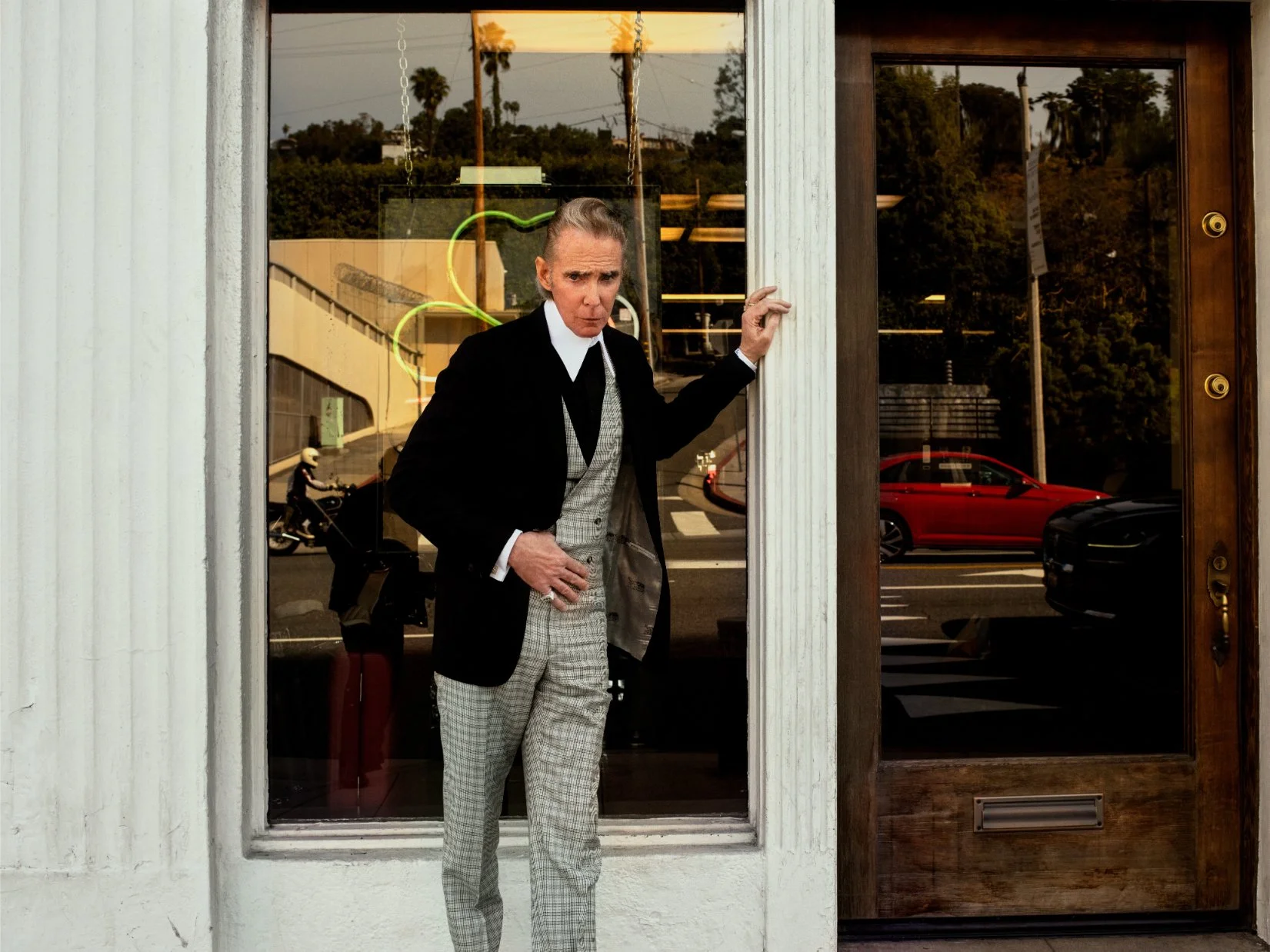
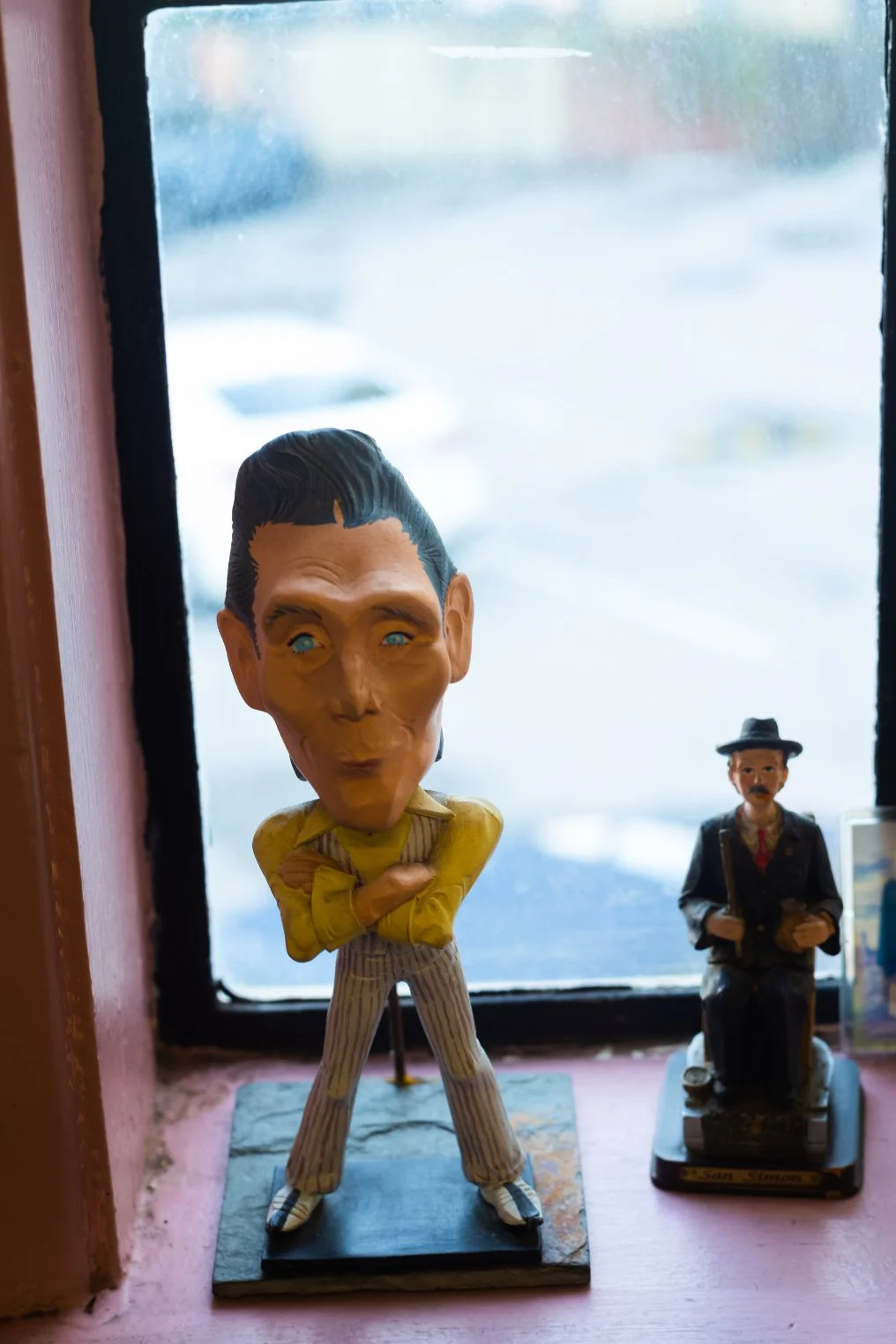
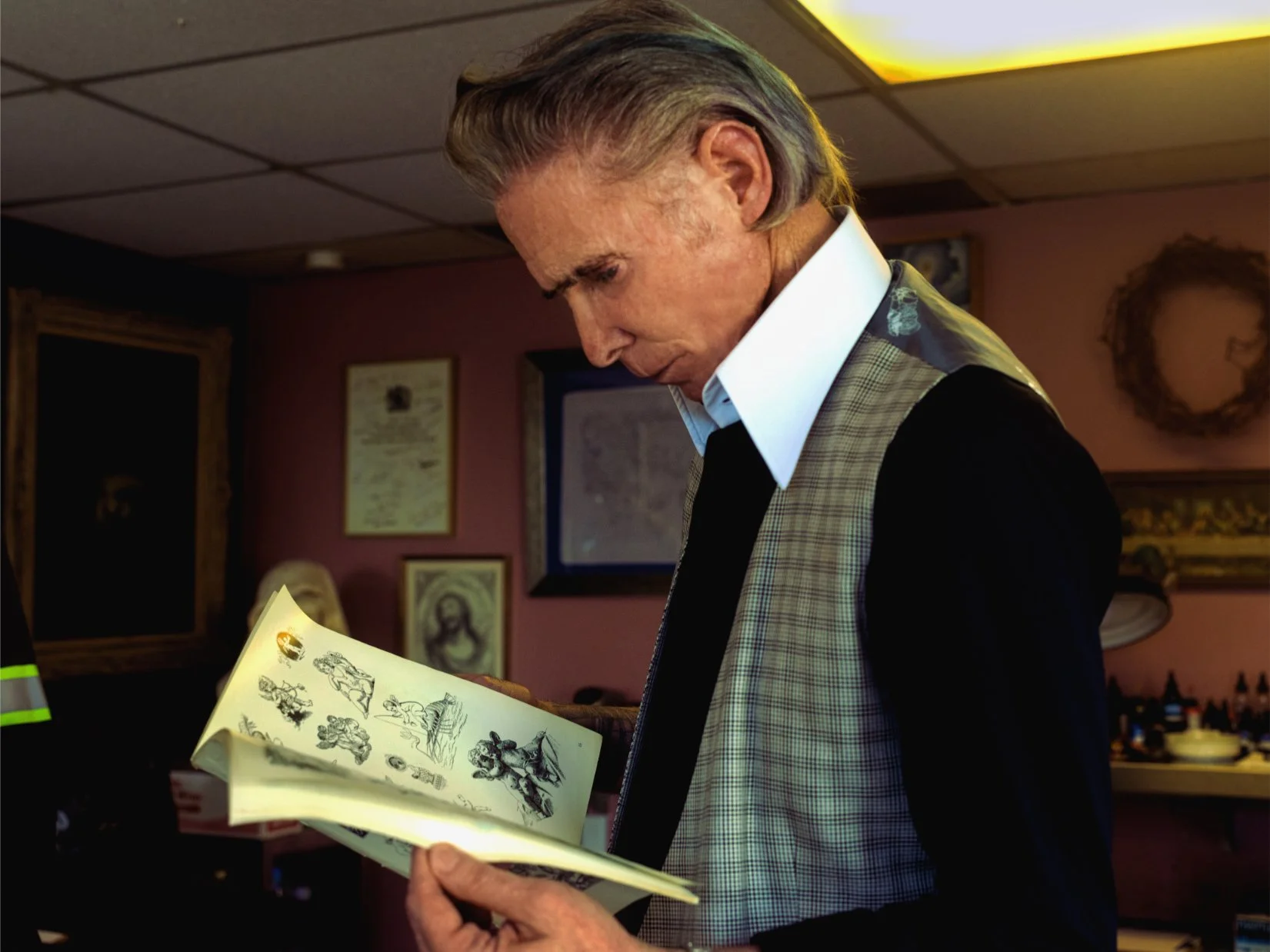
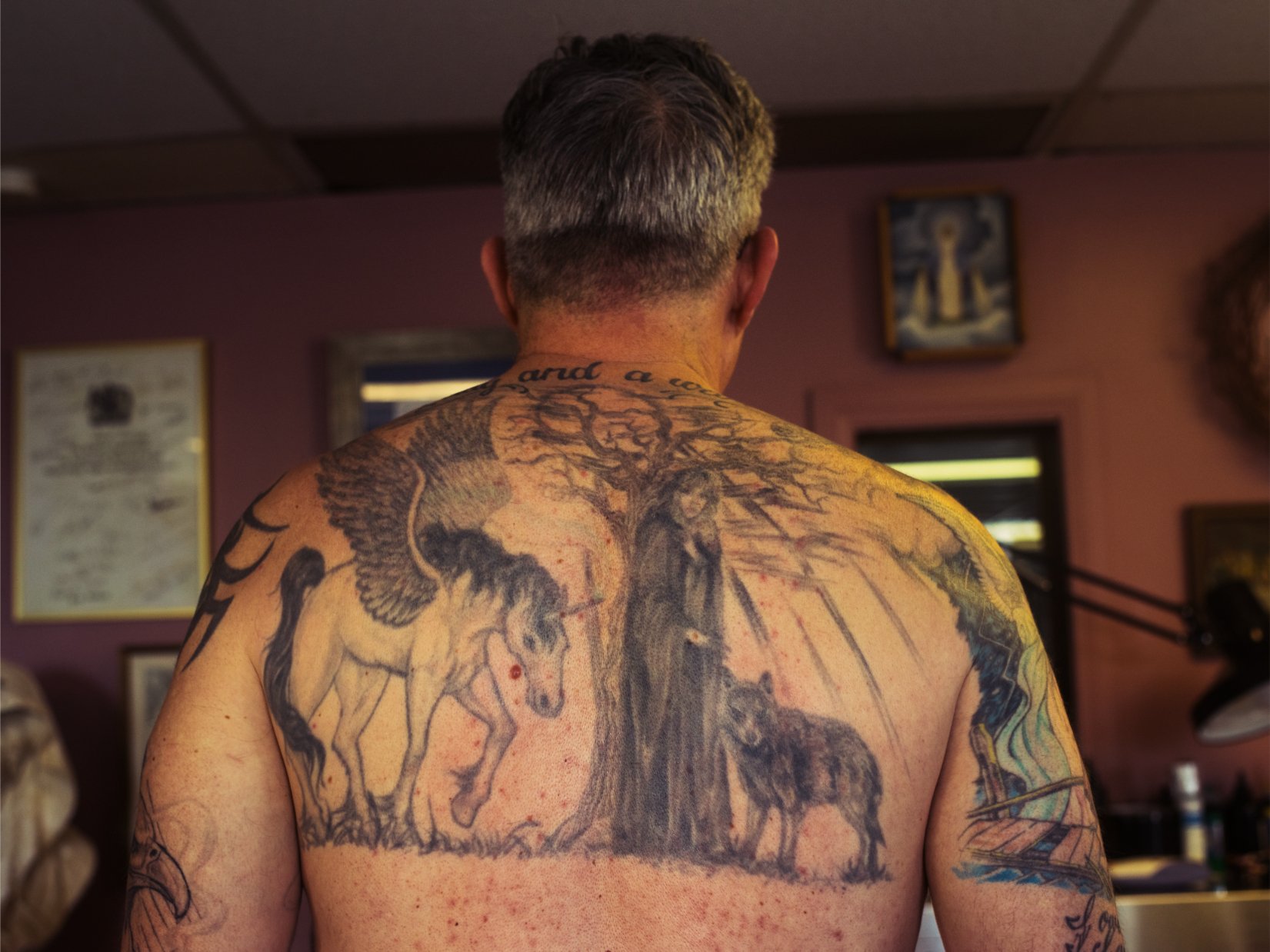
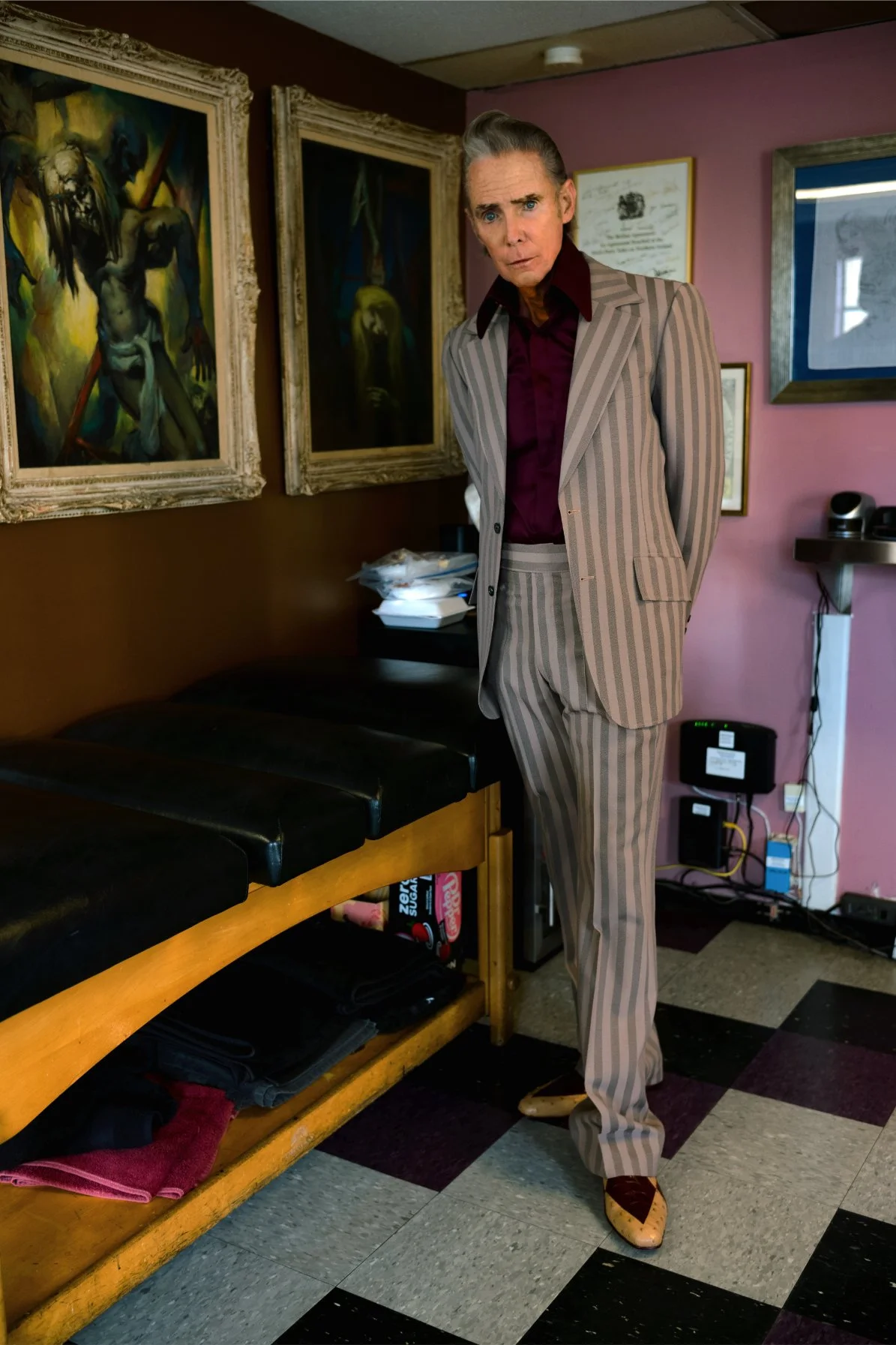
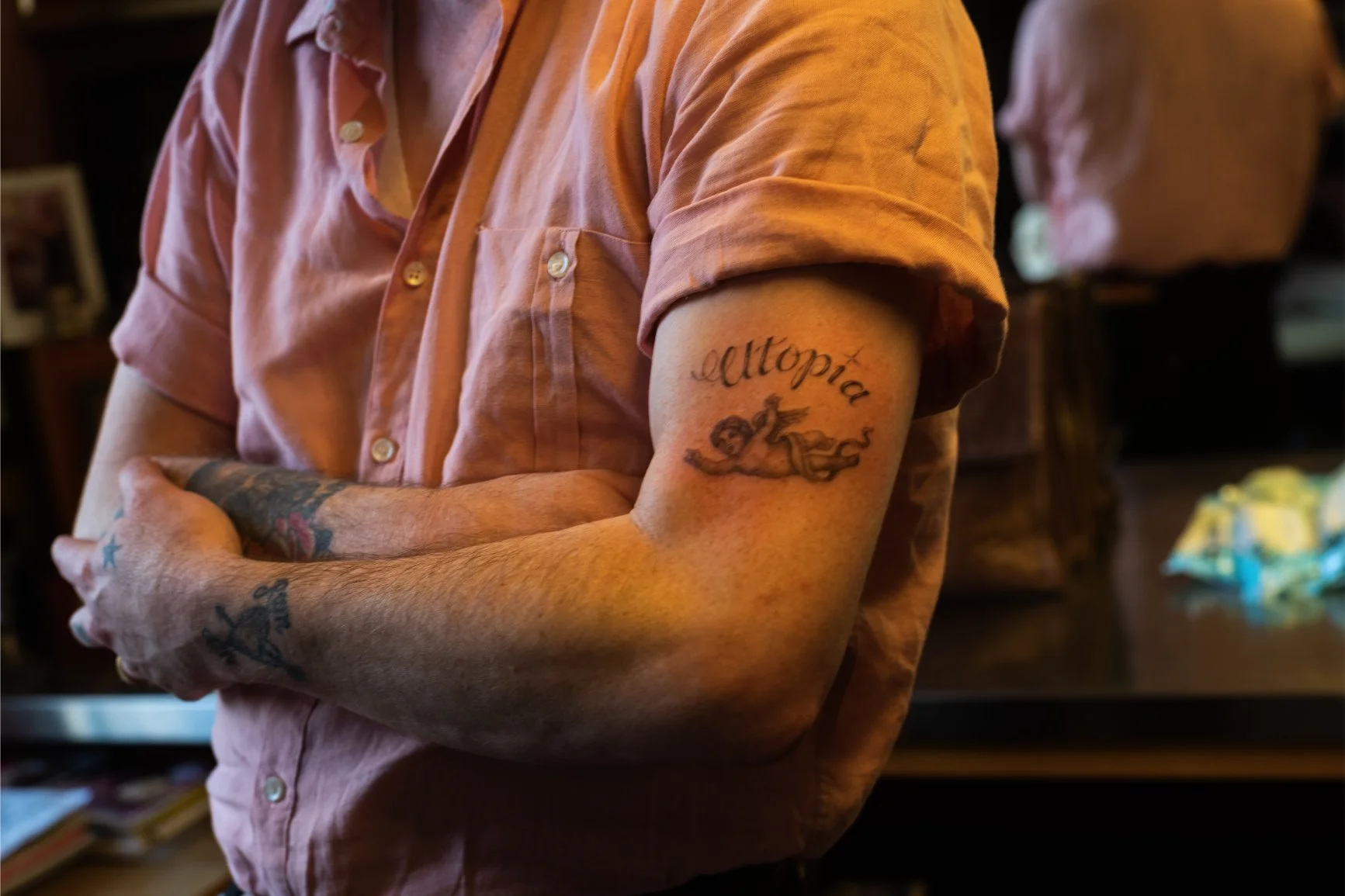
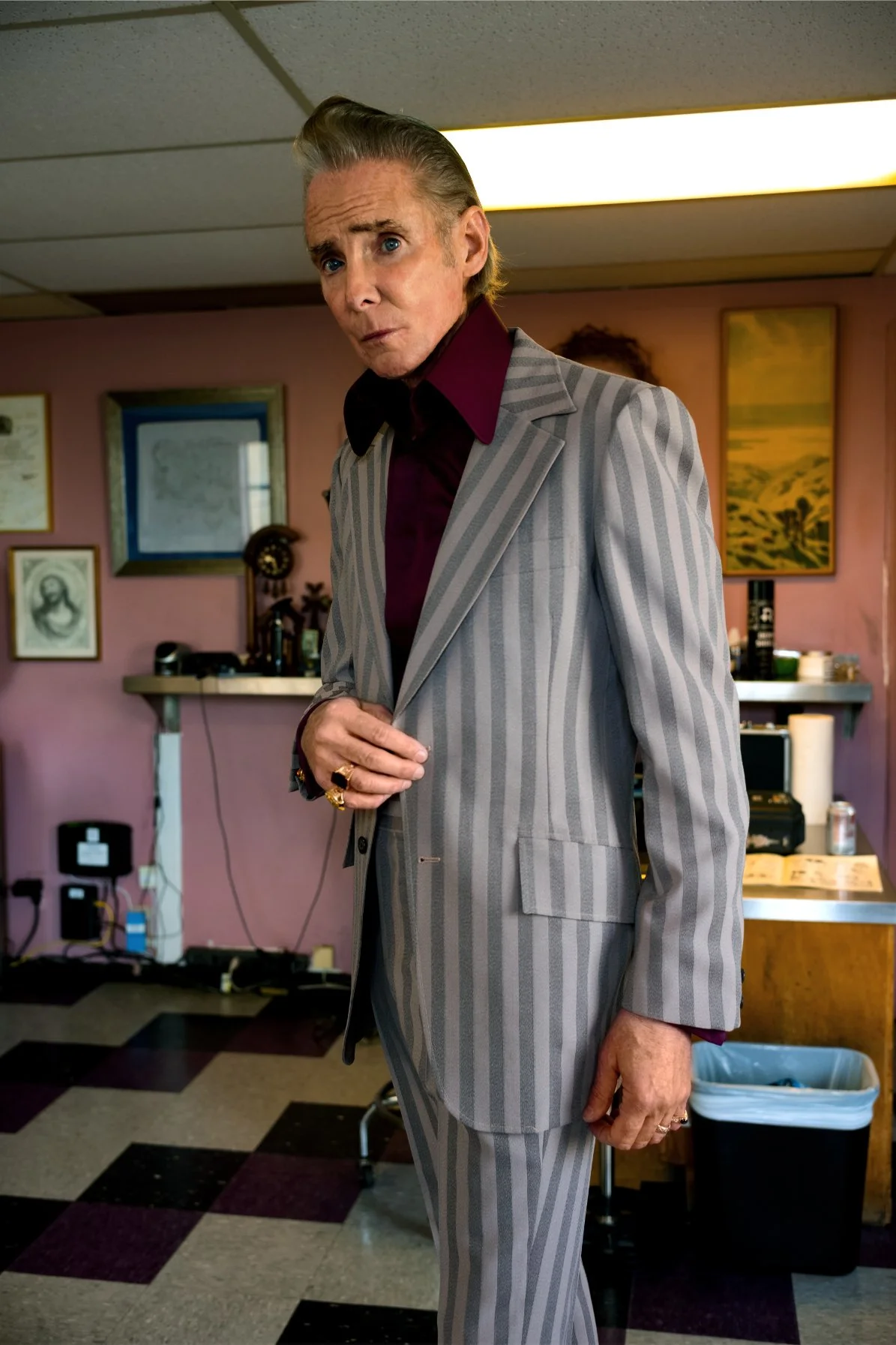
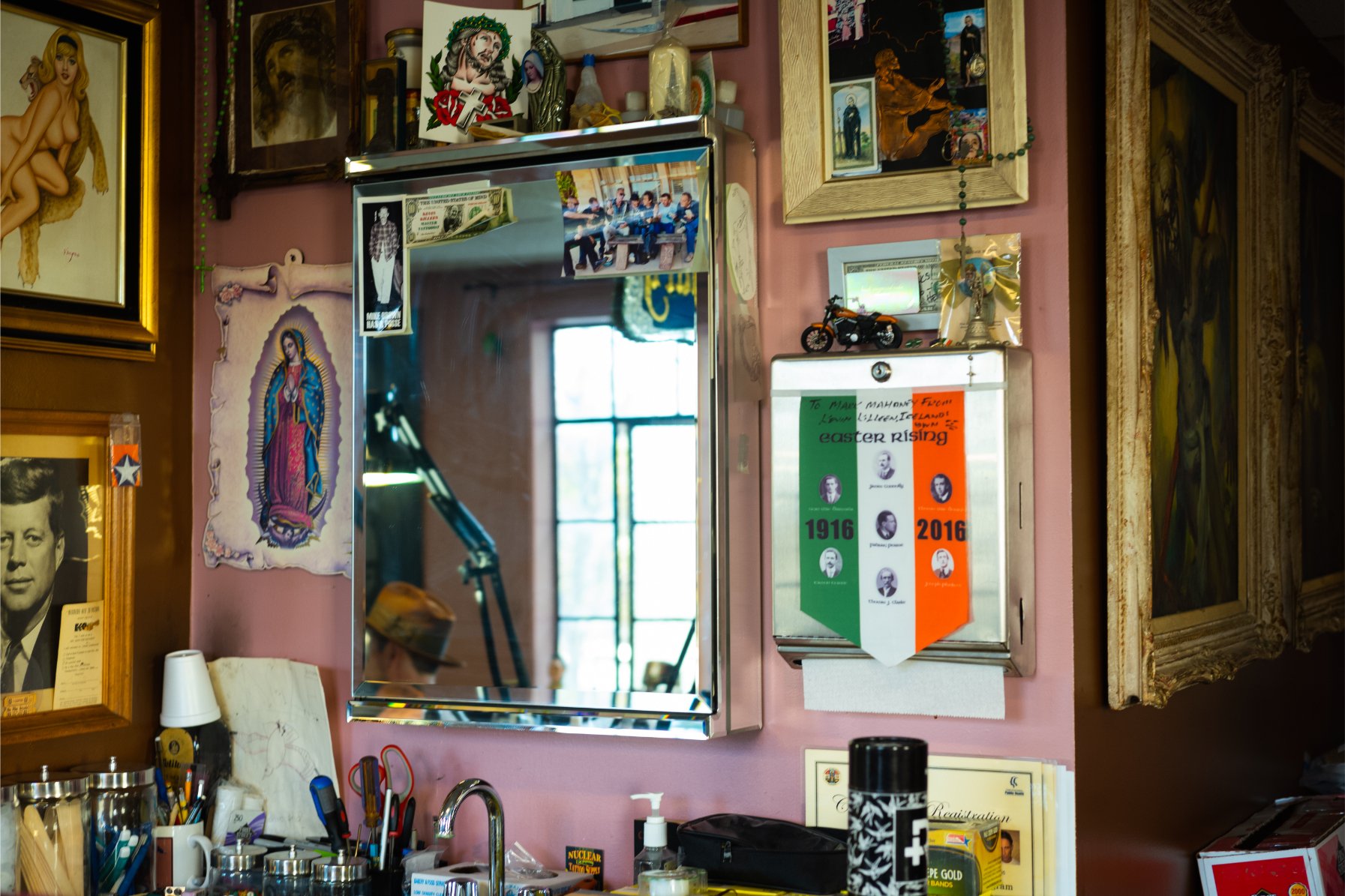
With the aura of a gritty, but warm benediction, legendary tattoo artist Mark Mahoney sounds and looks like a gangster angel that landed on the Sunset Strip. Priestly with high cheekbones, electric blue eyes, tailored suits, handmade Italian shoes, and a perfect pompadour, Mahoney’s shangri-la is Shamrock Social Club; one of the last true Irish tattoo parlors. Mahoney got his start tattooing the Hell’s Angels in Boston. Today, he is one of the world's most famous living tattoo artists. He was responsible for popularizing fine line tattooing, the black and grey style that originated within the Mexican gangs of East Los Angeles. Photographer and artist Nan Goldin met Mahoney in art school when they were just kids. Some of her earliest photographs are of the young tattoo artist: young, free, piercing skin with ink and riding around in cars. They have been friends for over forty years. Mahoney inked Goldin’s first tattoo. On a grey day in Los Angeles after the Oscars, where Goldin’s documentary All The Beauty & Bloodshed (2022) was nominated, she caught up with Mahoney for an intimate interview and a new document of portraits.


NAN GOLDIN: Did you learn anything in art school?

MARK MAHONEY: Zero. I just remember these two lesbian drawing teachers—they described themselves on the first day, one of them was like, “I like earth tones and natural fabrics." And I'm sitting there in shark skin and pointy-toed shoes and I'm like, fuck, we're off to bad start. And then, they asked us to draw flowers. So, I went home and drew, you know, flowers. And I come back and she's like, “No, I want you to draw how flowers smell, not how they look like.”

GOLDIN: So you came to only a few classes?

MAHONEY:  I came to only a few classes and then all the cool kids were going to New York. I went with you guys.

GOLDIN: You went earlier than me, with David [Armstrong] and Bruce I think. I came a year later. And Cookie [Mueller] and Sharon [Neisp] came around the same time.

MAHONEY: Yeah, yeah. Was it before you went?

It wasn't much before.

GOLDIN: Were you tattooing in New York? You didn't have a parlor, though, right? It was still illegal to tattoo.

MAHONEY: Yeah. I worked at people's houses. I worked in the Chelsea Hotel quite a few times. I'm going to tattoo you again at the new Chelsea when I do my residency, which I'm excited about. You are going to be the first person I tattoo.

GOLDIN: I love that idea.

MAHONEY: Returning to the scene of the crime.

GOLDIN: And so, when did you move to LA?

MAHONEY: 1980.

GOLDIN: What was the name of the guy who was doing fine line tattoos? Who moved to Hawaii.

MAHONEY: [Don] Ed Hardy

GOLDIN: What happened to him?

MAHONEY: You know, they made that ugly clothing line with his name, they licensed it. It was supposed to just be t-shirts, but they started making everything else. So, he had to sue the guy who licensed his name and he ended up getting a ton of money.

GOLDIN: Good. Did you work with him when you first came up?

MAHONEY: Yeah, I did. He changed the game.

GOLDIN: He was the first fine line tattooer.

MAHONEY: He encouraged it. He was more into color, but when they sold the shop where black and grey [tattooing] started, he bought it so that Freddy [Negrete], Jack [Rudy], and I would have a place to work.

GOLDIN: So good! Freddy's been with you all this time?

MAHONEY: On and off, you know. Freddy, how about that? A famous Mexican gangster tattooer. And then, when he wanted to get clean, he asked me to help him. And the only in I had was at this Jewish rehab, Beit T'Shuvah. A guy I tattoo was the intake manager. I'm like, “You gotta do me a favor, you gotta get Freddy in.” And he goes, “Mark, this is a Jewish rehab.” I'm like, “Don't worry, Freddy’s Jewish as a motherfucker. Let him in. Let him in.” (laughs) And you know, he finally broke down. And he did let him in. But, it turns out Freddy's mom was Jewish from when East LA was transitioning from a Jewish neighborhood to a Mexican neighborhood. So, his dad was a pachucos zoot suiter and his mom was a nice Jewish girl from East LA. He got totally into it. And he got Bar Mitzvahed.

GOLDIN: Now that's a beautiful story. But you know, it's against the Jewish religion to be tattooed. You can't go out of the world with anything that you didn't come in with or something.

MAHONEY: I think the jury is still out on that.

GOLDIN: I came to film the people at Beit T'Shuvah like four or five years ago.

MAHONEY: You did? That’s crazy. (laughs)

GOLDIN: Yeah. We were filming with a cameraman who was pure German. He had never probably met a Jew and he was going to the Passover Seder play—they did one of those. He had no idea what he was looking at. It defined corny.

MAHONEY: I think the rabbi is an ex-convict too.

GOLDIN: Yeah he was wild. Is the place still there?

MAHONEY: Yep. It actually helped a lot of people, man.

GOLDIN: A year and a half before Laura Poitras was on board as the director, when I first started this movie, we shot our own movie. But we couldn't get any money. Then Laura came on and we shot All the Beauty and the Bloodshed. But at the beginning of the movie, we were looking for radical approaches to sobriety.

KUPPER: How did you guys meet originally?

GOLDIN: We were at art school together. It was me and David and Mark and Kimberly and Bruce.

MAHONEY: We would drink beer and drive around in cars.

GOLDIN: That's what we did. We sat on suburban lawns, drank beer, and drove around in cars. Sometimes with the teachers. That was art school. And I lived with Mark’s sister for a while in Cambridge.

MAHONEY: It was great fun. You know, something I remember about living in New York, man, we'd go to three great gigs a night and then we'd go to the Mudd Club afterwards, but you could never say you were having a good time. You had to say, “Oh, I'm so depressed. It sucks.” (laughs) And in retrospect, we were having a ball. Right?

GOLDIN: No, we didn't have to say we were depressed. We just had to act like it.

MAHONEY: But I don't ever remember someone saying, “This is so much fun, ain’t this cool.” (laughs)

GOLDIN: It's true. I never thought of that (laughs). We missed our happy days.

MAHONEY: Yeah, right.

GOLDIN: Well, we’re picking up where we left off.

MAHONEY: That's a good line. We missed our happy days. I think it's absolutely true.

GOLDIN: We're having our happy days now.

MAHONEY: Right? I think that's why we're happy. Yeah. Happy enough. We’re cherishing in a way we didn't really then.


GOLDIN: So, did you come out to LA with Bruce?

MAHONEY: No, I came out with this girl from high school. We drove out and I went to the tattoo shop the first day and I asked them for a job and then they said, “Well bring someone down tomorrow and tattoo them. And if it works out good, we'll give you a job.” So, my friend who lived out here was in the Merchant Marines, he didn't have any tattoos. I told him, “You're getting a fucking tattoo.” So, I brought 'em down and I did a little tattoo on him and I got the job.

GOLDIN: Wow. The second day you were here. And were you living with Bruce?

MAHONEY: We lived together in San Pedro for a while, yeah. We had a cool house. It was crazy.

GOLDIN: Was David here too?

MAHONEY: Yeah, yeah. They came out together with the monkey, Joseph, who died en route. They went to a Pizza Hut in Mississippi and left him in the car with the windows rolled up.

GOLDIN: Oh, Jesus. Do you remember going to my parents' house?

MAHONEY: And the monkey got loose?

GOLDIN: Joseph escaped to the backyard and we had to call the zoo to come … no, the fire department. He wasn't coming back. And my parents were out of town and we were having too much fun in our house.

MAHONEY: Wild. I didn't think we would ever get ‘em out of that tree.

GOLDIN: I found a good picture. It's Bruce with the monkey.


KUPPER: Nan, can you talk about your first tattoo experience with Mark?

GOLDIN: Yeah, that was at Bruce's house on Elizabeth Street. There's pictures of it. I'm high as a kite. Happy as hell. Laying down on the bed with a beer in my hand. The first tattoo was a bleeding heart on my ankle.

MAHONEY: Yeah, like a sacred heart.

GOLDIN:  I collected sacred hearts.

MAHONEY: And the ankle sucks. It hurts.

GOLDIN: Yeah, it's not doing so well.

MAHONEY: We could redo it someday. Clean it up. You've earned that shit.

KUPPER: So Mark, how long were you in New York between Boston and Los Angeles?

MAHONEY: A few years. I went back and forth to Boston and worked on the Hell's Angels.

KUPPER: Tell me about that experience. Working with biker gangs.

MAHONEY: You know what, I look back on that now, those guys were so nice to me. I was so lucky. I think they were happy they didn't have to drive to Rhode Island and they liked that I could draw whatever they wanted on 'em, and I'd go to the clubhouse and have a ball. Yeah. That was wild. That was cool.

KUPPER: Did that experience inspire you to open your own social club?

MAHONEY: You know, when you’d go to tattoo shops in the old days, you'd go to Rhode Island and the guys were just mean, man. I remember asking a guy like this if there was a school for tattooing. And he said [imitating a growling voice], “Yeah, reform school.” There was this veil of secrecy around the tattoo world. It’s impenetrable. But I told myself that if I ever have a shop, you know, I want people to be nice to people. And that's why I call it the social club. It’s okay to socialize.

KUPPER: I feel like you've developed your own sort of countercultural shangri-la. Can you talk a little bit about that, and what your personal definition of utopia is?

MAHONEY: Well, I have been wanting to get Nan to move out here for a very long time because I know that the sunshine and California has been good for my mental health. You know what I mean? My mother had depression in that fuckin’ grey Boston weather. She said the Irish are given to the melancholy and I think that's true. But being in the sunshine, being in LA, it’s utopia to me. And I think Nan would thrive out here. I think she would be directing two movies a year and saying no to ten other ones.

GOLDIN: Jews are given to depression, too. There are two different kinds of guilt. Catholic guilt and Jewish guilt. I like Catholic guilt better than Jewish guilt. It’s more concrete and the imagery is beautiful. The Jewish guilt is endless.

MAHONEY: When you’re Catholic, you can go to confession and all your sins are forgiven.

GOLDIN: And if you’re Jewish you go to a Jewish psychiatrist and never get forgiven.

KUPPER: Nan, what's your personal definition of utopia?

GOLDIN: Utopia evades me. I'm a very dark person. My last show was called, This Will Not End Well. It's a major career retrospective, you know, being sixty-nine and saying, “this will not end well,” it says a lot. I mean, if I could, I would have my friends back. That would be utopian to me. All my friends and the way I feel now. The way I relate to people now with them alive as opposed to being young and an insecure person and all that. So, the way I feel now with them alive, that would be utopia.

MAHONEY: There’s that cherishing thing again. That’s really good.

GOLDIN: And maybe we'll meet them on the other side.

Barbara Stauffacher Solomon

interview by Oliver Kupper

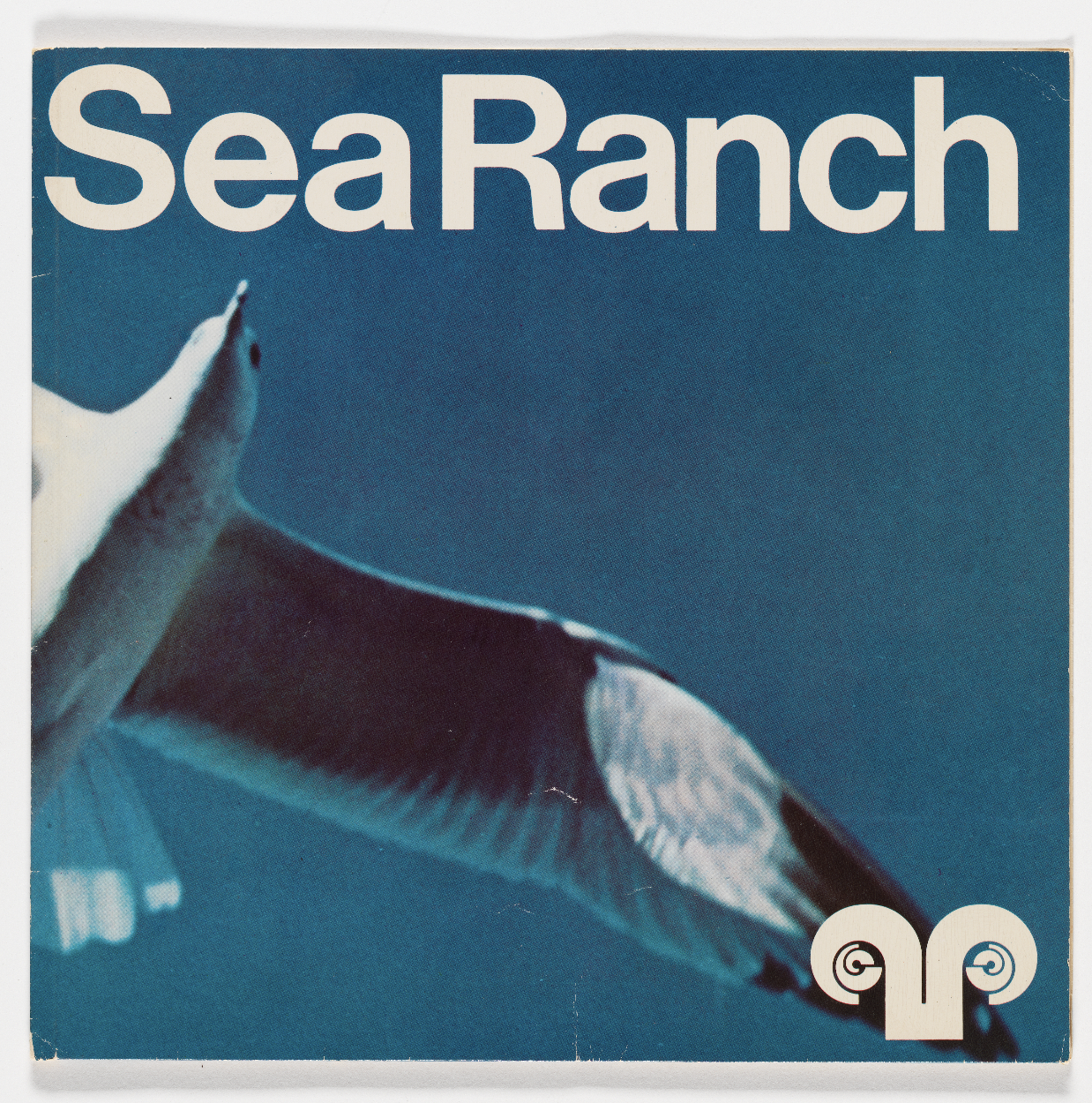
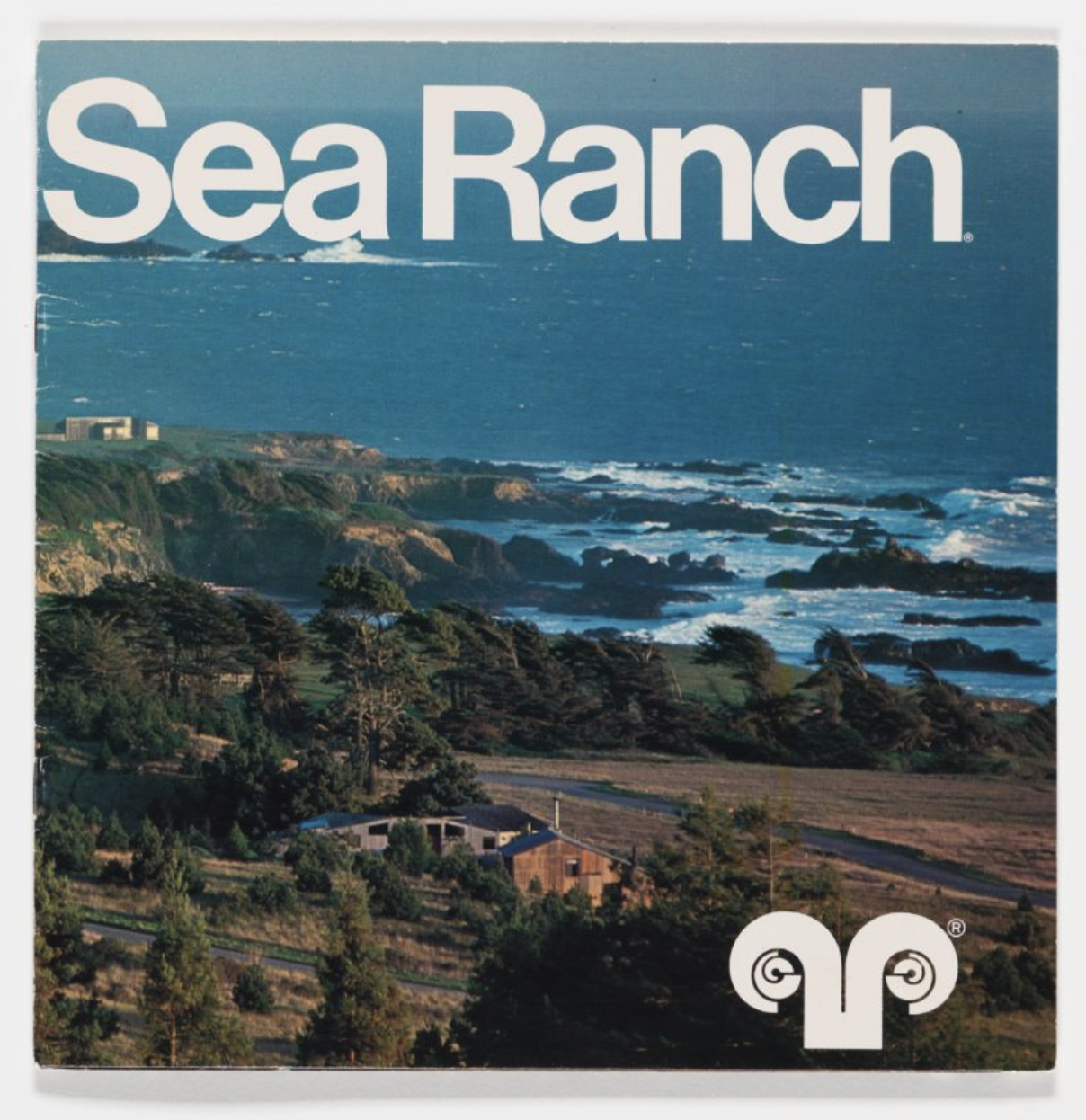
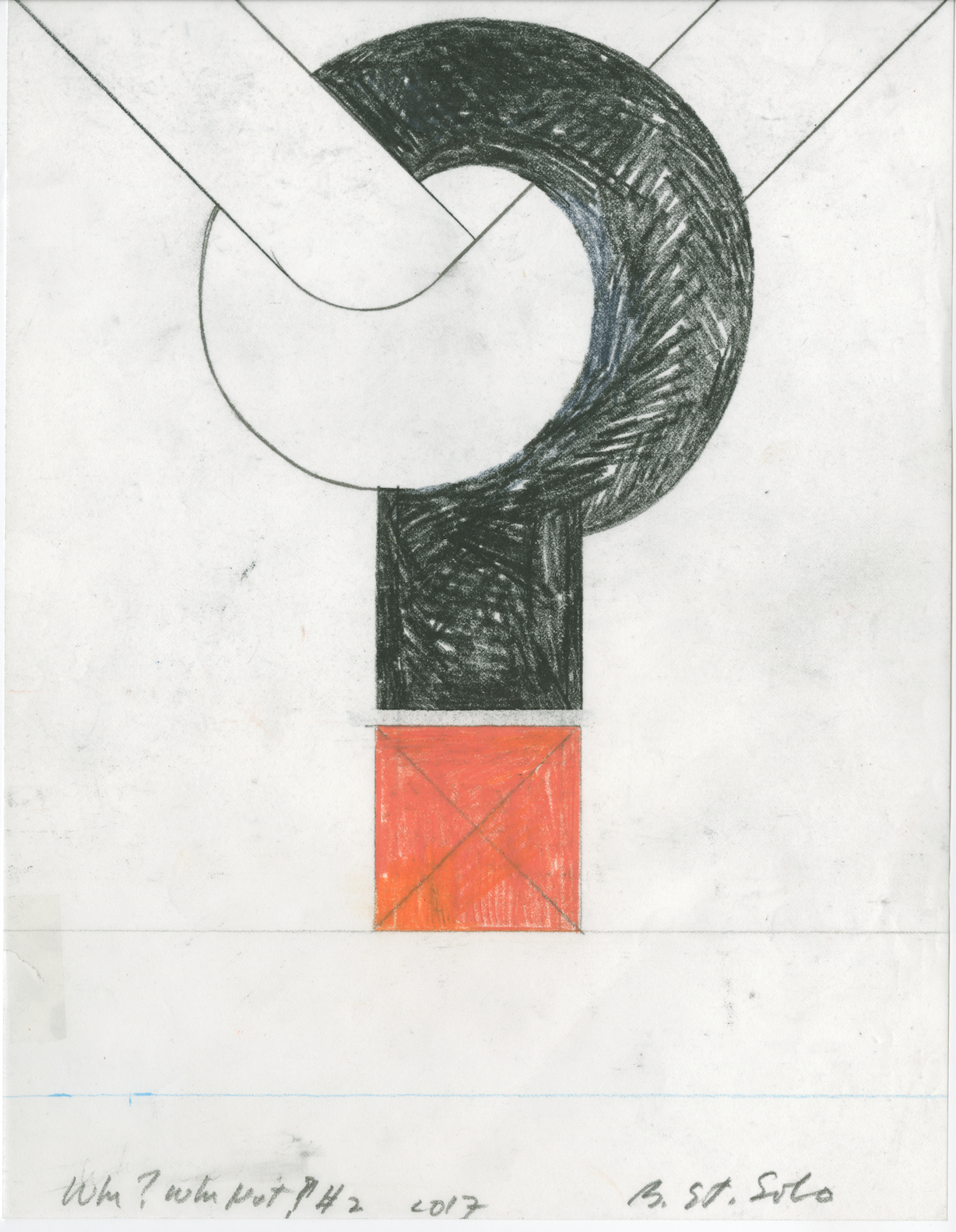
Barbara “Bobbie” Stauffacher Solomon, now ninety-five years old, studied graphic design in Switzerland under the legendary Armin Hofmann in the late 1950s. Her most famous project, the graphic identity for Sea Ranch, a planned community imagined by architects Al Boeke and Lawrence Halprin on the Sonoma Coast, was a blend of Swiss Style and California Modernism, an amalgam of irreverent hippie cool and clean straight lines in oversized texts and symbols called ‘supergraphics.’ The logo depicted two sea-shells that formed a ram’s head. When the idealism of the ‘60s and ‘70s died down, Sea Ranch lost its utopian ethos, but still remains a relic of what could have been. Solomon, however, is more prolific than ever.  

OLIVER KUPPER: Right now you are working on some new supergraphics for the San Francisco Museum of Modern Art.  

BARBARA STAUFFACHER SOLOMON: Yes. I'm doing absolutely enormous “OKs” with stripes. We're going to make it so visually nuts. It's like choreography, where you get everybody to walk in one direction with the design.  

KUPPER: Like the old dance step footprints that would be painted on the floor.  

SOLOMON: Yeah, kind of like that! Only it'll be on the ceiling. “OKs” will lead you to the Mario Botta building. So, people will go through the “OKs,” which is where the information and tickets desk is, but then they get into this kind of maze of stripes.  

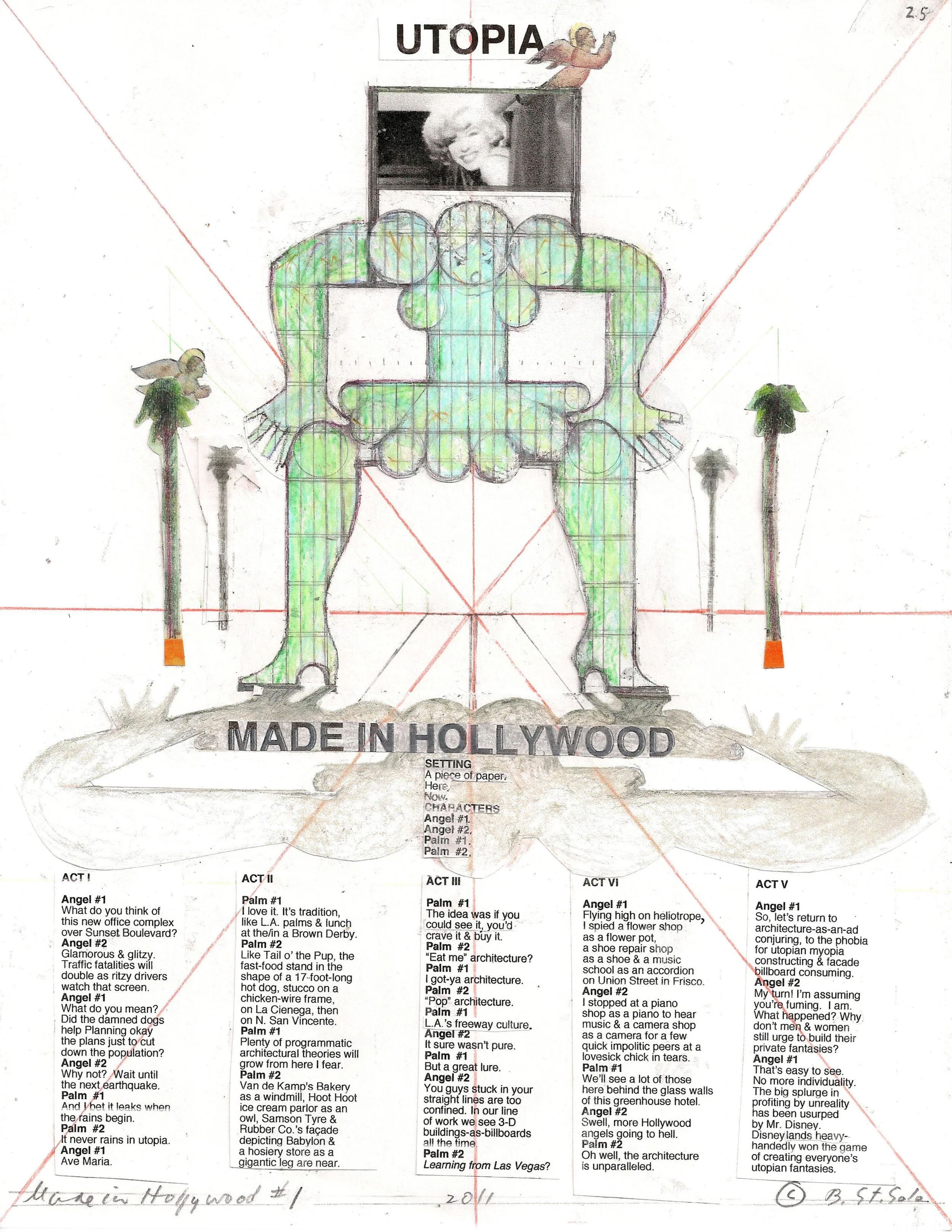
KUPPER: You have also been working on a series of books, like UTOPIA MYOPIA (2013), which has a page that is a five-act play set in Hollywood, between angels and palm trees.  

SOLOMON: That one section is totally illiterate. I never went back and cleaned it up, or I just gave up and decided nobody's ever going to read this, the type is too small. But you did!  

KUPPER: I dissected it immediately, because the lore of Hollywood attracts me. Did you spend time in Hollywood?  

SOLOMON: I've been down there a lot—with my first husband who was a movie maker, Frank Stauffacher. All the screenwriters loved him. That’s how I knew George Stevens and Frank [Capra], who was an angel! My husband, who had a brain tumor, started fading after he presented one of his movies. We went out for a drink, and my husband passed out. Capra, a strong little Italian man, just picked my husband up and carried him to the car. I mean, he's a mensch. We knew them towards the end when Frank was dying, and we were quite a scene. I was this beautiful little chick, and he was handsomer than the movie stars.  

KUPPER: That was the golden age of Hollywood.  

SOLOMON: They made the American Dream. For Capra, it was the American Dream to get out of Italy and the mess there and live in Hollywood. And make these democratic movies, teaching everybody to be good little democrats.  


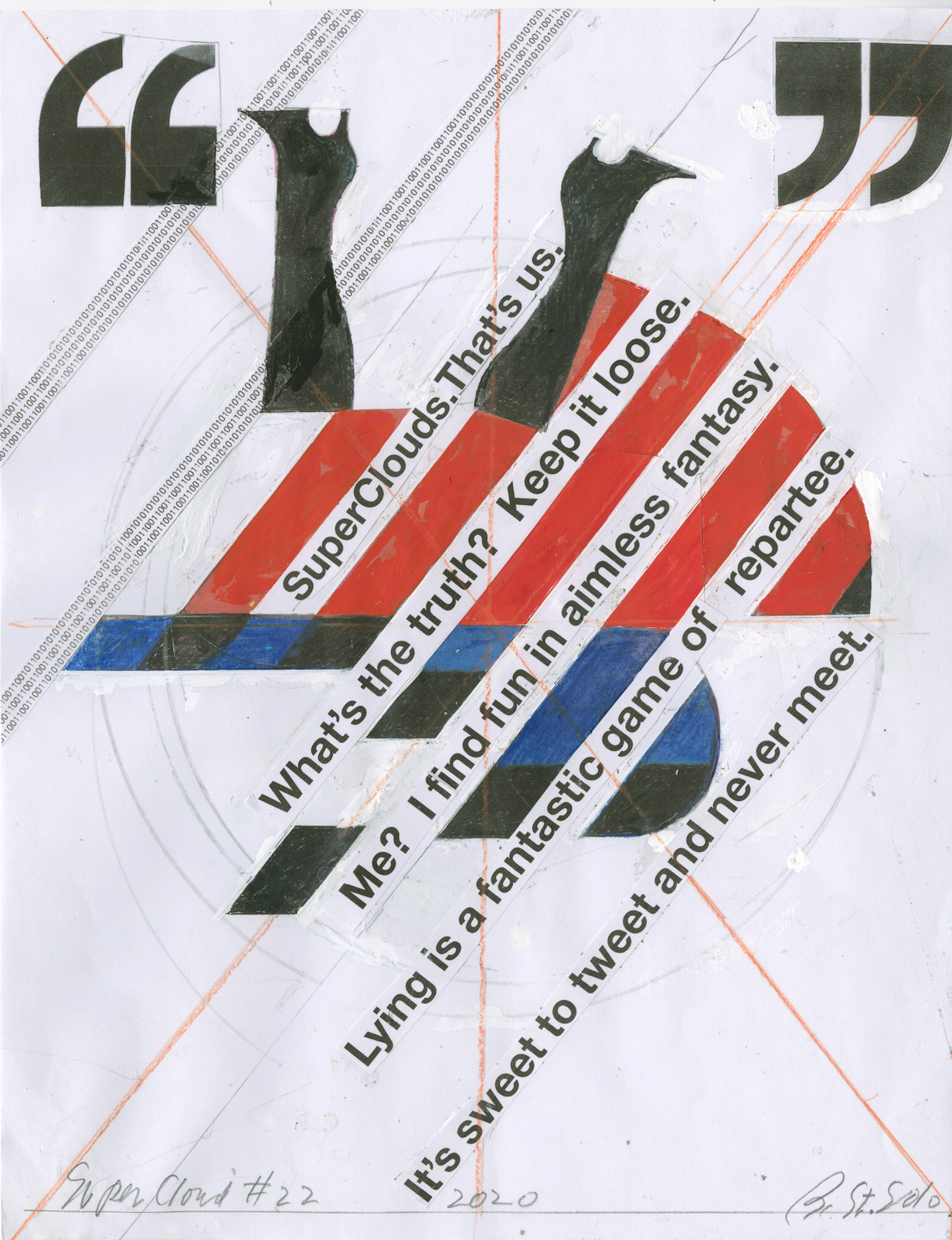
Barbara Stauffacher Solomon, Supercloud 22, 2020
Mixed media: Pigment print collage, gouache, ink, graphite,
colored pencil, white-out, cellophane tape, rubber cement, paper
8.5 X 11 in. (27.9 x 21.6 cm)
Courtesy the artist and Von Bartha


KUPPER: Did you ever meet Man Ray and what was he like when you met him?  

SOLOMON: Oh, he was sweet. He never said anything. He only talked about money. He was always short of cash. He always wanted to sell a drawing or a painting. He always wanted to have the next show because he needed money. We had dinner at their house one night, and Julie Man Ray was teaching me how to make risotto in the little kitchen. Think of yourself out on the corner of Hollywood and Vine and just walk about six houses south, and that was where they lived. That was in 1948. We went down and saw them on our honeymoon. And we took a walk around the block to look for the sites of where all the novels had been written. I was very young. I was sixteen when I first met Frank [Stauffacher]. He was fifteen years older than I was. He was fancy, and he knew all the surrealists. 

KUPPER: Where did you stay when you were in Los Angeles in 1948?  

SOLOMON: I would always stay with Lee Mullican and Luchita Hurtado. All the men were madly in love with her. She was so good at being charming, and she was just marvelous. She had been my best friend since I was about 16. I mean, she would tell me what to do, and I would do whatever she said. We were very close. They had a glass porch on the front of their house with a little cot in it. It was about three-feet wide. That was my bed.  

KUPPER: Wow, that’s an amazing memory of Luchita Hurtado.  

SOLOMON: I didn't even know she had her own last name. She was either Luchita Paalen or Luchita Mullican. She had so many husbands and names. And as long as the men with their egos were alive, they were the painters, and she was the one who cooked dinner. She never really let herself paint until she was a widow and had time. She always knew she could, I think, deep down. And the minute that Lee died, she started doing it, and then she was immediately very successful.  

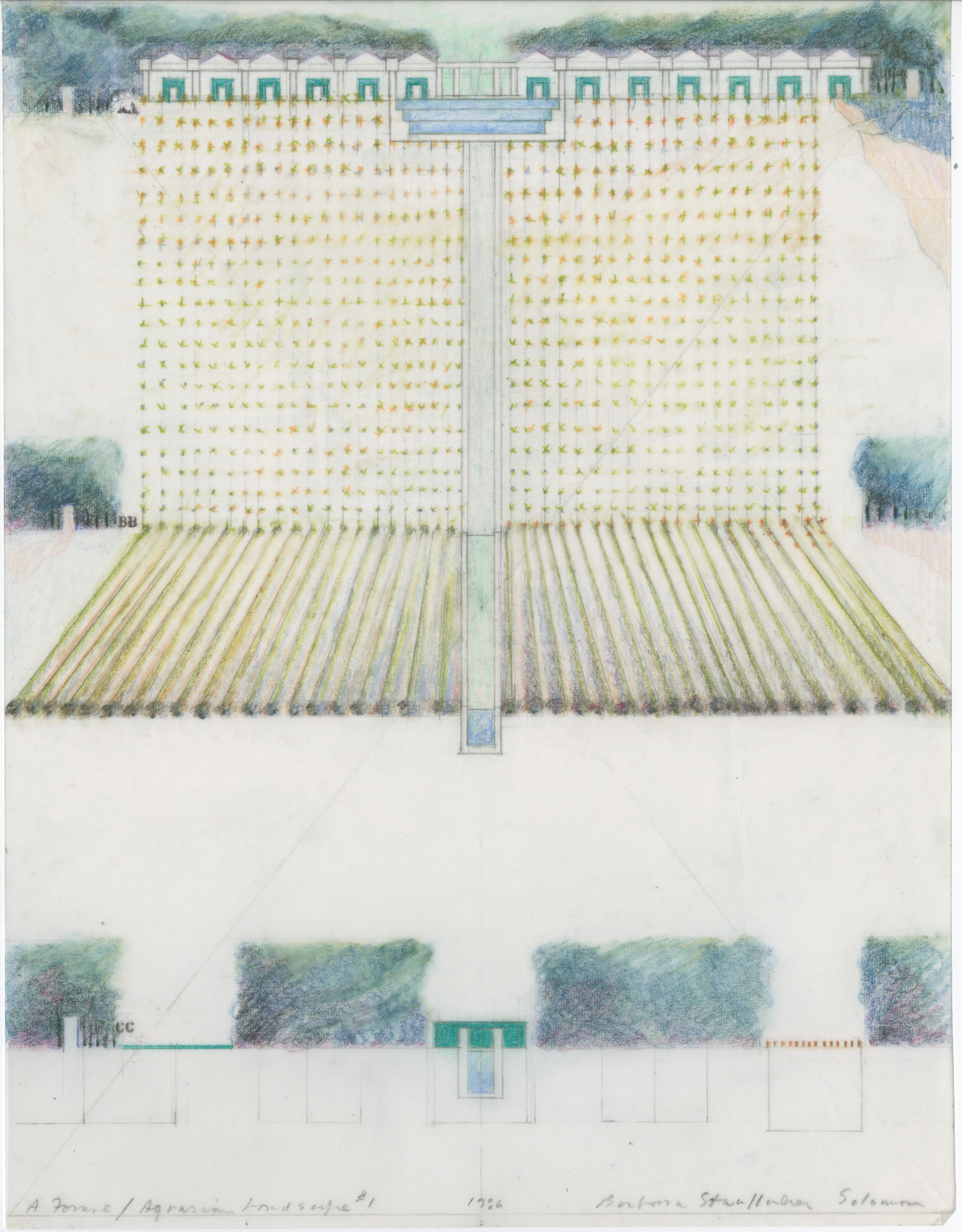
KUPPER: I wanted to talk about your thesis book, Green Architecture and the Agrarian Garden [1981]. Why is the union of architecture and landscape so important? 

SOLOMON: It's everything. They are two sides of one wall. First, the architect destroys all the trees and builds his precious little house. And then the landscape architect comes back and puts the trees and nature back. The world is all one big landscape. Inside the house and outside—they're all one thing in a way. They're extensions of each other. But in the architecture department, they hate each other. Architects think the landscape architects are the stupid ones who didn't have enough brains to be architects. And the landscape architects think the architects are the shits that are tearing down the trees.  

KUPPER: Well, a lot of architects are building now with more organic architecture in mind, where the landscape is more seamless with the architecture.  

SOLOMON: Well, the landscape architects have won. The landscape architects are going to save the world because otherwise, it's gonna get too hot, and everybody's just going to burn up.  

KUPPER: When did you start becoming interested in green architecture?  

SOLOMON: Somebody in art school once said, “Never use green. It's a very hard color to deal with, and never put empty space in the middle of your painting.” So I did both, actually. I have hundreds of those goddamn green architecture drawings. The ones with square trees that look like buildings. I just visually like green rectangles and want to make the world look that way. I was born in San Francisco and I lived all my childhood in the Marina District where there's the Marina Green. Every night with my mother, we'd walk around the Marina Green. And the grid of San Francisco has all these green squares where there are parks scattered around. At a certain point, the tops of the hills were just too difficult to build on, so they made them into parks. Little rectangles on top of almost every hill. 

KUPPER: San Francisco is such a beautiful, green city. And the surrounding areas like Marin. The utopian ethos has been so strong in California. Why do you think that is? And what does utopia mean to you as an architect?  

SOLOMON: All architects think they're building utopia. Even if it's just a gas station, they think it's utopia. 

I just think California is—I mean, open your golden gates! Since we found gold here, they assumed California is utopia. Californians have that feeling about California. That's why I came back. I could have lived in Europe. California is just an extension of people's bodies. 

KUPPER: Where do you think your rebellious spirit came from?  

SOLOMON: I don't know. My father was a lawyer, and he told me there's no such thing as god or the president of the United States. Don't have respect for any of those things. So, there's no reality. There's nobody you believe in and listen to. It's all absurd. My mother was like that too. She was a pianist. She was a rich girl that was no longer rich and loved walking among the redwood trees. She thought god was in the redwood trees.  

KUPPER: Can you tell me about Sea Ranch, and your contribution with the Supergraphics. When did the Swiss Style start to merge with the California Modernism?  

SOLOMON: When my husband died in 1955, I went to Basel, Switzerland to learn how to make money and how to be a designer instead of just a painter. I came back with all this training in me when they handed me Sea Ranch in 1962. Al Boeke and Lawrence Halprin, two of the architects, wanted Sea Ranch to be like the French new towns. Also, Lawrence had been raised on a kibbutz in Israel. First, he gave me an office that was in the same building as his firm. When they told me to do Sea Ranch, I designed it the way I had been trained under Armin Hoffman at the Kunstgewerbeschule in Basel. I had no idea what I was doing until I did it, I have to admit. But I was such a modernist. I went up there in a truck with the two sign painters. Everything had to be straight lines because they were sign painters and could only do letter forms. So my vocabulary consisted of what a sign painter could do. I started with that big blue wave on the west side of the building. The wave went up the shed roof, and then it came down, turned green on the other side. We only had black and white, vermilion and ultramarine blue, and I think one small can of yellow—primary colors. It was kind of like De Stijl. I was best friends with all the architects until I got all the press. Charles Moore never spoke to me again because I got in Life magazine and forgot to tell them he was the architect.  

KUPPER: So, who did they hope would live in Sea Ranch? Was it supposed to be for artists, for intellectuals?  

SOLOMON: No, Al was very square. I mean, it was supposed to be just plain old nice people. They weren't supposed to be intellectuals. And it certainly wasn't supposed to be second homes for the rich. That happened when they started making it so you could save on taxes with your second home. And that's when everybody was buying second homes up there. And they hired a couple of salesmen to come in and take over selling off the land. All of a sudden, it wasn’t about a nice town with a church and a school.  

KUPPER: Sea Ranch is really an example of an almost failed utopia.  

SOLOMON: It really is. It's very successful if you're rich. A lot of people from Los Angeles are coming up and buying property. Now it's all diamonds up there and the richest, trickiest people. 

KUPPER: Do you think design can be dangerous, especially if you are designing for a dangerous philosophy? 

SOLOMON: Of course, but that's what design is: it's the bullshit on top. It's making things look good.  

KUPPER: That's a good answer. I wanted to ask you if there is any connection to your time as a dancer and graphic design? 

SOLOMON: Every once in a while, it used to feel like it. When I used to work with the crew, and when you stretched your body big and long or got on the floor, I felt like I was making the same moves I made as a dancer. You're kind of moving with the paint with your arms stretched out. And you know, where I feel like a dancer again is when I’m at the SFMOMA making these stripes that'll make people walk from the entrance and up the stairs. They’ll wonder, now what am I supposed to do? And now, I'm going to give them big red stripes to have something to do. I’m choreographing them with art.  

KUPPER: Looking back on your career, what's the one thing that's been most misunderstood about you as an artist?  

SOLOMON: Well, nobody remembers that I was a widow with a child, and I needed money. The whole damn thing has been to support myself and my child. My husband, who died, his family just dumped me because my daughter has cerebral palsy. They were scared I'd ask for money. Then my second husband dumped me because he was young and cute. I aged, and he seemed to not. And I always had to support myself. I had two daughters, and I have a granddaughter. It was like, "Grandma is painting some supergraphics. I guess we can have oysters tonight!” If Frank hadn't died, I would have been a painter. And if I hadn't gone to Switzerland, I probably would have painted big color fields.  

KUPPER: Well, I'd say you came out on top.  

SOLOMON: Look, I was talented. I mean, when I had those two big rooms in the Sea Ranch to do, I was lucky, I got Charles [Moore] and Bill ​​[Turnbull’s] architecture. The walls had beautiful shapes, and I just followed the shapes and played with the shapes, and thank god it came out right. It's just dumb luck if it really works.  

KUPPER: Do you have any advice for people who might be reading this and thinking about building a better word; their own utopia? 

SOLOMON: I remember when I was teaching at Harvard, I asked the students, "What is art?" The answer: "It's nothing; just learn to see, and you'll learn that everything is art." The problem is that people look, but they don't see. If you look and see, the whole damn thing is certainly art.

Marina Abramović


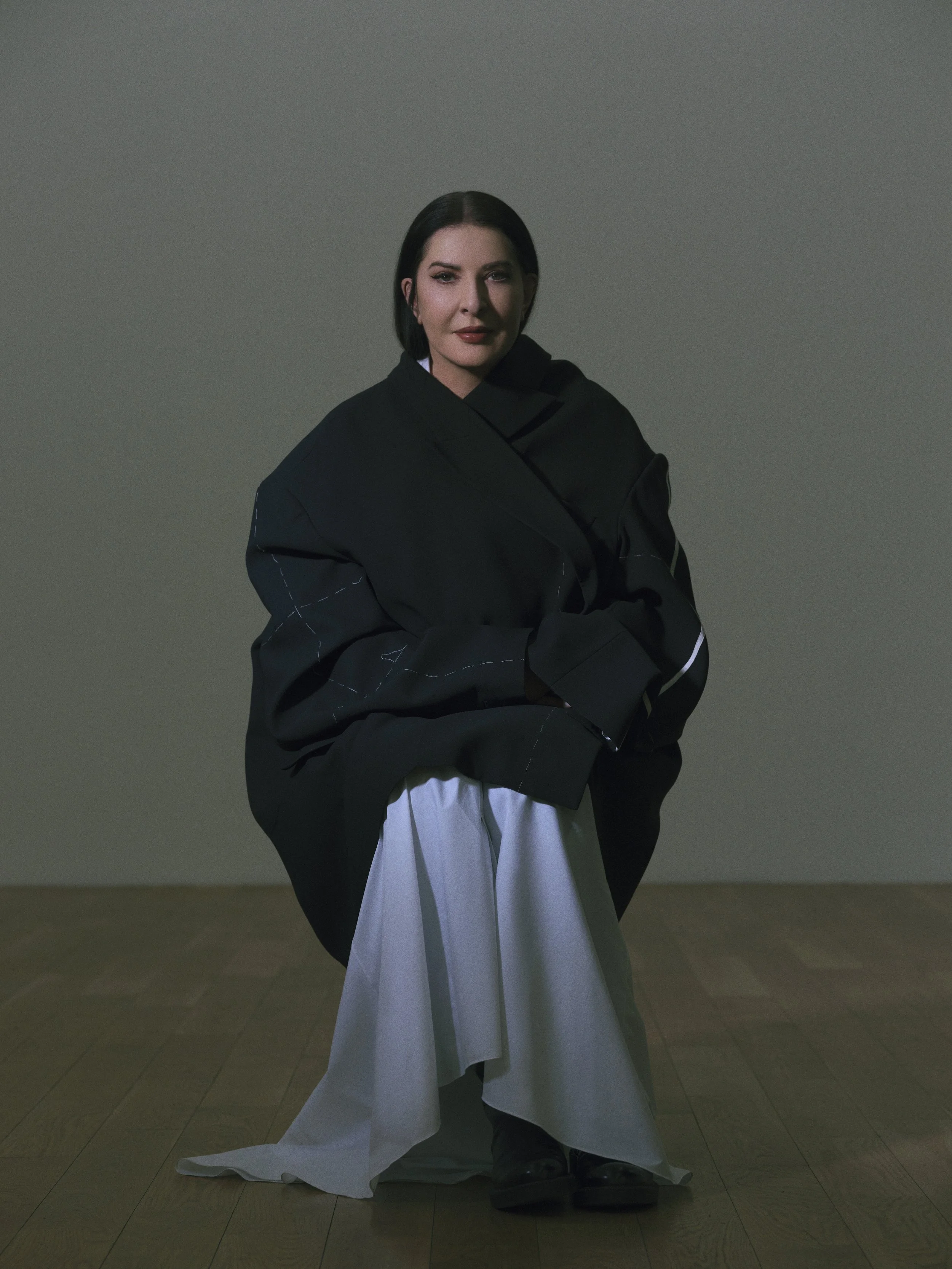
Peter Do oversized blazer coat and cotton wrapped blazer gown
Prada leather boots


interview by Miles Greenberg
photography by Justin French
styling by Julie Ragolia

Performance is a kind of collective action. It is one of the truest collaborative art forms. Since the 1970s, Marina Abramović’s main collaborator has been the audience to some of her most iconic, dangerous and breathtaking performances, which are often durational and test the limits of the human body. For Abramović, the artist is a universal vector for the experiencing of all things and all emotions. To protect her art form, she founded the Marina Abramović Institute, which regularly holds workshops, lectures, seminars and performances around the world. She was recently chosen for the Pina Bausch professorship in Essen, Germany, where she has been working with a multidisciplinary group of performance artists over the course of a year in preparation for their ten-day durational performance at the Museum Folkwang. Miles Greenberg was one of her performers in a six-day production, NO INTERMISSION, at Theater Carré in Holland that took place earlier this year. They caught up to talk about the transformative power of durational performance and the importance of freedom in one’s artistic process.

MILES GREENBERG: You came up as a young performance artist in Amsterdam. Can you talk about how the show we did together at Theater Carré reflected those years in its format?

MARINA ABRAMOVIĆ: You know, it was inspiring that the space where we did the performance is not a museum space, it’s not a kunsthalle, and it’s not the kind of space where you traditionally show art. This was a theater, and to actually break all of these rules that the theater imposes and create new rules—the playfulness was a very important part of the show. After doing this stuff for fifty years now, I’m so fed up with the rules, with the political correctness, and with all the shit that’s going on. Now, with a bit of nostalgia, I'm looking to futurists, to dadaists, to surrealists, to all these people with groups that actually created a history of art by playing. They weren’t afraid of mistakes. This is such an important situation where real, live art can happen, and also shit can happen, and both of those things are so exciting for me. We chose the artists but the artists were free to propose the things that fit them the best. Normally, if you have a show in a museum, you have to send the title of the performance, the duration, and what space it’s going to be in. All these regulations have to be followed, and then the work is made. I mean, who could have predicted that on the last day, the audience and the performers would jump into the canal, just like that (laughs). Normally, you don’t jump in the cold canal in Holland, apart from it being dirty, but never mind.

GREENBERG: I totally feel that. I think it resonated so much on a personal level when I went and participated. On the flip side, I had a museum show that I was working on back home in New York that was very regimented. Every single day I was having to deal with another tiny issue. There was so much preconception that it completely lost the spontaneity. It was great, but that process is so different. The performance we did in Holland, I had no idea what to expect, and that was such a palate cleanser—to be able to feel the immediacy of how the performance came to be. It’s an immediate art form. How does immediacy in that way—and the gratification of being able to create something and see it immediately with your body, with the audience’s body—how does that still play into your work and your practice today?


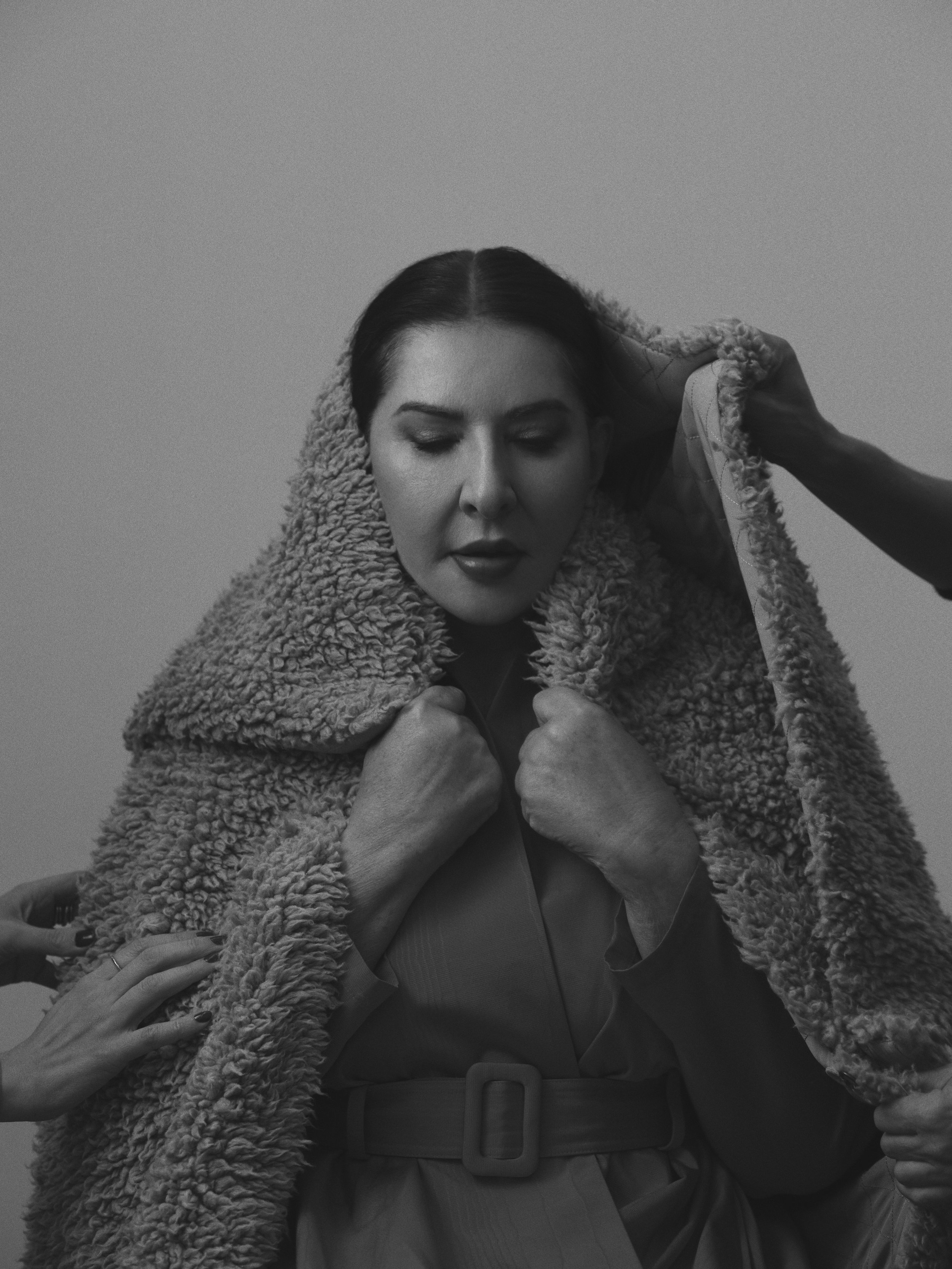
Marc Jacobs merino wool, baby alpaca and polyamide hooded cape
Gucci moiré smart coat


ABRAMOVIĆ: Jan Hoet was one of the very few great curators in art history, he was the director for documenta IX, and at the time, he took from Joseph Beuys' 350 secret potato recipes. So, every day we would have a new recipe and we hated potatoes. We wouldn’t get anything else, but he created this kind of family situation where you eat potatoes even though you hate them and you create art, because we all have to be in the same space with the same chemistry for this to happen. We need this feeling of freedom to create anything. It's from chaos that things actually happen, but you have to have that kind of vision.

Your project went through so many different phases. You were proposing one idea and then something else completely. What makes it great is when it's not just the artist who is doing experimental stuff, but the people who organize the performances need to have the same attitude. Did you feel the freedom to change the concept and everything else as you went along, even once you were in performance?

GREENBERG: Oh, things changed up until the last moment of the very last performance, absolutely. There were so many decisions that were made while making and while doing. The opportunity of having six days to feel it out with that audience every single day in a different way was great. Not everybody performed every single day. There were different versions and configurations, and everybody was working so much internally. For example, the way that Ying Mae walked through with her singing vase—it made the performance radically different from the day before.

ABRAMOVIĆ: When the public normally comes to a performance, they’re led into an auditorium, they take their seats as they’re used to. But then, they had one person, which was me, actually watch over them. And my watching was designed to turn them toward something they’re going to see, something that would be for a long duration, where they can just relax and take this as an experiment. I was trying to make this kind of dream for them, and after that, it strikes them that some can go to the left side, others to the right side, and some can go up. They were all free now to move around. But to start with a very simple exercise—let’s all breathe together twelve times—these simple exercises are so important to energetically connect everybody who would normally come to the theater not connected, and it works. So, the only structure was that one, and then everything else was so free, and whatever happens will happen.  

GREENBERG: I love the way that you describe the difference between theater and performance. In theater, it's a fake knife and you’re seeing ketchup, whereas in performance, the knife is real and so is the blood. You like to bring people into the universe and prepare them to see something. I’m wondering how that differentiation exists in the audience’s body?

ABRAMOVIĆ: What we were doing at the Carré was so interesting because it was a mix of everything. There was a big performative team that was very theatrical, but also there was the Spanish guy who would really take a drug that would knock him down, and then he’s left to the public to take care of him. It was absolute exposure, vulnerability, and danger. This was real and you could immediately see how the public reacted emotionally on each day. Your work was extremely emotional too, it was dance, but you introduce this physicality of endless time, where you could come and see it in the ballroom and then you could have a full dinner, come back, and it's still there. It’s never-ending, that investment of time, of possible danger, it brings a lot of emotion to the public. The durational performance form is so unique because it has this transformative function. You’re not just doing it because you’re going through the process and changing yourself, you’re also changing the public. That’s the key. It was so interesting how every day more and more people came. They would invite their friends, and those friends would invite their friends because they couldn’t believe what was happening. At the end, it was this huge celebration and the audience was no longer looking at something, they were a part of something.

GREENBERG: Can you talk a little about teaching at Essen, the legacy of Pina Bausch and that crossing over with your performance work?

ABRAMOVIĆ: My love for Pina Bausch really dates back a long time. In the ’70s, she had an incredibly radical approach to dance, made some amazing pieces, and there’s hardly anyone left from the original company because everyone is so old, but the new group is still performing these pieces. Every time I see their work I’m in shock by how relevant, how contemporary, how incredibly important it is, and how many other choreographers take from her to create their own work. For her, dancing was everything. It was walking in the snow with bare feet, standing in the forest, smoking a cigarette—there was no limit to what dancing was. And also, working to the point of trance. I went to see The Rite of Spring, which I had already seen several versions of, but I wasn’t prepared for this one. They went to Uganda and they took thirty dancers from fourteen African countries, male and female. The moment they started to act, you’re elevated to this spiritual, shamanistic, energetic level where you hardly even notice you’re breathing. Unbelievable. It was so spectacular because they add their own culture to the dance, which she made space for. This was really something.

I stopped teaching a long time ago, but I got a phone call from Pina Bausch’s son and he said that when she died, she wanted to establish this academy in Essen where people from different disciplines could create a multidisciplinary group, and I was the first teacher who’d been asked. It would only be teaching for one year and we could propose different people. I got 150 proposals and I chose twenty-six people. These people are coming from from physical theater, from drama, not many from dance, a male opera singer who is a soprano, there are jazz vocalists, composers, and none of them have ever done anything durational in their own fields. So, we’re working together for this big event and they gave me half of the museum where they’re going to perform for ten days, six hours a day. More and more, I want to create new work that mixes performance and dance. The Pina Bausch approach to the physicality and the spirituality of dance really speaks to me the most.

GREENBERG: I’m curious about your group of students. What kind of work are they producing?

ABRAMOVIĆ: The way I’m teaching, I want to be just a conductor to their own ideas. I don’t want to push my ideas, so I don’t even talk to them about my work. They can look on Google, but I’m not giving it. They bring their own stories, problems, investigations, dramas, whatever they want to do. There’s one student, she’s working on physical theater and her biggest drama is feeling ignored in public but being too chicken. So now, she studies chickens. She went to several farms in Germany, she covered herself completely with feathers, and she’s going to do ten days, six hours a day, being a chicken. It’s perfectly done and I just give her space, time, and the facilities.

It was very funny also to tell them how to value their performance projects financially. Because they are students, they are not going to be paid. The school pays for the production, plus they get a museum show, TV show, catalogue—I mean, I’ve never seen such a thing in my life. But I said to them, “In real life, you have to be paid for what you do, so put the price.” Some of them put like 300 bucks and some like $10,000. Very interesting how they value their work. (laughs)

GREENBERG: You’re an extremely good teacher, because nobody ever teaches that.

ABRAMOVIĆ: You know, I never got paid for any performance in my entire life until The Artist is Present [2012], and they had to pay me because I performed for three months in the museum and I had to pay my mortgage. Tino Sehgal is a genius because he really found out how to sell a performance. Kiss [2003] was the first thing he ever sold and he sold it for $250,000. It’s an edition of five plus two artist proofs, and lots of museums bought it. Every museum has to pay for the piece plus the performers, but at the same time, you have to control who they are. I saw this piece performed really wonderfully, and then another time I saw two shitty guys who had no charisma, nothing. So, you have to set up rules for how the piece should be performed in the future.

The Earthly Community: Reflections on the Last Utopia by Achille Mbembe

text by Achille Mbembe

Let’s thus return to the Earth. Our planet. The last utopia. It is distinguished from the other planets by its hospitality, that is, its disposition to make room for more than just one, to give space to multiplicity. Hence its participation in the form of the reserve as much as in that of the reservoir.

The Earth we are talking about here is not the exact equivalent of the world. We should not either understand by “Earth” simply ground, or plot. Instead, “Earth” refers to the idea of a self-renewing life of literally incalculable value that escapes any absolute power of mastery. This body of the Earth is thus living and animated, and one of its properties as a material is, moreover, that it is life-enabling. The Earth is consequently this living body without which we could not exist. It functions as a condition of survival for practically everything else. This makes it a metamorphic power, which is not anything abstract. It is a power that it is physical, sensible, insofar as it affects the living and lets itself be affected, even touched by it. If this power has a body, it is also permanently actualized through a multiplicity of bodies in movement, which it constantly mingles with and accompanies, and to which it contributes to provide a relative ontological stability. This has not always been so. In order to become a vast reservoir of life, the Earth needed the sun’s radiant energy and that reflected by the continents, the oceans and seas, and the atmosphere, among other things. Of all the names it has been given, this is probably the one that suits it best. The Earth’s specificity lies in its being a place of refuge for life, when life might otherwise have been extinguished.

Even after the great periods of extinction, life has endured. But nothing indicates that this will always be the case. The sun is going to get hotter and hotter, and redder and redder. It is going to get older and will perhaps die out one day. As regards the Earth itself, should it run out of water, it will turn into a gigantic negative mass. This would then definitively seal its kinship with the other planets.

In most African cosmogonies, the Earth is given as an uncountable set of signs, the means by which life comes about, matter is animated, and movement, actualized. As powers and spirits of nature inhabit and animate it, we cannot say that the Earth is immutable. In reality, it is always in the process of constituting itself; that is, it is disposed to foster the appearance of unforeseen figures of the existing, which it welcomes in its midst and in its hollows.

In this sense, the Earth is a substance that is both constituted prior to its inhabitants and all those who live off it, and is in turn assembled by these latter, humans included. This assembling occurs through the practical operations by which they form alliances among themselves, share it, divide it into delimited parcels, codify its uses, exploit it, confront each other, unite or separate, and redistribute its resources. As it stands, through the air we breathe and, to a lesser extent, the water we drink, the Earth includes those major links to which we are all connected, the chain of things and people, all living beings, animate and inanimate of which it is like the common fabric, both soil and shelter.

No one has absolute sovereign power across the entire expanse of the Earth. Some singular uses can be made of this common soil and shelter here or there. But no one actually owns it, and it is unable to be entrusted to the goodwill of a single person. When it comes to the Earth, no one, not even a state, has the power to act alone freely. Notwithstanding legal fictions, we are therefore not its owners, that is, if by property rights we mean the integral holding and exercise of “full powers over the thing-object of law.”

In truth, we are above all its inhabitants and, most of us, passers-by on it. We can, through technology, capture the Earth’s forces and recode them. But according to an animist metaphysics, we are unable to enframe the deployment of its life and essential springs. In other words, while we participate in its regulation, we do not do so as its equals. We are simple inhabitants among many others, or, better, “guardians” among inter-generational chains of solidarity. Moreover, our status as inhabitants and guardians is provisional, as our demise brings this status to an objective end. Indeed, upon dying, our ability to access that plot of land, whose owner we consider ourselves to be, for its use and its enjoyment, terminates. Besides, were the Earth to leave the world of nature and become a legal entity, it could only be as that which, by definition, is inappropriable

Thus, the Earth has an immaterial dimension that fundamentally distinguishes it from the sphere of things available for appropriation, or for integral absorption into property relations. This is precisely what makes it not a “common thing” but a “community,” an ambiguous community. Corresponding to this community of Earth is the basic universality of all its inhabitants. Taken all together, human persons cannot be said to own the Earth, nor can any other entities. Rather, they are its citizens, insofar as they are given an indisputable place on it. If they have a right to this basic hospitality, it is limited to a right to shelter, to a right to dwell on it. This right is, strictly speaking, a right of lodging, and it is unconditional. The Earth indeed provides a place for all, without discrimination. To enjoy this place, you do not need a property title. You receive it by the simple fact of existing, of being alive, of being here.

The idea of an earthly community is thus poles apart from the concept of a “land law,” as that which is deemed to exist prior to any convention and any contract (a nomos of the Earth). Contrary to the gesture of division and appropriation, contrary to the logic of enclosures typical of the European nomos of the Earth, the faculty of inhabiting is not the equivalent of the right to dispose of things unreservedly. On the other hand, habitation necessarily supposes co habitation, that is to say, making room for others, for beings other than oneself, other than human, for All, in fidelity to the Earth’s very vocation to be a dwelling for all. In this scheme of universal redistribution, no one is deprived of shelter and everyone has the fundamental right to a share. This birthright precedes all other rights. It is the equivalent of the right to breathe.

the all-world

“Decolonize” is a summons of limited interest, however, if it does not lead to genuine disappropriation, just as the late Édouard Glissant had recently outlined it. Glissant spoke about the great gesture of disappropriation as the All-World. The concept of the All-World has three distinctive features. First, it stands in total rupture with all forms of closure onto a self, whether that form is territorial, national, ethno-racial, or religious in nature. Second, it is opposed to the kind of authoritarian universalism that underpinned the colonial enterprise—a universalism of conquest that sought to actualize itself not in a multiplicity of bodies and extants, but in a single body that is arbitrarily held to be the one and only truly significant body. Third, in the spirit of the All-World, the call to know is initially an invitation to emerge from willful ignorance, to discover our own limits. Above all, it is a question of learning how to be born-with-others, that is to say, how in uncompromising fashion to break the mirrors that we inevitably expect to reflect back an image of ourselves. 

The world of the All-World, as Glissant conceived it, is woven and hatched from the entanglement and relations of a multiplicity of centers. For Glissant, the greatest obstacle to its advent is an ignorance so unaware of itself that it winds up turning into a pure and simple nativism trying to pass itself off as science and as universalism. The struggle against this venal form of ignorance requires that you step outside yourself and intentionally open up the possibility of multiple passages and multiple crossings. Indeed, it is the test of passage and crossing that permits us not to talk incessantly about ourselves, or about other worlds, and often in their place, as if they did not already exist for themselves, but instead to look together and eventually to see, but from several worlds each time.

The same can be said, mutatis mutandis, of disappropriation itself. Sharing or repairing the Earth means striving to listen, look, and see the real from several worlds and centers at once; it means reading and interpreting history on the basis of a multiplicity of archives. This project requires that a renewed critique of difference and segregation be urgently undertaken. For without this resolute critique of difference, what V. Y. Mudimbe called “the colonial library,” as the cornerstone of Eurocentrism, cannot be dismantled. Sharing the Earth also means learning to be born together (co-birth). Moreover, being born together is the only way to overcome the double desire, specific to colonial thinking, of abstraction and segregation—the separation of humans from one another, and of humans from other species, nature, and the multiple forces of the living.

The colonial illusion has thus come to an end. On its ashes we see new lines of thinking that are commensurate with the planet emerge in the North as well as in the South and East. Most of these lines of thinking concern not simply humans, but also the Earth, fire, air, water, and winds, in short all the living. They are all anti-colonial by definition, if by “colonial” we mean a refusal to “be born together,” a determination to separate, erect walls of all kinds and fortresses, to transform paths into borders, identity into an enclosure, and freedom itself into private property. These anticolonial and post-Eurocentric lines of thinking privilege not essences or compact and homogeneous blocks, but porosities. They are not tied to a nationalistic heritage. Where Eurocentrism used to cut time, space, and history into discrete elements, marked by supposedly irreducible and unassimilable differences, these lines of thinking concern entanglements.

In art, music, film, and other forms of writing, these lines of thinking are multiplying passages and building bridges. Where late Eurocentrism everywhere sees only lines of occupation, bridges that require burning, walls and prisons that need building, and points of arrival that ought always to remain unconnected to points of departure, the All-World posits that we are all traversed by multiple genealogies and wrought by sinuous and interconnected lines. We clearly bear witness today to the rise of these anti-colonial and post-Eurocentric lines of thinking, and not only in the South. Their burgeoning extends even into the heart of Europe. But at a time when people are withdrawing into their, often fantasized, identities; at a time when conspiracy and the deliberate production of falsehood and discord reigns, this flourishing and the echo they have among the younger generations arouse anxiety, fear, and panic, especially but not only in the old centers of the world.

Excerpts from The Earthly Community: Reflections on the Last Utopia. Copyright, 2022, Achille Mbembe. Translation by Steven Corcoran. Commissioned by V2_. All rights reserved. Reproduced with permission of the publisher.