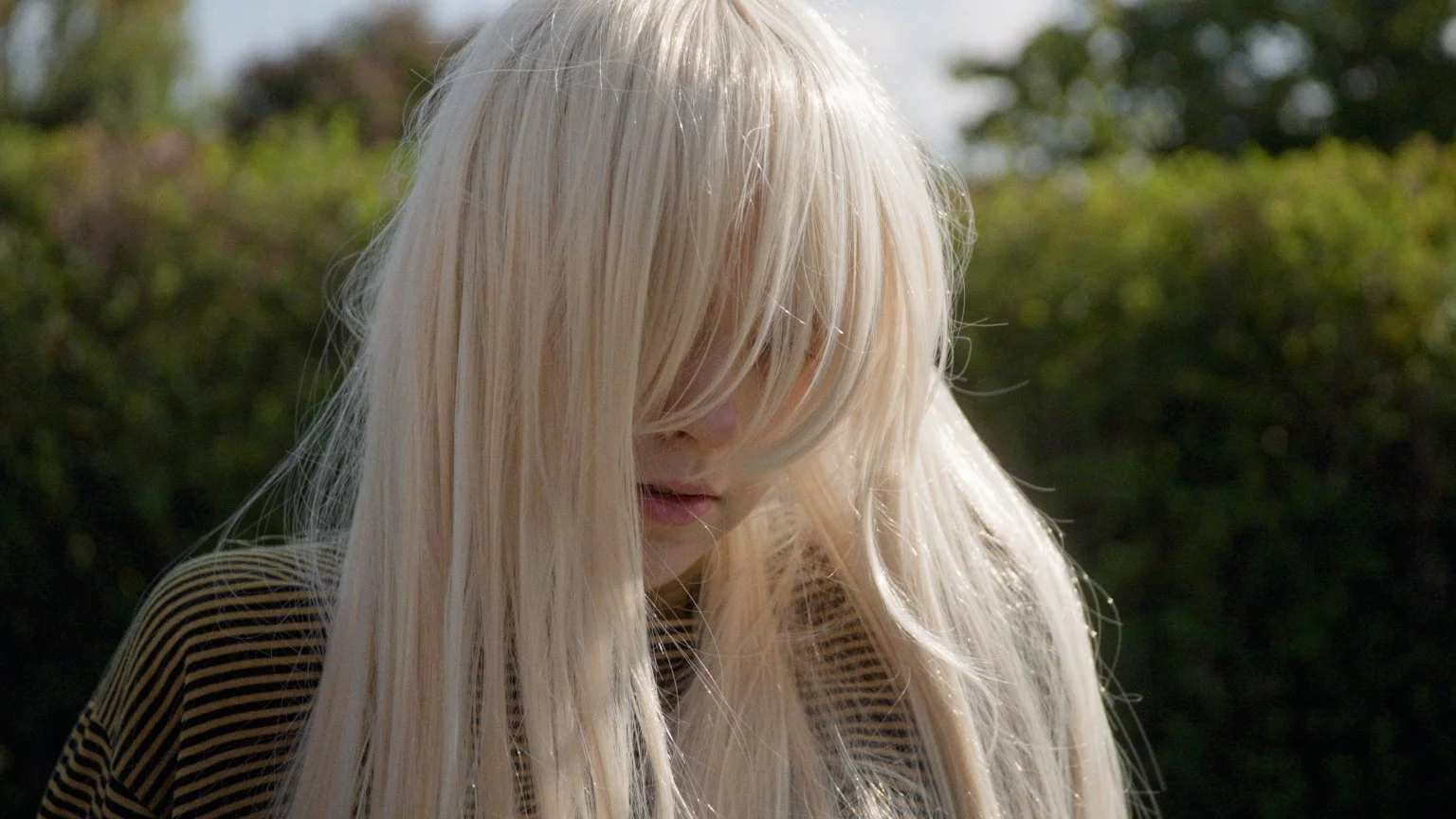
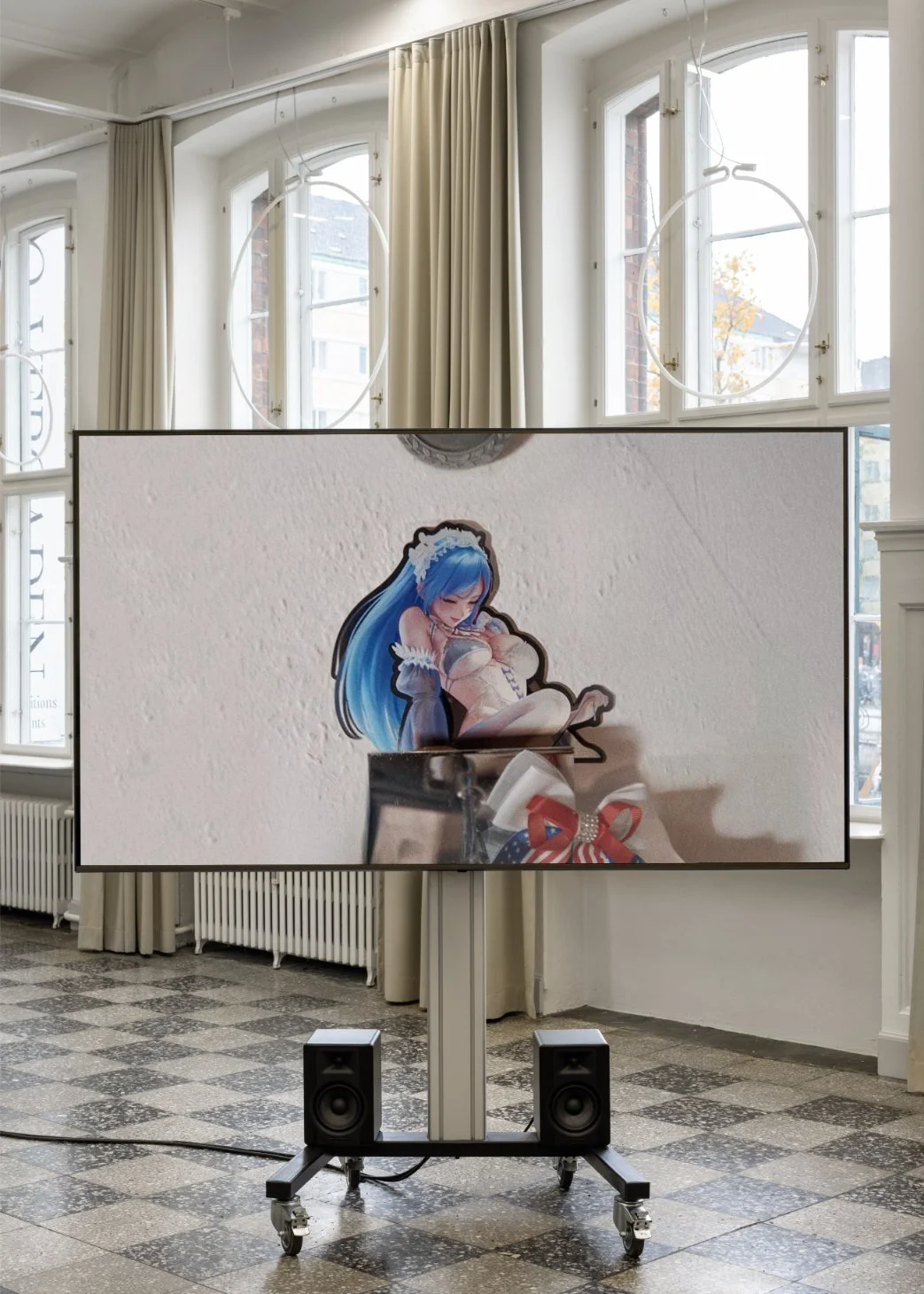
A Year without Summer ©
Mayra Wallraff, Florentina Holzinger, 2025
interview by Nora-Swantje Almes
Multidisciplinary artist Florentina Holzinger explores the cyborgian relationship between man and machine through violent and ecstatic performances that involve extreme stunts, body modification, and live sexual acts.
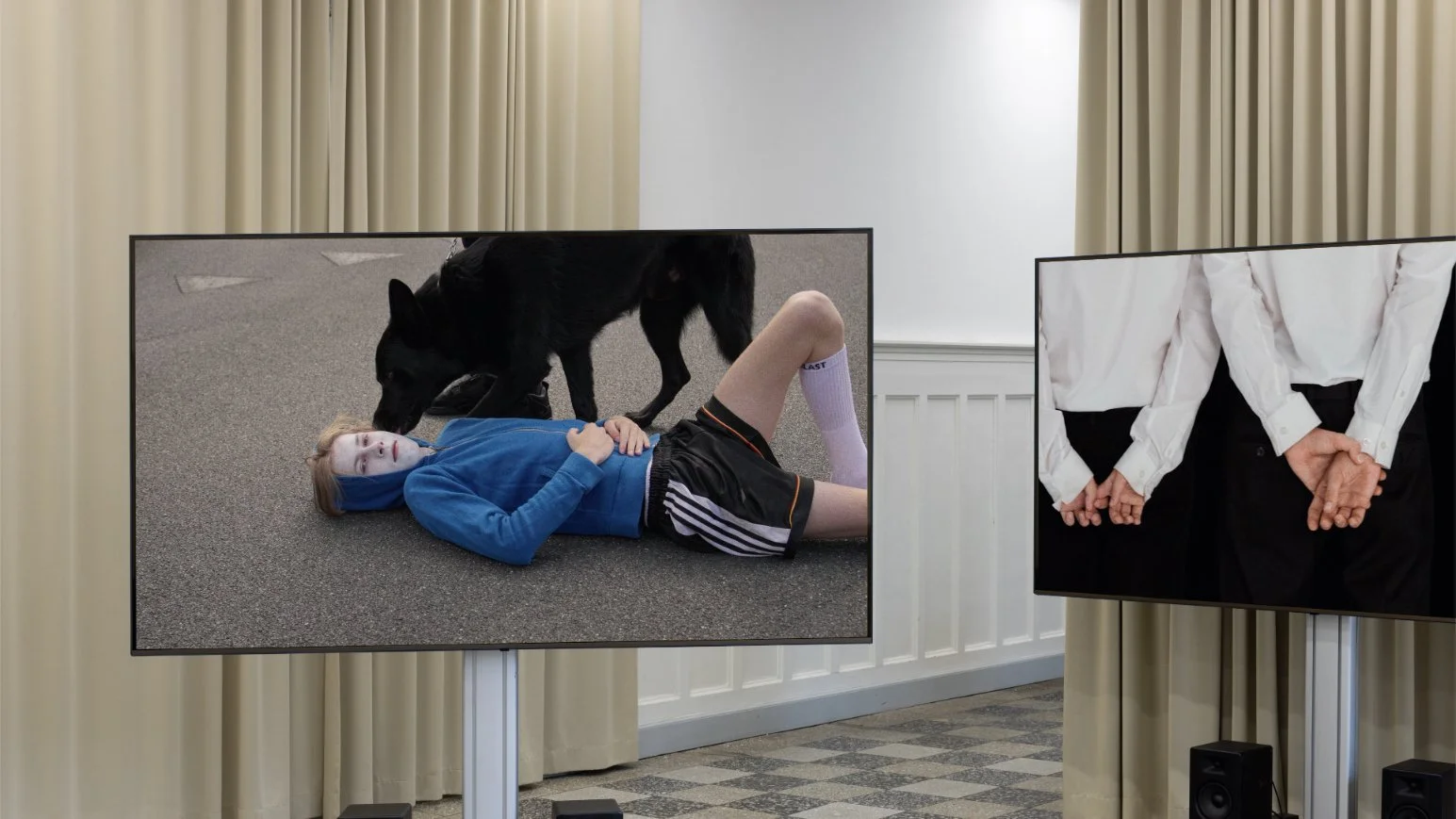
Étude for Disappearing. Composition for eight bodies, five harps and a car, Disappearing Berlin at Schinkel Pavilion (2022) ©
Silke Briel, courtesy Schinkel Pavilion, Florentina Holzinger, 2022
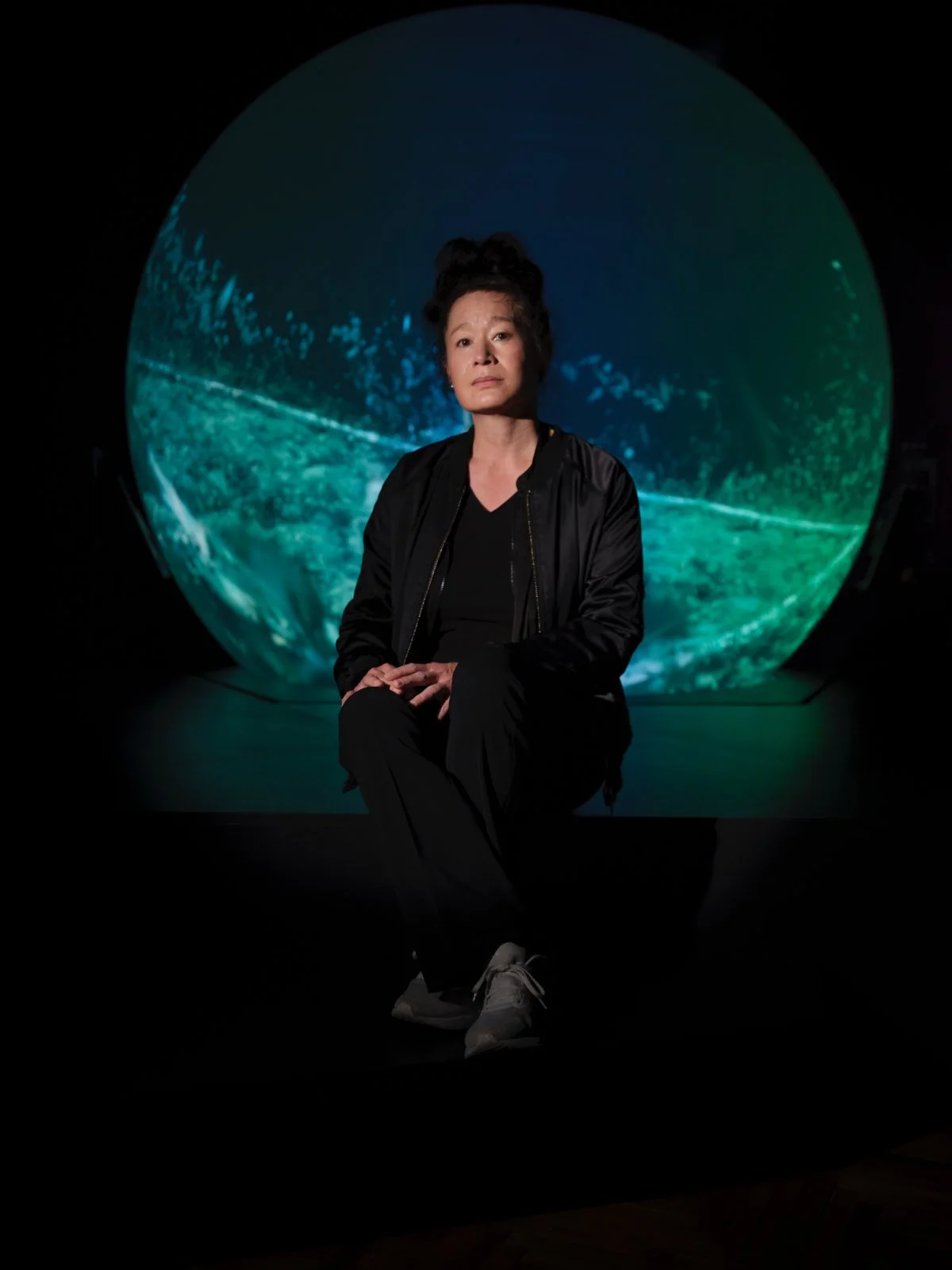
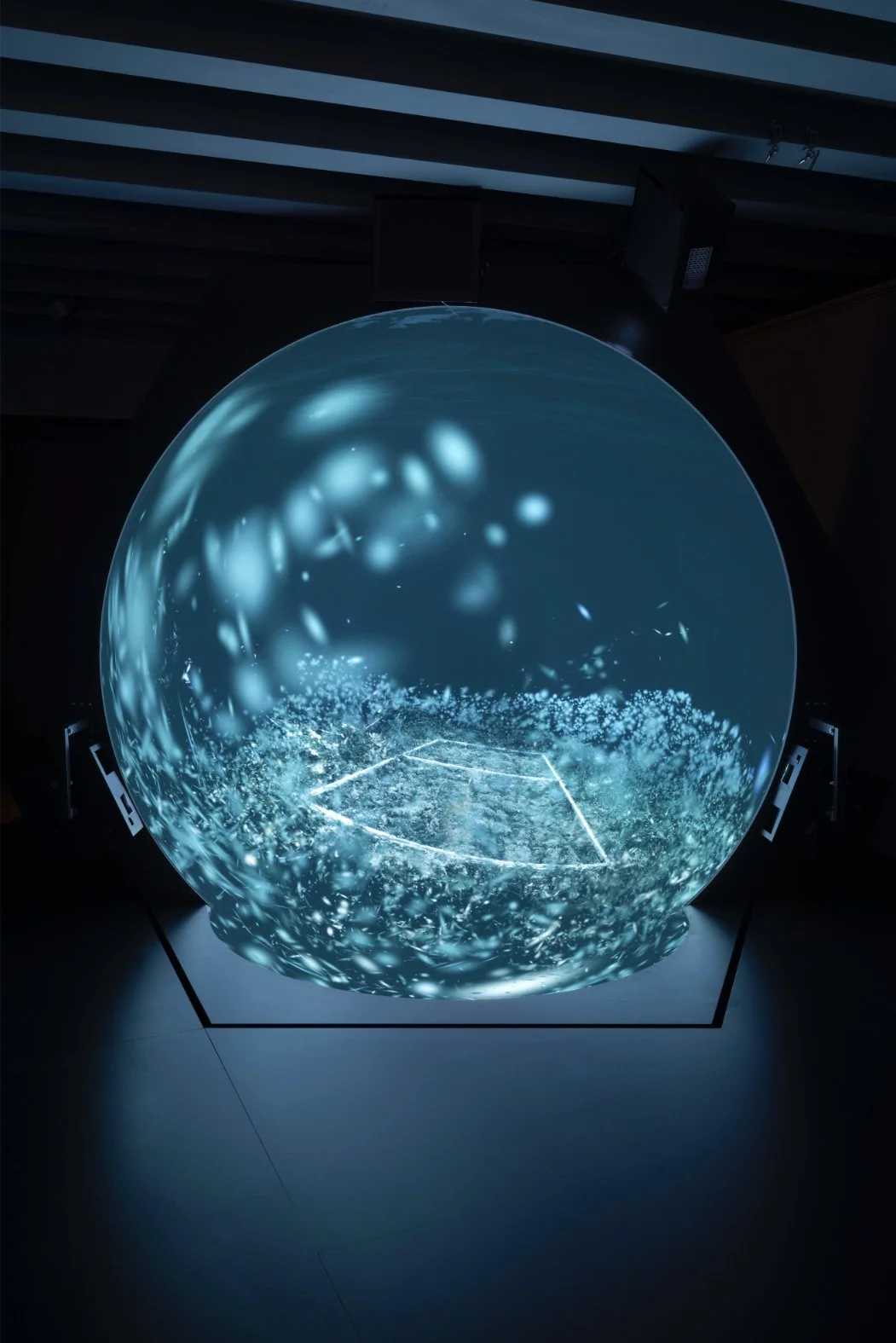
Chosen to represent Austria at the 61st Venice Biennale, Holzinger will premiere SEAWORLD VENICE. Curated by Nora-Swantje Almes, the installation is conceived as “an underwater amusement park, sewage treatment plant, and sacred building”—a metaphor for a world dying of thirst in a drowning world.
NORA-SWANTJE ALMES Venice is a city submerged in water, and your work has been evolving around water for quite some time now. It started on a larger scale with Ophelia’s Got Talent, but you also worked with water and on water surfaces at different institutes. For example, we have worked with lakes, and we worked in a harbor together. Where does this fascination with water come from?
FLORENTINA HOLZINGER Actually, I always hated water because I got a lot of ear infections as a child. My mother, who is also a pharmacist, was always like, “Don’t go in the water!” I had many operations and stuff, so I didn’t start diving until a few years ago. When my mother heard about it, she was terrified. And then it felt a bit like, if you don’t pathologize yourself all the time, you realize everything is fine. And in a way, for me, coming from dance, the water has literally always been a wet dream. The laws of gravity are totally changed; it’s a wonderful place to be: submerged completely, like going into flight mode without flight. When René Pollesch invited me to the Volksbühne, I knew I wanted to construct a water world there, and that’s when we made Ophelia’s Got Talent. In this show, many myths surrounding the water rise to the surface, and creatures come up from the deep to tell their stories.
ALMES To stay with this diving theme, how did the testing and development of the Ophelia piece go? Of course, it had to be in the water.
HOLZINGER The theater hates nothing more than water, from a technical perspective. Theater machinery, electric circuits everywhere—it was for sure not the greatest idea. And the thing most people forget: water is incredibly heavy. So we were rehearsing far out in an industrial hall, without heating. We would come to rehearsals in the morning, hoping the water would still be in the tanks, which wasn’t exactly the case every time. It was a trial-and-error period.
After Ophelia, we developed many other projects: most of them on dry land, but some took us to lakes or even the ocean. When we visited the Biennale a couple of years ago, we felt strongly that this could be a revival of our Melusine Studies. Venice is a city that regularly floods, so, in a way, a water project is more practical here than in any other city in Europe. The Giardini has an amusement park feel—almost a nightmarish version of one. All the imperialist nations have their own little temples. It’s really like a fun park in the way it’s organized, with different themes and topics representing nations. We thought this could be perfect for an Austrian water world. So we come with a certain conceptual luggage, but we are also opening up to the many new perspectives that this specific context brings.
Venice is a powerful example of a completely artificial city built on water. It’s almost a blueprint for what civilization is capable of. But what are the immediate consequences of that? People in Venice know the city is sinking. Floods are becoming more and more frequent. At the same time, the measures used to deal with this—large floodgates, dredging, and other interventions—often have damaging effects on the ecosystem. It becomes a vicious cycle of trying to fix the problem while also making it worse. The working class has left the city; everything caters to mass tourism, with all its symptoms. Of course, the Biennale is part of that dynamic, so we are also implicating ourselves when we exhibit or visit. All of these questions become important for what we do in the pavilion.
Ophelia’s Got Talent ©
Nicole Marianna Wytyczak, Florentina Holzinger, 2022
ALMES Ophelia's Got Talent starts with a talent show, so you immediately introduce this entertainment factor, along with the tropes of the climate crisis, which is inextricable from the water crisis. We talked about SeaWorld in San Diego being an interesting reference.
HOLZINGER SeaWorld, like other underwater parks, is about experiencing the exotic—the things we don’t know, even the endangered—neatly packaged. The essence of an underwater theme park, in the context of our highly extractive entertainment culture, lies in the simulation of nature as an artificial experiential space. It's no longer about the genuine, slow experience of nature, but about a condensed, spectacular experience, about consuming it easily. For us, it made sense to reverse that dynamic in Venice: the people visiting Venice should become the creatures. Conjuring something like SeaWorld also implies a certain level of audience participation and the expectation of spectacle, and we want to live up to this demand.
ALMES It also has a dystopian feel. Because all of these SeaWorlds have, in a way, collapsed and gone out of fashion. So, we have the spectacle of entertainment on one hand, but then also the fragility of that.
HOLZINGER The Austrian Pavilion was constructed in 1934 by the architect Josef Hoffmann, with the intention of creating an art temple. It was indeed a church builder, Robert Kramreiter, who was involved in the construction. So the modernist features of the building are intended to show artworks as relics, to allow for some sort of church-like experience. So we are not only creating this underwater theme park, but it is also intended to be a sacred building, a room for reflection, donation, and a sort of “sacrifice.” Our watery installation technically functions as a sewage treatment plant. Concepts of purity and dirt are of utmost importance, both in a water world and in a church. So our waters are in a constant state of transformation: from clean to dirty—in endless cycles, the same as the water in the canals of Venice. So what we mean when we say flooding the Biennale, or flooding the pavilion, is not just flooding it with water, but also flooding the senses.
ALMES Knowing your work from the stage is one thing—you’ve presented it in more traditional theater settings—but with these newer formats, you have entered the public space. In Venice, you’re working toward a seven-month durational piece. All of these contexts create different dynamics between the performance and the audience. I’m curious how you think about audience engagement and about the different roles the audience can play within the work.
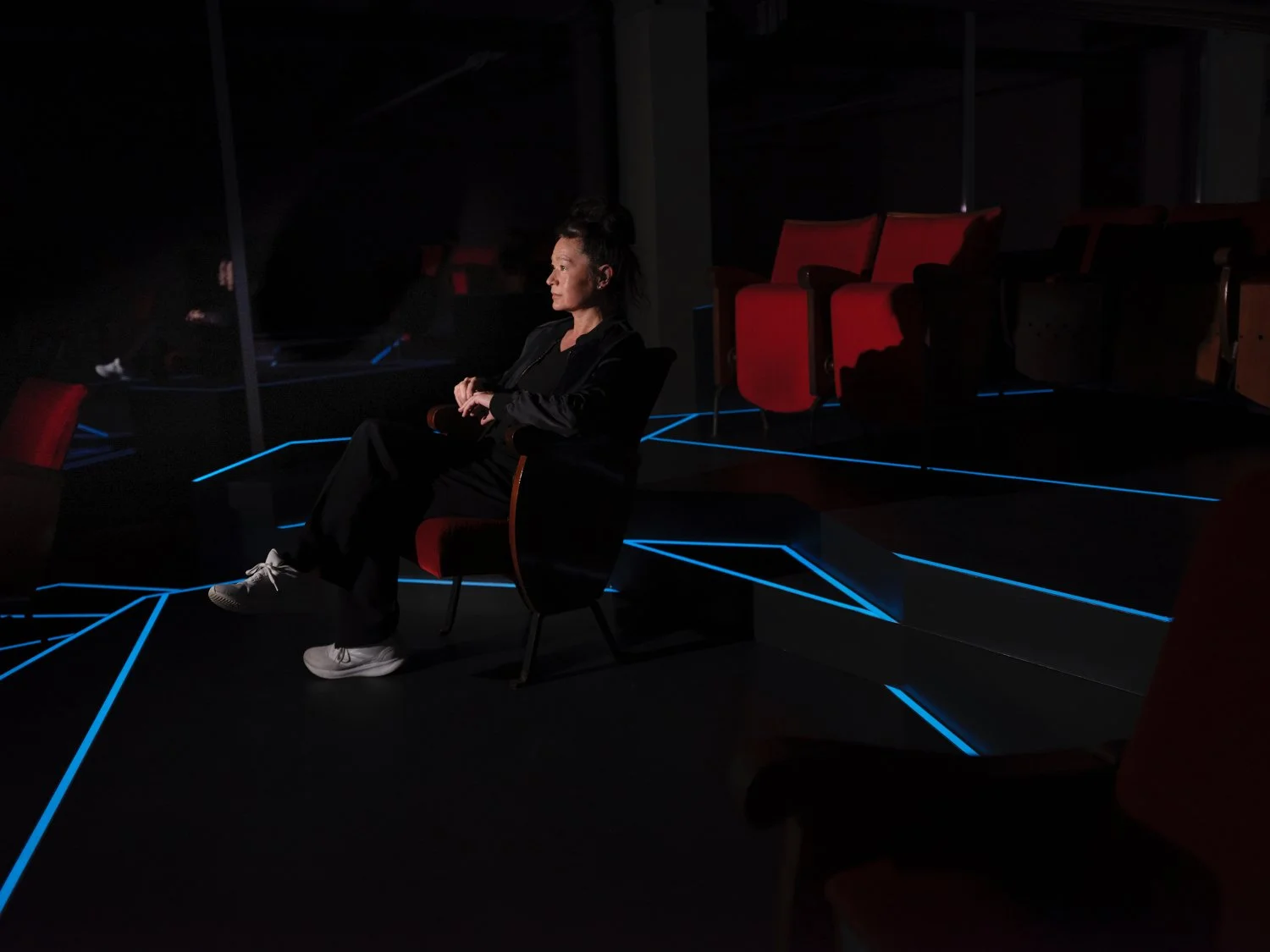
HOLZINGER Yeah, it will be very different. No auditorium, no stage, no darkness, few theatrical tricks, but most of all: no start and no finish. People can stay as long or as short as they want. Also for us, this is unusual and challenging—a challenge we took on very consciously. I did not want to offer slots or turn the pavilion into a theater; this we can do much better in other spaces. Everybody has the chance to visit us and to experience something, and everybody will probably witness something different. Our church is always open. We are moving in in May and out in November; it really is the spirit of a takeover. I imagine that it has the potential to be quite an intimate experience, where the border between who watches and who is being watched quite literally dissolves. Whoever wants to participate gets to.
ALMES In your stage works, this line also tends to blur. I have seen shows where people leave their seats to play characters in your performances. You offer tattoos on stage in Ophelia’s Got Talent; in TANZ, you ask for money for a reforestation project; in SANCTA, there is a moment for public confessions.
HOLZINGER Yes, I guess as a theater maker, I grew up in a very postmodern context, where it is the norm to smash the fourth wall. When I started actively going to church in research for SANCTA, it hit me: the mass is an extremely postmodern experience, based on participation—the audience even eats something given to them by the person on stage. At the Biennale, many of the contracts that exist in theater simply won’t apply.
ALMES Especially when it comes to proximity to the performers, right? The context is very different in an exhibition than it is in theater. In conventional theater, the rules are clear: you stay in your seat, and there’s the safety barrier of the stage. In a performance at a gallery or exhibition space, you can’t guarantee that people will respect that kind of personal space.
HOLZINGER Firstly, I didn’t choose to do art to make rules or teach morals. Otherwise, I would have become a politician or a priest. I’m very curious about the kinds of morals people will bring into that context. I am aware that if you offer a certain freedom—also in the interpretation of a situation—people will deal with it in all kinds of ways.
It’s exactly this type of decision I am curious about; it teaches us something about humanity, and that’s the least we can get out of this experience. Some people might feel intimidated, others invited and included, some even provoked: “Ah, it's not a painting, it is a body, I guess that means I can touch it.” Like in theater, we are prepared for all kinds of scenarios and will deal with people as they deal with us. Handle with caution!
Ophelia’s Got Talent ©
Bahar Kaygusuz, Florentina Holzinger, 2023
ALMES Let’s explore this performance–audience relationship a bit more through the Études format, which was the moment when I thought, “This is something that could also work in a visual arts context.” It was the format where you began taking performances out of the theater and into public space—so far, mostly outdoors. With the Études, I do think different power dynamics come into play because you no longer have the traditional frontal theater setup. There are so many other factors involved, too, since the situation is far less controllable—weather, how people move through space, and so on.
HOLZINGER It’s in a public space, so there’s always interference from the real world, let’s say, or the urban sphere...
ALMES …Which kind of becomes part of the soundscape.
HOLZINGER And also part of the choreography. These Études have been a very handy way for us to do some cool research, because all of the Études were, in a way, important research steps towards the bigger theatrical project. Not meaning to diminish their specific energy somehow, but when I retrospectively think about it, that’s really an important attribute of these Études.
ALMES It’s material research that you otherwise couldn’t really study.
HOLZINGER Exactly. It came out of a desire to engage with the outside world, but also to do things that we felt we could not do in theater. At a certain moment, I really had the feeling that there is no space more regulated than a German city theater. The Études are literally exercises and have a very different dynamic. We approach them in a fast-and-dirty way. They’re not worked out in every detail, because the context simply doesn’t allow for that. We pretty much make a score on paper; if we are lucky, we get to rehearse for two days, and everything only comes together when the score is followed in the moment of the show. The moment of the show might be before or after the announced time, since we are often at the mercy of factors like the weather.
You might be in an industrial harbor and have no idea which ships will arrive or when. If something suddenly stands in the way, it becomes part of the work—it becomes the thing in the foreground at that moment. You have to embrace that. There was a moment I felt an inferiority complex with the Études, because of the difference in economics of labor: I work on a stage show for years, on an Étude, a couple of days. But exactly this lack of theatrics, of narrative, of artifice makes it ultimately a very specific proposal. It has become an important satellite. Many elements will have a revival on the stage as well. It even serves to co-finance certain objects. So yes, it has become an important part of the practice.
ALMES You have done Études in harbors, in parking lots, public squares, and even on a glacier. They often involved water, but also the air. When I invited you to Bergen to do an Étude there, you worked with a helicopter and a huge industrial crane as instruments.
HOLZINGER Études are essentially large-scale, scored musical compositions. Bodies and machines become hybrids that serve as instruments to “play” the musical score. We work with the infrastructure we find in a particular place—often sites of industrial activity, where forms of urban transfer are happening. There’s an interplay between technology and the body, bringing them together: are they working with each other, for each other, or against each other? They become productive in the sense that they produce a kind of music—a beautiful piece of music.
To call them “Études” is obviously inspired by Chopin—I was playing them up and down as a kid. They are technically difficult exercises, with the aim of practice but also “to please an audience in concert.” We often operate at great heights. In industrial harbors, for example, we might work with a 50-meter crane that becomes—as it did in Bergen—an industrial wind chime, with performers hanging from it. This is classified as high-risk, so we work closely with stunt coordinators, who are very important to the process. Many of my performers come from sports or the circus world; there is a lot of experience with aerial work and rigging techniques.
ALMES I’m curious to hear more about the relationship between machines and bodies.
HOLZINGER Most of these machines could easily kill a human being—they can cut through flesh in a second. So, you have to take extreme care when working with them. In that sense, the relationships we develop with them are almost “cute.” For example, when we worked with forklifts in Bergen, it felt like having a conversation with the machine—a strangely cute interaction. They could do very intrusive things to the body; let’s just leave it at that. Generally, though, we approach machines as extensions of the body, exploring how they can expand the body’s possibilities.
ALMES When we’re thinking of interacting with machines, the first image that comes to mind is the motorcycles in TANZ. Motorcycles are vehicles designed for the body. I think you once described them as witches’ broomsticks.
HOLZINGER For me, this has been an organic development of ideas over more than a decade of work: from the pointe shoe as an extension in ballet, used to lift the body off the floor and defy gravity, to the motorcycle suspended in the air in TANZ, serving as an urban broomstick for Madge (the witch from Giselle) to ride on, to the helicopter in Ophelia’s Got Talent, which we penetrate to produce new, future life. With SANCTA and our last show, A Year Without Summer, we finally entered the robot apocalypse, working with actual robots as performers.
The theme of suspension is very present throughout all of this work—to lift things off the floor, to elevate them, not only in a material sense. If you take something discarded or unpleasant and elevate it, it can become sublime. These smelly, petrol-fueled objects—symbols of our capitalist world—can be transformed simply by being taken out of their usual function. They become almost magical tools, hence urban broomsticks, carrying the performers’ bodies as if granting them the same kind of superpower.
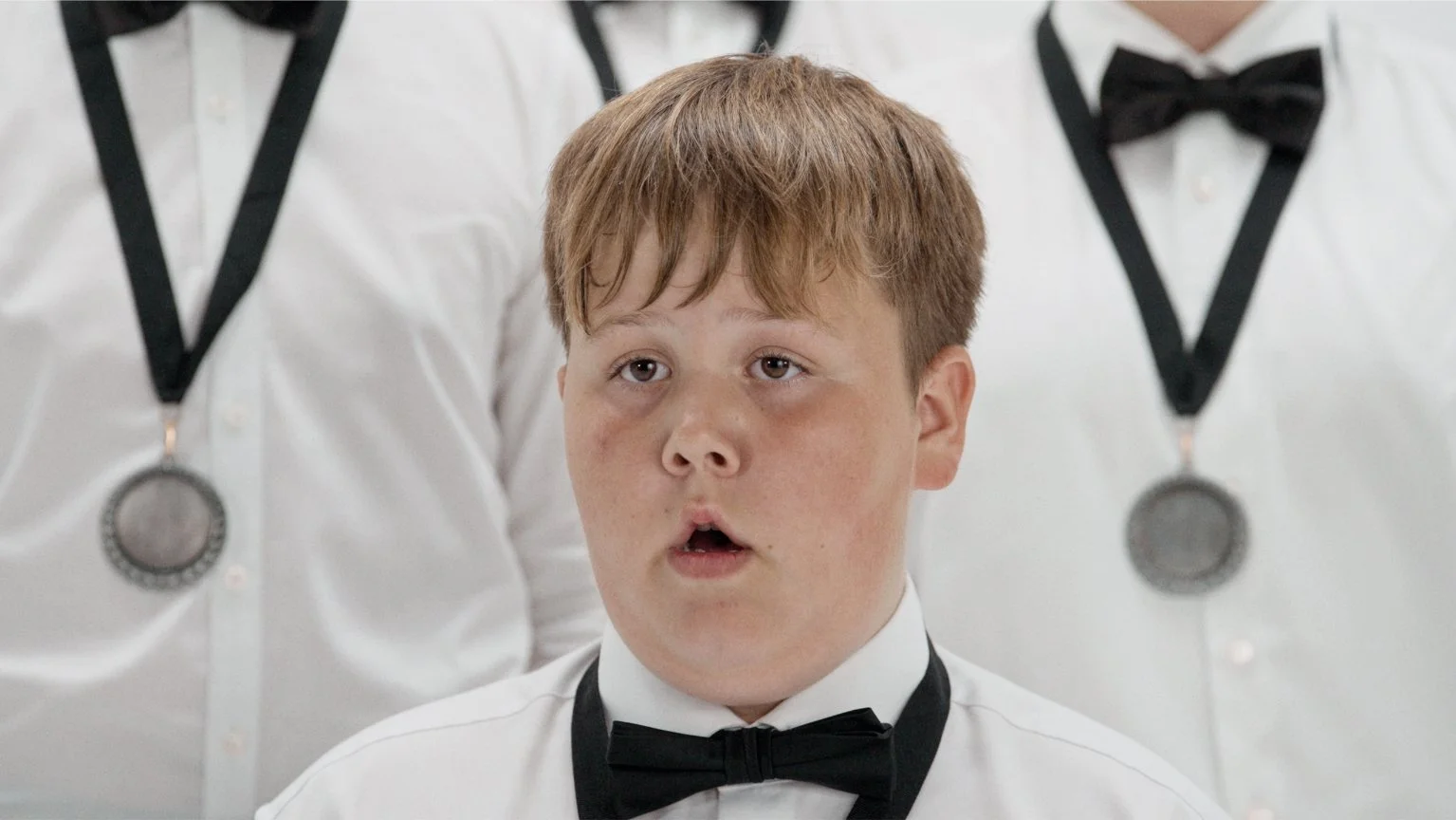
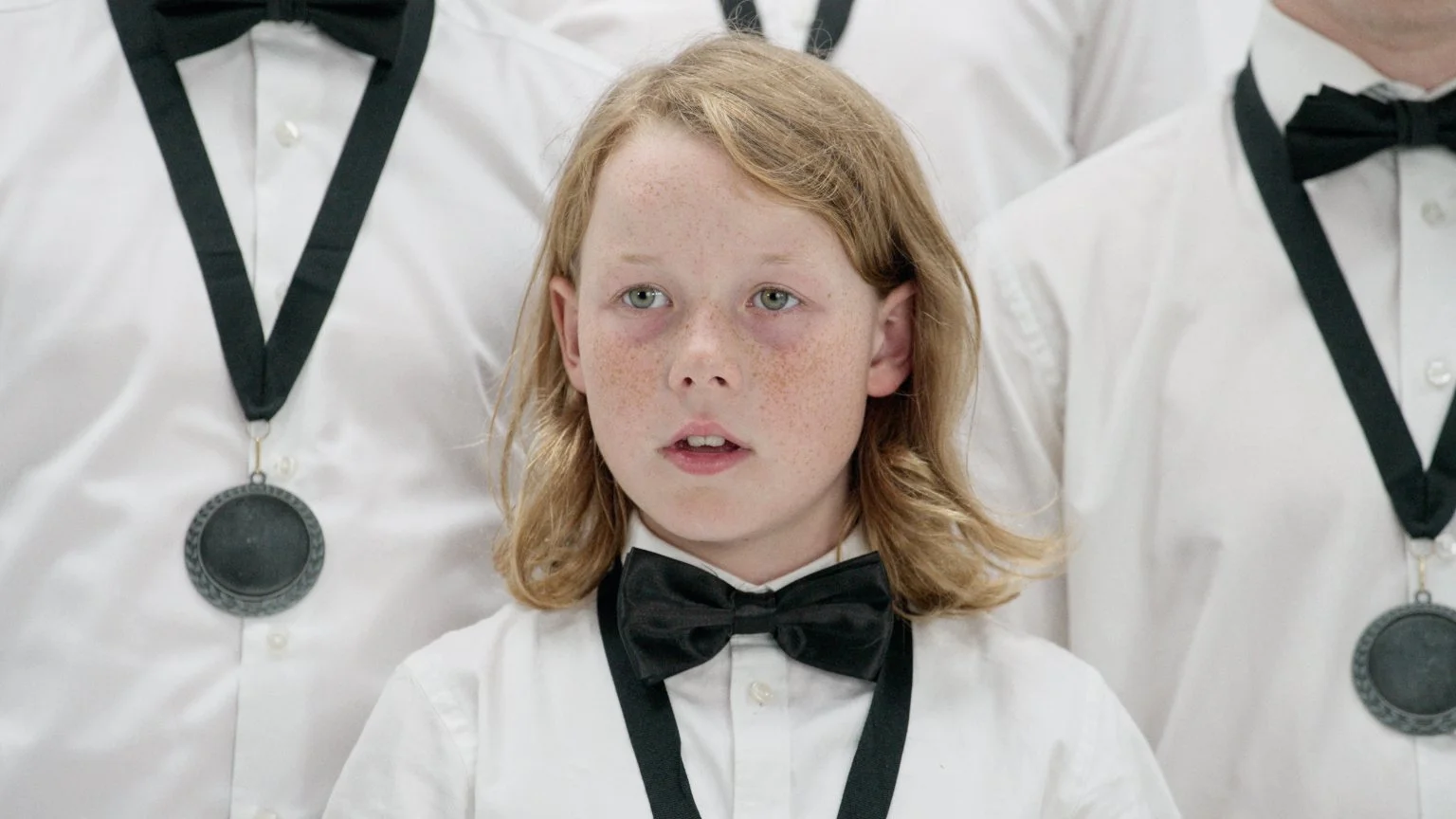
SANCTA ©
Nicole Marianna Wytyczak, Florentina Holzinger, 2024
ALMES The other image that comes to mind is from the opera SANCTA, where you had a robot arm that lifted a lesbian pope.
HOLZINGER The lesbian pope, yeah. Here we are talking about Saioa Alvarez, a performer of small stature who often uses a device to walk. In a way, all of us interact with machines on that level of dependency. The industrial robots came into the project during the very post-COVID atmosphere, when we discovered that some churches had actually used them to test whether they could give blessings to real people, instead of a living priest. It was obvious that we needed this robotic omnipresence for our opera about the church. We taught her—Pauline, our robot—some priestly gestures to guide the mass, but in the end, she ended up being more of an altar boy than a priest, and a pope-mobile.
SANCTA ©
Nicole Marianna Wytyczak, Florentina Holzinger, 2024
ALMES I feel like you and a lot of the cast all have superpowers somehow. You know how to do every stunt in the shows yourself, but then, all of the core ensemble members have their own specific skill sets.
HOLZINGER Yeah, maybe there is a certain pretense of becoming more than human at certain moments—to morally allow ourselves to be less than human for the rest of the show (laughs). But, yeah, for me, the art of illusion is one of the greatest arts of them all and ultimately what made me obsessed with theater.
Actually, A Year Without Summer is the show where it’s not so cute between us and the machines. Technology is both the hope and the fundamental fear of the 21st century; with AI, as the latest, it has also become Frankenstein’s monster. Our last show explores the stories we tell about our bodies, health, and identity, our decline, and our environment: the pursuit of immortality in the 21st century, medical promises of rejuvenation, and the dangers of uncontrolled technological growth in a world shaped by AI, robotics, and bioengineering.
It’s our version of the Frankenstein myth, posing the question of what happens when the creator gives birth to a monster he fails to control, with the creature increasingly becoming like him. Our pavilion is also a sewage treatment plant, so it’s a highly technical installation—with all its possibilities, perks, and risks—where everybody who enters ends up at the plant’s mercy. The creative promises of technological progress are, after all, always accompanied by a certain destructive potential.
ALMES I’m thinking about the extremity of performance art. There is something in your work that quite consistently pushes toward new images—for example, the suspension hooks and body modification in much of your more recent work. It’s often a shocking moment for the audience when they see performers hanging from the ceiling with hooks in their skin. Why body modification? What do you find intriguing about it?
HOLZINGER I always had a strong desire to perceive choreography as not just that thing that structures bodies in space. It was clear that also—or especially—the inside of the body deserves to be observed and choreographed; one can do this in as formal a way as one pleases. To quote Hermann Nitsch: not only should the scientist look inside the body, but also the artist. And this clearly comes from an artist who did not observe his own bleeding body every month on the toilet! Anyway, I could always relate.
I discovered hook suspension because it was the closest thing to flying I had seen in dance. TANZ was my attempt at a ballet, and blood is present in the ballet world too. It is conventionally aimed to remain invisible, hidden in the pointe shoe. It is not a visible part of the ballet, so it was our aim to change that. In ballet, it is very important to create the illusion that everything is effortless, that there is no labor involved. With hook suspension, you see the labor—the blood is visible.
It always slightly provokes me when people ask: “Why would you torture your performers like this?”—while they would never ask this of a ballet master at the opera. We sometimes even overstylize the labor. Some people like to pop aspirin to bleed even more. This is a very interesting aspect of the sideshow world—brutal gore is appreciated, and so is the spectacle of it.
ALMES There’s a moment in Ophelia, for example, when someone swallows an endoscope into their stomach. You clearly work with moments that produce not only surprise, but genuine shock. It took me a while to realize that people are actually on hooks, for example, that they’re really suspended. Or that the camera is truly being swallowed all the way down the esophagus. What is it about playing with these moments of shocking the audience?
HOLZINGER Of course, this is a question I get a lot: “Do I like to shock?” Are things solely aimed at shocking, or is there more to it than that? There’s always this judgment that wanting to shock is somehow old school or passé, or that it’s a violent experience you subject an audience to—so how dare you do that? In all honesty, every new day I have a different relationship to the word, but I think today I have a good one. I mean, in our “age of content,” we are not exactly short on severely disturbing content online, a lot of which we take for granted, without a real possibility for reflection or information.
In that context, it amazes me what people claim to be shocked by in our work, where graphic imagery is mediated and contextualized, aimed to reflect. It seems shocking for people to see real bodies doing real things that are mostly part of everyone’s lives too. People are shocked by what they don’t know, what is unusual for them, or what is considered taboo. One of my performers who died this year, Beatrice Cordua, expressed it quite simply: people are shocked by your work because they see things being put together in a different way, and it shocks them out of their convention. So, if need be, blame this on me.
In theater, you get to literally shine a different light on things because you can control many parameters. In the real world, you can’t control anything. For me, this is the beauty of theater—you can really suggest a different, fantastical world there.
ALMES And maybe the shock tolerance also varies from context to context. With SANCTA, which is in an opera setting, the set rules are fairly strict and conventional.
HOLZINGER Yes, during a Wagner opera, many opera-goers are seriously shocked when the libretto is not followed by the book. Whatever you’re doing on stage is a diversion from a certain expected norm. It’s really about asking: what are the implied rules of a place, and what are the habits there? The work is busy breaking those—or rather, I’d say, having fun with them. That’s why it’s so exciting for us to move from dance to theater, and from theater to opera. And this Biennale context, I guess, has its own supposed rules and habits as well.
TANZ ©
Nada Žgank, courtesy of City of Women, Florentina Holzinger, 2019
ALMES Should we talk a bit more about the Catholic presence in the city of Venice? You made a whole opera, SANCTA, based on Paul Hindemith’s Sancta Susanna (1922), where a nun mutates into Satana in the moment of sexual self-determination. We see nuns skating, sacred rituals, and Christian iconography. Like many of your other works, it deals with the repression of female-identifying bodies. When we were on the boat in Venice, doing the first site visits, for example, it felt like every third building was a church.
HOLZINGER The pavilions in the Giardini seem a bit like tombs. They feel so tied to the past—it’s almost a cemetery. It’s either tombs or chapels. With my Austrian heritage, and all the baggage that comes with it, it makes sense that this is a topic to include here. With SANCTA, some people said, “Oh, that’s extremely church-critical. You’re pissing on the shoe of the church.” But it’s also a revalidation of the ground values of what religion actually wants and what it serves. I think it’s an extremely interesting conversation. I actually pride myself on the fact that I was not busy with the Catholic Church for 20 years of my career, despite growing up in Austria as a Catholic.
When I was a teenager, all the papers were full of abuse scandals related to the church—as a kid at the peak of puberty, I was fascinated by the double moral standards of this institution. So when I was commissioned to do an opera, I dove into the classical repertory: most of it is Christian music, or inspired by it. Sancta Susanna was a “match made in heaven” for us. The archetype of the nun is complex and brings with it many contemporary themes. The Church’s relationship with the female body has always been very tricky; it is doomed to carry the burden of original sin.
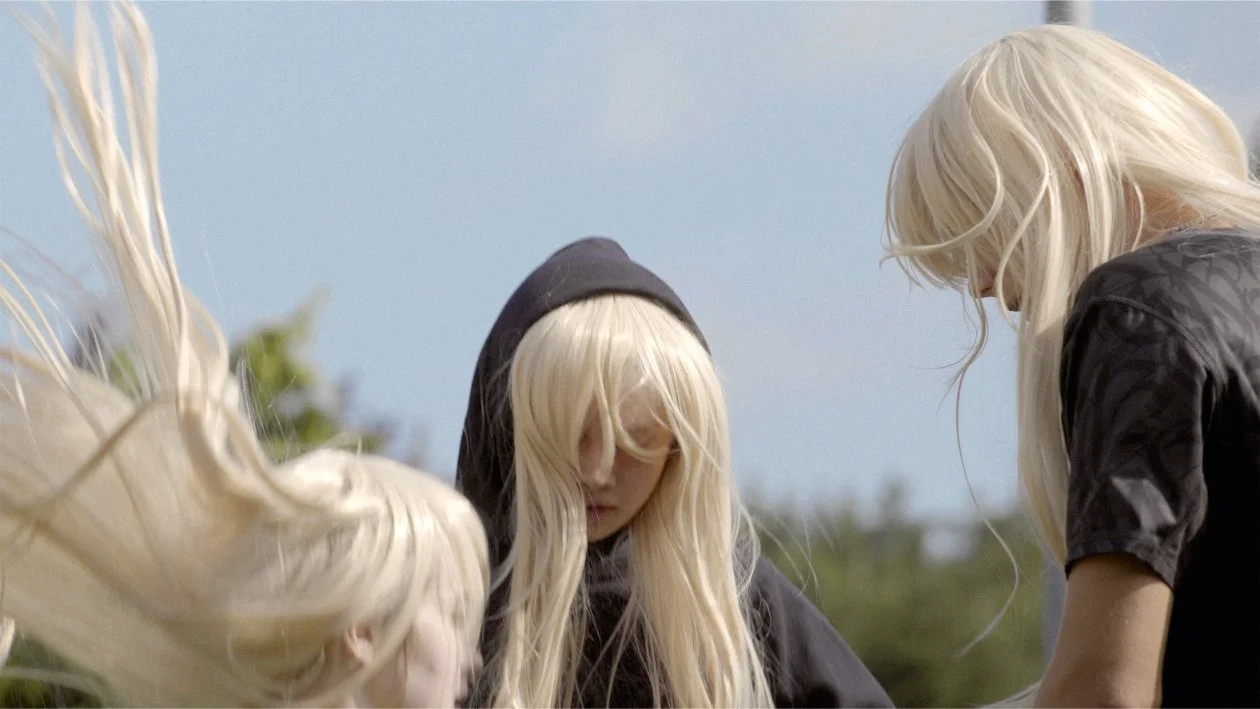
Harbour Étude ©
Nayara Leite, courtesy of Bergen Kunsthall, Florentina Holzinger, 2024
ALMES This is a bit of a sidetrack now, but it makes me think of the Rosalía album, where she poses like a nun. Then she also released a song called “Berghain,” which features an orchestra. The whole album feels super Christian. It opened up this whole conversation in mainstream culture about how religion or Christianity is actually becoming a thing to talk about again.
HOLZINGER You know, every other year is a nun year in Hollywood. I don’t really follow Rosalía, but it wouldn’t surprise me if she were a believing Christian. The pop world is full of Jesus-freaks, especially in the U.S. Obviously, many people are longing for this sense of community. Nun exploitation was, and still is, always present in pop culture, in movies … The nun is such a strong archetype, where so many contradictions and binaries clash.
As I said, growing up Catholic in Austria, I felt completely resigned from this by the time I was a teenager. As an artist, I was under the impression that I didn’t have to deal with this “chapter,” that it didn’t have any influence on me. Through the work on SANCTA, I got to analyze the bigger picture and found out how many stories all of us have to tell about the church, regardless of our cultural background or religion, if any.
You know, the problem isn’t religion itself, but fundamentalism and its interpretation—or, for example, the religious legitimation of political actions. Right now, we’re also seeing that Western civilization, which is instigating some of the wars of our time, is dominated by white men who have derived their supremacy from the tradition of Christianity. In our work, we simply like to subvert traditional, patriarchal power structures, and the Church as an institution is a prime example of this. And now I’m like, oh my God, how do I ever get away again from the church?
ALMES You’re entangled in it now.
HOLZINGER In the work, I always look a lot into the past … And the history of Western theater is also a history of religion. Theater developed from religious festivals, from the cult of Dionysus. It was a large, collective event—a religious act, with the altar and the offering prepared upon it at its center. For me, it makes sense that the theater, or rather the pavilion, is a place where life and morality are negotiated, and in that sense, it is a place of spirituality and also of mystery. In the best case, people leave in an altered state—in our case, at least physically relieved.
Étude for a Crane ©
Tammo Walter, Florentina Holzinger, 2023
ALMES You have mentioned your interest in horror aesthetics, and I know that you also were part of a horror film jury recently. I was wondering about this aesthetic of horror. Body horror was most present in A Year Without Summer, where you also had one of the performers as an Uber Frankenstein enter the space. Could we talk a little bit about this topic of monstrosity in your work, which, of course, is related to horror aesthetics and the idea of othering?
HOLZINGER Choreographically, I am, of course, interested in form—in the contained and controlled body. But I’m also obsessed with the opposite: the body that cannot contain itself, that is chaotic and out of control. High art traditionally tries to sanitize the stage from these kinds of messy situations. As a dancer, it is great to be healthy, young, and fit, but with a couple of years’ experience, it becomes part of the work to deal with injury, sickness, age. Aging is one of the monsters of our time. A big industry feeds off that horror.
For an audience, that can be hard to deal with, because it becomes very uncanny when the body cannot contain itself. Who wants to go to the theater to be reminded of death? At the same time, everyone has the experience of a body that leaks, that produces things it shouldn’t, that is sick and messy. Every minute spent in the theater is, for sure, a minute closer to death—and that’s something we all share.
ALMES What are you most excited about for the Venice project?
HOLZINGER I love working in the water. Everything really comes together when people arrive. Our Seaworld needs its creatures! You can prepare all you want, but this part of the puzzle always comes at the last moment—like a surprise package you have to handle as it arrives. Of course, I’m also excited to spend some wonderful days in the sun.
Ophelia’s Got Talent ©
Bahar Kaygusuz, Florentina Holzinger, 2023