

RadleyMetzger_TheOpeningofMistyBeethoven
Louis Vuitton Voyages
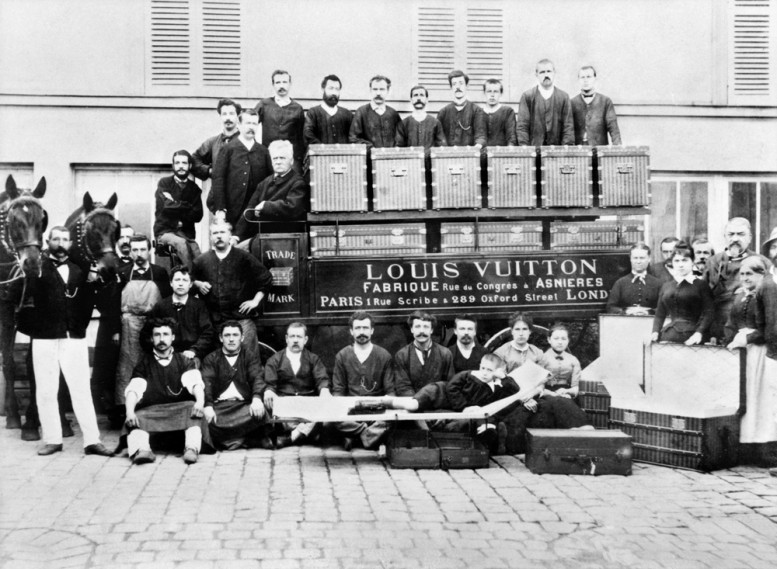 Vuitton Family, 1888
When Louis Vuitton founded his maroquinerie label in 1854 on Rue Neuve des Capucines in Paris he knew how to make a good travelling case. This is proven in durability and by the fact that most of the cases, even the earliest examples, still stand the test of time. And, just as well, the ethos of handmade luxury, that has slowly faded into a seemingly prehistoric notion, has lasted too–leaving the Vuitton unprecedented in the integrity of its craft–even through corporate mastication, mergers, and a platform in the publicly traded market. The Louis Vuitton label has had its own history in China too–in an age when the orient was a universe away from its Parisian base. In 1931 the Croisiere Jaune expedition led 40 men to drive 12,000 km from the Mediterranean coast to the China coast, following the footsteps of Marco Polo, was outfitted with Louis Vuitton trunks. And even further back to the 1907 Paris to Peking expedition when members struggled against temperatures as low as -30 degrees in cars outfitted with Louis Vuitton trunks. On view now until August 31 at the National Museum of China in Beijing, "Louis Vuitton Voyages" explores its own history and tradition since its inception as well as celebrates the label's place in Chinese culture.
[LAST DAYS] Marilyn Minter Retrospective in Hamburg

MarilynMinter_ChewingGreen
Marilyn Minter, Chewing Green, 2008 C-Print
In Marilyn Minter’s work, pride of place goes to the complex relationship between body, photography and painting. Here, Minter exposes all our cultural inhibitions in dealing with sexuality and desire, the hyperrealist shots of high-gloss surfaces and sections of the body are both seductive and irritating at once. In the fragmented representation of lips, eyes, mouths and necks, decadence confronts beauty and the pitfalls of glamour collide with the fascination it exerts. Minter’s voyeuristic hallucinations seem both tempting and dangerous. Beauty here proves to be a brittle construct in which sensuality and self-destruction are two sides of the same coin; flesh, yearning, sexuality and gender models are revealed to be commercial products. For the first time, the oeuvre of US artist Marilyn Minter (born 1948) is the subject of an extensive exhibition in Germany. On view until June 12. www.sammlung-falckenberg.de
Rei Kawakubo and Matt Groening

Dover Street Market window installation by Rei Kawakubo to celebrate the launch of a small collection of T-shirts in collaboration with Matt Groening. www.doverstreetmarket.com
[FIRST LOOK] LINDSAY LOHAN - A RICHARD PHILLIPS FILM
Gagosian Gallery announces Lindsay Lohan, Richard Phillips' first short film. In his 90-second motion portrait of Lindsay Lohan, Phillips draws on the conventions of his painting that explore the legacies of classical portraiture in relation to the mediated representations of contemporary popular culture. Richard Phillips' Lindsay Lohan will be included in "Commercial Break," presented by the Garage Center for Contemporary Culture, Venice, Italy, June 1 - 5, 2011, concurrent with the 54th international exhibition of the Venice Biennale.
Kurt Cobain Well FUCKING Hung

Kurt_Cobain_with_gun_experience_music
"Kurt was a leader, he was strong, in fact he was well fucking hung, if you really want to know."—Courtney Love, singer, Hole; widow of Kurt Cobain remarked in an, ahem, oral history of the band Nirvana. The Experience Music Project in Seattle is holding a massive exhibition celebrating the music and history of Nirvana, whose lead signer Kurt Cobain killed himself in 1994. Nirvana: Taking Punk to the Masses runs until April 22, 2013. www.empmuseum.org
Riding the Hoods With Maripol

Riding_the_Hoods_With_Maripol
Maripol moved to New York from France in 1976, where she became a part of the New York club and music scene, styling Madonna and working on films such as Downtown 81 (starring Jean-Michel Basquiat and Deborah Harry). In the mid-1980s, she opened her own boutique, Maripolitan, in the NoHo area of New York. Maripol has also been art director on music videos for Cher, D'Angelo and Elton John, among others. Riding the Hoods With Maripol, a collection of her photographs, are on view at the Clic gallery in New York until June 19. www.clicgallery.com
Vivienne Westwood Shoes at the Sursock Palace in Beirut
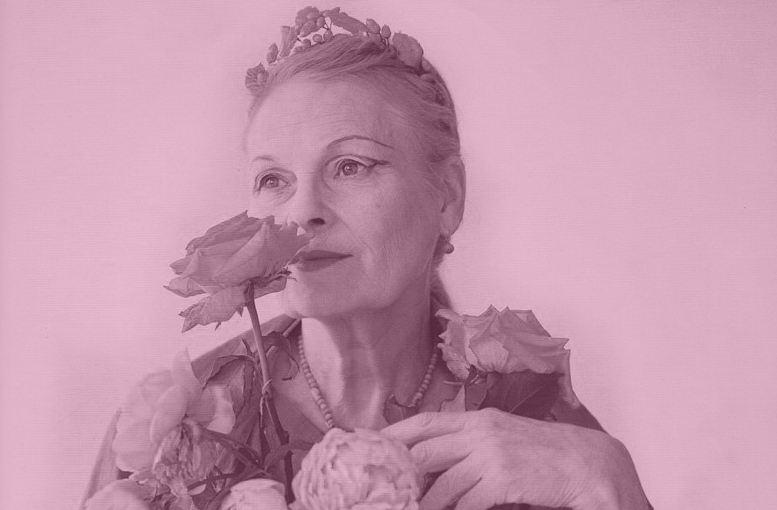
Vivienne Westwood's collections of shoes since the seventies have been on whats shaping out the be a world wide tour after the success of a show in London last year. You could also contribute the success to the rash of designer retrospectives. Right now the exhibition is on view at the Sursock Palace in Beirut. Vivienne Westwood Shoes, An Exhibition 1973 – 2011, which has opened in Beirut, will be followed by a stop in the north of England then on to Hong Kong, China and Japan. www.viviennewestwood.co.uk
Bob Dylan on Kicking Heroin

"I kicked a heroin habit in New York City. I got very, very strung out for a while, I mean really very strung out and I kicked this habit."
The Return of the Fiat Cinquecento
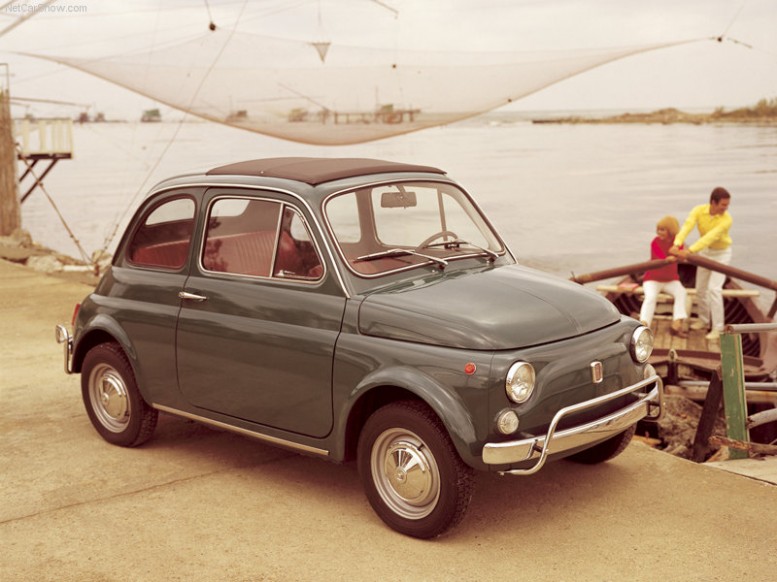 Fiat 500, Cinquecento, 1957
The Fiat Cinquecento, originally designed by automotive designer Giorgetto Giugiaro–famous for the De Lorean and Alfa Romeo–was recently introduced to the American driving public. The Fiat 500 originally hit Italian streets in 1957 and was the quintessential Italian driving machine. www.fiatusa.com
[Craft, Utility and Luxury] Serum Versus Venom
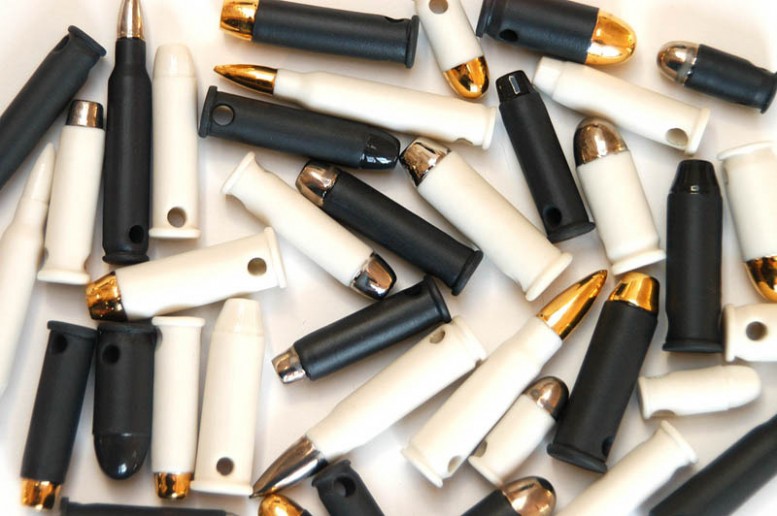
Serum Versus Venom (SVSV), which was created in 2003, as a "interconnectedness of craft, utility and luxury" is re-launching after several years in hiatus. SVSV is built on a philosophy called Futurecraft - an "ideological framework for creating high and sustainable value in an over-saturated consumer landscape by colliding elements of hype modernity with traditional product development philosophies, techniques and values." www.serumvenom.com
Three Way: A Trilogy of Vintage Erotica
"It's rarely a bad idea to show some sex films. I mean...really. This is a small series and is intended, certainly, to entertain. But it's also intended to investigate both the fantasies and realities of sexual representation — that uncomfortable space where we so often find a huge gap. When you place a slick, erotic daydream like Camille 2000 against the gritty reality of A Labor of Love, the difference becomes all the more stark. And then there's The Wild Pussycat, a masterpiece of what-the-fuck-is-this-ism. It combines erotic scenes with some pretty rough sadism — but somehow becomes an intense, unintentional black comedy instead of a just another crappy 60s sexploitation picture. Combined, I hope the three films illustrate some of the perils and positives of depicting sex, and raise questions about how, or if, anything has ultimately changed. Stay tuned for 'Three-Way Redux: A Trilogy of Contemporary Erotica,' coming soon." — Joel Shepard, Film & Video Curator, Three Way: A Trilogy of Vintage Erotica is showing the weekend at the Yerba Buena Center in San Francisco. www.ybca.org
Shunga: Erotic Art in a Comparative Context
Series: The Prelude to Desire, 1799, Utamaro
It was a time when Japan was ruled by military dictators called Shoguns and much of the East was just large swaths of bucolic countryside, with flowing grass, and a certain mysticism you can only associate with "the Orient." For centuries it was like this. Seemingly perfect and serene. The artistic output from this time is extremely recognizable: ornate woodcuts painted on scrolls, called ukiyo-e, that depicted the quotidien routine of Japanese life: work, play, love, theater, history, and pleasure. Shunga, a Japanese form of erotic art, that most think was deemed immoral, but was actually morally accepted, was common and many artists, without risking their reputations, dipped their pens in this type of ink. It was all the same–work and sex–it still followed a classifiable aesthetic of the quotidien. It begs the question–what did you do last night?
Series: The Prelude to Desire, 1799, Utamaro
This weekend, the University of London's School of Oriental and African studies will hold a workshop and a list of speakers on the topic of Shunga art. Talks are ranging and include introductions on the history of Shunga art to how to present and curate Shunga art. The talks are free and is being held at the Brunei Gallery May 20 and 21. www.soas.ac.uk/
Nino Migliori

_nino_Migliori_Il-tuffatore-Medium
Nino Migliori, Il tuffatore, 1951
Nino Migliori's photography is the epitome of a definitively Italian cultural movement during postwar Italy called neorealismo, or neorealism. Its the stark black and white photography of an Italy that seems to sizzle to the touch. Whilst Migliori captured still images of Northern and Southern Italy's street life, neorealism can also be exemplified with film–for example, Vittorio De Sico's 1948 classic The Bicycle Thief. Nino Migliori, who was born in Bologne in 1926, is still alive and well–a new exhibit Nino Migliori "Neorealism" opens this july at the La Mar de Musicas Festival in Cartagena, Spain. Nino Migliori "Neorealism–July 11 to August 31 at the Palacio Molina–www.lamardemusicas.com
James Franco by Adarsha Benjamin for Pas Un Autre
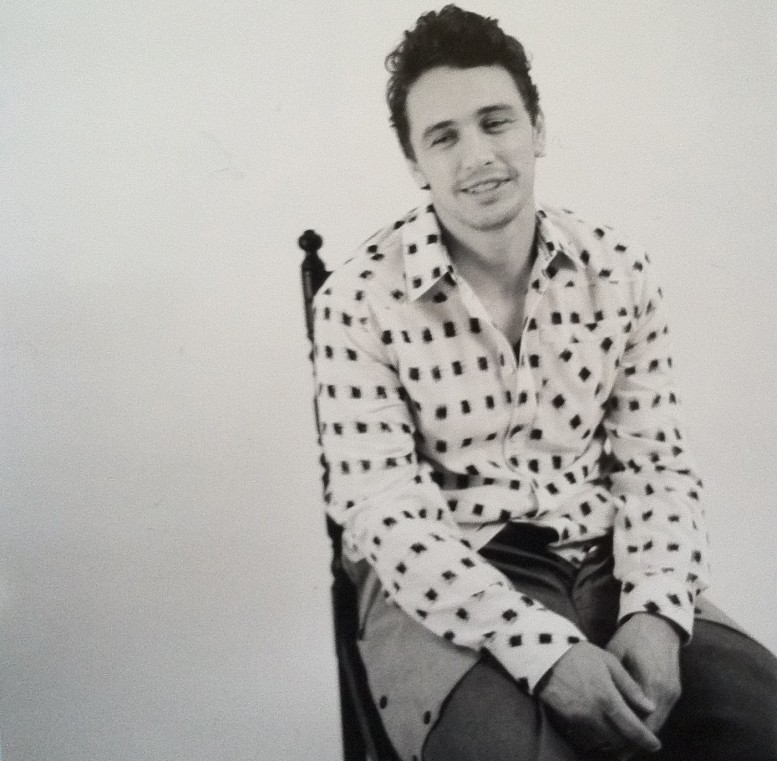
Test polaroid of James Franco for the first issue of Autre Quarterly, the print edition of Pas Un Autre. Shot earlier today in New York by the brilliant Adarsha Benjamin–styled by Paloma Perez–make-up/hair by Jordan Bree Long. Shot on location at the KDU Studios in Brooklyn.
Tracey Emin: Love Is What You Want

Love Is What You Want
"People like you should fuck people like me," reads one her famous neon sign installations. "Good smile, Great come," reads another. Tracey Emin, a celebrated contemporary English artist, who has a retrospective of sorts opening today in London, is labeled a "wild child" of the art world with no chance of taming. Her neon scribbles are honest and personal, and speak of the post modern human condition on a profound level. Emin has had her fair share of hard knocks–growing up poor, raped at 13, and an abortion of twins at 18–so now, with her trademark lopsided smile and sexy glint in her eyes, she's appropriately getting back at this fucked up mess we call a world–in a beautiful way.

Good Smile Great Come
Emin's rise to prominence culminated with a special exhibit at the Tate Gallery in 1999, in which she presented her unmade bed in the museum exactly as it was in her home–after spending countless suicidal days in it following a fight in relationship. Yellowed sheets, cigarette butts, stained underwear, and condoms strewn about the bed was a shocking, visceral site to behold–a strange reminder of the fragile, intricacies of the human psyche. A famous photograph, a self-portrait of the artist herself, from a gallery show I've Got it All Now (2000) - displays Emin clutching bank notes and coins into her crotch - an analytical critique for man's unquenchable desire for money.
"Oh Christ, I Just Wanted You to Fuck Me, And Then I Became Greedy, I Wanted You To Love Me." from a Tracey Emin Installation
The exhibition, Tracey Emin: Love Is What You Want, opens today at the Hayward Gallery at the Southbank Centre in london and features painting, drawing, photography, textiles, video and sculpture, in works that are "by turns tough, romantic, desperate, angry, funny and full of longing." Seldom-seen early works and recent large-scale installations are shown together with a new series of outdoor sculptures created especially for the Hayward Gallery.
On view at the Hayward Gallery May 18 to August 29, 2011 - find tickets here.

tracey_emin_bed
Eduardo Chillida's Rebellion Against Gravity
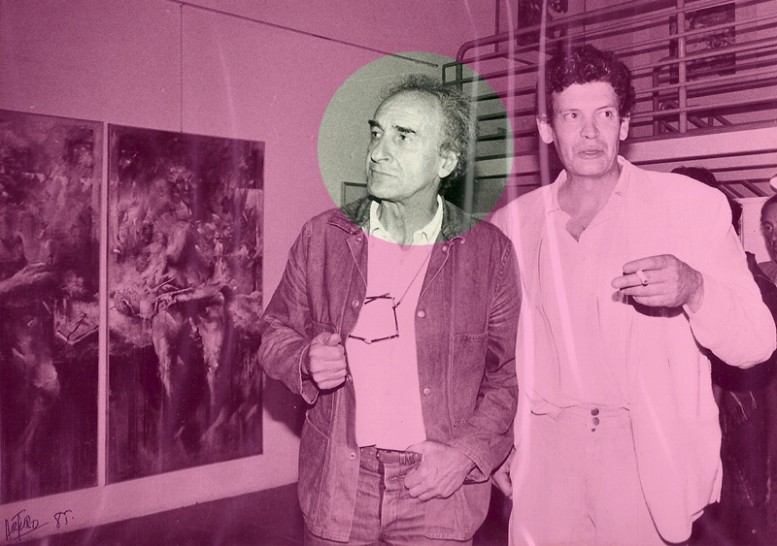
The limbs of Eduardo Chillida's (1924-2002) sculptures were monolithic gangplanks to nothingness - fingers that never touch - concrete testaments to humanities eternal, unrequited connectivity. His metal and stone sculptures, for which the Basque sculptor and former soccer player is most famous for, are like beautiful ruins, much like the labyrinthian formation of air-ducts after a building is blown away by a hurricane.
"My work is a rebellion against gravity."
Chillida had a romance with Space - nothingness wasn't really nothingness at all, but a disassembled puzzle waiting to be put together. Eduardo Chillida in the early 1960's engaged in a dialogue with the German Philosopher Martin Heidegger. When the two men met, they discovered that from different angles, they were "working" with Space in the same way. Heidegger wrote: "We would have to learn to recognize that things themselves are places and do not merely belong to a place," and that sculpture is thereby...the embodiment of places." This June marks the beginning of a large retrospective of Chillida's works at the Maeght Foundation in France. Almost 140 works are on display: 80 sculptures and 60 works on paper that include some Chillida's brilliant multi-media collages and drawings. On view June 26 to November 13 at the Maeght Foundation - www.fondation-maeght.com
The New Woman International
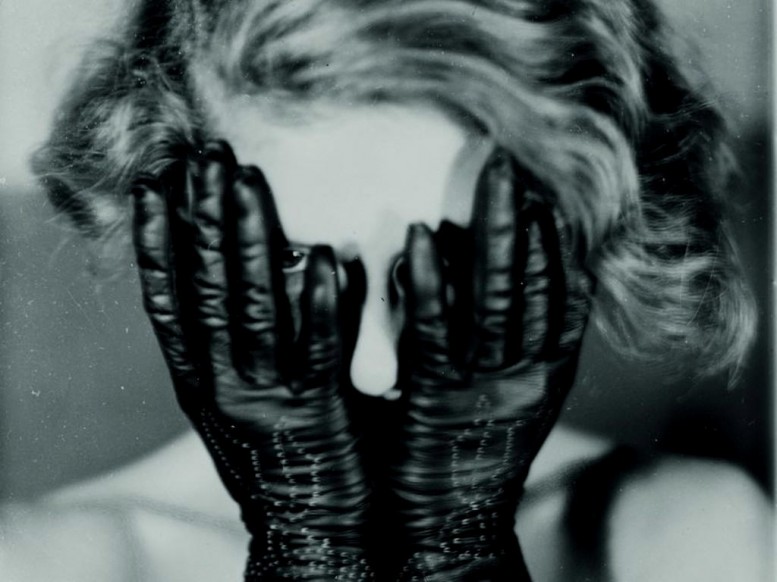 Germaine Krull by Eli Lotar
Images of flappers, garçonnes, Modern Girls, neue Frauen, and trampky—all embodiments of the dashing New Woman—symbolized an expanded public role for women from the suffragist era through the dawn of 1960s feminism. Chronicling nearly a century of global challenges to gender norms, The New Woman International: Representations in Photography and Film from the 1870s through the 1960s (University of Michigan Press) is the first book to examine modern femininity's ongoing relationship with the nineteenth and twentieth centuries' most influential new media: photography and film. You can find the book here.
Surrealism: The Poetry of Dreams

download
Victor Brauner, Romania/France 1903–66, Loup-table (Wolf-table) 1939, 1947, Wood and taxidermied fox
This June marks the beginning of a unique, expansive exhibit of surrealist artwork in Queensland, Australia. The Gallery of Modern art in Queensland, a land far from the birth of surrealism, is borrowing "the core" of one of the finest and largest collections held at the The Musée national d’art moderne in at the Centre Pompidou in Paris. Its a rare occasion in that the collection rarely leaves Paris. The exhibition presents more than 180 artworks by 56 artists, including paintings, sculptures, ‘surrealist objects’, films, photographs, drawings and collages. Surrealism: The Poetry of Dreams is on view June 11 to October 2 at the The Gallery of Modern Art in Queensland - www.qag.qld.gov.au.
PAUL THEK: Diver, A Retrospective
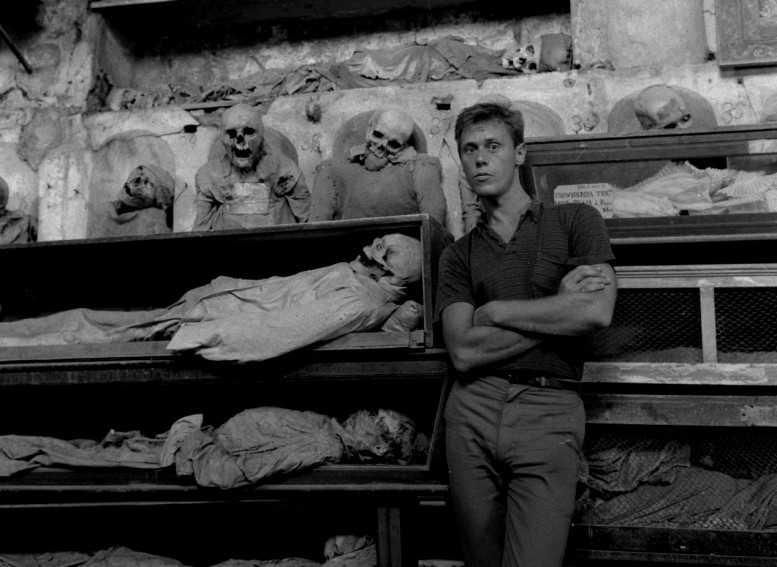
Paul Thek: Diver, a Retrospective is the first retrospective in the U.S. devoted to the legendary American artist Paul Thek (1933–1988). A sculptor, painter, and one of the earliest artists to create environments or installations, Thek was first recognized when he showed his sculpture in New York galleries in the 1960s. These early works, which he began making in 1964 and called “meat pieces,” resembled flesh and were encased in Plexiglas boxes that recall minimal sculptures. With his frequent use of highly perishable materials, Thek accepted the ephemeral nature of his works—and was aware, as writer Gary Indiana has noted, of “a sense of our own transience and that of everything around us.” With loans of work never before seen in the U.S., this exhibition is intended to introduce Thek to a broader American audience. On view at the Hammer Museum in Los Angeles - May 22 to August 28 - website.