
Vivienne Westwood Shoes at the Sursock Palace in Beirut
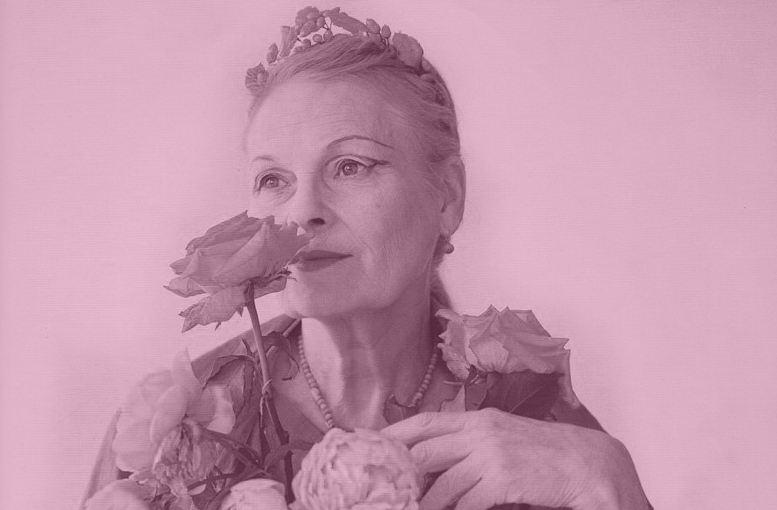
Vivienne Westwood's collections of shoes since the seventies have been on whats shaping out the be a world wide tour after the success of a show in London last year. You could also contribute the success to the rash of designer retrospectives. Right now the exhibition is on view at the Sursock Palace in Beirut. Vivienne Westwood Shoes, An Exhibition 1973 – 2011, which has opened in Beirut, will be followed by a stop in the north of England then on to Hong Kong, China and Japan. www.viviennewestwood.co.uk
RICHARD PRINCE, first solo exhibition in Asia

richard-prince-untitled-girlfriend-1993
Since the late 1970s, Prince has been mining images from mass media, advertising, and entertainment. Working in the tear-sheet department at TIME/LIFE in New York, he took magazine ads for jewelry, furniture, fashion, and cigarettes, and gave them new potency by cropping, removing ad copy from the images, reshooting black and white images on color film, and configuring them in generic groups. With these “rephotographs”, he redefined the artistic act and its related concepts of authorship, ownership, and the aura of the image. Applying his understanding of the complex transactions of representation to the making of art, he has crafted a unique signature filled with echoes of other signatures but that is unquestionably his own.

richard_prince_cowboy
An exhibition, that opened yesterday at the Gagosian gallery in Hong Kong, explores the role and representation of women in the male imaginary and in American culture, a principal theme in Prince’s oeuvre since the outset of his career and one that is charged with ambiguity and provocation. By locating, appropriating, and manipulating popular depictions of feminine types – from the aloof fashion model and the glamorous celebrity to the fetishistic nurse and the bold biker girlfriend - Prince explores how visual definitions of gender form in popular culture through repetition and reiteration. Gleaned from a variety of highbrow, lowbrow, and subcultural sources, Prince’s women abound with a diversity of stereotyped erotic appeal.
On view until July 16, 2011 www.gagosian.com

untitled-girlfriend-1993-rp7571-1_richard_prince
Resurrecting PECK

Annex - Peck, Gregory (To Kill a Mockingbird)_01
Frames by Oliver Peoples designed in celebration of the 50th Anniversary of the release of the literary novel written by Harper Lee in 1960–inspired by the signature optical frame worn by Gregory Peck as Atticus Finch in the classic film To Kill A Mockingbird. www.oliverpeoples.com
The Erotic World of Harri Peccinotti

harry_peccinotti_sandvich
Harri Peccinotti, who is nearly eighty years old and looks almost exactly like a wizard, is most well known for his erotic images of women–often cropped and close up focusing in on the delicious details, instead of giving away the whole picture. Peccinotti also has the distinction of shooting the Pirelli calendar two years in a row and is oft credited with upping its raunch factor to the level it stands today. This June 14 marks the opening of an exhibit at the Tethys gallery in Florence, Italy–the exhibition will run until July 4 2011. www.tethysgallery.com
Bob Dylan on Kicking Heroin

"I kicked a heroin habit in New York City. I got very, very strung out for a while, I mean really very strung out and I kicked this habit."
[Blood Bath] The Art of Hermann Nitsch
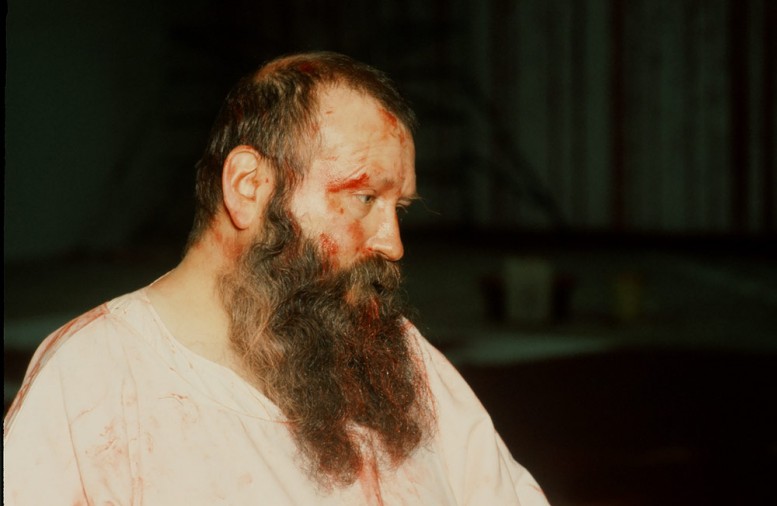
In the Denver-MCA through the end of May are the “relicts” (relics) of one of Nitsch’s abreactive performances, enacted to liberate the repressive drives in himself and participants in his “aktions.” Instead of film, however, these are Schuttbilder paintings (poured) composed of animal blood and pigment, capturing the gestures and off-body splatters of the original performance.
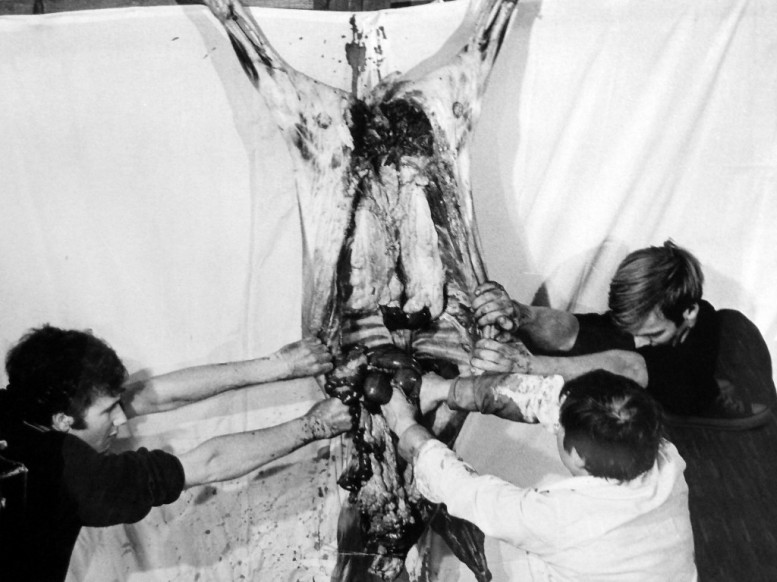
Part Artaud’s idea of psychoanalytical cure through certain abject formations of theatre, part Golden Bough-type worship and slaughtering of Dionysius, Nitsch’s work is about the trace of an event, not the finished painting. Drips, clots, spatters and smears all attest to a “relic” of a non-repeatable memory or aktion. But the frenzy of the performance is always dictated by the frame: the Nietzschean reintegration of primal and social. This is repeated again in the museum’s display: in the center are a number of Catholic vestments perfectly pressed and placed upon vestibules. But on the walls is the bloodwork, surrounding the repressed pagaentry of transubstantiation, recalling the pagan roots of Christianity, when the blood was never reduced to wine.
Bloodlines: Paintings by Hermann Nitsch is on view at the MCA in Denver until May 29. www.mcadenver.org
Text by Dreux Moreland for Pas Un Autre
The Return of the Fiat Cinquecento
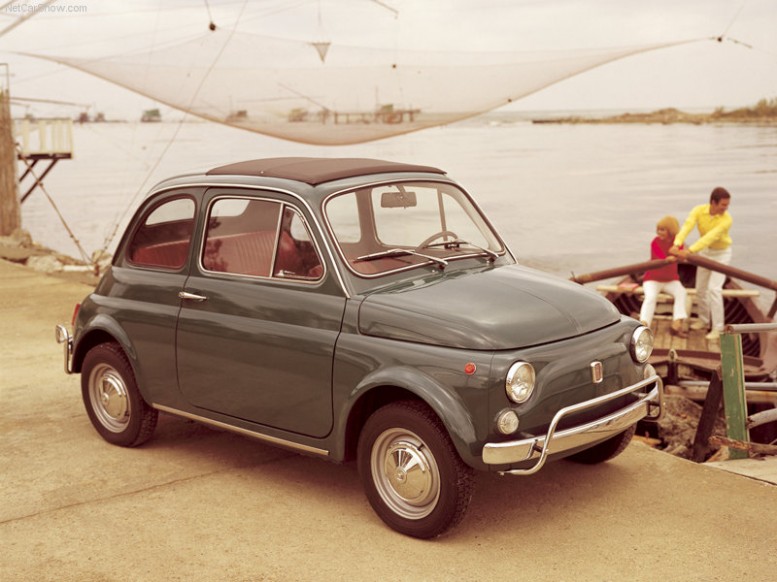 Fiat 500, Cinquecento, 1957
The Fiat Cinquecento, originally designed by automotive designer Giorgetto Giugiaro–famous for the De Lorean and Alfa Romeo–was recently introduced to the American driving public. The Fiat 500 originally hit Italian streets in 1957 and was the quintessential Italian driving machine. www.fiatusa.com
We Are Handsome, The Memoirs

"This season, We Are Handsome takes you to the far reaches of your imagination, your minds eye, your memory. The Memoirs collection inspires thoughts of vacations past, memorable experiences and those moments in life when time seemed to stand still, just for an instant." Jeremy Somers from We Are Handsome, on the new collection for the Australian swimwear line, entitled The Memoirs. www.wearehandsome.com
[Craft, Utility and Luxury] Serum Versus Venom
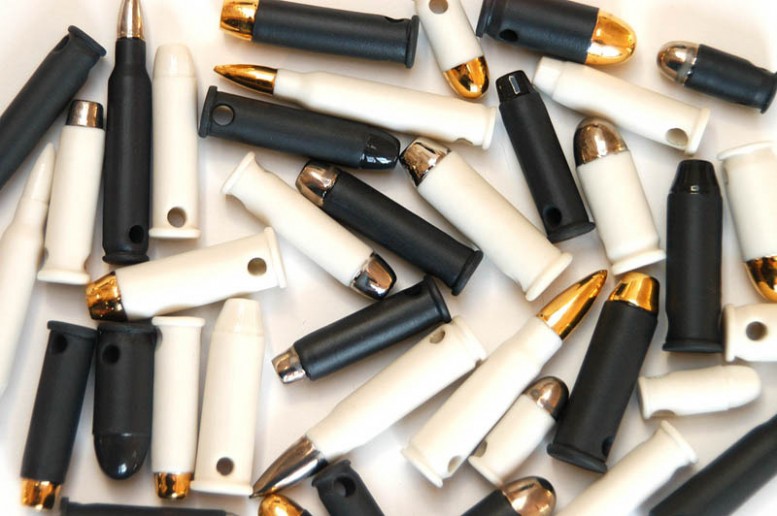
Serum Versus Venom (SVSV), which was created in 2003, as a "interconnectedness of craft, utility and luxury" is re-launching after several years in hiatus. SVSV is built on a philosophy called Futurecraft - an "ideological framework for creating high and sustainable value in an over-saturated consumer landscape by colliding elements of hype modernity with traditional product development philosophies, techniques and values." www.serumvenom.com
[BEHIND THE SCENES] Adarsha Shoots James Franco
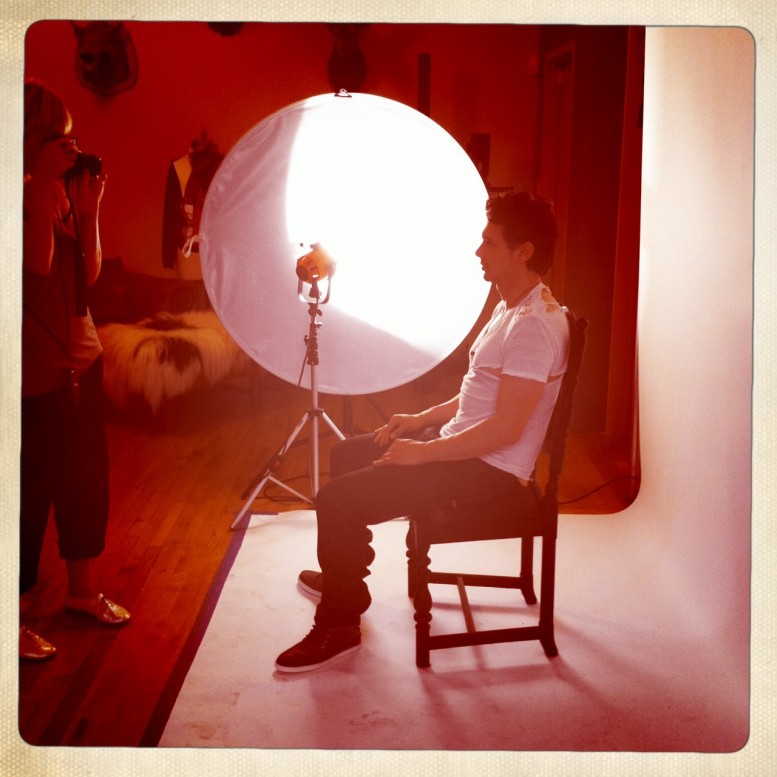
Adarsha Benjamin shoots James Franco for Autre Quarterly at the KDU–due out this July. Photography by David Gensler
[OPENING] Nancy Grossman: Heads

"They speak to the malice and subservience of both psychology and worldly conflict. Though the works are often rendered blind and mute, they still allude to the role of the silent witness amid cruelty and disorder." MoMA PS1 in New York presents Nancy Grossman: Heads, a solo exhibition that focuses on the artist's evocative head sculptures. On view May 22, 2011 - August 15 www.ps1.org
Photographe Inconnu

Anonymous photographs by unknown photographers at the Galerie Lumière Roses on view at the at the Bastille Antiques Fair May until May 29–www.galerielumiereroses.com
Three Way: A Trilogy of Vintage Erotica
"It's rarely a bad idea to show some sex films. I mean...really. This is a small series and is intended, certainly, to entertain. But it's also intended to investigate both the fantasies and realities of sexual representation — that uncomfortable space where we so often find a huge gap. When you place a slick, erotic daydream like Camille 2000 against the gritty reality of A Labor of Love, the difference becomes all the more stark. And then there's The Wild Pussycat, a masterpiece of what-the-fuck-is-this-ism. It combines erotic scenes with some pretty rough sadism — but somehow becomes an intense, unintentional black comedy instead of a just another crappy 60s sexploitation picture. Combined, I hope the three films illustrate some of the perils and positives of depicting sex, and raise questions about how, or if, anything has ultimately changed. Stay tuned for 'Three-Way Redux: A Trilogy of Contemporary Erotica,' coming soon." — Joel Shepard, Film & Video Curator, Three Way: A Trilogy of Vintage Erotica is showing the weekend at the Yerba Buena Center in San Francisco. www.ybca.org
[ON VIEW] The Portraits Richard C. Miller
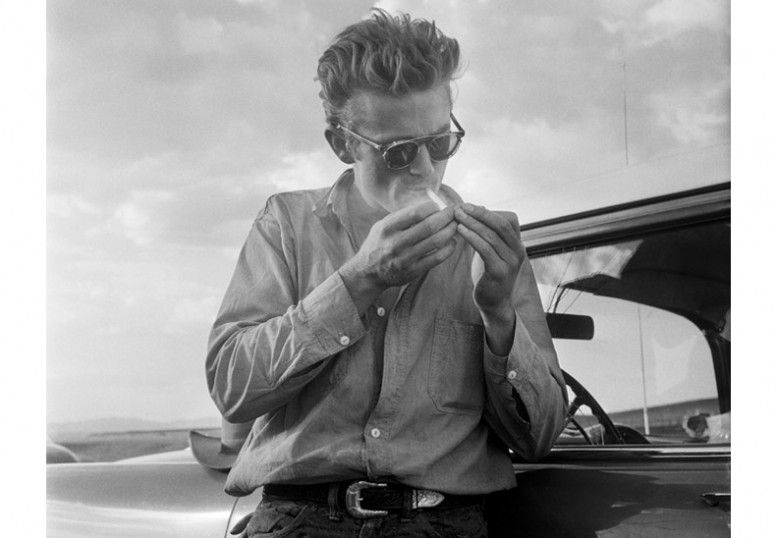
Richard Crump Miller was a true American working class photographer. From photographing airplanes for service manuals during WWII, to his snapshots of the construction of the Hollywood freeway–and all the way to his unique, saturated carbro prints of celebrities, assignments for various magazines, and covers of the Saturday Evening Post, Miller is a photographer who has captured the pathology and false paradise of the American dream. Miller's photographs ooze with a tenderness of a country still in the cocoon of its innocence. Moreover, Miller's iconic portraits of James Dean and Elizabeth Taylor on the set of Giant show not only a human side to celebrity, but the boredom suffered in the manufacture of our idols. Richard C. Miller -- Portraits is on view at the Craig Krull Gallery at Bergamot Station in Santa Monica until June 11. www.bergamotstation.com
Shunga: Erotic Art in a Comparative Context
Series: The Prelude to Desire, 1799, Utamaro
It was a time when Japan was ruled by military dictators called Shoguns and much of the East was just large swaths of bucolic countryside, with flowing grass, and a certain mysticism you can only associate with "the Orient." For centuries it was like this. Seemingly perfect and serene. The artistic output from this time is extremely recognizable: ornate woodcuts painted on scrolls, called ukiyo-e, that depicted the quotidien routine of Japanese life: work, play, love, theater, history, and pleasure. Shunga, a Japanese form of erotic art, that most think was deemed immoral, but was actually morally accepted, was common and many artists, without risking their reputations, dipped their pens in this type of ink. It was all the same–work and sex–it still followed a classifiable aesthetic of the quotidien. It begs the question–what did you do last night?
Series: The Prelude to Desire, 1799, Utamaro
This weekend, the University of London's School of Oriental and African studies will hold a workshop and a list of speakers on the topic of Shunga art. Talks are ranging and include introductions on the history of Shunga art to how to present and curate Shunga art. The talks are free and is being held at the Brunei Gallery May 20 and 21. www.soas.ac.uk/
Marc Swanson: The Second Story
 Marc Swanson, Untitled Boxer, 2010
Marc Swanson constructs sculptures out of found iconographic sources, from taxidermy to tattoos, fabricating them from culturally-loaded materials so that the resulting sculptures in both form and content reveal the conspicuous constructedness of our personas in the modern mediated world. For example, taxidermy forms relating to his own father’s fantasy of an outdoorsy hunter’s life—one his dad never really lived but simulated—are overlaid with the glittered mirrored surfaces associated with the demimonde of the after-midnight nightclub world the artist inhabited for many years.
 Marc Swanson, Untitled Black Fighting Bucks, 2009
Swanson’s allusions often refer simultaneously to both the austere, rarefied, and serious history of minimal art and the legacy of cheesy metal and self-consciously decadent glam rock bands. In stating the equal importance of both in his work, Swanson makes viewers aware of the complex negotiations between high and low culture in everyone’s lives. An exhibition, curated by Bill Arning, Director, at the Contemporary Arts Museum Houston opens this July. Marc Swanson: The Second Story–July 2 to October 9, 2011, at the Contemporary Arts Museum Houston–www.carmh.org
Nino Migliori

_nino_Migliori_Il-tuffatore-Medium
Nino Migliori, Il tuffatore, 1951
Nino Migliori's photography is the epitome of a definitively Italian cultural movement during postwar Italy called neorealismo, or neorealism. Its the stark black and white photography of an Italy that seems to sizzle to the touch. Whilst Migliori captured still images of Northern and Southern Italy's street life, neorealism can also be exemplified with film–for example, Vittorio De Sico's 1948 classic The Bicycle Thief. Nino Migliori, who was born in Bologne in 1926, is still alive and well–a new exhibit Nino Migliori "Neorealism" opens this july at the La Mar de Musicas Festival in Cartagena, Spain. Nino Migliori "Neorealism–July 11 to August 31 at the Palacio Molina–www.lamardemusicas.com
James Franco by Adarsha Benjamin for Pas Un Autre
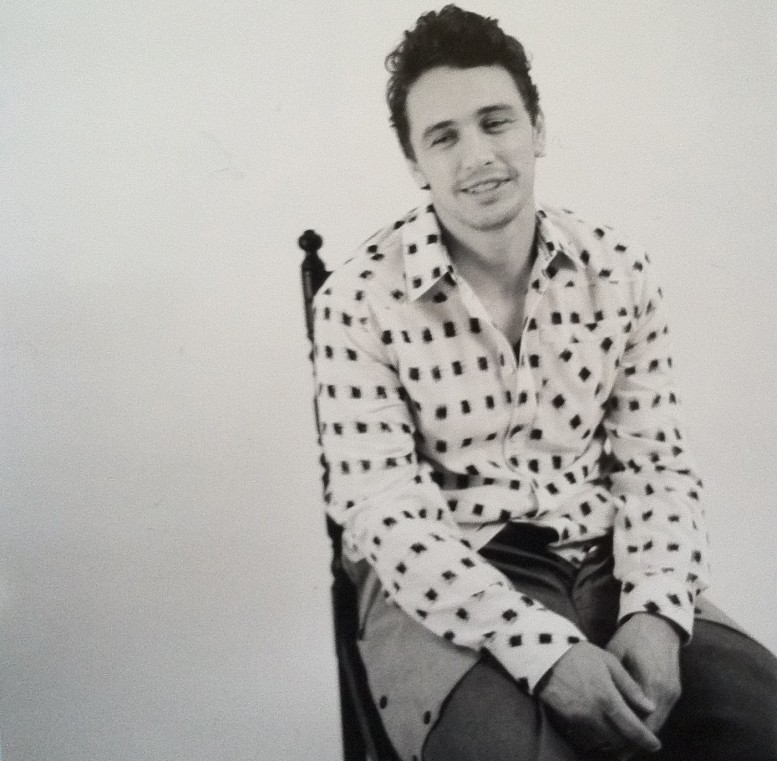
Test polaroid of James Franco for the first issue of Autre Quarterly, the print edition of Pas Un Autre. Shot earlier today in New York by the brilliant Adarsha Benjamin–styled by Paloma Perez–make-up/hair by Jordan Bree Long. Shot on location at the KDU Studios in Brooklyn.
Tracey Emin: Love Is What You Want

Love Is What You Want
"People like you should fuck people like me," reads one her famous neon sign installations. "Good smile, Great come," reads another. Tracey Emin, a celebrated contemporary English artist, who has a retrospective of sorts opening today in London, is labeled a "wild child" of the art world with no chance of taming. Her neon scribbles are honest and personal, and speak of the post modern human condition on a profound level. Emin has had her fair share of hard knocks–growing up poor, raped at 13, and an abortion of twins at 18–so now, with her trademark lopsided smile and sexy glint in her eyes, she's appropriately getting back at this fucked up mess we call a world–in a beautiful way.

Good Smile Great Come
Emin's rise to prominence culminated with a special exhibit at the Tate Gallery in 1999, in which she presented her unmade bed in the museum exactly as it was in her home–after spending countless suicidal days in it following a fight in relationship. Yellowed sheets, cigarette butts, stained underwear, and condoms strewn about the bed was a shocking, visceral site to behold–a strange reminder of the fragile, intricacies of the human psyche. A famous photograph, a self-portrait of the artist herself, from a gallery show I've Got it All Now (2000) - displays Emin clutching bank notes and coins into her crotch - an analytical critique for man's unquenchable desire for money.
"Oh Christ, I Just Wanted You to Fuck Me, And Then I Became Greedy, I Wanted You To Love Me." from a Tracey Emin Installation
The exhibition, Tracey Emin: Love Is What You Want, opens today at the Hayward Gallery at the Southbank Centre in london and features painting, drawing, photography, textiles, video and sculpture, in works that are "by turns tough, romantic, desperate, angry, funny and full of longing." Seldom-seen early works and recent large-scale installations are shown together with a new series of outdoor sculptures created especially for the Hayward Gallery.
On view at the Hayward Gallery May 18 to August 29, 2011 - find tickets here.

tracey_emin_bed