photographs by Oliver Maxwell Kupper

For all its promise of liberation from the gilded structures of exaltation surrounding the objet d'art, the readymade has become deflated by its own pressure. Found objects, assemblage and appropriation have been cunningly adopted and integrated into the mechanisms of taste, robbed of their subversive function and aestheticized into a polite paradigm. In a series of nine new collages upending these platitudes, Valentin Carron locates within his own psychology the entry points for the subconscious material of identity and freezes them, allowing for unexpected and arbitrary recombination that short-circuits accepted modes of explication. Sing Loud And Walk Fast will be on view through July 12 at 303 Gallery 555 W 21 Street New York. photographs courtesy of the gallery
Kim Gordon: Lo-Fi Glamour, the artist’s first North American museum solo-exhibition, features painting, sculpture, a new series of figure drawings, and a commissioned score for Andy Warhol’s 1963–64 silent film Kiss. Gordon cites Warhol as one of her artistic influences, particularly the lo-fi aesthetic of Warhol’s studio, as well as his involvement with the Velvet Underground, and his multi-disciplinary practice in fashion, painting, music, publishing, and performance. The exhibition and commissioned score, Sound for Andy Warhol’s Kiss honors Gordon’s early interests in Warhol while also spotlighting the development of her artistic voice. Lo-Fi Glamour is on view through September 1 at the Andy Warhol Museum, 117 Sandusky Street Pittsburgh, PA. photographs courtesy of the Andy Warhol Museum


photographs by Oliver Maxwell Kupper

Guillermo Kuitca
The Family Idiot 2018
Oil on canvas in artist frame, triptych
102 x 167.5 cm / 40 1/8 x 66 in

Guillermo Kuitca
Retablo 2016
Oil on wooden panels
330 x 245 x 185 cm / 129 7/8 x 96 1/2 x 72 7/8 in

Guillermo Kuitca
Missing Pages 2018
Oil on canvas, 18 parts
285 x 380 cm / 112 1/4 x 149 5/8 in95 x 63 cm / 37 3/8 x 24 3/4 in each
Photo: Gonzalo Maggi

Guillermo Kuitca
The Family Idiot 2018
Oil on canvas in artist frame
100 x 56.5 cm / 39 3/8 x 22 1/4 in
Photo: Gonzalo Maggi
Evoking the complex geometries and layered information of architectural plans and cartographic maps, Guillermo Kuitca’s theatrical paintings explore themes of dislocation. Presented in the South Gallery, this exhibition will debut two new series rendered with the artist’s distinctive melding of abstraction and figuration: ‘The Family Idiot’ draws from Jean-Paul Sartre’s three-volume study of Gustave Flaubert, while the 18-part wall piece ‘Missing Pages’ evokes the physical process of book printing, specifically the unexpected combinations of images that ensue during pagination. The exhibition will also include new Theater pieces that build upon Kuitca’s long-standing involvement with the dramatic arts through an idiosyncratic integration of architectural features in two-dimensional space.This exhibition by Guillermo Kuitcat will be on view until August 18 at Hauser & Wirth 901 East 3rd Street, Los Angeles. photographs courtesy of the artist and Hauser & Wirth

David Hammons
Untitled 2018 Mixed media Dimensions variable
© David Hammons Courtesy the artist and Hauser & Wirth
Photo: Genevieve Hanson

David Hammons
Orange is the new black
2017 Mixed media 139.7 x 40.6 x 30.5 cm / 55 x 16 x 12 in
© David Hammons Courtesy the artist and Hauser & Wirth
Photo: Genevieve Hanson

David Hammons
Untitled 2017 Mixed media
© David Hammons
Courtesy the artist and Hauser &Wirth
Photo: Genevieve Hanson
This exhibition by David Hammons will be on view until August 11 at Hauser & Wirth 901 East 3rd Street,
Los Angeles. photographs courtesy of the artist and Hauser & Wirth
The Whitney Biennial is an unmissable event for anyone interested in finding out what’s happening in art today. Curators Jane Panetta and Rujeko Hockley have been visiting artists over the past year in search of the most important and relevant work. Featuring seventy-five artists and collectives working in painting, sculpture, installation, film and video, photography, performance, and sound, the 2019 Biennial takes the pulse of the contemporary artistic moment. Introduced by the Museum’s founder Gertrude Vanderbilt Whitney in 1932, the Biennial is the longest-running exhibition in the country to chart the latest developments in American art. The 2019 Whitney Biennial will be on view from May 17 to September 22 at The Whitney Museum of American Art in New York. photographs by Adam Lehrer
Autre magazine celebrated its Spring 2019 issue with a two day takeover at Chandelier Creative’s West Coast outpost, Owl Bureau, a former pharmacy in Highland Park. The takeover started with an event on Saturday evening and daytime gathering with a lecture from fire ecologist Richard Minnich. Cocktails were provided by Madre Mezcal. photographs by Oliver Maxwell Kupper
Ranging from the monumental to the intimately-scaled, the featured sculptures capture Frank Stella’s ongoing exploration of the spatial relationships between abstract and geometric forms and the ways in which they behave in and engage with physical space. In these newest works, Stella combines interlocking grids with more fluid and organic lines, creating a dynamic interplay between minimalist and gestural visual vocabularies. Frank Stella: Recent Work will be on view from April 25 through June 22 across both of the gallery’s Chelsea locations at 509 and 507 W. 24th Street. photographs courtesy of the gallery
Celebrating the photographers who have played a critical role in bringing hip-hop’s visual culture to the global stage, CONTACT HIGH: A Visual History of Hip-Hop is an inside look at the work of hip-hop photographers, as told through their most intimate diaries: their unedited contact sheets. Curated by Vikki Tobak—produced in partnership with United Photo Industries—and based on her book of the same name, the photographic exhibition includes over 120 works from more than 60 photographers. Taking the audience into the original and unedited contact sheets—from Barron Claiborne’s iconic Notorious B.I.G. portraits, to early images of Jay-Z, Kendrick Lamar and Kanye West as they first took to the scene, to Janette Beckman’s defining photos of Salt-N-Pepa, to Jamel Shabazz and Gordon Parks documenting hip-hop culture—CONTACT HIGH allows visitors to look directly through the photographer’s lens and observe all of the pictures taken during these legendary photo shoots. The exhibit also includes rare videos, memorabilia, and music to demonstrate how the documentation of a cultural phenomenon impacts not just music, but politics and social movements around the world. CONTACT HIGH: A Visual History of Hip-Hop is on view through August 18 at Annenberg Space For Photography 2000 Avenue of the Stars, Los Angeles. photographs courtesy of the gallery
London-based fashion brand COS celebrated its partnership with Dia Art Foundation for a second consecutive year at the Dia:Beacon Spring Benefit on May 4th. Guests were among the first to view the new installation of works by Korean artist, Lee Ufan. photographs courtesy of COS (via BFA)
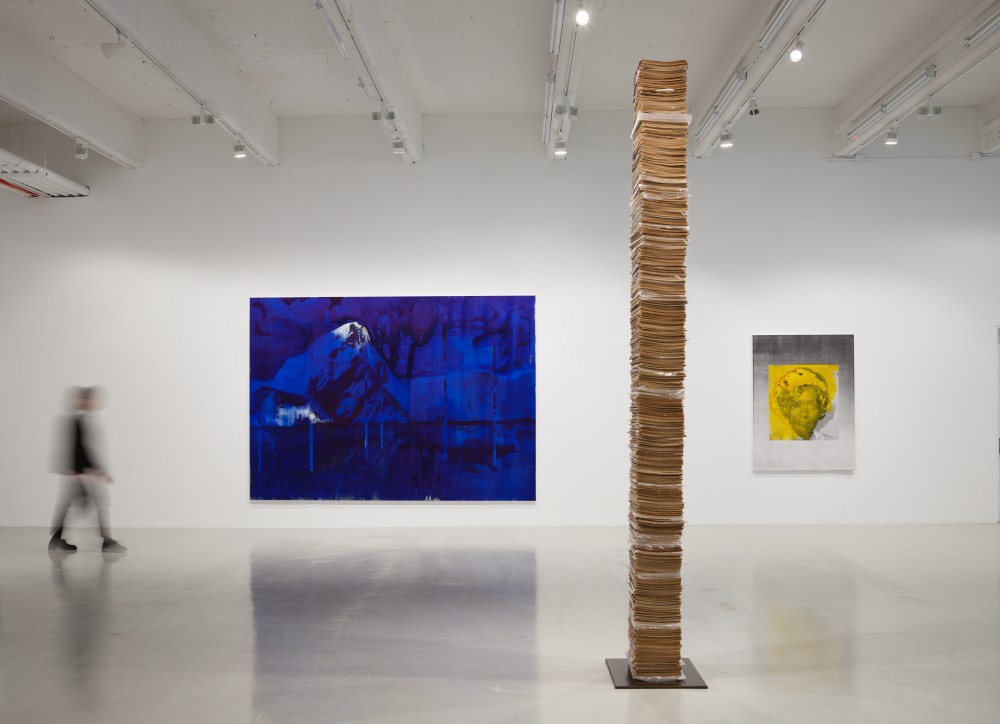
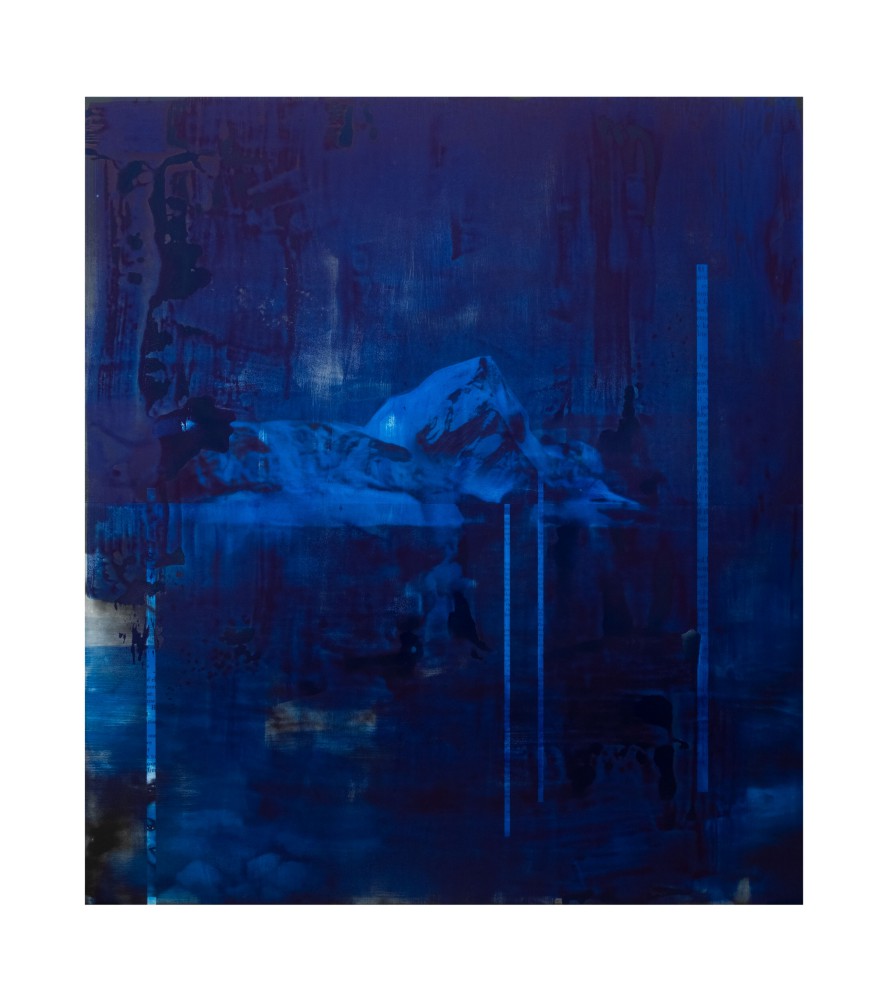
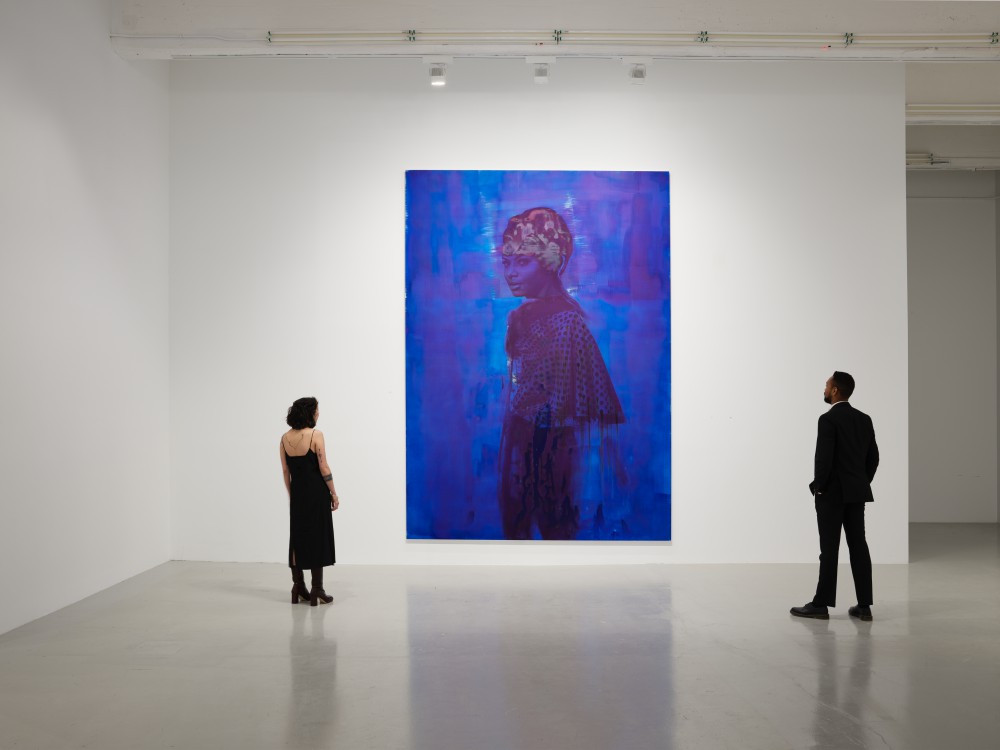
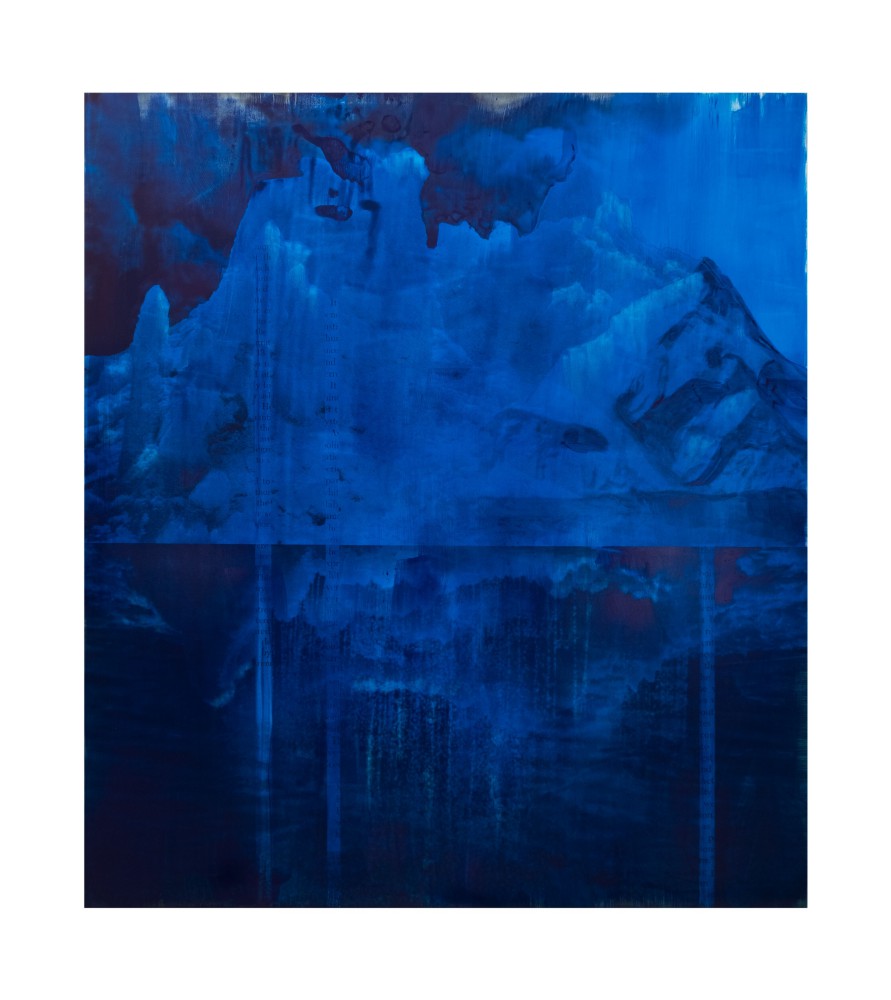
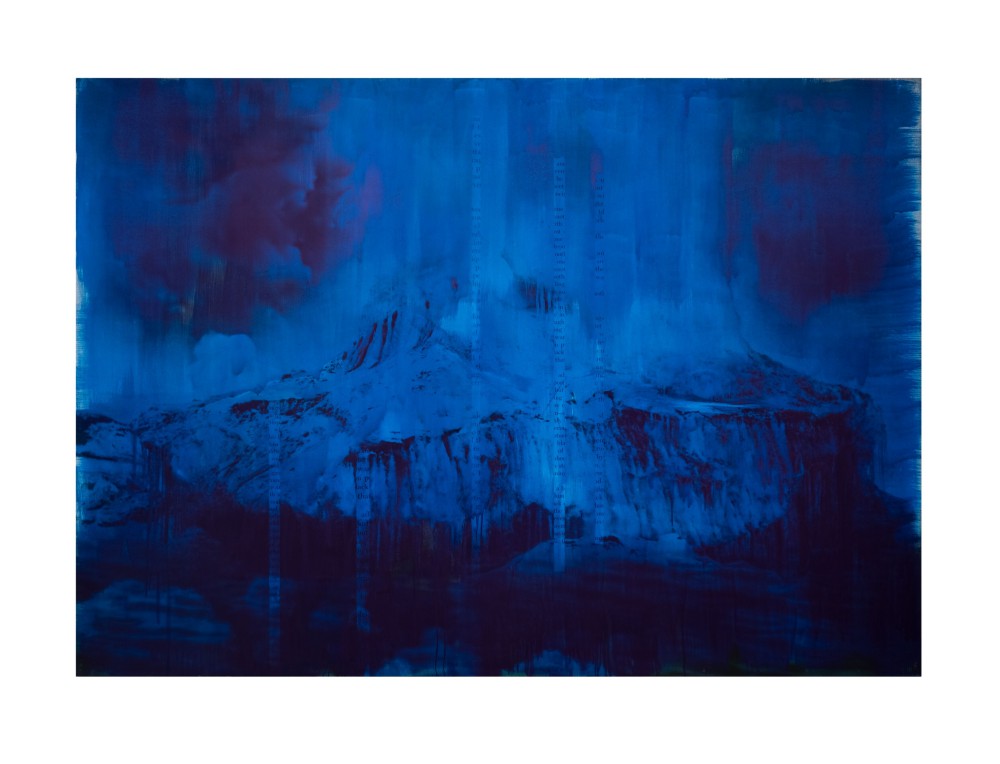
Debuting a suite of new large-scale paintings, Lorna Simpson’s Darkening finds the artist returning to and building upon themes and motifs at the center of her practice: explorations focused on the nature of representation, identity, gender, race, and history. For more than 30 years, Simpson’s powerful works have entangled viewers in an equivocal web of meaning, drawing upon techniques of collage through the use of found materials, often culled from the pages of vintage Jet and Ebony magazines. In ‘Darkening,’ Simpson continues to thread dichotomies of figuration and abstraction with vast and enthralling tableaux that subsume spliced photos and fragmented text, abstracted beyond comprehension. Equally arresting and poetic, the paintings engage viewers with layers of paradox, capturing the mystifying allure of an arctic landscape in inky washes of blacks, grays, and startling blues. Darkening will be on view through 26 July at Hauser & Wirth 548 West 22nd Street, New York. photographs courtesy of Hauser & Wirth
The Outsider Art Fair features over forty visionary artists from around the world, including works by Noviadi Angkasapura (b. 1979, Indonesia), Frédéric Bruly Bouabré (1923–2014, Ivory Coast), Henry Darger (1892-1973, USA), Janko Domsic (1915-1983, Croatia/France), Minnie Evans (1892-1987, USA), Guo Fengyi (1942–2010, China), Martín Ramírez (1895-1963, Mexico/USA), Judith Scott (1943-2005, USA), Melvin Way (b. 1954, USA), George Widener (b. 1962, USA), Adolf Wölfli (1864–1930, Switzerland), Anna Zemánkova (1908–1986, Czech Republic), and Unica Zürn (1916-1970, Germany) among many others.
The Doors of Perception focuses on the visionary nature of art commonly known as outsider art, art brut, or self-taught art. The exhibition presents a large constellation of works made by exceptionally gifted artists from five continents, offering a panorama of art created on the margins of society. Whether psychiatric patients, self-taught visionaries, or mediums, each of the artists in the exhibition felt at some point in their life the need to create an artistic language of their own in order to reveal what they understood to be the true nature of things. Often disenfranchised because of their mental condition or social status and without any previous artistic training, many of the artists exhibited here dedicated their lives obsessively to the creation of complex visual representations, often after experiencing a life-changing epiphany. A meeting with a supernatural power—whether an encounter with the divine, spirits of the dead, or extraterrestrial beings—might have triggered this impulse to create. These remarkable events produced strong centrifugal forces that drove the artists from chaos to order, opening for them “doors of perception” to a transcendental reality that, in many cases, helped them survive their otherwise unstable life. The Doors of Perception is on view through May 5 at Frieze, Metropolitan Pavillion 125 W. 18th Street, New York. photographs courtesy of The Outsider Fair

Misery loves company, and the art scene is full of miserable people. In our vast, virtual memetic culture, @JERRYGOGOSIAN is dissecting the great unregulated art market and its strange ecosystem of fear, lies and egomaniacism. Everyone knows she, or he, is on the inside, but the constant guessing only fuels the fire: Who is @JERRYGOGOSIAN? Click here to read.
Born only a few months after the Chernobyl Disaster in 1986, Romanian artist Mi Kafchin was inundated as a young child with fear-driven remedies that would help to cure the invisible but pervasive radioactive toxins that enveloped her region and in effect her being. Trust in aspirational progress or the security of big government would dissipate into that same air. The chemtrails that crisscrossed the sky above represented a direct and constant communication of this reality but banalized into a sublime of the everyday. This toxic cocktail of aluminum, barium and strontium militaristically seeded into our atmosphere successfully keeps society under control… at least, that is, until the EMF from 5G begins to vibrate our delicate bodies. This legacy of trepidation from sources governmental, paranormal and extraterrestrial has festered into a menacing ideological vortex of possibility, one looming large in the work of Mi Kafchin and mapped out here in her second solo exhibition at Nicodim Gallery. Chemtrails is on view through June 1 at Nicodim 571 South Anderson Street, Los Angeles. photographs by Agathe Pinard

Photo courtesy: Johnson Publishing Company, LLC.

Photo courtesy: Johnson Publishing Company, LLC.

Photo courtesy: Johnson Publishing Company, LLC.

Photo courtesy: Johnson Publishing Company, LLC.

Photo courtesy: Johnson Publishing Company, LLC.

Photo courtesy: Johnson Publishing Company, LLC.

Photo courtesy: Johnson Publishing Company, LLC.

Photo: Delfino Sisto Legnani and Marco Cappelletti, courtesy: Fondazione Prada

Photo courtesy: Johnson Publishing Company, LLC.
With The Black Image Corporation, Theaster Gates has conceived a participatory exhibition which explores the fundamental legacy of Johnson Publishing Company archives. Featuring more than four million images, they have contributed to shape the aesthetic and cultural languages of African American identity.
Central to the exhibition are the works of two photographers, Moneta Sleet Jr. and Isaac Sutton, who both worked for Johnson Publishing. The publishing company created two landmark publications for black American audiences in the 1940s and ‘50s: the monthly magazine Ebony and its weekly sister outlet Jet, which quickly became two of the major platforms for the representation and discussion of black culture. The magazines covered historic milestones such as the March on Washington in 1963 and the first African-American astronaut, politics, sports and celebrities, as well as the complex realities black Americans faced in the US post-war era. The Black Image Corporation is on view through July 28 at Gropius Bau Niederkirchnerstraße 7 10963, Berlin.

Adam Rolston
I Am Out Therefore I Am, 1989
Crack and peel sticker, 3 1/2 x 3 1/2 in.
Courtesy the artist

Catherine Opie
Raven (gun), 1989
Inkjet print, 8 x 8 in.
© Catherine Opie. Courtesy Regen Projects, Los Angeles and Lehmann Maupin, New York and Hong Kong

Cathy Cade
Sisterhood Feels Good, Los Angeles, 1972
Digital print, 11 x 16 in.
Courtesy the artist

Diana Davies
Untitled (Marsha P. Johnson Hands Out Flyers For
Support of Gay Students at N.Y.U.), c. 1970
Digital print, 11 x 14 in.
© The New York Public Library/Art Resource, New York.

Gran Fury
Riot, 1989
Sticker, 5 x 3 1/2 in.
Courtesy of Carpenter Center for Visual Arts / Harvard Art Museum

Peter Hujar
Daniel Ware (Cockette), 1971
Gelatin silver print, 20 x 16 in.
© 1987 The Peter Hujar Archive, LLC. Courtesy Pace/MacGill Gallery, New York and Fraenkel Gallery, San Francisco

Peter Hujar
Gay Liberation Front Poster Image, 1970
Vintage gelatin silver print, 18 x 12 in.
Gift of the Peter Hujar Archive, LLC. Collection of Leslie-Lohman Museum

Keith Haring
National Coming Out Day, 1988
Offset lithograph, 26 x 23 in.
© Keith Haring Foundation

Fred McDarrah
Celebration After Riots Outside Stonewall Inn, Nelly (Betsy Mae Koolo), Chris (Drag Queen Chris), Roger Davis, Michelle and Tommy Lanigan-Schmidt, June 1969, 1969
Gelatin silver print, 8 1/2 x 11 in.
Collection Pavel Zoubok. Courtesy Pavel Zoubok Gallery, New York. Photo: Fred W. McDarrah/Getty Images

Shelley Seccombe
Sunbathing on the Edge, 1978
Color photograph, 13 x 19 in.
Courtesy the artist

Shirley Bernstein
View Of, 1975
Screenprint and lithograph, 26 x 19 in.
Courtesy the artist

Thomas Lanigan-Schmidt
Allegory of the Stonewall Riot (Statue of Liberty) Fighting for Drag Queen, Husband and Home, 1969
Foil, plastic wrap, pipe cleaners, linoleum, glitter, acrylic paint, acrylic floor shine, food coloring, staples, magic marker, wire, printed material, found objects, and other
media, 12 x 7 x 4 in.
Courtesy the artist and Pavel Zoubok Gallery, New York

Tseng Kwong Chi
Art After Midnight (New York), 1985
Chromogenic print, 30 x 30 in.
© Muna Tseng Dance Projects, Inc.
Standing from left: Patti Astor, Steve Maas, Peter McGough, Animal X, John Sex, Joey Arias, Ann Magnuson. Kneeling from left: David McDermott, Min Thometz-Sanchez, Keith Haring, Tseng Kwong Chi
Coinciding with the 50th anniversary of the Stonewall Uprisings, Art after Stonewall, 1969–1989 is a long-awaited and groundbreaking survey that features over 200 works of art and related visual materials exploring the impact of the Lesbian, Gay, Bisexual, Transgender, and Queer (LGBTQ) liberation movement on visual culture. Presented in two parts—at New York University’s Grey Art Gallery and the Leslie-Lohman Museum of Gay and Lesbian Art—the exhibition features artworks by openly LGBTQ artists such as Vaginal Davis, Louise Fishman, Nan Goldin, Lyle Ashton Harris, Barbara Hammer, Holly Hughes, Greer Lankton, Robert Mapplethorpe, Catherine Opie, Joan Snyder, and Andy Warhol. On view at the Grey Art Gallery from April 24 through July 20, 2019 and at the Leslie-Lohman Museum from April 24 through July 21, 2019, the exhibition is organized by the Columbus Museum of Art. Art after Stonewall, 1969–1989 is on view through July 20 at New York University’s Grey Art Gallery and the Leslie-Lohman Museum of Gay and Lesbian Art. photographs
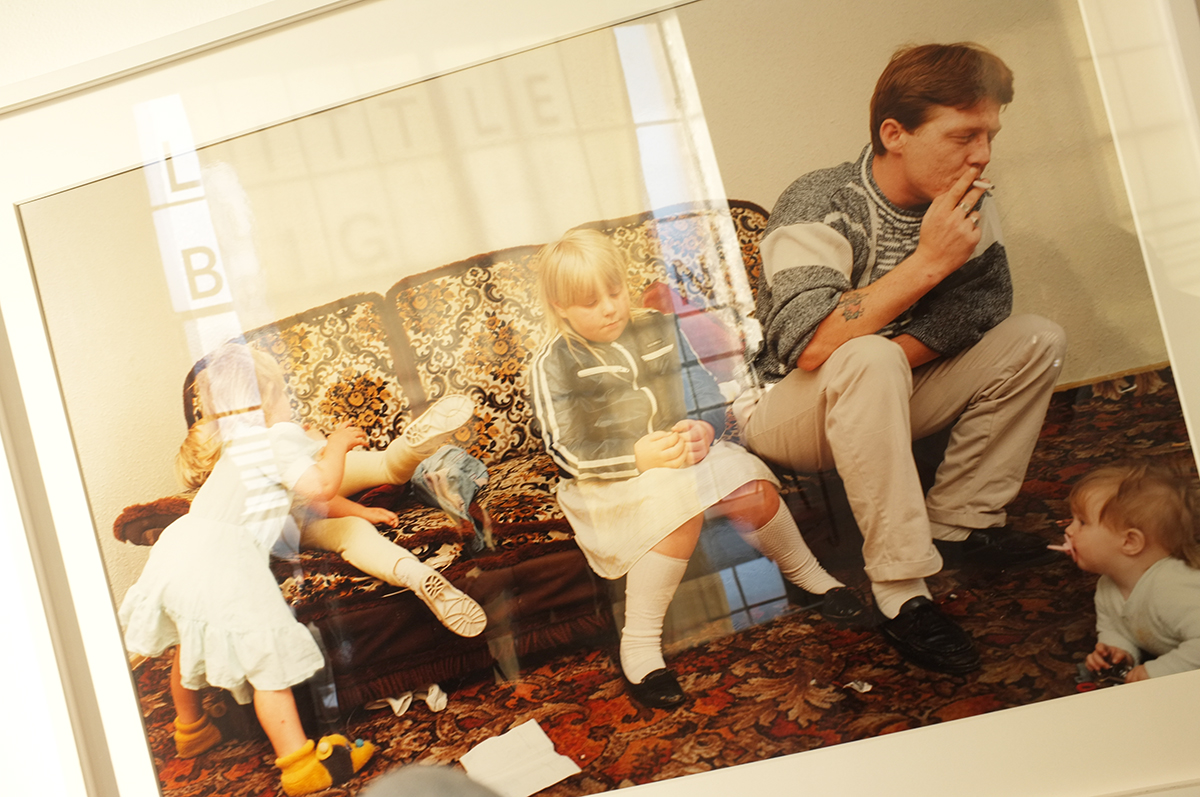
In 1991, Aperture published Nick Waplington’s first book, Living Room, to great critical acclaim. A major exhibition followed at their 23rd Street gallery in New York, and for a number of years the exhibition toured the world. The exhibition prints were then put into storage, and soon thereafter Waplington – having moved on to new projects – asked his gallerist, Holly Solomon, to destroy them. In 2018, Solomon’s son Thomas contacted Waplington with surprising news: the original Living Room exhibition prints had not been destroyed, and were still in his possession. Little Big Man is delighted to present these historically significant vintage works, appearing in an exhibition for the first time since the early 1990s. The exhibition is on view through May 15 at Little Big Man Gallery 1427 EAST 4th Street, Los Angeles. photographs by Oliver Maxwell Kupper