Sterling Ruby’s Atropa Explores the Duality of Life @ Sprüth Magers New York

Atropa by Sterling Ruby, Sprüth Magers New York, 2026. Photo: Isabella Bernabeo.

text and photographs by Isabella Bernabeo

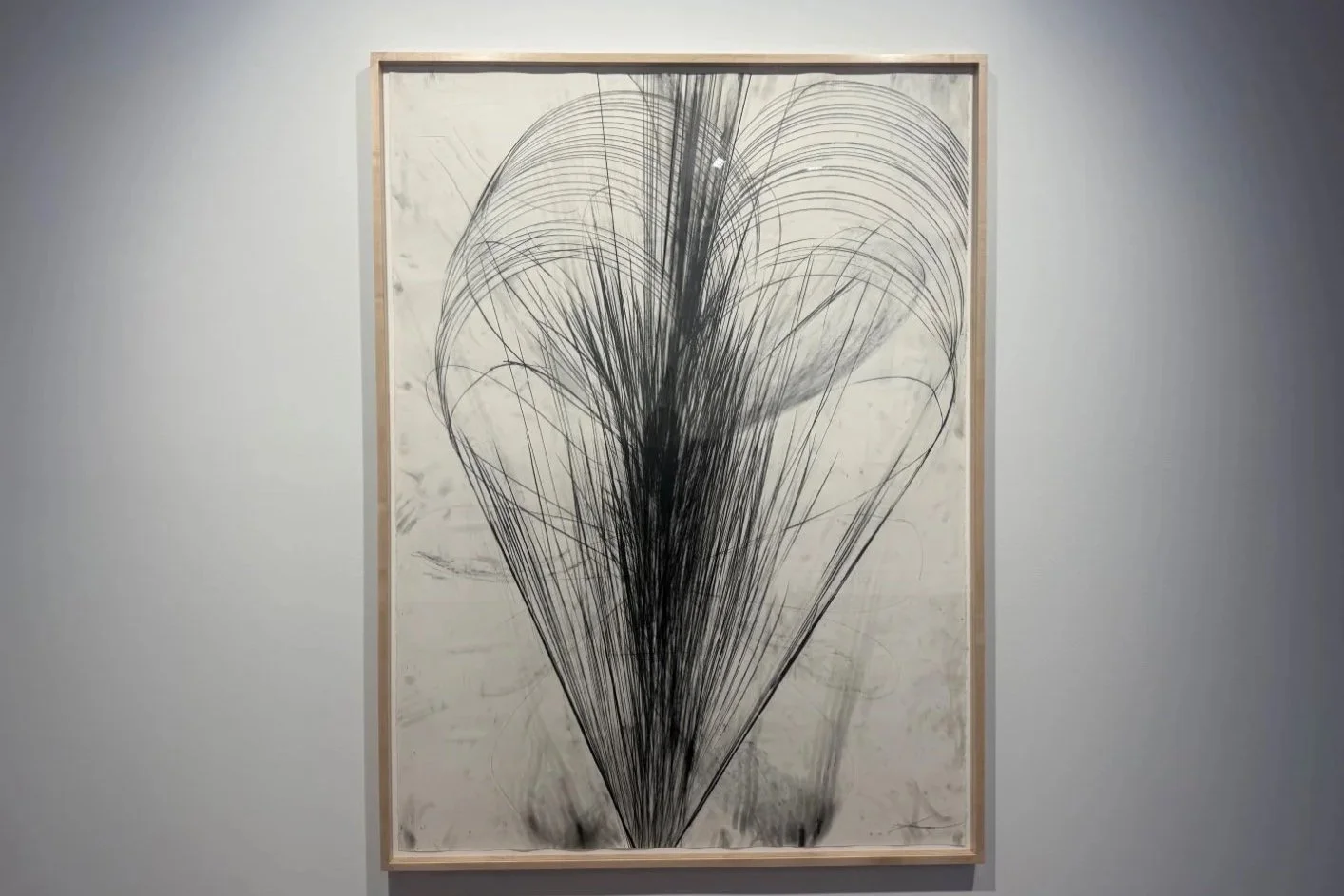
Hidden away on the second floor of an old Upper East Side building, Sterling Ruby’s Atropa explores the duality of life through unconventional artistic methods. Named after the nightshade genus, more commonly known as deadly nightshade, Atropa also references Atropos, a Greek Fate and the eldest daughter of Zeus and Themis. She is the goddess who cuts the thread of life, allowing her to decide the time and manner of a mortal’s death.

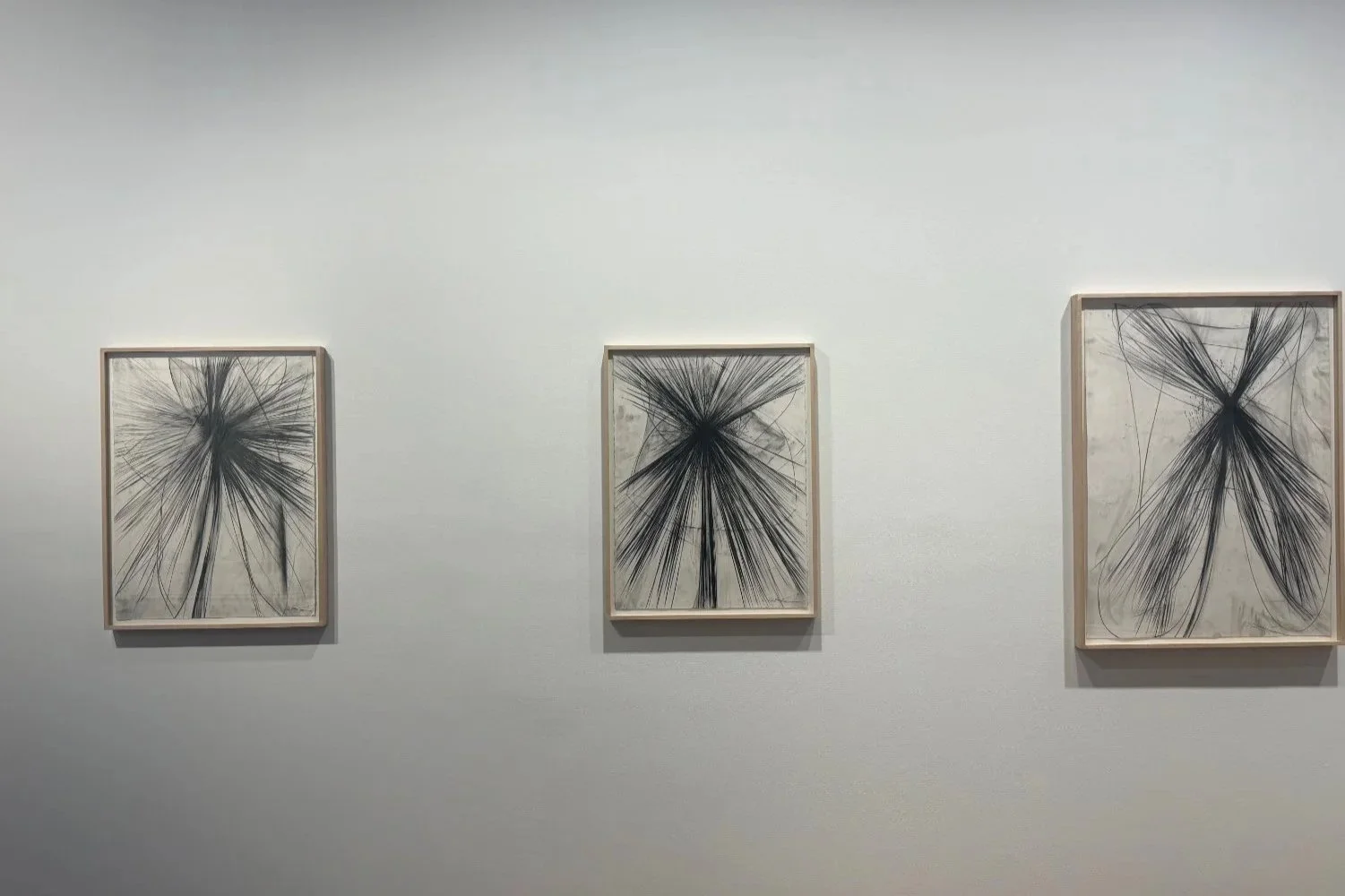
After climbing up an old, rickety staircase, we enter what appears to be an empty apartment flat. The sleek white walls and dark brown hardwood floors dominate the space until they are met by tiny, intricate black lines within pale wood frames, arranged along the walls. 

Atropa by Sterling Ruby, Sprüth Magers New York, 2026. Photo: Isabella Bernabeo.

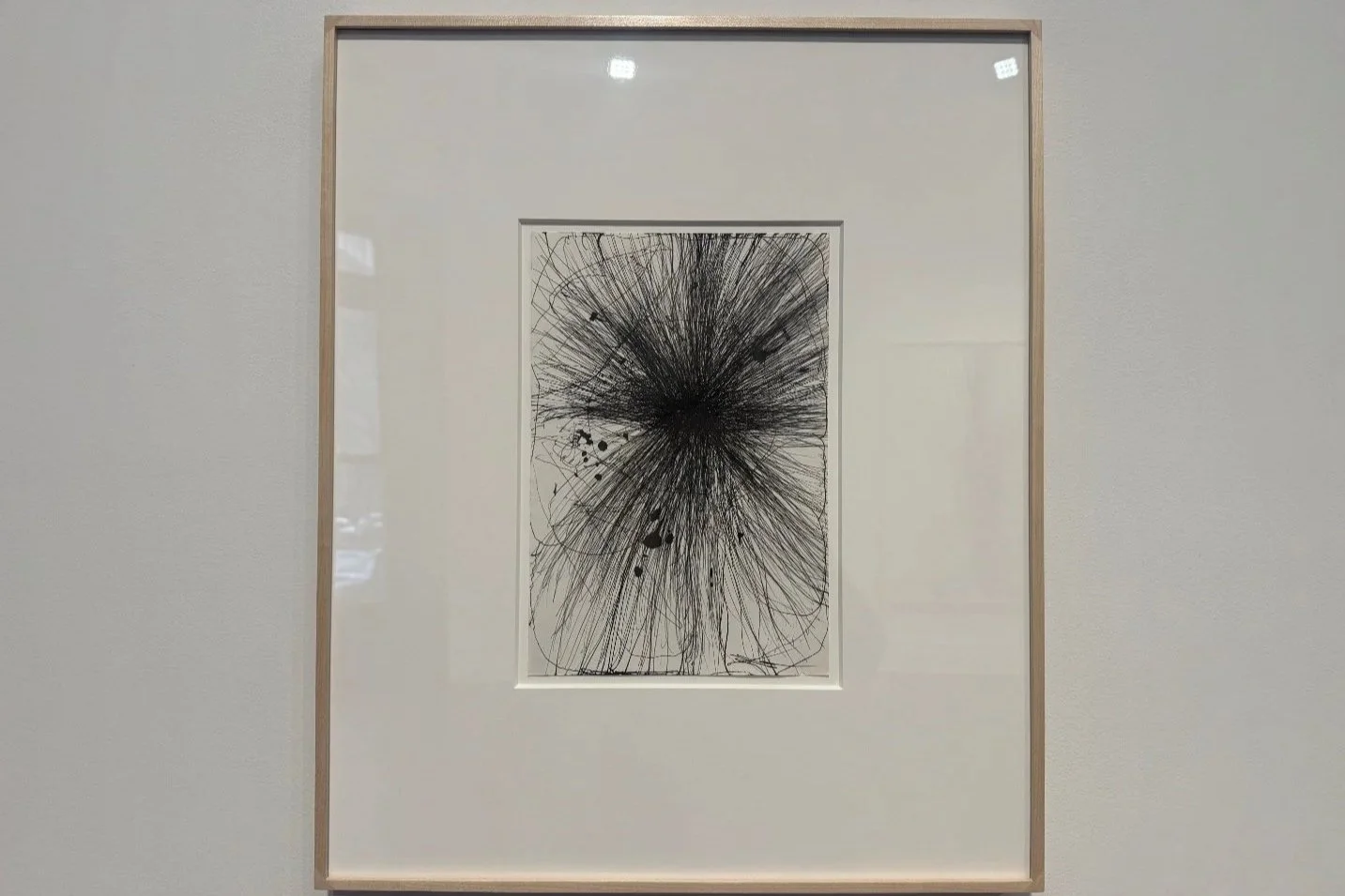
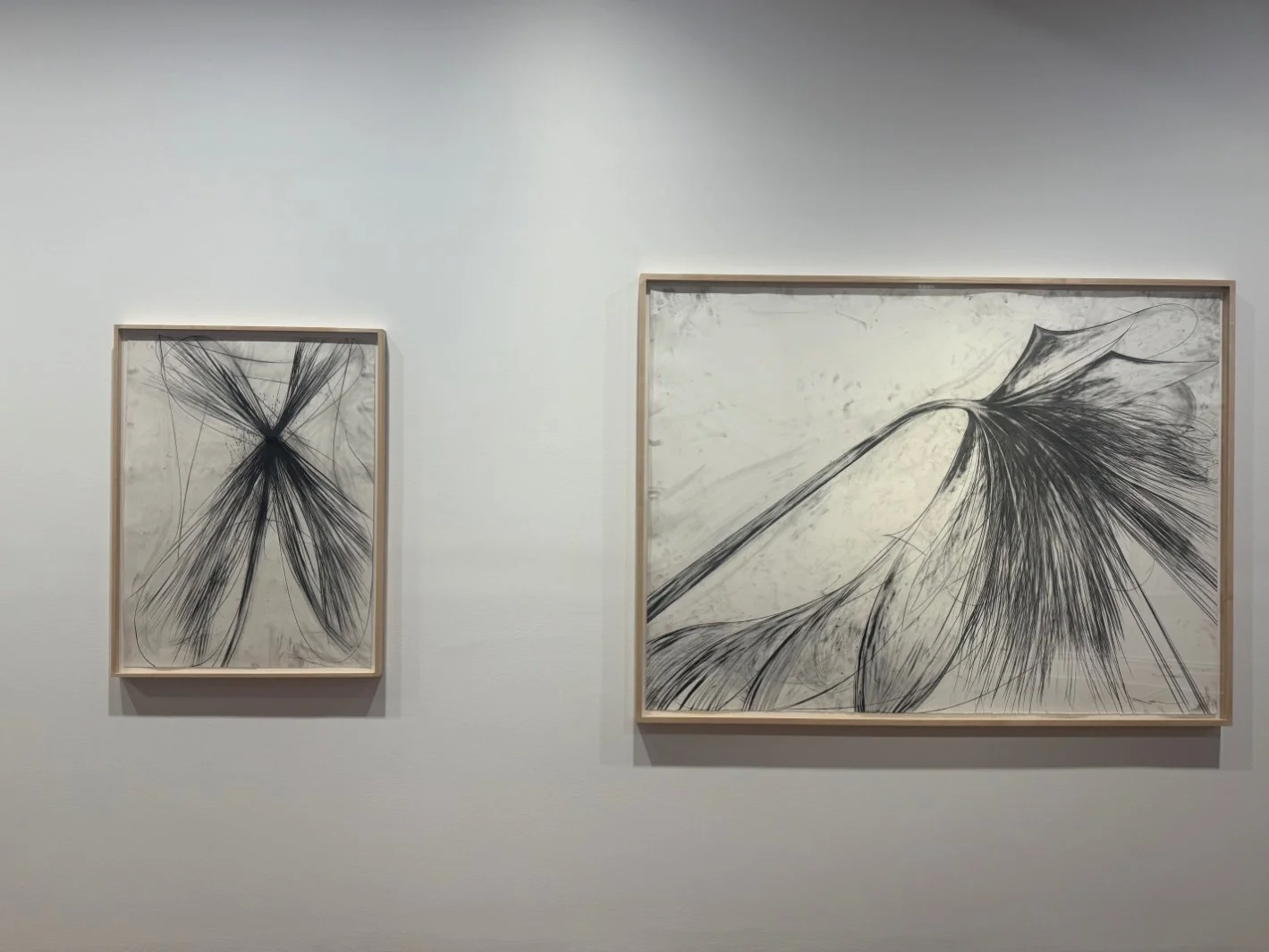
These graphite and pen-on-paper drawings seem to shift and move, their lines twisting fluidly like a worm wiggling to life. Though they were made just last year, these pieces trace back to a series that Ruby began working on thirty years ago. Each of them is drawn with instinctive human gestures rather than the controlled mark-making characteristic of a traditional representational practice. 

All eight drawings are also named after a flower – from Henbane in the nightshade family to Bleeding Hearts in the poppy family to Morning Glory in the convolvulaceae family – many of which are highly poisonous plants. 
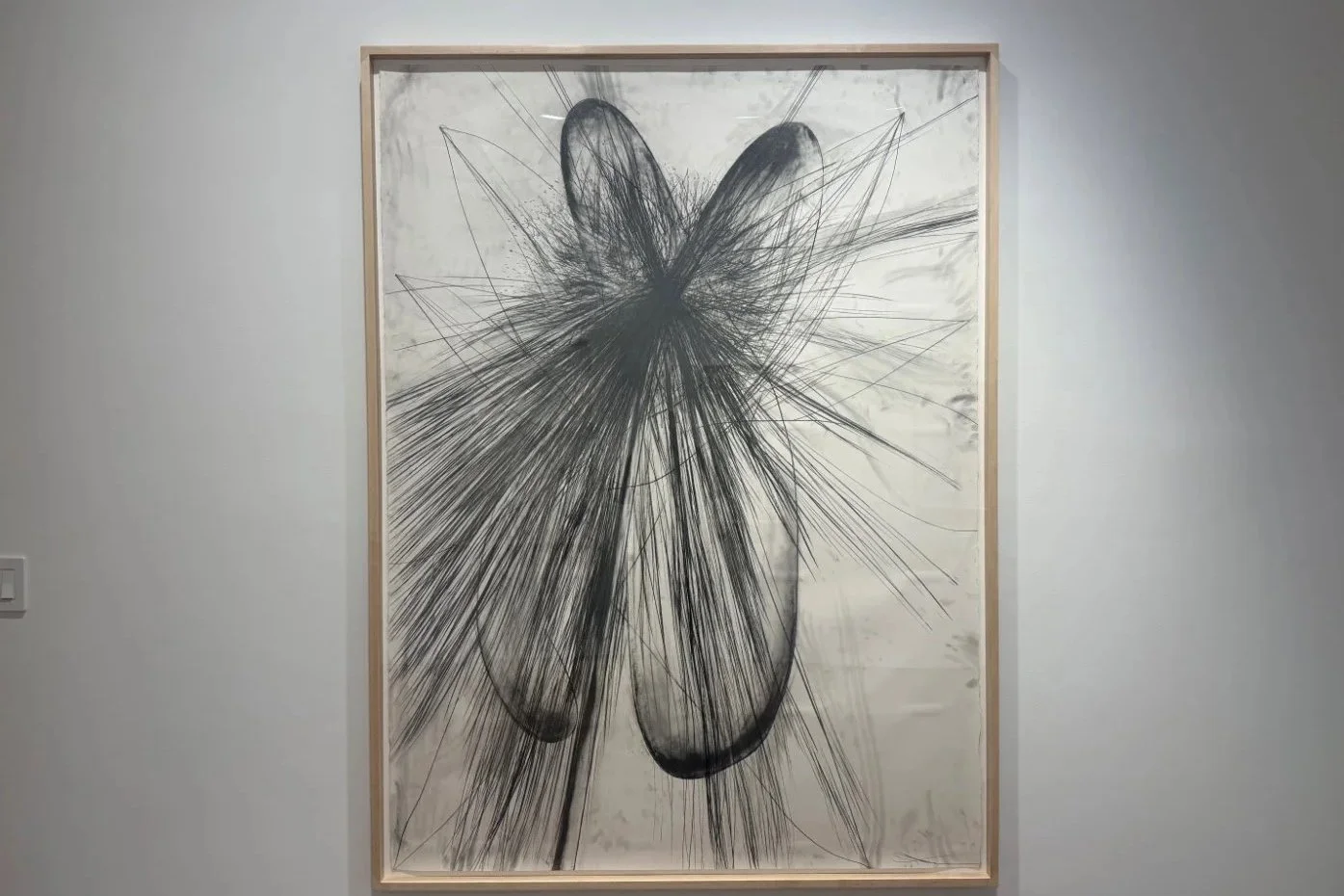
The artworks, each with a dark void near the center of the penwork, seem to represent the endless dangers that accompany the natural world, yet the black, scrawled lines from the void seem to reach beyond the page, yearning to reconnect with the land of the living. The pieces showcase the true paradox nature embodies: the destructive venoms of a flower alongside its medicinal properties, the beauty humans create alongside the destructive instincts that surface daily. 

Atropa by Sterling Ruby, Sprüth Magers New York, 2026. Photo: Isabella Bernabeo.

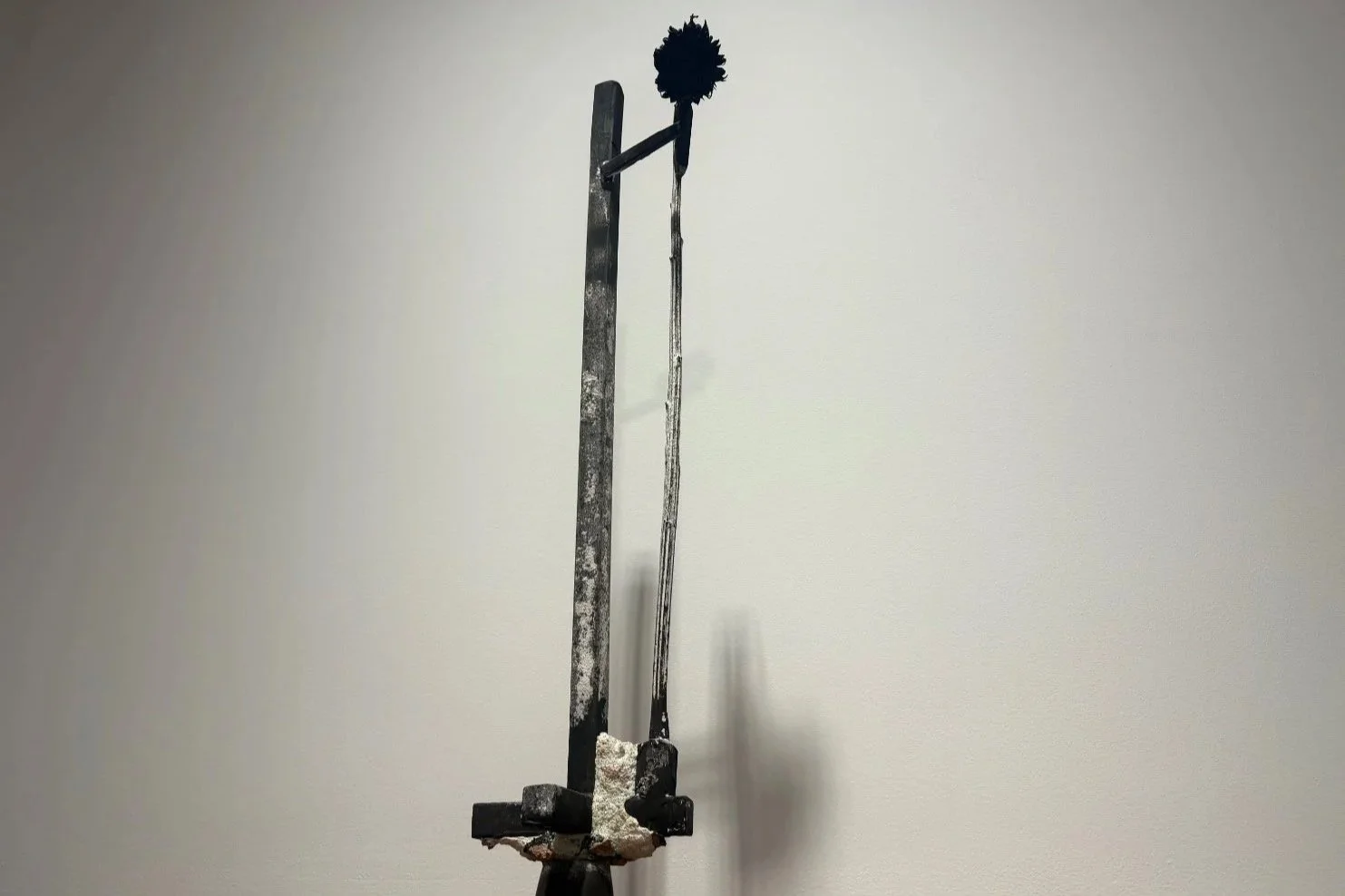
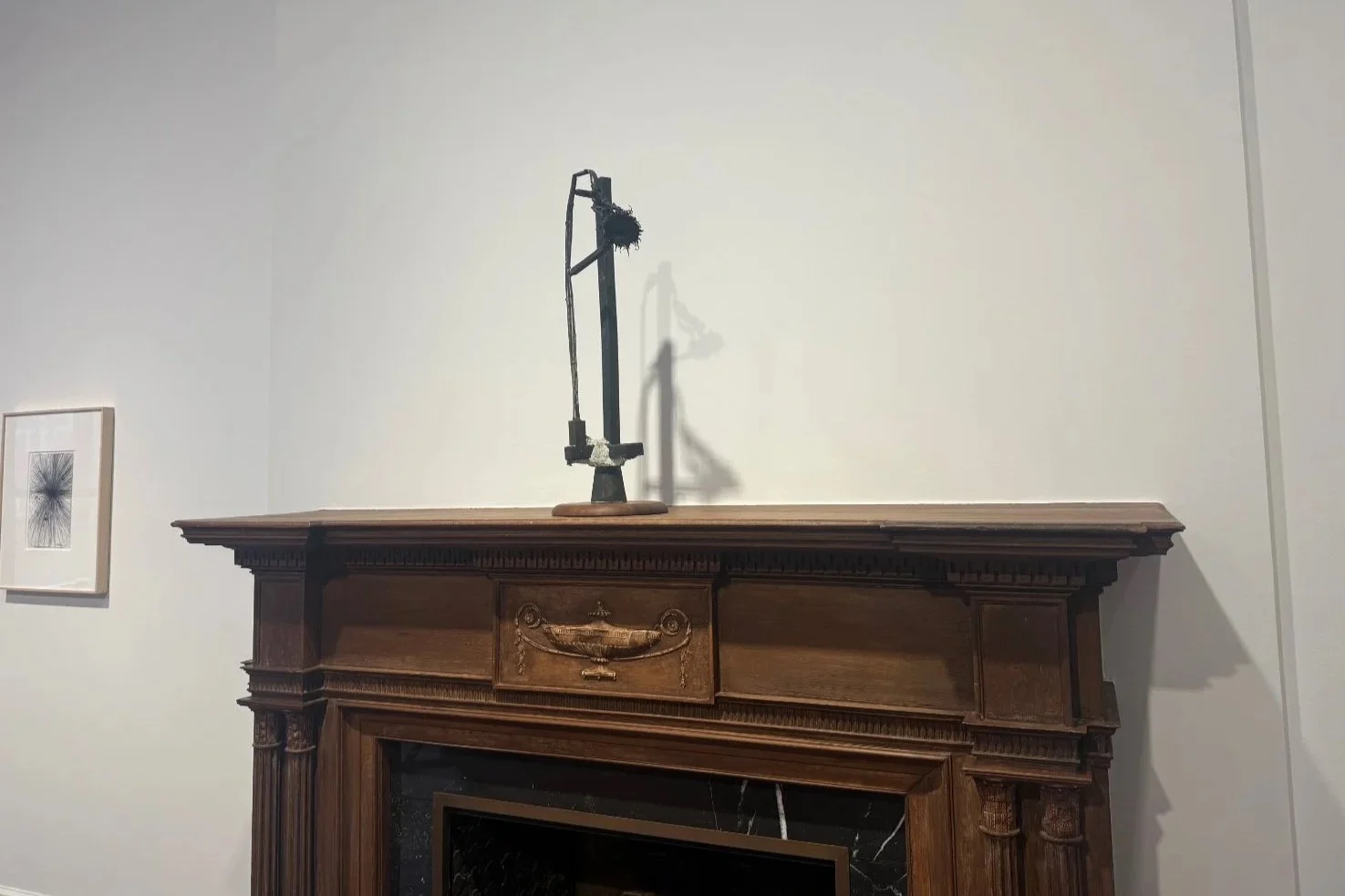
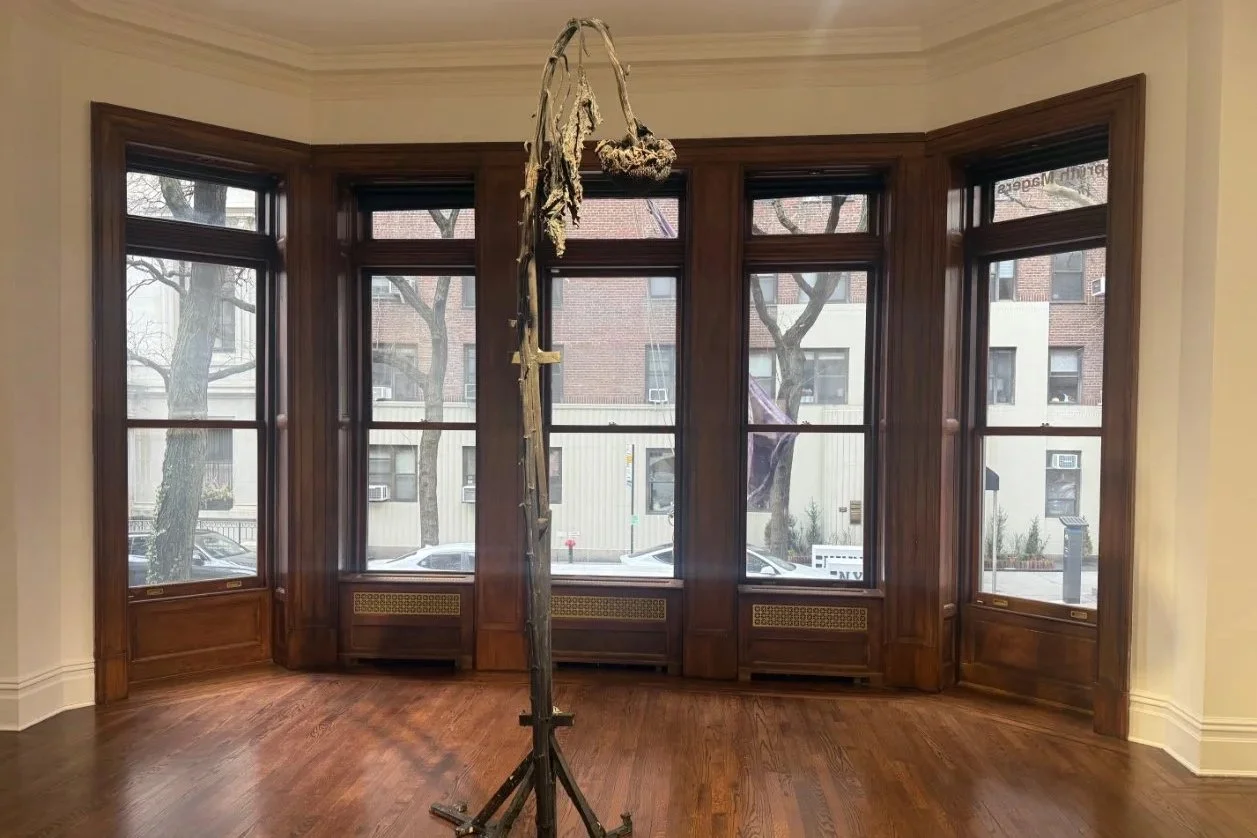
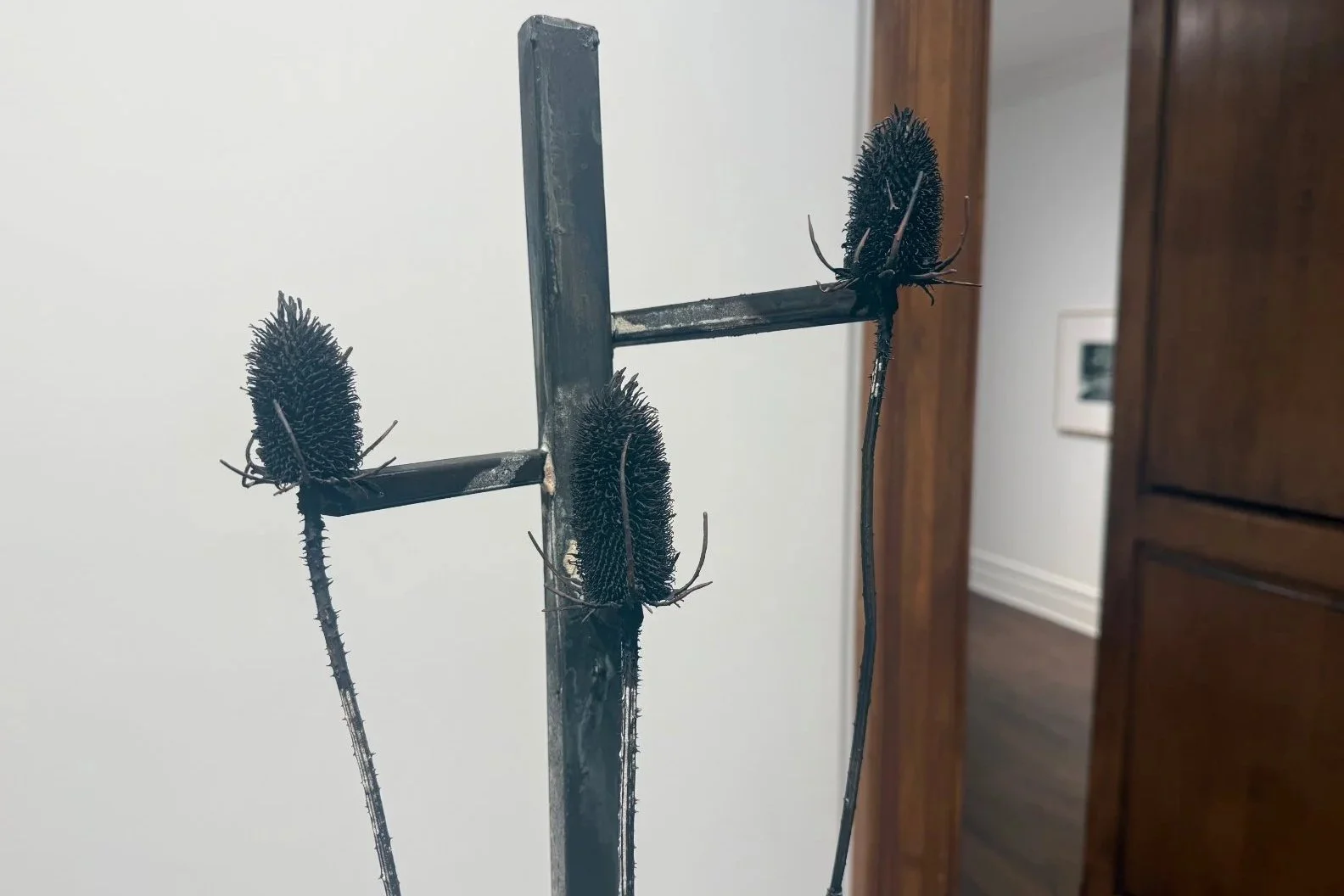
Settled between the drawings are six bronzed flowers, some resting upon dark brown mantels, others stationed on white podiums, and one even large enough to stand on its own: a lone slouched sunflower waiting for the sun to rise. 

All of these flowers, which are the exhibition’s sole sculptural component, are made in Ruby’s studio after being cut, dried, and cast. The burnout process fully incinerates the flower, leaving behind only a bronze mold of what it once was. These sculptures each reveal the flowers in various states of blooming and decay, underscoring once again the bewitching parallels of life. 
It’s only then that you turn around and spot a small square opening leading into a second room, just now realizing that Ruby’s exhibit is separated into two parts. The second section clearly contrasts with the first space; the endless whites, blacks, and browns are now replaced with vibrant splashes of blue, purple, and green. 
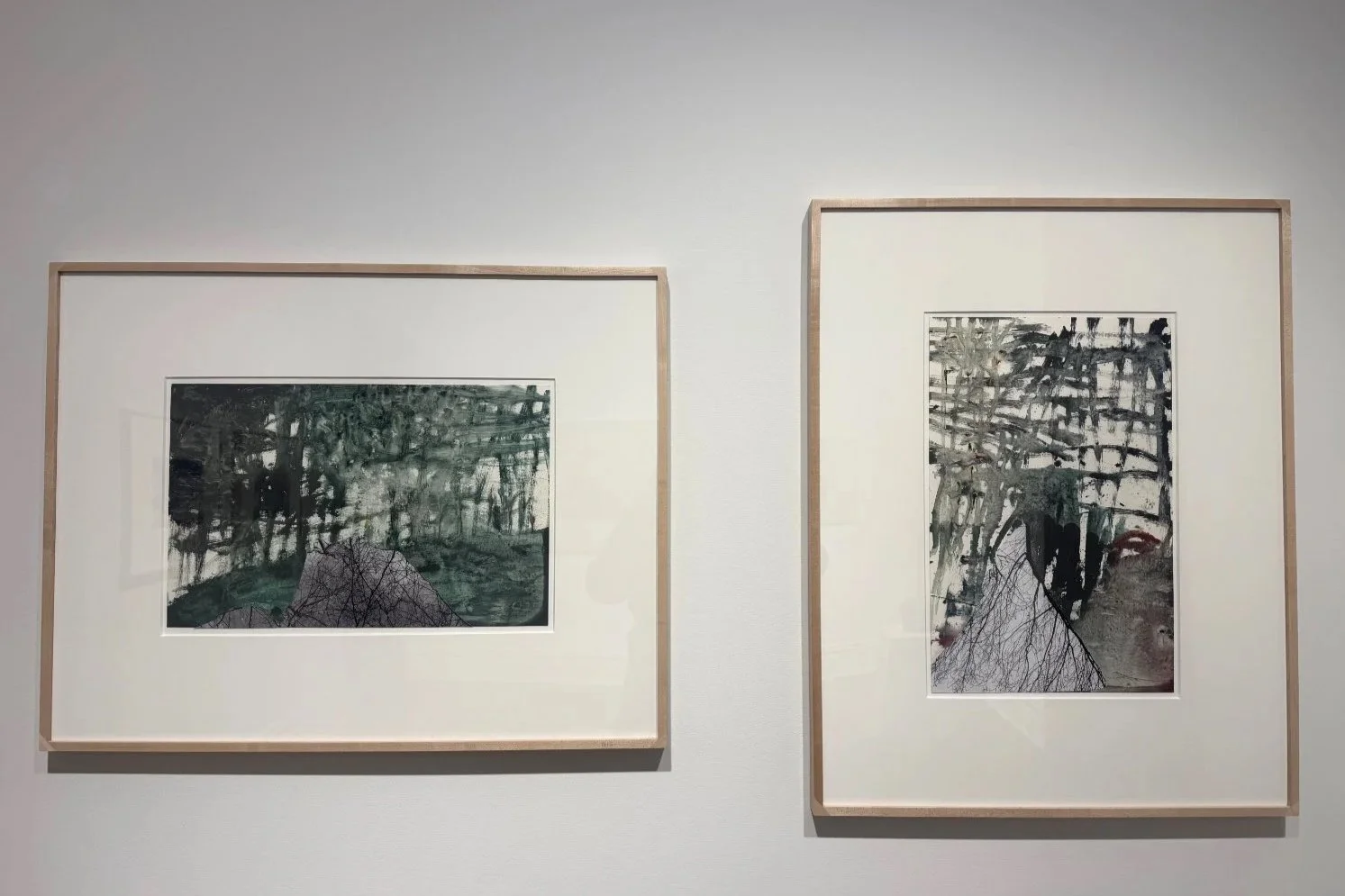
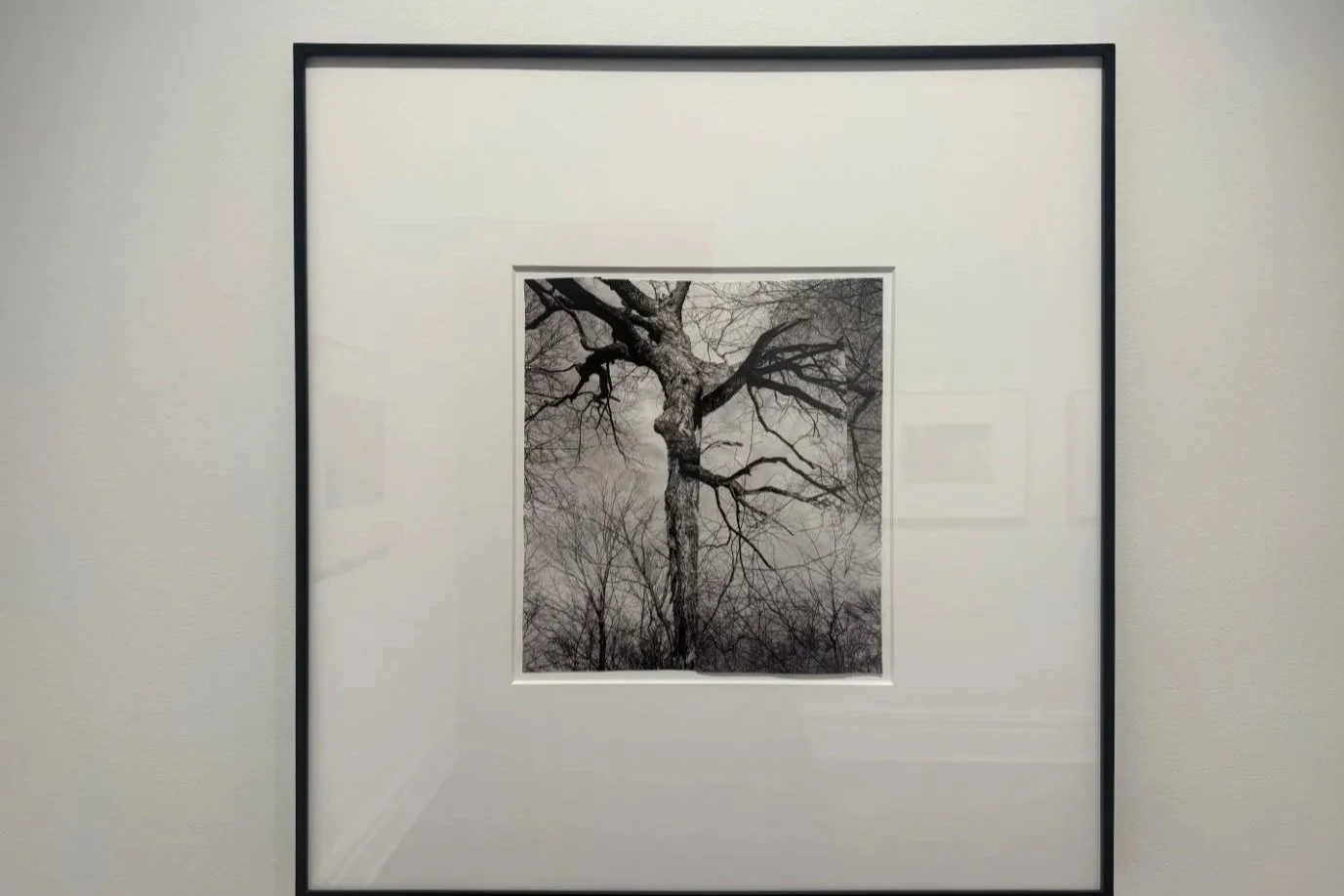
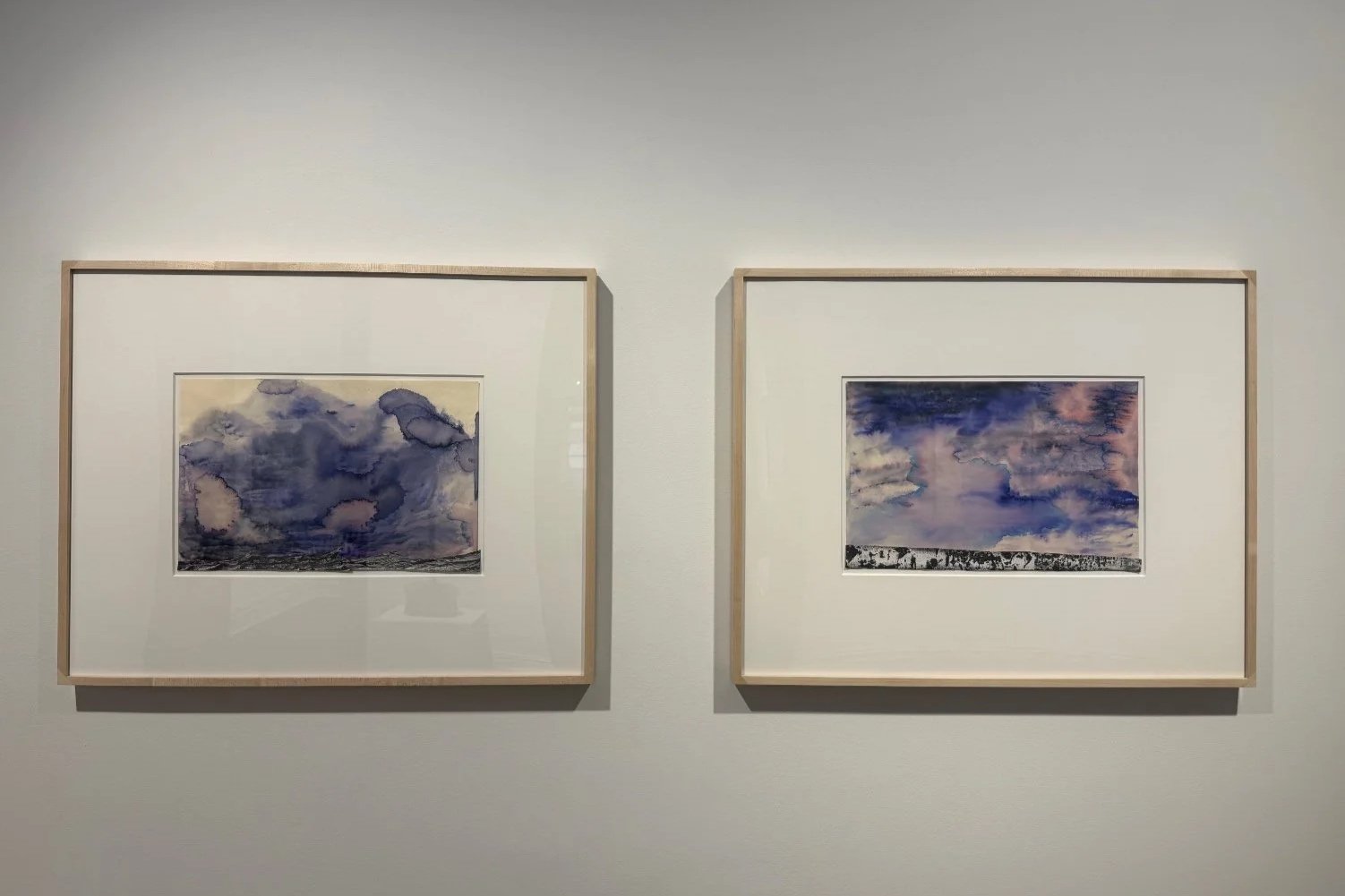
This compact rectangular room is filled with watercolor collages. Hanging on the wall to the right are three black-and-white photographs of overgrown trees whose branches split off in every direction. One of the images, SPLITTING, remains as simple as that, whereas the two others are engulfed in a spray of green lines that design a checkered pattern. On the adjacent wall hang two very similar works, yet instead of black-and-white photographs of trees, it’s a flat landscape. Painted above the curvy hills are clouds of purples, pinks, and blues, creating a stunning winter sunset. 

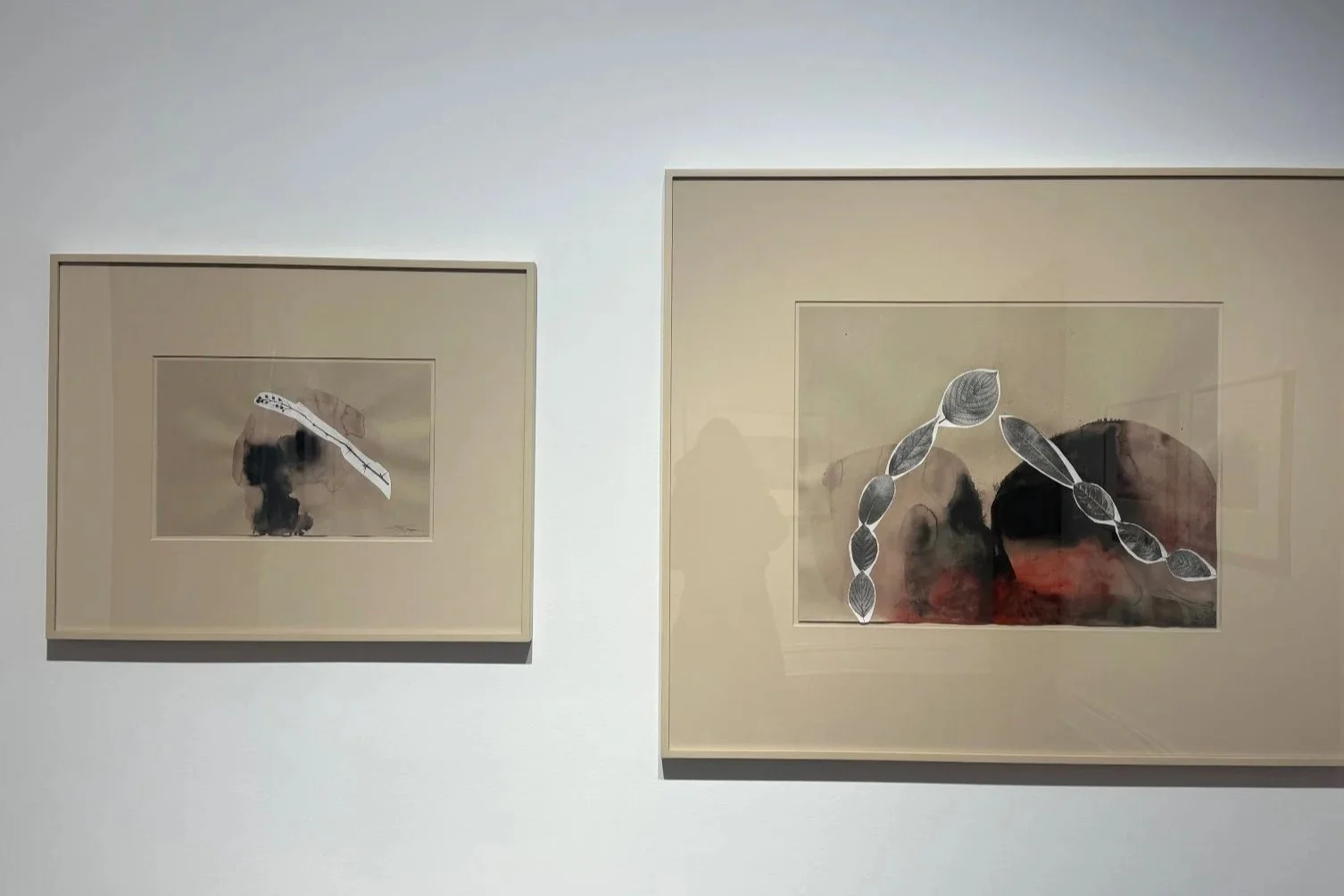
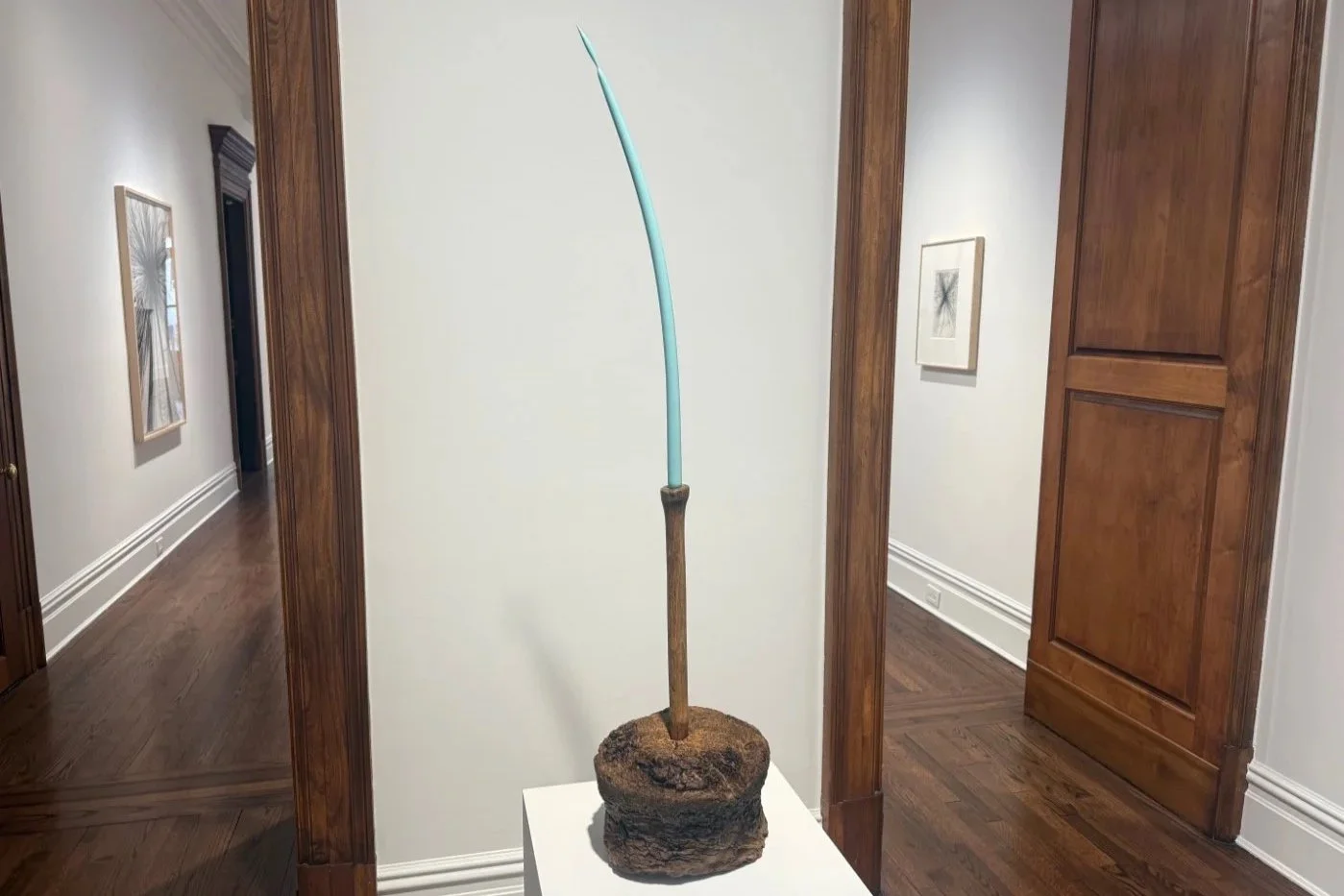
Across from this scene, beige and aqua take over, as two final collages hang next to a wood and bronze sculpture. The sculpture, Vestige, appears to be a curved sword or feather thrust into a stone. The handle, a light burl wood, slowly morphs into an aqua blade. The collages, Hippies and Kissing Hippies, apply large black watercolor stains on a beige background to create human faces, both crowned with wreaths of leaves and flowers. 
Whereas Ruby’s first room encapsulates the natural decay of an environment, this room embodies an exuberance of life. Atropa collocates mortality within two separate encounters, balancing the pleasant beauties and agonizing inevitables that life has to offer.

Atropa is on view through March 28 @ Sprüth Magers 22 E 80 Street, New York
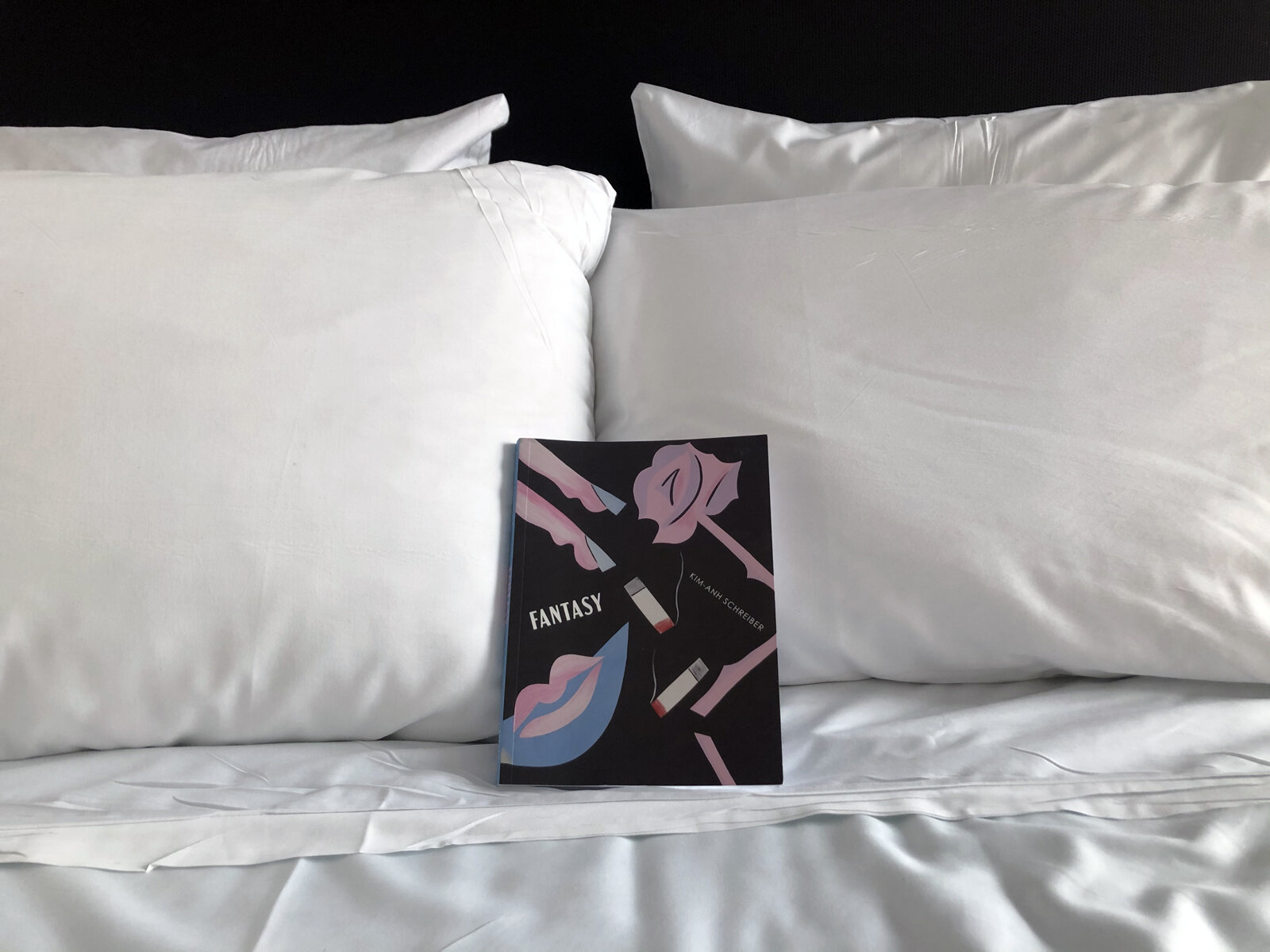
Read Our Review Of Kim-Anh Schreiber's New Book Fantasy

text by Summer Bowie

When planning a pregnancy or discussing the process of birth, we often hear about the rebirth that the mother experiences—her renaissance as woman with child, giver of life, and newborn unto herself. It’s such a beautiful image when you ignore the suicide that was planned for the woman who once was. Thus is the balance of life and death, and it's one that some of us contend with more readily than others. Nothing is more apparent than this in Kim-Anh Schreiber’s Fantasy, wherein the book’s titular figure is the daughter of a mother who never stops mourning the life she should have had; her inescapable Karma. 

This cross-genre novel is a disembodied lung desperately inflating and deflating itself with stale cigarette smoke and the decades-old dust of whatever room you’re sitting in. It’s a work of autofiction that is equally exposed and pregnable as it is a fictitious hallucination woven like a cosmic braid with scenes from Nobuhiko Obayashi’s 1977 film, House. The intergenerational sorority of aunts, mother, and grandmother that represent the author’s Vietnamese refugee matrilineage become interchangeable with Obayashi’s highly Westernized depiction of archetypal Japanese schoolgirls and the dubious matriarchs who haunt them. The spaces within the house hold formative and traumatic memories alike. They contain cultures of sexually repressed, sisterly perversions that are devoid of sexuality, yet brimming with desire. Schreiber is wont to illustrate scenes in much the same way as Obayashi—little comedic horrors that drip with Agent Orange and irradiated uranium (respectively) over postwar rubble both seen and unseen. House makes a perfect companion for this book in the way that it depicts the domicile as a metaphor for the body. A cell that contains the bodies of all the women who have kept it.

In Fantasy, mother tongue is laced with the mysterious motherland in a braid that spans the Pacific Ocean. A language spoken between grandmother and granddaughter flourishes and fades in this boat they call home, its orbit so wide one forgets that it’s indeed moving. Only her mother’s constant motion is detected as she skirts in and out on an outlet designer dingy, leaving an inexplicably large wake each time on her way out. You can trace the roots of words that have died in the wisps that fly out of one loop or the next, having provided the foundation of their intercontinental bridge, they take an unceremonious bow and quietly escape the lexicon of their nomadic identity. “Ever since I was a little girl, I have lived in a fantastic theatron: a seeing place whose walls keep disappearing, transforming to mask, fly, tease, or torment, and beyond the walls are nothingness, and three generations of women live with me, entering through the door to rehearse their magical future, every character brought down by their character, by the desire to look good as themselves for themselves, and I alone see them, I alone beholding my house, my body, my ghosts and my gods, and my screen that is suddenly a cannibal.”

Am I really so porous that someone could just bleed into me? asks Khaos, a recurring figure whose only identifying characteristics are Daughter Flower, pregnant. Flowers constitute the form of certain characters at times, nourish them at others, and press their withering bodies into the pages of a history book from a forgotten land. Having meticulously studied a smorgasbord of allegories that portray women stuck in houses such as Mekong Hotel, Keeping Up with the Kardashians, Pretty Little Liars, The Virgin Suicides, and so on, Schreiber takes an incisive look at the corporal quality of our deepest psychic understandings and the umbilical cord that carries our identity from one body to the next. She is indefatiguably distinguishing one X from the other in her chromosomal set, knowing that there isn’t a corpus callosum dividing her dual identities, but rather an extensive sequence of yins and yangs swirling; an infinite loop of chain-smoking daisies propelling the turbine of life and death. Like the avatars of an ancient goddess, they circulate the dust that gathers in the corners of the epigenetic house, floating ubiquitously through the air, carrying traces of every dead and living thing that ever graced it with their presence.

Fantasy features cover art by Sojourner Truth Parsons and is published by Sidebrow Books. Click here to preorder. Follow Kim-Anh Schreiber on Instagram.

Asya Geisberg Gallery presents "Plastic Garden" Group Exhibition in New York

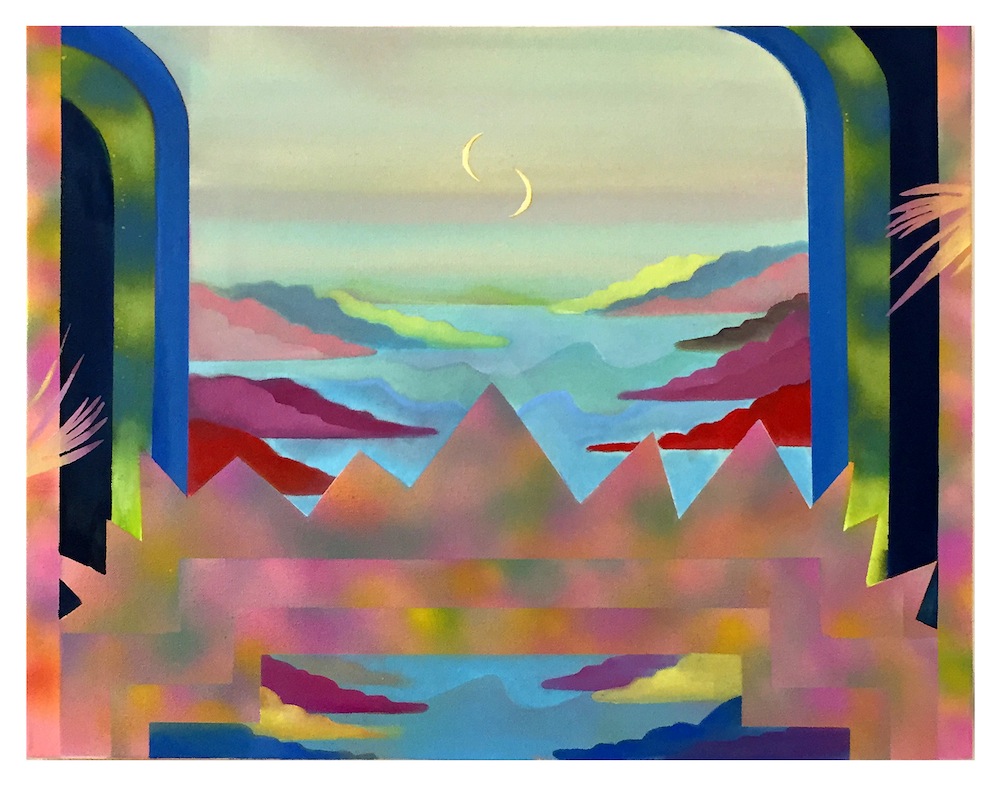
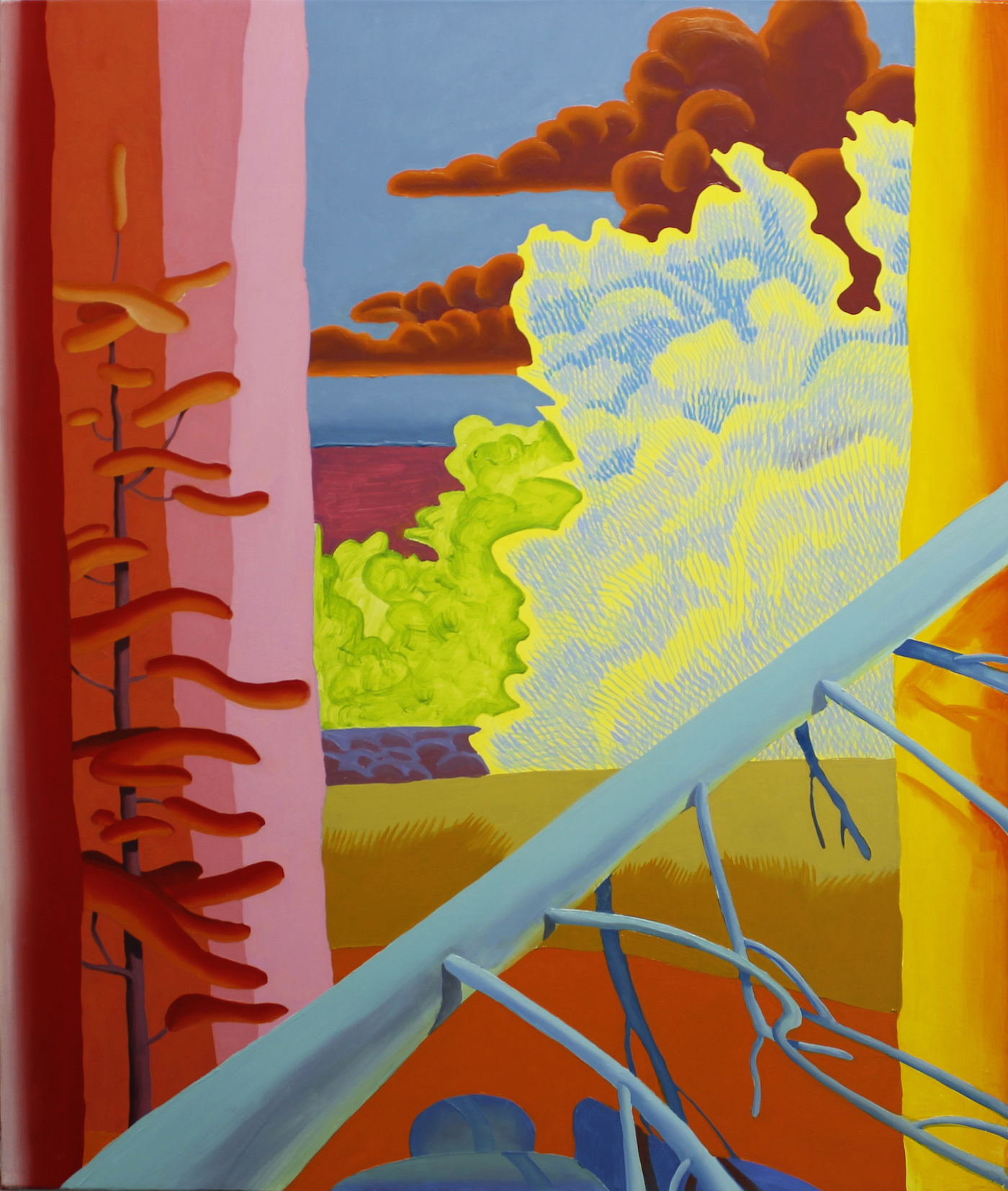
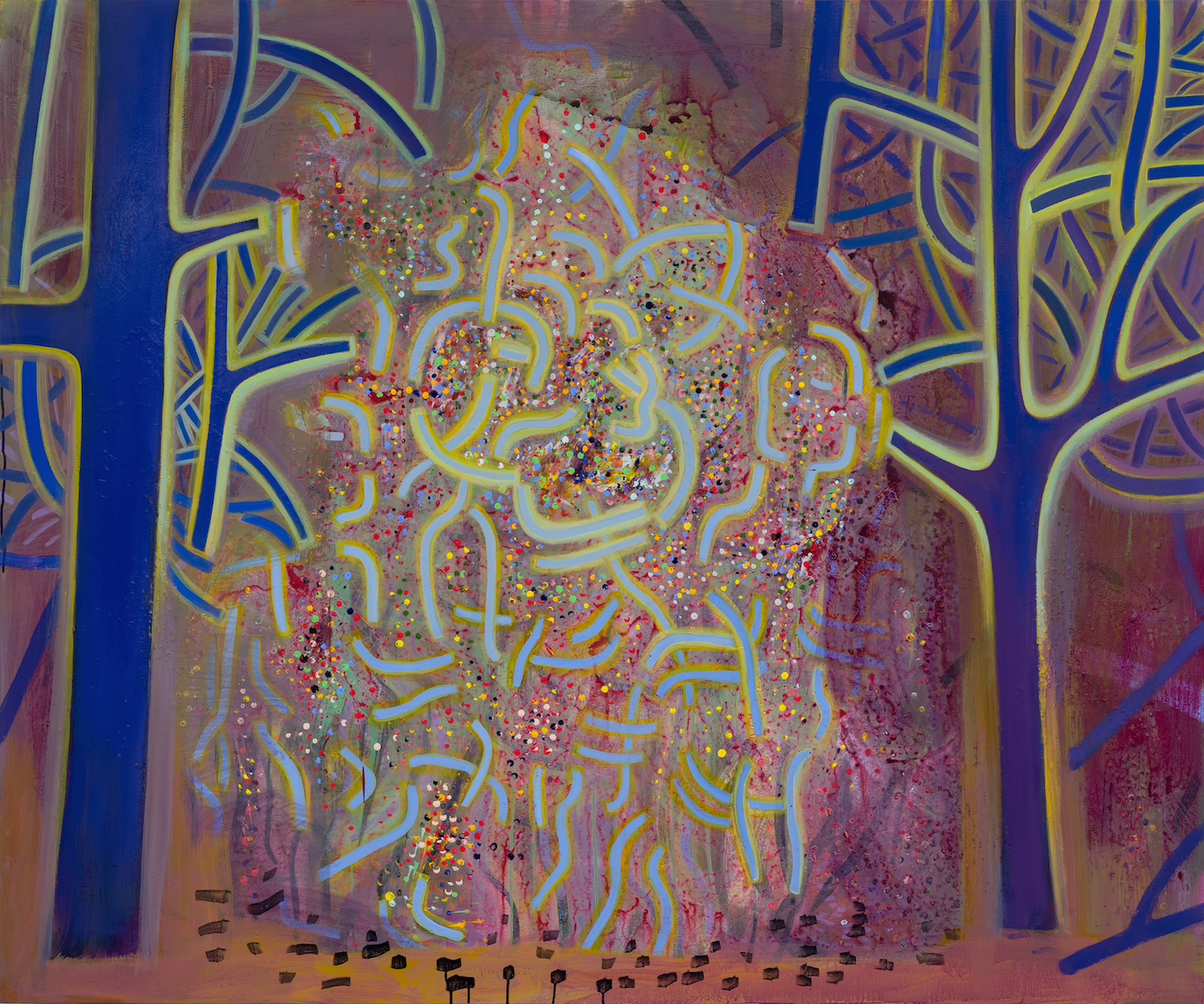
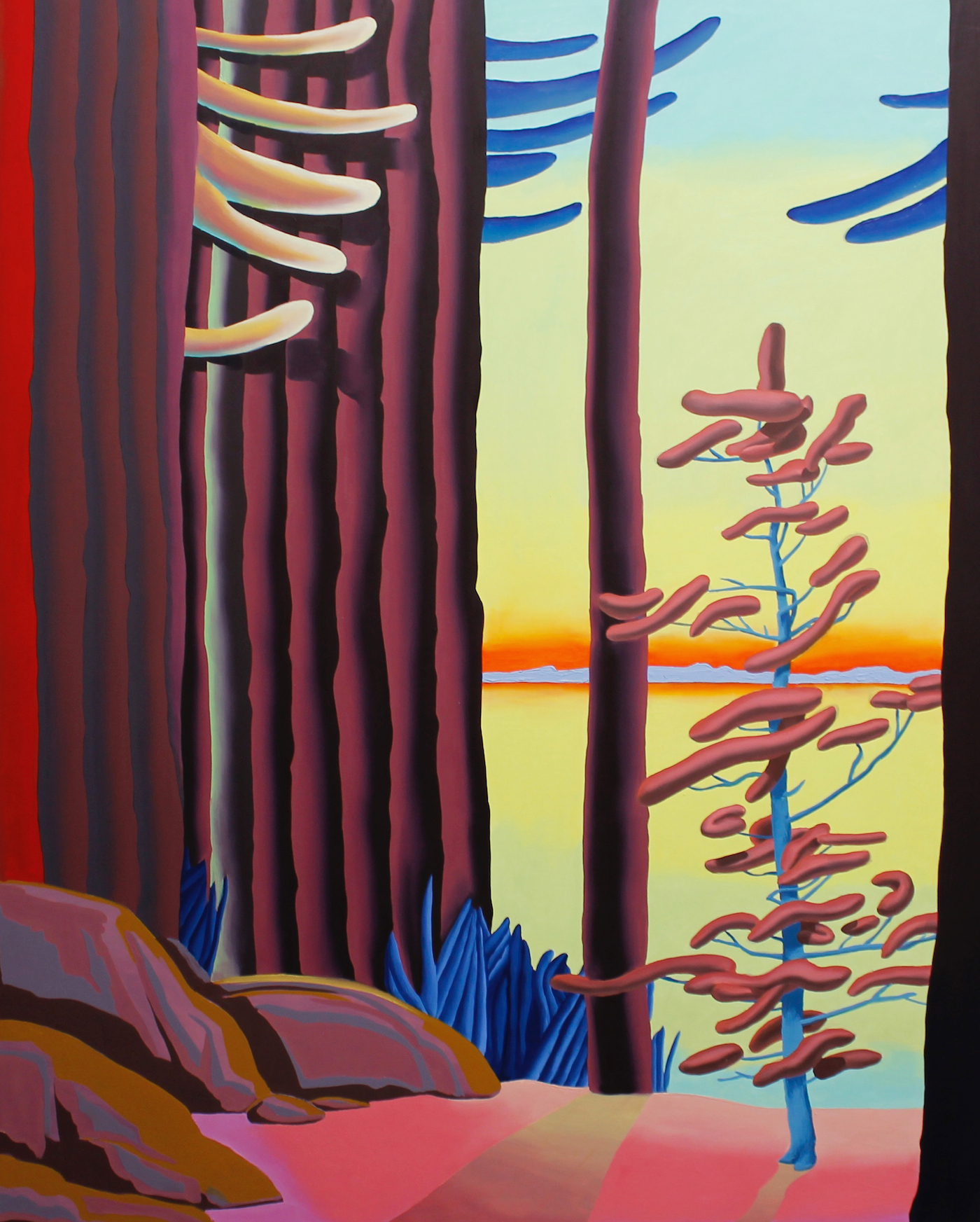
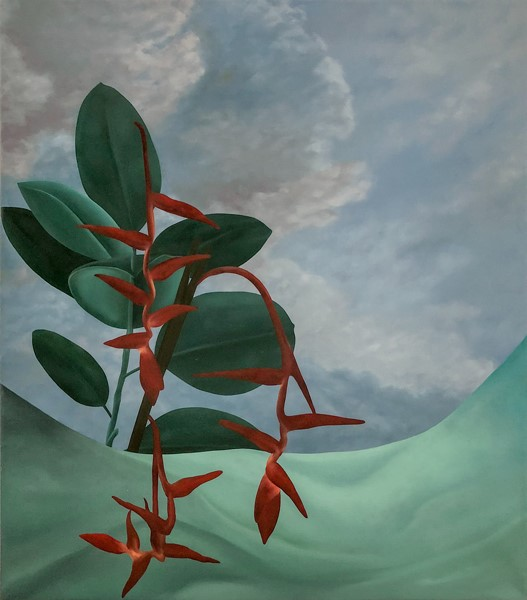
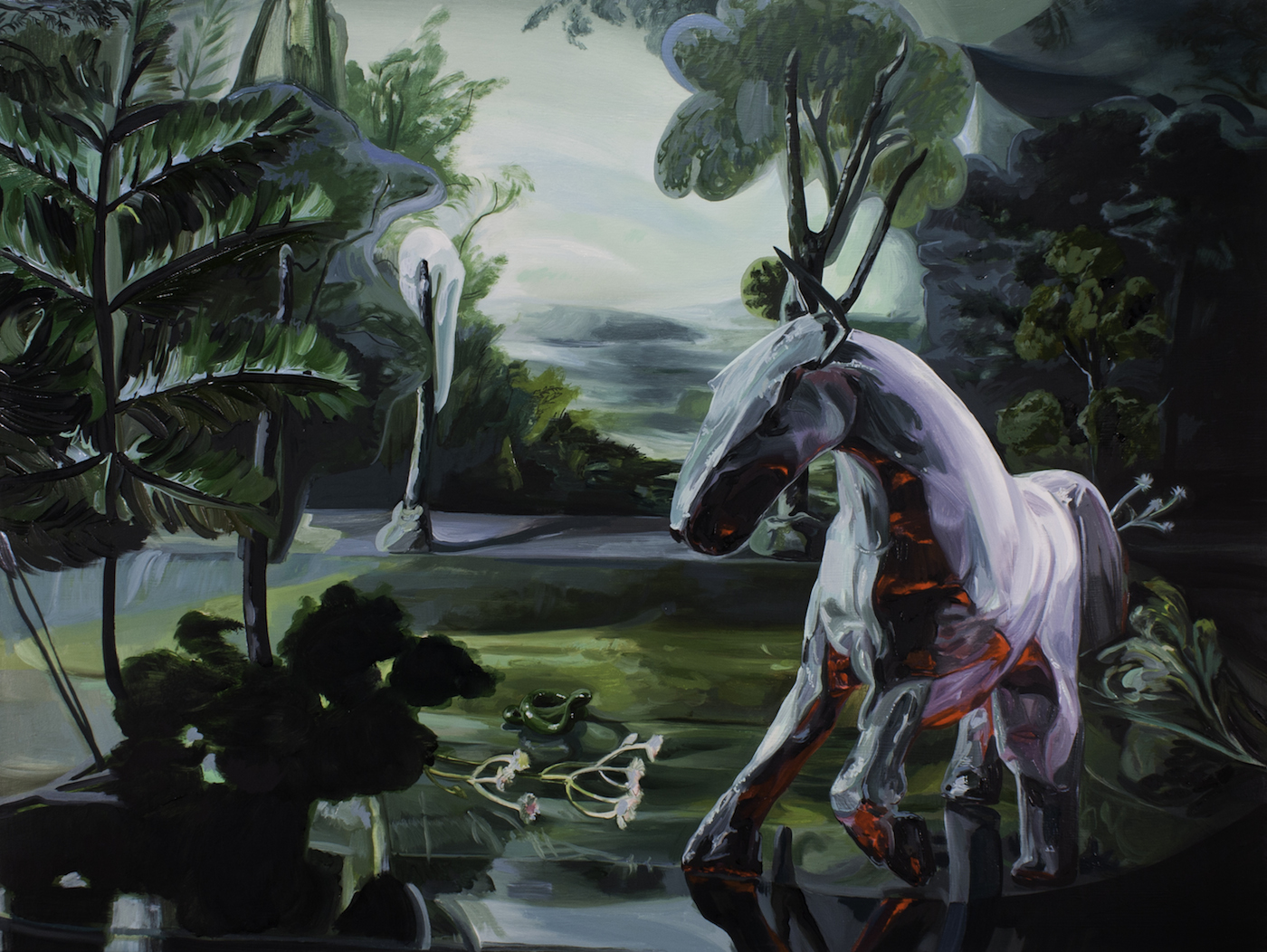
“Plastic Garden” is an exhibition curated by Katrina Slavik featuring the works of seven painters: Madeleine Bialke, Jennifer Coates, Sharona Eliassaf, Adrienne Elise Tarver, Joani Tremblay, Emma Webster, and Brian Willmont. These artists depict landscape and flora through a synthetic lens, creating lush, technicolor dystopias. In combination, their works seek a spiritual connection to nature not through awe-inspiring vistas, but with toxic colors, moody surrealism, and industrial surfaces.

“Plastic Garden” is on view through August 16 at Asya Geisberg Gallery 537B West 23rd Street, New York, NY. photographs courtesy of the gallery and Etienne Frossard

Closing Of Nicole Nadeau's 'A Flower By Another Name' @ That That X WNDO In Los Angeles

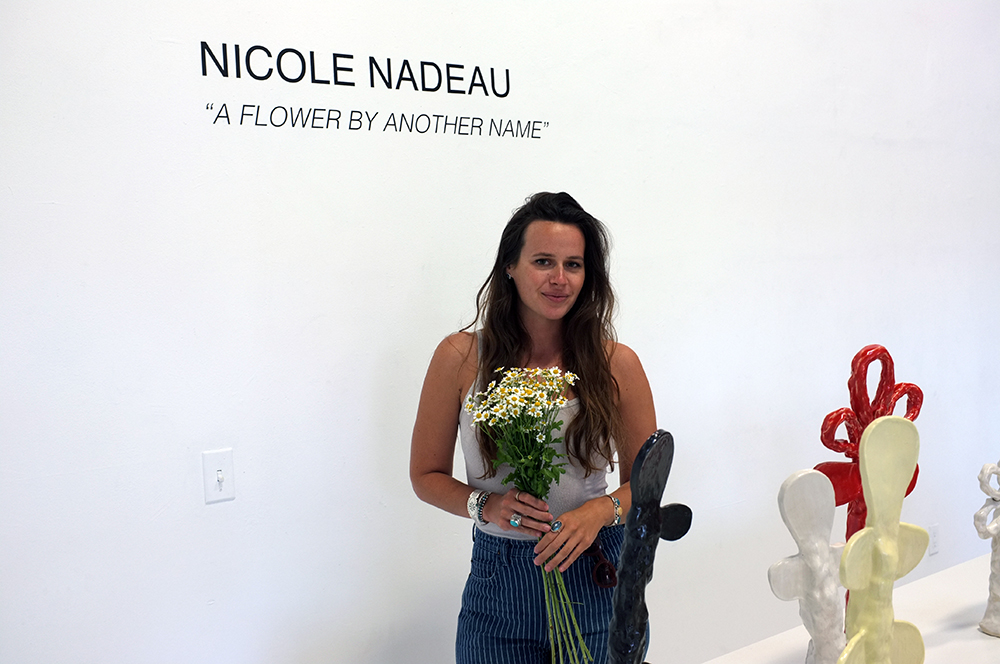
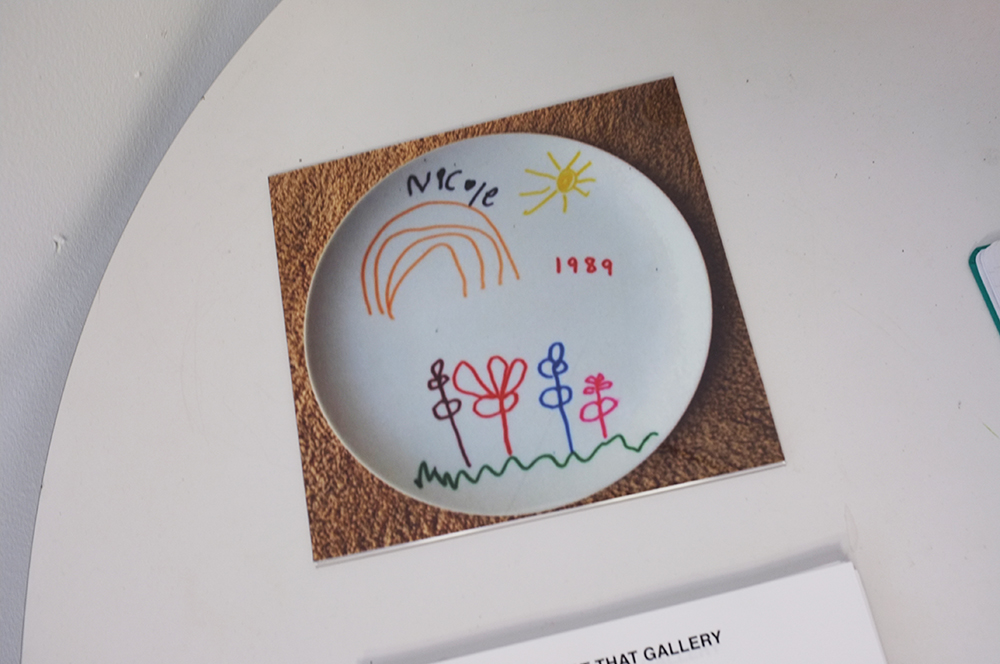
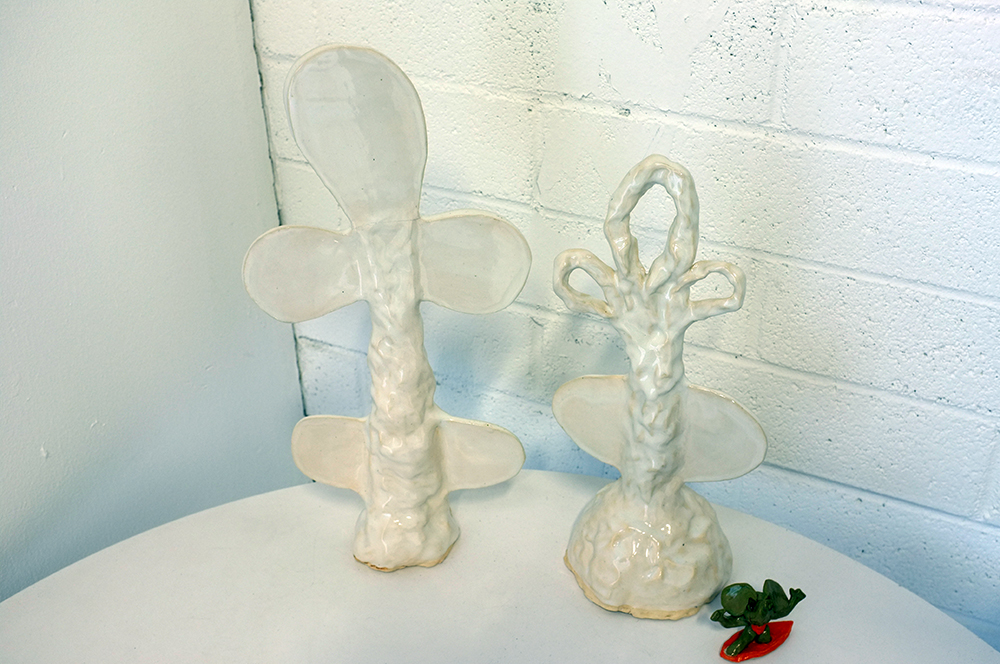
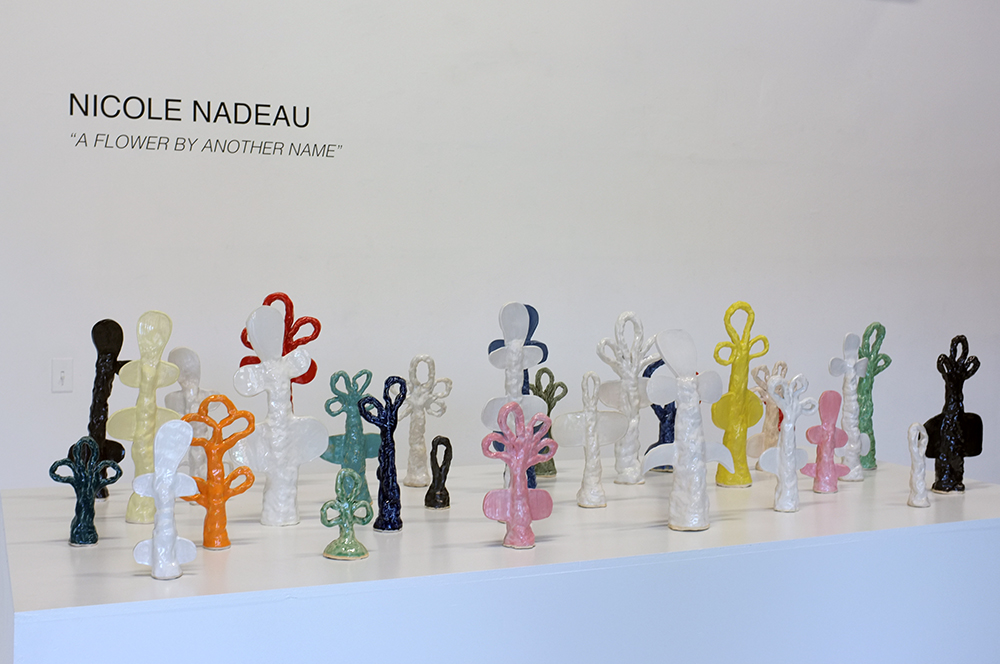
A sculptural interpretation of a drawing Nicole Nadeau made as a child, A Flower By Another Name is a conversation between present and past. Curated by Kyle DeWoody, the ceramic sculptures are the artist’s 3D interpretations of the drawing. In order to better understand the subconscious messages embedded in the flowers, Nadeau had her twin sister, Coryn Nadeau, a clinical art therapist, psychoanalyze the original drawing using Lowenfeld theory, The Silver Drawing Test of Cognition & Emotion, Kellogg & assessment symbology. Her finding help to inform the dimensional translation.

She suggested that the four flowers were an abstract representation of the four members of Nadeau’s family. Noting we have a capacity for symbolization in art, whereby we unconsciously project transitional objects or the family dyad onto the work. When objects are repeated in the same number sequence as the artist’s family dyad, it is said to reflect that individual’s family. This may be why the flowers are disproportionately large to their surroundings, given the strong feeling attached to them. The flowers are also the only objects in the drawing that exhibit variation, most noticeably in colored – even the rainbow is monochromatic. A Flower By Another Name was presented by That That Gallery from September 20-27 at WNDO 361 Vernon Avenue, Venice 90291. photographs by Oliver Kupper