
Pippa Garner interviewed by Hans Ulrich Obrist

interview by Hans Ulrich Obrist

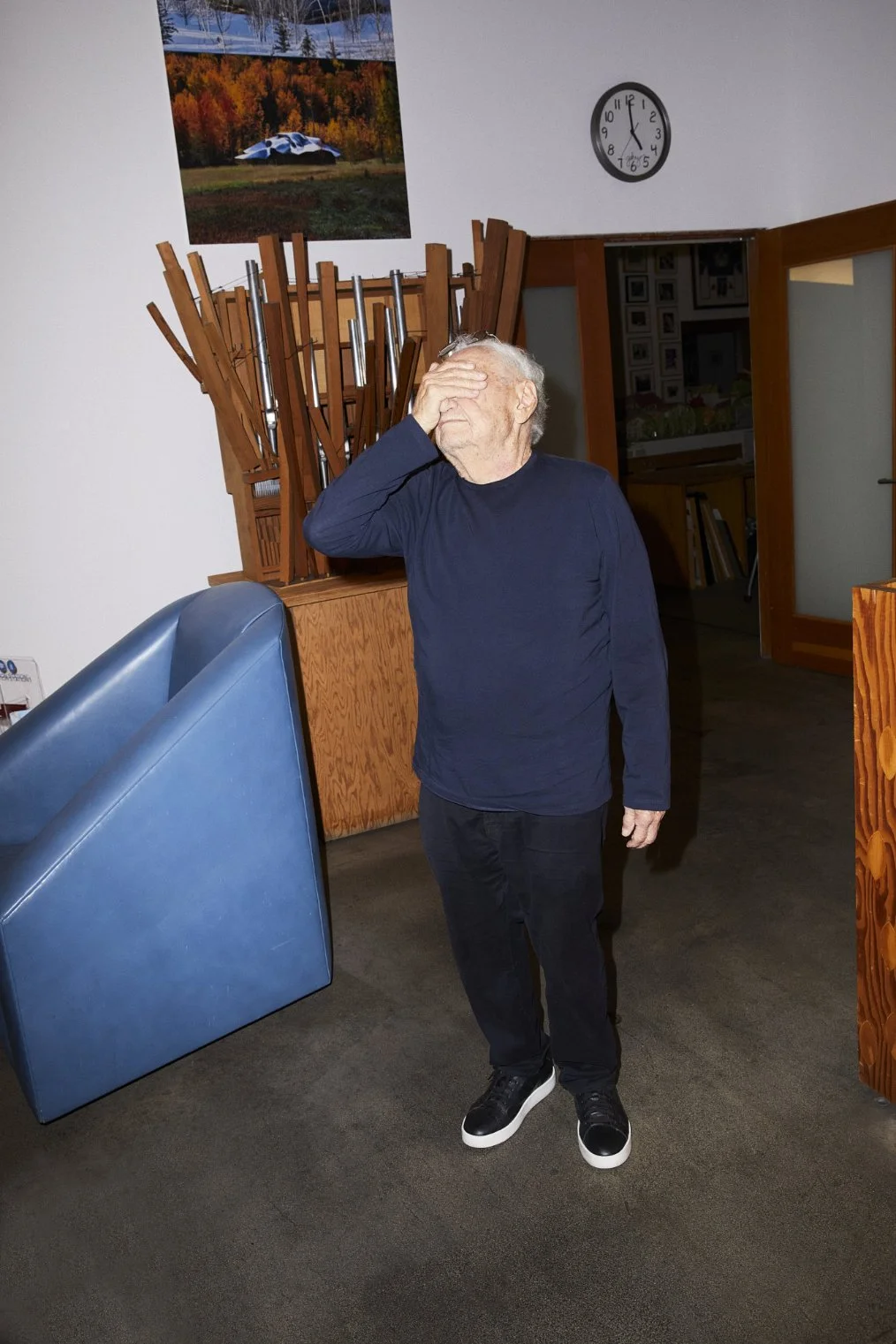
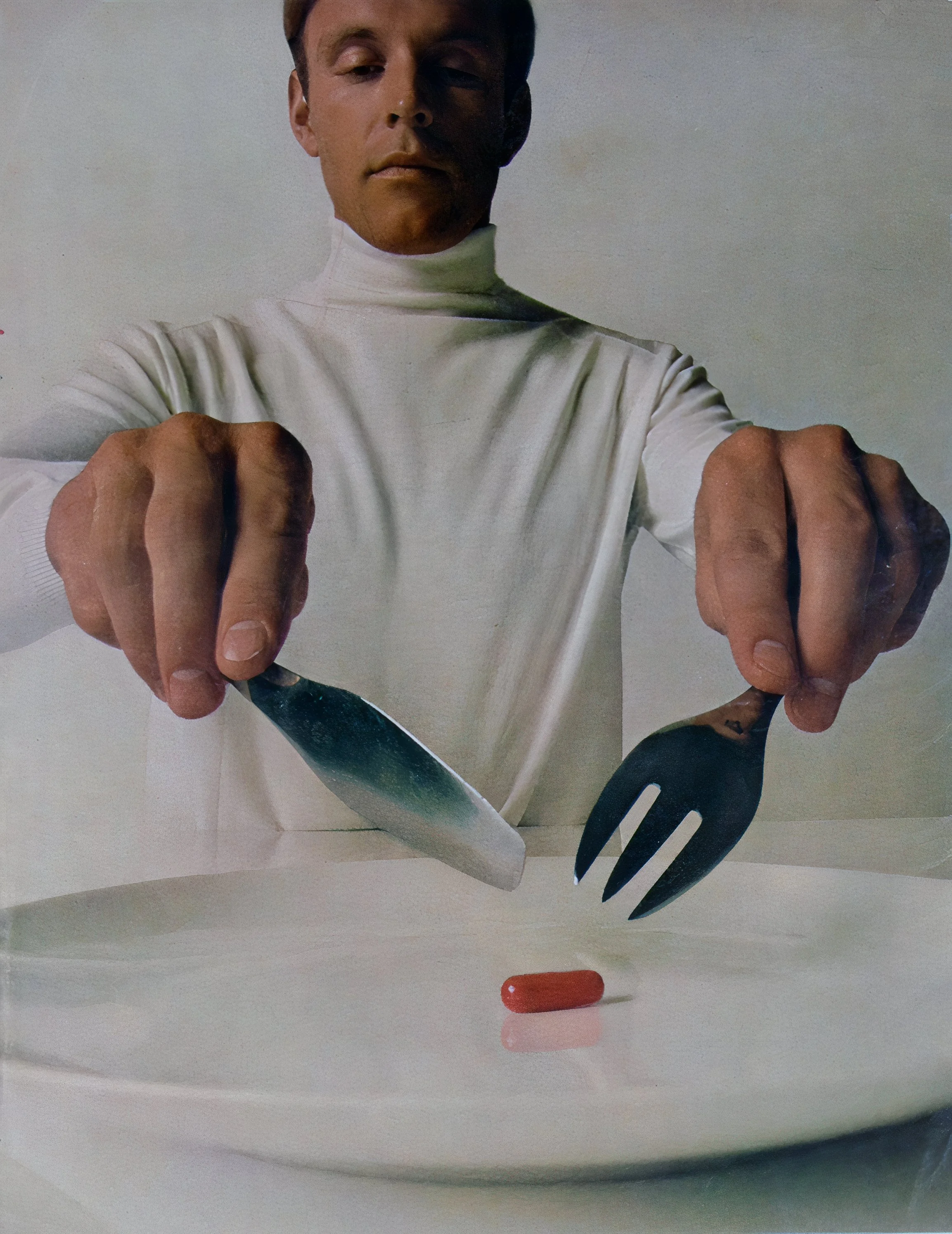
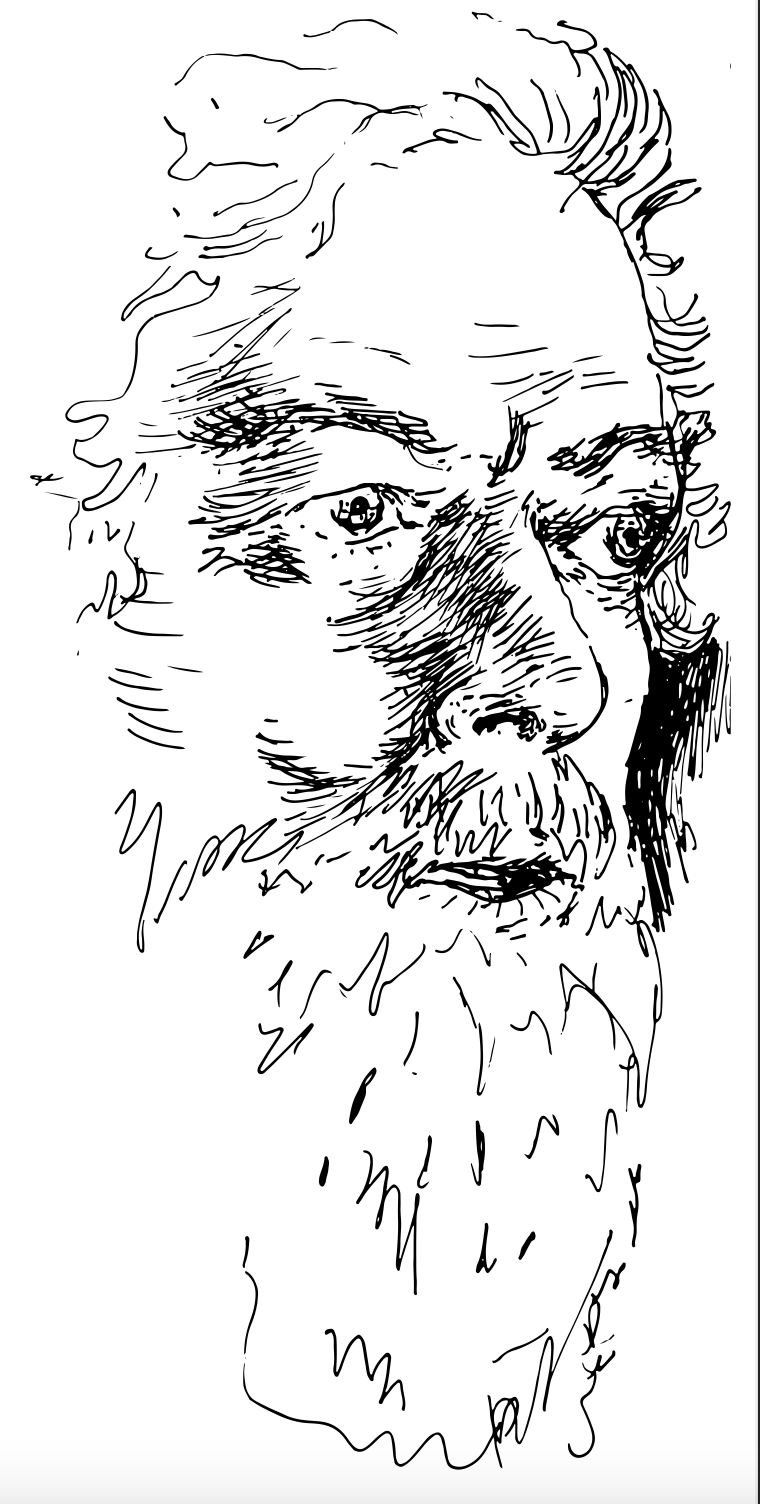
From the auto body to the human body, artist Pippa garner is one of the most pioneering artists of our time. Serving first as a combat artist during the Vietnam War, Garner’s radical practice took on the form of absurdist automotive sculptures and utopian inventions. A backwards car, an umbrella with real palm fronds, a half suit, satirized our lust for objects and teetered on the edge of fine art and commercialism. Even Garner’s own sex change, transitioning from man to woman, become a materialistic invention, her sexual organs equal to the raw material sent down the factory assembly line; body and thing becoming one and the same part of capitalism’s bioindustrial complex

HANS ULRICH OBRIST: I wanted to ask you how it all began. How did you come to art or how did art come to you? Was it an epiphany or a gradual process?

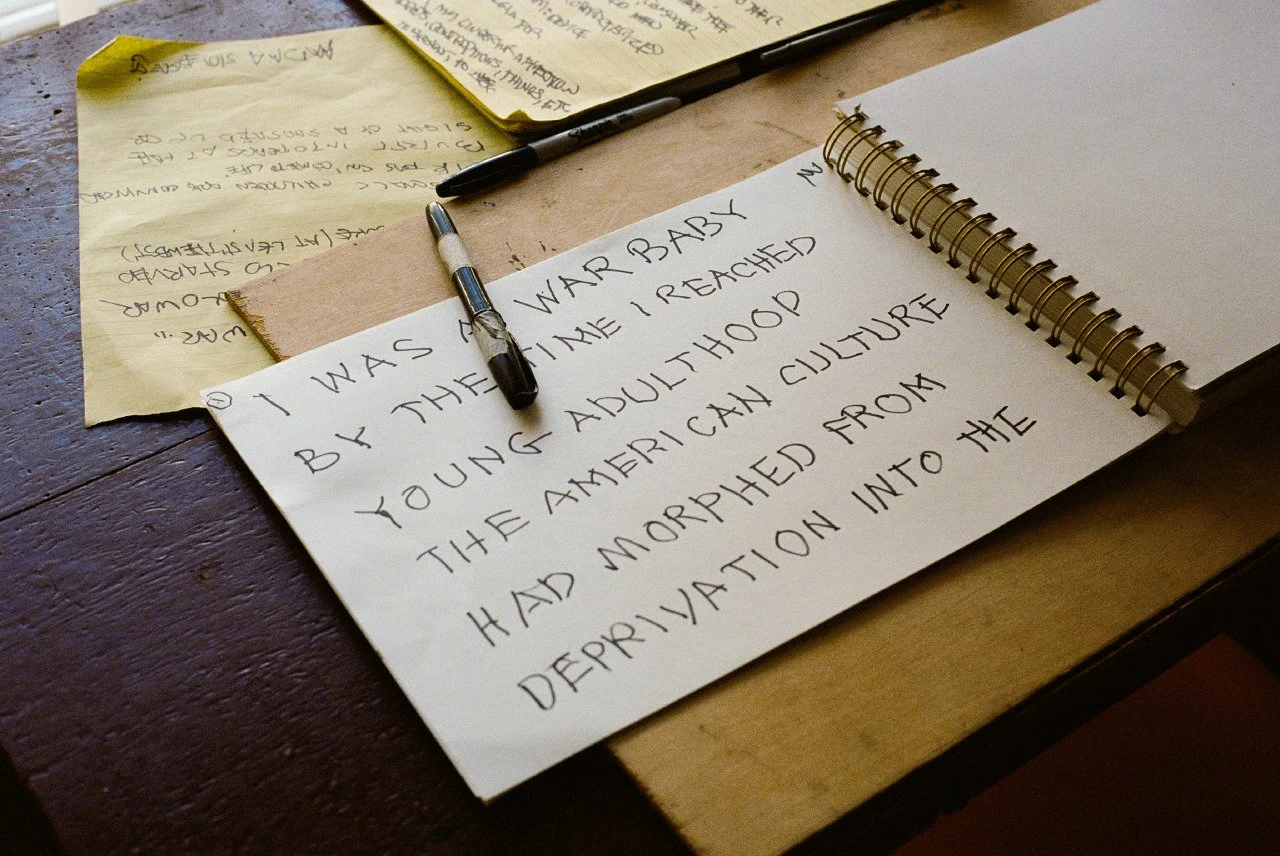
PIPPA GARNER: Well, I was a misfit to begin with. It seems like the growth process can be enhanced by the situation you're in. I was a war baby. I was born in ‘42, and I still have a few memories of what life was like during that time. Everybody knew somebody that was in the Army. Even a small child can get a sense of what it feels like to have the world be at war. I didn't pick the time I came to life on Earth. The war years were a time of deprivation. And this is a country of extravagance—it was based on independence and outlaw thinking. And all of a sudden, the whole thing was thrown away because of the war. But living was good for me then because I went through adolescence just as consumerism was really born. The assembly line technology that had preceded World War II was advanced by war needs, so there were all these companies suddenly producing the fastest, best things they possibly could, from airplanes to shoes. Advertising was born out of that because they had to convince people they needed things they didn't realize they needed. Suddenly all these stores were flooded with consumer goods. Things that nobody could imagine: chrome blenders, waffle irons, ovens, and lawnmowers. And I was fascinated with that, particularly automobiles, because the cars that I grew up with all had very distinct faces—the eyes, the mouth, the nose. You could recognize whether it was a Studebaker or a Ford. They had a certain character and I felt like there was life there. It goes back to another childhood thing of wanting to bring things to life. I think all children go through that with their stuffed animals. They get off of it pretty quickly, but I never quite overcame that. Clear into my puberty and beyond, I still felt that cars were living. If I’d see a bad crash where the face of the car was all smashed, I’d burst into tears. I found that it was a useful tool as an artist because a lot of the stuff that I was making was a kind of consumerism.  

HANS ULRICH OBRIST: You were in the Vietnam War with the US Army as a combat artist. Can you tell us a little bit about that experience? It also brought you to photography because you got these state-of-the-art cameras from Japan and started to take personal photographs, which became important for your later magazine work.

PIPPA GARNER: I was drafted in college. I used up several student deferments. Finally, they sent me the notice. So, I was sent to train as an unassigned infantryman in Vietnam, having no idea what I was going to be doing. I went over on a big plane full of people who were going to be assigned to different units. Once I got there, I thought, gee, I wonder if there's something that might have to do with my art background. I did some research and sure enough, one of the divisions, the 25th Infantry, is the only division with a Combat Art Team (CAT). A group of people who had some art background were given an itinerary to go out with different units and document with drawings, pictures, and writing. The camera thing was interesting because the military store on the base had all this expensive Japanese camera equipment, very cheap. And I got a really nice Nikon camera for nothing and trained myself to use it. A lot of times things were going so fast that you couldn't really hold the image long enough to document it, so that's when photography became very much a part of my life.

HANS ULRICH OBRIST: Then you studied transportation design at the ArtCenter College of Design in Los Angeles, an extremely well known institute. You had one of the first major epiphanies in 1969. You presented your student project, which was a half car, half human. Can you tell me and our readers about the epiphany that led to Kar-Mann (Half Human Half Car). And also how people reacted to it?

PIPPA GARNER: There was a Volkswagen sports car in the '60s called the Karmann Ghia. It was considered a very sophisticated sports car during that time and that’s why I modified the spelling and called the sculpture Kar-Mann. I started going to art school fairly early. I went to the ArtCenter College of Design, which at that time was called Art Center School and it was in Hollywood. My father, who was in charge of things, saw that my interests were leaning toward art. To him, that was bohemian and something he didn't like. He was a businessman and wanted me to go into business. And so he tried to direct my art to car design because I was so interested in cars. He did a lot of research and found out that the school where all the car designers were trained was this Art Center School in Los Angeles. So I went out there in 1961 and found myself alienated because all the other students there wore suits and loved cars in a much different way than I did. I cherished [cars] in a way that was sort of comical. I thought some of them were really funny and stupid looking, so I felt pushed into a satirical corner. So, I quit that school and went to the Cleveland Institute of Art in Ohio, which is a wonderful fine art school, and I started doing a lot of life drawings. I fell in love with life drawing. To study the form, you have to understand it from the inside out or else it doesn't look lifelike. But I got quite good at it. So, eventually I went back to the Art Center. I still had the design classes, but they had life drawing work. And so, I began doing tons of life drawing and sculpting the human form. It just fascinated me. But the idea of making this half car, half man, was something that I did as a sketch. There was a wonderful teacher that encouraged out-of-the-box thinking a bit more, and when I showed him the sketches he said, “Why don't you make that?” So, I figured out the proportions—I wanted the human part to be about the size of a small male figure, and then I found a toy car and was able to integrate that using styrofoam to make the basic sculpture. And then, I covered it with resin to make the surface hard and did all the detailing. I was making fun of cars.

HANS ULRICH OBRIST: I've just written the book Ever Gaia [Isolarii, 2023] with James Lovelock, who invented the Gaia Hypothesis with Lynn Margulis. He was a serial inventor. In a similar way, you are a serial inventor. You created all these objects between design and non-design, and then images of these objects were published in magazines, like Esquire, Rolling Stone, and Playboy. It's interesting that you then decided to go beyond the art world. I've always been very interested in that. Can you talk a little bit about how you bring these objects to a bigger audience, through magazines, but also appearances on talk shows?

PIPPA GARNER: When I was doing all that work in the ’70s, ’80s, and ’90s, there was a real barrier between fine art and commercial art. If your work occurred in magazines, it was low grade. No matter what it was. It was degraded by the fact that it was published. And I reversed that in my mind. I thought, well, gee, that's not right. Here's an opportunity to have things out there reaching thousands of thousands of people as opposed to an art gallery. I love the idea of having as much exposure as possible. Even though I've had close friends that were recognized fine artists, and in a bunch of the galleries—I never really cared much about it. I did have a couple of gallery shows here and there, but mainly the thing that fascinated me was the fact that I could reach people clear across the country, and sometimes beyond, with these images. I didn't have much money during those years, but I always got enough out of the magazines.
HANS ULRICH OBRIST: And of course, one of your key inventions, which is so famous today, is the backwards car from 1973. It's also interesting because it was a different time in magazines—when they paid for these extraordinary realities to happen. Can you talk a little bit about the epiphany of the backwards car and how it then drove on the Golden Gate Bridge in San Francisco?

PIPPA GARNER: There was a period in all the major American car companies after World War II when they started having these really huge design departments. They used a lot of references to jet planes. The Cadillacs in the ’50s were huge, and they looked like they were moving even when they were standing still, which is called directional design. After my half car, half man, I started seeing cars in a context that had nothing to do with their purpose. The Cadillac particularly fascinated me because of the huge fins. And I had a good friend that was a designer who worked for Charles Eames in the early ’70s. He and I would go roaming around sometimes on our bicycles. One time, we went by this used car lot and there was a ‘59 Cadillac, and it just popped into my head, what if that thing was going backwards? It was just devastatingly funny and that convinced me that in some form it had to happen. So, I started sketching and figuring out how to do it, and I made a nice presentation. Esquire Magazine in New York responded and said, “Oh my God, we have to do this. How much do you want? How long will it take? We’re going to send a photographer to take pictures of the process.” But it couldn't be a Cadillac, because you couldn't see over the fins. So, I started looking in the papers until I found the car I wanted: a 1959 Chevy, two door sedan, six cylinder, no power steering or power brakes. I wanted a drive train as simple as possible so it would be easier to reconnect. It had fins, but the fins were flat, so they didn't obstruct your vision. And so I did the whole thing myself in a little garage space. Now, it was a matter of, how do I lift this thing up, turn it around, and set it back down on the frame? I didn't have access to any sophisticated technology to do it, so I got everybody I knew and we had a little party when I finally got everything cut away. Once everyone got a little bit high from the alcohol, I said, “Okay, folks, everybody around this car, shoulder to shoulder. When I give the command, I want you to lift the car up, and then walk it back, turn it around, bring it forward, and set it down again.” I thought it was going to be too heavy, but fortunately they didn't have any trouble. Once it was set back down, there was the backwards car. One day it was ready to try out and that was it, we went out and drove it around the San Francisco coast.

HANS ULRICH OBRIST: The other day, I visited Judy Chicago, and of course she worked with car elements. There was also John Chamberlain. And during the same era, there was also Ant Farm, the architecture collective with whom you actually collaborated. And Nancy Reese was a big influence on you, because she made you realize that you can identify yourself as an artist. Can you talk a little bit about this?

PIPPA GARNER: Well, that was an interesting evolution, especially when you think back on it from the Information Age. Now, everything is shrunk down to nothing. There's no presence. Even cars look almost identical. You can't tell one from the other. The only way you can tell the difference between a Mercedes and a Kia is by getting close enough to look at the logo. Other than that, they're identical. They all get the same input. They use CAD design. So, that whole era really stands out. Everything was so unique. There was such an emphasis on trying to make things attract attention and to design things that make people say, gee, I gotta have that.


HANS ULRICH OBRIST: In 1995, you did this great project where you tried to get a custom license plate that said “sex change”—spelled SXCHNGE. But the authorities at the Department of Motor Vehicles turned it down, so you resubmitted with HE2SHE and it was accepted.

PIPPA GARNER: For me, the sex change thing was a material act. I never had a sense of being born in the wrong body as one of the expressions that they use goes, or had the trauma of being treated badly because of my sexual feelings. I never thought of any of this until I had already lived in my thirties as a male. And then suddenly, I ran out of interest in the assembly line products that I was so fascinated with. Even with cars, I felt like I had done as much as I could do. So I thought, there's gotta be something new, something else. And that was just about the time that changing your gender worked its way into the culture. The first example was, of course, Christine Jorgensen, way back in the ‘50s. But it wasn’t until the ‘80s when terms like transsexual started to be used. Leading up to that was the whole gay revolution. When I was growing up, you couldn't be gay. It was the most horrible, evil thing that could happen to a person. Gay culture was completely concealed. So coming out of these cultural biases became a real issue. And the human body—flesh and blood—fascinated me because I could still be using existing objects and juxtaposing them, but at the same time, making it fresh again. So, I looked at myself in the mirror and thought, you know, I'm just at an appliance, like that radio over there, or the car sitting outside. The body that I was assigned to, I didn't pick it. I didn't say I want to be white, middle class, and heterosexual. So, if I am nothing more than another appliance, why not have some fun with it? Why not play with it and alter it in a comical way? Finally, that escalated into my deciding to go through with the surgery, which I went to Brussels for in 1993. I had what they call a vaginoplasty. Now, part of me is European [laughs]. I came back from that and thought, this is great, Im in my forties, I've had a penis for all these years, and now I have a vagina. What an amazing thing—I live in an age when you can do that. You could go and pay somebody some money and say, “Here, I want to have my genitals turned the other way around.” And they said, “Fine, here's the bed.” (laughs) I was fascinated with the fact that I could do that with my body. It gave me a sense of control and a sense of a whole new area that I could explore. Meanwhile, the culture was changing and becoming more open. It's still not good, but it's much better than it was. I was kind of a pioneer with that perhaps.  

HANS ULRICH OBRIST: There's this amazing conversation, which you did with Hayden Dunham, about the struggle of being inside bodies. You say that because the advertisements and consumerism in the background in your life were always very gender oriented, you were forcing yourself to become more masculine. And at a certain moment, you decided not to conform anymore. It’s so pioneering. Can you talk a little bit about that?

PIPPA GARNER: Everything is structured in the culture to try and keep people in a comfort zone. Unfortunately, that doesn't fit everyone. But how do you deal with that? How do you let people be what they want to be and still have a sense of the culture being unified and functional? Again, all these things are just a point of evolution. Things keep changing and moving forward, and they always will. I think about my life being one frame of an endless film—just my little thing, and then it goes to the next frame. And that goes on into the distance forever. I think that my perceptions of gender were very materialistic. I’m a consumer and this is what I do with my body. It was no different than someone putting on makeup, or somebody going to a gym, taking steroids, and building this huge body that doesn't have any purpose at all except for looks. I didn’t have anyone that was going to suffer for it. If I had a family, it might've been different, but probably not. At this point, I was single. I had nobody to be responsible for, except to keep things moving forward. I don't want my life to ever get stagnant, to start losing its rhythm. And that's what I'm fighting now, because at this age, how do I maintain that? It's very hard for seniors to keep one of the things that I think is essential for life and that is sexuality. Everything for me represents the lifespan—from baby to aged person. Whether it's called puberty, adolescence, middle age, old age, I feel the need to incorporate that thinking in my work to keep that sense of life going, and the most obvious way is by maintaining sexuality. If I don't have any sex drives, all of it goes flat. I take estrogen and testosterone so that I can keep an endocrine system that's young and still is attractive and wants to be attracted, even at 81. That’s one of the real essential parts of my inspiration. If I lose that, I don't have any ideas. It's funny because hospitals are all divided into these clinics. Because I’m a veteran, I've got this ten-story VA hospital building at my disposal and there are clinics for everything but sensuality.  So, they’re really missing the point of trying to make people want to stay alive.

HANS ULRICH OBRIST: In this conversation with Dunham, you say that you see the body as a toy or a pet that you can play with. You can change the shape of it. You're an inside and an outside.

PIPPA GARNER: Well, that's it right there. That keeps things interesting and keeps a sort of question mark floating in the air over everything. So, you're not quite sure what will happen, you know, maybe it will be a drastic failure, or maybe a revelation.

HANS ULRICH OBRIST: We know a great deal about architects' unrealized projects because they publish them. But we know very little about artists' unrealized projects. I wanted to ask you if you have any unrealized projects, dream projects, which are either censored or too big to be realized, or too expensive to be realized?

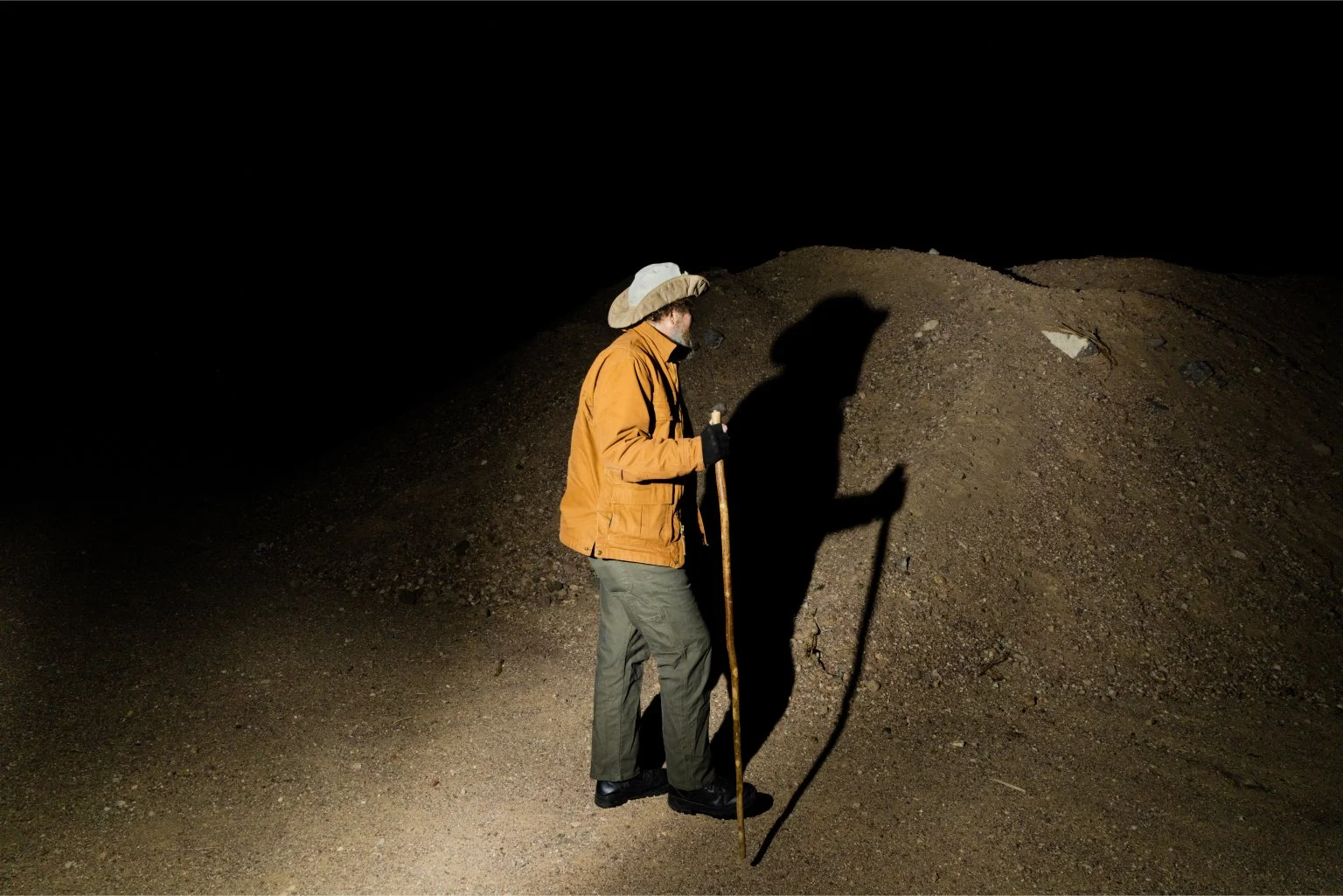
PIPPA GARNER: Well, it's funny, because I always do. The problem is—and this is fairly recent—I was diagnosed with leukemia that was ostensibly from my time in Vietnam. I was there for thirteen months in the mid-60s. They were spraying Agent Orange, a defoliant, which turned out to be extremely toxic. I actually went on several of the missions with one of the planes that was spraying it, and there were no masks or anything. It stayed dormant until only a couple years ago, when all of a sudden, it caused pneumonia, which put me on life support for over six days. I was unconscious and I was in the hospital for a month in intensive care. Life support is terrible because it causes you to melt basically, mentally and physically. I've never gone through anything like that. All of a sudden, I found myself like a baby. I was able to go back home, but I still haven't fully recovered from that. I don't think I have the will. So, that's one of the problems. Now, I have this obstacle in my thought process because I'm constantly thinking, am I going to have some more time or not? You can be very isolated in Long Beach. Most of my friends are in Hollywood. So, I spend a lot of time alone, and I'm not good at that. I need to have back and forth. But I'm on the rules of the hospital. They did a five-hour infusion, which was a good thing. I'm lucky to have somehow survived to this point. I did something today with this young woman from the gallery who helped me take some pictures. It was a little thing I do for every April Fool's Day, which is my holy day. And so that was something that represents my thought process. I didn't have that two weeks ago. Then, all of a sudden, there it was. The same little mechanism back there was working. One thing that will be interesting is when we get autonomous cars. I want to live long enough to see that—something tangible. Something that affects my life that I feel stimulation from. Maybe I’ll just have one final burst left and then I drop dead. Or maybe not. I might be able to spread it out.

Ariana Papademetropoulos: Cosmic Release


interview by Jeffrey Deitch
photographs by Max Farago

Ariana Papademetropoulos’ paintings are thresholds—portals into alternate utopian universes. Oneiric interiors are grand stables for a fantasy menagerie and translucent figures that haunt with languorous decadence where beds become symbols of sexuality and dreaming. Painting these distinct worlds since her early childhood, Papademetropoulos was inspired by the occultist environs of Southern California, particularly her hometown of Pasadena where rocket scientist Jack Parsons and Marjorie Cameron once held magickal rituals at his estate in the 1940s with a coterie of believers in the esoteric. Coming from a family of architects, Papademetropoulos uses Renaissance techniques to build a world that is uniquely her own.  

JEFFREY DEITCH: So, we're here in Mumbai, sitting in the lobby of the Oberoi Hotel. 

ARIANA PAPADEMETROPOULOS: Yes. We’re in a kind of utopian setting. 

JD: This is, yes. An artificial utopia. But let's transport ourselves back to Pasadena, California. 

AP: Okay, let's go.  

JD: I've always been impressed by how you were so rooted in Pasadena, Los Angeles, but somehow your artistic outlook is so international. Your work encompasses influences from Italian Renaissance, French Surrealism, and many other sources. But the key is your California background. You are California all the way through. A lot of the artists in Los Angeles, they come from someplace else. But you come from Los Angeles, you went to school in Los Angeles, you apprenticed with artists and that's where you work. So, let's talk about your background. You come from an artistic family. 

AP: I come from a family of architects on both sides, Green and Argentine, so although I was born in Los Angeles, I’ve always known a world outside of it. I suppose my interests are very influenced by both architecture and by my surroundings of Los Angeles, and so that follows through in all of the work. 

JD: I met you in a very organic process. That's how I like to meet artists. It’s not like I saw your art in a group show and contacted you, and you didn't send me an email with your images. 

AP: We met at the Autre dinner! We talked about Los Angeles history and that's how we connected. 

JD: That’s correct. We were seated next to each other at the Autre dinner at a hotel in Downtown Los Angeles.  

AP: And here we are doing an Autre interview. 

JD: I already knew a little bit about your work from some mutual friends. People said, “Oh, you have to see Ariana’s work. She's brilliant. She's such a great artist.” So, I was already intrigued. And then, I visited you in this storybook house in Pasadena. What a romantic place. It was kind of an outbuilding, like a stable, a barn, connected to a grand estate. It was a little bit shabby, which was perfect. And I went into your studio. There weren’t just paintings propped up and easels—it was a total work of art. A gesamtkunstwerk: book covers, astonishing objects, stools that have human legs coming out of them (laughs). It was an entire prosthetic world, and that's my favorite kind of artist. Where it's not someone who just makes a painting or a sculpture, it's an entire artistic universe that you created. And it seems that you were born into this artistic universe. I mentioned to your mother once how talented you are, and so young. And she said, “Oh, well, she's been doing this since she was six years old or earlier,” that you were born to be an artist. 
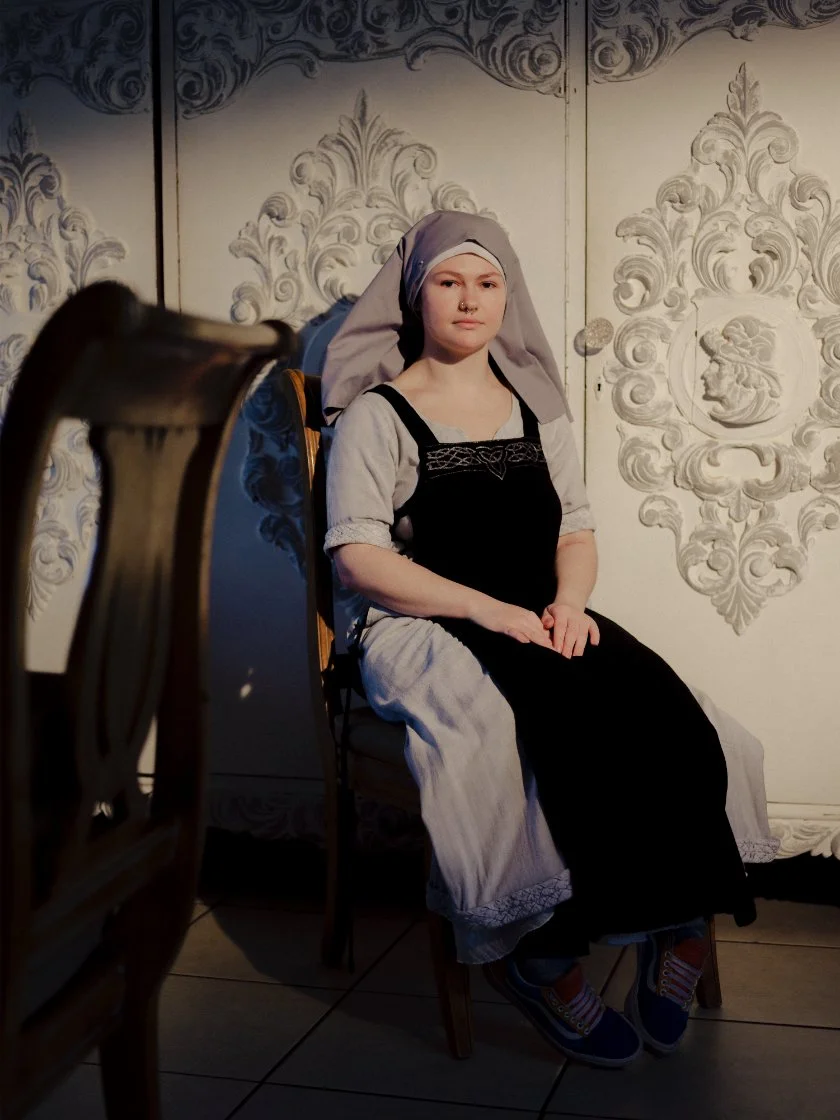
AP: I feel like it wasn't really a choice, it's just the way I've always been. But I think ever since a young age, I was highly sensitive to my surroundings and I figured out that the way I create a space affects my way of being. An architect creates a space and ideally it will affect the way that you behave in that space. Frank Lloyd Wright believed that the functionality of a space could enrich the life of whoever inhabits that space. In a way, it’s obvious, but I instinctively picked up on that ethos and knew that how I decorated my room would have an impact on my perception. 

JD: And most of your artworks are set in an interior. 

AP: Exactly. 

JD: There may be figures, there might be a fantasy animal, like a unicorn. But almost always set in an interior.  

AP: An empty room for me is like a portal to an imaginary realm. It always starts off of being basically bored in a house. That kind of suburban, empty room allows the fantasy to come through. It takes you to this middle world. 

JD: You're interested in volcanoes as well. 

AP: That's true. (laughs) I'm interested in archetypal subjects from fantasy, but I'm also interested in geological wonders and the natural beauty that exists on Earth. Volcanoes, crystals, waterfalls, flowers, geysers, bubbles, caves, you know, there is a lot of beauty everywhere if you look for it. Utopia does exist in some sense. It's just that we have to choose to see it.

JD: We've had a number of conversations about the special occult history of Pasadena. It’s a very unique place because on one side it's very Midwestern American, but on the other, it has attracted extraordinary people who enter into alternate realms. We talked a lot about Marjorie Cameron.  

AP: And Jack Parsons.  

DEITCH: I'm curious to hear how you learned about this as a child in Pasadena and how that alternate history of Pasadena has shaped you? 

AP: I've always been very drawn to esoteric subjects, including magick, Aleister Crowley, all that kind of stuff. And then, when I came upon Jack Parsons and Marjorie Cameron, I got very excited because it really is this crossover between all the things that I love, which is the occult, science, and art. But what's remarkable is that the mansion where I had my studio belonged to this woman named “The Silver Queen.” She inherited silver mines. Her husband died and she got married eight times—one was a prince in India. But I was convinced when I was working there—because it's very close to The Parsonage, which is where Jack Parsons lived—that she threw parties and that Jack Parsons attended. I imagined this whole scenario. And what's wild is that, one day, I went to the studio and it was transported to the 1930s. The house was often used for movie sets. They brought in all these orange trees and everyone was dressed in suits and hats. They were filming a show about Jack Parsons and my studio was The Parsonage in the TV show (laughs). I found the script and my mind was completely blown. That crossover between what's real and what's a fantasy is so present in Los Angeles. And speaking of utopias, Jack Parsons wanted to create his own version of utopia. The Parsonage was an 11-bedroom house where people from all walks of life had rooms and they performed sex magick. It was basically this place of free love and they believed that sex magick could take you to an alternate realm. L. Ron Hubbard lived there for a while. Also, professors at Caltech, bankers, and people like Marjorie Cameron.  

JD: It was a fascinating fusion of art, science, technology, the beginnings of space exploration. Religion was all there. Los Angeles art, for a long time from the perspective of New York City, was all about light and space and minimalism; high-tech materials. But there was always this undercurrent of homegrown surrealism; this utopianism. You mentioned Marjorie Cameron.  

AP: Yes, Aleister Crowley told Jack Parsons she was the Scarlet Woman, the woman that would move us out of a patriarchal society, the age of Osiris, into the age of Isis, the age of women.  

JD: It's fascinating that from the beginning you embrace that side of Los Angeles history in your art. 

AP: Los Angeles is a place that's built on myth. The idea of the city came long before Los Angeles was there. It has always had a history where fantasy becomes reality, and not just in Hollywood. And then, we created the concept. Beachwood Canyon had The Krotona Inn where the theosophists lived, which had very utopian architecture. There were the Nature Boys in the 1930s, who were like the first hippies—these Germans who moved to Laurel Canyon, and were vegan, and had long hair, and looked like they were from the ‘70s. The Native Americans say that Los Angeles has always had this magnetic quality to it that made people delusional. So, it's always this place of smoke and mirrors. Even hundreds of years ago, there was some type of energy that made things unclear. That opens possibilities for people to believe whatever they want to believe. That's what Scientologists believe—you create your reality and however you choose to live becomes the basis of your reality—which can be dangerous and idyllic. Growing up in LA, all of this has been embedded in my work.  

Ariana Papademetropoulos, Phases of Venus, 2022. Oil on canvas, 91 3/4 x 108 1/4 inches (223 x 275 cm); © Ariana Papademetropoulos; Photo by Argenis Apolinario; Courtesy the artist and Vito Schnabel Gallery

JD: We presented a fascinating exhibition project together called The Emerald Tablet. It was quite unique. I'm not sure any other artist has ever done anything like this. It encompassed a very impressive solo exhibition of your work with epic paintings. And then, in the other part of the gallery you curated an exhibition that articulated your unique aesthetic and it was a kind of fusion of what we've been talking about. This Los Angeles occult history with The Wizard of Oz, and that myth. You should talk a little bit about The Emerald Tablet and Unarius, who did a performance in front of the gallery as part of the opening.  

AP: L. Frank Baum [who wrote The Wizard Of Oz] was a theosophist. He named The Emerald City after The Emerald Tablet, which is an ancient alchemical text. The most famous line is “As above, so below.” I wanted to basically do an esoteric version of The Wizard of Oz. Instead of leading you to the Emerald City, it led to the Emerald Tablet, which is a place of collective unconsciousness. It's this place that all artists go to—a timeless universe. And that's why the green room had artists from the past hundred years. They all looked similar because they're all from this world some of these artists connected with. It's why the Mike Kelley piece looked so similar to the Agnes Pelton. The Jean-Marie Appriou piece looked like it was out of a Leonora Carrington painting. Everything was connected because it's this place that we can all enter into. Unarius believes there are these crystal cities on Mars, which was really similar to Mike Kelley's Kandor piece, which is where Superman was born. Unarius is a belief system, but they also functioned almost as a film studio because they made so many movies. They had their iconic bird release at the opening.  

JD: Unforgettable. They drove their spaceship up North Orange, parked in front of the gallery, and had their cosmic release. 

AP: I think perhaps Ruth, who started Unarius, was a performance artist without knowing it. She dressed as an Angel and flew down for her sermons suspended by a rope, surrounded by beautiful, young angel men. She lived out her dream. 

JD: And I love the way this exhibition tied together your work with that of this special Los Angeles history by Mike Kelley, Jim Shaw and artists from an earlier era, some connected to Los Angeles, and also artists like Leonora Carrington and Agnes Pelton. 

AP: Agnes Pelton is a big influence for me. She's very connected to that other realm, that collective unconscious that I'm always interested in, and theosophy is a religion that has been very inspiring to a lot of artists. Kandinsky was a theosophist. It's just a fusion of worlds that almost looks musical, and it comes from this idea of thought forms; where the best way to describe a feeling is not through words, but through pictures. I think that's what art is. It's not articulated, but you can feel it. Those were the ideas of Madame Blavatsky and Annie Besant.  

JD: So, you have an exceptional technique and you paint almost like a Renaissance master. I'm fascinated by the art education you gave yourself. You told me you were kicked out of about five high schools. Then, you attended CalArts where I'm sure you got very good artistic insights, but you didn't quite fit in. But then, you did something very interesting. You created an old-fashioned apprenticeship. You worked for Noah Davis. You worked for Jim Shaw and absorbed artistic techniques and approaches the old-fashioned way. 

AP: I think that's the best way of doing it, seeing how an artist operates in the world. Because, in a way, I do think art schools are a bit problematic. I can tell when an artist goes to CalArts. I can tell when an artist goes to Yale. You go to an art school with your own way of being and then you come out as a product of that school.  

JD: You didn't let CalArts do that to you. 

AP: I just don't think I could have. I don't have that personality. I've been interested in the same subject since I was ten years old. I am so through and through myself that I'm not successful at being anything but that. I think some of my favorite artists are self-taught because that is what being an artist is. It’s figuring out your own path. I mean, there’s a way of being a successful artist where you follow all the rules, but ultimately, you can also get there by doing it your own way. 


JD: Your perspective is also very international. Your name is Greek, but your mother is from Argentina. And you have a natural affinity for Italian culture—some of your wonderful paintings were painted in Rome, which suits you very well. Somehow, you're channeling the Renaissance in what you do—a sort of fusion of this unique California underground aesthetic and channeling Botticelli.  

AP: I definitely have my fantasy version of Italy. I first went there as an escape, but the longer I'm there, the easier it is to see the real-world version versus my Dolce Vita version. But I think Rome and Los Angeles are kind of similar in a way. And the churches of Rome are basically installation art. It’s all about trompe l'oeil. You don’t even know what you're looking at anymore. Is the sky really opening up to the heavens above? You go into those churches and you are overwhelmed by the beauty. It’s almost a religious experience because beauty is a portal to get you somewhere else. And I think that's something that I really strive for in my own work. I try to use beauty as a gateway to get to another thing. 

JD: I'm fascinated by your studio practice. You remind me of my friend Jean Michel Basquiat who was out all the time enjoying life in the clubs, yet astonishingly prolific. He obviously spent hours and hours in the studio. And so, unlike many artists, you have a very full and interesting life. Here we are in India, but your work is so demanding. It must be hours and hours in isolation doing this repetitive, exacting work. 

AP: I travel and I live my life, but I don’t think an artist is never not working. I get inspiration from seeing the physical world. For the show we are doing together on Nymphaeums, it will take a lot of research and visiting grottos. And then, I’ll go into my studio for a prolonged period of time and work out the ideas I’ve absorbed. The physical nature of the work does require a long time, but it's almost meditative, and I enjoy the peace. I’m either working or I'm exploring, but anything in between, I've just never learned how to do that. It's either I work really hard or I'm wanting to live life to the fullest. 

JD: So, a fascinating example of how you experience the world. You accompanied me some years back on a trip to Germany and you had read on the internet that there was some house built by a madman. It was the architecture of a schizophrenic and we were determined to see this house. When we encountered people in the art world and told them we were going to see this house, nobody else had heard about it. So, we rented a big Mercedes—I asked you to drive—and we saw this house. It was absolutely amazing. And that's typical of how you take in the world. I haven't seen the image of this house in your work yet, but something from this house is going to be there soon, I’m sure.  

AP: That trip was actually the first time you mentioned to me this idea of a gesamtkunstwerk, or a total work of art. I never knew that word existed. And you were saying to me that that's what I'm doing. There's the work that I make, but it's also an extension of the world that I live in. And I feel like that idea really resonated with me. Now that I have a word to describe this thing, it’s opened so many new possibilities, because I've always been a little bit afraid of being anything other than a painter. There are always magical, beautiful things if you look for them. And there are things that are out of this world, that are in this world. 

Entering A World of Concerns: Survival Structures for Humanity

The point is not of planning utopias; the point is about practicing them. And I think this is not a question of “should we do it or should we persist in the existing order? It’s a much more radical question, a matter of survival: the future will be utopian or there will be none.
Slavoj Žižek

text by Abbey Meaker

Utopia is not a place; it’s a shooting star: it appears suddenly, in the eye of the mind, bright and mesmerizing, mysterious. It demands our full attention before vanishing. Utopia is not a place; it’s a moment in time, a note in tune. Utopia is a transgression. It is a question, a confrontation. It can only exist outside of our imaginations in small gestures. We can’t go there; we can’t live there, and the moment we try, the dream collapses. Utopia is not perfection; it’s freedom. In the tide of our experience on Earth, moments of utopia find us in the awareness of our interconnectedness, of acknowledging our finitude without being silenced by it. For a moment, it liberates us, and with the wind it goes. 

There have been periods throughout history when the notion of utopia becomes part of the cultural zeitgeist, contemplated by artists, philosophers, and writers in the realm of an imagined paradise. Marie-Hélène Brousse opened her 2017 lecture entitled “Identities as Politics, Identification as Process, and Identity as Symptom” by arguing the fact that the dominant conception of identity is an ideal identity, whole and stable, unified and intentional (utopia). Contrary to such a view, Lacanian psychoanalysis posits that life is something which goes “à la dérive” (adrift). In other words, the idea of a unified identity is a lie, as the structure of the unconscious goes against the possibility of such a unity. The real utopia—cultivation of identity to oneself and the world around them—is one of quotidian practices. It is not an existence free of antagonisms. Our murky origins and inner workings have depth. From this dusky bloom we come with questions, compelled by curiosity and a need for connection. We follow that drive to dark places, and there we find a lighthouse, the artist. Artists are stewards of meaning, and as I consider experiential notions of utopia, I continually return to the work of Agnes Denes. 

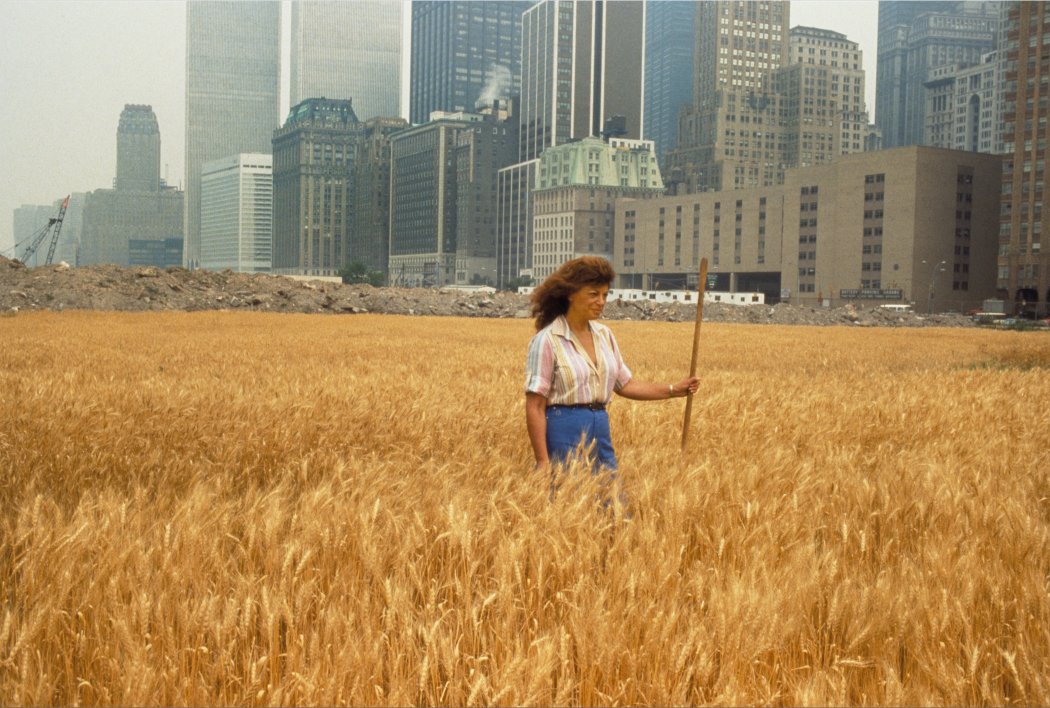
Utopia is an offering made by the hands of an artist. It is an act of creation. It is planting a wheat field on two acres in lower Manhattan as the artist Agnes Denes did in 1982. Wheatfield — A Confrontation, was sited on a landfill created when the World Trade Center was constructed in the late 1960s-early 1970s. This artwork was intentionally and aptly placed in the shadow of the towers, a stone’s throw from Wall Street with the Statue of Liberty in view. It yielded over one thousand pounds of healthy amber wheat, and in the months the wheat was maintained—on this property worth billions, representing some of the world’s greatest wealth—a compelling paradox was unearthed, a profound statement on the implications of global commerce, wealth disparity, and misplaced priorities on the culture and condition of the earth itself. Forty years later, this prescient work echoes with overwhelming urgency. 

Agnes Denes, whose work has never been easy to categorize, is an artist who has continually engaged with the notion of utopia in tangible ways. Her practice, which investigates philosophy, science, linguistics, and history, is grounded in socio-political concepts and ecological concerns. Her work is motivated by a curiosity of the human mind, how we think, how we evolve, how time changes us, how previous generations inform current and future generations. Denes describes her entry into visual expression as an exit from the ivory tower of her studio into a world of concerns. For more than fifty years, Denes has used her work to call attention to and protest damaging systems of power, deteriorating values, and the ways in which our interests, choices, and problems interfere with and harm the whole of Earth’s ecosystems. 

Her poetic eco-philosophical work Rice/Tree/Burial, first realized in 1968, began with a private ritual, a symbolic event and declaration of her commitment to the environment and human concerns, namely the ways in which one informs the other. Like chapters in a story, Denes began by planting rice. In the 1977 iteration of this work, the ritual was re-enacted and realized at full scale in Lewiston, New York. She planted a half-acre of rice in a field 150 feet above the Niagara Gorge. The site marked the birthplace of Niagara Falls between Canada and the US, twelve thousand years ago. Rice represented universal substance, that which brings forth and sustains life. 

She chained together a series of trees in a sacred Native American forest. The chains symbolized connection, linkage in time and material, and our interference with natural processes. Reorienting these trees created, in a sense, a new ecosystem. Introducing new elements and materials, like a dam in a river, sets a cascading change into motion. The echo of interconnectedness sound. 

The final chapter included the burial of a time capsule to be opened in one thousand years. It contained only the filmed responses to a series of philosophical questions that had traveled around the world, and a long letter the artist addressed "Dear Homo Futurus." The contents of the time capsule symbolized human intellect and evolution, clues as to the values of previous Earth generations. 

Though conceptually rigorous, the acts involved in the rituals are everyday practices: hands in the soil, sowing seeds, burying the sacred, the symbolic, total absorption in the mundane. This work reminds us that ideas in the context of art can be more than flimsy imaginative notions, they can be used in the deconstructive remaking of the world. These gestures, the enactment of utopias, will bleed out, soaking our tightly interwoven fabric with new color and texture. 

In my exchange with Agnes, she told me, and asked that I share with you, that we must turn around inside ourselves and look through a different window. To make sure we ask the right questions, questions that open the soul. The artist said she wanted to sit down with everyone reading this and start a conversation they would walk away from with a full heart, an open mind, and enough curiosity to kill a cat. I propose that we speak with Agnes, ourselves, each other, the past, the future, through a series of existential questions she buried in 1977: 

1. What governs your actions? Do you think there is a force influencing what happens? 
2. How do you feel about death? 
3. What would you say the human purpose is? 
4. What do you think will ultimately prove more important to humanity, science or love?
5. What is love? 
6. What would perfect existence consist of? 

Extra

photography by Jermaine Francis

styling by Naomi Miller

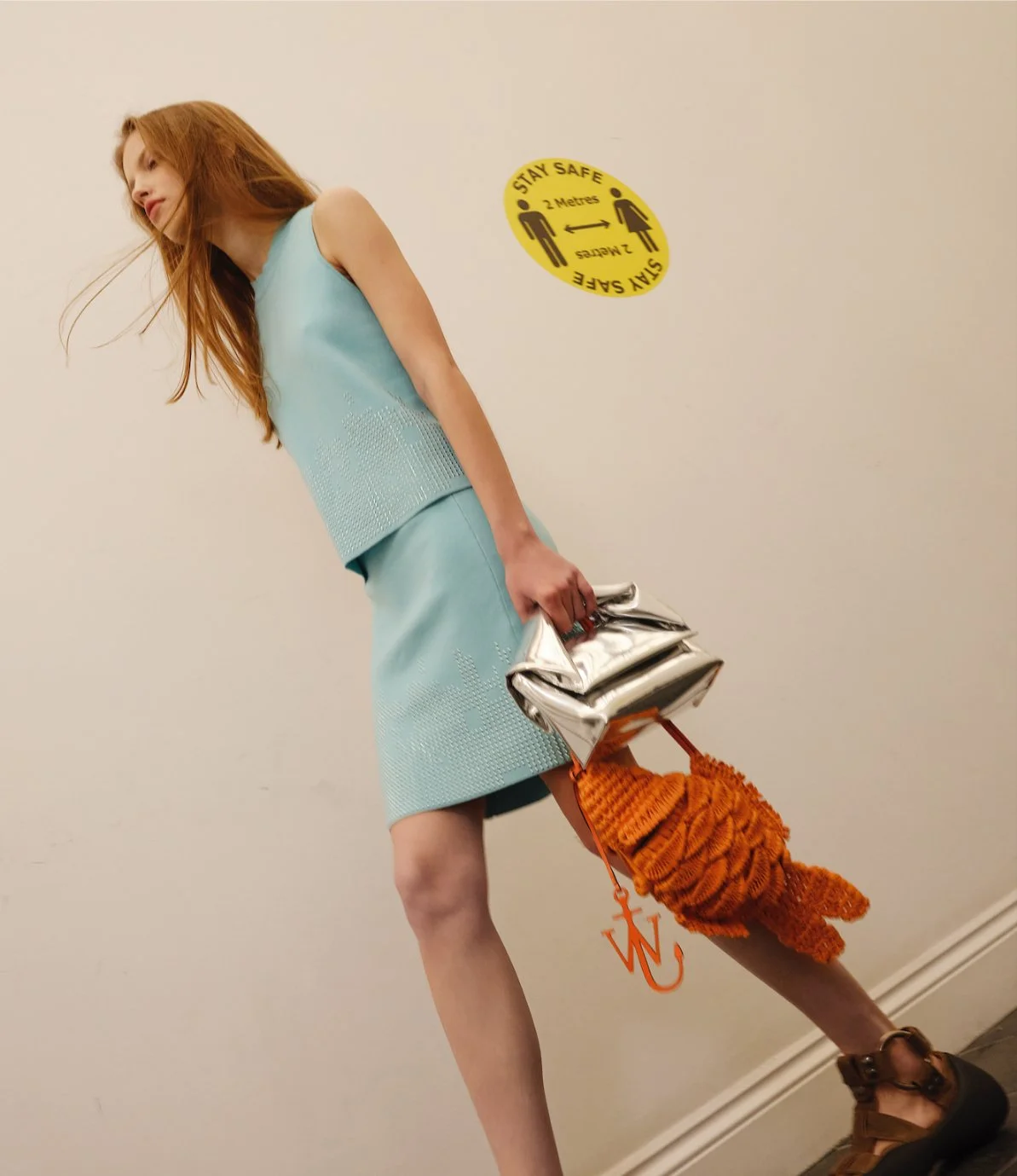
JW Anderson merino wool top and skirt, fish-shaped shoulder bag, mirrored bag, and leather sandals

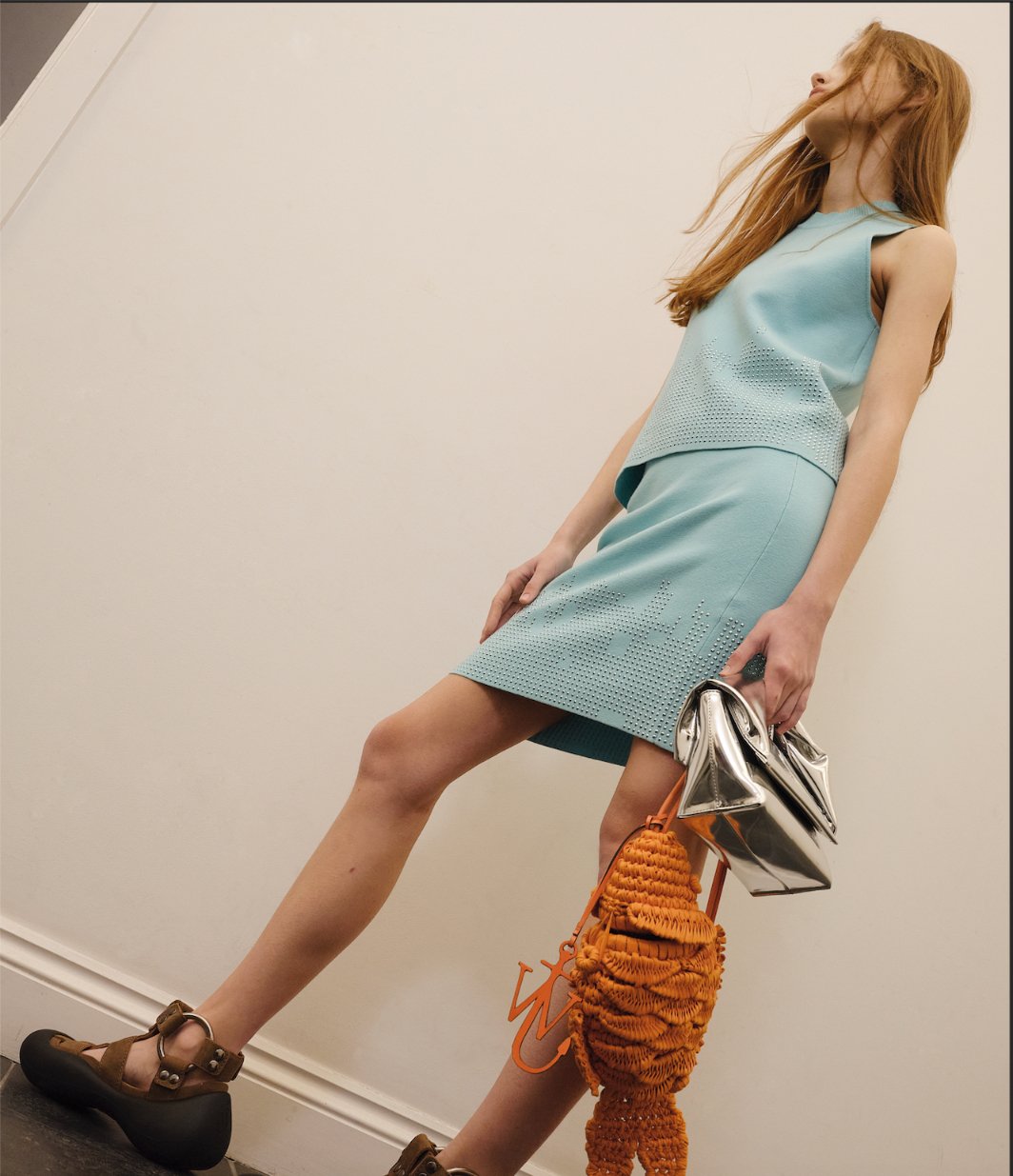
JW Anderson merino wool top and skirt, fish-shaped shoulder bag, mirrored bag, and leather sandals

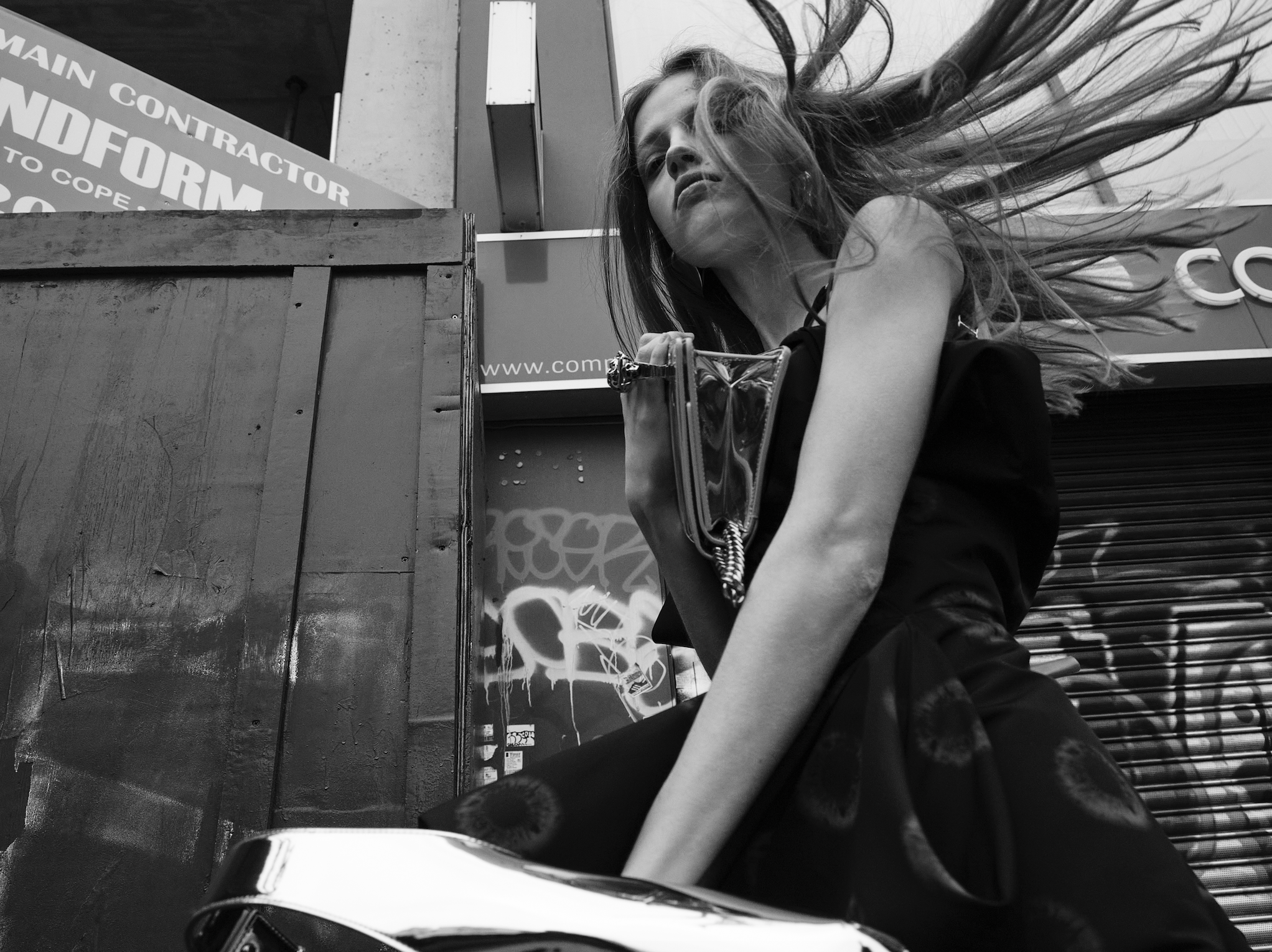
Alexander McQueen polyfaille dress, Hobo jeweled leather bag, Slash leather bag, and metal earrings

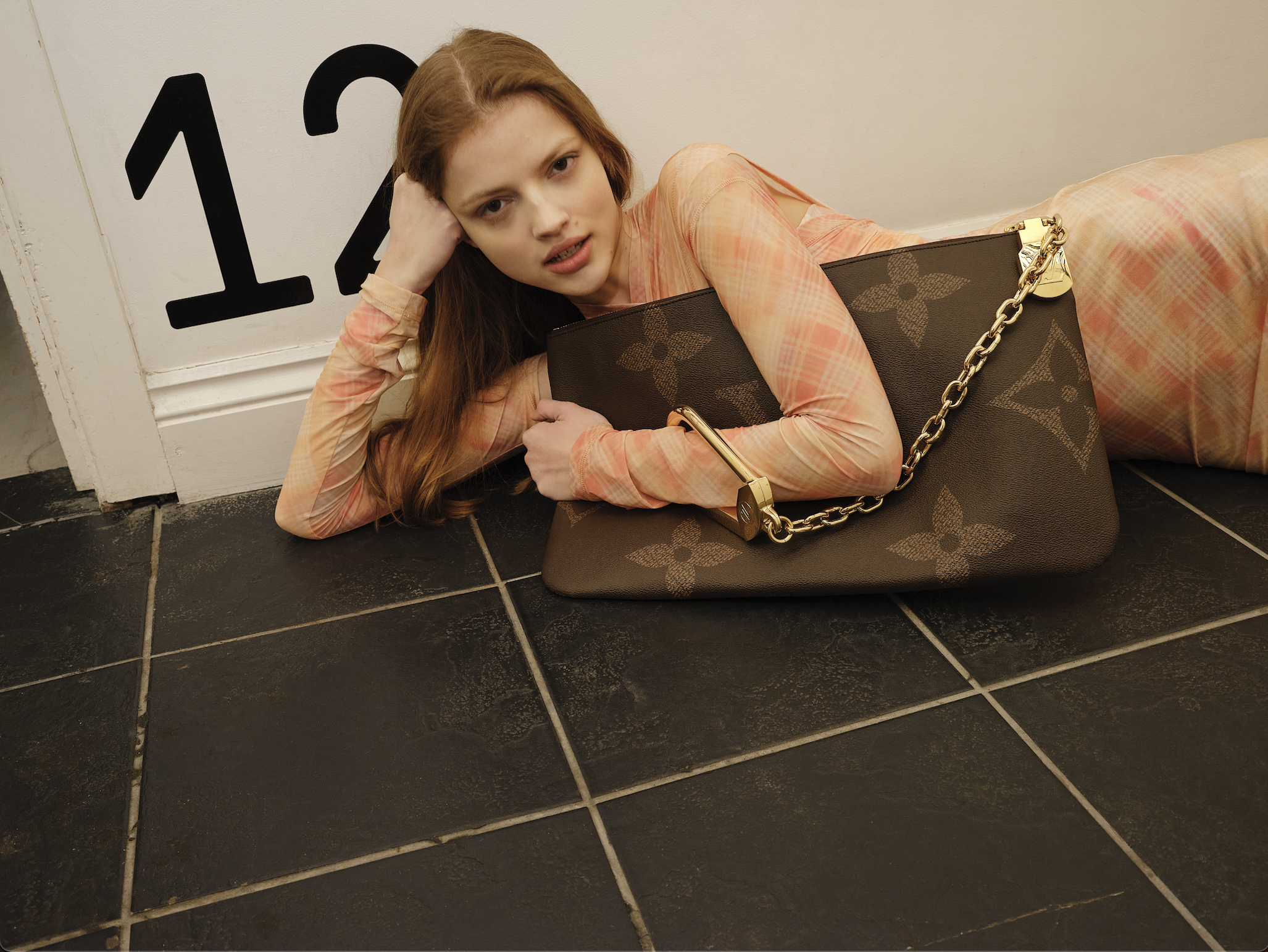
KNWLS polyester top and leggings; Louis Vuitton canvas XL key pouch

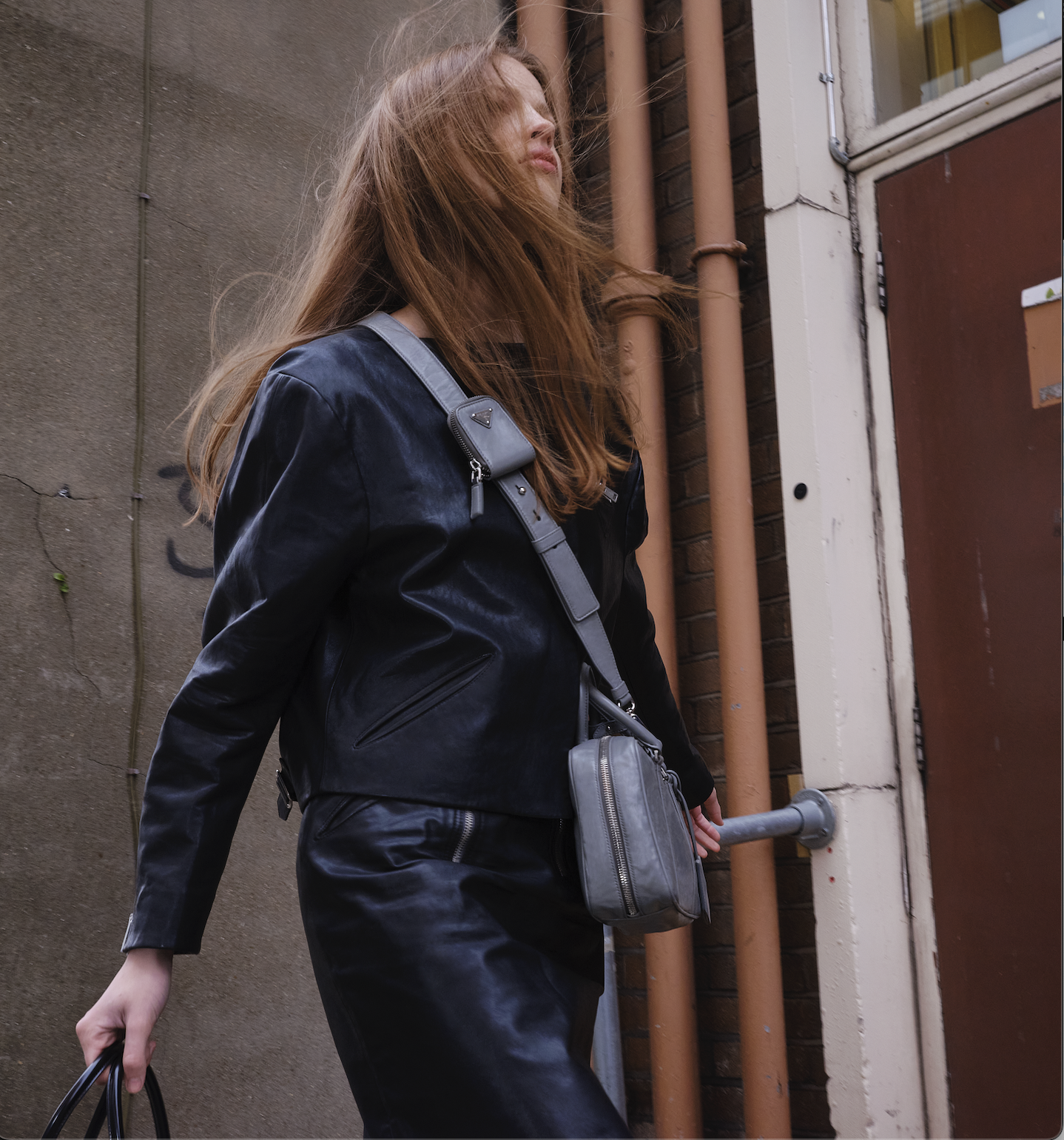
Prada leather jacket and skirt; Supernova leather bag, Top Handle leather bag

Rejina Pyo wool blend jacket; Margaret Howell heavy cotton poplin shirt, cotton linen trousers and tie, pebble leather Doctor’s bag and Rambler’s bag


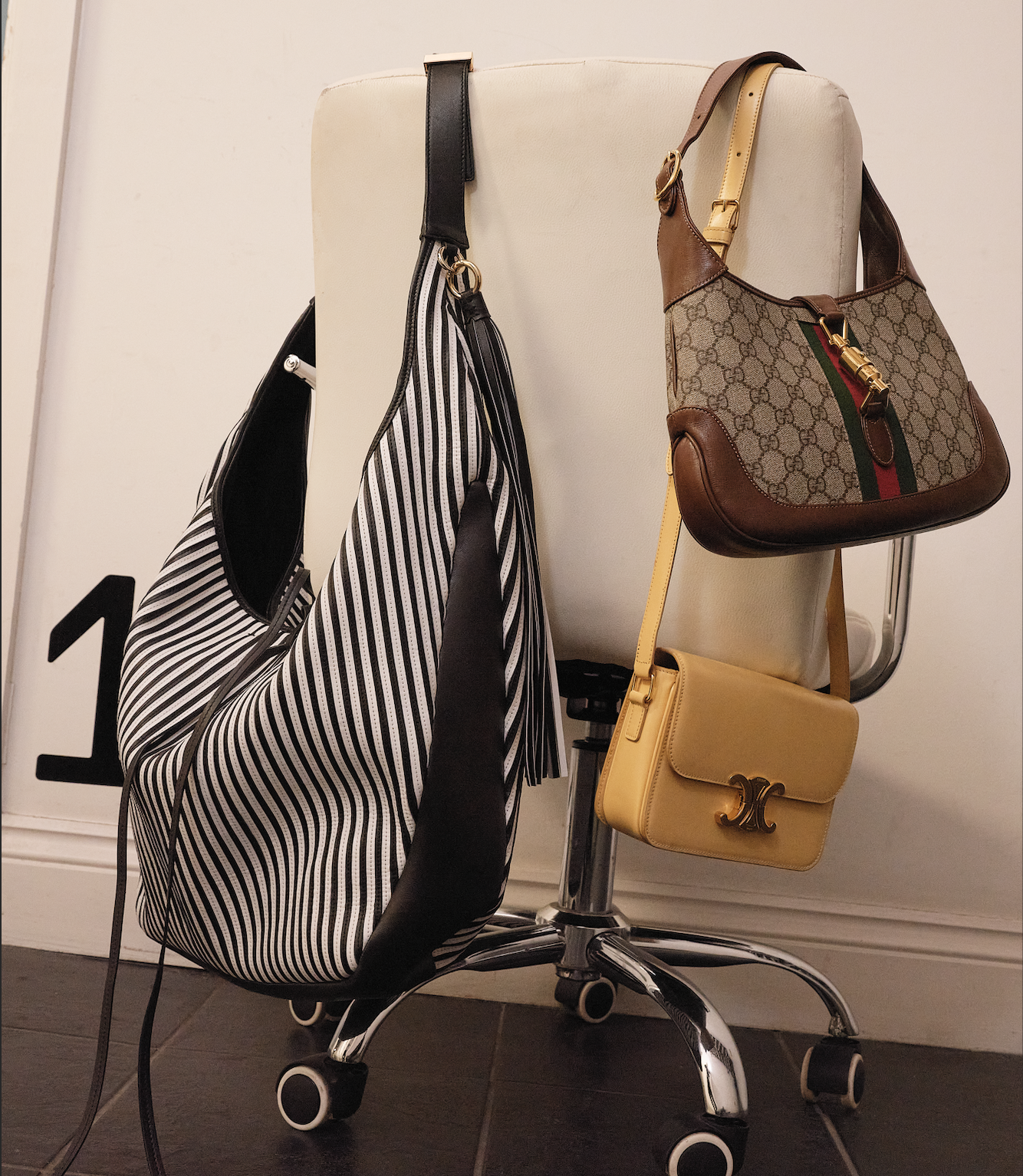
Chloé Patchwork calfskin leather bag; CELINE by Hedi Slimane Triomphe leather bag; Gucci Jackie 1961 canvas and leather bag


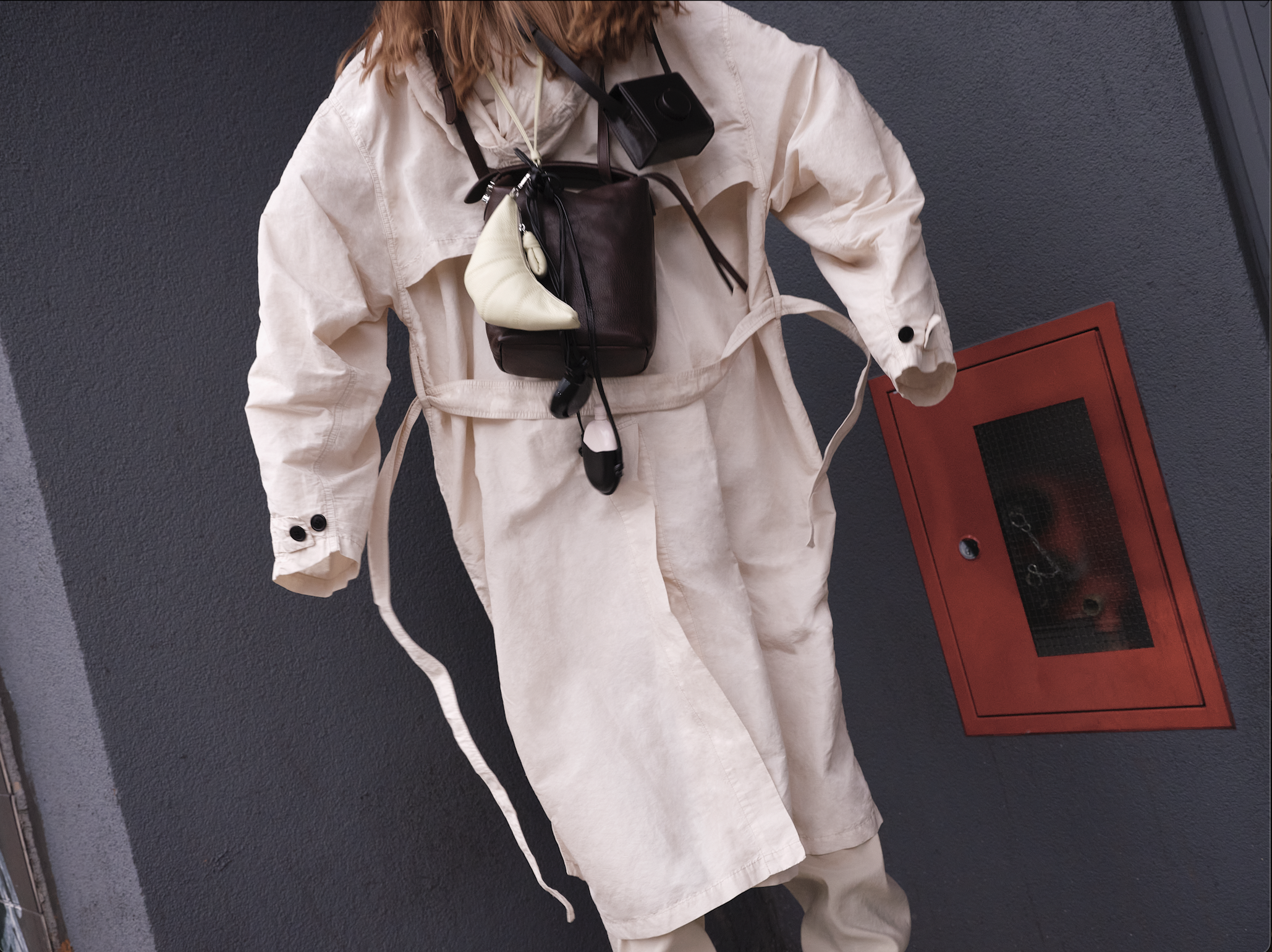
Lemaire polyamide, linen and cotton parka, cotton poplin shirt, silk and polyamide trousers, metal flask, leather flask, leather flask case, Mini Camera leather bag, Case leather bag, and Croissant coin purse

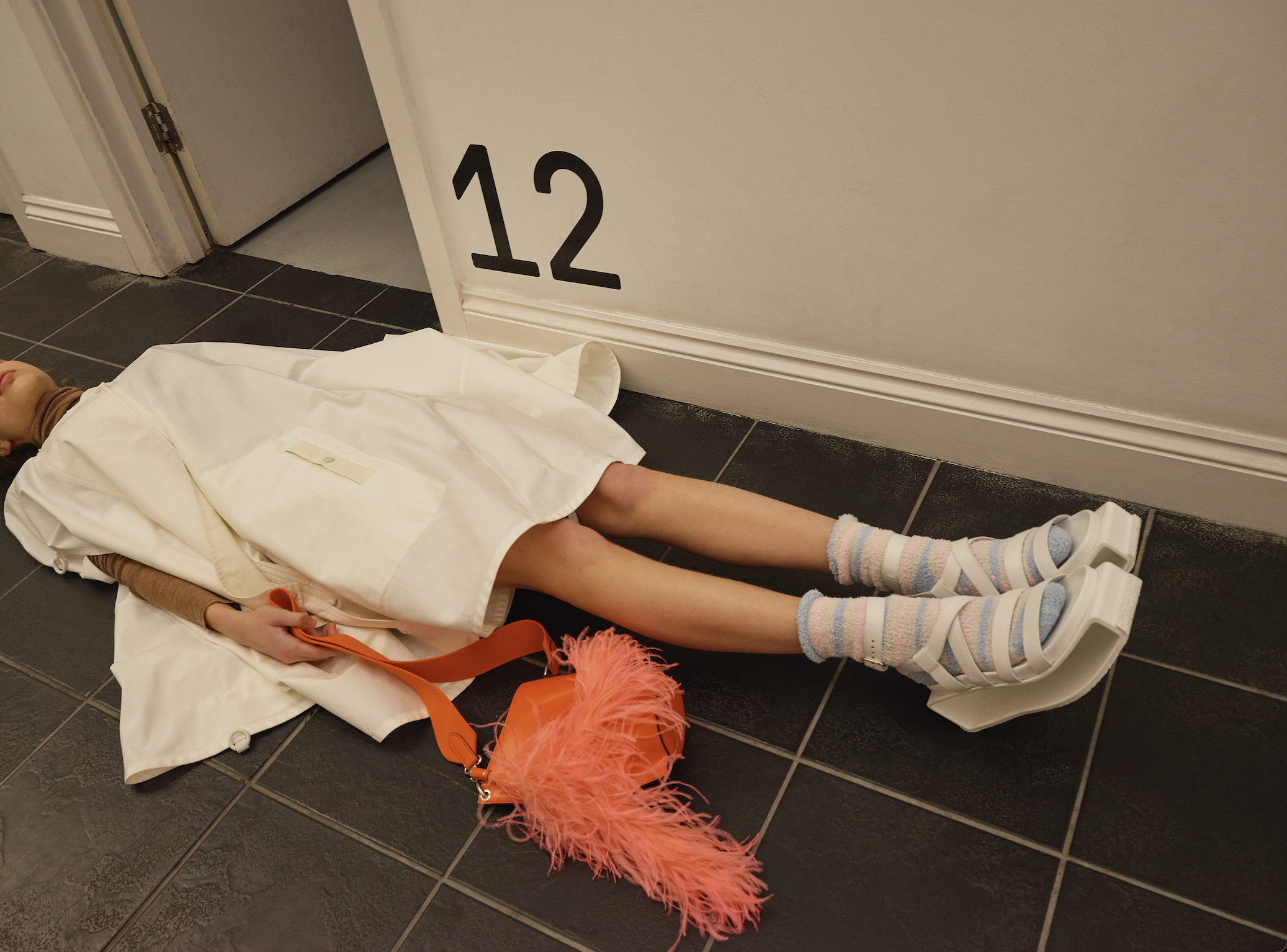
Hermés nylon coat, cotton turtleneck, Pansage Plumes leather bag with ostrich feathers and leather sandals


Acne Studios cotton sweatshirt; Uniqlo U denim jeans; Acne Studios Musubi leather bags, and Micro Distortion leather clutch


An Interview of Diva Amon

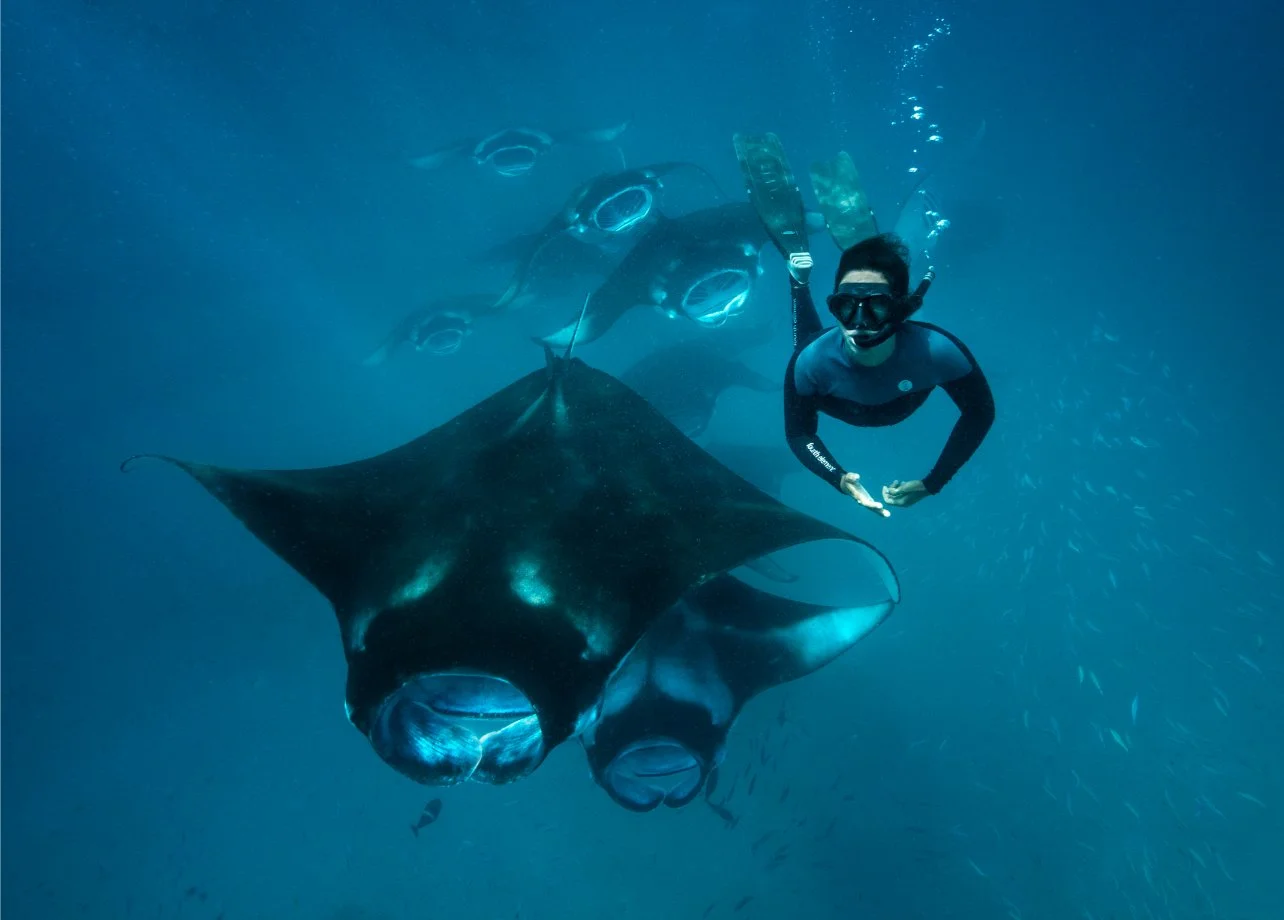
Diva Amon diving with Manta Rays. Photograph by Michael Pitts. Courtney Diva Amon

Interview by Kaylee Gibson


Back in 2021, I found myself at the Venice Architecture Biennale, curated by scholar Hashim Sarkis, which sought to answer the question: “How will we live together?” One of the most poignant exhibitions was held at the Danish pavilion, which was completely transformed by Architecture studio Lundgaard & Tranberg and curator Marianne Krogh. In an exposed cyclical system of piping, rainwater was collected from outside and taken on a closed-loop journey through the space. Visitors become part of this system—a poetically visible merging of nature—by drinking a cup of tea brewed with leaves from herbal plants that absorbed the water. Sipping my tea, listening to the calming streams, traversing the city by water taxi through its famous canals that pour out into the Adriatic Sea, I pondered our planetary water system, and how it links us all. Deep sea marine biologist Diva Amon feels the same obligation and urgency to highlight this link. The deep sea, which is defined as a depth where light begins to fade, is the largest habitable ecosystem of our planet, yet it lies furthest from our reach. Not only does it regulate our planet’s climate at large—it also has the potential to solve some of humanity’s greatest challenges.

KAYLEE GIBSON: What roles do the deep oceans play in our planet’s ecosystem?

DIVA AMON: Our deep oceans are a reservoir of biodiversity, but it goes beyond that—it is a journey through time. Because of their huge size, they provide over 96% of the habitable space on Earth, they cover a vast percentage of our planet's surface, and that size is what really allows them to play such a significant role. They regulate the climate by absorbing heat and sequestering carbon. They provide food for billions with their provision of fisheries. And then, there’s nutrient cycling. Cycling nutrients on the planet is everything ... it is life as we know it. It also plays a large role in detoxification. So, we have nutrient cycling, elemental cycling, and really big services like primary production. They provide a home for so many animals. There are also so many potential pharmaceuticals that could come from the deep sea. Life in the deep ocean evolved in these extreme conditions: high pressure zones, close to freezing temperatures, darkness, so many of those animals have genetic material that could be quite interesting to us in the future—for pharmaceuticals, or biomaterials, or for industrial agents.

GIBSON: Biomaterials are so interesting. Can you give a few examples of these?

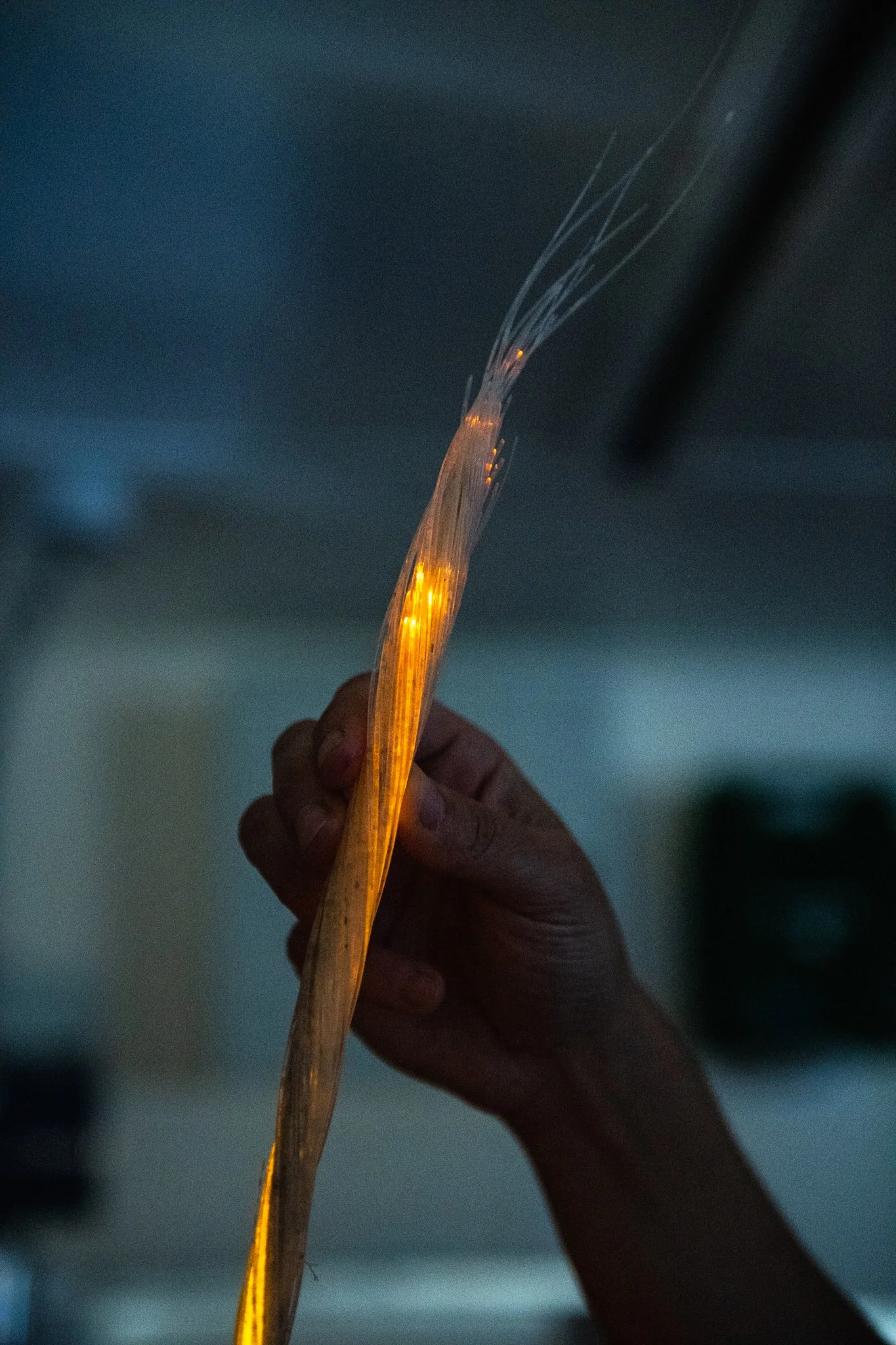
AMON: Sure, there’s a species called a glass sponge, it’s not actually made of glass, it’s made of silica. They look like fiber glass and have these beautiful, intricate structures. These creatures have actually been used as inspiration to make more efficient fiber optic cables. Another example of biomaterial comes from dead whales. When whales die, they usually end up down in the deep sea where they become food and shelter. There are bacteria that break down the fats in whale bones most effectively at deep sea temperatures, so 3-4 degrees Celsius. These enzymes have been utilized for more climate-friendly laundry detergents because they remove stains at lower temperatures.


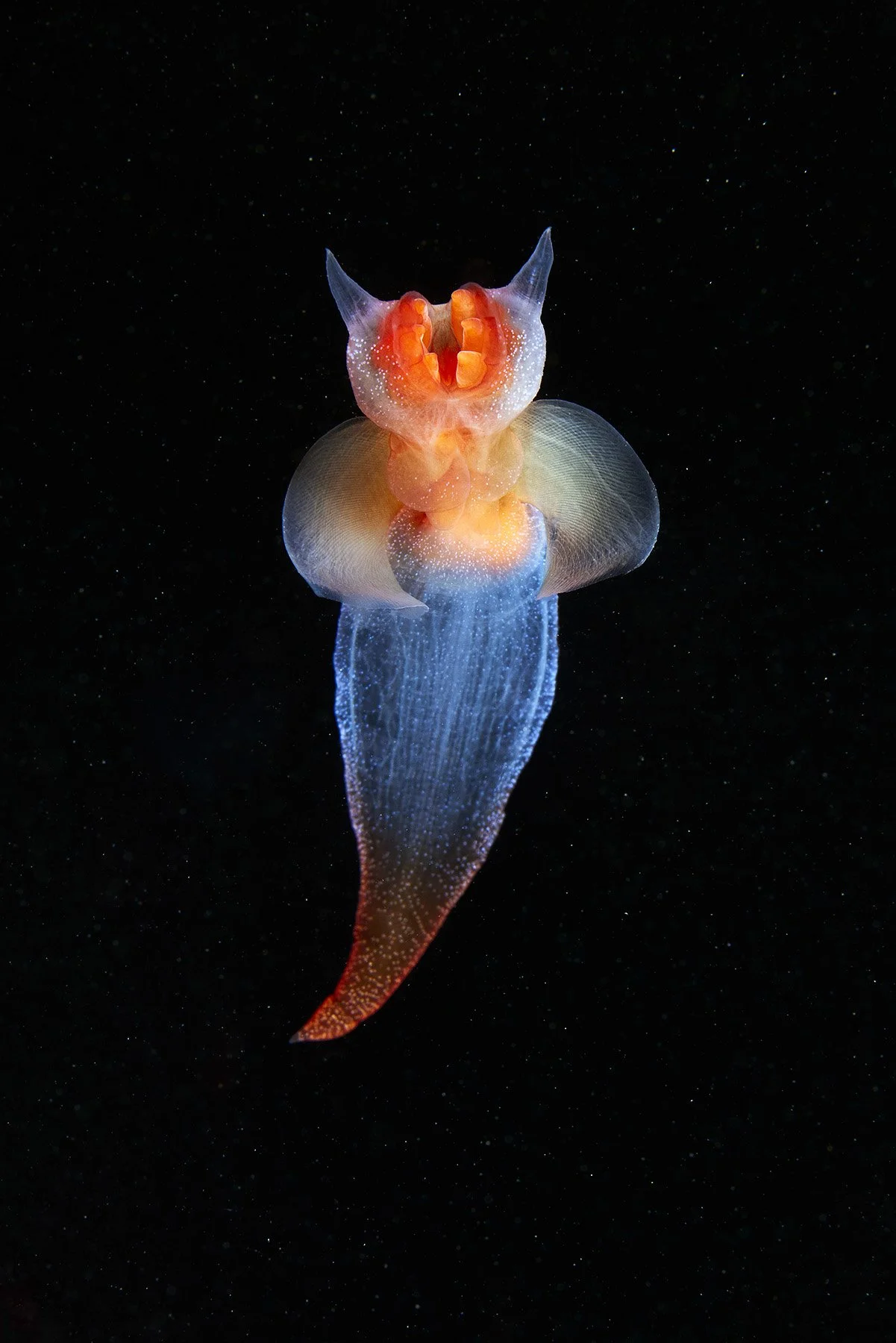
Sea Slug. Photograph by Alexander Semenov


GIBSON: These are very new findings and applications, but it seems like there’s still a lot to discover.

AMON: We’re just scratching the surface. There’s only maybe thirty of these applications so far. We know probably 1/3 of the multicellular species. They think there’s close to 1 million species that live in the deep sea, and about 2/3 of those still have not even been discovered, and that’s not even taking into account unicellular species. There’s so much to be discovered, so much that we could potentially use. All of that life is linked to the functions and the services that keep our planet ticking. There’s this untapped reservoir of potential use and benefit to us that could help with some of the most profound challenges of the future.

GIBSON: Can you predict the potential of those undiscovered species in anyway?

AMON: In terms of microbial life, there will be things that are entirely unexpected. And there are single corals that can live for over 4,000 years. Think of how much has happened in human history in that time. There are sponges that live for over 10,000 years. Not only are we seeing new life, but we are also seeing it in new ways. There are these teams in California that have been doing amazing work on bioluminescence, a phenomenon where animals create their own light. In the past ten years, we’ve realized that it’s far more common than previously thought. The majority of the species in the deep sea create their own light, and because of the vastness of the deep sea, bioluminescence is possibly the most common form of communication on the planet. So, it’s really rewriting paradigms, which is what I think we’ll see more of in the coming years. We’re at a pivotal point in ocean exploration, and we’re conducting research in more effective ways, which is leading to discoveries that we never could have dreamed of.

GIBSON: That’s so fascinating. So, much of our understanding of life on Earth has been linked to our reliance on both oxygen and sunlight, but our deep oceans function so much differently.

AMON: It wasn't very long ago that we realized there are entire ecosystems in the deep sea that are able to exist completely in the absence of sunlight or oxygen. A lot of life in the deep sea relies on food from the sea surface: dead animals like whales, plankton, and fish. But about fifty years ago, hydrothermal vents were discovered, and those are these incredible environments where life doesn’t actually use the photosynthesis-related food chain that 99.9% of life on Earth relies on for its existence. Instead of using sunlight as their ultimate source of energy, they use chemical energy. So, there’ll be methane seeping from the sea floor, or hydrogen sulfate, and life has evolved to use that as the starting block of their food chain. You get to those places in the deep sea and they are booming with life.

GIBSON: What do you think this means for the future of society and how we think about our oceans?

AMON: A hundred years ago we thought of the ocean as this deep, dark place, like a vacuum with no life. Since then, our explorations and discoveries have shifted so many paradigms, allowing us to realize that life not only finds a way, but thrives in these places, changing everything we previously thought was possible. I think that lends itself to life on other planets. If life can exist in these extreme places on our own planet, what’s to say it doesn’t exist on other planets that exist under extreme conditions? It’s really about showing what’s possible and rewriting the laws of biology. Apart from that, the slightly cynical answer is that while more people are engaging with the deep sea than ever, it’s still not enough. Many people still have this idea that there’s not much to conserve there, and as a result, I worry that it’s seen as this final frontier on Earth, which is a very challenging mentality. Economists have a term called the ‘blue economy.’ It’s a real push to harness all the resources the deep ocean has to offer.There’s nothing wrong with that as long as it’s done in a way that is not just sustainable, but also restorative. What we are seeing now with some of the industries that are pushing into the deep sea are attempts to exploit it. Fisheries have been operating for decades in the deep sea and there’s been purposeful dumping in the past, but now there’s an accidental sort of pollution. We’re seeing oil and gas going deeper and deeper, we’re seeing deep sea mining on the horizon, and a lot of those industries benefit from the notion that there’s not a lot of life down there. All of this knowledge is not as mainstream as it should be, so we risk losing species, losing habitats, losing those functions and services that we rely on.


Glass spicule stalk collected from Cape Range canyon, showing fiber optic properties. Courtesy Schmidt Ocean Institute


GIBSON: How can we engage the public more? What do you think that looks like?

AMON: That's really the challenging question. Unfortunately, deep sea exploration and deep sea science is incredibly expensive. It's akin to space exploration. It’s very high tech and very high skill, which means it’s not accessible to the majority of humankind. And that has resulted in it being colonized by a small set of humanity. If we can begin to remove those barriers so that more of humankind can participate in those conversations, we can develop a better understanding of what’s there and how best to manage and protect it. Ultimately, there's a big geopolitical issue here. Scientists have had the privilege of conducting research on these parts of the planet that no one else has seen. I do wish that more scientists would utilize that privilege to the benefit of the deep sea itself. Thankfully, we’re seeing a rise in scientific exploration being live streamed. We're also seeing more mainstream documentaries being made such as it being featured on The Blue Planet. There’s a lot in the works that will bring the deep sea to millions of people around the world. We need to take it to the policy makers who are drafting regulations now that will be in place for decades, if not centuries, and will be pivotal for our ocean and its management. We ourselves have abig role to play.

GIBSON: It is so wild to me that the International Seabed Authority (an off-shoot agency of the UN) is essentially deciding the fate of the deep oceans. Are they playing an effective role in their protection?

AMON: There are so many issues happening around the ISA. Since 2018, I've been going to their meetings twice a year, and you see in the room that not every country is at the table. They all have a seat, but they're not necessarily present. That is often due to a lack of resources. It’s not considered a priority. Many countries can't afford to send delegates there for three weeks a year. As a result, the voices that tend to be the loudest are the ones that are ultimately going to benefit. Intergovernmental processes are not perfect, but it's particularly glaring at the ISA.

GIBSON: I had no idea until recently that there are permits being issued to mine the deep sea, nor that the ISA even existed. How likely is it that deep sea mining will happen?

AMON: Very likely, unfortunately. That devastates me. But I think there are so many brilliant organizations doing their best to at least delay it. As of now, the Republic of Nauru, Pacific Island triggered a two-year rule. That means by June 2023, they could be issued an exploitation license and that’s it. Not only is this entirely out of step with much of what humankind is talking about now, what’s most distressing is the fact that biodiversity loss is the highest we’ve seen within human history, the climate crisis is spiraling out of control, and here is this UN-related body that is essentially trying to kick-start what is going to be an extremely disruptive industry in one of the most pristine parts of the planet. It’s completely at odds with what we should be doing. A lot of people are saying, “Well, we need the metals for the climate crisis.” But that's a band-aid. Let’s not mince words. We’re working our way through the planet's resources and ultimately just finding new things to use and destroy.

GIBSON: If deep sea mining were to happen in just a small area, would that have effects on very large areas?

AMON: We really don't know. A big part of the problem is that more than 99% of the deep sea floor has never actually been visualized with human eyes, nor with a camera. A lot of it is based on modeling. We're using the best data we can to inform those models, but it's still mostly unverified. I used to work for the University of Hawaii and the contract I was working on was for one of these mining companies trying to understand which life forms exist in the Clarion Clipperton zone (between Hawaii and Mexico). We went out on a cruise in 2013, which was the first time anybody had seen that sea floor and over 50% of the large animals we saw were entirely new species to science. And now, more scientific teams have been observing through the CCTV that 70-90% of the species there are new to science. And that's just multicellular species. We're not even talking about microbes. So, we're operating in this real dearth of information, and not just about what's there, but how it might be impacted. If we don't know how the animals will be impacted, we don't really know how the functions and services that we rely on will be impacted. The parts of the planet that have been licensed off in these areas, and there are about eighteen licenses out there, each of them is about the size of Sri Lanka. These are not small places, and we know that all life in the path of the machine will be killed. There will be huge dust plumes kicked up off of the sea floor from the mining machinery, all of the minerals will be pumped up to the surface, they will be separated from the water, and that water will be pumped back into the ocean. That water will have metals, it will be a different temperature, it'll be a different chemistry, and it will essentially be a form of pollution. That's going to create another one of these plumes that has the potential to suffocate animals, or render them blind. The currents have the potential to take these plumes to further areas and the footprint will be much, much larger, and we're not even talking about noise, which travels huge distances in the deep. There’s so much to consider and it's been acknowledged that there will be species extinctions. Ultimately, when those things happen, there will be impacts to the fisheries that much of the world relies on. There’s grave concern about the impacts on the carbon sequestration capability of the deep ocean. There's so many unknowns that it's really worrying to think about an industry on this scale. We should be taking a very precautionary approach. And, if we do decide that we absolutely need these metals for our survival, then we should start small—just license one entity to begin with, and then do lots of monitoring around it. But that's not what’s expected to happen. There have been thirty-two licenses granted globally, and most of those places don't have protected areas in place yet. Most of those places don't even know what lives there.


Pelagia noctiluca. Photograph Alexander Semenov


GIBSON: Is there anything we can do to keep this from happening?

AMON: That's the real challenge about the deep sea. It’s not like we can go out there and protest. So, the first thing we can do is talk about this, the more people who know about this, the better. Many well-known countries are participating in deep sea mining. France has a contract area, Germany has several contracts, and so does the UK. Apart from that, it's about consumption. The oil companies came up with ‘carbon footprints’ to try to put the onus on us, the individuals, for pollution, rather than themselves. But there is something to be said about living more consciously, and thinking about where everything we buy comes from. Each of us has a cellphone, and those use about sixty different types of metals. So, trying to consume less is important and also pushing for technology that can be recycled more easily, or technology that can be fixed. I think we are seeing those shifts in society. It's just not happening quickly enough. It's a tough one. People aren’t engaging first hand with the environment of the deep sea, so it’s a hard one to get people on board with, even though it’s absolutely essential to us being here.

GIBSON: I did read that Samsung, BMW, Google, and Volvo vowed to not use anymetals mined from the deep oceans.

AMON: Yes. There are steps happening. These four major corporations have come forward and pledged to not source any of their production materials from the deep sea, at least until it is deemed to not be destructive. Seeing these big corporations willing to take a stand on this was probably the most hopeful thing that has happened. I hope it really is this pivotal event where after these four, we see more and more coming forward. Ultimately, many corporations know that they are rewarded for good behavior by their consumers, so their leadership in this area has been very refreshing.

Halycon Days


Zamir wears Rick Owens cotton tank top, Shayna Arnold metallic lamé necklace


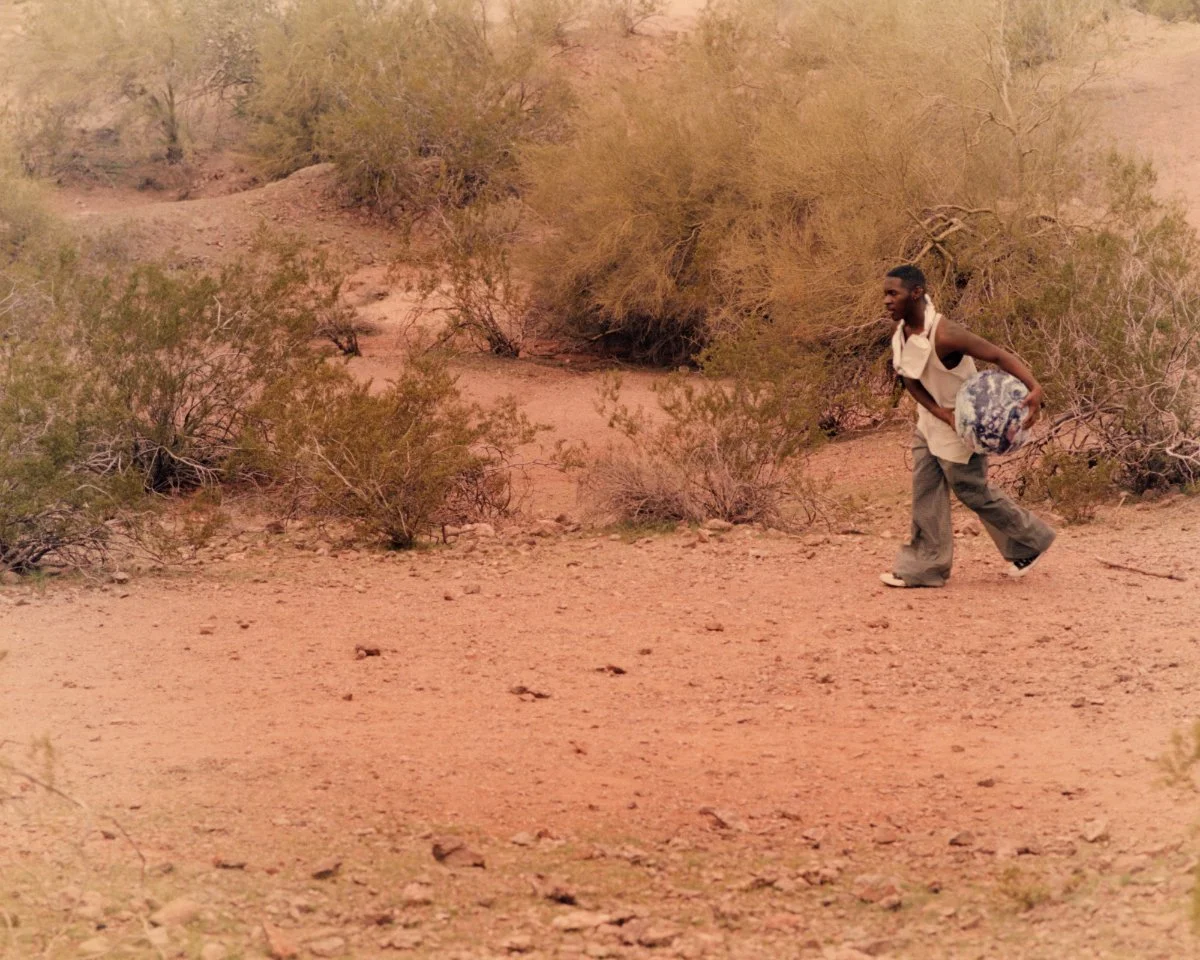
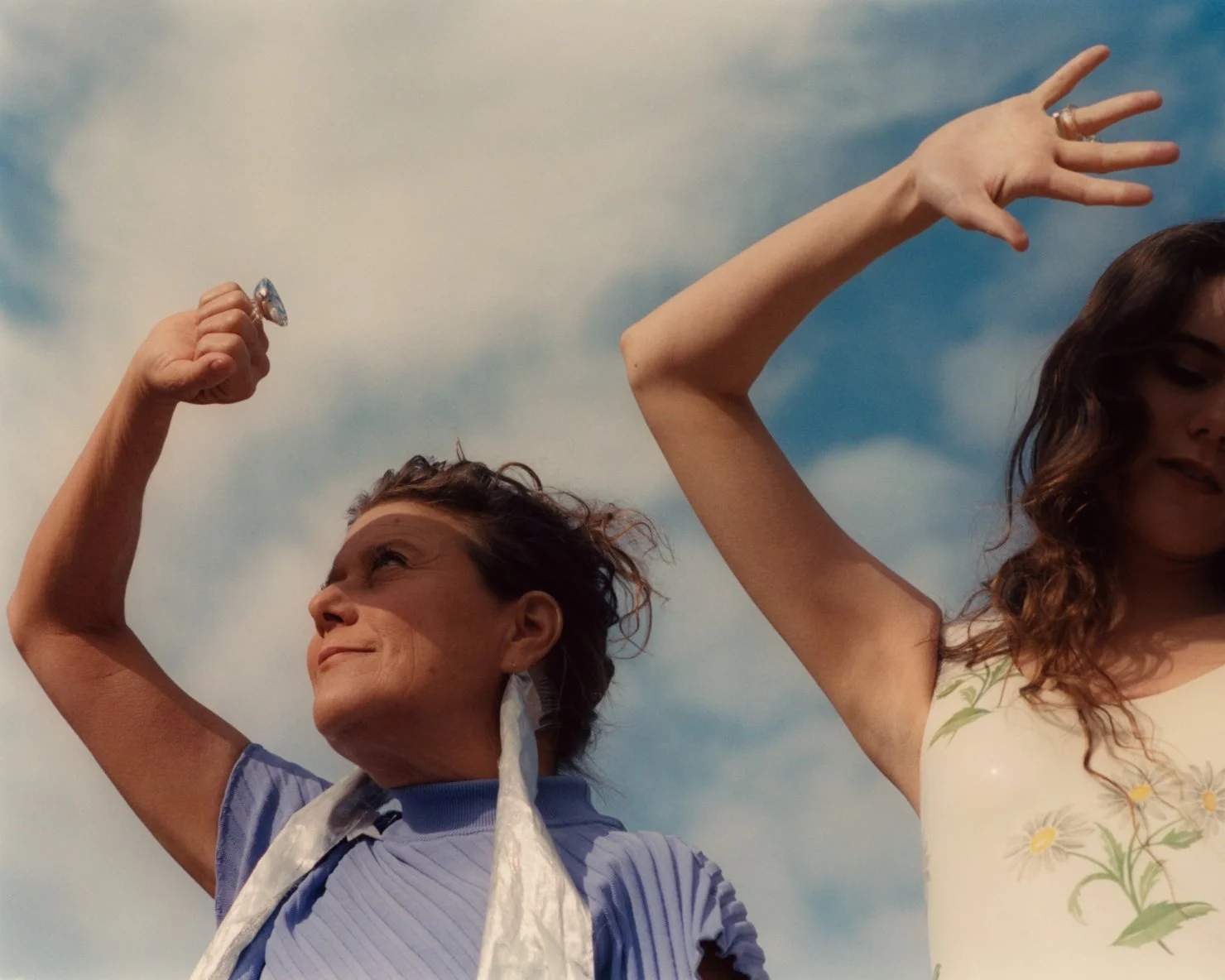
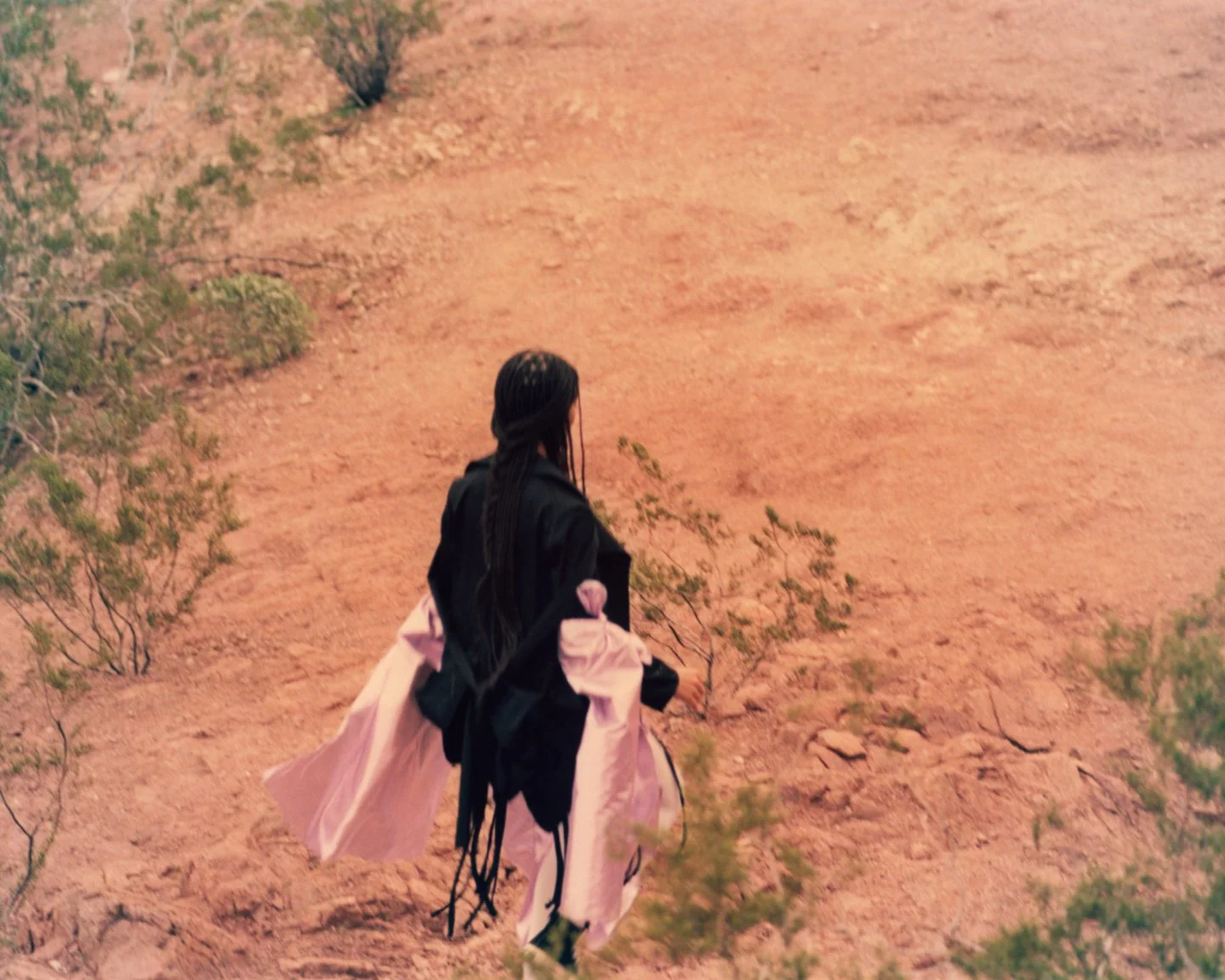
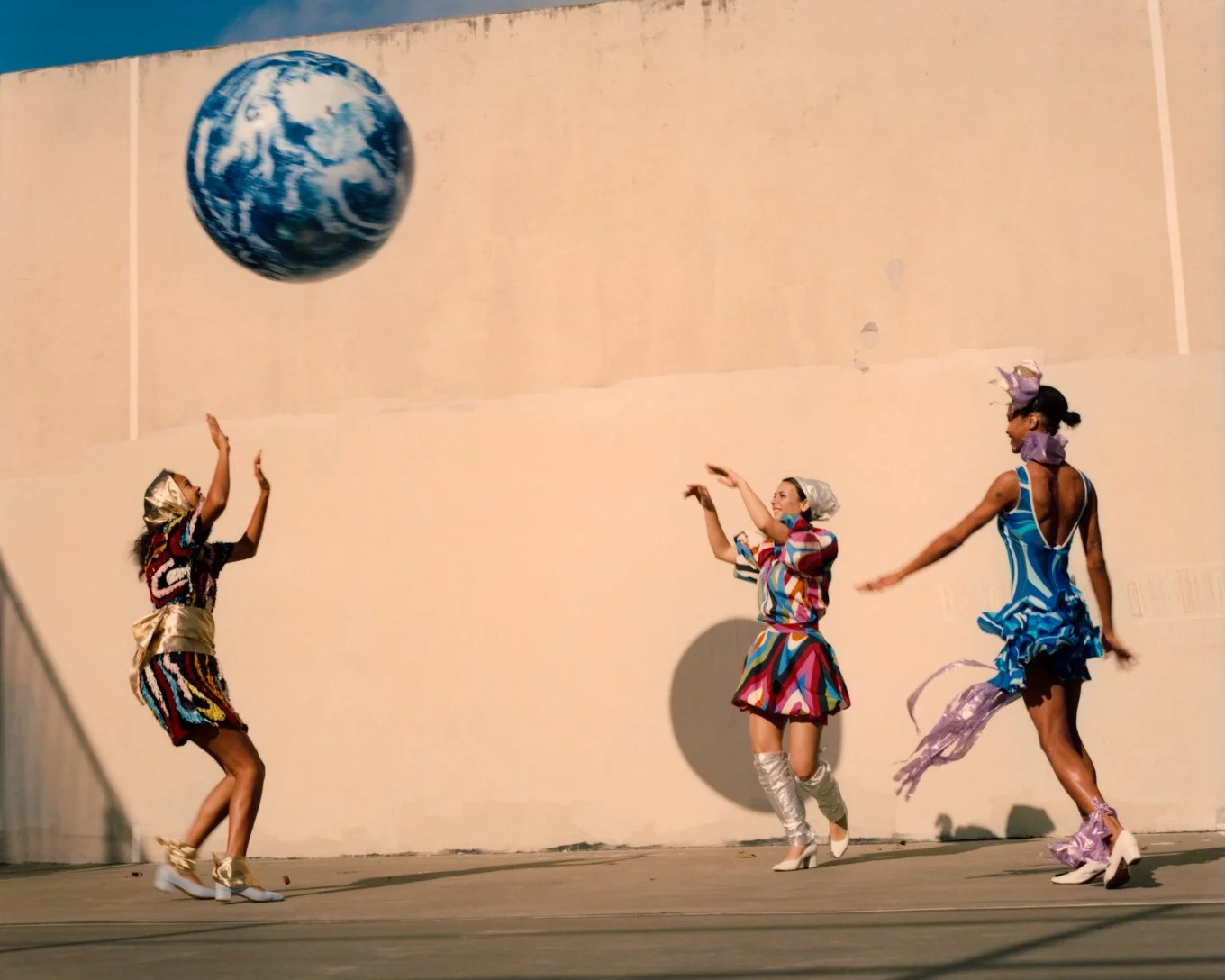
photography by MAT + KAT
styling by Shayna Arnold


Zamir wears Rick Owens cotton tank top and ripstop pants, and Shayna Arnold metallic lamé necklace


(left to right) Kathy wears Issey Miyake polyester dress, and Shayna Arnold metallic lamé earrings; Seffa wears Loewe steel mini dress


Amandine wears Shayna Arnold metallic lamé head scarf


Kennedy wears CDLM cotton sateen jacket and washed satin dress, Shayna Arnold metallic lamé sleeves, and cotton spandex and metallic lamé tights


(left to right) Amandine wears Pucci sequined nylon dress; Mikala wears Pucci lycra dress; Ayan wears Pucci lycra dress. All wear Shayna Arnold metallic lamé head scarf, belt, and leg bands, and Maryam Nassir Zadeh leather shoes


Tytianna wears Giovanna Flores cotton dress and Maryam Nassir Zadeh stone bracelets


Denzel wears Loewe nappa calfskin jacket and nappa leather shorts, Shayna Arnold metallic lamé cape, and Adidas sneakers


Denzel wears Shayna Arnold metallic lamè cape


An Interview of Nikki Maloof


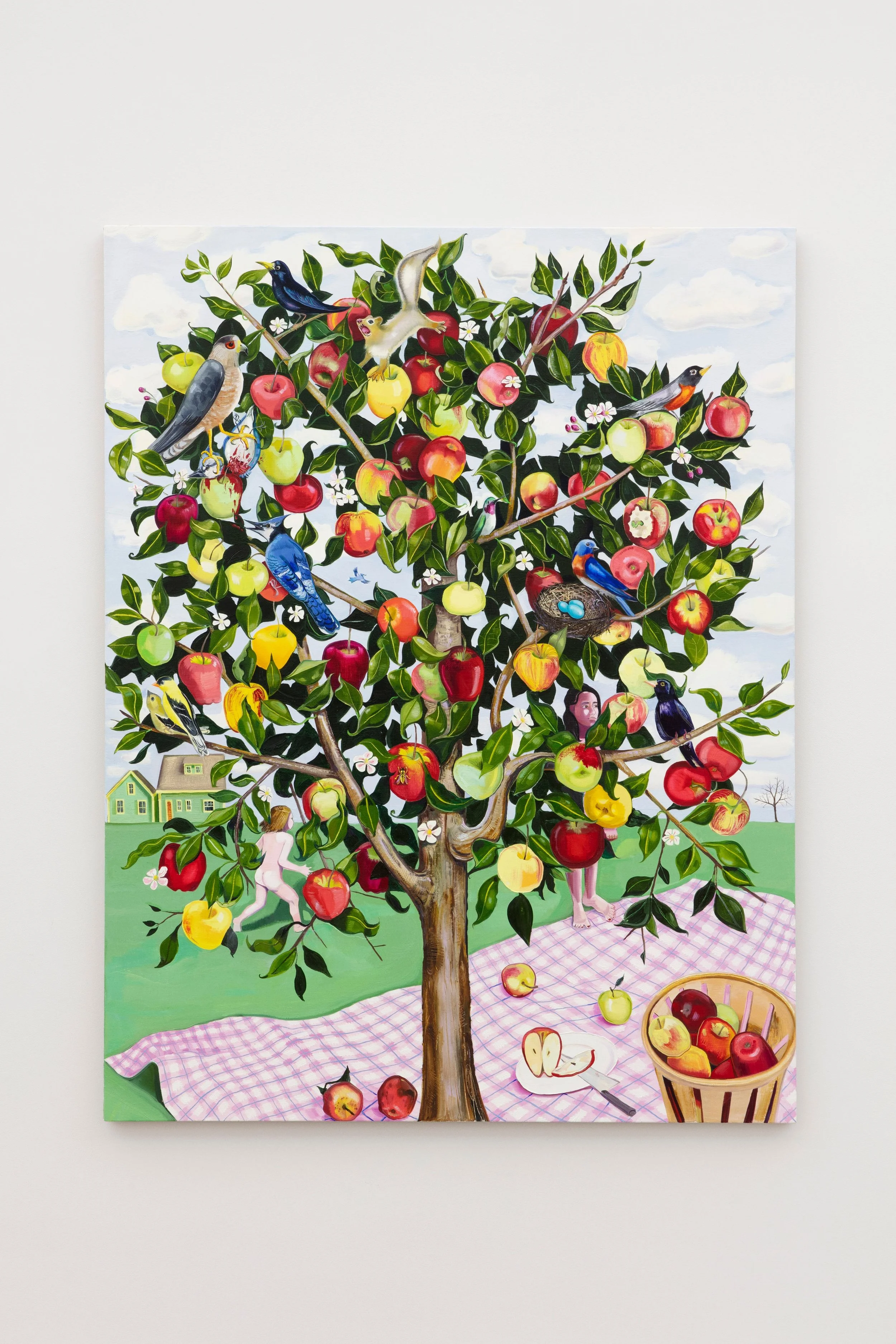
Nikki Maloof, The Apple Tree, 2022. 
Oil on Linen. 70 x 54 inch.
Photographer: Guillaume Ziccarelli.
Courtesy of the artist and Perrotin.


Interview by Oliver Kupper

Nikki Maloof’s domestic tableaux are startling and at the same time humorous reminders of our own existence. Bright, prismatic, dreamlike, her paintings grapple with unexpectedness—freeze-frames before the tragicomedy unfolds. Fragments of a scream before a murder. A foot descending a staircase, a hawk’s talons moments from clutching a dove, a hand behind a curtain. The uncanniness is haunting and visceral. Maloof’s exhibition, Skunk Hour, which was on view at Perrotin gallery in New York, explored a new suite of paintings, many of which feature culinary activity in the home. The title is borrowed from a Robert Lowell poem of the same name. “I myself am hell;” he writes, “nobody’s here— / only skunks, that search / in the moonlight for a bite to eat.” Living and painting in South Hadley, Massachusetts, Maloof’s rural surroundings invite a poetic interiority that if rife with symbolism akin to Dutch Still Life—the bones of fish on a plate, a dog’s hungry eyes, the artist’s own reflection in a knife blade, her paintings invite us into another, stranger world.   

OLIVER KUPPER: Where are you based these days?

NIKKI MALOOF: I live in Western Mass[achusetts]. My husband is from this area originally, and we would visit a lot when we were still living in the city. About six years ago, we decided to move. So, this is where we live. 

KUPPER: I love that area. It has a weird, mystical quality.

MALOOF: Very hippie-dominated, kind of arty. But also, the colleges bring a lot of young people, so it's a cool place.

KUPPER: I want to start with your chosen medium, which is still life. I'm curious what first attracted you to the medium? 

MALOOF: Well, I went to Indiana University, and it's a very traditional painting school. So, I really learned how to paint from painting still lifes. When you paint something from life, you turn off your brain and you're just doing it. It’s something I would pepper in with other things that I was doing in the past that had more to do with my imagination, and it's just always been there. But, when it came to this body of work, I retreated more into the home as a setting. I started wanting to treat the spaces in a home like a character and not necessarily paint the people that inhabit them. That lended itself to looking to the objects that we surround ourselves with for ways of conveying meaning. I'm very attracted to houses and the things that we compile. I'm always following a little trail of crumbs and one painting will lead to the next. It started off with animals, but then it slowly became about our interaction with the domestic space. 

KUPPER: I think of the Dutch still life painters and how portraiture completely started dropping out of those paintings in this really surreal way. 

MALOOF: For a long time, that kind of painting would not have been the thing that I related to as a more developed painter. As a young painter, I would always walk past those paintings, and it's been an interesting challenge to try and make a still life catch your attention or convey emotion because they're sort of inert.

KUPPER: Even though those paintings are about objects, each object has this deeply spiritual quality. 

MALOOF: When I started to look deeper at those works, I became aware of a whole language that is lost at first when you just think, oh, like fruit, whatever. I find that really intriguing—that there’s little messages all the time.

KUPPER: Seafood became part of those Dutch still lifes because of their connection to water. In your work, there are also some symbolic notions of seafood. Can you talk a little bit about the symbolism in your work and about some of the different objects that reoccur?

MALOOF: Painting things like seafood began years ago when I was painting a lot of domestic animals—trying to make stand-ins for us. I was thinking about the way that we interact with animals on an everyday basis. One of the biggest ways we interact with animals is by eating them. It's this relationship where we tend to look away really quickly because it can be a weird reckoning, especially when you look at the industry of it. So, I was thinking I should enter the kitchen because that's where we actually interact with animals. I thought it might be a challenge to make a fish seem emotive, and I wanted to borrow from the realm of the Dutch fish paintings, but make it my own by breathing some weird life into them. Fish are strange because we feel almost nothing for them, but then they look so alive compared to any other thing that we come in contact with. There's a dark humor there—something that’s kind of ridiculous about it all. Also, painting fish and food is extremely delightful, and I think if something seems weirdly fun, there’s usually some reason that you need to go there. If the desire is there, I usually follow it, and then see if it has any repercussions.

KUPPER: There's also this humorous, dark side to a lot of the work. During the pandemic, and also during the Plague, painting started to become very dark and strange, and people started dealing with their emotions in different ways.

MALOOF: Yeah, I'm really attracted to anything that is on the line. All artforms that are one foot in lightness, one foot in darkness are really intriguing. I feel like that's what it is to be alive. Ideally, you want to be on the light side, but that's an almost impossible place to remain. Being a human, there’s too many factors to grapple with. So, that tone really makes sense to me.

KUPPER: The title of your new show, Skunk Hour, was inspired by a Robert Lowell poem. It’s interesting to hear about an artist’s inspirations outside of painting.

MALOOF: I've been really interested in poetry since grad school. I look to it for answers in a way that I can't with painting. A poem conveys meaning without telling you exactly what the answer is and I found it very freeing when I realized that you don't have to explain everything—that the artwork takes on a life of its own. I like that Robert Lowell poem because you're basically following him as he drives around his town and notices things. He's describing it and slowly coming to terms with his own mind. It goes from being somewhat light to this intense, dark place. And when you're in a space that's so familiar to you, like your home or your neighborhood, those things do occasionally hit you. That’s the whole point of the show: the realization that there's moments in our everyday lives that are so intense, and we notice them, but they’re always in the background, and then we have to move on. Skunk Hour is like nighttime, when we're alone with our thoughts. It’s about the way that we deal with existential experiences in everyday life.

KUPPER: There's this interesting sensorial notion of being reminded of your own mortality.

MALOOF: Yeah! When I moved out here, I realized that when you're a little bit closer to nature, it hits you all the time. You could be walking, and then see a hawk dismembering something, and it makes you think of so many things, but then you just carry on with your day. I wanted to paint those experiences and feelings. As far as other inspirations, I like the more confessional poets, like Sylvia Plath. She is definitely a figure that looms large in my mind. Stylistically I get a lot from her work. She would often take instances from everyday life and electrify them into a kind of psychodrama or operatic grandeur full of darkness and pathos.

KUPPER: And you're sort of in Sylvia Plath territory now. 

MALOOF: I am. She is a figure who created under intense pressure … pressure to be a good mother and the pressure of her intense ambition. I relate to those struggles a lot. Under all of that stress her work took shape almost like how a diamond is formed. The facts of her death aside, her art can be a reminder that sometimes the difficult aspects of life can also be the fuel to a fire that’s within us. I guess that’s a utopian view of art making for sure. 

KUPPER: I read about the epiphany you had with this exhibition: seeing a newborn deer in the morning and then a dead neighbor being wheeled out of their house.

MALOOF: That was the craziest day. It was this perfect spring day and so strangely bookended like that. I basically woke up, was having coffee, and then I saw these little ears poking out of an iris bed in my neighbor's yard. When I went over, it was a brand new, baby fawn. And then, at the end of the day, we had a neighbor of ours who had been ill for a while, and it was just so surreal to see the car drive up and take him away. But homes are where everything happens. They’re full of humdrum experiences—chopping onions, folding laundry—and then they’re peppered in with these very dramatic moments as well.

KUPPER: Would you say there's a sense of psychological self-portraiture, even in the still lifes? 

MALOOF: That's really what the goal is—to convey what it's like to feel like laughing and crying in the same day; to exist in that. I grew up playing with dollhouses, and imagined worlds were a big part of my being a child. That has to inform some part of it. 

KUPPER: There's also a societal aspect of it where the woman's place is in the home.

MALOOF: There's a residue of that, for sure. I'm from the Midwest and was raised by people who were very patriarchal. We went to school, but while it was clear that you were to get married, there was such an emphasis on becoming a successful person.

 KUPPER: The heteronormative American dream.

MALOOF: Yeah, there's tension there with having this type of career and having kids. I'm watching their experience of the world from a different vantage point. I garden a lot, which has made me acutely aware of how we’re not that different from that fawn or any of the creatures we come across. That's another thing that I think about in the work: how do we fit into it all?

KUPPER: Would you say that your work is utopic in any way? 

MALOOF: I don’t think of my paintings as utopias, but I definitely think of the act of painting as the closest thing to a utopia I can imagine. It’s not unlike the way I would arrange a dollhouse as a kid. It’s where I can have everything the way I want it and play with ideas freely.

KUPPER: In your work, it feels like the reality comes from the sense of paradise lost. The apple tree has a very Edenic quality to it. Can you talk about that painting specifically?

MALOOF: Well, I try to grow food all the time here, and I fail at it most of the time, but the orchard attracted me because of how it would work, paint-wise. In a tree, of course, there's birds and bird nests, and I immediately was like, oh, bird nest and then a hawk devouring a bird right next to it. I was thinking about the way that you move a person's eye around a painting, almost like the way that a child would draw a life cycle. This was also the first time I put myself in a painting in probably a decade. Mostly because I was thinking about the way that scale changes meaning in a painting. I made myself almost the same size as an apple to address the way we’re not as important as we think. I feel like that painting hit every note that I was trying for.

KUPPER: There's a strong sense of time in it. It's like a clock.

MALOOF: Time is definitely a thing I don't talk about enough in the work. When you have kids, you suddenly feel like everything is a clock. You're really aware of it ticking, and it's deafening sometimes. I did it in one other painting called Life Cycles. It's a dinner scene where you follow the fish from an egg to the bones.

KUPPER: There's a sense that you're watching a time bomb of our mortality. 

MALOOF: It's something I think about all the time. Does it seem very morbid to you? (laughs)

KUPPER: No, you deal with the morbid aspect of it with a lot of humor. 

MALOOF: Humor is definitely the thing that I use to offset all of these intense thoughts—to try and lessen the blow or something. That's where color and paint comes in. The meaning comes from finding a way to manipulate this weird material that just is so deeply fun and pleasurable. I want you to experience that as much as all the darker things. There's a lot of levity with paint.

KUPPER: Art can be fun, and it should be fun. That's where the utopian idealism comes from. 

MALOOF: Maybe they're utopias and I didn't know it. Do you think they're utopic? 

KUPPER: I do. I think they're your own invented utopias.

MALOOF: Maybe they are a place where I can have everything I want, and arrange it just so, and live in it for a while. I never thought of it that way because I don't think our reality lends itself to utopia. Our everyday life is far from it. It's not the first thing I think about, but I guess it is the place that I go to make sense of it all. So sure, it can be a utopic place.

KUPPER: I think that if you can invent your reality in a painting, and even if they're based in realism, there's still a utopic urge in that creation of a world. There's also this clash—psychologically and philosophically—between your Judeo-Christian upbringing with its heteronormative ideas about one’s place in society and the realization of our own mortality.

MALOOF: There's definitely a theatrical element to it all. The worlds that I create are far from my actual reality. The Judeo-Christian thing isn’t such a big part of it, but there’s always a residue in how you approach things that is based on your your early conceptions from childhood.

KUPPER: Where do you think that humor you employ originated from? 

MALOOF: I have four sisters, and I'm the middle, so I was probably the one who was trying to make people laugh most of my life. But I've always gravitated towards things that have humor embedded in some way. I think about musicians that do it and I’m always trying to strike a balance with each painting. You're balancing the color, the composition, and the tone so that the song works. Humor is one aspect of that orchestration. It’s putting together all these harmonies and trying to make them work.