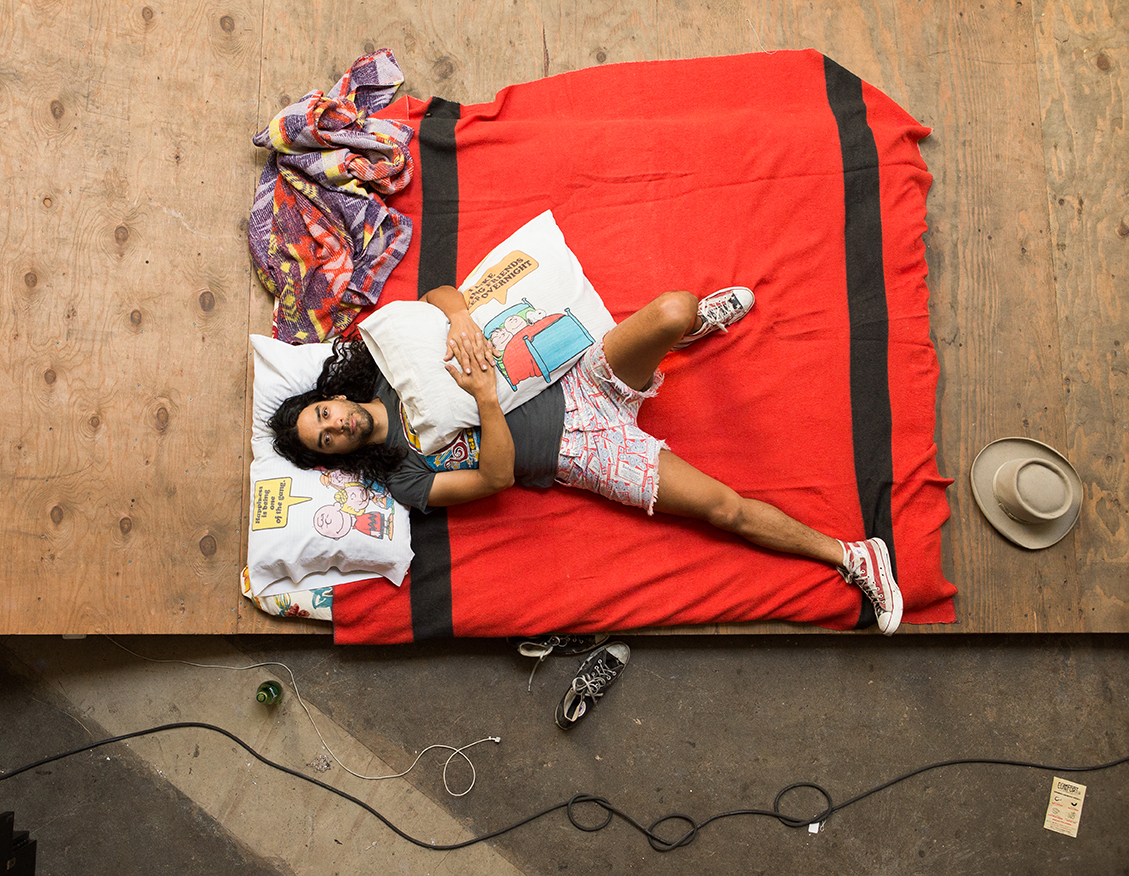

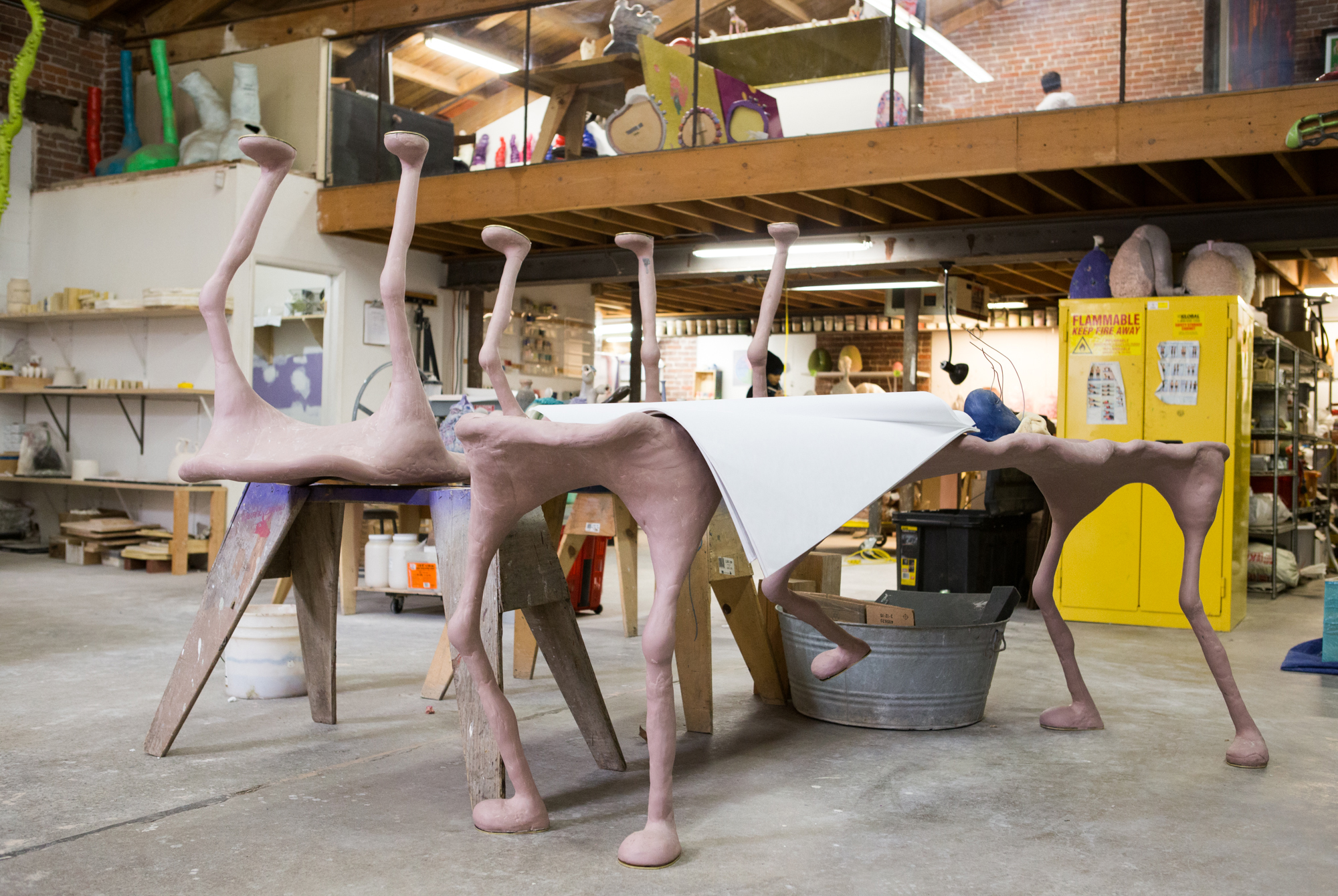
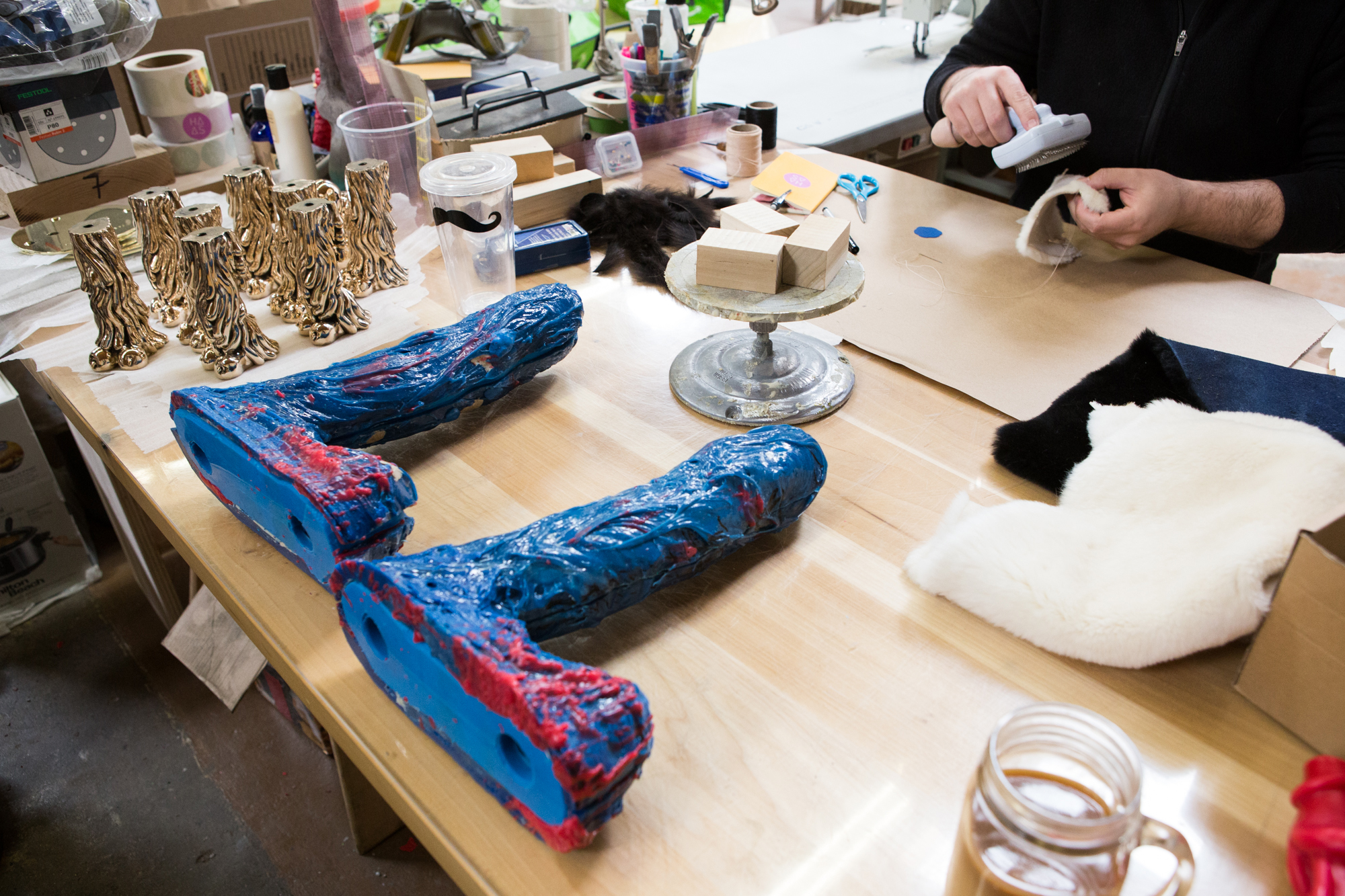
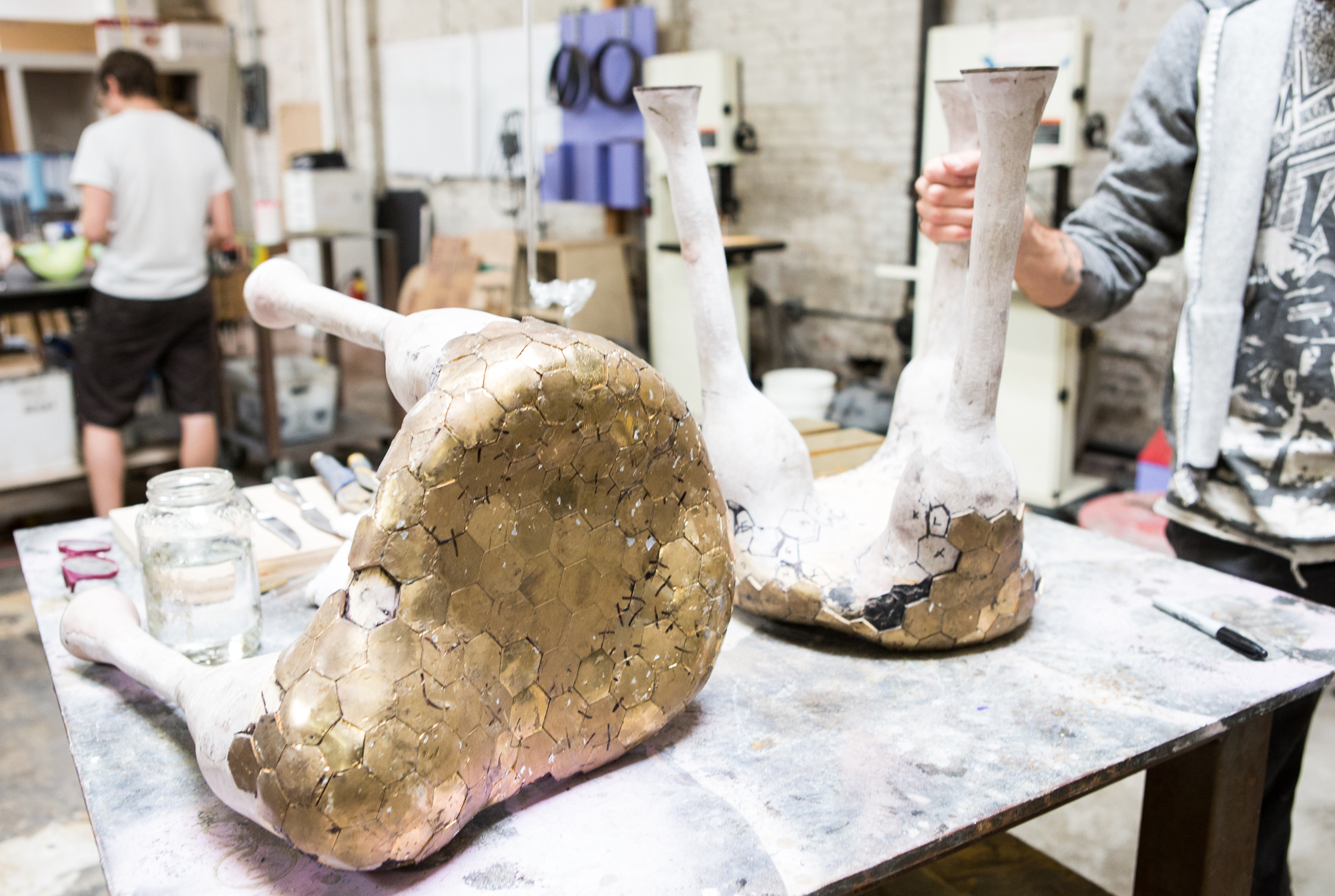
Getting Afreaky: An Interview With Nikolai and Simon Haas of the Haas Brothers

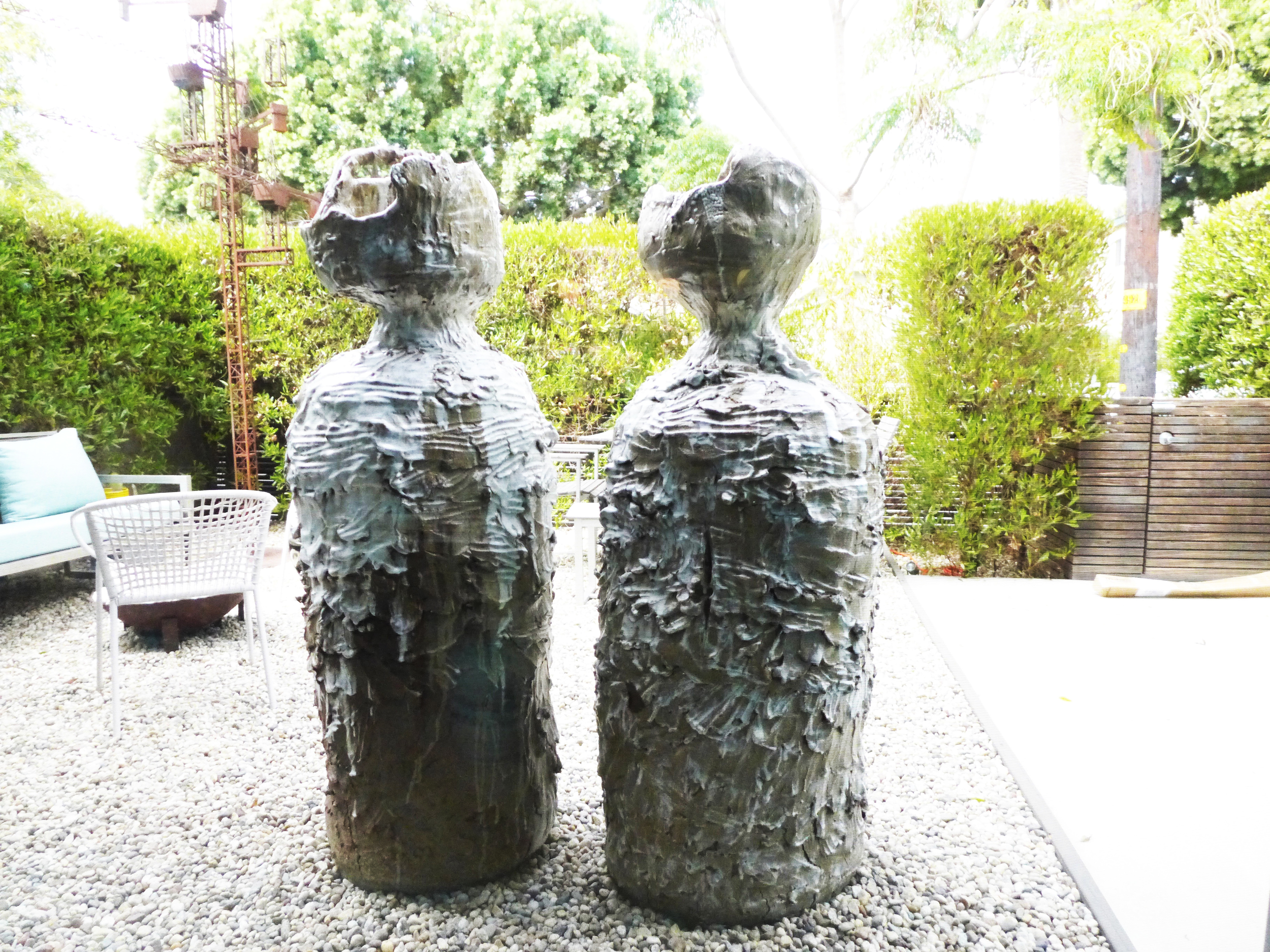
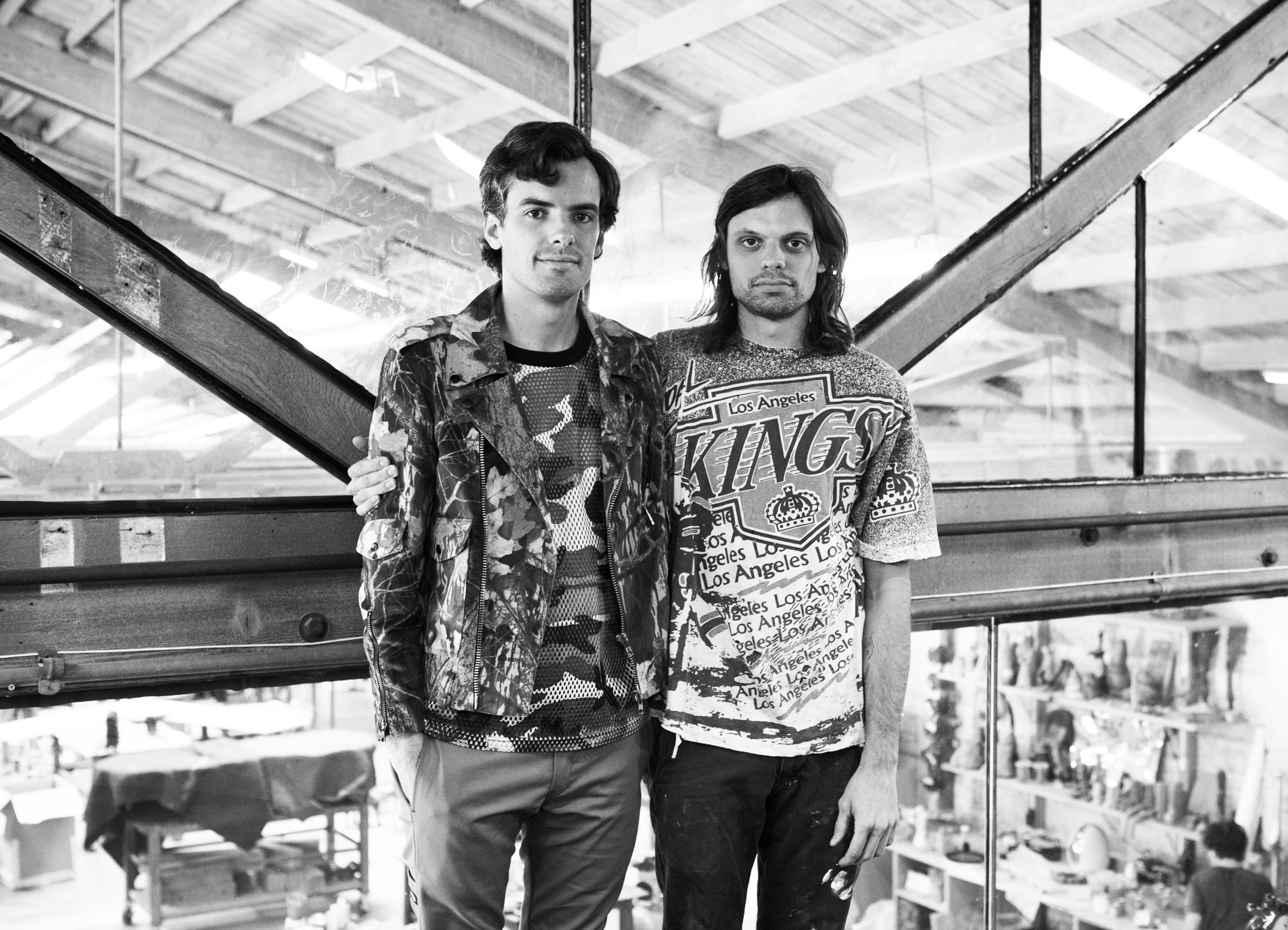
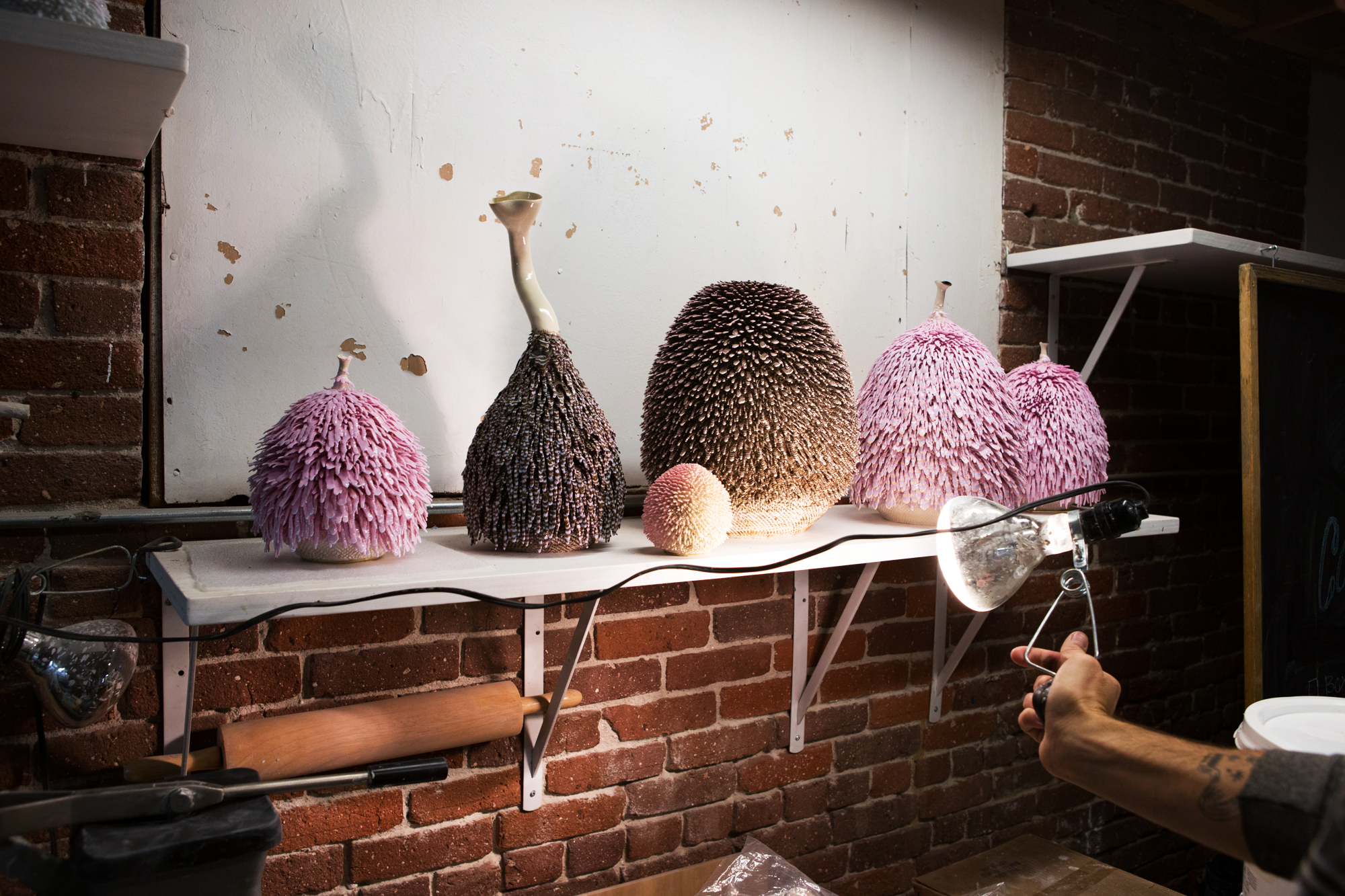
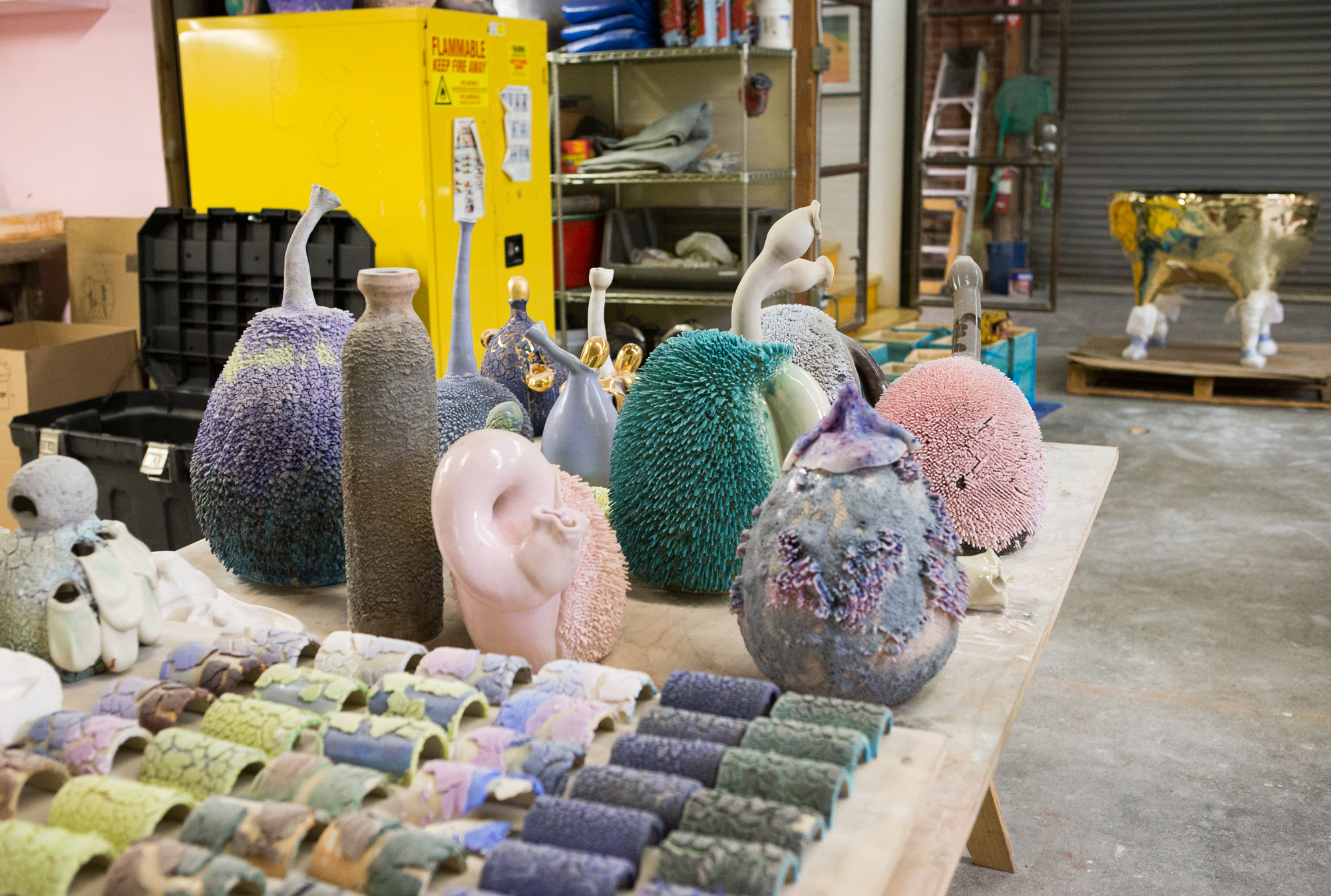
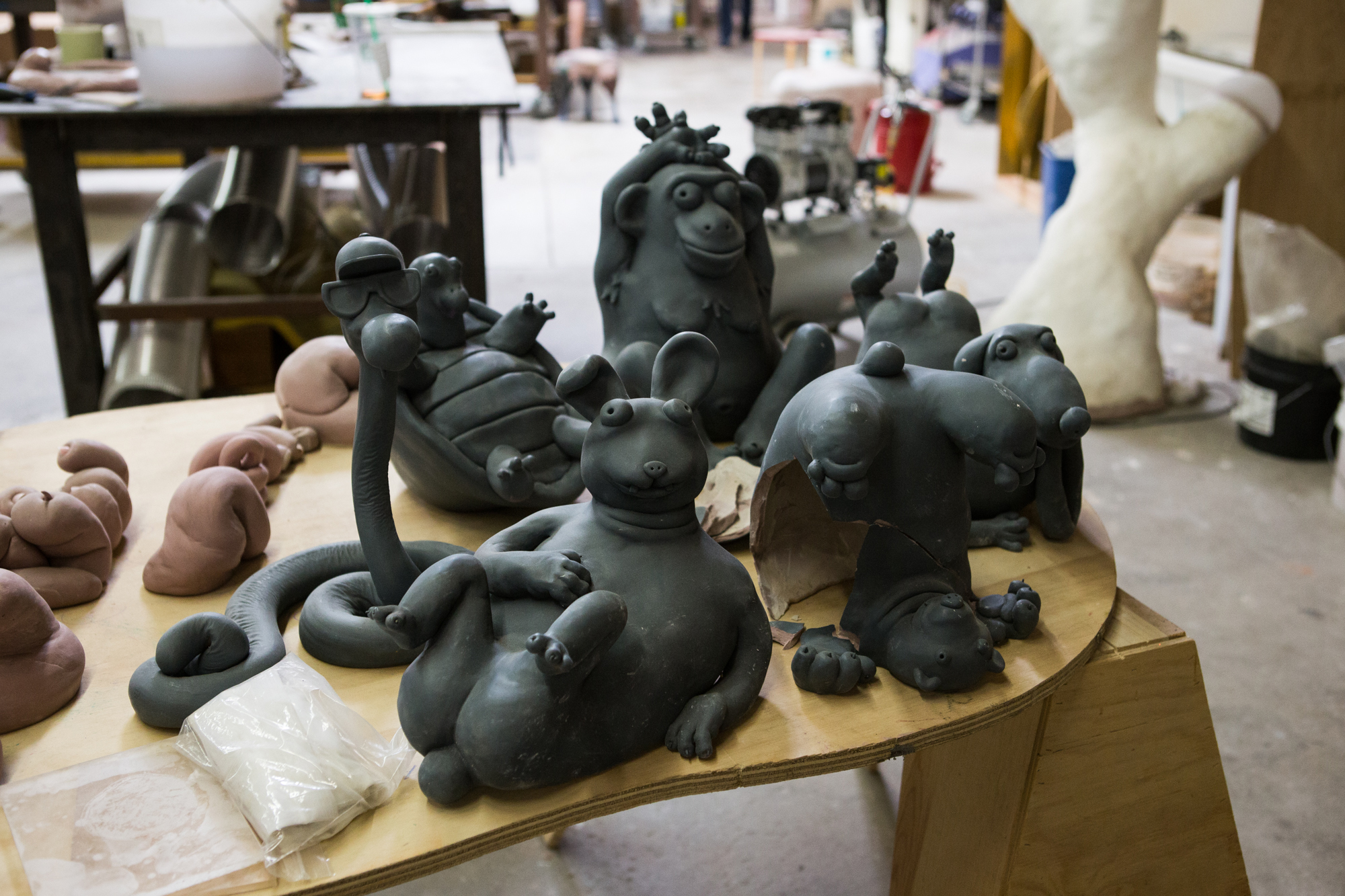
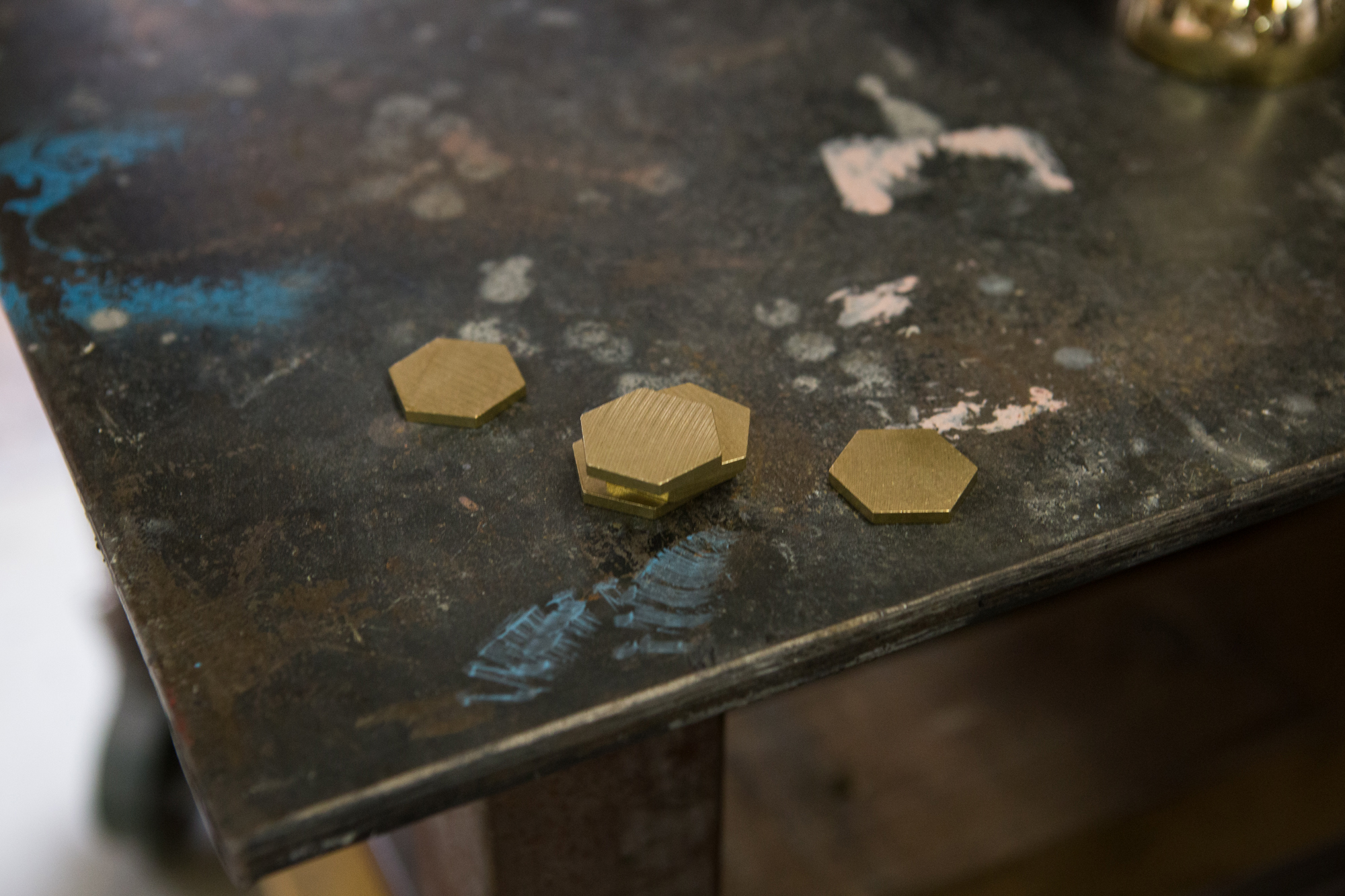
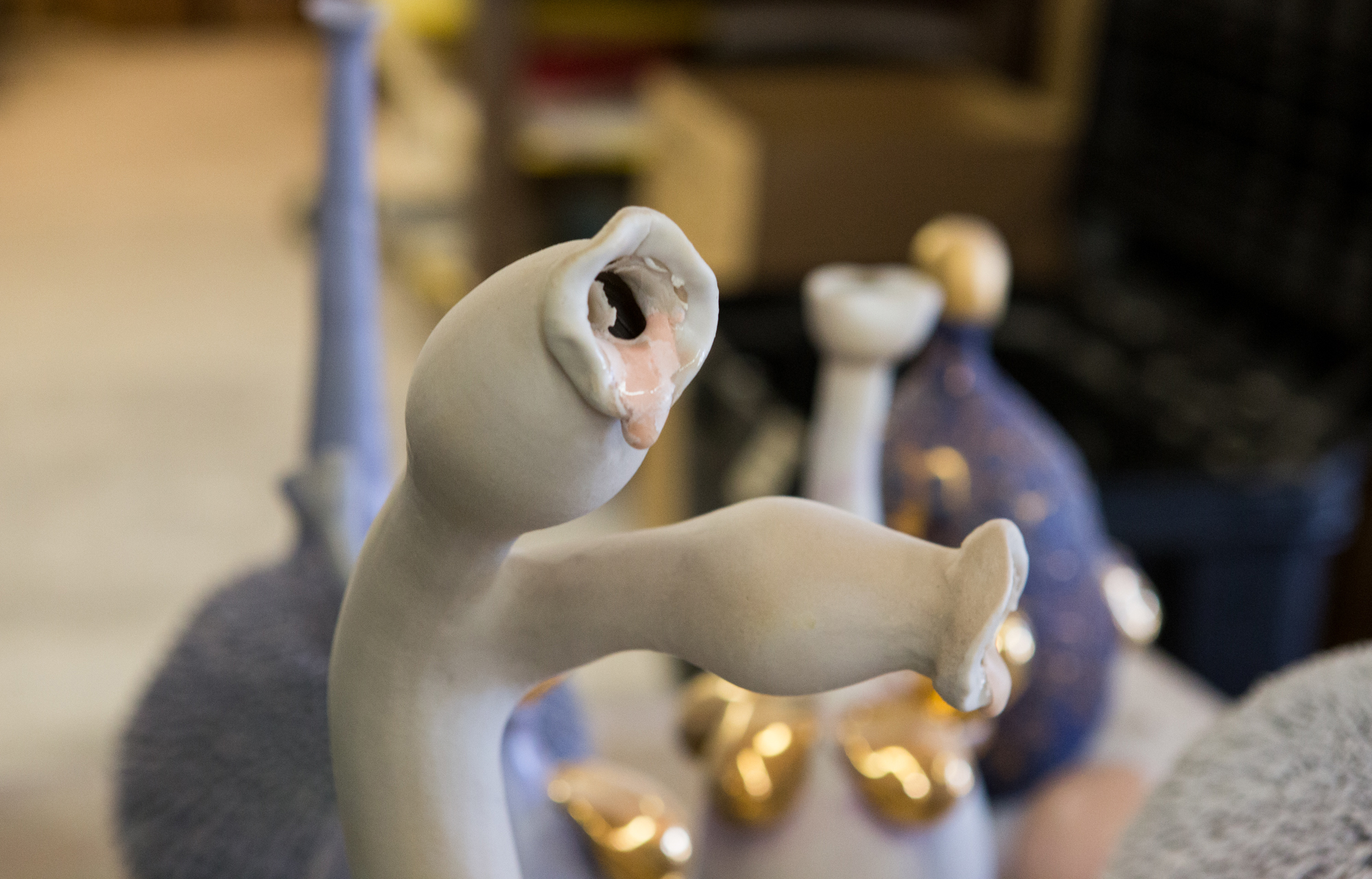
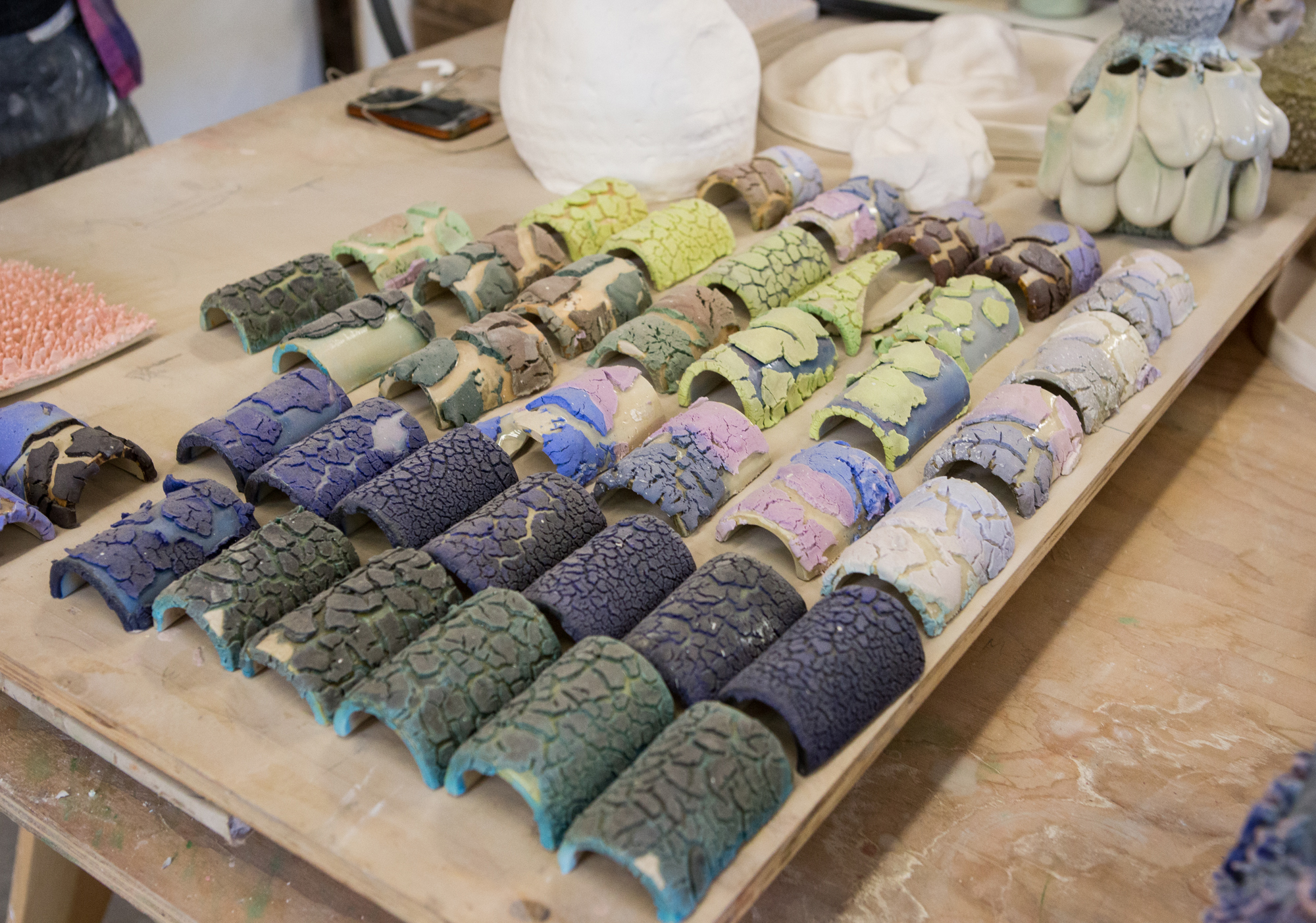
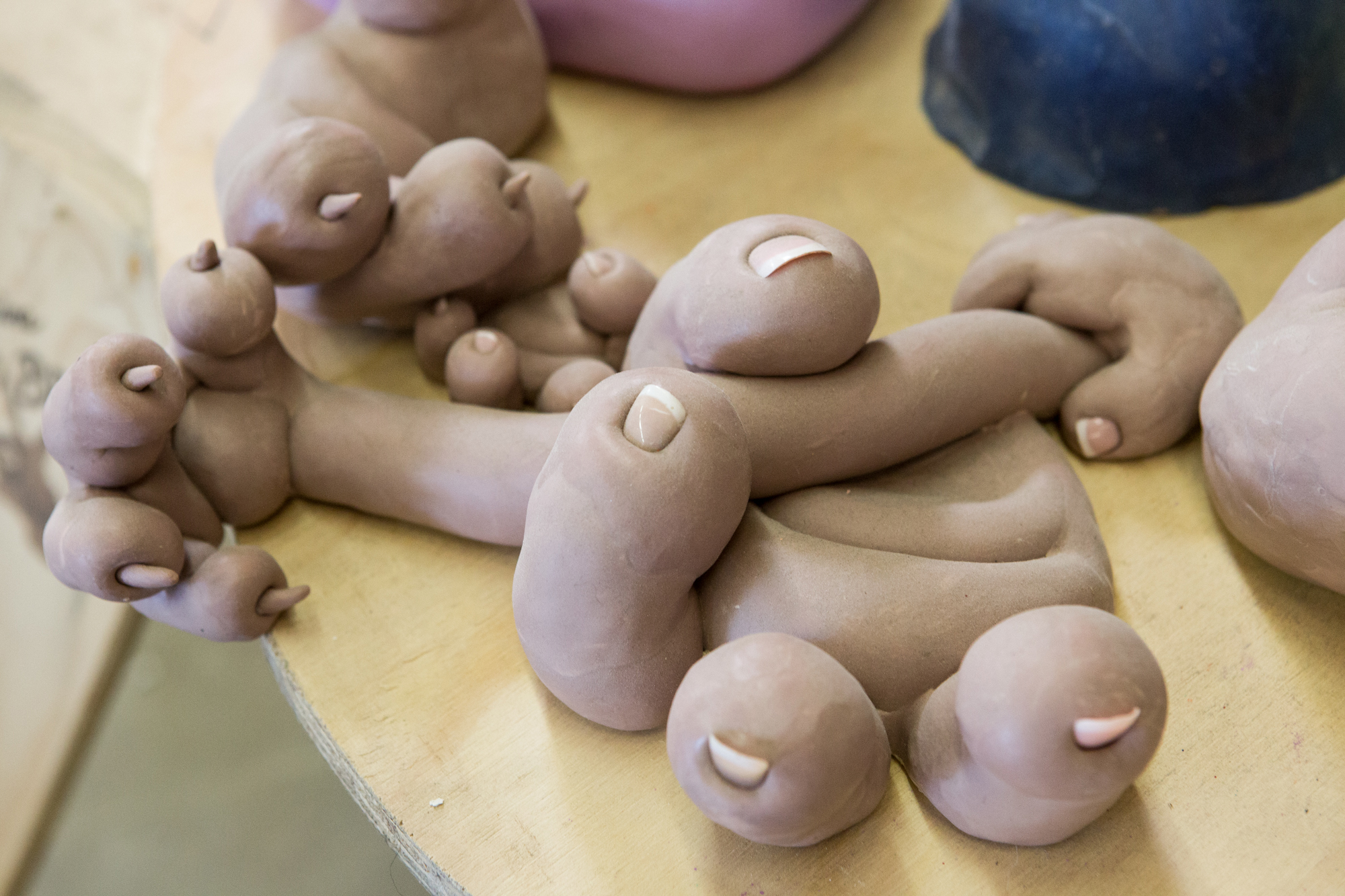
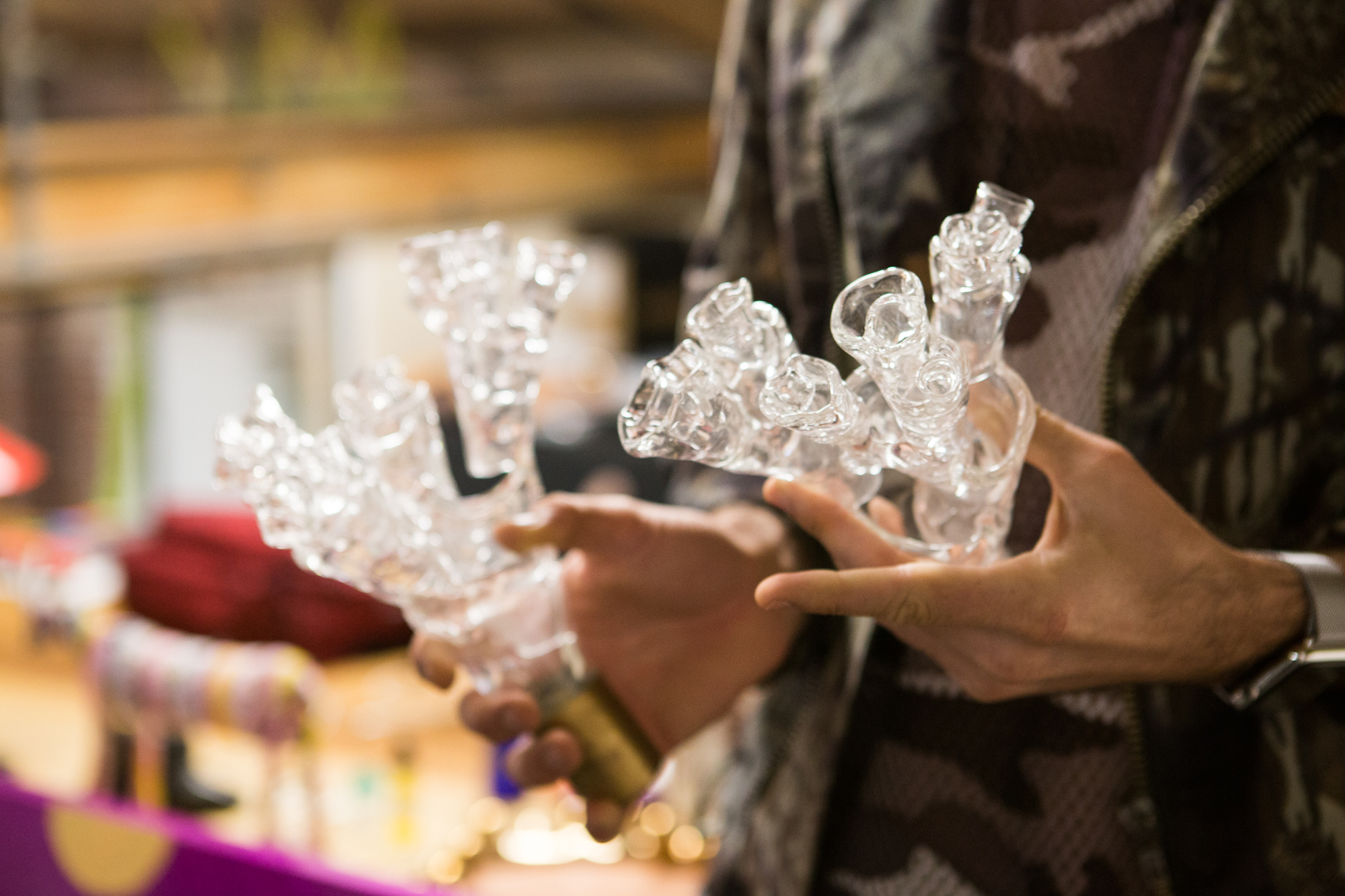
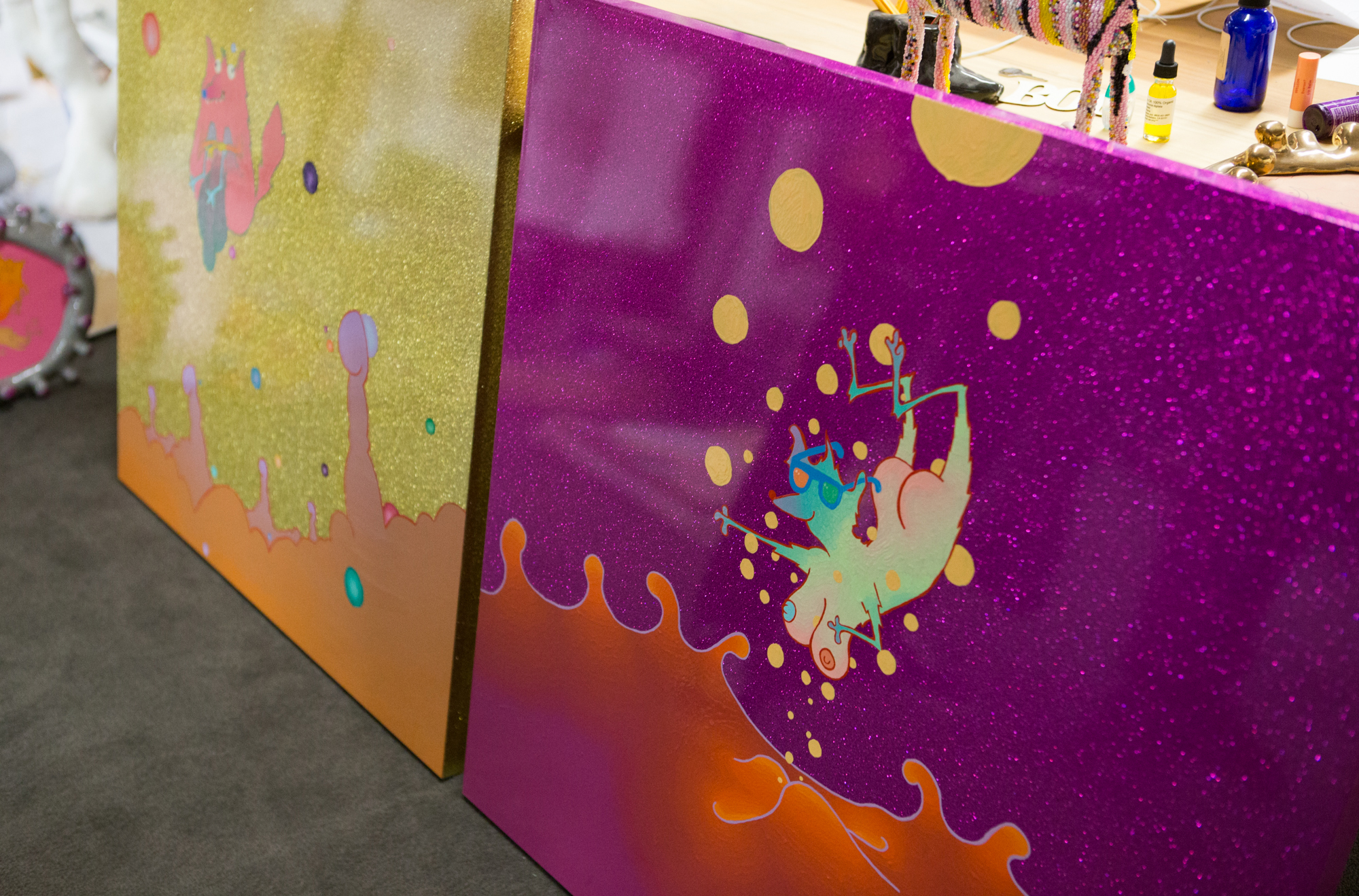
The Haas brothers seem like mystical ambassadors from the future. However, they are not here to portend of doom and gloom, like the current headlines may lead you to predict. Indeed, the future looks pretty bright according to Nikolai and Simon Haas โ€“ fraternal twins who make high-end sculptural objects that only the very lucky can afford, but are almost talismanic in their complexity and humorous in their intentional simplicity. The materials the brothers use mimic natural and rare phenomena in nature. This gives their work a sexual energy that takes phallic and vaginal forms, replete with folds and shafts and rounded curves that could make the prudish contingent quite sensitive. Put the work together and it looks like a combination of Maurice Sendak's menagerie of Wild Things and Dr. Seuss on too many tabs of acid. 

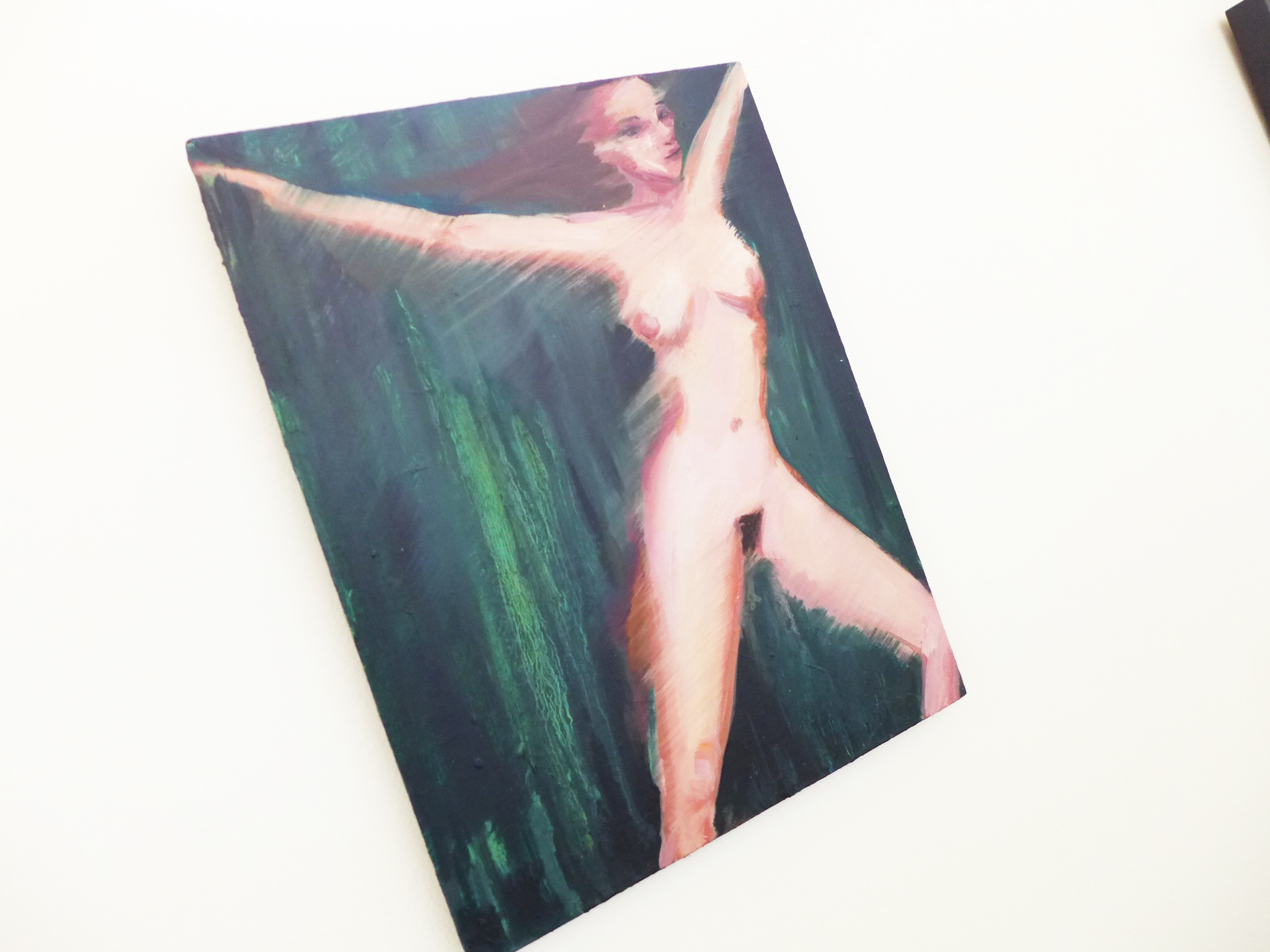
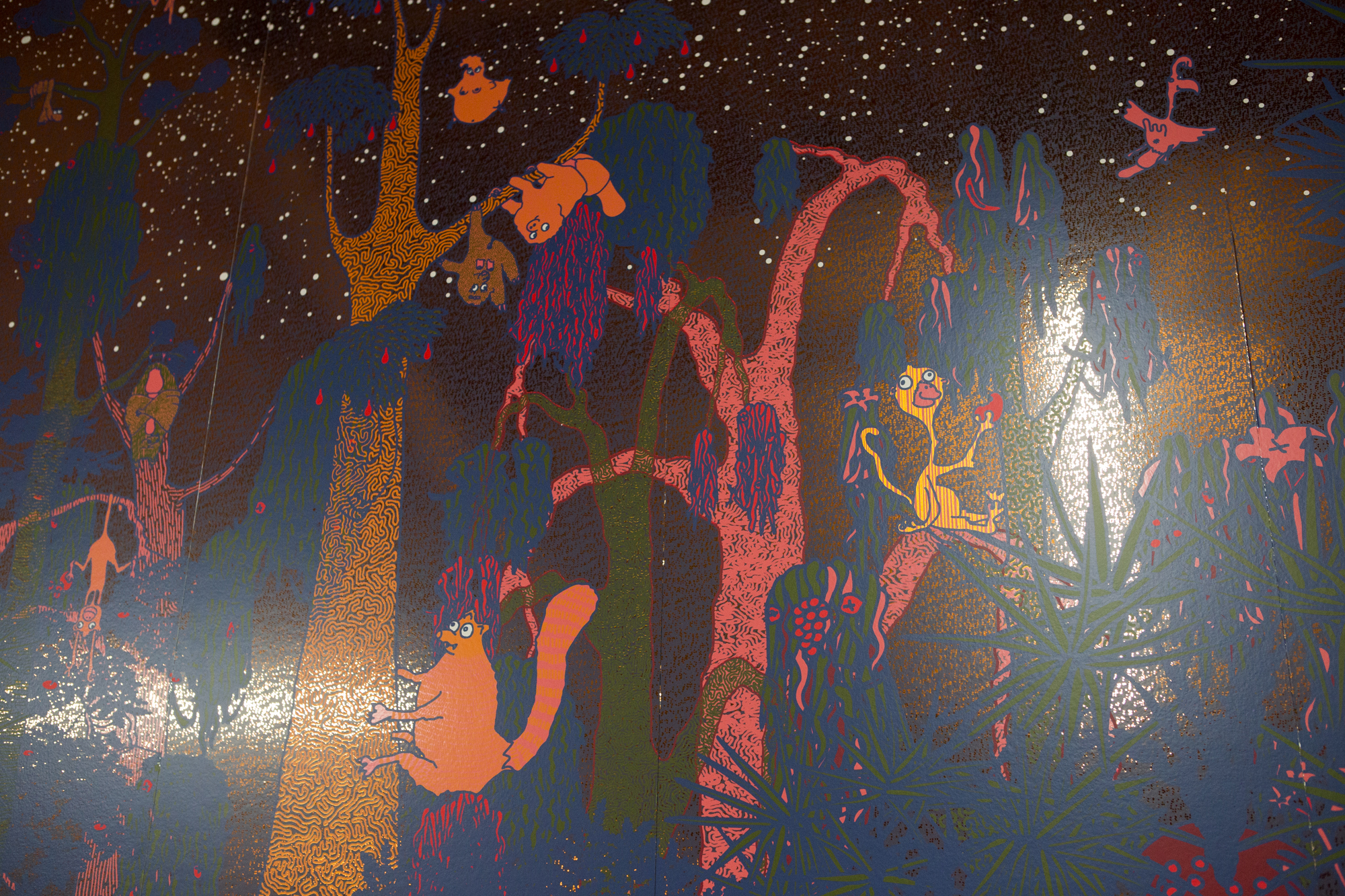
If you visit the Ace Hotel in Los Angeles, you can see some of their drawings on the walls of the Chapter Restaurant; next to the lobby. Portraits of Roman Polanski are juxtaposed next to chubby line-drawn creatures holding cocktail glasses โ€“ Nikolaiโ€™s work is more cartoonish, one dimensional and comical, while Simonโ€™s work is more realistic, detailed and has more perspective. Itโ€™s a perfect way to experience their work on an individual scale. But it is when they bring their styles together that the real magic happens. Simon comes from a much more logical perspective, while Niki is much more laid back, creating an incredibly powerful dynamic. 

Over the last couple of years, the Haas brothers have been riding high on a wave of popularity โ€“ a collaboration with Donatella Versace took their works straight to the gilded living rooms of the fashion and design world. Solo exhibitions in New York have made them darlings in the art world. However, the proverbial wave crashed when they were on a private jet heading back to LA from an exhibition of their work in Miami.  

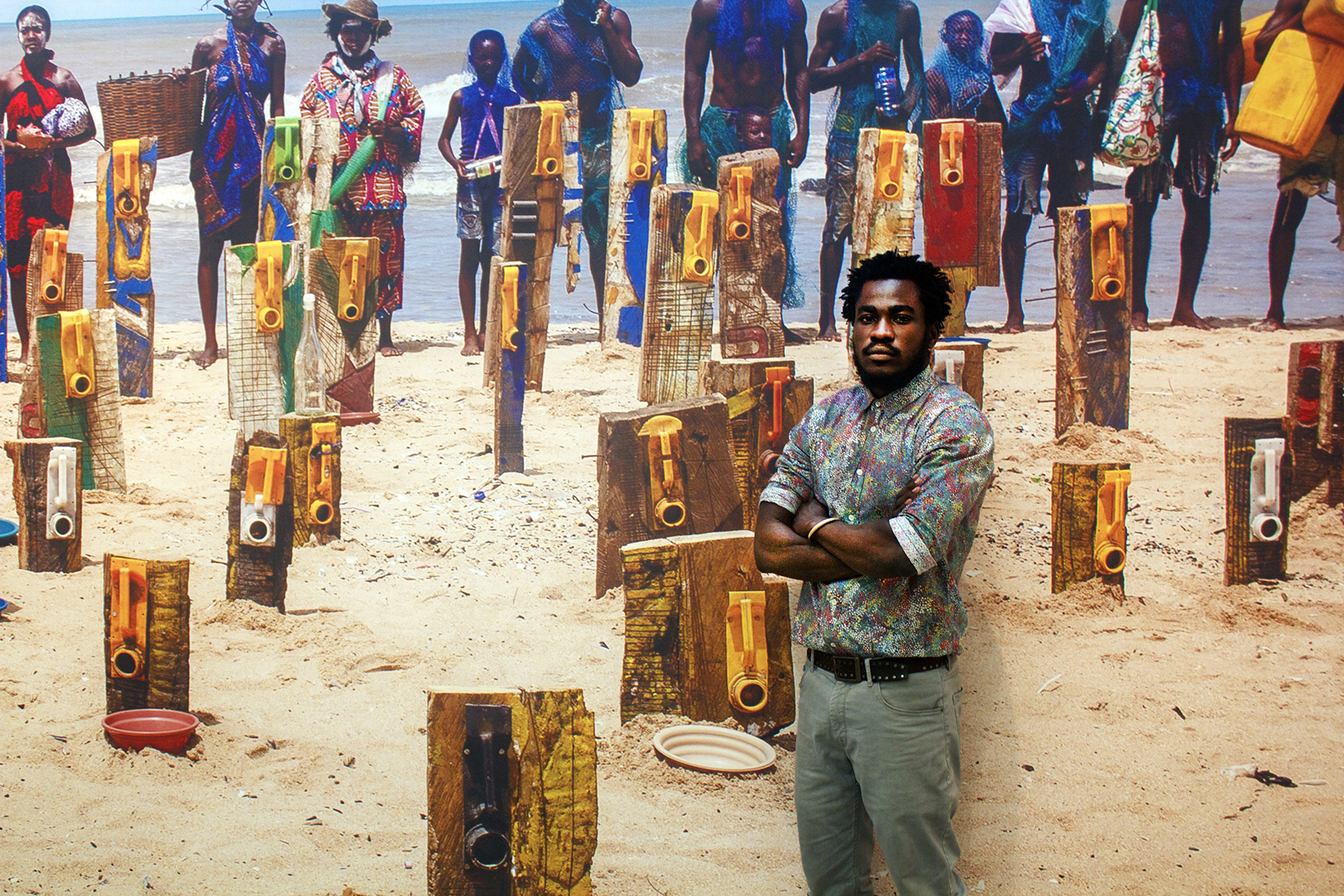
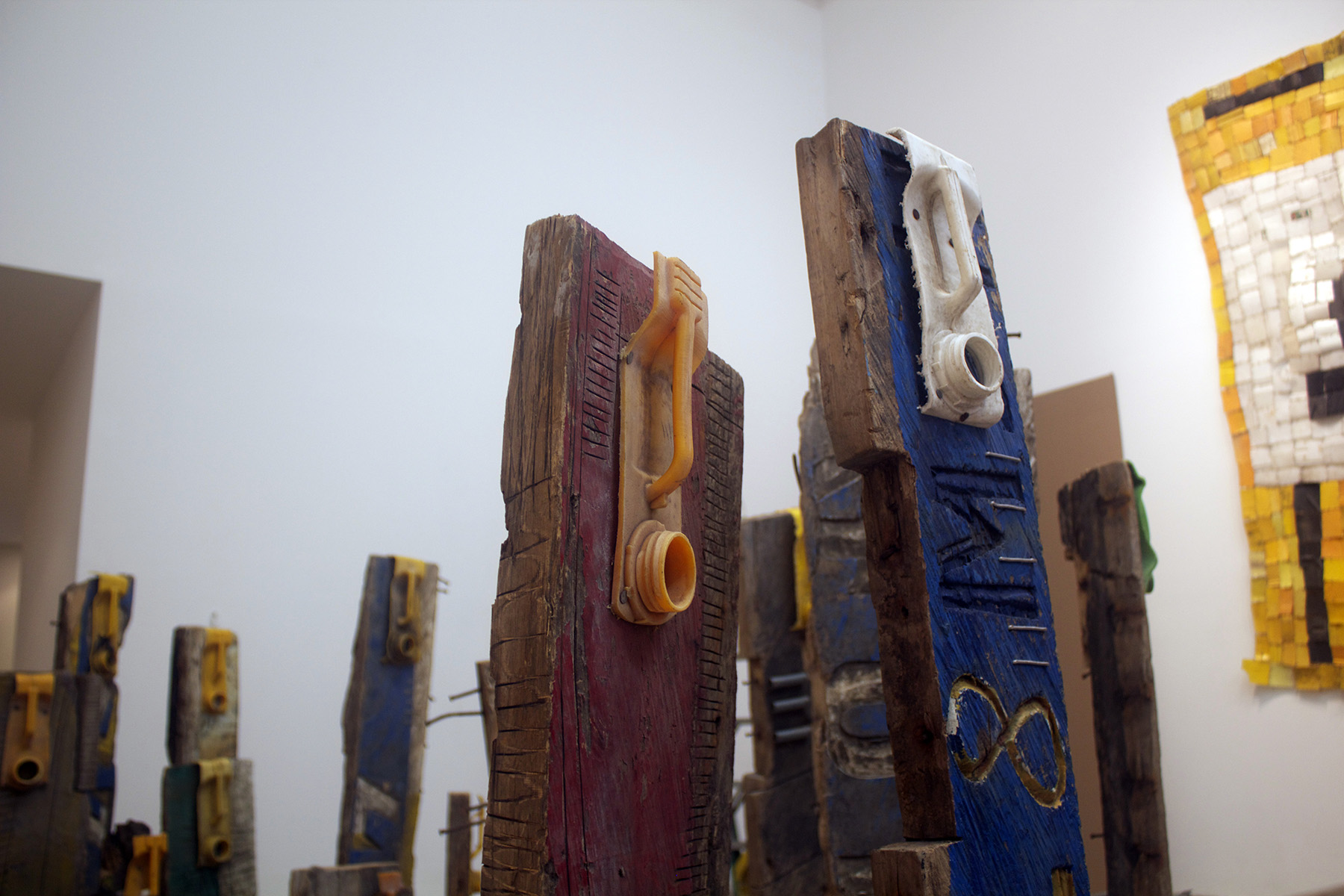
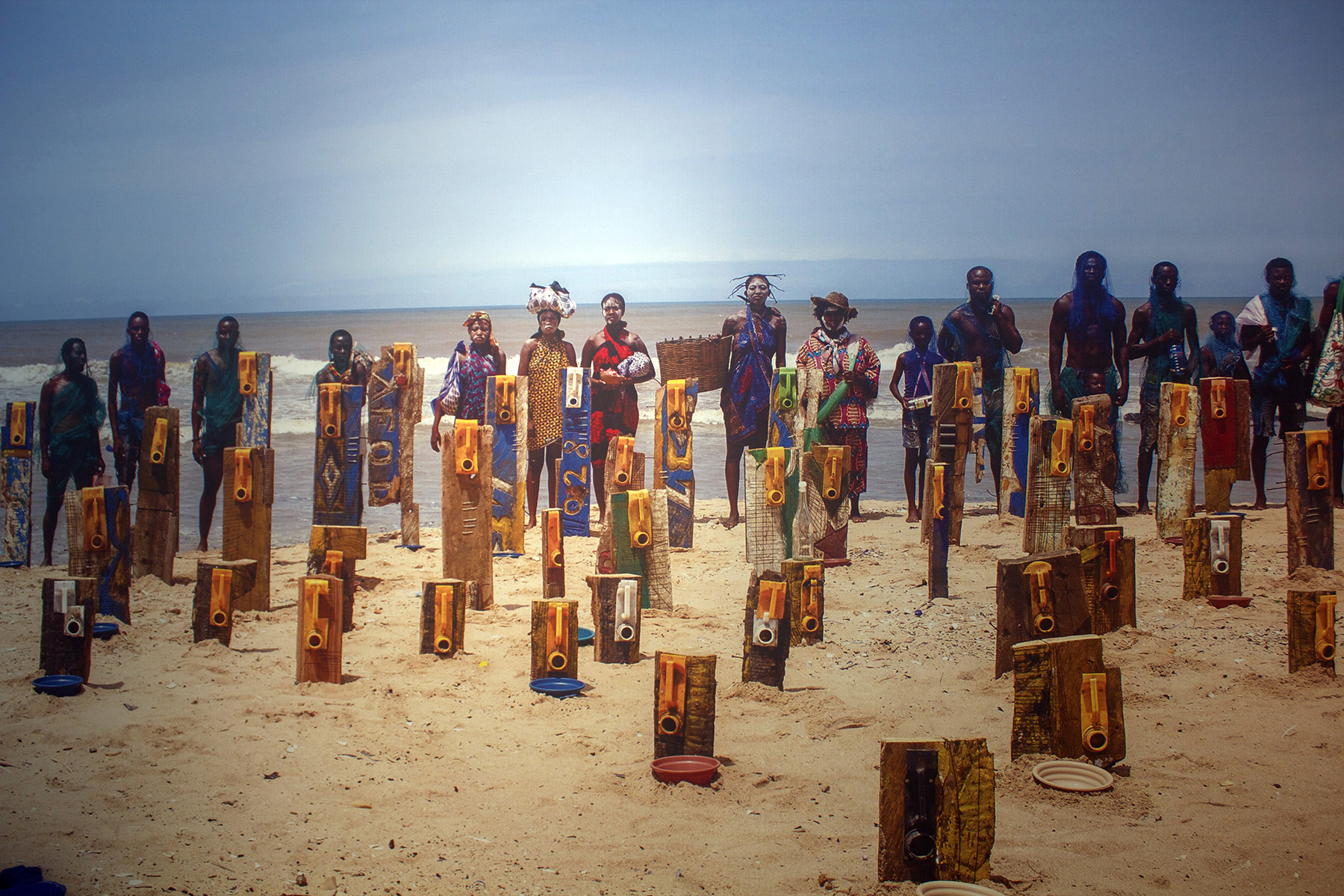
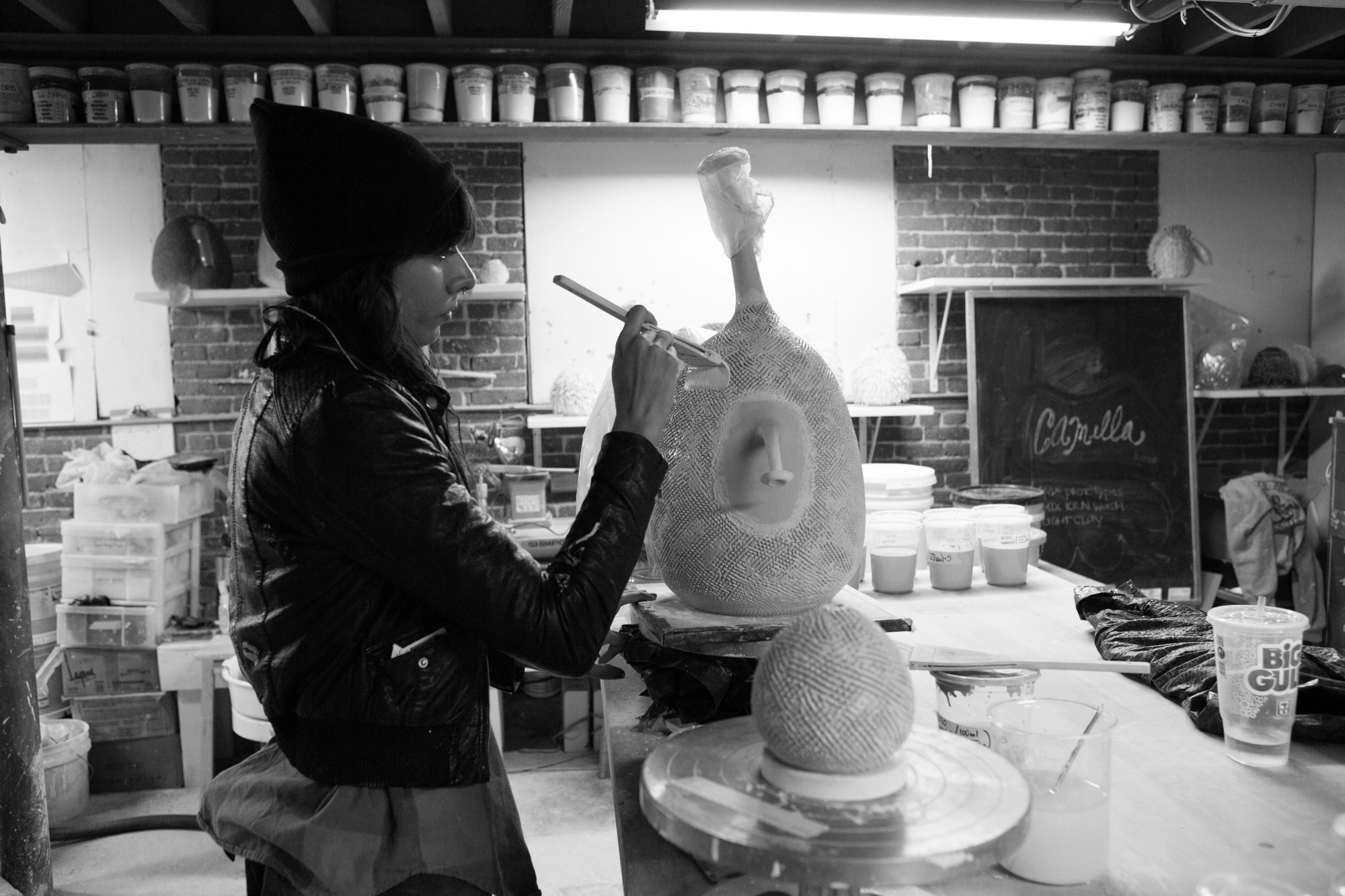
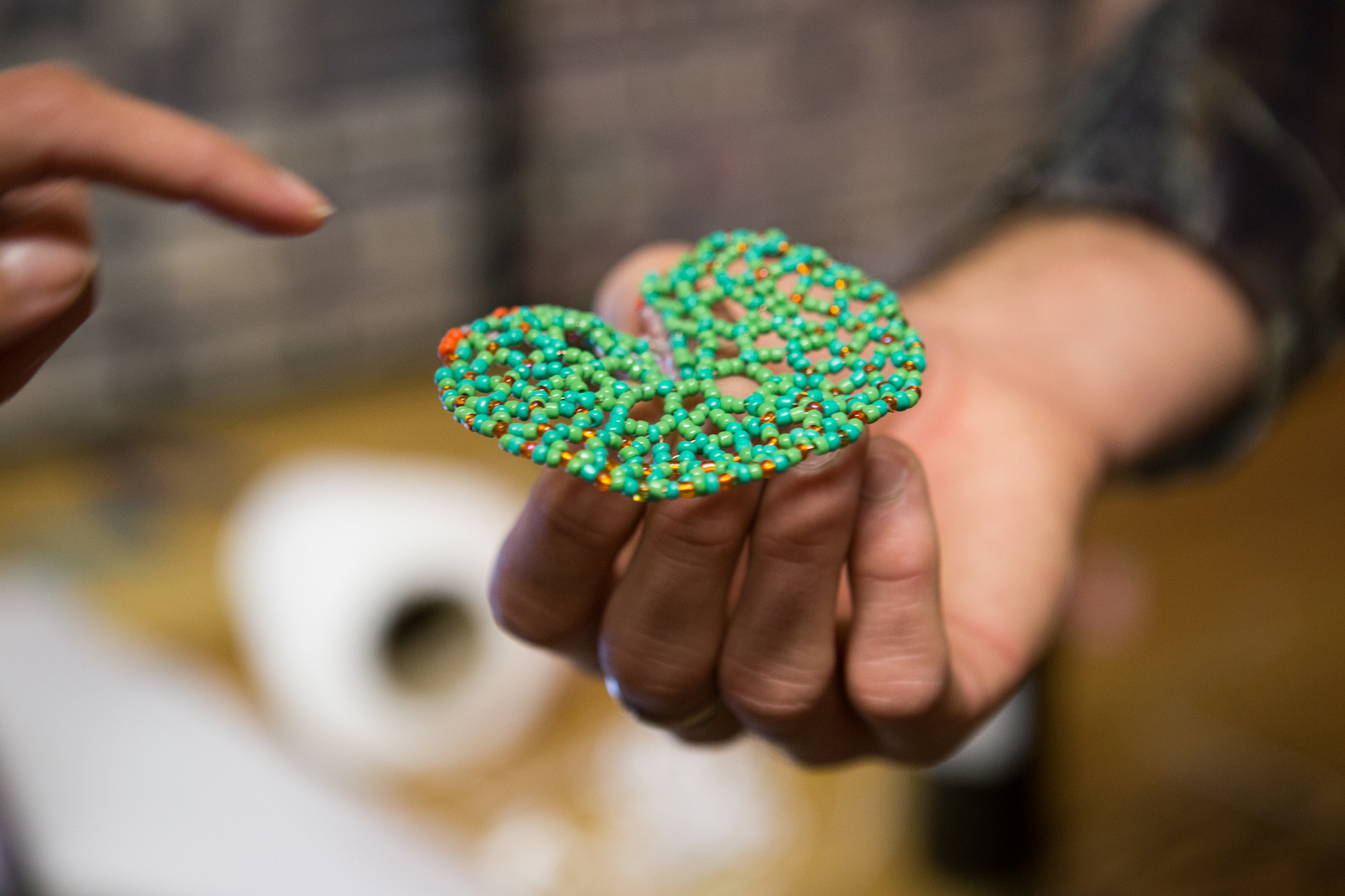
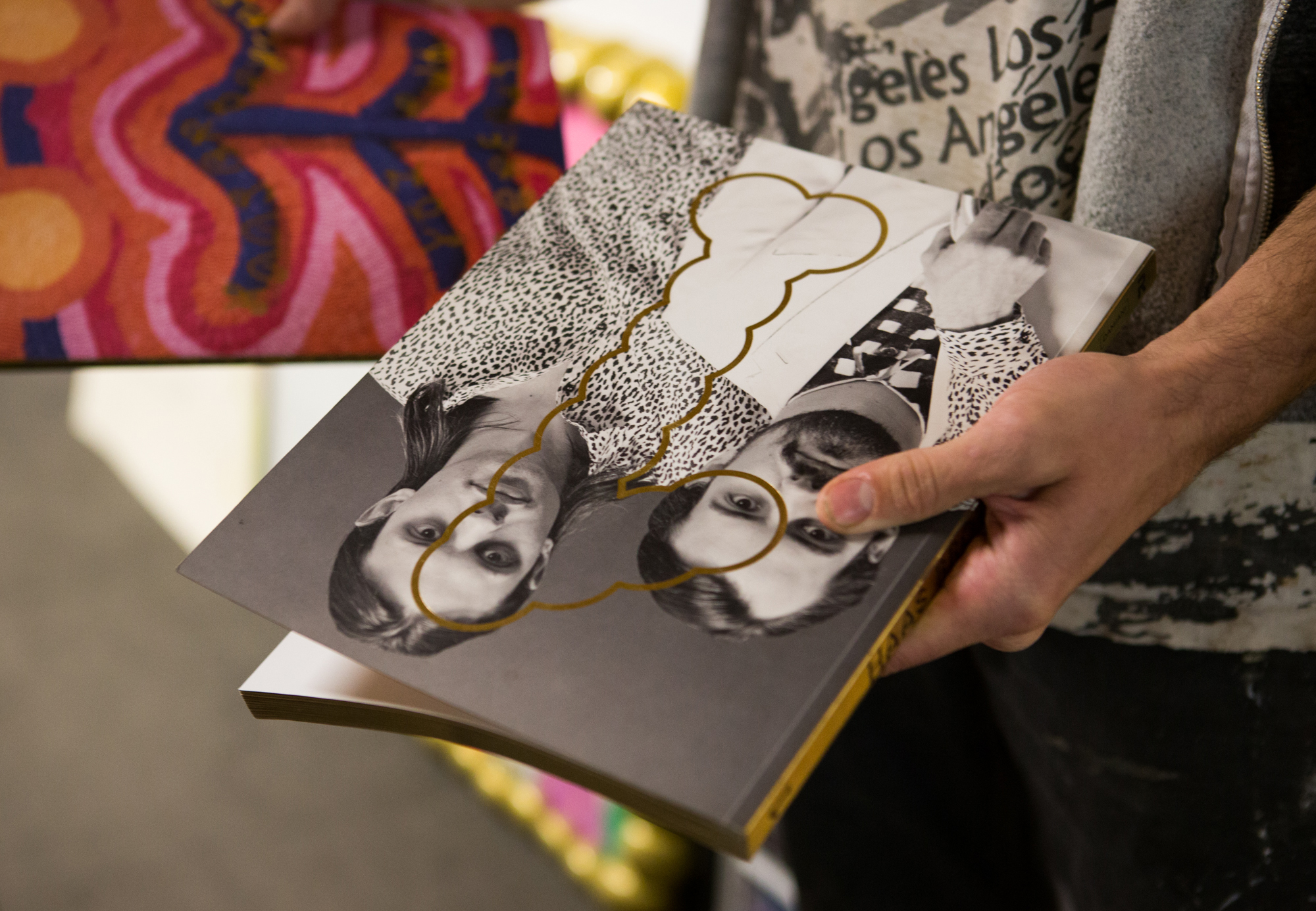
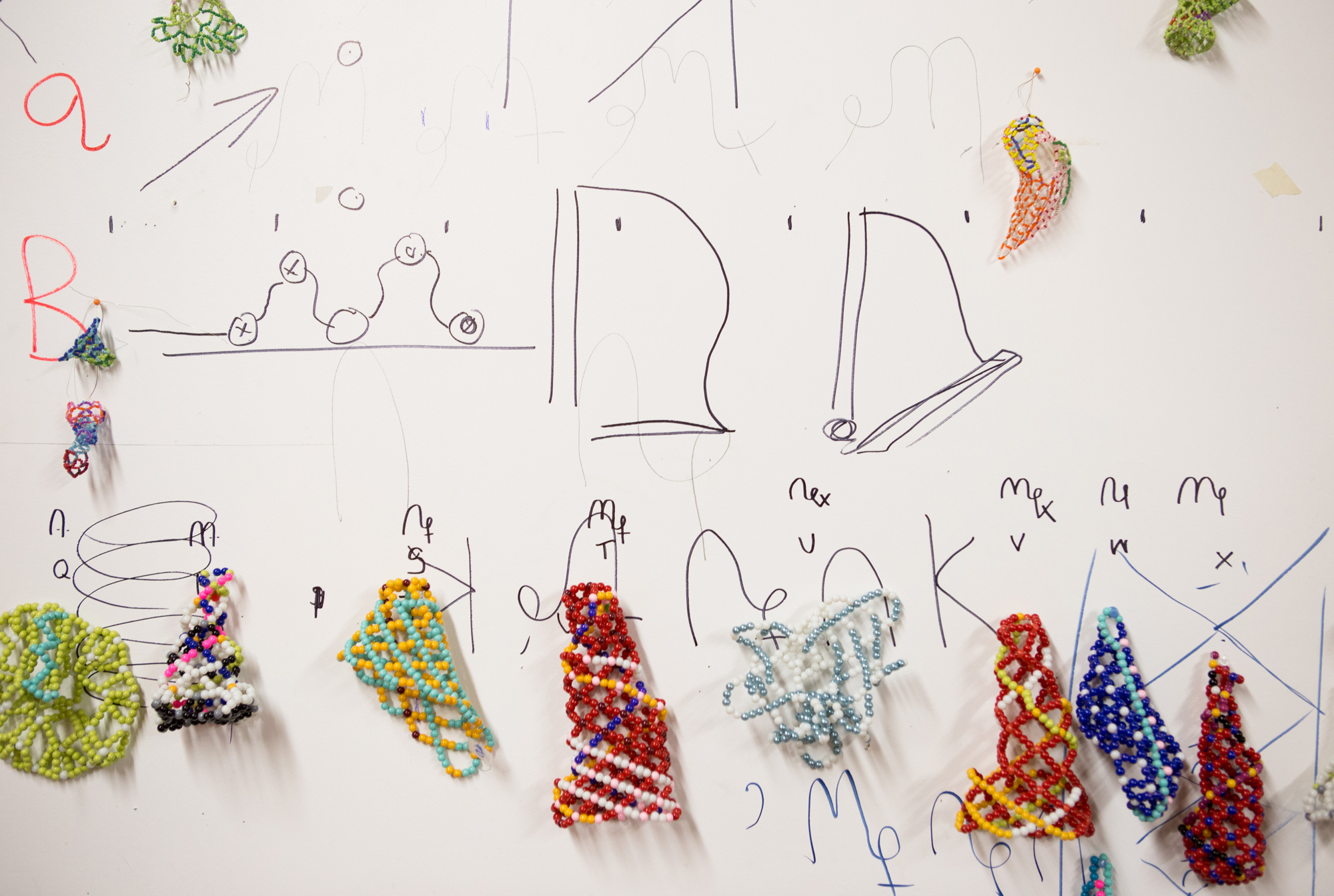
To fill their souls again, they have been working with a group of bead artists located in a township outside of Cape Town, in South Africa, who call themselves the "Haas Sisters." This week at Design Miami, the brothers will be premiering works from this collaboration, entitled Afreaks, which include colorful four legged creatures in varying sizes and large psychedelic mushrooms โ€“ more examples of the Haas Brothers, and now Sisters, goal to spread positive vibes. The work will also be on view this February at Cooper Hewitt's Design Triennial. 

In the following interview, we talk to the Haas Brothers about their craft, their collaborative relationship, the sexual overtones of their work and how a trip to Africa changed everything. 

AUTRE: When did you first start collaborating artistically together? Was there a specific moment when you knew you wanted to make this happen together?

NIKOLAI: My first remembrance of doing stuff together was when we wanted to make these machines. There was a popular artist at the time who made these rolling ball sculptures. We saw that as kids, and we wanted to make this machine in the backyard. We were about 3 or 4.

SIMON: Our very first collaboration started in 2007. He was in a band with Vincent Gallo, and they were touring. I was in school, and they called me and asked me to tour with them. I dropped out and drove to LA to join them.

NIKOLAI: That was our first professional collaboration.

SIMON: Then a friend of ours offered Niki this construction job in 2010, and he asked me to do it with him. We rented a studio downtown. Basically, thatโ€™s when we knew that we were going to be working together always. We actually had a conversation about it. We rented that shop, and we didnโ€™t know what to do.

NICKOLAI: In this conversation, we were asking ourselves, โ€œWhat are we starting a business for?โ€ We just want to work for ourselves and do our own thing. I donโ€™t think we said it explicitly at the time, but we knew we were dedicated just to being happy people. That was the spirit of what was going on. I remember when we sat down and talked about what we were going to achieve, that was the number one thingโ€”being happy, and trying to spread that in our community. Not just the people who we were working with in the studio, but also in the communities outside of the studio, the LA community.

AUTRE: And the rest of the world as well?

NIKI: Yeah, as much as possible. We have a community in Miami now because we go there all the time. We have a community in Europe because we go there all the time. The whole point is to be happy.

AUTRE: When you collaborate on a piece together, where does it start? Is there a brainstorming session?

NIKI: Itโ€™s different every time. I think our most explicitly collaborative moments are when we have to sit down and conceive new shows together. On single pieces, weโ€™re collaborating all the timeโ€”asking each other questions as we go. Simonโ€™s always working on the philosophy and the deeper meaning behind the work, and heโ€™s always thinking about how the work can change. Iโ€™m kind of doing more brutish work, like sculpting or sketching cartoons.

SIMON: Heโ€™s the maker, and Iโ€™m just testing stuff all the time. Iโ€™m a fanatic; Iโ€™m a materials person. The way we collaborate is Niki gives life to these processes, and I give him materials to work with. And we always talk about all of it the entire time. Also, as twins, weโ€™re on the same track.

NIKI: Itโ€™s not just the conception of the piece. The collaboration doesnโ€™t stop. The African project is such a good example. The actual objects themselves are just a result of the real important part of the project, which is the philosophy of the book. Hopefully people read it. Thatโ€™s the kind of project that people will put in history books if they read what Simon has written.

SIMON: Itโ€™s basically a feminist, white privilege project thatโ€™s wrapped up into something consumable and pretty. Thatโ€™s the thingโ€”our audience is the 1%. Weโ€™re delivering things to them to make them think. Itโ€™s not something they would necessarily pick up on the shelf. We get to put this stuff in there to kind of figure out later. We talk about ourselves as entering more into philosophy in that way.

AUTRE: Thatโ€™s really interesting. My next question was about luxury and the definition of luxury.

NIKI: To be honest, most people who are living luxurious lives have pretty bad situations. Thereโ€™s something about wealth where it gets to a certain level, and it starts to dehumanize the person. They perceive themselves as an odd commodity, even though they trust themselves more than anyone else. Luxury, honestly, is being as happy as you possibly can be. Thereโ€™s a sweet spot where you have enough to support what you want to do. At the same time, you are loose enough that you can say, โ€œFuck this.โ€ If you have to get work, if you have to write contractsโ€”even if youโ€™re making thousands of dollars, itโ€™s not all that luxurious. Youโ€™re under your own thumb.

SIMON: Luxury as people understand it is almost like a prison. You go to basically the same hotels and the same restaurants in every country in the world. Someone who is living luxuriously is having the same experience everywhere. Youโ€™re getting the Vegas experience all over the world.

NIKI: The Hollywood hotel, the concierge that takes care of everything for you. If we had gone to Cape Town in the luxurious way, we would have been taking crazy advantage of black people. We would have been ignoring the entire context of the point of being there. We would have barred ourselves from doing this project. 

AUTRE: Luxury, in a sense, can also mean the freedom to be creative.

NIKI: We have the luxury to do whatever we want. Thatโ€™s what Iโ€™m looking for. The luxury to allow ourselves to be happy. We want to be curious all the time, and we want to explore that curiosity. Thatโ€™s the luxury weโ€™re after.

AUTRE: You have the capability to work in this small format, and then you can explore all those ideas that were in your head.

NIKI: We talked about supporting our community. We were telling kids that the guy that hired us for this first time said, โ€œHey, Iโ€™m giving you the ability to start expressing yourself.โ€ Thatโ€™s how we started making our stuff. Later on, our gallery said, โ€œHey, make whatever you want.โ€ That was a big moment for us. We werenโ€™t making anything cool before that really. Money and space doesnโ€™t make you very happy. I would actually say I was just as happy when I was 18 years old and broke.

AUTRE: I want to talk about sexuality, because thatโ€™s a major part of your work, especially in your drawings.

NIKI: The sexuality, to me, is just the reality of being a person. Everybody thinks about sex. Everybody has sexual organs. It does occur a lot in the sketches in particular. In the rest of our work, it appears about as often as it does in everyday life. You see yourself clothed, and then at the end of the day, youโ€™re naked looking at your own dick. The way that I push sexuality in the cartoons and the way I use it in art work (like the sex room we made a couple of Basels ago), the point is to make it seem like less of a shock. It is simply an innocent expression if itโ€™s done well. Obviously, if not, it can be oppressive. Itโ€™s all happiness. Itโ€™s an extension of being a person. The point of using it in our work is the idea of leveling the playing field. 

SIMON: Itโ€™s so positive. Tom of Finland was more centered on the erotic. The idea behind this is positivity. Thereโ€™s a very positive message. Beyond that, we focus a lot on animals too. Animals and sex are really common themes throughout history, design, and art (which were the same things until recently). We feel like itโ€™s a natural interest. Itโ€™s whatโ€™s around us. To exclude it from the work is almost weirder. I was in drawing classes at RISD, and there would be people doing life drawing classes who would leave out the penis. That creeps me out. Showing it is not creepy. Taking it out, showing me your thought process, is kind of creepy.

AUTRE: Thereโ€™s so much shame attached to sexuality in our culture.

NIKI: We are vehemently anti-shame. Thatโ€™s one of the pillars that Simon set up for our ethos very early on. Any time we sit down to do a piece of work or a show, we make sure to follow these guidelines we made for our studio.

SIMON: The first few sexual pieces, people would come up to us and say, โ€œOh my god, you canโ€™t show that.โ€ Thatโ€™s shaming. Weโ€™re not going to listen to them. Itโ€™s because of their own discomfort. We made a piece for Basel about sex and shame. People would enter through this giant vagina. We like to get people to consider their own thought processes as theyโ€™re experiencing these things. I think itโ€™s important.

AUTRE: It is important. There is a lot of censorship going on these days, like with Instagram.

SIMON: The fact that you canโ€™t show nipples on Instagram pisses me off. The nipple canโ€™t be free; thatโ€™s so stupid.

NIKI: Weโ€™re not trying to be shocking when we talk about sexuality. People think weโ€™re sensationalist and shocking, but really weโ€™re just expressing what we think.

AUTRE: Do you ever have creative disagreements? How do you resolve them?

SIMON: We have, though itโ€™s kind of rare. We had a big fight in Cape Town, but that wasnโ€™t creative.

NIKI: Talking to each other creatively, we take each other seriously. If Simon doesnโ€™t like something Iโ€™m coming up with, or if I donโ€™t like something heโ€™s coming up with, we just try to explore it with each other. You probably have a point, letโ€™s find what it is. Our creative fluidity is beyond good.

SIMON: In school, I had critiques by some teachers who had chips on their shoulders. It was so obvious. They will give shaming critiques of work. We donโ€™t do that to each other. It stunts your creative growth so much. We understand that if one of us shits on the other oneโ€™s piece, heโ€™ll stop exploring it and be afraid to do it. I know that his output is going to be incredible, so I have to trust it, and vice versa. The biggest fight we had was in Cape Town, and it came only because we were both going through so much. Weโ€™d been riding this crazy high from getting pretty successful pretty fast, and it kind of hit us. When we were in Cape Town and working with these women who had so little, it was like, โ€œWhat am I doing?โ€ Both of us were going through internal turmoil, which caused us to have a big fight.

NIKI: There were also a bunch of reasons why we had to flesh things out. After the fight, it ended up so much better. It was so worth it. That was the first time we ever had a fight. Itโ€™s crazy. Literally, if you talk about the moment before we went to Africa, we had our first solo show in New York. It was met with tremendous success; we sold everything.

AUTRE: Was that R & Company?

NIKI: Yeah. We were hanging out with collectors and all that bullshit. We were staying at a friendโ€™s penthouse. We were taking ecstasy and listening to soul music, and it was so fun. I donโ€™t feel bad for doing it at all; it was unbelievable. But then we go from this moment of complete pleasure and excess to being dumped in Kairicha. We set that up for ourselves, but it was a good reality check. Fuck. Who gives a shit about what we just did? I was proud that we did that, we worked really fucking hard. But weโ€™re young white men. We grew up knowing A-list celebrities. Half of this, whether we like it or not, was handed to us. Suddenly we're working with black women in Kairicha where black people still donโ€™t have the same rights, they are not being given any chances. When we came into the picture, we did a small fair in South Africa, it was the first time they had ever been to the townโ€™s center. That was the first time they got to go to a fancy event.

SIMON: And the crowd that came in was shocked that they were all in there, and as the artists especially. It was really cool.

NIKI: People say itโ€™s not racist in South Africa, but then you try to take them all out to a sushi restaurant, and you canโ€™t do it.

AUTRE: It seems embedded.

SIMON: Theyโ€™re like, how about going to KFC and going to the top of the hill instead? We actually wound up doing that, and there were people taking photos of us. It was so bizarre.

NIKI: You have to realize, though, that thatโ€™s how these people grew up. Thatโ€™s what itโ€™s like in South Africa, white or black. The whole black community has its own issues with intolerance too. Theyโ€™re super intolerant with gay people. Itโ€™s all fucked up. What we have to understand is that everyone growing up there has grown up with a certain social structure. The idea of ignorance really comes into play. Culturally, people were brought up in an ignorant way. We want people to understand that you donโ€™t want to isolate people youโ€™re hoping to change. If you do that, nothingโ€™s going to happen. And everybody, as evil as they may seem (and I donโ€™t even believe in the idea of evil), nobody is actually evil. Everyone is a person deep down inside. Whatever it is that theyโ€™re reacting to, if theyโ€™re acting in a way thatโ€™s full of shit, like demeaning a person because of their skin colorโ€”I believe that they are fully capable of dropping that. It takes time. I think that the Internet is the biggest purge of that of all time. All of a sudden, nobody on the Internet community seems tolerant of homophobia or racism. As a mirror of society, you see society not willing to tolerate that anymore. The Internet touches about 80% of their lives. Thatโ€™s great. They all have cell phones and listen to Beyoncรฉ and One Direction. But the thing is, Beyoncรฉ is not homophobic or racist. When you have idols that are being put in front of people like that, itโ€™s only a matter of time before it melts away. In fact, anybody who is younger than us is not an issue. You just have to wait for the old people to die away. Although, Iโ€™m sure there are some people carrying the torch who are younger.

AUTRE: A lot of people donโ€™t get that reality check. They go to the developing world, but thereโ€™s no reality check.

SIMON: You turn into a monster. I felt myself turning into a sharky monster before we went to Cape Town. I was noticing changes in my behavior. Like, I was totally okay with being an asshole to somebody. Thatโ€™s not like me, and it started to bother me a lot. Thank god we went to Cape Town; it hit us so hard. I remember, right after Cape Town, we went to Miami. We wound up in a G7 flying back here, and I could not enjoy myself. It felt brutal.

NIKI: These pieces of art are selling for thousands of dollars. At some point, itโ€™s too much money. Nothing is worth that much. I know some of our stuff is stupid expensive. But the point is that itโ€™s feeding something much bigger. Weโ€™re trying to bring it back to the community.

AUTRE: With you guys, thereโ€™s craftsmanship.

SIMON: There are definitely reasons why our stuff is expensive.

NIKI: If thereโ€™s an art piece that has historical value, but all thatโ€™s happening with it is the piece being taken and used as a commodity. Itโ€™s dehumanizing. Itโ€™s been moved around in the market with a shitload of money on it. No one needs something that costs that much.

AUTRE: How did the project in Africa come about?

SIMON: Cape Town was named world design capital, and we went for a fair to show some of our pieces. When we got there, we were being tourists looking for art in South Africa, where everything is totally whitewashed. We went to this craft fair, and there was this booth with really cool beaded animals. The woman in the booth was so fascinating and cool and making these beautiful pieces. We just loved her and her story. The booth is called Monkey Biz. On each piece, they have a tag with the name of the woman who made it. We thought that was amazing, because that doesnโ€™t happen very often. Itโ€™s a small thing, but itโ€™s actually a really big thing. Thatโ€™s what got us to want to start doing it. We had this whole penpal exchange with this womanโ€”Montepeloโ€”and her team for about a year, and she really wanted us to come. We showed up and started working with them. They were all afraid of working with us, actually. Theyโ€™re used to being treated poorly. As soon as they realized we werenโ€™t on that track, it became this really awesome community building experience.

AUTRE: When will those pieces be shown?

SIMON: In December. December 4th.

AUTRE: So thatโ€™s your next major project?

NIKI: Yes. And we have another show in February.

SIMON: The theme is beauty.

NIKI: Weโ€™re trying to transgress beauty. Weโ€™re trying to get rid of our exclusive authorship.

SIMON: Jeff Koons would never name all the fabricators that worked on his project. Thatโ€™s what weโ€™re trying to transgress. I think itโ€™s kind of cool.

AUTRE: Design and fine artโ€”where is that line?

SIMON: The line is the people who are going to make money off of it. Itโ€™s completely commercial. Also, the word โ€œdesignโ€ is completely Western and very modern. There was never a distinction between the two until recently in our culture. Itโ€™s so location and time based that we find it to be gross. We donโ€™t really make that distinction.

NIKI: At the same time, weโ€™re proud to be a part of whatโ€™s considered the design community. The truth is, weโ€™re just doing what we do. No labels, man.

SIMON: We rose up through the design world, but we are contentious there. As our stuff is being thought of more as art, the design fair has tried to push us out. Art Basel and Design Miami are the same thing, but they donโ€™t know what side our work should be on.

NIKI: Design Miami has been trying to push us out because weโ€™re โ€œart.โ€

SIMON: That actually happened with this Cape Town project. We had to appeal and fight for the right to get into it. They told our gallery that they couldnโ€™t show it unless they had us in that booth.

NIKI: The design line exists only in the eyes of the people of commerce.

AUTRE: What do you think will change things?

NIKI: Itโ€™s already happening. The Internet, again, is leveling everything. Hashtags have become more important than library cardstock. The way that people think about design now is like library cardstock. The hashtag is going to take over. People in our generation donโ€™t give a shit. People who are old have dedicated time to a certain way of life, and theyโ€™re really resistant to changing that way of life. But the truth is, theyโ€™re old, and they donโ€™t know what the fuck theyโ€™re talking about.

SIMON: The reason why it hasnโ€™t already changed is literally money, government, etc. But that will go away, and it will all be much chiller. Itโ€™s clear from looking at the Internet whatโ€™s going to happen. Growing up gay in Texas, I saw very few people who were out in the public eye. The best I could get was Queer Eye for the Straight Guy on TV. Now, on the Internet, you can see whatever you want. Everything is going to change.


You can see the Haas Brothers' "Afreaks" this week at the R & Company booth at Design Miami opening on December 2nd. You will also be able to see the work at Cooper Hewitt's Design Triennial, which will open on February 12, 2016 and will run until August 21, 2016. Purchase the "Afreaks" book here. text and interview by Oliver Maxwell Kupper and Summer Bowie. photographs by Sara Clarken
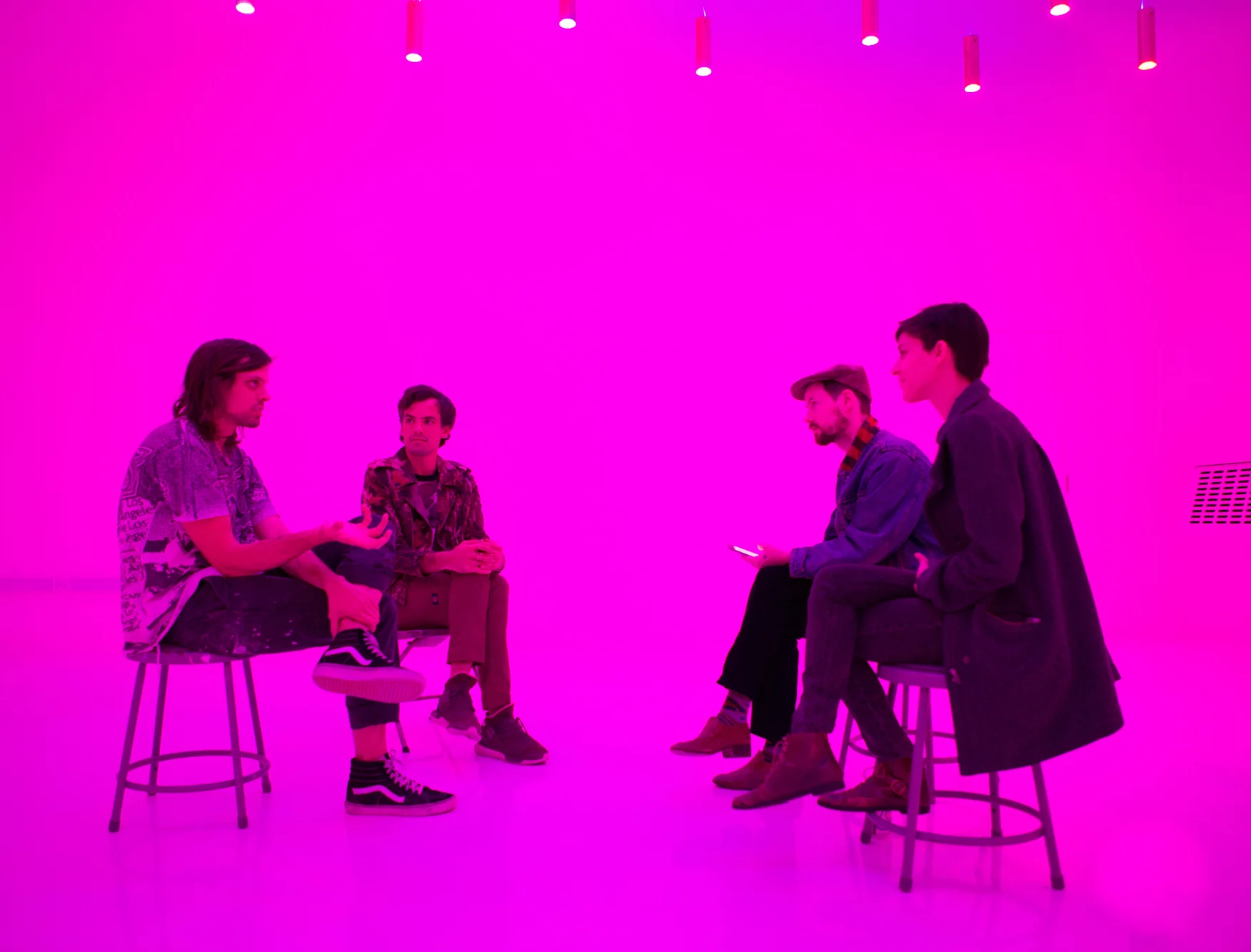

My Alchemical Romance: An Interview With Ezra Woods and Alia Raza of Regime Des Fleurs

Ezra Woods and Alia Razaโ€™s alchemical romance started about ten years ago with a mutual love of flowers. It should be noted that Ezra and Alia are not a romantic couple, but they are bound by some other fateful and supernatural force of nature that allows for their close collaborative efforts. After ten years as close friends, the pair decided to start Regime Des Fleurs, a โ€œpostmodern lifestyle art-practiceโ€ disguised as a luxury perfume brand. Before starting the brand, Alia was a video artist in New York City and Ezra was a stylist in Los Angeles, but they werenโ€™t exactly satisfied with where their careers were going. We met up with the pair a few weeks ago, and Ezra recalled his grandfather's long-time love of flowers. It is understandable where Ezraโ€™s love of organic fragrances comes from. Alia is just as infatuated, and in the following interview recalls being enraptured by the perfumes on her motherโ€™s vanity. Currently, Regime Des Fleurs includes ten scents โ€“ separated by three tiers: Lyrics, Ballads and Epics. With ingredients such as palo santo, extractions of Laotian and Indian agarwoods, and Indian blue lotus, their fragrances take you on an enchanted journey though history, from the opulence of Ancient India to the era of Louis XVI and Marie Antoinette and all the way up to 20th century high modernism. All in all, what Ezra and Alia have achieved with Regime Des Fleurs is something very rare for a perfume brand: a unique identity. In the following conversation, Autre chats with the duo about their origins, their inspirations and influences, and they give a hint of whatโ€™s next for Regimes Des Fleurs (hint: a candle is in the works and so is an edible fragrance).

AUTRE: So how did you two meet, and did you know right away that you guys wanted to work with each other?

ALIA: We met through my roommate ten years ago, and we had no idea whatsoever that we would ever work together for the first nine years that we knew each other.

EZRA: We were friends, and we did kinda fun things together, but we never thought that weโ€™d end up working together.

AUTRE: Did you know that you had shared interests?

ALIA: Aside from flowers and perfume, I donโ€™t know how many overlapping interests and references we had until we got to know each other a lot betterโ€“โ€“and then we realized that we had tons in common.

AUTRE: So when was that specific moment when you knew? Can you describe it?

ALIA: We had a dinner one evening, about two years ago, and we started talking about how I was making art, and how I loved what I was doing but also wanted to turn it into more of a business type thing.

EZRA: We were both in transition with our careers. Sort of not satisfied with where we were professionally, and in some ways creatively. Although Alia had received a lot of validation and recognition for what she did, she wasnโ€™t making money and turning it into a business.

AUTRE: And, Alia, you were in video art?

ALIA: Yeah I did video art, and made one short film and wanted to direct movies. But I think we both did a lot of work that we loved and that we were proud of, but supporting yourself doing creative work is difficult. So I think separately, we had each thought about creating objects to sell. But only when we came together two years ago, and had this one dinner in Beverly Hills, did we actually discuss what it would be like if we had a brand together, and what the kind of codes of the brand would beโ€“โ€“what weโ€™d be wanting to say with what we made.

AUTRE: Was it specifically fragrance? Or was it more abstract?

ALIA: It was fragrance, it was beauty, it was fashion, it was an art practice all rolled into one.

AUTRE: So like a collective?

EZRA: Yeah, a collective. But it was more, and still is more about what the brand is about than any kind of particular output, I would say. Does that make sense? Itโ€™s about the idea of the brand in a way. The meaning of the brand.

ALIA: Itโ€™s about seeing the world in a certain way.

AUTRE: So going back a little bit, Ezra, I read another interview that said you used to wear cologne to kindergarten. So I want to talk about some of your background in fragrances, because it seems like that goes back really early, that youโ€™ve had a long love affair with fragrances.

EZRA: (Laughs) Yeah, I think my folks are really aesthetic, sensual people. They raised me and my brother to appreciate those things and consider them in a way thatโ€™s more than frivolous, or extra, or unimportant, or a second thought. So from a really young age that was always really important to me, and then as I got older I started to think about things in a more critical and analytical way. Because Iโ€™d always loved perfume and it was a part of my life, I started to see it that way also. Kind of considering what this perfume is saying, not just that it smells good. What it means. I guess since a young age that was always part of my life, and as my mind expanded and grew, so did my relationship to that one thing. But you should ask Alia about her experience with perfume, itโ€™s really interesting.

ALIA: We were both obsessed with perfume from a really young age. I was fascinated by my motherโ€™s vanity with all the perfumes on it, and even my fatherโ€™s colognes. I loved smelling different shampoos, and I was just really into smell. I loved the idea that you could bottle it. But I was also really into the flowers in our garden, and the lilacs and all of that.

EZRA: But you remember what perfume you were wearing when you met everyone. You always remember what perfumes other people like. You always remember what people wear.

ALIA: Right. I got kicked out of 7th grade math class once because I was wearing way too much dewberry perfume from the Body Shop. My math teacher, Mr. Dam was like โ€œI canโ€™t handle it.โ€

AUTRE: Amazing.

EZRA: To add to the question for both of us, itโ€™s kind of always been one thing that was a lens through which we see other things. And understand and relate to the world.

AUTRE: My next question is about nostalgia and how that ties into the scent of perfumes. Can you recall any scents associated with a specific memory that stands out the most?

ALIA: For me, if I wash my hair with a certain shampoo, Iโ€™m like back in 9th grade. You know what I mean, 100 percent there.

EZRA: I get more feelings than specific recall of a moment in time. On Wednesdays I go to the farmers market, and I buy flowers for both of us because I like us to have flowers in our houses because itโ€™s what inspires us. I bought ginger lily and I hadnโ€™t smelled it for a long time. It completely made me feel like a child, and I donโ€™t even remember where I smelled that but it transported me emotionally; smelling that and feeling like a child. It was so weird and intense and amazing.


water/wood A forest underwater. On a tranquil forest walk. A cool bracing mist/ meets ancient sun-warmed trees. 

With pale herbs, palo santo, sparkling young pine needles, myrrh resin hydrosol, rosewood, driftwood, himalayan cedarwood dust, hawaiian sandalwood oil, dried wild tobacco bud, orris root butter, white lotus blossom absolute, and crystallized amber.

BUY HERE

AUTRE: So making the fragrances by hand, how long does that process take? From finding the ingredients to bottling it, what is that process like?

EZRA: Weโ€™ve been collecting and discovering ingredients on our own since before we started our company. And then together we constantly are collecting ingredients. Discovering new things, ordering samples, trying them out and experimenting with them. Coming up with a specific perfume can take anywhere from an ongoing process of three days to things that weโ€™ve been working on for a year that weโ€™re still not done with.

AUTRE: Do you sell internationally?

ALIA: We have one international store thatโ€™s in Saudi Arabia, and then Net-A-Porter sells our stuff in Europe. Aside from that, since the product is handmade thereโ€™s different regulations for it. So itโ€™s difficult, we wonโ€™t be global until next year.

AUTRE: I want to talk about the bottling, which you talked a little bit about it earlier. I guess that ties into budget stuff, but creatively, the bottling and the packaging of Regime Des Fleurs is a major part because itโ€™s so creative and brilliant.

EZRA: Thank you!

AUTRE: So how do you communicate your fragrances with the bottling? How did that come about and what is the origin of the packaging โ€“ can you explain that process?

EZRA: Thatโ€™s a really interesting question.

ALIA: We always start everything by talking a ton.

EZRA: Yeah we talk about everything ad nauseam sometimes but itโ€™s always fun.

ALIA: But itโ€™s just a lot of conversation to figure out how we want to start. Ezra will be like โ€œI think we should do a paper labelโ€ and Iโ€™ll be like โ€œwhat are you talking about, what kind of paper?โ€ and then he has to clarify. Thereโ€™s a lot of explaining and a lot of communicating.

EZRA: We like a lot of the same things, but thereโ€™s a lot of things that one of us appreciates and the other isnโ€™t into or vice versa.

ALIA: And then we have to convince the other one that itโ€™s cool or worth it.

EZRA: But itโ€™s kinda fun.

AUTRE: Itโ€™s like a constructive duel.

EZRA: Definitely! So when we came up with our packaging it was really about conveying ideas and feelings. To us, we see it as a lot of different elements happening in harmony to create our vibe.

ALIA: Itโ€™s a little bit of Memphis, itโ€™s a little bit ofโ€ฆ

EZRA: 80s mall.

ALIA: A mall in the 80s, yeah totally. A little bit of rococo baroque.

EZRA: Rococo baroque or late 18th, early 19th century France.

ALIA:  A little bit masculine, and just very simple. They almost look like skyscrapers if you line them up. But then the colors can be childlike, or feminine, or punchy.

AUTRE: And you use really interesting paints and materials too right?

EZRA: Yeah, so we developed our first samples which was how we kind of created the design. We were like โ€œwe want to kind of paint these bottlesโ€ but then we didnโ€™t know what we were fully going to do until we figured out how the bottles were going to be painted, and then through that process and working with that first person who was actually an art fabricator that works with a lot of artist friends of ours, we figured out the design. That was really weird and cool because it just kind of happened.

ALIA: Well, there were a couple things. We were on a deadline. You know we had this opportunity, to go to Paris to show whatever we had come up with by March 1st. We had only started working on the packaging in January so we literally had six weeks to figure it all out.

EZRA: And no money.

ALIA: There was a deadline, we had to get them finished, I wasnโ€™t sure at all about doing color. Ezra really wanted to do color badly, we tried doing it and then we both loved the way it came outโ€ฆ but if one of us had hated it, I donโ€™t know what we could have done. We wouldnโ€™t have been able to go to Paris. There was no choice. Luckily it worked.

EZRA: (Laughs) It worked.

ALIA: Our logo also was designed by an old friend.

AUTRE: The logoโ€™s great.

EZRA: Thank you! Oh my god we love our logo so much. If you look at what our references were, and then you look at how the logo came out; we couldnโ€™t have imagined it to be more of what we wanted.

ALIA: And the girl who did it, doesnโ€™t even do logos. Sheโ€™s an illustrator and a photographer and a fashion designer but she was like โ€œI donโ€™t want to do a logo, I donโ€™t know how to do a logoโ€ and we were like โ€œyouโ€™re the only person whose taste we trust and you get us and Iโ€™ve known you since I was 16.โ€ And she did it and it was great.

EZRA: We were like โ€œjust draw it, weโ€™ll vector it, weโ€™ll add the copy to it. We donโ€™t need any of that, we just want you to draw the framework and basically create the gist. Weโ€™ll take it from there.โ€

ALIA: Because weโ€™d done color for the bottles, we were like letโ€™s go back to one of the original ideas and do totally colorless for the boxes.

EZRA: So our whole brand code developed out of that, which was extreme color and pop and emotion with product.

ALIA: And then a very stately, restrained outside.

AUTRE: It seems like a perfect combination.

ALIA: Yeah, it kind of is. The gray boxes all lined up kind of look likeโ€ฆ

EZRA: Your personality?

ALIA: Me, and then the colored bottled line up with Ezra.

EZRA: I would say the colored bottles in a mess look like me.

ALIA: When theyโ€™re cracked and chipped.

EZRA: When theyโ€™re cracked and chipped and laying all over each other.

ALIA: But the gold crestโ€™s both of us.

AUTRE: Yeah, itโ€™s great. I want to talk about history, because history plays a lot into your descriptions especially.

ALIA: Weโ€™re obsessed with the romance of history.

AUTRE: 18th century Europe, 20th century high modernism; can you talk a little bit about that and your interest in history?

ALIA: Whatโ€™s more fascinating than the history of humans and civilization?!

EZRA: Things that have happened that are extreme that arenโ€™t a part of our everyday lives anymore. Alia and I both have certain things that weโ€™re obsessed with, and we share them. Moments in time, and stuff that we know a lot about. When we were little kids we were both obsessed with Versailles. Kind of everything from the 17th and 18th century mostly, but in a weird way weโ€™re both similar where we sometimes just want to spend a day by ourselves and learn about things. Sometimes on a Sunday Alia will be texting me throughout the day and be like โ€œdid you know thatโ€ฆโ€

ALIA: โ€ฆThat Marie Antoinette only drank hot chocolate with orange flower water?

EZRA: Yes. Or Iโ€™ll text Alia and be like โ€œwill you google Laiterie de la Reineโ€ which was this amazing grotto which was designed for Marie Antoinette.

ALIA: Itโ€™s always about Marie Antoinette.

EZRA: Itโ€™s always about Marie Antoinette, no itโ€™s about a lot of other weird things. I donโ€™t know, people that wear flowers as jewelry for example.

ALIA: I also think that for me at least, the older I get the more that I appreciate and care about history. The more moved I am when I go to other cities or countries and see old stuff. I think when youโ€™re younger, for me at least, I was much more interested in what was happening in the world right now, and the older I get itโ€™s more fascinating to me what has already happened.


Nymphaea Caerulea A singing iridescent floral An out of body experience, Nymphaea Caerulea dances on the skin with an extremely rare hyper-purified extraction of the sacred blue waterlily. Like the enchanting call of Sirens to chosen wayward ships, the mesmerizing base of Nymphaea Caerulea features an abundance of genuine White Ambergris, supported by celestial notes and shimmering accords composed of 80 ingredients: both precious naturals and intuitively selected aroma materials.

With Indian blue lotus, Hawaiian blue lotus, white ambergris, aurora reconstitution, Nile waterlily headspace, pandanus amaryllifolius, salty water, and the absolutes of 15 flowers.

BUY HERE


AUTRE: What led to now?

ALIA: Yeah! What led to now?

EZRA: Thereโ€™s all this stuff from the past that was executed without the conveniences that we have today that would be extreme and amazing with those conveniences and the fact that they were done despite having computers or electronics, whatever, it makes it even more moving. We kind of fetishize the aesthetics of the pre-industrial world.

ALIA: But at the same time weโ€™re not interested in going back. We really appreciate the fact that we were raised in a democracy. It sounds pretentious but I donโ€™t care. Our brand is pretentious.

AUTRE: Well itโ€™s glamorous, thereโ€™s a distinct glamour that emanates from your brand, and that certainly ties into a lot of different things. We live in a weird world where attention to detail, attention to making things by hand is not there at all.

EZRA: We feel that way completely. I guess going back to that first conversation we ever had, the main point of the conversation was that we wanted to have a brand and create products that spoke to us directly; the things that we wanted that we felt like we couldnโ€™t get.

ALIA: We were sophisticated consumers who had always paid attention to luxury, and so we thought: what can we make that we would be impressed by? That we would think is special?

AUTRE: Sure.

EZRA: I always say that if I wasnโ€™t responsible for the brand or the products, and I had come across it, I would be obsessed with it. Thatโ€™s kind of our standard: obsessibility.

AUTRE: Can you talk about the first and second collections and how they differ?

ALIA: I think that we would say that the first collection is all about water. They donโ€™t all smell watery, but to us they all have something having to do with water. Whether it was cool mist, or freezing cold. โ€œDove Greyโ€ is vapor, or running water in โ€œWater/ Wood.โ€

EZRA: Ocean water in โ€œNymphaeaโ€ and in โ€œNitesurf.โ€

ALIA: Yeah the first collection to us is more about water and the second collection is more about texture.

EZRA: Thatโ€™s the real thing, the second collection is really about texture. Sparkling, oily, radiant, bisque, porcelain, those were a lot of the things. Then the stories became a little bit different. The first one was a lot more whimsical and the second one is a little bit more serious I think. Weโ€™re weirdoes but thereโ€™s a logic there.

AUTRE: Well itโ€™s abstract and itโ€™s very hard to put a fragrance into words that make any sense besides the actual name of the fragrance. You want to create a sort of story with those fragrances.

ALIA: The truth is, like with almost anything else, you can spin something either way. We could spin โ€œDove Greyโ€ as an all-synthetic industrial smelling perfume, or we could spin it as a natural root.

EZRA: But theyโ€™re both true. Itโ€™s interesting how what you were saying relates to the way we approach what we do, which is almost painting meets cooking, meets poetry, meets science. All this stuff happening. We see it really layered and intensive I guess. Because we talk about it so much weโ€™re on the same page about it.

ALIA: When I used to do film and video, I used to say what I loved about doing it was that it was a combination of all these different art forms. The acting, the costumes, the camera, all of it came together to do one thing. I actually feel like what we do now, together, is even more that way.

AUTRE: So whatโ€™s your personal favorite fragrance that you make?

ALIA: Ezraโ€™s is โ€œNymphaea Caerulea.โ€

EZRA: I love wearing it, but itโ€™s not necessarily my favorite to wear. But itโ€™s my favorite that weโ€™ve made. I like them all. Thereโ€™s something about all of them because I feel like theyโ€™re all accomplishments.

ALIA: They are! My favorite is โ€œBel ร‰poq.โ€ If I could only choose one, it would be that one.

EZRA: More than โ€œFloraliaโ€?

ALIA: Yeah!

EZRA: Really? Huh. That was fun to make. That took a long time, Bel ร‰poq. Months.

ALIA: Itโ€™s our most classic light floral. Gardenia, jasmine, that kind of thing, thatโ€™s what I respond to. Thatโ€™s really all I care about.

AUTRE: Thatโ€™s interesting. So letโ€™s talk about the next collection.

EZRA: Ok! Thereโ€™s a lot of stuff coming up.

ALIA: Thereโ€™s a few next collections, but before we release the third collection which is going to be called โ€œThe Third Collectionโ€ we have a series of individual products and collaborations coming out. So we can talk about those if you want.

AUTRE: Yeah! Go for it.

ALIA: We have an edible perfume, originally it was made for a restaurant in New York called Dimes because they asked us to make a Regime Des Fleurs cocktail with them. Itโ€™s on their menu and itโ€™s their most popular cocktail. Itโ€™s insane. You canโ€™t go to New York without going to Dimes.

EZRA: Next time you go you have to go to Dimes, itโ€™s the best place.

ALIA: So thereโ€™s the edible perfume, thereโ€™s the collaboration weโ€™re working on with a brand called Hood By Air.

AUTRE: Oh yeah theyโ€™re great.

EZRA: We kind of have an ongoing relationship with them, we scented one of their shows with this perfume called โ€œFaunaโ€ thatโ€™s from our second collections. Weโ€™ve done a couple of things offline together. Weโ€™ve known them for a long time, itโ€™s a fun relationship.

ALIA: Weโ€™re also launching our very first candle, which is going to be a limited edition of only 75 of them and itโ€™s in collaboration with Maxfield.

EZRA: And this Italian company called Bloc Studio, they make marble stuff. Itโ€™s called โ€œDregs.โ€

ALIA: Yeah the name of the scent is โ€œDregsโ€ as in wine dregs.

EZRA: Itโ€™s the remains of the wine, but also dregs of society. Itโ€™s incredible, itโ€™s really really good.

ALIA: It smells so good. Itโ€™s very dark and gothic.

EZRA: And every time weโ€™ve smelled it weโ€™re like โ€œshit we did good with this oneโ€ (laughs).

ALIA: Weโ€™re getting better and better, the perfumes get better and better we think.

AUTRE: So when are these projects going to be launched?

ALIA: The Maxfield collab comes out in December

EZRA: The edible perfume called โ€œTimelapseโ€ should be out Black Friday. Thereโ€™s so many people that we like and respect and we see adjacencies with our brand, that we want to work with tons of people. Thereโ€™s also three or four other people that weโ€™re talking about doing collaborations with but theyโ€™ll probably all be in the new year. Weโ€™ll see.


To learn more about Regime Des Fleurs, visit their website here. Text and interview by Oliver Maxwell Kupper. Photographs by Sara Clarken. Follow Autre on Instagram: @AUTREMAGAZINE


The Highway Is For Gamblers: An Interview With Artist Jeremy Everett

In Jeremy Everettโ€™s latest, most ambitious work of art, entitled FLOY โ€“ a magnum opus of grandiosity and scale โ€“ the artist crashes a 60-foot truck on a highway in Utah, leaving milk spilled across the asphalt. The wreckage was filmed from a helicopter ยญโ€“ the artist had to race from the crash site to the helipad before the milk evaporated. Indeed, evaporation is an important part of Everettโ€™s oeuvre โ€“ in his Double Pour series, for which his current exhibition at Wilding Cran is named after, the artist captured water spilled on a generic parking lot in Los Angeles before it dried and disappeared into the ether. While most artists apply material to material, Everettโ€™s practice seems almost like a VHS tape on constant rewind; a fuzzy layering of time, space and ephemerality that makes you realize the illusion of time, the impermanence of life and the absurdity of everything. For instance, there is the time the artist took a vacuum to Death Valley and literally Hoovered the desert landscape โ€“ in the following interview, youโ€™ll find out what happened to the vacuum. Also in our conversation, Everett talks about what it's like crashing a truck full of milk, the symbolism of the American highway, and his experience growing up in the American west.  

Oliver Kupper: So, I want to talk about FLOY because weโ€™re standing in front of it right now, what was it like making that project? 

Jeremy Everett: We had a very small crew, only seven people. No insurance. It was mostly spoiled milk. We also had to use this fire-retardant foam because the milk was evaporating so fast I wouldn't have had time to go get the helicopter and fly back and document the piece from above.  But I like it even more, that it was staged in this way. Shooting from the hip. 

OK: Yeah, itโ€™s like a set. Was it originally used to transport milk? Real dairy?

JE: Yes its all real. The truck was previously wrecked so I filled it and wrecked it again. 

OK: Was it difficult to get permits? 

JE: It was tedious, government agencies need facts. Part of the text for this piece will be the proposals for the permits. They ask for exactly what youโ€™re going to doโ€”how, when, who. Itโ€™s this absurd idea dissected into factual government vocabulary. I was trying to convince the department of highway on the phone, they said, โ€œI donโ€™t know what youโ€™re doing, but if it all evaporates and there will be no permanent damage then okay.โ€ 

OK: Utah seems outside of that creative realm. People might be more open to saying, โ€œOkay, whatever you want to do.โ€

JE: In the beginning they couldnโ€™t understand how it could be sculpture, but they were still very supportive by agreeing to do it, by the end of the day they loved it so much all of the families of the local crew came out to see it  and celebrate the work. Very interesting to see that transition. I am so grateful for their help,  Iโ€™m sending them a print from this show

OK: The branding on the truck says Real Dairy, that's such an American, generic thing.

JE: Yeah, and the highway is Americaโ€™s greatest monument 

OK: Iโ€™ve been reading a lot of interviews about you, and it seems like people have trouble defining your work in a less abstract way. How would you define your practice?

JE: All of the work is directly related to and participates inside of life.  The work in this show begins with an action, wrecking the truck, pouring two puddles in a parking lot in LA, painting the visual structure of the surface, the grid, until it breaks. Allowing these disruptions to produce a visual charge.   

OK: And earth art. Could that be used to define your work? You grew up in Colorado, right? 

JE: I grew up in Colorado very close to where Christo did Rifle Curtain, I enjoy the works of Smithson and Heizer very much but I donโ€™t feel my work has a connection to land art. I closed the the highway so I could wreck the truck, so the sculpture could participate in the system, stop the system, this disruption is a significant part of the work.

OK: So thereโ€™s a performance aspect to it?

JE: Yes. All of the photographs of Works in Situ are documentations of temporary works that I stage or perform. I really enjoy how factual a work is when it participates inside of life.  Double Pour lasted five minutes, during this time the parking lot became something else long enough so I could  photograph it.  

OK: And landscape architectureโ€”what were you going to do with that degree?

JE: Nothing. But the school was incredible. We had full freedom in a very conceptual environment. 

OK: So, you used that to explore your artistic practice?

JE: Yes. I never really practiced landscape architecture. After school, I went to Toronto to study with the designer Bruce Mau. It was a graduate interdisciplinary studio with only seven people, so we had full freedom. My entire education was full freedom. I never really thought about the need to categorize what I was doing or making.   

OK: It seems you have an obsession with materials and decay, the way materials interact with one another.

JE: The way the cream of the milk ran down the chrome of the truck. I enjoy using references of certain materials as a part of the work. Also revealing certain visual qualities like the way the wireframe grid leaves an image on the surface of the painting with photographic accuracy. 


"Once during a snowstorm a truck flipped and slid into my lane. I was far enough away that I stopped to watch, but it was unbelievable. That physical power. Beyond the violence of it there was a very interesting sculptural quality to the object. "


OK: Could you talk a bit about where the obsession with material came from?

JE: I approach painting through sculpture and photography. These paintings are the results of trying not to make โ€œpaintings.โ€  I am also obsessed with printing and copying, all forms of reproduction 

OK: Is there a fatalistic element to your work? 

JE: Yes and no. 

OK: In terms of environment, is there any kind of message youโ€™re trying to tell?

JE:  These are such short term discussions that I donโ€™t find it interesting in the long run. Art is a much bigger picture.

OK: It doesnโ€™t need a message. Do you think too many artists are looking for that message?

JE: I enjoy art when it is dysfunctional. Working with a message seems more connected to advertising. 

OK: I want to talk a little about the performance sculpture. Where did that idea initially come from? 

JE: I grew up in the West and saw several truck accidents.  Once during a snowstorm a truck flipped and slid into my lane. I was far enough away that I stopped to watch, but it was unbelievable. That physical power. Beyond the violence of it there was a very interesting sculptural quality to the object. 

OK: We gamble with inertia all the time.

JE: This object is massive. When you flip it on its side, something happens visually and physically. It becomes heavier -  I was interested in that sculptural situation.

OK: When people think of trucks, they donโ€™t think about the death and destruction of it. They think about a truck driving down the highway. It took two years to put together?

JE: Yes it took two years to find the pieces. I drove from NYC to LA for a residency, stopped for gas and there was this wrecked truck sitting in a parking lot, it was the last part I needed to realize the work. I found the owner of the truck, convinced him to let me re-wreck the truck and it was on. I shot the piece two weeks later.  

OK: With this show, what are you trying to convey as a whole? 

JE: All of the work is connected by a monumental or un-monumental temporality. There are three photographs of Works In Situ hanging directly on the wall, constructed from smaller tiled prints. This grid construction is very important, and relates to the paintings which are also grids with a photographic quality, but pushed until the grid of the surface is broken. The paintings lead you to FLOY in the next room which is much larger and more specific work in Situ. Next to FLOY is a photograph revealing the section of the gallery wall exposed on film under specific lighting conditions. 

OK: You grew up in Colorado, but you said you spent time in Paris as well?

JE: Iโ€™ve been in Paris on and off for the past five years.

OK: What brought you back to LA?

JE: I did a residency here and found it so easy to make work. This city is all about production. Now I have a studio thats large enough to work on multiple ideas at the same time.

OK: Itโ€™s easier to get out of LA too. You can get out to open space. There are open highways, which play an important part in your work. 

JE: Yes.

OK: What about your vacuum piece โ€“ were you going to show an example that at your current show here at Wilding Cran? 

JE: I like the repetition of vacuuming so I took a Hoover to Death Valley and vacuumed the desert for nine minutes until the vacuum blew up. We were going to show it here, but it didn't work visually in this space. 

OK: So, lets talk about some of the wire mesh pieces โ€“ can you talk a little bit about those and what materials did you use?

JE: I was interested in mapping the painting with a perfect grid so I laid out a wireframe and then began to build the surface with paint, casting the painting like a sculpture. By doing this, the grid began to slip, fracture and crumble in ways that were specific to the action.  

OK: Fine art is probably more freeing than architecture?

JE: Yeah. I left architecture a long time ago. It was just for school. I entered the art world through the back door.  

OK: Anything that you are working on now? 

JE: I have a few large scale temporary works like FLOY that I am always working on out of the studio. One of which should be realized in the next three months. In the studio I'm preparing a solo show at Edouard Malingue gallery in Hong Kong and another show at Art Basel Hong Kong opening in February/March. 

OK: Can you talk about those?

JE: Yes the paintings that will be shown in Hong Kong are made using smoke pigment.  The canvas is almost printed with pigment and air, revealing the structure underneath as the image and composition. I use air current to make a copy in a similar way that a photocopier uses light. 

OK: Bigger than this?

JE: Different. Even more reduced. 


Jeremy Everett "Double Pour" will be on view until November 14, 2015 at Wilding Cran Gallery, 939 South Santa Fe. Avenue, Los Angeles, CA. text and interview by Oliver Maxwell Kupper


Sex As Power, Black Identity and The True Meaning of Love: A Unique Conversation with Artist, Performer and Writer Lex Brown Who Just Released Her First Erotic Novel

Text by Audra Wist

Lex Brown is an artist, performer and the author of My Wet Hot Drone Summer, recently published by Paul Chanโ€™s Badlands Unlimited as part of the New Lovers erotica series. Lex and I met in the summer of 2011, keeping in touch and crossing paths in LA. She is now pursuing an MFA in Sculpture at Yale University. Itโ€™s hard for me to write about Lex as I see her as a close friend who I love, someone who I think is accomplished just as a person, aside from her remarkable work. She seems to have an casual but intimate knowledge of a pulse that goes unnoticed by most. Our interest in sex crosses over where we think in terms of experimentation or the idea of sex as power - where are there glitches and what is happening when we have a sexual encounter? In her new book, she takes on sci-fi erotica full throttle with a cloaked critique. She is electric and the book reflects that spirit with equal parts hilarity and sincerity. We sat down in Pittsburgh, PA after performing together the night before to discuss her new book, views on sex, the fluctuating temperature of our time, and how to appropriately experiment with love.

Below is an excerpt from our conversation.

**

Lex Brown: Audience praise in general is a weird dynamic.

Audra Wist: Actually, Aaron [Kunin] and I were talking about thisโ€ฆ thereโ€™s some poets that donโ€™t even want white writers to talk about black writers. No names, no mention of their work, no praise, nothing. And I wonder is that constructive? Or how is that productive? Anyways, what is it like to do the performance youโ€™re doing or write the book that youโ€™ve written and have a primarily white audience watch or read it and go โ€œGood job, wow, great work.โ€ I have no idea what thatโ€™s like. I remember [in a group dynamics class] sitting in the William Pope.L show at MOCA and we were to discuss the show and a black student blurted out โ€œWhat is white guilt? Tell me. I donโ€™t know. Can a white person explain that to me?โ€ And of course, all of us whiteys were stunned, panicked. We didnโ€™t know how to approach that question but we all knew it very well. It felt like anything we said was wrong - and here, to congratulate feels like itโ€™s patronizing in some way. There are so many intricacies to being a person of color and writing or making and looking at art that I simply do not have the experience to speak aboutโ€ฆ or I donโ€™t know what is the right or supportive response to these complicated knots.

LB: I think what is so complicated about right now is that in addition to already living in the white patriarchy, within the last twenty or thirty years, there has emerged another normalized reactionโ€”a standardized black reactionary identity, or criticality, which does not involve thinking critically. And also the same for feminism and other marginalized groups. Thereโ€™s this component of people reacting in the way they think theyโ€™re supposed to and not really stopping to consider and engage with things. Though, as Iโ€™m saying this, I know I can only notice things because Iโ€™m in my own very specific place of privilegeโ€ฆ my own self-awareness of being black in an upper-middle class situation gives me a special kind of privilege of hyper-articulateness. Anyways, the point Iโ€™m getting to is that there are so many blogs in which people are going off about x, y and z. A lot of people are angry about a lot of things because they do recognize their oppression, and that is good, but in a way it can be so counter-productive to the project. I can understand where theyโ€™re coming from, but as a writer, when youโ€™re talking about systemic oppression, you cannot throw that phrase around without providing the facts and experiences that are evidence of that oppression. You need to back it up because the things you are saying are true and are important but if you donโ€™t back it up the only reaction youโ€™re going to get is that youโ€™re just being emotional and then you canโ€™t be mad when somebody only sees that emotion. You canโ€™t get mad at some white male reader when he says โ€œall youโ€™re doing is reacting emotionallyโ€ when the way that youโ€™re writing is with the expectation that people just automatically understand you. You need to write as a black woman as if nobody understands, explain everything, because people can be ignorant.

AW: And that goes for anyone making an argument about anything, right?

LB: Yeah, you really need to because if youโ€™re in a position of marginalization, thereโ€™s nothing about systems that are organized that benefit you. You need to be like a razor blade if youโ€™re going to cut through the bullshit. You have to be! Itโ€™s really important to understand the intricacies of what youโ€™re talking about and the identity of the person with whom youโ€™re talking to.

AW: Or the context perhaps, like who itโ€™s being sent out to or where itโ€™s being published.

LB: Yes, this is something I learned in the clowning workshop. If you really want to change someoneโ€™s mind, they need to feel like you see them and they need to feel likeโ€ฆ or, they need to have the experience of seeing you saying โ€œIโ€™m marginalized, youโ€™re not, can you understand this?โ€ There is a certain amount or acquiescing or compromise that has to happen. Making things a little sweeter. Not everybody feels that way. But my perspective on this is that the little song and danceโ€ฆ you know, it helps because in order to-- I donโ€™t know if this is coming out coherently.

AW: Iโ€™m totally following. This is making sense.

LB: Okay, so, for example, to be a woman and talking to men and trying to get them to see you, you have to be like โ€œDonโ€™t worry, man, I see you.โ€ You know?

AW: Yeah, of course.

LB: And of course I see you because I live in your world! I understand-- well, no I donโ€™t understand what it feels like to be white... but I also kind of can because I imagine it would be like if I turned off some things in my brain. For a long time, I have had a guilt that I had to get over that I imagine feels similar to white guilt because ultimately white guilt is a class guilt. Itโ€™s a privilege guilt. Thatโ€™s what it has to do with and for me I felt guilty about privilege and a very complicated guilt about being black and I felt like I didnโ€™t have anything valid to talk about because I was not suffering or something. And then, slowly I realized, oh, wait, I have this very unique position in combination with my disposition, which I also like thinking about those words: position in society versus a disposition, or personality, what does a disposition mean? Dispossessed?

AW: Or out of position?

LB: Yes, something to explore. Good title for a piece. But, I also relate that to the book in the sense--

AW: I was just going to say that. Thatโ€™s perfect for the book: position and disposition.

LB: Thereโ€™s the position of the book and the disposition of the book. Thereโ€™s funny stuff in there, too. Erotica is something that people donโ€™t take seriously but arousal is a serious and real thing. Itโ€™s a fun book. You know, I hope people even read it. Thatโ€™s the whole question I have. Are people even going to read this book? And maybe thatโ€™s a larger question about books.

AW: Who reads โ€˜em?

LB: Who reads โ€˜em? Seriously! Iโ€™m reading books right now.

AW: What are you reading?

LB: Right now, Iโ€™m reading Taipei by Tao Lin, Franny and Zooey by J.D. Salinger, and Citizen by Claudia Rankine.

AW: Thatโ€™s an interesting combination of books.

LB: I love when I can get into a book and I feel like Iโ€™m into all of them. Taipei because itโ€™s just so... god, yes! That is how it feels to be a young person today. Have you read it?

AW: I havenโ€™t read it yet.

LB: Itโ€™s really remarkable. I think someone on the back cover describes it as โ€œrelentless.โ€ The intensity and specificity with which he describes an anxiety about vagueness that we experience now in the information age: a vague sentiment about being and existing. Especially because his character is a writer like him, everything that comes with existing as an artist that is existentially questionable and that is not present in the New York Times article where theyโ€™re talking about the โ€œCreative Classโ€ and asking โ€œDo these doodles make you feel better?โ€ That is the difference between this self-help doodling and being an artist - itโ€™s confronting that existential vagueness that is the reality of life and being like, fuck!

AW: Disposition.

LB: Yeah, and Franny and Zooey is great because Frannyโ€™s character kind of talks about that, too. Itโ€™s actually very contemporary. Have you read it?

AW: Yes, I was always struck by that, too.

LB: Yeah. Thereโ€™s this part with her talking to her boyfriend and then she runs to the bathroom crying and tries to pull herself togetherโ€ฆ thereโ€™s this affective nature with which she presents herself that I really identify with. Like you canโ€™t help but have affectations and play with those when you are a conscious thinking intellectual person who is aware of that intellectualism as a marginalized person. You canโ€™t help but be interested but also grappling with your own affect and what do I do with that? Citizen is great. I only just started, but she talks about Hennessy Youngman and him giving instructions to black artists on how to express feelings of rage, but Rankine is talking about the real rage that is the undercurrent of this rage, Hennessy Youngmanโ€™s rage, that is subdued. She has this brilliant line about making oneself visible to death. And I read it and was like, yep, thatโ€™s me. This craving for visibility. To be visible at all costs. Listen to me at all costs.


"...On the one hand, Iโ€™m like fuck, fuck these white dudes, I canโ€™t keep having sex with them because I feel rejected and in pain and then on the other hand, I want to do it because itโ€™s an experiment to push somebody. But it takes me so long to get over everyone. Through all of these relationships, Iโ€™ve learned and learned and learned to constantly try to get to a place of truth with love."


AW: Visibility at all costs, yeah, I feel that.

LB: I hope people read this book! Just look at me.

AW: Yeah, look at me.

LB: Like in your performance, you said โ€œthey never let you speak.โ€

AW: Yeah, they donโ€™t. And when you do speak the whole thing is really dependent on the fact that they listen. Thatโ€™s the hard part. You try to give them the opportunity to listen as best as you can butโ€ฆ you give it your best shot.

LB: Yeah, last night with our performances back to back and then Moor Mother Goddess - that was great!

AW: It was a great trifecta.

LB: I feel like when some people perform they ask โ€œlook at meโ€ instead of saying โ€œlook at me.โ€

AW: Yeah, you donโ€™t need to ask for permission and thatโ€™s actually the problem is that you shouldnโ€™t have to ask for permission. I will take that.

LB: Or itโ€™s something else to do while doing something else and saying look at me.

AW: Like I said last night, women are typically very good at being direct. Is everyone in the Badlands New Lovers Series female identified?

LB: Yeah.

AW: The ability to be direct is really specific to women, I think.

LB: Thatโ€™s something Michaela asked me on the panel about being a woman, or writing as a woman, and she made a pointโ€”and Iโ€™m glad she made this point and it was pretty boldโ€”she said, โ€œWe got submissions from men but they just werenโ€™t as good - they just werenโ€™t.โ€ And the way she said it was very straight up, no apologies, and I appreciated that. I think she was asking why do you think, as a woman, youโ€™re a better writer? And my response wasโ€ฆ

AW: Women are better.

LB: [laughs] Yeah, women are better. But as a woman, you experience sexuality beyond the bedroom.

AW: You do!

LB: In a way that most men do not.

AW: You put your finger in the fucking wound. Men donโ€™t even see the wound, they donโ€™t even know. Women are in there, feeling around, touching it.

LB: Or the wound is wounding you, just walking down the street, whatever. There are so many infinitesimal interactions of sexuality that women live and breathe. For me, I constantly feel like Iโ€™m living and breathing identity as a woman, as a black woman. And because Iโ€™m black, Iโ€™m so sensitive to other aspects of class that might be harder to feel if you were white. But people of color, when youโ€™re in this weird positionโ€ฆ somehow my ancestors made it here and Iโ€™m so aware of here.

AW: Of course, that lineage and the time.

LB: Iโ€™m so aware of my ancestors all the time. I really visualize myself almost with a cape trailing behind meโ€”my parents, grandparents. Who are mostly black, but some white and Native American. My mom knows a lot more about it than I do. I need some money to do some research. You know some issues are too big or complex for me to take on right now because I donโ€™t have the money or canโ€™t devote the time.

AW: Something else I thought of while reading the book was sex as transactional.

LB: I think I need to peg somebody. I think I need to have that experience.

AW: Oh, yeah. Thatโ€™s an absolute. I think men have this fantasy about it. They think women are so turned on or are getting so sexually aroused by it, and thatโ€™s a part of it, but I think itโ€™s mostlyโ€ฆ I mean, Iโ€™ve said this before: sex is not that interesting, power is and pegging is about power. Power is in that wound.

LB: Yeah, I was having sex with this guy and afterwards, I was explaining to him what I was thinking about the whole time and he said, โ€œWow, you think a lot.โ€ The instinct I feel when he makes that comment is Iโ€™m going to push this. Youโ€™re obviously fascinated by me thinking a lot or youโ€™re trying to destroy it. Thatโ€™s hyperbolic but, thereโ€™s an attraction in sexual attraction, at least this is the way it works for meโ€ฆ is that thereโ€™s something that you want in a person and at the same time there is something you want to erase or destroy, even if the thing you want to erase is your own desire for wanting something that isn't you. Does that make sense?

AW: Yeah.

LB: So, when he says something like you think so much, Iโ€™m thinking yeah, I do, but I donโ€™t know if you realize what it sounds like you saying that meโ€ฆ but also I donโ€™t know what I sound like to you telling you this. That aspect of sex is very interesting to me as a transaction between people.

AW: Itโ€™s almost as if sex can be an intellectual transaction.

LB: Oh, sure! When we were having sex, I was thinking about so much stuff! I always do when Iโ€™m having sex. And I really feel that also has to do with when youโ€™re in the receiving position. Physically, you are equally engaged in making it happen but you could, in the receiving position, you could ostensibly just be completely flat and have all this time to think which I often do.

AW: [laughs]

LB: You donโ€™t have to do anything to make intercourse happen. I think itโ€™s true too that you could be a passive top. Sort of.

AW: But putting them in that position, the importance of pegging, is putting them in the position of receiving so that their mind has that time to do what we usually do.

LB: Yeah, totally. I really fight that impulse and what this guy and I talked about on the train, it was a difficult discussion. I  have this impulse to go towards things that are difficult. I want to change your mind. Bottom line, I really do. When youโ€™re attracted to somebody and you feel like they have something that you donโ€™t, thatโ€™s what makes the attraction.

AW: It does.

LB: Projection.

AW: Absolutely.

LB: Projection is attraction. And so I know what it is that these white guys have that I donโ€™t. But, what is it that I have? I feel like they donโ€™t know, but itโ€™s there and itโ€™s an interesting mystery. What is it that I have that they donโ€™t know that they want? And so on the one hand, Iโ€™m like fuck, fuck these white dudes, I canโ€™t keep having sex with them because I feel rejected and in pain and then on the other hand, I want to do it because itโ€™s an experiment to push somebody. But it takes me so long to get over everyone. Through all of these relationships, Iโ€™ve learned and learned and learned to constantly try to get to a place of truth with love.

AW: I think thatโ€™s a really good outlook though. Iโ€™ve been thinking about the same thing.

LB: I donโ€™t know if Iโ€™ve ever even had sex with somebody who loved me and I loved them.

AW: And even when you do, sometimes it canโ€™t work. I have so much love for [my ex], but Iโ€™m not sure if we can ever fuck again, thereโ€™s too much love between us.

LB: In a sense that sex diminishes that or is superfluous?

AW: It diminished the unconditional nature of our love. Sex can introduce a possessiveness and necessitates something else, something more. Whereas when weโ€™re just friends, itโ€™s an unconditional love.

LB: I donโ€™t know if they can go together.

AW: Neither do I. Iโ€™m very skeptical. But Iโ€™ve also had weird sexual situations work in all types of ways, good and bad.

LB: At this point I think love is really grappling with your inner shit and being challenged to throw some stuff away. But also own some stuffโ€”own your shit in a way thatโ€™s uncomfortable. Within the act of loving someone, you have to come to terms with how you construct yourself, as well as how you construct the other person. Iโ€™ve had to come to understand love as a non-possessiveness.

AW: I see what you mean. There are also some types of love can be play pretend or a security blanket to shield you from your own cracks. I wonder sometimes if I am really looking at love for what it really is.

LB: I imagine love as the essence of the universe, which is beautiful, but not peaceful. Each person is a universe, and you have to come to an understanding. Maybe real love is unexpectedly coming to the same definition of what love is.


You can purchase Lex Brown's book, "My Wet Hot Drone Summer," here. See the trailer below. Text and interview by Audra Wist. Follow Autre on Instagram: @AUTREMAGAZINE


The year is 2056. Hotshot lawyer Mia Garner needs a fresh start after dumping her cheating boyfriend. So she goes on a cross-country drive with Derek, her handsome tech stepbrother, to meet Xavier Cรฉron, a mysterious CEO who wants to acquire the game-changing nanochip Derek invented.

Aarhus Is On Fire: An Interview With Danish Band On The Rise, Liss

Put a โ€˜Bโ€™ in front of Danish band Lissโ€™ name and you have the perfect description of their unique, blissed out sound. Comprised of four teenagers from Aarhus (which is a little bit like the New Orleans of Denmark), Liss sounds like an amalgam of Arthur Russell angst and 90s R&B.  Currently, Liss โ€“ who are on the Escho label (known for introducing Iceage and KLoAK to the world) โ€“ is making waves on the international music scene, and it is only a matter of time before they blow up in the States. In the following interview, Sรธren Holm, Vilhelm Strange, Villads Tyrrestrup, and Tobias Hansen chat with Autre about musical upbringing, their unique sound and their new single, which will be released at the end of this month. Also, listen to their incredible track, Always, at the end of the interview. 

Autre: How did all of you guys meet each other and did you know right away that you wanted to make music together?

Tobias: Villads and I met each other at a music school we went to. Since that we've been playing a lot together. I knew Vilhelm a bit and had heard some music he had made with Sรธren which I really liked and we agreed to meet in me and Villads' rehearsal space to try something out. So I guess so. 

Autre: Growing up in Denmark, how did you gain access to music and what music were you listening to that inspired you the most?

Sรธren: By my older siblings, who introduced me to, for example Bjรถrk, Massive Attack and Prince - All the classicsโ€ฆ And I guess that those are the ones who still inspire me the most musically today, but there is a lot of new music that also inspires meโ€ฆ I like all sorts of music. 

Tobias: My dad is a music teacher and he always played me a lot of music, so I think mostly through him. Also when I was little one of my dadโ€™s good friends who lived in our neighborhood used to burn CDs for me with all kinds of music I should hear. It was music like Beastie Boys, Sex Pistols and Daft Punk - I remember listening a lot to that stuff. 

Vilhelm: My father was a big jazz fan back in the day, but he kind of gave up on listening to records when he got kids I think. I learned to play guitar through my brothers, and when I was around 13 I bought my brother's Stratocaster. I think the biggest musical influence I've had was when I discovered Radiohead and Portishead years ago. It kind of introduced me to pop music in some way...

Villads: Pretty similar for me. My dad is a music teacher and he played me a lot of his records. 

Autre: Do any of you have musical backgroundsโ€ฆ.I know that in some countries, musical training is required in the curriculum?

Villads: I had quite a lot to do with music in school.

Sรธren: No, I started playing piano a few months before I met the other guys. 

Autre: Your sound has been described as โ€œNordic soulโ€ โ€“ what is Nordic soul in your own words and would you use any other descriptions to define your sound?

Tobias: I don't really think we are Nordic soul. It's difficult to put a stamp on your own music but I guess we make pop in a way. 

Vilhelm: I think itโ€™s always pretty hard to define your own music, itโ€™s always easier for the observers of course. I usually tell other people we play pop music if they ask. Pop is such a broad concept - in my opinion it has no limits.

Autre: Are your parents supportive of what you are doing โ€“ it seems like they would be with all the attention you have been getting?

Sรธren: Yes, they are very proud, and they have been supportive from the start.  

Villads: My parents have always been supporting me musically

Autre: Most of your lyrics are in Englishโ€ฆwas their a conscious decision to sing in English versus Danish?

Sรธren: I've mostly been listening to music with English lyrics, so it just felt natural. 

Autre: What are some of your favorite things to do in Aarhus?

Sรธren: Aarhus is great because when Iโ€™m in town I get to visit my friends and girlfriend. 

Villads: I like to cycle.

Vilhelm: Hanging around the parks in the summer. Aarhus has some really great parks.

Autre: What do you want American fans to know most about your band?

Villads: That we really want to play for you all, and we hope itโ€™s gonna happen sometime. I guess for all musicians in Denmark playing in America is a really big thing.

Autre: Where do you see yourselves in ten years?

Villads: I see myself in a bigger city but I donโ€™t know if itโ€™s Copenhagen or somewhere else. And I hope and think Liss will still exist at that point. 

Sรธren: Hopefully still evolving musically.

Autre: Whatโ€™s next? 

Tobias: We are working on an EP right now, which will be out soon, hopefully. And then continue to write songs and do concerts.

Vilhelm: Weโ€™ve been using a lot of time finishing songs for the last few weeks, so I canโ€™t wait to get back to writing new stuff.


You can preorder Liss' limited 7" single here with tracks Always and Try. You can also purchase digitally here. Keep up with tour dates here. Text and interview by Oliver Maxwell Kupper. Follow Autre on Instagram: @AUTREMAGAZINE


A Long Strange Trip: An Intimate Conversation With Actor, Artist and Now Curator Leo Fitzpatrick

photograph by Curtis Buchanan

A little over three years ago, I moved to New York to attend a graduate journalism program at NYU. Though I had wanted to get here forever, the very essence of being here didnโ€™t hit me until I was record shopping at Kimโ€™s Video and Music (RIP) in the East Village when I saw artist, actor, and now, curator Leo Fitzpatrick flipping through the bins. Fitzpatrick, to me, was something of a city landmark for young weirdoes that like fucked up art. As a bored suburban teenager I would look at photographer Patrick Oโ€™Dellโ€™s Epicly Laterโ€™d blog where photos of Leo with his uber cool friendsโ€”from actress Chloe Sevigny to pro skaters like Jason Dillโ€”and I saw a world and a lifestyle that I knew I wanted a part in. Fitzpatrick and his mega-famous artist buddies like the late Dash Snow and Dan Colen were my New York heroes, much like Lydia Lunch and Basquiat were to a previous generation. It wasnโ€™t just about the work; it was the whole wasted freedom of that particular moment in downtown New York's history.

Itโ€™s been a long strange trip for Fitzpatrick since he was discovered skateboarding in Washington Square Park at age 14 by Larry Clark to star in the directorโ€™s seminal โ€˜90s troublemaker film Kids. Though he has remained involved in acting on and off ever since (heโ€™s most likely appeared in at least one of your favorite shows: The Wire, Carnivale, Banshee, and a hilarious turn in this past season of Broad City as a misdemeanor prone trust fund man child), art has more or less been his primary passion since he bought his first Chris Johanson piece at age 17. He gained some notoriety for his austere and slightly brutal painting style as well as for his documented friendships with some of the early โ€˜00sโ€™ most famous wild child artists like the aforementioned Snow and Colen, Nate Lowman, and Ryan McGinley.

But Fitzpatrick may have found his true calling as a curator. What sets him apart is his unbridled passion for the art that he likes. What he doesnโ€™t like is the financial motivations that sometimes overshadow what art is supposed to be. This notion allowed Fitzpatrick to conceptualize the Home Alone and Home Alone 2 galleries with Lowman. The driving force behind the Home Alone concept was that none of the art that Fitzpatrick and Lowman showed was actually for sale. This freedom allowed them to re-imagine the gallery as a hangout. A place where ideas could flow freely and art could be displayed in interesting and surprising ways. Home Alone housed shows by artists like Adam McEwen, Larry Clark, Klara Liden, and others. The problem, of course, became money. With nothing to sell, Fitzpatrick and Lowman were losing money every month Home Alone was alive. And with Lowmanโ€™s busy schedule, Fitzpatrick shouldered much of the logistical burden behind the concept. โ€œItโ€™s tricky to hold up a gallery when youโ€™re working with a friend,โ€ says Fitzpatrick. โ€œWhen we broke up Home Alone, it was mutual, but you can start to resent your partner at some point.โ€

But thanks to Marlborough Chelsea director Pascal Spengemann and owner Max Levai, the spirit of Home Alone lives on in the Viewing Room, a space set up in the Marlborough Chelsea location where Fitzpatrick has complete creative control and is again not worried about the constraints of selling. โ€œFinancially, [Home Alone] kicked our asses,โ€ he says, โ€œWith Marlborough, I have support. Itโ€™s all the best parts of Home Alone, but with more stability.โ€ In just a few months, the Viewing Room has hosted a show by 80-year old Los Angeles-based artist George Herms, and is currently holding an exhibition by iconic New York photographer Richard Kerns. โ€œItโ€™s his photos from the โ€˜80sโ€ says Fitzpatrick. โ€œI donโ€™t know what he would call them, but I call them โ€œstreetscapes.โ€ Theyโ€™re all never-before-seen photos.โ€

After I profiled Fitzpatrick for my Forbes column last winter, he and I became friendly. Iโ€™m not going to lie: I look up to the guy. He is a singular example of someone who was able to carve out a place for himself in the art world without any formal training but a whole lot of sheer passion, hard work, and interesting ideas about the industry. We chatted in the Viewing Room about transitioning the Home Alone concept to a commercial gallery.

Adam Lehrer: How did this collaboration with Marlborough Gallery come about?

Leo Fitzpatrick: I wanted to have a body of work that was different. I enjoy discovering. Iโ€™m excited to try new things [with art] in an unconventional setting. In this space, I donโ€™t have to worry about selling art. When you free it up like that, itโ€™s exciting for everybody.

AL: Does making art for a gallery space feel as interesting as working in a more guerilla-type setting?

LF: There are benefits to both. I just needed the help. A lot of people remember Home Alone as something bigger than it actually was. But running a gallery is a lot of work. I donโ€™t have the energy to start anything on my own anymore. We closed it at a good time. And I donโ€™t think I could have gotten a job at a gallery before Home Alone.

AL: Do you see more artists trying to move outside of the conventional frame of showing art?

LF: I think people are moving towards finding ways to show art outside of the conventional gallery. Maybe your friend owns a pizzeriaโ€”put your art on the walls, and call that a gallery. I donโ€™t see anything wrong with that.

AL: Getting work out there is more detrimental than ever, with the living costs associated with this city.

LF: The problem is finding space. Artists are living in the same spaces that they work in. It limits the kind of work they can produce. Like, a painting is much easier to make than a sculpture because it takes up less space. But I also like the challenge.

AL: Because with challenge, one is automatically forced to think differently in his/her execution?

LF: A lot of my outlook comes from skateboarding. One person might just see some stairs, but a skater sees a lot of options. How do I manipulate this to work for me? Thatโ€™s how I view the art world. I canโ€™t compete with somebody who has a lot of money or more education than me, so I have to invent a new way to do what I want to do. Iโ€™ve probably made some naรฏve mistakes, but thatโ€™s what you have to do.

AL: Chelsea shows have been the same forever. This is a new concept in an established space. Do you think, if itโ€™s successful, it could be pioneering?

LF: Itโ€™s an unusual concept, so I donโ€™t know if it will catch on. But I think itโ€™s a great idea. I would support other galleries that wanted to try it. I never understood why the art world was so territorial. Arenโ€™t we all trying to do the same thing? When you start talking about money, thatโ€™s when the competition comes in.

AL: How do you see yourself fighting that territorial aspect of the art world?

LF: When I came into the art world, I was a young kid. I was really intimidated by the Chelsea galleries. They were cold to me. I want to create a space for the kids who are curious. Why would you turn someone like that away? I tried to make Home Alone more of a hangout than a gallery. If one kid comes for a free beer, but gets really excited about making art or starting his or her own galleryโ€”I think thatโ€™s really cool.

AL: Is it keeping the culture alive in some sense?

LF: Oh, yeah. You have to encourage kids to do their own thing. They canโ€™t just sit around making the kinds of things that are going to be shown in Chelsea. Start your own movement. And kids need a place to talk about their ideas. Art is [about] growing up with your peers.


"Kids are unpolished. Theyโ€™ll stay out until 4 in the morning and talk to each other and try to take over the art world. I love that kind of thing. Kids fucking up the systemโ€”to me, thatโ€™s great."


AL: What are the challenges you see for young artists?

LF: With the Internet, everything is so transparent. It must be hard for younger kids not to compare themselves to their friends. If they see their friend selling something for $20,000 and theyโ€™re only selling theirs for 10, I donโ€™t think thatโ€™s healthy. They wonโ€™t be able to concentrate on making the work.

AL: What is your relationship to money?

LF: I have a very funny relationship to money now, especially money in the art world. I understand that it needs to exist, but itโ€™s hard for the art world to thrive. I probably canโ€™t afford the art thatโ€™s being shown in the gallery, but I get to hang out with it for a month. For me, the exposure is more important than the money. I just want to start a conversation.

AL: Is the role of curator fulfilling creatively in the same way making art is?

LF: Maybe more so. I get more out of supporting other artists than I do supporting myself. Iโ€™m not very ambitious. I donโ€™t really consider myself an artist; itโ€™s just something I do. If I get asked to do an art show, thatโ€™s cool. But if I confirm that Iโ€™ll be showing an artist that Iโ€™ve been trying to get for months, thatโ€™s like, โ€œfuck yeah!โ€

AL: What has been your favorite part of curating?

LF: Hanging an art show is more satisfying to me than anything. I always tell the artists to not worry about the art they give me. My job is to make it seamless. They get to make whatever they want to make, and I figure it out. And Iโ€™ve loved experimenting with how the show is going to look. You want the art to get exposure, but you donโ€™t want it to be too conventional.

AL: Is showing artists that you feel are under-appreciated important to you at all?

LF: Thatโ€™s not always the case. Iโ€™ve done shows with artists who have had a lot of exposure. But I prefer otherwise. George Herms is an 80โ€“year-old from California. Heโ€™s a dying breed. Heโ€™s a photographer, a sculptor, and a painter. His whole life embodies art. I want this show to set the tone for the rest of the gallery.

AL: Are there other curators that inspire you?

LF: Not really, no. But I do follow a lot of little galleries. I like to support the underdogs. These little galleries are the underdogs, and theyโ€™re doing really cool stuff. If I was to compare myself to contemporaries, I would compare myself to these tiny, scrappy galleries that are just trying to get by. Iโ€™m not trying to compete with a big gallery.

AL: But if that did prove to be the evolution of it, would you be opposed to it?

LF: As long as you keep your heart in the right place. But I donโ€™t think about competing with the art world. I have ambition, but that doesnโ€™t mean making money. It means putting on great shows that leave people scratching their heads. I also want to prove people wrong. To the people who say, โ€œYou canโ€™t do that,โ€ I say, โ€œLet me try.โ€

AL: Have you had to attune your business savvy to deal with those challenges, or are you letting Pascal and Matt take care of that?

LF: No, I do everything. If youโ€™re a smaller gallery, people might be more eager to help you out than if youโ€™re a more established Chelsea gallery. So weโ€™ve gotten a lot of support. But I deal with a lot of rejections.

AL: For all of your lack of pretentiousness and mellow attitude towards what you do, the name Leo Fitzpatrick is one that is known in the New York art world. Are people starting to recognize you for your connection to the art world as much as your acting career?

LF: Kids have come up to me on the street. At first, I thought they were going to talk to me about my acting, but then they said, โ€œWe really like Home Alone.โ€ To me, that was the best feeling in the world. I think of acting and the art world as two different careers. And if youโ€™re not going to sell your art, a kid stopping you on the street to say they like your work keeps you going.

AL: How do you go into choosing work for the gallery?

LF: The work has to excite me first. Everything I show gives me a gut reaction. There arenโ€™t any politics to it. Itโ€™s not the artist who is hot at the moment. Iโ€™d rather show people who arenโ€™t in the limelight, and give them the exposure. Iโ€™ll do more research, dig in the trenches, and try to find artists who were forgotten or who donโ€™t get the respect they deserve. Hopefully, the rest of the audience will find it interesting, too.

AL: What you do makes people realize that it is possible not to come from a certain world or scene, and still be able to do what you want to do.

LF: For sure. I think we need to give these guys a little heat. If you canโ€™t compete on their level, and you still attempt to create (whether it be art or a gallery or whatever), that shows that you have a lot of drive and hunger. From the beginning, youโ€™re setting yourself up for failure, but you say, โ€œFuck, Iโ€™m going to do it anyway.โ€ Thatโ€™s awesome.


AL: You once said to me that the art world needs a grimy side. Do you think griminess can exist in this Chelsea system?

LF: Grimy can mean so many things. I think itโ€™s the youth that will provide the โ€œgriminess.โ€ Kids are unpolished. Theyโ€™ll stay out until 4 in the morning and talk to each other and try to take over the art world. I love that kind of thing. Kids fucking up the systemโ€”to me, thatโ€™s great. Itโ€™s probably a good idea to get on those kidsโ€™ sides.

AL: How should they go about that?

LF: A kid just reached out to me from London and saidโ€”โ€œHey, I want to do a Home Alone in London.โ€ You donโ€™t need my permission. You can even use the title Home Alone. I donโ€™t own it. Itโ€™s just an idea. You can sell art out of the back of your car and call it a gallery. Just fucking do it, man.


You can catch Leo Fitzpatrick's current curated show, Viewing Room: Richard Kern, at Marlborough Chelsea until December 23, 2015. You can follow Leo on Instagram: @lousyleo. text and interview by Adam Lehrer. Follow Autre on Instagram to stay up to date: @AUTREMAGAZINE


Leo Fitzpatrick and Richard Kern by Adam Lehrer

On Truth And Symbolism And the Universal Meaning of Life: An Interview With Artist Annina Roescheisen

Artist Annina Roescheisen is making her name known in the art world. Right now, you can see her formative series What Are You Fishing For? at the Venice Biennale, in the context of the European Pavilion. Starting today, the German-born artist who received her degree in art, philosophy and folklore from the elite Ludwig Maximilian University in Munich in 2008, will see her first solo gallery show in New York. Her series What Are You Fishing For? is emblematic of her work: rife with symbolism and metaphor, and dripping, literally, in pictorial beauty. In the following interview, Annina talks about the use of metaphor in her work, her experience getting to know New York and the meaning behind her self-designed tattoos.

Ariana Pauley: There are a lot of metaphors that you use in your work. Do you come up with the metaphor beforehand, or is it a fluid process?

Annina Roescheisen: Itโ€™s more of a fluid process. The whole story-writing is a process. It starts with a keyword or a phrase that I write down; I always have these little books with me. There are a lot of things going back and forth. Often, I have five things spinning around in my head at once. At a certain point, there is one story that ends up pushing forward. It can come from anywhere. So, the symbolism comes more naturally. Itโ€™s something I like to play with, but I donโ€™t construct the work around the symbolism. Itโ€™s just a manner of expressing myself.

AP: For the film that was in the biennial, what would you say were the most important metaphors?

AR: In this one, I think itโ€™s about life, death, and Renaissance. There are many others, but I would say those are the main three.

AP: How was your experience at the biennial? How did it all come about?

AR: It came through a gallery in Berlinโ€”Circle Culture Gallery. The gallery owner really likes my work, but I donโ€™t fit into his program (heโ€™s more into abstract art, graffiti, etc.). Heโ€™s really very supportive. When he saw the film, he was applying for the Venice Biennale with another artist, and he proposed that I apply my film with him. Iโ€™m a young artist; I never thought they would say yes. But I had the answer in two days. I still donโ€™t understand it sometimes. Itโ€™s so unreal that I just do it. I think itโ€™s good, sometimes, to not understand what youโ€™re going to do. Itโ€™s best to just do it.

Itโ€™s a tiny, tiny room. I donโ€™t have the biggest room. But I am so happy to participate and to have the whole atmosphere.

AP: You just moved to New York. Are you nervous that the culture is going to affect your art? Do you think your time in Paris affected your art in a certain way?

AR: I think it always affects your art, where you live. In general, no matter where you live, itโ€™s just about growing up. Definitely, my art is going to be affected, in a way. But itโ€™s also growing more as a woman and growing up in general. Paris was good to grow up, as an artist. I feel more apt to face a bigger audience.

AP: Was there a specific reason why you decided to come to New York?

AR: Itโ€™s more open here. People are more curious. I like the way they think here. People just dare to do things. For them, doing things is experience. For me, thatโ€™s what life is about. It was nice to grow up in France, but people are not that positive. They are afraid to do things. Sometimes, the result doesnโ€™t really matter at the end. Just go out and do something. In Paris, it could feel like a prison. I feel more open, more supported, and a bit crazier here.

AP: Is it your first time in New York?

AR: Iโ€™ve been going back and forth for a year. I wanted to know for sure where I wanted to settle. Sometimes, you have an idea of a city or a job which is not the real thing. I didnโ€™t want to jump into an illusion. I was doing two months in Paris, a month here, two months in Paris, and a month hereโ€”for a year. If you move your ass in New York, you can really get somewhere. After the year, I knew I preferred it to France.

AP: What are you working on next?

AR: I wouldnโ€™t say Iโ€™m hoping to deal with more mature work, but the next thing Iโ€™m working on is much more frontal. Itโ€™s still my signature, but my art thus far has dealt with subtle, hidden messages. You can decode if you want to, but you have to plunge into it. The next piece Iโ€™m working on is super frontal. You canโ€™t escape it. I donโ€™t know whatโ€™s going to happen after.

AP: How did you come to do this new work?

AR: The last one that I just finishedโ€”itโ€™s called โ€œA Love Storyโ€”is more subtle. Itโ€™s about emotions. I wanted to work on a topic called โ€œLove.โ€ Itโ€™s so cheesy. Everyone would want to vomit on it. But I wanted something both subtle and deep. Provocative thingsโ€”nakedness, violenceโ€”theyโ€™re too easy. Itโ€™s super-subtle. Then, from that project, I wanted to do something more frontal.

The new thing Iโ€™m working on is called โ€œThe Exit Fairytale of Suicide.โ€ Itโ€™s super hard-cut. Itโ€™s between black and white, hard and light. Itโ€™s still my work, but more frontal. The topic of suicideโ€”you just canโ€™t escape it.


"I write quite often. But when I was younger, I didnโ€™t write a diary, I would write on my body. Itโ€™s the same thingโ€”symbolism. Itโ€™s one sign that stands for a whole story."


AP: Are you focusing mainly on film now? Or are you still working with sculpture and photography?

AR: The photography always comes with the film. I really like to keep some moments of the film, for the audience. There are a lot of people that canโ€™t buy video art. So I want to be aware of that. Itโ€™s nice to have a certain moment of a film that plunges you into the whole thing when you see it. So, when I do video art, my whole photography is based on the film. I really donโ€™t like to do photography pure. In a film, you are more authentic. Youโ€™re not standing in a pose. The image is in the movement. For me, itโ€™s a deeper photography than posing photography.

In terms of sculpture, there are going to be more museum shows, more installations that you will really have to walk through. Iโ€™m also creating sculptures that I integrate into my film.

AP: For your film and photography, is it always you as the subject?

AR: In the beginning, yes. When I was younger, I did some modeling. It was easy, because I knew exactly what I wanted for the images. Itโ€™s not about me. Youโ€™re like a tool, a transmitter. On โ€œPieta,โ€ at that point, the easiest way to get what I wanted to convey was to use myself as the model. The movements are played in slow motion, but I didnโ€™t want to edit the video too much. I donโ€™t like to change my art in Photoshop or anything; I like to keep it as close as possible to the original film. Itโ€™s good when youโ€™re aware of your body, and when youโ€™re aware of the camera. For me, that was easiest.

For โ€œWhat Are You Fishing For?โ€ I would have loved someone to be in my place, but the water was, like, six degrees (about 43 Fahrenheit). You can offer to pay a model as much as you want, but if itโ€™s not their project, theyโ€™re not doing it. I prepared for monthsโ€”taking cold showers, reading up on those cult divers. I was psychologically prepared to do that.

This last film, Iโ€™m not in it. Iโ€™d like to be more and more in the back. But in a way, itโ€™s nice when you have the experience in front of the camera. I can direct people better. I know exactly what I can ask them.

AP: You do a lot of humanitarian work. Will that translate into your new work? Are you planning on continuing that in New York?

AR: I would love to. I work a lot with autistic children. Every time I go to Paris, I still go to see them. I worked in a project in Berlin for street kids. I would still like to integrate my work into humanitarian projects. For the moment, I havenโ€™t looked around at what is in New York, but I would like to do something.

Itโ€™s easy to do good stuff as well. Itโ€™s not always necessary to do something that is public. You can be a humanitarian all the time, in a way.

AP: Would you want your art to translate that to the viewer?

AR: My art has a lot to do with emotions in general, and I really try to keep it open for everybody. Thatโ€™s the humanitarian side of it for me. I donโ€™t like the โ€œelite artโ€ thing. I loved that in Paris, all the exhibitions had young people comingโ€”13, 12, even younger. I really want to have an art that talks to everybody. On the other hand, I donโ€™t know if thereโ€™s a day where I can really work in front of the camera with autistic children or with womenโ€™s rights. In a way, itโ€™s in my work without being in my work, through my personality.

AP: You described your practice as a โ€œsocial media practice.โ€ Could you explain that?

AR: Actually, itโ€™s a term that I would love to erase. It created a lot of confusion. โ€œSocial media,โ€ for me, was word-by-word. โ€œSocial,โ€ because I like to be in the social, humanitarian arena. โ€œMediaโ€ is just the medium that I use. But โ€œsocial mediaโ€ as in Twitter, Instagram, whatever created so much confusion. Iโ€™m stepping back from the term, because it doesnโ€™t describe my work as an artist.

AP: Tell me about your tattoos.

AR: I started early, when I was thirteen. I write quite often. But when I was younger, I didnโ€™t write a diary, I would write on my body. Itโ€™s the same thingโ€”symbolism. Itโ€™s one sign that stands for a whole story. Nowadays, I use more of the paperwork to describe things. When I was younger, I did it on my body.

AP: Did you design them all yourself?

AR: Most of them. I work with a friend who is a graphic designer in Munich, just so I can do it properly. I got a lot of inspiration from the Japanese artist Nara. I saw one of his images when I was five or six, without knowing anything about contemporary art. But it was always appealing to meโ€”the side of the cute little girl paired with this more evil side. I loved the eyes with the stars insideโ€”like the universe. Thereโ€™s a lot of depth, even though it can seem childish. I love his art. He was a big inspiration for a few of my tattoos.

AP: Are there any artists specifically that inspire you?

AR: I like the paintings of German Romanticismโ€”Freidrich, for example. I like literature as well. I love contemporary artists as well, but more for who they are. Marina Abramovic, for example. Iโ€™m not a big fan of her work, because itโ€™s super violent. But I really like how she pushed herself to do something innovative and unique. Sheโ€™s such a strong, spiritual woman. And her project, โ€œThe Artist,โ€ is so great. Yes, nowadays, itโ€™s a bit too commercialized, but I think sheโ€™s great.

AP: While youโ€™re in New York, do you have any projects lined up besides the upcoming exhibition?

AR: I have a group show on the 22nd of November at Catinca Tabacaru Gallery on the Lower East Side. Weโ€™re about to talk about a solo exhibition there as well. I have two solo showsโ€”one in Paris and one in Genevaโ€”also in November. Thatโ€™s the month. Iโ€™m working on other projects, but Iโ€™m waiting for confirmation before I spill any dates. The next show will probably be around springtime next year.

AP: Do you have a specific message that you want your new New York audience to get from your work?

AR: Not really. I think itโ€™s not up to me. At the point that you exhibit your work, you give it up to people. It doesnโ€™t belong to me anymore. Take whatever you want to take from it. I just hope that people will like it.


"What Are You Fishing For?" will open tonight and will be on view until December 1, 2015 at Elliott Levenglick Gallery, 90 Stanton Street, New York, NY.  What Are You Fishing For? is also on view at the Venice Biennale until November 22, 2015 at Palazzo Bembo in the context of the European Pavilion. interview and photos by Adriana Pauly. intro text by Oliver Maxwell Kupper. Follow Autre on Instagram: @AUTREMAGAZINE


No Hate, No Fear: An Interview With Artist On the Rise Marilyn Rondon

photograph by Miyako Bellizzi

Text by Adam Lehrer

The first time I met Miami-based artist Marilyn Rondon was at this yearโ€™s New York Art Book Fair. She was working at a booth under the tent section of the fair and itโ€™s very hard to not be immediately drawn towards her: a fiercely petite Venezuelan woman in her mid-โ€˜20s with painfully beautiful bone structure, deep brown eyes, jet black hair, Olympian fitness level, and a vast collection of tattoos including script on her forehead and an amazing battle royale back piece done by Brad Stevens of New York Adorned. Trying to evade a pervasive sense of shyness, I briefly chatted with her while perusing through her impressive display of self-published zines and other work.

I ended up picking up a copy of her โ€˜Selfie Zineโ€™ and as I browsed through it on the train home I was struck by its raw depictions of human friendship and exuberance. The format is simple enough: throughout the book Rondon appears in selfies along with male and female friends in varying degrees of clothing. Rondonโ€™s willingness to show her self sans modern filters is striking. Her โ€˜Selfieโ€™ book is the antithesis of Kim Kardashianโ€™s โ€˜Selfieโ€™ book in which Kim appears 100 percent made up and perfect in every photograph. Rondon actually seeks to reveal herself. To be known. Not to peddle an idealized version of herself.

Curious, I started following her work on both her Instagram (@calientechica) and her Tumblr pages (totallystokedonyou.com). In photography, creative projects, painting, writing, zine productions, and more, Rondon shares her life with her myriad followers. Her willingness to let people into her life has resulted in inspired creativity and the occasional public debacle. Her โ€œLatina Seeks Thugโ€ project was the result of her jokingly saying to a friend, โ€œAll I want in life is a thug to have a baby with.โ€ In a stroke of mad genius, she decided to post an ad on Craigslist asking for that exact thing. Without even a picture, she got 101 emails in 17 hours from gentleman looking to take Rondon up on the offer. On the more difficult end of her creative life sharing, Rondon wrote an article in Dazed about her cheating boyfriend that he would eventually ask the publication to take down. She simply goes with her emotions and does her best to let everything fall in place. That is what makes her an interesting artist.

The first time I spoke with Marilyn she had just gotten back from a silence retreat and she was still flying high off the experience, making it the perfect time for an interview. She is incredibly warm and open yet simultaneously self-aware. She discussed much of her artistic philosophy and the brazen harassment from perverted men she suffers as a result to her commitment to her work. The sheer amount of activity Rondon engages in is astounding. Along with her social media projects and experiments, Marilyn has also started painting commissioned murals characterized by bold repetitive patterns. As a working model, she has a rigorous exercise routine and strict eating habits. A couple days after the interview I was out celebrating my birthday and Rondon was DJing in Greenpoint, Brooklyn. She literally does everything, and it all becomes a part of a rich and diverse artistic world. Marilyn Rondon is a contemporary artist to watch (on social media, and in her work).   

Adam Lehrer: You work in so many different mediums. What was the first medium you messed with when you first felt an inclination towards creativity?

Marilyn Rondon: I was enrolled in a magnet art elementary school in the third grade. There, they teach you everything from ceramics to photography. I learned how to develop film when I was in the fourth grade. My dad was a musician. My mom is really artistic. My younger sister makes art and plays music. My older sister photographs and paints. I was fortunate. I always had my little sketchbook. I did ballet for a few years. Art was always my favorite. I could create my own world and distract myself from reality.

AL: Thatโ€™s interesting that you say art distracts you from reality. When I look at your work, you put so much of yourself into it.

MR: I use myself as my subject a lot. Art should be about the human experience. I like to play around with the idea that this is my world, but itโ€™s also collectiveโ€ฆ I really donโ€™t know how to explain what I do.

AL: Youโ€™re great at illustration. Youโ€™re great at photography. But I also think your Instagram and Tumblr are really interesting. Do you consider all of it in the same domain of your work?

MR: I consider [social media] a reflection of my photography and my drawing. Iโ€™m just documenting my life and what Iโ€™m going through. Iโ€™m growing. I started documenting through photography really young. I would always take pictures with my Polaroid camera. I would take photos of my friends at school and on the weekends all the time. I was fascinated with holding on to the people I love and care about. Itโ€™s strange to call it art, but every photographer shoots what they want to shoot. I just want to shoot the moments I should remember. People always change; you never know when youโ€™re going to stop seeing someone, for whatever reason. Itโ€™s really important for me to capture that.

AL: The mural stuff youโ€™ve been doing is really amazing. How did that opportunity come up? Have you always been drawing in that repetitious pattern?

MR: Yeah. I always just draw the same thing. I feel fortunate, at such a young age, to have found that style which is so distinct. No one elseโ€™s stuff looks similar to mine. I honestly just do it because I love painting so much. The feeling I get when I put the paintbrush downโ€”Iโ€™m in heaven. Itโ€™s so therapeutic. The most painting I did was in the past year, when I was getting over my breakup. I did 300 paintings.

AL: Do you think youโ€™ll always continue with the multimedia aspect of your work, or are you shifting more towards painting?

MR: I havenโ€™t painted in a month. Itโ€™s been really hard to not paint for that long, but I havenโ€™t had a lot of inspiration. I was recently commissioned to do ten paintings in five days, which was really hard, because my paintings are intricate and cover the entire canvas. It was a shit show. I didnโ€™t sleep for 36 hours. Iโ€™m literally the most determined person I know. Iโ€™ll sleep when Iโ€™m fucking dead.

AL: I love the โ€œLatina Seeks Thugโ€ debacle and subsequent show that you got into. Do you feel that your best ideas come from spur-of-the-moment things that happen in your life?

MR: Yeah, especially with that piece. I made that piece as a joke. In passing conversation, I said, โ€œIโ€™m going to do this, and itโ€™s going to be hilarious.โ€ I didnโ€™t think it would have the amount of reach that it did. I didnโ€™t think it would even be considered art. I totally forgot that I even put out the ad. My ribs hurt for the week straight after that because I couldnโ€™t stop laughing.

AL: And there are guys that sent you dick pics?

MR: Yes. It happens to me on my Instagram too. I turn my phone on, and itโ€™s just dudes sending selfies with, โ€œHi.โ€ And then, immediately afterwards, itโ€™s a picture of them jerking off. What do they get from this? These men that do this are clearly sex offenders. Any man in their right mind knows not to send a video of them jerking off to a stranger. Theyโ€™re so sick in the head. Itโ€™s repulsive and scary. Itโ€™s all the time, too. And itโ€™s not just me.

AL: I think itโ€™s cool that you turned this disgusting habit of perverts doing disgusting things into something positive. Youโ€™re posting all of these guysโ€™ pictures, but people still send them. Is it proving a point that these guys donโ€™t learn?

MR: Theyโ€™re brain dead. They see me as an object, and they donโ€™t take the time to know me as a person. They just think, โ€œOh, sheโ€™s hot; Iโ€™m going to send her a picture of my dick.โ€ Oh my god, you donโ€™t know what Iโ€™m going to do with that photo? You idiot.

AL: Your conversations with other women reveal similar social media experiences. Do you find that the abuse women go throughโ€”on the Internet and in real lifeโ€”is a common theme, or is it more extreme in some cases than others?

MR: Itโ€™s more extreme in certain cases than others. Or maybe not. Everything in life is constantly changing. Weโ€™re different people, in different environments, in different cities. I really donโ€™t understand it. I want to know if men experience this. I want to interview guys who are on social media, to see if they have similar experiences with women. Iโ€™m interested in the other side of it, to see what itโ€™s like for a guy who is posting a bunch of selfies on social media. Are girls sending him pictures of their tits? How common is this for a man? Thatโ€™s where I want to go next.

AL: Well, I donโ€™t know, if that happened to me, I donโ€™t know if I would be bummed. Women have to endure all the time which makes it different.

MR: This shit also happens in real life. When I was eight years old, I was walking home from school one day, and some pervert flashed me on the street. It happened to my sisters and my friends. These men are obviously mentally ill. They donโ€™t realize their behavior is not okay. They think that they are justified in doing it because women look a certain way or dress a certain way. There are boundaries in this world, regardless of how someone presents herself.

I understand that Iโ€™m an interesting-looking person, and I have to deal with people asking me questions about my body. People feel so entitled to harass me. I work at a bar, and these guys will be like, โ€œCan I braid your hair?โ€ Iโ€™m like, โ€œCan you not touch me?โ€

AL: Do guys use your tattoos as an in, like a pickup line or something?

MR: Oh, yeah. And they think itโ€™s a compliment, but itโ€™s likeโ€”โ€œGo away. I donโ€™t want to talk to you.โ€ And then they get upset and start to insult you if you donโ€™t respond.

AL: When you are portraying nude women other than yourself, how do you navigate the male gaze?

MR: I basically have no ass, so Iโ€™ve always had this fascination with asses. Like the grass is always greener on the other side. So I approach my subjects with curiosity. I just play around with them in a way that I would want to be shot. Iโ€™m comfortable with my body. I think sexuality is totally okay. Iโ€™m very comfortable with my figure, and with the woman figure. Itโ€™s not something that should be shameful. Weโ€™re human beings. When Iโ€™m shooting girls, Iโ€™ll say, โ€œOh, I wish I could look like this, can you do this?โ€ And theyโ€™ll do it. Itโ€™s like Iโ€™m playing out my fantasy.

AL: So itโ€™s still a representation of you, even though youโ€™re not the intended subject?

MR: Yeah, I guess.

AL: Have you ever had a moment where you shared something about yourself or anyone else that you regretted?

MR: Oh, all the time. Half the things I post on Instagram, 20 minutes later Iโ€™m likeโ€”I shouldnโ€™t have done that. I feel like thatโ€™s natural for most people. That happened to me earlier this year, actually. I was on a trip with my ex, and I found out he was cheating on me. Then, there was an article in Dazed about it. He was very upset, and asked them to take it down. I didnโ€™t do the piece as revenge. I didnโ€™t want to hurt him. I had to use the words that I used to show him how we was treating me. I made the piece to raise awareness about the places we put ourselves in for the people we love. But it was totally taken in the wrong context. I was portrayed in the wrong way, and I suffered for a long time because of it.

I come from a family of abuse. I was abused for a really long time. When youโ€™re abused for a long time, you think itโ€™s normal. But itโ€™s not normal. You need to be treated with love and compassion. Love should be unconditional. Thatโ€™s what I wanted to get across. 

AL: Do you regret any of the work you make?

MR: I donโ€™t regret any of the work I make. But it can be exhausting. People judge who you are without knowing anything about you. Iโ€™ve put things out that have made me grieve. But thatโ€™s the life of an artist.

AL: I find it amazing how open you are with talking about mental illness and the things you have been through. Itโ€™s inspiring. Do you feel you have a responsibility to erase some of those stigmas?

MR: Thatโ€™s why I do what I doโ€”because of where Iโ€™ve been, what Iโ€™ve gone through, how I got out of it. I know how hard it is to be there. It becomes much bigger than it really is. I have people write me every day, saying, โ€œIโ€™m going through the hardest time. Can you give me some advice?โ€ I make myself available. Iโ€™m not a therapist, but I try to help people through what Iโ€™ve learned. If I can affect just one person in a positive way, Iโ€™m happy. I donโ€™t need money for that. We live in a world where people are so closed off. People donโ€™t know how to love, how to love themselves.

AL: Did you move to Miami for a change of scene, or for work?

MR: I moved to Miami the day after I broke up with my ex, because I wanted to murder him. But I grew up in Miami. The only way I was going to get over him was to never see him again, so I uprooted my life. But it was the best thing ever.

Iโ€™m taking a break from painting, but Iโ€™m having my very first solo photo show in January in Miami!

AL: Do people ever interpret your intensity as coming off too strong?

MR: Yeah, but I kind of like it. Iโ€™ve learned to love without expectation. I feel so free because of it. I can tell someone I love him/her and I donโ€™t expect to hear it in return. I just want them to know that they are loved. Peopleโ€™s ideas of love are so skewed because of the romance movies and books they read. No. Love is about sharing. Itโ€™s not selfish. And when you love yourself 100%, you can love freely.


You can find more of Marilyn Rondon's photography and art on her website - you can also check out current and previous zines. You can also check out a selection of those dick pics here. Text and interview by Adam Lehrer. Follow Autre on Instagram: @AUTREMAGAZINE


Subculture Capital: A Conversation With Valerie Steele On the Line Between Fashion and Fantasy And Her New Book About Queen Of New York Nightlife Susanne Bartsch

Thomas Skou

Fashion and nightlife are enmeshed in a seductive tango that relies on the notion of pleasure. I often wonder if the pleasure of fashion is about dressing for yourself or for being seen? One could make the same argument about going out on the town. Indeed, there are many ways fashion and nightlife mirror one another. Each is an art as well as enterprise; each is mercurial; each can convey status and each sets and rejects trends, most typically from the ground up. If youโ€™ve ever danced in a packed club or slithered your way into an outfit, you know that both fashion and nightlife are a celebration of the individual bodyโ€”how it feels, how it looks, how it moves.

In fashion historian Valerie Steeleโ€™s latest book, Fashion Underground: The World of Susanne Bartsch, which was released today by Yale University Press, readers can delight in a marriage of fashion and nightlife that examines each as an elevated art form. Her book presents approximately 200 looks from the personal wardrobe of Queen of New York Nightlife, Susanne Barstch. Bartsch, who is known not only for her elaborate parties, in particular, The Love Ball, which ultimately raised more than $2.5 million for AIDS research and advocacy, but also for celebrating the performative aspect of fashion as wearable art. New York, known to set the bar for both fashion and nightlife was Bartschโ€™s playground in the 1980s. And play she did, with a fantastic collection of avant-garde looks from Rachel Auburn, Body Map, Leigh Bowery, John Galliano, Jean Paul Gaultier, Thierry Mugler, Mr. Pearl, Vivienne Westwood, and Zaldy. For the first time, Bartschโ€™s admirers can thumb through her wardrobe and feast their eyes on the corsets and headpieces, the bodices and gowns, the glitter and artistry worn by the impresario back when New York City itself was untailored, unsavory, and unadulterated.

Dr. Steele is the director and chief curator of The Museum at the Fashion Institute of Technology, has curated or co-curated many innovative and award-winning exhibitions, including London Fashion, The CorsetFemme Fatale Gothic: Dark Glamour, Daphne Guinness, and many more. Autre was able to have a one on one conversation with Dr. Steele about Susanne Barstchโ€™s place in the history of nightlife and fashion, subculture capital, and whether fashion is fantasy, or an intermingling of both.

Jill Di Donato: You talk about how democratic Susanne wasโ€”the motley crew that she brings together. But through experience in the New York club sceneโ€”especially the idea of the velvet ropesโ€”there seems to be a paradox there.

Valerie Steele: Thatโ€™s what Susanneโ€™s contemporaries were pointing out. She was different because she was much more inclusive. Most of the club scenes were very much the velvet-rope typeโ€”keeping out all but the elite. She was much more about having a heterogeneous group coming, in terms of race, age, class, and sexual identity.

JD: What clubs did Susanne work with?

VS: Savage, Bentleyโ€™s, and Copacabana were the three main clubs that I mention. But there were events from any number of organizations, ranging from the CFDA to Armani.

JD: How would you characterize 1980s club fashion?

VS: In terms of what you see in the show, you see a lot of people from her world who are very much in that post-punk, post-glam look. They are highly decorated. Thereโ€™s a lot of do-it-yourself and gender-bending.

JD: What do you think of punk today? Do you think it is dead?

VS: It exists on multiple levels. On one hand, new generations keep re-discovering punk styles. On the other hand, fashion designers keep reviving what they think of as punk style. Both of those things are happening simultaneously. They donโ€™t mean the same thing. I realized that when I did my gothic show. Goth kids were doing something different than what designers were doing, but both were drawing on some of the same sources.

JD: What do you think of club fashion today?

VS: I really donโ€™t know very much about it. Itโ€™s notโ€”per seโ€”the point of the show. The show was to explore the outer-fringes of the fashion world, the fashion underground, and its relation to the more commercial, mainstream fashion. My impression is that the club scene today has much less of an influence on the mainstream fashion system than it did in the past. However, thatโ€™s always subject to change. Fashion is always about pendulum swings.

JD: You use the term โ€œsubculture capital.โ€ Could you explain that a little bit?

VS: The idea of cultural capital is that itโ€™s an inherited capitalโ€”not necessarily economicโ€”but certain cultural things. You went to a school where you learned certain things. You have the right kind of manners. You have inherited things from your culture that will brand you as a member of a particular elite. Subcultural capital, then, exists within various subcultures. You know the right kind of music. You might know the band personally. You would know things that were valuable within that subculture that would make you an โ€œinsider.โ€


"For whatever reason, Iโ€™m drawn to the hidden meaning of fashion."


JD: Do you feel all subculture will eventually become mainstream?

VS: I donโ€™t think itโ€™s so much that subculture becomes mainstream. I think aspects of subculture are constantly being appropriated by the mainstream. That can be painful for members of the subculture. When I did my book Fetish, I interviewed all of these leather guys. I asked, โ€œWhat do you think of Versaciโ€™s collection?โ€ They said, โ€œWe hate it!โ€ I asked, โ€œWhy? Itโ€™s so cool.โ€ They said, โ€œNow no one can tell if weโ€™re people who mean it or who are doing it for the fashion statement.โ€ The point is, the fashion system is a great, big vacuum cleaner that hoovers up all kinds of good looks. It vacuumed up hippies, punks, fetish, glam. You canโ€™t blame the system; thatโ€™s what they do. But when itโ€™s incorporated into the fashion system, it does mean something different. It doesnโ€™t mean that members of the subculture canโ€™t retain, for themselves, a different set of meanings. It just means that itโ€™s no longer a secret subculture.

JD: Appropriation has such a negative connotation, but can it be a compliment?

VS: Itโ€™s inevitable. Just suck it up, because itโ€™s going to happen. You can fight against it, but itโ€™s like pissing in the wind. Itโ€™s not going to help you.

: You had said that fashion was the F word a long time ago. Do you still feel that way?

VS: That article was about the attitudes about academia in fashion, specifically, not in the culture in general. When I was in grad school, people in universities thought of fashion as bourgeois, conformist, anti-feminist, and superficial. Everything bad. I think thereโ€™s more of a respect for people studying fashion as a legitimate topic, in large part because of queer studies. Traditional feminism was anti-fashion, saying it was oppressive to women. Within the queer studies movement, there was a sense that fashion could be turned to oneโ€™s own purposes. It could be subversive or self-expressive. Eventually, that got through to people in academia. That said, there are still very, very few places where you can get a Ph.D in fashion. Very few. No room has been made for it in the academic framework, possibly because itโ€™s such a cross-disciplinary field. Where would you put it? Itโ€™s like how womenโ€™s studies, basically, got dumped in the English department. Fashion studiesโ€”would it go in art history? It could fit there, but also in other departments.

Autre: Last year, The Museum at FIT lifted the photography ban, to the delight of Instagram feeds of fashion lovers. Did you have anything to do with the museum allowing photos on Instagram?

VS: Yes, I was very keen on that. The media manager and I did some research, and it became quite clear that museums all around the country were allowing photography. It was this old hold-out against a new generationโ€”refusing to allow things to be photographed. I had to push to get that through. Other members of the museum were really anxious about it. But thatโ€™s how a younger generation relates to things. Itโ€™s very important to allow photographing in the gallery.

Autre: From Instagram, it seems the crowd-favorite is The Blonds piece, with the jaws. Do you have a favorite?

VS: Anything by Mr. Pearl. Iโ€™ve known Mr. Pearl since the eighties. I interviewed him for my Fetish book, for my corset book. I took him on a tour to the Fashion Institute to see their corset stuff. Iโ€™ve known him for a very long time, and I think heโ€™s brilliant. He is the founder of high-fashion corsetry. It was very nice for me to see so many of his pieces that Susanne had saved. We showed them to a curator from Somerset House, and theyโ€™re going to be doing a show for Mr. Pearl in 2017 in London. Itโ€™s well-deserved. If I could acquire things from Susanneโ€™s collection, it would be the jaws corset, and one of Mr. Pearlโ€™s corsets.

Autre: In the โ€œclassic tenโ€ context, whatโ€™s the one wardrobe staple you could not do without?

VS: Oh, I suppose shoes, donโ€™t you think?

Autre: Anything particularโ€”a heel? A boot?

VS: No, it depends. It could be a shoe, a boot, a sandal. It could even be a sneaker. (Before I did my first book, I knew nothing about sneakers. Now, Iโ€™m becoming obsessed with them.) But I do love hats. I have so many of them piled up. I donโ€™t understand why there arenโ€™t more hats.

JD: What would Susanneโ€™s message to contemporary youth culture be?

VS: Accept who you are. Be pleased with who you are. Iโ€™ve talked to lots of people, and theyโ€™ve all said to me how encouraging and liberating it would be to meet Susanne. They might feel like a freak out in the real world, but she would come up to them and say, โ€œYouโ€™re a superstar! Youโ€™re so cool!โ€ I think that enthusiastic acceptance has been one of her great contributions. Whatever her spaces areโ€”whether theyโ€™ve been parties or her storeโ€”they have been spaces of acceptance. Everyone talks about trans kids. Way back when she had her store, she had a trans person receptionist. Sheโ€™s been way ahead of her time in that way.

JD: Is there something in Susanneโ€™s work in particular that gives you inspiration?

VS: Iโ€™m drawn to things that are subcultural aspects of fashion. My friend Richard Martinโ€”he used to be the director at FITโ€”said to me once, โ€œVal, we always write the same book, donโ€™t we?โ€ All of his books were about fashion as art. All mine were fashion in terms of sex, gender, and subculture. For whatever reason, Iโ€™m drawn to the hidden meaning of fashion.

JD: Do you know if Susanne took her makeup off before bed?

VS: You know, I never asked her. But sheโ€™s Swiss German, so I bet. They are very clean.  


Find over 80 looks from Bartschโ€™s personal wardrobe at the exhibit, Fashion Underground: The World of Susanne Bartsch, which runs through December 5, at The Museum at FIT. You can purchase the book here. Intro text and interview by Jill Di Donato with additional reportage by Van Arthur. 


Art In the Age of Afrogallonism: An Interview with Ghanaian Artist Serge Attukwei Clottey

There are not a lot of artists willing to get dragged by a noose through the streets of Accra, the capital of Ghana, in the name of social justice. Gallon by gallon, Ghanaian artist Serge Attukwei Clottey is returning your used plastic refuse in the form of beautiful masks and mask-like sculptures that take on haunting human expressions. In the artistโ€™s native Ghana, yellow canisters are ubiquitous and have become a seamless part of the countryโ€™s landscape. Where these containers come from has become a source of plight for the people of Ghana and central to Clotteyโ€™s artistic practice. Originating in Europe, the containers once held cooking oil, but after a water shortage, the containers were repurposed to hold water and gasoline. Over time, though, the gallon jugs have become so plentiful that they have started to pollute the beaches and even landfills. Clottey has coined the term โ€œAfrogallonismโ€ to describe this exercise and it has, over the years, become his rallying cry. Indeed, there is something very punk in what the artist is trying to achieve. Many of his sculptures come from works created by Clottey for his performance collective GoLokal, which has held numerous public presentations that have to do with displacement, migration, colonialism and Africaโ€™s place in the treacherous nexus of a vastly globalized world. A land rich with resources, but flooded with greed. Footage of Clottey being dragged through the streets by a noose while performers throw money at him was replayed multiple times a day for a week straight on the local news. Reverberations of Clotteyโ€™s message is slowly making its way westward to the States. Officially opening today, Mesler/Feuer gallery in New York presents an exhibition entitled โ€œThe Displacedโ€ where you can experience many of Clotteyโ€™s incredible assemblages, wood installations and plastic sculptures in person. Autre caught up with Clottey during the installation of his current exhibition to discuss his own art history, his politically and socially charged performances, and his ideas of the โ€œNew Africa.โ€

Adriana Pauley: How did your art career start? Did you always know you wanted to become an artist?

Serge Attukwei Clottey: My dad is an artist. I drew and painted at an early age. But I wasnโ€™t sure if I wanted to pursue art as a career. I was more interested in electronics. Growing up in Africa as a child, we got all of these electronics imported from America. I was very interested in how they functioned and in who is behind that creative process. But because my dad is an artist, he thought that I should pursue art. He was going to give me the platform to be successful in that field. So, I got chance to study art in Ghana for four years. Then, I studied in Brazil.

AP: How did you decide you wanted to study in Brazil? Was it a similar culture? Did that influence your art?  

SAC: After going through four years in art school, I wanted a way to further my education. I had a scholarship to study in Brazil for three months. I wanted to experience a different place, and how art is shaped differently in that place. Brazil actually changed my entire relationship with art. I became more experimental with materials. In art school, I learned how to paint traditionally. In Brazil, I got a sense of contemporary art. When I came back to Ghana, my approach was totally changed.

AP: Does your interest in electronics come up at some points in your work?

SAC: Yes. Electronics have been a part of my practice from childhood. Now, I combine art and electronics. I work more with performance and installation. I work more with electronic interests. It has given me a new platform to visualize those ideas with materials. It has given me a lot of exposure. Itโ€™s very newโ€”combining art and electronics, in Ghana especially.

AP: Has art always been a big part of your life? 

SAC: Growing up with my dad, I studied how to paint even before I went to art school. I donโ€™t feel anything special about art, because I grew up in that space. It was a very creative upbringing.

AP: You recently did a performance piece, and you have a performance collective now. What has been the response from the public? 

SAC: From the beginning, people were unsure about it. The guys who are in it are not artists actually; they are from different careers. There are a lot of creative people in the community where I was born, but they donโ€™t have the platform to explore that. As an artist, I have that platform. I find a way to bring them together to address issues in our community. Since then, it has been very challenging. The topics we work on are very political. We have very religious subjects. We explore gender identity. Over time, people have become more understanding. We have a lot of presence in the media, in publications. We are trying to address issues such as how the politicians manipulate youth during elections. And how after, they have nothing to offer. We were very critical about that, and it was on TV the whole week before elections. It gave us a lot of publicity. It tells me that itโ€™s possible to create that sort of a platform. I hope we can establish a company which serves as a profit for the group, and for the locals as well.

AP: Would you say, generally, that you would like to give something back to society? To educate them about certain issues?

SAC: I grew up in the community. Ghana has been my inspiration. It makes sense to extend my exposure to the community. The community has been my main collective in exploring my artistic ideas.

AP: In one of the performances you did, you traced the journeys of your family. Your ancestors used to go to the north of Ghana, and come back to the south with different Buddhist techniques. Does that spiritual aspect play into your work?

SAC: Itโ€™s played a major role in my work. I wanted to narrate my familyโ€™s journey, because we also have a migration background that no one knows about. Iโ€™m using the narrative to make a new construction relating to my present work. The idea of continents, of transporting something from one continent to another, is very interesting to me. My family would transport from one town to another, but there is no proper documentation of that history. In my artistic practice, I want to reconstruct that history for my generation. Iโ€™m interested in combining my family history in relationship to my new work.

Iโ€™m interested in the sea and how it navigates the world together. Iโ€™m also interested in finding ways to trade back to the West. All of my materials are imported from Europe or America. The trade relationship changes the value of materials. Africa has come to realize how trade has come to benefit the West. As an artist, I want to find a strategic way to trade back to the West with materials that now benefit Africa.


"Our development needs to be seen. It needs to be shown to the world. We have to acknowledge our past, but we need to develop our present, our future. Iโ€™m interested in creating a link between Africa and the people who have been displaced from Africa."


AP: Do you see any parallels between your familyโ€™s journeys and your own journeys now?

SAC: Iโ€™ve traveled a bit throughout the continent, and Iโ€™ve seen how African art is being pursued in different ways. Itโ€™s not about people struggling in Africa. Iโ€™ve shown my work in Ghana as well as all over the world. Thereโ€™s a possibility for change that African art is exploring. My family background has been a guide in my artistic journey. I see how powerful my ancestors were trading on the coast. That is the spiritual aspect that has been guiding me on my journey.

AP: You use a lot of plastic, which is very important in the United States. It is important in Africa, too, but for other reasons. Do you address that issue?

SAC: I try to address where my materials come from, and how that changes the value of those materials. There is a big difference between a plastic that is made to be presentable and a plastic that is being dumped somewhere.

AP: How do you gather that material? 

SAC: We collect them on the coastal beaches, as well as at dump sites. In Ghana, because of the volume, there is no space to consume them. They find ways to dump them. We donโ€™t have proper recycling structures. You end up seeing them on the streets and in the ocean. For me, the material plays a very significant role in my work. I take care in picking out and repurposing the plastic that has been discarded.

AP: What about colors? I know you use a lot of yellow. Do colors have a certain meaning in your work?

SAC: The dominant color is yellow because yellow is used for transporting oil. Looking at yellow in Ghana, itโ€™s in our flag to symbolize wealth. But I want to change that. It shouldnโ€™t be about the โ€œNew Africa.โ€ What can we generate from this plastic? It has become part of our life. We need that to survive. Instead of getting it out, we can use them. We canโ€™t just store them; need to take care of the environment. Once I put them together, I can build houses. We need to innovate new ways of dealing with this.

AP: Can you explain your concept of โ€œAfrogallonism?โ€

SAC: Afrogallonism is a word I made up after working with this plastic for fifteen years. Over time, it has become my second skin. Every time I see a gallon, I get inspired. I realized that the top of it looks like a mask. Afrogallonism is the new Africa, the future of Africa. We have traditional masks, but this is the mask of our time. This is a relevant mask that brings up issues of water and environment. Itโ€™s a movement that I started. I want to find ways to inspire people to work with plastic. Afrogallonism is a word that came up after realizing how much time I have spent working with this material.

AP: What would you like your American audience to take away from your exhibition?

SAC: The displays are about migration and how people have been displaced all over the world. Coming from Africa, Iโ€™m interested in bringing that kind of connectionโ€”the relationship of humans and materials. Iโ€™m interested in how migration has displaced everyone. I want the audience to see that this is a New Africa. This is Africa in the 21st century. This is what we are going through. Our development needs to be seen. It needs to be shown to the world. We have to acknowledge our past, but we need to develop our present, our future. Iโ€™m interested in creating a link between Africa and the people who have been displaced from Africa. As this material comes to America, I hope to create that link. 

AP: Do you have any upcoming shows or performances planned?

SAC: Right after this exhibition, I have a performance in Ghana, just before the next election. Iโ€™m very critical. When it comes to politics, people have loud voices, but they are not heard. As an artist, together with my collective, we perform in public space. We hit the matter hard. We want to use our exposure to address that relevant issue.


Serge Attukwei Clottey's "Displaced" is on view now through November 22 at Mesler/Feuer Gallery, 319 Grand Street, 2nd Floor New York, NY. Follow Afrogallonism here. intro text by Oliver Maxwell Kupper. Interview and photographs by Adriana Pauly. Follow Autre on Instagram: @AUTREMAGAZINE


The Kid Stays In The Picture: An Interview With Asthma's Benedict Samuel On Acting, Hope, And Redemption

Asthma, which makes its premier today in New York and on streaming services, could be confused with a modern retelling of Godardโ€™s Breathless, but itโ€™s much more than that. Not that thereโ€™s anything wrong with putting Asthma in the same orbit of Breathless. Indeed, there is a galaxy of films about the outsider, the fuck up, always fucking things up, profusely apologizing, riding off into the sunset and finding redemption before the credits roll into a blur of black and white words. But Asthma is distinctly original in the sense of its cinematic nuance and its ability to crawl over your skin like warm honey. There is softness to it. It is a romantic film bent on destroying the archetype of a film about romance; whatever that means. Asthma is also the first film of director, Jake Hoffman, who shows an enormous amount of promise in the realm of telling a great story and making it look easy as hell to tell it. Another thing that makes the Asthma star shine the brightest is, well, its star: Benedict Samuel. An extraterrestrial by American standards, Samuel hails from the land down under. There is a strong history of Australian import to the American movie screen, but there is something iconic about Samuel.

Maybe itโ€™s that heโ€™s just cool or maybe because heโ€™s not afraid to show his vulnerability โ€“ both things you canโ€™t learn in acting class. In his role as Gus, Samuel shows a generous sensitivity by not making heroin addiction look fun, but where he radiates the most is in his ability to be relatable on screen, despite the tying off and nodding out. Starring alongside actress Krysten Ritter (Breaking Bad, Big Eyes), the character of Gus plays like a magnet to her characterโ€™s own suffering and longing. Together they go off on a journey of chaotic and dysfunctional proportions, from the gritty streets of New York City โ€“ the late, great poet and bon vivant of Manhattanโ€™s high and low life Rene Ricard makes a cameo โ€“ to a hippie hideout in Connecticutโ€™s countryside where a band of misfit musicians will give you major FOMO.

Along the way, we learn a lot about Gus โ€“ some revelations seem obvious, but important nonetheless, but some are more shocking, but not shocking when you realize the implications. Whatever the case is, Benedict Samuel was born to play the part. Cast after sending in an audition tape, Hoffman was unsure if he was seeing the actual character or an incredibly convincing actor. When we asked Hoffman if he was surprised by Samuelโ€™s interpretation of the character, he had this to say: "When I saw Benedict's audition I was blown away by both his talent and his take on the character...Watching the tape I thought: that's the guy. That's not to say he did everything exactly how I imagined, rather it was fun to be surprised by his choices, [choices] that were his and felt honest, but always in synch with the original vision and intention."

In todayโ€™s cinematic landscape, there arenโ€™t a lot of films where more than one scene gives you that visceral chill. There are also not a lot of films that feel memorable in the sense of capturing the aura of a zeitgeist โ€“ one that you can look back on without feeling duped. Asthma has all these qualities and watching it will become an important part of your movie-watching digest โ€“ thatโ€™s for sure. It also has cameo appearances by the likes of Rosanna Arquette, Iggy Pop and Nick Nolte. Or watch the damn movie for the sake of seeing Samuelโ€™s performance. In the following interview, Autre has a casual conversation with Samuel over the phone while on his way to a cemetery in Australia to have his portraits taken for this feature. We talk about the weather, his acting style, how he prepares for an intense role like that of Gus, working with Iggy Pop, and why redemption and hope are precious things in which to hold on.

OLIVER KUPPER: I hear birds chirping. It sounds like paradise over there.

BENEDICT SAMUEL: Oh man itโ€™s a beautiful day today, itโ€™s gorgeous.

OK: We are in downtown L.A.

BS: Very nice, I love it down there. Where abouts?

OK: We are on Spring street, weโ€™re in the heart of downtown L.A.

BS: Oh grand!

OK: Yeah we just moved our headquarters here.

BS: Oh cool man! I was flicking through the magazine online, itโ€™s such a fucking great mag man.

OK: Thank you! We watched the film a couple nights ago and itโ€™s incredible. Youโ€™re really great in it.

BS: Oh thanks man! So you enjoyed the film?

OK: Yeah really enjoyed it. Jake had showed me the trailer about seven or eight months ago and I couldnโ€™t wait to see it. And Iโ€™m glad that IFC is putting it out.

BS: Yeah theyโ€™re great at supporting films which is awesome. Itโ€™s just what the film needs, you know?

OK: Are you going to be at the L.A. premier or were you at the recent private New York premier?

BS: No, I went to the New York premier, just last week. Which was crazy man, I think I was in the air longer than I was in New York. It was real quick.

OK: Thatโ€™s wild. How was it? Was that the first time youโ€™d seen it in a theater?

BS: No, I saw it with Jake when it got accepted into the Karlovy Vary, itโ€™s a national film festival in the Czech Republic. The first time I saw it with the clean cut and the music and everything, was in the old Czech Republic.

OK: Wow. And that was a film festival right?

BS: Yeah, itโ€™s called Karlovy Vary.

OK: So do you want to jump into this interview?

BS: Yeah man, sure!

OK: So my first question- when did you know that you wanted to be an actor? Was there a sort of a moment where you knew you wanted to become an actor?

BS: It wasnโ€™t like a lightning bolt situation but it kind of gradually happened. I think that interest was encouraged unconsciously by my parents. We went to a lot of theatres as kids, we read a lot of books, and then my brother started acting in school. I look up to him very much and it just seemed really exciting and intriguing. There was a kind of mystery about it that got me hooked. So I kind of followed, over a series of time, my brother into it.

OK: Did you watch a lot of movies? Were there any actors that you were really inspired by or that you sort of looked up to, besides your brother?

BS: Growing up it was more theatre, but I remember secretly Dave and I taped Pulp Fiction on VHS and because we were so young and because it was rated R, we would come home after school and watch this film for like ten minutes before mum or dad got home. So we watched Pulp Fiction over the course of about three weeks. Thatโ€™s a good memory. And so now I really love the work of Phillip C. Hoffman and people like that who are completely and utterly invested in that world.

OK: So in Asthma youโ€™re working with Rosanna right? She was in Pulp Fiction, was that sort of strange?

BS: Yeah! It was a real trip, you know? Sheโ€™s a real beautiful, graceful actor and it did cross my mind - like wow! Fuck, here we are.

OK: So you watched Pulp Fiction, but there are a lot of amazing Australian films. The independent film industry in is huge out there. Did you watch a lot of Australian films?

BS: Yeah, yeah I certainly did. Thereโ€™s one independent film in particular that is a must. Itโ€™s called Wake in Fright, and I think it was made in the 70s. But itโ€™s exactly what its title suggests. And itโ€™s phenomenal. But also watching the Edgerton brothers as I kind of grew more into acting and the creative nature surrounding it, those guys were an inspiration in particular.

OK: You went to a lot of theatre, were your parents in the theatre world?

BS: Iโ€™m pretty sure they did some amateur theatre along the way, but theyโ€™re both high school teachers.

OK: Youโ€™ve worked with your brother on a role, is that right?

BS: Yeah, Iโ€™m happy with it but it was certainly a learning curve. Itโ€™s an interesting process kind of trading notes and scripts back and forth. Weโ€™re working on a bunch of stuff at the moment which is exciting. But itโ€™s a slow burn.

OK: Yeah, So I want to talk about your role in Asthma. It was a pretty intense character; I mean do you have a specific method that you sort of employ when you go into a character like that?

BS: Itโ€™s always tough to talk about that kind of stuff because in anything really, thereโ€™s not just one kind of technique. I always try and come from a place of honesty and not judgment whatsoever and try to talk about something real in a very creative and interesting way. So thatโ€™s always my ambition, and hopefully I donโ€™t fall flat on my face.

OK: Whatโ€™s life like between the scenes, is it hard to get out of character?

BS: I think naturally there are some things that stick with you for a little bit, more so than other things, but I donโ€™t find it hard to excuse myself from the game that weโ€™re playing, you know?

OK: And what was it like working with Jake?

BS: We hit it off immediately, and Jake and I developed a really great relationship. Which is really surprising because we only met over the tape that I did. But we just kind of got each other. I think Jake as a director is really calm and thoughtful. With that energy on set, coming from the person who is driving the scene, itโ€™s infectious. That spreads through the crew. So it was fantastic, I think the world of him.

OK: And that was your first time in New York City, right?

BS: Yeah, I was there for three days driving around in a Rolls Royce, which wasnโ€™t too bad.

OK: What was your experience like, whatโ€™d you think of New York?

BS: It was great. The funny thing is that itโ€™s such a beautiful city and I hadnโ€™t been there before. So, Iโ€™m playing this guy whoโ€™s like the New York fucking institution, and Iโ€™m looking up at stuff all the time, going - wow! And Jakeโ€™s like, Ben! Fuck man, people from New York donโ€™t fucking look up. They look down. And I was like yeah, right, right, right.

OK: Thatโ€™s funny. That must have been an awesome experience driving around in that Rolls Royce.

BS: Oh man, yeah Iโ€™ll never forget it, it was amazing.

OK: I guess thereโ€™s not a lot of movie roles that require you to have quite that great a time.

BS: I wish I got a Rolls for the shoot!

OK: Yeah of course. And what was your experience like, working with the late Rene Ricard and Iggy Pop? That must have been pretty cool.

BS: Yeah, I feel pretty lucky. Iโ€™ve got a lot to be thankful for. Firstly, working with Rene was just amazing. I didnโ€™t know too much about him until Jake introduced me. I saw his artwork and had heard all these magical stories about him, and once I met the guy he lived up to every one of them. I think he was flirting with me. It was so much fun. He had these slippers that had dollar signs on them, I think he actually brought them himself.

OK: Wow, sounds about right.

BS: But yeah, itโ€™s just such a shame that he couldnโ€™t have seen the film because I think he would have been very pleased with his performance. And working with Iggy Pop was great, he rocked out, he didnโ€™t know any of his fucking lines. The guy was drunk, (laughs) Iโ€™m kidding, but it was amazing. It was like working with one of the greats. Unbelievable.

OK: If you had an ultimate role that you would want to, or could play, what would that be?

BS: Um, tough questions mate! Thereโ€™s not really one role, but one thing that I want to do, and keep doing, is working on the type of projects that allow you to have a collaborative, artistic conversation about whatโ€™s going on. Thatโ€™s where I love to live- in that collaboration, and in the discussion about creating something that is a bit different, a bit skewed, a bit of a different viewpoint into the same story. I just want to exist with good people on good projects.

OK: Yeah! Are you working on anything now in Australia, or are you planning anything soon?

BS: Yeah, I just wrapped yesterday on a short called โ€œSecret Cityโ€ for Foxtel which is a political thriller, which is very nice. Jacki Weaver is in it, and a bunch of other fantastic actors. Also a show that I just finished earlier this year is premiering on Sunday, itโ€™s a six-part mini series called โ€œThe Beautiful Lieโ€ which is based on Tolstoyโ€™s Anna Karenina. Itโ€™s a contemporary re-telling of that. So yeah Iโ€™ve had a good year and a good time.

OK: Yeah, it seemed like after Asthma - after it wrapped - you started getting a lot of roles, which is pretty amazing.

BS: Yeah, well Iโ€™m so thankful for Jake because he really could have hired anyone he wanted to. I know that he wanted to hire the right person and I feel very lucky that he thought that was me. Iโ€™ve got a lot to thank for Jake.

OK: I mean youโ€™re perfect for that role, it made so much sense.

BS: Thank you.

OK: When people see that film, what do you want them to take away from watching it?

BS: Itโ€™s an interesting question because I try and stay out of the way of that kind of stuff because I think whatโ€™s intriguing about this film is that it could mean so many different things to so many different people. I had a lot of responses from people coming up like, โ€œI lost my best friend to that drugโ€ and โ€œI have hope now from this film,โ€ while other people have come up and said, โ€œthis guyโ€™s a fucking dickโ€ or โ€œIโ€™ve been hurt too.โ€ So I try and stay out of that conversation and let it happen because itโ€™s so interesting that the thing that we all watch in the cinema can mean so many different things and I like to allow that conversation to happen. Itโ€™s delightful, it really is. 

OK: Did you watch any other films or was there any research that you did to learn about how that worked?

BS: Yeah, I think Iโ€™ve said this in a few other interviews as well, but addiction is a very real, serious thing. I didnโ€™t want to glorify what he was doing and I didnโ€™t want to judge it either. Because there are people who are in the throws of addiction and I wanted to be very sensitive and I wanted to represent it without saying โ€œthis is terribleโ€ or โ€œthis guy's a jerk.โ€ So I watched a lot of documentaries about heroin and really approached it with sensitivity because I know there are people who are going through this, and thankfully Iโ€™m not, and thankfully I donโ€™t know anyone who is. Which is a real blessing. I guess in regard to your question earlier, what the film really is about is a notion of redemption, of hope. And I think no matter what, there is always the opportunity for redemption. Itโ€™s just whether you take it or not.

OK: Yeah, the film had a happy ending.

BS: Yeah I agree. Iโ€™m glad.

OK: A lot of films end without a happy ending, and youโ€™re left without that sense of redemption.

BS: I think the film really needs that too, because the content is heavy; itโ€™s true, itโ€™s real. I think Jake didnโ€™t compromise himself by allowing the audience to have their cake and eat it too, you know?

OK: Sure! Well thank you so much for your time.

BS: Yeah! Iโ€™ll have to shoot up by the office next time Iโ€™m in L.A., thatโ€™ll be great. I also wanted to mention how fantastic David Myrick is, the director of photography. He became a really really great friend of mine and without him too we wouldnโ€™t have captured all these beautiful things in such a thoughtful way. The way he and Jake worked together was just beautiful. Heโ€™s a dear friend of mine, I love him a lot.

OK: It was shot very beautifully, the light was very beautiful, it was very well done.

BS: It was gorgeous, yeah we were lucky to have such great people on board.

OK: I canโ€™t wait to see it in a theater, we saw it in an office but I canโ€™t wait to see it in that experience.

BS: Youโ€™ve gotta see me in my undies again.

OK: Yeah, thatโ€™s the main thing weโ€™re looking forward to.

BS: I told Jake it should be in the poster, but he didnโ€™t want to give anything away. 


Asthma will make its premier tonight at the IFC Film Center in New York, director Jake Hoffman will be in attendance for a Q&A. You can buy tickets here. The film will also be available to stream on select streaming services. The film will make its Los Angeles premier on October 30th. text and interview by Oliver Maxwell Kupper. photographs by Elvis DiFazio, shot at the Camperdown Cemetery in Sydney Australia. Tuxedo jacket: vintage Gucci. Bow tie: vintage YSL. Shirt: Tom Ford. Pants: Models own. Stylist: Michael Azzollini. Follow Autre on Instagram:  @AUTREMAGAZINE


Every Day Is Like Sunday: An Interview With Claressinka Anderson On The Domestication of Art And Eschewing The Traditional Gallery

Step into Claressinka Andersonโ€™s beautiful, but modest-by-comparison, contemporary home on the border between Santa Monica and Venice Beach in Los Angeles and you are stepping into a new breed of art gallery: part home, part gallery, and part breeding ground for ideas. Lately, there is a trend amongst gallerists ยญยญโ€“ from Los Angeles to New York to Miami โ€“ who are eschewing the traditional white-walled platform and exposing art in a much more organic environment; one that is conducive to conversing, socializing, and yes, collecting. But this platform of showing art is not new โ€“ the French nobility and wealthy patrons of the arts have a long history of turning their homes into art galleries. In fact, they were the first art galleries. It was only in the 20th century, when art became much more of a global enterprise, that art needed a much more โ€œprofessionalโ€ environment โ€“ a storefront to show an artistโ€™s work โ€“ and thus the traditional gallery was born. But sometimes, the stark atmosphere of a gallery can be intimidating for collectors โ€“ new and experienced. This is where Marine Projects and Marine Salon comes in. Claressinka Anderson โ€“ its founder โ€“ is much more interested in the introduction between artists and collectors, as well as the innovation of ideas. What better place for this conduction than her home, with itโ€™s open floor plan, double-height walls, and an intimate courtyard. You feel at home and the art you see on the walls makes much more sense that way. Last week, Anderson invited us into her home for a chat โ€“ Salon No. 13 was in full swing with works by up-and-coming artist Fay Ray lining the walls, sculptures by Galia Linn guarding the entrance, and other works perfectly placed as if theyโ€™ve been there all along. There is something undeniably glamorous about Anderson. She is knowledgeable about the arts, passionate about the arts and has a deep appreciation for the allure of art. In our interview, we chat about her early interests in art, the impetus for turning her home into an art gallery and how Morrissey lyrics can become a powerful philosophy for living life.

OLIVER KUPPER: So, what made you decide to start a salon style gallery in your home?

CLARESSINKA ANDERSON: I was interested firstly in the historical salons from France - the 17th and 18th century salons and then going into the 19th century. I think the very first salons, although thereโ€™s not a lot written about them, were actually from the 16th century and were in China.

I had always been really fascinated by the idea of these intellectual gatherings around art and literature and music that took place in peopleโ€™s homes. So I was interested in re-contextualizing that in the contemporary art world and making contemporary art accessible for young people and people that are potentially interested in starting to collect. 

OK: What are some of your earliest experiences with art?

CA: I grew up in London, and I have my parents to thank for exposing me to art from a very early age. They werenโ€™t really into contemporary art, but they were very much into the arts in general. Theatre and music, and they took me to museums. I donโ€™t have any particular memories of it, but Iโ€™ve been told by my mother that I was always drawn to, as she would say, the avant-garde. Which I think for her was more like modernism, but thatโ€™s what I was really drawn to. When I was five I became obsessed with Picasso, so it started pretty young. I would ask her to take me to the National Gallery and I would actually copy Picassoโ€™s paintings into a little sketchbook I had. She still has some of my weird little rudimentary drawings of boobs.

OK: Did your parents collect art?

CA: They did, but like I said, not contemporary. They collected kind of more traditional, and some modernist influenced art, but not actual modern art. They didnโ€™t have the money for that kind of thing.

OK: So, you started Marine Projects as a salon style gallery and then you shifted things into a more traditional setting and then back again โ€“ what was the reason for this?

CA: It just suits me and my character better. Iโ€™m also more of a free spirit, and not that Iโ€™m not a business woman, but you really have to be super super cutthroat to be a top tier dealer, I think. Iโ€™m just not really that person. And I think if you had done this interview with me a couple years ago I probably wouldnโ€™t have even admitted that, but I feel comfortable saying that now. Iโ€™m more comfortable in myself now too - Iโ€™ve come to a place where I just really want to live authentically in the same way that I want to work with artists who have really authentic practices. And I struggled with it, I thought: am I really going to be this person? Am I really going to go to every single art fair? Am I going to do all these things that you have to do when youโ€™re tied to that traditional model? And I just made the decision that actually, no I am not.

OK: So who are some artists that youโ€™re really excited about right now?

CA: Well, to start, all the women artists in my current exhibition. Also, a couple of the artists Iโ€™ve worked with, Jow, in the back room who has a solo project, she was an artist at the gallery so Iโ€™ve worked with her before. And then Fay Ray, she was another artist who Iโ€™m working with again and I feel really deeply invested in her career. Thereโ€™s also this young artist called Shoshi Kanokohata  who just graduated from UCLA and heโ€™s a sculptor. Heโ€™s working in ceramics and heโ€™s doing really interesting work. I havenโ€™t had a chance to work with him yet but Iโ€™ve bought one of his pots and Iโ€™d like to. He also does more conceptual pieces from his more traditional, more Japanese background throwing pots with the glazes. Theyโ€™re just really, really beautiful. So I really respond to, and love his work. I collect ceramics, itโ€™s something Iโ€™ve gotten into recently so heโ€™s someone who I really like. 

OK: So the home itself- did you look for a space that would accommodate the work, or what was that process like?

CA: I did actually. It wasnโ€™t in a time when I had realized what Iโ€™d be doing yet, because I lived here for almost 2 years before I started the salons. But I definitely bought the house with showing art in mind. I didnโ€™t necessarily think Iโ€™d have my own business out of here, at the time I was working with another gallery, but I knew that I wanted to collect and show work. I walked in here and I was amazed by how much space there was, for a house thatโ€™s at the end of the day not that big, on a lot that isnโ€™t that big, I just thought the use of space was so fantastic. Particularly this double height wall and that raised wall above the front door, I was really inspired by the possibilities - these are dynamic spaces. Iโ€™ve had a lot of collectors come into this space who live in much bigger houses, and they are actually envious of how much wall space I have. Itโ€™s just really great for art.

OK: It is great, and itโ€™s great for a salon.

CA: Yeah and I think itโ€™s this really nice hybrid between home and gallery where it has a warmth to it. Itโ€™s a home, but it still has really tall walls. I was talking about it with Ariel Herwitz, and she was saying โ€œIโ€™ve shown my work in lots of galleries that have lower ceilings.โ€


"...You really have to be super super cutthroat to be a top tier dealer, I think. Iโ€™m just not really that person. And I think if you had done this interview with me a couple years ago I probably wouldnโ€™t have even admitted that, but I feel comfortable saying that now."


OK: Absolutely. Are there any challenges between showing in a gallery setting and a home?

CA: Itโ€™s more just the opening of yourself to having a lot of random people in your house. You would think Iโ€™m a super open person, but Iโ€™m actually pretty private. So itโ€™s funny that Iโ€™ve decided to do this, because Iโ€™ve really had to open myself to the idea. And itโ€™s fine when I have people who Iโ€™ve already gotten to know a little bit, or Iโ€™ve had exchanges with. But sometimes I do get random emails from people and I have no idea who they are and they want to come by. Iโ€™m here by myself and I really donโ€™t know, so thereโ€™s things like that where Iโ€™m a little unsure. I try and do a little bit of a check to figure out who everybody is before they come over.

OK: So I want to talk about some patrons of the art, or some other inspirations when it comes to salons. Can you name any specific people or institutions?

CA: I mean definitely; Iโ€™d have to say Gertrude Stein would be an obvious one for me. Because I actually really was looking at her for an inspiration for what she did in Paris- I mean she was essentially running a museum out of her home, and all these incredible people were involved. And she was also a collector, I mean she was a collector, a patron, an intellectual, a visionary. She would have to be my number one inspiration. I also read Peggy Guggenheimโ€™s autobiography, or one of them a few years back and was really interested in her story too. The idea of how someoneโ€™s truly personal interest in art and love of art can then grow out into something that really educates a lot of people and brings it to a wider audience, same with Gertrude Stein.  I am interested in that, and it being accessible. I think that oftentimes when you get to a certain level gallery, you no longer become accessible to a lot of people. Thatโ€™s really not what Iโ€™m trying to do - my true inspiration is to start people off as collectors.

OK: So Marine Projects is like the gateway drug for collecting art.

CA: (Laughs) I like that.

OK: I mean, itโ€™s addictive.

CA: No itโ€™s hard! Usually in couples there tends to be one person driving the collecting a little more than the other, it just tends to be that way. With my husband, Iโ€™m recently married - I just got married in May, Iโ€™m definitely the one that drives the collecting. But heโ€™s really open to it too. We will definitely continue to collect together.

OK: Itโ€™s addictive, but you also get to live with art. And thatโ€™s an amazing and beautiful thing- to live with art.

CA: You just reminded me of one thing that Iโ€™ve really learned, thatโ€™s very different from my experience of doing shows here versus at a regular gallery. Iโ€™m really cognizant of how much the energy of the home changes from show to show depending upon what work is in it. And because Iโ€™m living with it, you feel it differently than you do when you see it in a gallery. Obviously itโ€™s the same thing, a gallery is a blank slate, itโ€™s a white cube, and everything that goes into it also changes it. But something about actually living with it day to day - you know to have breakfast, taking a shower, being in it all the time, you really are affected by it. And I think that we are energetic beings and art has energy in it, it really does. When I de-install shows, thereโ€™s always a couple of days where thereโ€™s nothing on the walls and it feels so uncomfortable to me. Itโ€™s funny because the people who are living next door and renting the house, I went there a while ago and they donโ€™t have anything on the walls. Itโ€™s just amazing to me that they just donโ€™t live with any art - and so many people donโ€™t.

OK: Itโ€™s a very weird thing.

CA: I get sad, and I start to feel kind of anxious when thereโ€™s nothing on the walls. With this particular show, I really love it, and itโ€™s a great show to live with, but Iโ€™ve also specifically put pieces in shows that are a little bit difficult to live with sometimes, or things that I wouldnโ€™t necessarily want to live with all the time. Because I think that we shy away from things that are uncomfortable. In terms of collecting, those are often pieces that work well in gallery settings but then people donโ€™t actually want to take them home. So Iโ€™m trying to do that as well.

OK: But art should interrupt your life in some way.

CA: Exactly, exactly. So thatโ€™s another aspect of what I try and do here too. Same with Galiaโ€™s vessel upstairs on the coffee table like that. Proportionally itโ€™s too big for that coffee table, but we really wanted it to be in the space.

OK: What is your advice to new collectors who are hesitant about collecting art? Is there a piece of advice that you always give them in one form or another?

CA: I actually do. For me, and Iโ€™m sure itโ€™s different for every person, but I really say: you have to absolutely love every single thing that you buy. Irrespective of whether you think itโ€™s a good investment, irrespective of all these things, which are things that should be taken into account - you know I always say that you donโ€™t want to pay some sort of exorbitant amount of money for something that isnโ€™t worth it, and it is important to research. But at the end of the day none of that matters because it could all fall apart anyway. So the question is: will you be happy with that thing on your wall? Or on the floor? Wherever it is, you have to love it.

OK: Okay, last question, we noticed some pillows upstairs with Smiths and Morrissey lyrics โ€“ is there a story behind those?

CA: Thatโ€™s kind of a cool story, itโ€™s a little more personal. So thereโ€™s this artist, Lisa Borgnes Giramonti, and she did these hilarious tongue in cheek, needle point paintings. They were poking fun at Hollywood and botoxed ladies and all these things. I really am drawn to text-based work just in general, and I had gone over to her house just to do a studio visit and she had one of these pillows in her house. Because I knew she did a lot of needlepoint stuff I figured she had done it herself, and she said โ€œyes, Iโ€™ve kind of just been doing them for friendsโ€ฆ a little side project.โ€ And I liked the Smiths growing up, so I saw the sweetness I was only joking one and I really liked it, so I asked her if I could have that one and she said yes so I bought it from her. When I met my now-husband, I found out that he was a major Morrissey fan which was just a super funny thing. I mean I liked the Smiths, but he was a huge fan, and I thought that was pretty funny because I grew up in London and he grew up in Cupertino. So quite soon into our relationship, it was his birthday and I contacted Lisa, and she actually made one for him. And then I gave it to him as a gift for his house. I think in the back of my mind, I was always thinking that at some point the pillows are going to be together! So now they are. Another layer to the Everyday is Like Sunday, is that Sunday is our special day and itโ€™s the one day of the week that we always spend together unless one of us is traveling. So it became this almost philosophy for us, that we were going to live our lives with an Everyday is Like Sunday attitude.


Salon No. 13: Works 373 โ€“ 417 will be on view until November 21, 2015 At Marine Art Salon โ€“ you can send an email or call to make an appointment. text and photography by Oliver Maxwell Kupper. Follow Autre on Instagram: @AUTREMAGAZINE


Noah's Arc: An Interview With Supreme's Former Creative Director Brendon Babenzien On A New Fashion Frontier

As I first walk into the flagship store for Brendon Babenzienโ€™s Noah brand in the NoLiTa neighborhood of Manhattan, Babenzien is a little on edge. The store, beautiful in its design as it is, still smells of paint and there appears to be a credit card issue (that issue is now completely fixed). So Babenzien politely requests that we take a 15-minute recess and I poke around the store.

Staying true to the brandโ€™s slight adherence to its beach community theme, the store stands out in the neighborhood full of high fashion boutiques with its white brick exterior and nautical logo on the glass door. Inside is something like a portal to Babenzienโ€™s head. There is an old issue of High Times with John Lydon on the cover, a stack of records, and numerous trinkets and gadgets that would serve a variety of activity-based functions.

And then of course there are the products. Babenzien has cultivated an aesthetic with Noah; equally informed by beach community prep and skateboarding grunge; but these products have a malleability that could serve a variety of personal styles. They are also high quality and priced exactly in accordance with their qualities. A t-shirt is $48, a sheepskin jacket is $2,000. The whole point of Noah is that the customer is buying a product and not into a brand. Thus, you pay for what you get when you need it.

News launched that Babenzien would be leaving Supreme in February, and Noah was announced shortly thereafter. He is quick to say that he wasnโ€™t unhappy at Supreme, but his daughter had just been born and that instilled in him a drive to start vocalizing his ideas about garment sustainability and smart shopping. Babenzienโ€™s message isnโ€™t all that different than that of say Vivienne Westwood: buy less, buy high quality, buy beautiful.

Babenzien is immediately disarming once conversation gets rolling. He has a mystical surfer guy vibe with a soft cadence to his voice that allows him to deliver philosophies without coming off as too heavy. He and I sat down at the Noah flagship to discuss the brand, sustainability, activity, and how style is everything and fashion is nothing.

Adam Lehrer: Iโ€™m really into the whole Noah concept, I grew up on Cape Cod.

Brendon Babenzien: Oh you did, nice!

AL: When I first read an interview about you, you were talking about growing up in a beach community and how that informs the brand.

BB: Did you see the reversal sweatshirt? That literally is from this memory that I had from the clammers working when I was a kid. Theyโ€™d be out there in the middle of the winter and would be wearing these two-ply sweatshirts. They werenโ€™t even wearing jackets really and they would be digging all winter. My brother would dig for clams just for easy beer money. And my version of that, or what I grew into, was surfing. You share this common experience [living in a beach community]: surfers, fisherman, and people that are just generally beachgoers.

AL: Itโ€™s a lifestyle.

BB: You all share this common physical experience: the look of the water, the smell of the water, the beach, the sounds that go with it. Iโ€™ve always loved how a surfer and a sailor doing different activities on the same body of water - they share food locations.

AL: Thereโ€™s like six restaurants, four bars.

BB: Iโ€™ve always really loved that overlap. Thatโ€™s an underlying constant in the brand, but itโ€™s not a nautical brand. Itโ€™s one part of the culture. A one-dimensional brand recognizes how youโ€™re going to work. Apple is Apple: itโ€™s clean design. But I think with clothing, thatโ€™s influenced by culture, it can be limiting. Iโ€™m into a lot of things why canโ€™t I express them all under one roof? If itโ€™s from one voice, it comes off natural. Because weโ€™re small, and the brand is singular, I think it works.

AL: Is that something you were maybe thinking about at the latter days of Supreme, that you wanted to express all the things you love as opposed to a few specific things: art music, skateboardingโ€ฆ

BB: Supreme already does that better than anyone. They throw all these cultures into one place and have it make sense. It wasnโ€™t so much that theyโ€™re not doing it so I want to do it. This label is more about me growing up and my personal experiences. There are things that I wanted to say about how I see the world. The only way to do that is to put your own brand out into the culture, and to use your own words. I was only one of many people that went into making Supreme what it is, granted I was an important part of it. But it wasnโ€™t just my voice. It was just time for [Noah], plain and simple.

AL: Iโ€™m really interested in how you talk about how the effort put into being fashionable can overrule having style. Does Noah have a specific customer or are you trying to make products that allow people to be who they are?

BB: Itโ€™s a really tricky thing. You make all this stuff in a really particular way but then you talk about people being individuals but then you are asking them to step into your box.

AL: (Laughs) Right.

BB: So for lack of a better word, itโ€™s a fucked up situation! Thatโ€™s one of the reasons that I talk about activities and what they do and what they think because thatโ€™s really the thing that gives rise to their personal styles. Weโ€™re not asking people to come in and be a โ€œNoah person,โ€ weโ€™re asking them to be themselves and see if any of these products fit their lives.  If you want to run in these shorts or you decide this is the year that youโ€™re going to buy a sheepskin jacket, and which one is it? Maybe itโ€™s ours. Maybe itโ€™s the Tom Ford one, I donโ€™t know. But we really like the piece and we hope the customers can do their own things with it. So we arenโ€™t really asking people to join this culture, itโ€™s more how do we intersect with people.

AL: A lot of designers seem to say that they donโ€™t buy into trends, but youโ€™re really a trend averse designer, is that conscious or are you just trying to filter things into the world?

BB: I definitely get nervous with the designer term because I really donโ€™t know if I am. Iโ€™m a glorified stylist: I donโ€™t have any design training, and I couldnโ€™t cut a pattern if I tried. Iโ€™m something else, but I donโ€™t know what that is yet. The trend-averse thing, itโ€™s not a thought. From the time I was 13 working at a surf shop, Iโ€™ve trusted my instincts. Sometimes that leaves you ahead of the curve. We try not to analyze it so much here. Iโ€™m not even sure we are trend averse. They are just clothes. But I feel like we sit really closely with the world and Iโ€™ve often thought that people that make things, whether it be fashion or television shows, are so closely related in their thinking. Iโ€™d love to think that we are ahead of something, but I really donโ€™t think we are.

AL: One thing that I found interesting was that the spectrum of price points is vast, but all the products are priced exactly as they should be. A t-shirt is $45 or a jacket can go up to 2 grand. Is it important to you that the product always matches its price point?

BB: Yes. One of the things at the core of this, from the business side and maybe culturally, we produce garments that make sense and we donโ€™t over-produce. Sometimes the price is really high because you are making a small quantity of a beautiful thing in a very expensive fabric. That is design to me. But a t-shirt shouldnโ€™t be $200, I wouldnโ€™t want to wear a fancy t-shirt. When you have a store, thereโ€™s an advantage to things not being ridiculously priced, because you cut out the wholesale component.

[Brendon walks over to the Noah storeโ€™s racks of clothing and motions toward a shirt] We have a cashmere shirt, and itโ€™s expensive itโ€™s $800.


AL: I felt it though, itโ€™s nice.

BB: Oh, itโ€™s incredible. If I was in the wholesale department, or I was in another brand that was in a position to buy that fabric, it would be $3,000. Thatโ€™s a real thing.

AL: And I also think that brands like modern day Saint Laurent selling cut off denim skirts for 1200 dollars just to maintain brand integrity is sick.

BB: I have a hard time critiquing Saint Laurent because of all the โ€œluxury brandsโ€ I actually think they are doing a pretty phenomenal job. The clothes are pretty normal.

AL: And thatโ€™s interesting because it does go into Yvesโ€™s philosophy of normal clothes made in the most luxurious of fabrics.

BB: Thereโ€™s some stuff where you really see the rock nโ€™ roll influence and maybe there are some people that couldnโ€™t get it, but then theyโ€™ll have a coat that by most standards is pretty preppy.

AL: I think itโ€™s more the styling that makes it look subversive.

BB: Yeah itโ€™s incredible. My criticisms of the fashion world mostly have to with it pushing products on the public. Products that people might not be interested in after a year. That has to do with more of my personal consumption. If you buy my jacket you can wear it for 30 years, cool. If you buy something wear it once and throw it in to the back of your closet, we have an issue.


"We live in a fucked up world where there is no perfect answer. So what do I do? I make clothes, I understand brand culture, and I have things that I want people to see. So I open up the doors and communicate every aspect of the process. Focus on how style is style and you need not buy 100 things to look cool."


AL: Whatโ€™s interesting though is that the people who arenโ€™t smart about shopping buy so much shit, but people like me who do care about a quality product are going to trust you more as the person behind a brand, and they will want to buy Noah.

BB: You would hope. Styling is a huge component. There are things in this room that on one person might look really preppy but on another might look more mod or English punk or whatever. It depends. If I get a 50-year old guy from Naples and he buys this [double breasted jacket] heโ€™s going to look Euro. But someone else could wear it and look like Shane MacGowan. Thatโ€™s there the style component comes in.

AL: With Supreme, the only thing in front of the brand is the red box logo, has it been weird transitioning to someone who is in front of the brand, doing interviews, in some sense being the face.

BB: Yes (laughs). Iโ€™m not a huge fan, but Iโ€™m getting more comfortable with it. As a father I feel a responsibility to start communicating these ideas. Iโ€™m not good if Iโ€™m not taking the little amount of connection I have to people. If Iโ€™m not doing that, Iโ€™m kind of being irresponsible. If I can maybe open someoneโ€™s mind to buying less or starting their own business, then I need to do it. But I donโ€™t necessarily enjoy it.

AL: I just remember when you were at Supreme one video of you came out and everyone was like, โ€œBrendon Babenzien speaks,โ€ it was a big deal, just to hear you speak at all. Now thereโ€™s tons of press. It has to be different.


BB: Itโ€™s a lot. Iโ€™m not stoked. Did you see how stressed I was this morning? It was pretty much because of this. I like talking to you, I like talking to people. All the writers that have come in are informed and cool and itโ€™s a pleasure to have these conversations. But I donโ€™t want to be fucking famous.

AL: And fame can be a by-product.

BB: Here I am trying to talk about consumption issues and buying less and Iโ€™m selling products. We live in a fucked up world where there is no perfect answer. So what do I do? I make clothes, I understand brand culture, and I have things that I want people to see. So I open up the doors and communicate every aspect of the process. Focus on how style is style and you need not buy 100 things to look cool. I would argue that people with less money and access that know how to dress are far superior creatively to people that can buy anything they want. Itโ€™s easy to buy a Celinรฉ piece and look fresh, Celinรฉ is incredible!

AL: Itโ€™s harder to go dig up an old Yohji Yammamoto jacket at a thrift store.

BB: Forget that even. Maybe you canโ€™t even afford that, and you have to co-opt something. Thatโ€™s why I think skateboard culture and hip-hop culture were so impressive in the early years. These kids had nothing, but they would go buy stuff at Army Navy stores and workwear and make it look fucking cool.

AL: And itโ€™s been influencing everything ever since.

BB: Thatโ€™s style. To not have to go out and buy the latest and the greatest thing.

AL: Youโ€™ve said Supreme was more about the artists, musicians, skaters, surfers, writers, and athletes, are these still your people with Noah?

BB: Theyโ€™re not even separate. You canโ€™t separate music and fashion and skateboarding and style. Think about skateboarding: the style isnโ€™t just the fashion, itโ€™s the doing. You watch the old Dogtown doc, they say you have to have style. How your arm sits, you land. The clothes are an extension of that. You can say the same thing about a painter or a writer, the physical action of what they do is natural. Itโ€™s a style. Because if you skip that process of skating, running, or painting, and go straight to just trying to look a certain way, thereโ€™s nothing there. Thereโ€™s no substance. Shopping shouldnโ€™t be a fucking hobby.

AL: With Supreme something everybody liked were the campaigns with people like Lou Reed, do you still want to use the brand to highlight people that you admire?

BB: Without a doubt. I donโ€™t know that Iโ€™m in the position to do that yet, there are costs involved. Weโ€™ve already started in some way, these bandanas are from some Japanese kid who cuts up bandanas. Weโ€™ll do that, when we can.

AL: To finish up, just sitting here I see people coming in and you seem so interested in people. And stories, and you have ideas and an overall message, do you see yourself in some sense being a storyteller?

BB: I think I like people, I joke a lot that I donโ€™t like people but I just donโ€™t like bad people. I definitely like a good story. I donโ€™t know if Iโ€™m the storyteller or if I like other peoplesโ€™ stories and want others to know those stories. Maybe Iโ€™m the person who spreads the story. Because you realize that there are so many people that do amazing things and donโ€™t get noticed, maybe they donโ€™t have connections, or canโ€™t talk to the press, or donโ€™t understand social media. They never get their due. Itโ€™s fucking crazy. Or these days if you arenโ€™t into alternative music or lifestyle, youโ€™re nothing. Why? I met these guys at a wash house the other day. They were these big MMA guys from Maine, like brawlers. And they were there getting some of their clothes washed. They have a big factory in the woods in Maine, and they make MMA fighting gear. And they were super cool, smart, fun to talk to, interested in New York. We talked for like an hour, because they were really interested in fabrics. But if you saw these huge guys walking in and they said, โ€œYeah I love textiles,โ€ you wouldnโ€™t know how that happened. I love that shit.


The Noah flagship store is now open at 195 Mulberry Street in New York. The online store will be live on October 22, 2015. Text and interview by Adam Lehrer. Images by Thomas Iannaccone. Follow Autre on Instagram: @AUTREMAGAZINE


Femdom and Supermasochism In the Modern Age: An Interview With Sheree Rose

text and interview by Audra Wist

Sheree Rose is the kinky grandmother I never had but always wanted. Featured in the groundbreaking 1997 documentary SICK alongside her late partner, supermasochist Bob Flanagan, Sheree was the woman behind the curtain acting as Bobโ€™s Domme and a massive force in helping him achieve greatness through performance, poetry, and promiscuity. All smiles and as candid as it gets, she gleefully divulged the breadth of her sexual awakening and the hardships in getting there. She is a punk, a pervert, and a pioneer โ€” a true libertine โ€” warm hearted yet strict and opinionated, which is why I was initially drawn to her. She is most written about in the context of Bob (โ€œan exotic endangered species,โ€ as she calls him), and while that relationship was undoubtedly important to her and performance history, Sheree stands alone as a remarkable and fascinating woman who waxes poetic on the state of femdom, feminist practice, and sex in the contemporary time โ€” โ€œout of the bedroom and into real life โ€” explicit not just implicit.โ€ On September 11th, we met at the ONE Archives at USC to discuss her role in the BDSM and D/s scene in Los Angeles during the 70s and 80s, the importance of choice, questions about male sexuality, and our shared love for guiding slave boys into the matriarchy.

AUDRA WIST: I am primarily interested in you as a dominant woman. Obviously a lot of your work involves Bob. How did you come to understand your relationship? Especially when you were coming of age?

ROSE: I was one of those 50's teenagers who, I think I missed the sexual revolution by a year or two.  And back then abortions were illegal, and in my middle-class Jewish family you were expected to be a virgin until you got married, not necessarily because it was the moral thing to do, but because we didn't want to get pregnant. And we tended to get married right out of high school--many of my friends married right out of high school. I was really worried I was gonna be an old maid. So, I married the first man that I slept with. Did I know about sex? No. I lived at home; I had never had my own apartment, you know I was very sheltered. I was immersed in this culture that was very conservative. Did I know about sex education? Did I know about pornography? Did I know about gay people? Nothing. I don't think I was that unusual; that's just the way it was.

AW: Was that frustrating?

ROSE:  No because I didn't know about sex. I mean I really didn't know. I couldn't say it was bad sex. I knew I was bored with it; I knew I didn't like it. I started going to UCLA at night, and we would go out drinking after class. Only once a week before class. We would go out and have fun, just talk. This was something I had never done before, and these were all single people. My social life before then was couples going out to dinner on Saturday night, going to each other's houses for little dinner parties. It was very boring, but this was exciting. And one night we were out late.

AW: And what year was this?

ROSE: This was '77, and my husband said--I came back a little drunk; I had been drinking-- he yelled at me: "No wife of mine is gonna go out drinking in bars! I won't allow this!" And he threw something at me; I think a bottle of perfume or something; I don't know, and that was my moment. That was this is not the life I want to live. I don't want anybody telling me what I can and cannot do, especially for what I felt was relatively innocent. I mean I wasn't having orgies. But remember, you have to remember the context: my husband was a lot older than me, so he was even more conservative than I was. And that was it, that moment. And soon after that I started having an affair with one of my fellow students, a Colombian. And he played the classical guitar. He started my love affair with guitar players.

AW: So, you did it the exact way you do this kind of thing: you exited the conventional life and did the whole passionate Latin lover thing?

ROSE: I did the whole thing. And I realized that I didn't want to lie to my husband. And my friends said to me: "Look, just have lovers, and don't tell him." That was the morality. Again this is a very small sub-group of people: Jewish, middle-class, upper-middle-class--married people with children. Very respectable people.

AW: This is funny. The reason I got into BDSM, or what peaked my curiosity is that I also grew up middle-class, and I worked at a drycleaner, and I always thought everything was just so, you know? Everyone was always so pleasant and so great. But I thought: "this is just bullshit, such bullshit". I remember I was working one night and this guy came in and told me, out of nowhere that he loved to wear womenโ€™s clothes. That was the same thing, it just shattered that illusion in an instant. 

ROSE: Well yeah, it is illusory. Unfortunately all the hypocrisy, especially around sexual matters, I mean big deal. But in the meantime, between the time I got married in the 60's and eventually divorced in the 70's, the whole sexual revolution had taken place. Birth control was out there, so I could have an affair and not worry about getting pregnant. And that was a big deal. I found that being being was wonderful, and he had a different take on life. You know, he was very romantic. He was like a rolling stone because he came from a very wealthy family in Colombia, and he just travelled around doing different things, doing whatever he wanted to do. So that was a good introduction because he wasn't really the typical married guy who you'd have an affair with. But after that break up I was single for about three years, and this was from '77 to '80. And this was not a happy time. In some ways it was great because I explored my sexuality; I said: โ€œI need to know what sex is all about.โ€ I explored my sexuality with different people, but never one that I felt like I really liked.

AW: So, you were cruising?

ROSE: I took a lot of chances. But this was the time. It was the time before AIDS; it was the time to do it. And I had my tubes tied after my two children, so I wasn't worried about getting pregnant. And most of the time I used condoms (luckily I didn't get any diseases) but this was before AIDS and we didn't think about sex as something you could die from. I was hanging out with X--the rock 'n roll group X. I became a groupie for X. I was older than everybody else! I was in my late thirties, but that's what got me off my boyfriend. We had been big Who fans, and I heard about this new group X, and decided I wanted to go see it, so we went to see our one of their first performances. And there were people throwing up on the floor, people with purple hair, people cutting themselves.

AW: At the show?

ROSE: Yes, if you were an X fan--and back then it was before there were plastic bottles, you had glass bottles--and you would cut their arms with X's. So the first time I saw stuff like that was not SM, it was the punk scene. And I was an older punk, but I was a punk. In that photograph of me and Billy Zoom, I was the punk queen and he was the punk king at a punk prom. It's a very famous photograph. But that was before Bob. This was all before Bob.

AW: And this was in LA?

ROSE: All in LA. It was '78-'79 was when I got totally wild that way.

AW: So did you run around with the same people, like Joanna Went?

ROSE: Yeah, of course I know Joanna Went. But that was later, once I got together more with Bob, and we got more into the art part of it. But at that point it was all music. I knew everybody in that scene, and it was really fun: those early days. It was innocent in a way that it isn't now. And then I went to a poetry party Halloween 1980; my other interest was in poetry, and it was Beyond Baroque which was a poetry art center. And all the poets came through there. I was dating a poet there, and he invited me to this Halloween party. I was dressed like Jane Mansfield. Bob wrote a poem about it, and he was a character from Night of the Living Dead. So I am in a blonde wig, and fake boobs, and a tiny dress. I knock on the door and he answers the door and he has hand in his mouth, and we looked at each other--two dead characters--and something happened. I don't know what it was, but it happened. He was 27, very young, but I just thought there was something interesting about him. He was thin and very punky looking, and I was impressed that he had a book. That was a big deal in those days, to have a book published. So we made a date, and like a day or two days later he came over and we went to dinner, and he told me he had cystic fibrosis which I had never heard of. He said to me: "you know itโ€™s a gastric disease, and I have to take all these pills, and I have to cough." And I thought ๏ปฟoh, okay, No big deal. ๏ปฟI was exploring. Remember I was in an exploratory period; I am looking for a new kind of something.

Mockup of Bob Flanagan on the cover of Bimbox, No. 4. Bob Flanagan and Sheree Rose Collection. ONE Archives at the USC Libraries

AW: How did your relationship move into SM?

ROSE: So that first date at my house--I had this big house in Westwood--and he fell in love in my basement, which we did utilize. And he said to me: "I'm a submissive man," and I thought ๏ปฟwhat does that mean? ๏ปฟAnd he said "I have CF." And that meant nothing to me. But he said: "I want to belong to a woman. I want to do anything she says. I want to cook for her, clean for her: wash windows, wash clothes, clean up." And for me, I thought ๏ปฟthis is a great๏ปฟ. I want a man to do all those horrible chores for me that I can't stand doing. Because when I was married, and we were both working, I had maids. So I knew what that was like.

AW: He came out swinging.

ROSE: Well, remember he was dying. He thought he was dying, and was looking for a good two-year relationship. Most people with CF didn't live past 30, and he was 27. So I thought to myself: ๏ปฟthis is interesting. I mean two years.

AW: Did he tell you straight out: "I could die"?

ROSE: Cystic Fibrosis was a deadly disease, and he started talking about the SM aspects: he liked to be whipped; he liked to have his penis tied up. And I had never heard any of that stuff, but all the light bulbs went off for me. The other thing that had happened to me is that I started going to feminist workshops, and I was a student. I had stopped archaeology and went into psychology. I have a Masters in psych. So at that time my assignment was the women's building on campus. Now, I am a straight woman, don't know anybody who's gay. Really, nobody. And I was thinking: ๏ปฟI have to go in there with all those lesbians๏ปฟ. I was petrified! I don't know what I was thinking. But this was my assignment, and I started meeting all of these wonderful women who weren't scary at all. They were women! They were cool women! And also from that came The Socialist Feminist Network, and this was a group of women who met once a week to talk about feminist literature, and the history of feminism, and women before the patriarchy. And all the texts that has been written--that I knew nothing about. Everything about women power and women taking control, and I think most of these women were lesbians, but I was dating someone at the time and they said to me: "don't you realize you're sleeping with the enemy?" That was the attitude.

So that got me thinking. I had been very dissatisfied with these men I had been dating, so when Bob came into my life at this point it was like the perfect storm. As an identified straight woman I was looking for a man who would not dominate me. Who I could take the role, take over. So it was the political aspect of it as well as the sexual, and he was in a band, and he was a poet, and a lot younger than me. It all worked perfectly.

Had he told me he was a dominant man, and wanted to dominate me I wouldn't have been interested. My head was filled with rhetoric about women power, and all that.

AW: You came about it from almost a theoretical or intellectual standpoint, whereas now, I feel like there is so much merchandising of BDSM. There is so much imagery, and the amount of porn out there. Not that that's bad, but the difference in how you come to it.  Do you think that one is better or worse or it doesnโ€™t matter?

ROSE: As far as sexuality is concerned, some people--male or female--enjoy getting a sexual thrill. SM to me is all about satisfaction. If you're not getting off on something you're doing, you're not doing it right, or you shouldn't be doing it. So, some people, really enjoy being submissive: it gives them a sexual thrill. And if they love their partner, it's fun. And that's why you do it, that's why you should do it anyway.  But for me, anyway, it wasn't fun for me to be submissive. It wasn't fun for me to be tied up, and we tried a little bit of that. I did not like following directions, and he had no interest in doing that. He loved to be submissive; he loved to be on his knees--whatever weird stuff I wanted him to do, he just got off on it. So I don't think it really matters what your theoretical thing is, it matters more what gets you wet, what gets you off. It's sexual. It can be theoretical, but if itโ€™s not sexual--if you're not doing it for money. Then there are economic reasons for doing what you're doing, which I have no problem with at all.

AW: There was never any formal training?

ROSE: He taught me! He had been going to professional Mistresses for year, which many men would do. He would save up his money, go and pawn his camera, then go and get beat up. It was a lot of physical domination. He had a lot of bruises, a lot of welts. He liked very heavy SM; not as heavy as some guys, but that was what he was into. He loved being in bondage. So, it clicked. When I first got together with him, there wasn't any situation that I knew of where a couple could go in and do SM together. It was very private, very closeted. I wanted to get it out of the bedroom and into real life. It wasn't just that I tied him up, and we fucked, and nobody knew what we were doing. No, it was a political statement. I wanted him with a nose ring and a collar and people knowing that he was submissive to me, not just in the bedroom, but in real life.


"It was very private, very closeted. I wanted to get it out of the bedroom and into real life. It wasn't just that I tied him up, and we fucked, and nobody knew what we were doing. No, it was a political statement. I wanted him with a nose ring and a collar and people knowing that he was submissive to me, not just in the bedroom, but in real life."


AW: Did you have any inspirations?

ROSE: Our model was Leopold Von Sacher Masoch. He wrote a book called Venus in Furs (a very famous book) and masochism comes from him. And he was essentially Bob's role model. He looked for the woman of his dreams who would be cruel to him, who would be mean to him. And they started with contracts, so we started with contracts. Everything was written out: what we would do, and how we would do it, and it was renewable. He signed with a cut in his chest, to formalize it. He was my slave forever, or until I said ๏ปฟyou're not my slave anymore.

AW: Marriage is a contractual thing, but using the body as a symbol of that power exchange or bond is interesting.

ROSE: Right, absolutely. I wanted it to be explicit, not just implicit. And I like the idea of contracts. And later on, when we started different groups to bring SM into the mainstream, and we started a group called Society of Janus. There were quite a few women coming into it, and I wanted to get women into the SM scene. I didn't want it to just be under the table. Because it was "nasty", the only women in it were professional, but they weren't high on the social ladder, back in those days in the early 80โ€™s. I mean they were not talked about. They were there, for sure, so I really wanted to make it more respectable. If a women wanted to be more submissive or dominant, it didnโ€™t matter, to be able to be out about it, honest about it. So I started having female slaves. My main slave was Bob but I had other slaves as well, and with all of them we had contracts. That was a really big deal to have a contract, so that everybody knew what was expected. After three months, we would go over the contract again and decide are we going to keep it up or dissolve it. So it wasnโ€™t like anyone was breaking up with anyone, you signed up for three months and at the end of those three months, you both decide, not just the Mistress.

AW: So, whatโ€™s this?

ROSE: Oh! These are some good pictures, this is rather famous, the incident is going to be in a book that just came out. This is the weird kind of stuff we did. Bob devised this whole thing, where he was down in the basement, and he had tubes attached to his penis and mouth so he could pee and be fed because he was down there for 24 hours.

AW: I remember Grace Marie [Professional Dominatrix] did something similar.

ROSE: Did she? Oh cool!

AW: Yeah we were at a play party and there was some ass-to-mouth tube system and it was pretty amazing.

ROSE: Pretty amazing. And also we were into things like enemas, I used to give people wine enemas, that was my big deal.

Mike Kelley and Bob Flanagan, MORE LOVE THAN CAN EVER BE REPAID

AW: How old did Bob live until?

ROSE: 43.

AW: He lived for a while then.

ROSE: Yeah, he did. And without a lung transplant either.

AW: Do you think that it was the fact that you were around?

ROSE: Definitely, no question about it. He wrote a song about it. CF would have killed him if it werenโ€™t for SM.

AW: I always tell people, what we do is therapeutic, but itโ€™s not therapy.

ROSE: Oh my god, yeah, men who need it, itโ€™s like lifeblood for them.

AW: I feel like Iโ€™m so fascinated by the punk scene you were talking about, and the way you came out BDSM. I donโ€™t know if itโ€™s because I romanticize things that I donโ€™t know about or things that I wasnโ€™t there for. But it must have been so different and exciting, to have no rules or precedent.

ROSE: It was, and thatโ€™s what I loved about it. Remember when I was talking about my boring life before? I wanted to experience things that nobody had experienced, that women hadnโ€™t experienced. By that time, I knew that men were doing wild things and I wanted women to be able to do them too.

AW: Right.

ROSE: So I donโ€™t think if I had been as repressed, maybe if I had had a great sex life with a great husband, maybe none of this would ever have happened. I donโ€™t know.

AW: Thatโ€™s crazy. And I guess there still are women out there living those lives, maybe not you or I, but generally speaking thereโ€™s people who subscribe to it who maybe wouldnโ€™t otherwise.

ROSE: I donโ€™t know anymore, Iโ€™m not in touch with the world the way I used to be. Iโ€™m not nearly as active and Iโ€™m not nearly as plugged in. But I still do my things on the side here and there. One of the things we did before was crossing SM world with the poetry world with the art world. So we were always running to one thing or the other. Bob was the star, and I was coming from a place where I was the woman. Iโ€™m the mother and I still have that traditional role of wanting to see my children succeed. In many ways Bob was my pet, he was the best pet a person could have. He was an exotic, endangered species, and I thought he wasnโ€™t going to live that long anyway so I wanted to exploit him in the best possible way so that he would make the best impact on the world.

AW: You facilitated that.

ROSE: Totally. I saw him as not as just a kinky guy, but as someone who was really talented, really funny, really sweet, as extraordinary. I thought he was going to die. I donโ€™t want the world to forget about him. So of course it changed as years went on, and I became more active in it, but I didnโ€™t want to be the star, to be on stage. That wasnโ€™t really my thing. I very enjoyed being behind the scenes and making it happen. And getting almost a motherly thrill. I got a lot of satisfaction out of seeing him be so successful. That pleased me. It wasnโ€™t like I was jealous of him and wanted to be up there.

AW: Right. Thatโ€™s something I picked up on in reading about you and watching all the videos. Thatโ€™s a really privileged position to be in. To have that responsibility, to feel like you had such a hand in making somebody fulfill whatever their higher purpose is. Putting something good into the world.

ROSE: Yeah, and I feel like that was the impetus of it. Now looking back, should I have done something different or been more assertive about some things? I never felt that I was that talentedโ€ฆ my talent was recognizing other people who were talented. I could see something good, something that should be noted. 


In 2014, Sheree Rose donated her extensive archives of photographs, ephemera and other material to the One Archives at the USC Libraries. You can peer into Rose and Flanagan's intimate public life in the documentary Sick: The Life and Death of Bob Flanagan, Supermasochist. text and interview by Audra Wist, Autre's sex editor-at-large. Below photographs of Rose and Wist at the One Archives by Sara Clarken. 


Kill The Clown, Keep The Comedian: An Interview With The Devilishly Brilliant Marc Horowitz

Marc Horowitz is a genius, but he may also be the devil. His work is satanically brilliant. Over the last ten years, Horowitz has performed riotous pranks that have taken on the form of conceptual art and mad marketing schemes that seem at times Bernaysian, but always dementedly creative. He has taken a mule to run errands in San Francisco, he started a semi-nudist colony, he has tried to convince the board of the Golden Gate Bridge to build giant fans to blow away the fog so tourists could take pictures and he spent an entire year of his life trying to have dinner with 30,000 people after he wrote his name and number on a whiteboard in a Crate & Barrel catalogue. And that is only a sliver of his antics. When the stock market crashed, he tried to bail out the banks with his artwork. Today, Horowitz will see the official opening of his first solo show at the Depart Foundation in Los Angeles. How he has never had a formal solo art exhibition in a U.S. gallery is a question that even boggles the artist. Entitled Interior, Day: A Door Opens, the exhibition combines works on canvas and sculptures that took the artist an entire year to create. The sculptures harken back to Roman and Greek antiquity, but if you look closer, you'll notice one statue with a strange smirk, an 8-ball sword thrown through its chest with BRB written on the blade โ€“ or you may look even closer and notice that he has included strange cat figurines, artifacts taken from his motherโ€™s home in the Mid-West (sheโ€™s a hoarder Marc would later tell us). In the following interview, Horowitz talks about being the weirdest kid in school, selling โ€œpoop shoesโ€ to Mormons, and the symbiotic relationship between fine art and commercial art.
Oliver Kupper: You grew up in the Midwest. What were some of your earliest introductions to creativity and art?
Marc Horowitz: My mom enrolled me in art classes from the ages of five to nine. And then I was just a fucking weirdo. I used to breakdance for senior citizens when my grandmother did Meals on Wheels. I organized a breakdancing competition for these elderly people.

OK: How many people were competing?

MH: There were four of us, and about four people watching usโ€”all of whom probably didnโ€™t understand what was going on.

OK: And there was a ghost removal happening? What was that?

MH: I moved around a lot as a kid. We ended up in South Carolina. At that time, Ghostbusters had just come out. I was a huge fanโ€”I bought the cassette tape and I would listen to it all the time. I was very entrepreneurial as a kid. I made a business card that said, โ€œGhostbusters and Cleaning Service.โ€ My friend and I handed these business cards outโ€”putting them under peopleโ€™s doors and in their mailboxes. My mom was getting calls at 3 in the morningโ€”โ€œThereโ€™s something moving upstairs. Weโ€™re frickinโ€™ terrified. Can you come now?โ€ She would say, โ€œIโ€™ll send my son over in the morning. He can help you out.โ€ Iโ€™m about eight at this time. I built this homemade box, like a ghost box. My friend Ian and I would show up to peopleโ€™s houses like this. They would literally look straight ahead and then down to where I was standing. We would do this whole performanceโ€”banging on things, making a lot of noise. At one point, we had dry ice. When we were done, weโ€™d ask, โ€œCan we sweep your porch for 5 bucks?โ€ That was my first business.

OK: You said you were entrepreneurial. It seemed like you were verging into some sort of performance art or conceptual art. Did you know you were doing that, or was it purely being an imaginative kid?

MH: I think it was hyper imagination. It was sort of like restless leg syndrome. I had so much energy. My mom refused to put me on Ritalin. Teachers used to say, โ€œYou have to get that kid under control.โ€ I was the fucking class clown. Everything that went wrong in the class would be pointed at me. Out of necessity to keep myself entertained, I would make friends in this weird way. One time, it backfired, and there was a good five-year period before high school in which I was a complete nerd.

OK: How did it backfire?

MH: I told everyone at school that there were aliens that had landed in the forest behind the school. I convinced everybody. I got everyone at recess to line up along the fence, and I was just running down the line saying, โ€œLook for the shiny objects!โ€ I was fucking out of my mind. The teachers were trying to break it up. I went to the principalโ€™s office, of course.

The first time I went to the principalโ€™s office, it was the first day of kindergarten. The teacher had to leave the room for an emergency call, and I organized the whole class to hide so that we could surprise her. She was terrified. And when she asked, โ€œWho did it?โ€ everyone pointed at the bathroom. Of course, I was the only one hiding in the bathroom.

OK: You went to school for economics. Where did you want to go with that degree?

MH: It was a minor in microeconomics, with a major in marketing. At the time, I was working in the cornfields in Indiana. Because it was agriculture, I was being paid less than minimum wage--$4 an hour or some shit. I was cross-pollinating corn. All my friends were going to business school, and that sounded awesome. I wanted to make some fucking money. Thatโ€™s about it.

OK: And then, the Crate & Barrel thing happened. You wrote your name and your number on their whiteboard. Did you expect insanity to ensue after that?

MH: No, I thought it would just be an inside joke. Six people would see it. It was a cascade of events. So, I went on this business trip. I was given fifty dollars a night for food, but I couldnโ€™t keep all of it if I didnโ€™t use it. Which is ridiculous. So I would invite different people out for dinner until I exhausted it. Then, I put up an ad on Craigslistโ€”โ€œFree Dinner.โ€ The morning news picked it up as a story. The next day at work, everyone was making fun of me. They were like, โ€œOh, what do you want to write on the board, Mr. Cool, Mr. Ad-Guy?โ€ And I thought, โ€œLetโ€™s extend this even more.โ€ So I wrote โ€œDinner with Marcโ€ and then my cell phone number. I promised everyone on set that I would take everyone who responded out to dinner. I forgot about that shit until I got a call from Jake in Overland Park, Kansas, wanting to go out to dinner. And then it just never stopped.

OK: What was one of the weirdest dinner dates?

MH: There were some fucking weird ones. There was this family in San Juan Bautista with 25 people. There was one here in LAโ€”I met the guy who was the producer of Britney Spearsโ€™s movie Crossroads. He was trying to pitch to me over dinner for a movie about a guy that puts his number in a Victoriaโ€™s Secret catalogue, and the character goes from becoming a nerd to the cool guy. Some guy ran an obstacle course for corporate people. It was nuts.

OK: It seemed like a convergence of you wanting to get out of the corporate world and other people wanting something fun to do.

MH: It was like a portal. I like to create these situations that take you away from reality. Thatโ€™s what I do.

OK: You have a marketing background. What do you think the line is between marketing and fine art?

MH: Thatโ€™s a big question. Can they work together? I donโ€™t think theyโ€™re on opposing sides. I think theyโ€™re hugging each other. Without marketing, you couldnโ€™t have the art world. The art world doesnโ€™t want to acknowledge that it participates in some of the same things that the rest of the world participates in.

OK: In the sense of being accepted by mainstream media, they seem like marketing strategies for your creative endeavors. When does fine art enter that stream?

MH: I did a project called โ€œSliv & Dulet Enterprises.โ€ I had this alter egoโ€”Burt Dulet. He had a mullet. He ran this agency with Kyle Sliv, his partner. We created a summer line of products and services. It was artists posing as business people posing as artists. It was very confusing. We set up shop in this gallery in San Francisco. We developed these hijinks. We had a meeting with Golden Gate National Park Service. We were trying to pitch them on the idea to install 75-foot fans to blow the fog away so tourists could take photos of the city and not be disappointed. They were looking around the room and thinking, โ€œWhat the fuck is going on here?โ€ There was another time, for the signature series, in which I had to sell poop shoes to Mormons. The idea was that it's a pair of shoes that you put over your shoes when you go into public restrooms so that no one knows who's going poop.

Marketing was such an integral part in a lot of these things. If a tree falls in a forest, does it make a sound? It doesnโ€™t. You need eardrums there for it to make a sound. Much in the same way, artists need people to make their work resonate. Marketing played a big role in working these projects, in something like the National Dinner Tour, or working with a group to sell them on poop shoes.


"Marketing was such an integral part in a lot of these things. If a tree falls in a forest, does it make a sound? It doesnโ€™t. You need eardrums there for it to make a sound. Much in the same way, artists need people to make their work resonate."


OK: Your current show is your first solo exhibition. Why did it take so long?

MH: I didnโ€™t even realize it until I was approaching it. I was like, โ€œHoly fuck. This is it, man.โ€ The Europeans entertained me for a while, but I didnโ€™t sell anything, so I was gone. I didnโ€™t need the galleries. When I had an agent, Sony Pictures and MTV were my galleries. They were my vehicles. I didnโ€™t need the traditional galleries. I took a different route. Harrell Fletcher changed the way I thought about art as a whole. I went out and did all of these performances while I was going to school. I was anti-gallery. Itโ€™s the capitalist machine. I didnโ€™t want to be a part of it.

OK: Do you think something changed in the art market that made you more accepting?

MH: Things changed outside of the art market. There became too much compromise. In working with companies like Nissan and Sony, I became coopted wholly. I realized that they do, actually, have all the power. Iโ€™m left with minimal power. I can re-edit things and present my own version, but who is really making the decisions? That led me to the project, โ€œThe Advice of Strangers.โ€ For me, that represented a huge failure. I started grad school at the exact same time. Honestly, after that, I was done with performance. It was too hecticโ€”mentally and physically.

OK: So you had more freedom in the studio?

MH: Yes.

OK: What is the relationship between all the pieces in the show? Whatโ€™s the vision for the cohesive whole?

MH: I think the thesis for the show is conflating personal history with art history. I went to grad school for two, long, grueling years. Charlie White said, โ€œKill the clown, but keep the comedian.โ€ It made me clownish. I wanted to cut that part of my practice, which meant severing my ties to video and performanceโ€”at least for now. I wanted to go back to the studio, back to my rootsโ€”which is painting and sculpture. Itโ€™s a return home.

OK: And a lot of your humor is still infused.

MH: The humor is still fully here. Itโ€™s also a collaboration with family. My mom is a hoarder, and she gives me these cats and these weird things. We started a photo series where I would photograph all the weird shit she gave me for Christmas and such. I began incorporating elements of the photographs into the sculptures.

OK: People like to describe your work as โ€œNet Artโ€ or โ€œPost-Internet Art.โ€ What the hell does that mean?

MH: Iโ€™ve taught two classes on it, and I still canโ€™t answer that fucking question. Personally, Iโ€™m on my own island. โ€œNet Artโ€ has become so convoluted. Post-Internet Art especially. That confuses a lot of people. Everybodyโ€™s making post-Internet art if you think about it. A lot of the practice had to do with technologyโ€”incorporating blogs, Twitter, online audiences. But I wasnโ€™t a chatter. I wasnโ€™t an active community memberโ€”I was an outlier. Whatever technology or materials serve the purpose of the idea, thatโ€™s that.

OK: Whatโ€™s next?

MH: Iโ€™m releasing my own cryptocurrency in a month. Itโ€™s called โ€œH Coin.โ€ Itโ€™s live now, but I havenโ€™t officially released it. The value is based on my mood, productivity, and sales. I plug this in every day, and the value goes up and down. Iโ€™m selling this series of photographs that I worked on with my mom through this medium. You can play Snake to earn the coin. Some guy played enough snakeโ€”probably 40 hoursโ€”and got himself a piece. He said, โ€œI just moved to LA. Iโ€™m super bored, and I wanted the piece.โ€ He deserved it. Itโ€™s been a process. Itโ€™s not a true cryptocurrency in that people are solving block chains and shit, but itโ€™s in the vein of a cryptocurrency. Also, Iโ€™m having a show in Berlin in February.

OK: Was it a different experience being in the studio than being out in the world?

MH: I was so sick of making film edits and sitting at a computer. I was sick of frame-fucking everything. I wanted to see a direct mark to something physical. You put down fucking yellowโ€”there it is, you deal with that right now. For me, it was a relief. It felt right. 


Interior, Day: A Door Opens will be on view until December 19 at the Depart Foundation in Los Angeles. You can check the exchange rate for the hCOIN here. Text, interview and photographs by Oliver Maxwell Kupper. follow Autre on Instagram: @AUTREMAGAZINE


Casual Burnouts, Lovable Weirdos: An Interview With Actor, Artist and Jack of All Trades Mel Shimkovitz

About a month ago, Autre was asked to cover the second Summer Sacrifice for How Many Virgins? at the Ace Hotel. If that doesnโ€™t make any sense, itโ€™s because it doesnโ€™t. Little did we know that we would be introduced to one of LAโ€™s most enigmatic, energetic, and multifaceted performing artists by way of a hilarious mock acting reel spanning 10 years of highly varied and absurdly captivating film projects. From parodic audition tapes for films like Pretty Woman, to the superimposing of her character on iconic โ€˜90s infomercials, to abstract layerings of sound and industrial imagery, Mel Shimkovitzโ€™s work is at once arresting, captivating the viewer with a chameleonic quality that leaves you anticipating the next impressive transition. It is perhaps that chameleonic quality that makes Mel so fascinating. The moment the reel finished playing, I immediately scanned the audience for this curious specimen in hopes of a handshake and the prospect of an interview. Little did I know the magnitude of the Pandoraโ€™s box I was about to open.

Researching Melโ€™s work before the interview, I found a wide range of recent, mostly acting work (sheโ€™s popped up in skits on Funny or Die and has made cameos in varied televisions series), but struggled to dig very deep into the past. She would later explain that this is due to a slew of pseudonyms she used throughout the early aughts in order to protect the Shimkovitz family nameโ€”a nice Jewish family from Chicago. In the following conversation, Macho Mel (as she is known in some circles) covers a dizzying gamut of work and life experience. There was her meeting with William S. Burroughs as an adolescent in Lawrence, Kansas. There was her founding of the Voodoo Eros record label, which released music by the likes of Devendra Banhart, CocoRosie, and Antony and the Johnsons. Voodoo Eros also took the form of a retail store that she ran with CocoRosieโ€™s Bianca Cassidyโ€”it was more an elaborate conceptual art piece than a real retail experience. But next year may change everything for Mel, because she will find herself in a reoccurring role on Jill Solowayโ€™s groundbreaking series Transparent, which just cleaned house with five Emmy awards. We canโ€™t wait to watch.

Indeed, Melโ€™s approach is wacky and unbridled, yet focused, professional, and somehow she seems to be completely devoid of pretense. She is familiar, but also alien in her virtuosic comedic talents that have an almost vaudeville vibe, but maybe itโ€™s just her willingness to fall over to make an audience laugh. Itโ€™s the best kind of comedy, because itโ€™s real and authentic. In the following interview, Mel and I chat about Trans vampires, her Zelig-like position in the music, art and Hollywood worlds, and the mediaโ€™s sudden shift in focus toward the lives and rights of the LGBTQ community.

Summer Bowie: So, I loved the Melvira work you produced with Amy Von Harrington at the Ace Hotel. Can you talk a little bit about how that came together?

Mel Shimkovitz: Ben Lee Ritchie Handler and Ava Berlin have a project called How Many Virgins? They asked me if I had any videos I wanted to be shown, because I had been making videos with Amy for a long time. So, I had all these years of work and I thought it would be a nice opportunity to dig into the archives. We had some extra time, so we made a new reel that was really influenced by the Hollywood vibe. When I came out to LA, being an artist quickly transformed into being an actress. Not just in art stuff, but in the semi-mainstream as well. Amy has been making reels for me for a while, and we got the idea to make a fun reel for once. Sheโ€™s obsessed with Elvira, so we created the character โ€œMelviraโ€โ€”Elviraโ€™s cousin, who came out to LA wanting to make it. Sheโ€™s an awkward trans vampireโ€”Melvira: Mistress of the Stage and Screen. So the video screening was Melviraโ€™s acting reel.

SB: That seems pretty surreal. How did you meet Amy Von Harrington?

MS: I was running a record label at the time. I was doing a huge mailing of promos in Brooklyn. She was standing behind me at the post office, deciding if she hated me or not, as I spent an hour holding up the line. Later that night, she showed up at a party that I was throwing with Bianca Cassidy for our project Voodoo Eros. We had a fried chicken party that night and I recognized Amy from the post office. That was it. We just started hanging out and working together. And itโ€™s been like that ever since. Weโ€™re casual burnouts. Lovable weirdos.

SB: Can you tell me about the Voodoo Eros project?

MS: Yeah, we had a store on the Lower East Side called the Voodoo Eros Museum of Nice Items. This was 2007. We were a record label, so we would record in there at night. But during the day, we sold XXXXXL sweatshirts and sweatpants that we had hand-painted. Our thing was โ€œthe biggest clothes on the Lower East Side.โ€ It was such a small store that we could only put up one thing on each wall. They were all horribly priced. Some were $2 and some were $2,000. We also sold items from the 99ยข store across the street, but we would mark them up about 1,000%, but with really nice price tags. The only people who came into the store were Japanese tourists and dudes who would come in to gay bash us. Bianca and I decided that we were going to play shopkeeps for a year. To be a shopkeep, though, you have to have a long attention span and a will to make money. We didnโ€™t have either of those things.

SB: Where are you from, and when did you first know you wanted to become an actor?

MS: I grew up in Chicago, but I left when I was 17 and went to Kansas. I was really obsessed with the Beats. I was obsessed with William Burroughs. This was before I knew what misogyny was. I was happy to meet him; he wasnโ€™t happy to meet me. But he was very happy to meet the very good-looking guy I was hanging out with. Lawrence, Kansas is really a cultural mecca in the Midwest. Thereโ€™s a legacy of major progressive hippies out there. Itโ€™s a major abolitionist town. Thatโ€™s not to say that the Westboro Baptist Church isnโ€™t down the street, and didnโ€™t protest every play when the Harlem Choir Boys came to town.

Growing up in Chicago, you do a lot of improv and sketch comedy. I grew up doing community theatre and plays in school. When I went to Kansas and didnโ€™t know what to do with myself, they took me in. There were so many communists teaching at the University of Kansas in the theatre department. That was a really political educationโ€”political theatre. I went from there to New York.

I was there for a number of years before I met Bianca Cassidy. We started this feminist collective called โ€œWild Cafรฉ Theatre,โ€ and no one was coming. But then Bianca and her sister started this band, and I started doing performance art for their shows in front of thousands of people. We were making videos and fictional worlds. We were queering the world. That time in my life, everything was a creative choice.

SB: Tell us about your period with CocoRosie. 

MS: Our first album that we put out was just for fun. It was a box filled with tapes that friends had made. We put it out as an album called โ€œThe Enlightened Family.โ€ We had songs by CocoRosie, Antony and the Johnsons, Jana Hunter, Vashti Bunyan, Metallic Falconsโ€”just before anybody knew who these people were. All of a sudden, people were buying it! It was a cool project; we were doing whatever we wanted for a couple of years. It was a pure aesthetic project.

SB: Wow, that's amazing. Now, let's fast-forward to your life in LA for a second. As a performance artist, it seems like youโ€™ve become this integral part of LAโ€™s creative community, but it also seems like youโ€™re gaining footing in the more mainstream Hollywood industry. Where do you feel most at home?

MS: In the past, I always would have said in the art world, because of my interest in all things beyond theatre and narrativeโ€”Iโ€™m super interested in poetry, abstraction, and psychedelic visualscapes, etc. But amazing things have happened in the past year. Iโ€™ve met such a great community of writers, directors, and performers. I have this super amazing TV and film community that I never had in the theatre and music worlds of New York. I found a really good tribe. Now, I would say I feel really good in both places, which is so cool. So, I donโ€™t know, Iโ€™m really just trying to be very charming, super polite, show up on time, do whateverโ€™s asked of me, have no ego at all moments, and be ready to humiliate myself. I think thatโ€™s it.

Thereโ€™s this idea that nice guys finish last, but Iโ€™m getting the feeling that nice guys are getting ahead. In the art world and the Hollywood world, the thing that they have in common is negative competitiveness. The art world is held back by its own self-reference, which makes it super exclusive. The Hollywood world is held back by its own nepotism. Which doesnโ€™t work for anybody who isnโ€™t a straight white cis maleโ€”thereโ€™s no community for them. People are realizing the patriarchy of that doesnโ€™t work for them. Weโ€™re seeing change now. When the first Whitney opened, there was not one woman artist. In the new Whitney, there is amazing work by female artists on every floor. Itโ€™s a mindful and purposeful choice, but thatโ€™s how equality happens. The cameras are finally being put in the hands of women, queer people, people of color, trans people, people of different ages even.


"Iโ€™m really just trying to be very charming, super polite, show up on time, do whateverโ€™s asked of me, have no ego at all moments, and be ready to humiliate myself."


SB: Have you noticed any differences coming to LA from New York?

MS: Coming here, people are starting to collect and to pay attention. All kinds of people can be a part of it. Itโ€™s so optimistic out here. Being an artist in New York feels like youโ€™re part of an industry, part of the company. But being out here, especially for the first few years, it felt like being an outsider. And isnโ€™t that who should be creating new culture in a community? The people for whom the current culture isnโ€™t working? 

SB: What would you say has been the catalyst for the boundary pushing weโ€™re seeing in regard to gender and sexuality in the media today?

MS: I want to say that itโ€™s been people who identify as queer rising up and forcing their voices to be heard. But nothing happens without the majority paying attention to it. So that makes me think the majority of people just want to see different stories and experiences. The thing thatโ€™s so interesting about the civil rights movement of the LGBTQ community, versus the racial civil rights movement of the 60s, is that queer people are born into your family, which forces us to face it. In recent years, numerous legislators have had to contend with their children coming out. How can they go and say their child doesnโ€™t deserve marriage equality? And so it was passed. Also, when an American hero comes out as transโ€”that really pushes things forward.

I wonder where we would be in gay rights if AIDS hadnโ€™t happened. Not only did we lose so many great artists and leaders in the community, but all of the resources had to go to screaming for help and taking care of each other.

In the trans communityโ€”which is related, but separate from LGBTQ in a lot of waysโ€”trans people have fallen in and out of being accepted throughout humanity. Being trans is something that indigenous communities throughout time have upheld as a shamanistic trait. Itโ€™s only been a few hundred years in white society in which a trans person has been an unacceptable thing. We love Laverne Cox and Caitlyn Jenner, but 20 trans women of color have been murdered this year. Iโ€™m all for marriage equality, Iโ€™m happy that went through, but Iโ€™m kind of likeโ€”fuck getting married, can we save these lives?

My familyโ€”who didnโ€™t want to talk about me being gayโ€”is suddenly so interested in talking about trans people. I was on the show Transparent, and these old Jewish people are in it, which really helped my parents with understanding the show. I did a short documentary (which is part of a series of short documentaries) called โ€œThis Is Me,โ€ produced by Wifey.TV. They were nominated for an Emmy. I star in one, and my family saw this. Suddenly, Iโ€™m getting phone calls from my sister, who has never talked about my queerness. Now, sheโ€™s asking me what I want my niece and nephew to call meโ€”Aunt or Uncle. Weโ€™re having this conversation now.

Everybody, all of a sudden, decides that they have to be cool with it, because itโ€™s not cool to not be cool with it, and then everybody just gets on board. These days several of my friends have kids, and six-year-olds totally understand trans people. They donโ€™t get separated by boyโ€™s lines and girlโ€™s lines anymore. Iโ€™m going into more spaces that have gender-neutral bathrooms. Even for me, hearing a guy peeing in the stall next to me feels like a radical act. Itโ€™s not a radical act, but it feels so radical. Weโ€™re all just people peeing now.

There are all these new stories to tell. Thereโ€™s a huge society of people that havenโ€™t been telling their stories. We want to know what their stories are about. I mean, look at how many stories about gay couples and trans people are coming out in Hollywood this year. So many! Everybody is really into it. I mean, Iโ€™m already hearing people say things like, โ€œIsnโ€™t it enough already with all the gender stuff.โ€ But this is the first year after 100 years of filmmaking history that these stories are starting to emerge. A lot of people have had enough with the same straight love story.

SB: Are there roles that you feel more comfortable with, or do you jump into all of them with an adventurous attitude?

MS: If the cameraโ€™s rolling, Iโ€™m there. Iโ€™m ready to perform. Iโ€™ll jump into anything. Iโ€™m lucky now that Iโ€™ve been given really fun stuff to play. I didnโ€™t grow up like that. Iโ€™m a writer because I had to write my own stuff. I couldnโ€™t get casting. Iโ€™ve always been like this. My mom got my ears pierced when I was one so people would stop calling me a โ€œcute little boy.โ€ Iโ€™ve been told by so many people that this was going to limit what I was able to do. But recently, Iโ€™ve realized it means I can do anything. Iโ€™m performing male and female all the time. What I love doing nowโ€”which horrifies a lot of other butch lesbiansโ€”is to wear a dress. I have a bunch of stuff coming out where Iโ€™m the ugly best friend, or Iโ€™m the prostitute, or whatever. Thatโ€™s drag to me, but I can get into my femme side. I feel like an artist when I do that. Itโ€™s so powerful.

I always used to stick to comedy. Now, there are parts written where Iโ€™m playing a character closer to my own experience. Thatโ€™s really challenging, and totally new.

SB: So, what kinds of projects are you working on at the moment, or in the near future?

MS: Iโ€™m finishing up shooting the second season of Transparent. I have a really cool, fun, scary role in that. Iโ€™m finishing writing a feature that Iโ€™m supposed to shoot next year. Itโ€™s called The Sangres. Itโ€™s a dark, comedic, anti-Western with queer themes that Devendra is writing the soundtrack for. Itโ€™s influenced by Bob Dylan and Sam Peckinpah. And the fucking desert. Iโ€™m doing anything people ask me to do. I starred in a webseries. Iโ€™ve been drawing a lot. Just creating my own content.

Iโ€™m doing embarrassing things all over town. If anyone has anything embarrassing for me to do, Iโ€™m there. If you want me to cry, I can do that too. Iโ€™m always on time, congenial, and Iโ€™m always sober on set.

SB: Thereโ€™s definite progress being made in terms of acceptance and rights for those within the queer community, but is there an ideal destination and what does it look like to you? 

MS: The part of me that came out in Kansasโ€”the person who had to hide for so longโ€”wants to say that the destination would be to not have physical violence done upon you because you are Other. The more optimistic thing to say would be that there would be no Other. Or rather, that we would all be Other. I see us opening up our gaze on gender, and seeing it as a broad spectrum. But I think thatโ€™s only one little domino to knock down. Okay so we stop seeing people of other genders as Other, when are we going to stop seeing people from different countries and religions as Other?

I would love to see a year in which people who have consistently been at the back of the line take a move to the front. I would love to see them take over in film and in art. Just for one year. Take the director and turn him into the PAโ€”see what happens. That would be a good short-term goal. Just a year, just sit down, shut up and watch!


You can catch Mel Shimkovitz in the new season of Transparent on December 4, 2015 on Amazon. Click here to see more of Mel's work. text and interview by Summer Bowie. photographs by Oliver Maxwell Kupper. Follow Autre on Instagram: @AUTREMAGAZINE


The New Funkadelic Revival: An Interview With Boulevards' Jamil Rashad On Bringing Funk Back To The People

โ€œFunk is the DNA for hip hop,โ€ George Clinton once said in a television interview, when asked why his music had such staying power. Itโ€™s true, funk music is the double helix of sorts for the hip hop that rose from the streets to the top of the record label chain and to a sort of a blanketed commerciality that makes the rap music of today seem very watered down. This is where Boulevards comes in โ€“ not only are they bringing back the downhome funkiness of hip hop, they are also making funk music for the 21st century, which is amazing. The best part is that itโ€™s being made from scratch. Today, Boulevards is releasing a self titled EP with four beautifully produced tracks that are awash with tectonic plate shifting beats and a driving, panther-like sexuality. Itโ€™s the kind of music that elicits the kind of dancing that might get you arrested. Boulevards is essentially a one man band โ€“ North Carolina native Jamil Rashad โ€“ son of a jazz radio DJ who grew up listening to the kind of music that would shape his future musical endeavors: jazz, blues, R&B and, of course, funk. Rashad also went to art school and has an affinity for punk and hardcore music. Autre got a chance to ask Rashad a few questions, about his upbringing, his musical taste and about bringing funk back to the people.  

OLIVER KUPPER: I know your father was a jazz radio DJ, do you remember any specific musical artists that you were really inspired by growing up?

JAMIL RASHAD: When I was younger, a lot of the artists were Earth Wind and Fire, Kool and the Gang, Prince, Rick James, Miles Davis, James Brown and Con Funk Shun โ€“ a lot of Philly soul as well since my father grew up in Philly.

OK: When did you realize that you wanted to make musicโ€ฆwas there a specific moment or did everything lead up to it?

JR: I mean I was 16, maybe 12, I used to write poetry. Those poetry lines turned into raps. I used to freestyle with kids in the bathroom and back of class. So in that moment I knew I wanted to do something with music, I just didn't know how.

OK: You gravitate a lot towards funk musicโ€ฆwhat is it about funk that moves you so much?

JR: Funk music is special. I love the complexity but simpleness about it. The style, the songwriting and how it crosses over to mainstream. I enjoy the syncopation of the instrumentation, the bass lines and some slap bass. But when It comes down to it, it's the grooves that I love so much and the way it makes me feel personally when I'm on the dance floor. My parents, your parents had funk music when they were growing up for their generation. Now I'm going to bring that feeling back for this generation. People want the funk.

OK: It seems sort of incongruous that you got into punk and hardcoreโ€ฆwas that a phase or do you still have a little bit of that punk ethos?

JR: It wasn't a phase, I still listen to some hardcore bands and punk bands. I guess I always enjoyed the energy of their live shows and their instrumentation of music as well. It has always interested me and still does.

OK: What was the scene like in North Carolinaโ€ฆ.was it a strong hipster scene or cool kid scene?

JR: Raleigh is my home. Its not about being hip or cool. We are just us. We enjoy music, we enjoy live music, we enjoy new things, we enjoy being us and that's what makes Raleigh a special place. So much talent there. So many great things happening.


"My parents, your parents had funk music when they were growing up for their generation. Now Im going to bring that feeling back for this generation. People want the funk."


OK: Letโ€™s talk about your personal fashion sense for a moment, because it's amazingโ€ฆhow would you describe your style?

JR: My style is simple. I'm about just being comfortable. That's really it. My father growing up was a big influence.

OK: Jumping back to your musicโ€ฆyour new album is coming out, how would you describe this record?

JR: The EP is cool. I released the songs on my own label, Dontfunkwithme Records. Just have some jams I worked on with some of my favorite producers, Taste Nasa, Isaac Galvez and Rollergirl. They understand the funk. But it's a taste for what's to come in 2016 and beyond. I just want to create infectious jams for the dance floor.

OK: Listening to the track Honesty, it seems like you add a little fade out at the end that encourages DJs to mix it into their rotation, do you see people dancing the night away to your music?

JR: Thank you for that!! I've always wanted people to dance and feel good when they listen to my music. That's all I want. That's why I create the jams, so you can dance the night away with your friends, family and significant other.

OK: Whatโ€™s next? 

JR: What's next? Just working on new music!! Creating the best music I can create to my ability.


Click here to download the digital edition of Boulevards' self-titled EP here - and the physical version here. Boulevards will also be making a few exciting live appearances in New York in November - more here. Text and interview by Oliver Maxwell Kupper


An Interview With Surf Noir Quartet La Luz's Frontwoman Shana Cleveland

It seems like something dark and catastrophic always happens right before surf-noir quartet La Luz records an album. Before the first album, it was a mass shooting in Seattle. Before the second album, it was a catastrophic car accident on a highway whilst the band was on tour. All of this misfortune, perhaps melded with the dark overcastness of the Pacific Northwest, gives the band a murderous and deliciously baleful sound. Just take the track Oranges off their newly released album entitled Weirdo Shrine, which was produced by the lo-fi, garage funk master, Ty Segall, in a surf shop in San Dimas. The song, which was inspired by a deeply haunting poem by the suicided beat poet Richard Brautigan, starts off with a fuzzy guitar riff that sends a dagger through your spleen and then, as the blood seeps out, becomes an instrumental ballad that is the perfect soundtrack for a homicide in the coolest spy film youโ€™ve never seen. All in all, though, the entire record reminds you of some of the greatest from Spector, but remains contemporary in its beauty โ€“ the bandโ€™s harmonies and lead vocalist Shana Clevelandโ€™s voice is near angelic. Autre got a chance to ask Shana a few questions about the band, the accident, and their collaboration with Ty Segall.   

Oliver Kupper: How would you describe the sound of La Luz? A lot of press releases have described it as surf noir. Is this accurate?

Shana Cleveland: I like the surf noir description. Itโ€™s a description that a friend who used to work at Hardly Art came up with. When a lot of people hear the term โ€œsurf rock,โ€ they think of the Beach Boysโ€”something light, or party music. It seems nicely clarifying to add โ€œnoir.โ€ It hints at the fact that thereโ€™s something darker at play than simply cars and girls. I donโ€™t know how to describe itโ€”thatโ€™s the best description.

OK: Did you naturally arrive at the sound?

SC: Itโ€™s just what came out. When we started the band, the idea was to have a lot of vocal harmonies. I wanted to see more rock bands that had soul-influenced vocal harmonies. We also wanted to incorporate the surf-guitar sound. That was intentional. The โ€œnoirโ€ part is just what came when writing the music.

OK: Did you grow up in Seattle? It seems like a far stretch from the world of those classic surf-guitar riffs.

SC: I actually grew up in Michigan, which is even farther away from any sort of coast. I started listening to surf rock when I moved to Seattle. I saw this band that could more aptly be described as โ€œsurf noir.โ€ They were a super dark, experimental, instrumental surf band. They were playing at a house party, and everyone was dancing. It was one of the first times I had ever been to a show where people were having so much fun. It made a big impression on me. I started listening to more surf rock. I learned to play songs by The Ventures.

OK: Whatโ€™s unique about Seattle is that you can do thatโ€”go into an abandoned building or someoneโ€™s grandmaโ€™s house and play music. Have you noticed that?

SC: Those places are always appearing and disappearing. Iโ€™ve lived in Seattle for ten years now. I donโ€™t think any of the same DIY spots that were open when I moved here are still around. But there are always new ones cropping up. Where I live, in the University district, thereโ€™s a lot of that. There are so many kids; there are so many new bands. Itโ€™s inevitable that people are going to find crazy new places to have shows.

OK: Did you grow up in a musical environment? Did you know that you wanted to play music?

SC: Yeah. My parents are both musicians, and all of their friends are musicians. Plus, Iโ€™m an only child. I was always surrounded by musicians and hanging out at shows. At the time, I found it super boring. But when I was old enough, I gravitated towards it.


"If the accident made any influence on the feeling of the album, it was from how close weโ€™ve become as a band."


OK: The accident seemed to have a major shift in the band, especially in the sound. Can you talk about how that changed the direction of the band?

SC: Itโ€™s hard for me to see. Itโ€™s definitely in there, but not obviously or literally. There is a heavy mood that is hovering over things. But I also think that in the first album there is a lot of that as well, so itโ€™s hard for me to tell how much the accident had direct influence. I was dealing with some pretty heavy stuff when the first record came out. There was a mass shooting in Seattle, in a place where a lot of my friends hung out. Ultimately, itโ€™s hard to say. If we made another album, and we had a great year leading up to it, we would still probably come up with something dark. If anything, it made us closer. In the last year, weโ€™ve spent so much time together. Weโ€™ve been touring constantly. We recorded Weirdo Shrine at Ty Segallโ€™s house in LA, and we left immediately from there on another month-long tour. If the accident made any influence on the feeling of the album, it was from how close weโ€™ve become as a band.

OK: You recorded at a surf shop in San Dimas?

SC: Yeah. That was a happy accident. We were supposed to be recording at Tyโ€™s new studio, but we couldnโ€™t. At the last minute, we had to find a new place. His friend, Tyler, owns a surfboard company called Year One Boards. He offered his space, and a bunch of people from Tyโ€™s band came to help move all this big, analog equipment into the surf shop. It was actually a great place to record. It was a big room with a lot of possibilities for mic placement and manipulation of the sound.

OK: There is a serious rawness to the album.

SC: Yeah, thatโ€™s definitely Tyโ€™s influence. His idea was to make it feel alive, to capture the energy of live shows.

OK: How did you meet Ty Segall? 

SC: We opened for him in Portland. We really wanted to play with him. Afterwards, he approached us with a lot of excitement for the band. Even after that show, he said, โ€œYeah, letโ€™s go on tour together.โ€ I was like โ€œYeah, sure, buddy.โ€ About a year after that, sure enough, we went on tour with him. In the meantime, I wrote to him and asked if he had any suggestions of whom we should record with. I really liked the way all of his recordings sound. And he said, โ€œYou should just record with me.โ€ It worked out really well. On the tour, he got to hear a lot of the songs we had been working on. He was really familiar with them by the time we got to the studio.

OK: So, whatโ€™s next for La Luz?

SC: Thereโ€™s a big change coming, but we havenโ€™t talked about it publicly yet. We have a lot of stuff in mind. For the next month and a half or so, weโ€™ll be on tour in Europe. Iโ€™m going to stay and travel around with Shannon and the Clams doing merch. Iโ€™m hoping to find some time to write more music. Weโ€™re working all the time. Iโ€™d like to get the next album out as soon as possible, but I have to start writing it first.


You purchase/download La Luz's new album Weirdo Shrine here. Keep up to date with current shows here. Text and interview by Oliver Maxwell Kupper. Follow Autre on Instagram: @autremagazine


Seattle's La Luz play their hit song "You Disappear" for the Ethnic Cultural Hour. Things get weird.

Heaven On Earth: An Interview With Jack Pierson on Tomorrowโ€™s Man

photograph by Aubrey Mayer 

Jack Piersonโ€™s art is dangerous and seductive with the lure of a sordid kind of glamor. Close your eyes and imagine a motel with a blinking vacancy sign. Youโ€™re on the edge of the desert and itโ€™s 110 degrees in the pitch-blackness. Indeed, he is an enigmatic artist with a sense of hopeless romanticism โ€“ his work screams this tortured longing. Over the last few decades, Piersonโ€™s art seems to get cooler and cooler โ€“ there is a distinctly dreamy and quixotic quality to all of it: the photographs, the collages, the text based works that incorporate rusty and discarded signage and his beloved artist books. Officially launching today at the New York Art Book Fair MoMA PS1 is the third installment of Piersonโ€™s highly acclaimed and groundbreaking publishing project Tomorrowโ€™s Man. Borrowing from the title and aesthetic of a 1950s homoerotic chapbook disguised as a muscle building mag, Tomorrowโ€™s Man is a pastiche of found imagery, collaborations with contemporary artists, text, and work by Pierson himself, which seems to send that beautiful lightning bolt that brings the publication to life in an electrifying way. Whereas the first and second installments were denser, the third issue is much lighter with contributions by only four artists. Geometric abstractions by Richard Tinkler, text works by Peter Fend, and a short story by Veralyn Behenna entitled โ€˜The Flavor of Your Wish.โ€ There is also, of course, a series of beautiful previously unpublished photographs by Pierson โ€“ male nudes in natural form. In the following interview with Autre, Pierson talks about Tomorrowโ€™s Man (where to hide it and what to listen to while youโ€™re reading it) and contemporary gay life. 

OLIVER KUPPER: Letโ€™s talk about Tomorrowโ€™s Man, where did the idea come from to start this publication?

JACK PIERSON: It began as a one-off arty little book. I've made them throughout my career. I was dragging my heels on this first one because I wanted to do something new that really engaged the viewer. Including work by other artists made the project exciting for me. Once we had done one I had so much fun I wanted to keep it going. So I set a goal for a dozen issues. This will be the third. 

OK: Itโ€™s interesting โ€“ the combination of appropriation and collaborations with artists and friends โ€“ what draws you to this format?

JP: I'm super into other artists and the work they make. I know a lot of great artists, young and older, who need venues where their work can begin to be discovered. A nice publication is one of the best ways I can think of. And the ephemera? I just find myself liking printed stuff and really believing in it as modern to present old stuff in a new way. 

OK: What is your idea of โ€œTomorrowโ€™s Manโ€ โ€“ what is your definition of ideal masculine beauty?

JP: I don't think there is any one ideal of masculine beauty. That's one of the great things about contemporary gay life - Every physical type has a fan base. 

OK: I love the visual assemblage involved in the seriesโ€ฆturning the pages, it really feels like a scrapbookโ€ฆdo you collect a lot of these old magazines and what is the curation process like?

JP: Thank you! I have collected printed material, usually from an earlier period, since I was a teen. It started with 1920s sheet music I think. Lately, I have been collecting a lot of scrapbooks from the 20s to the 60s. I guess the format, now that you mention it, might come from that. 

OK: There is something palpably erotic about Tomorrowโ€™s Man and there are a lot of homoerotic themes, is this a magazine anyone can put on their coffee table?

JP: I'd of course be happier if it wound up under the mattress than on the coffee table. Part of the format is a reaction against the idea of male nude coffee table books. I think soft cover and smaller is a sexier way to receive naked men. 


"I'd of course be happier if it wound up under the mattress than on the coffee table....I think soft cover and smaller is a sexier way to receive naked men."


OK: This new issue seems to be going in a different direction than other issues, can you talk a little bit about the themes in this issue?

JP: Well issue 1 was dense with imagery with over 18 artists, number 2 became even more so. Really a lot of information and artists. For number 3 we decided to change it up and allow more breathing room. It's just three artists; Richard Tinkler, Peter Fend, and myself, and of course a story written by Veralyn Behenna. 

The design has at once more breathing room and complexity in the layout. I saw some new text pieces by Peter Fend and knew immediately I wanted them for Tomorrow's Man 3. He deals mainly with environmental concerns, ways to steer the planet back to health. I thought those themes would be good both with Richard Tinkler's intense metaphysical mind maps as well as my essentially naturist photography. 

OK: You decided to include your own work in this issueโ€ฆwhat brought you to the decision to include your own work and why havenโ€™t you included your work in previous issues?

JP: My work has been in every issue so far. The first two I included only that which had been published already. Tear sheets etcetera, and in that way mine was already in the stream of ephemera from which I cull. Tomorrow's Man 3 is the first issue to include unpublished work by me, in this case naked pictures of handsome men. 

OK: Who are some artists working today that you think are truly breaking boundaries?

JP: I think all the artists in the first 3 issues of Tomorrow's Man are radical and ready to break through. 

OK: Whatโ€™s a good song to listen to while you flip through the pages of Tomorrowโ€™s Man?

JP: Not just one song. The Platter's Greatest Hits!

OK: Whatโ€™s next for Tomorrow's Manโ€ฆanything in mind or are you just going to let things flow? 

JP: Flowing is what's best to do to be creative. I'm already thinking back to extremely dense. Dense work on top of dense work. A lot of drawing based work and maybe more writing.


Jack Pierson's Tomorrow's Man will be available at the NY Art Book Fair at MoMA PS1 Friday through Sunday, 18 - 20 September 2015 at the Bywater Bros Editions Booth, G4, 22-25 Jackson Avenue on 46th Avenue Long Island City, NY. Text and interview by Oliver Maxwell Kupper


Tattered to Shreds: An Interview With Chapel NYC's Patrick Matamoros On The Perfect Tee

The first time I met Patrick Matamoros, we decided to drive to Malibu โ€“ to John Fruscianteโ€™s house โ€“ to shoot a wet t-shirt contest fashion editorial with some of his incredible vintage tees. He had just come in from New York where he would sell his tees either on the street or in pop up shops throughout the city โ€“ and often got arrested for not having a merchantโ€™s license. There were original Vivien Westwood and Malcolm McClaren seditionary tees with Minnie Mouse getting fucked by Mickey, and Snow White getting gang banged by the Seven Dwarves. It was the kind of subversive brilliance that came out of a late 70s punk London when donning swastikas and chains was the cool thing to do. Today, a lot of these t-shirts have become a lot more rare and sought after. Ten years later, Patrick is in Los Angeles and has a virtual library of some of the rarest t-shirts in the world โ€“ what he calls a โ€œt-shirt orphanage.โ€ His biggest clients are Rihanna and Kanye. Itโ€™s hard to find anything about the umbrella company, Chapel NYC, which he uses to slang his threadbare wares. Patrick is also very secretive about where he finds his t-shirts, but he is not shy about telling you that heโ€™ll travel far and wide to find some of the coolest tees youโ€™ve ever seen. Patrick has a laid back, ageless California soul whose living room consists of a half pipe and a DJ booth that usually has a Waylon Jennings record spinning on repeat. After all this time, we got a chance to catch up with Patrick to ask him some questions about his life in vintage tees, the great lengths he goes to source his tees and his brand, Chapel NYC. Chapel has also curated a fine selection of rare tees for the Autre store โ€“ we are rolling out a batch this week and next, so grab one or two before someone else does.

Oliver Kupper: When did you start collecting tees?

Patrick Matamoros: My first vintage tee was my cousinโ€™s Beatles t-shirt. It was from the early 80s. It was worn and thin. I had a crush on this girl in the eighth gradeโ€”a cute, Mexican gothic girl. She had never talked to me before. She came up to me and said, โ€œNice t-shirt,โ€ and walked away with an attitude. I went and got the rest of my cousinโ€™s t-shirts.

OK: Those t-shirts were original concert tees?

PM: Concert tees didnโ€™t really start until the seventies. Youโ€™ll see t-shirts before then, but hardly ever official. Maybe youโ€™ll get something made up for a photo shoot for a record label. T-shirts werenโ€™t fashion until the seventies.

OK: Whatโ€™s the craziest length youโ€™ve ever gone to source a tee?

PM: I bought a t-shirt from a homeless guy once. I was on a bus, and this guy is wearing a 1976 Lynyrd Skynyrd shirt. It was amazing. I start talking to him to see if the t-shirt meant something to him, but someone had given it to him at a shelter. I bought him a new t-shirt and paid him $40.

OK: Did you sell it?

PM: Yeah. Almost immediately for $350 or $400.

OK: There are specific tees that people seem to like over time. Have you noticed any trends?

PM: Iโ€™ve gotten a bunch of new clients recently that are very young. Ten years ago, people were wearing t-shirts ironically. These young kids that are collecting tees and getting into tees are not doing that. When theyโ€™re wearing a Brandi t-shirt from 2002, theyโ€™re really, really into it. Thereโ€™s nothing ironic about the way they wear a Christina Aguilera or Mariah Carey t-shirt. Iโ€™m not exactly a fan of most of those people or their music. But I think itโ€™s cool that these kids arenโ€™t doing what we were doing ten years ago. They are actual fans of everything they wear. 

The trend right now is very much early 2000s and late 90s. A lot of cartoon stuff; a lot of Disney t-shirts. Not like Mickey Mouse, though.

OK: Tell me about the days when you were a street merchant in Soho. How did you go about doing that? Where did you sell them?

PM: I used to sell at the markets on the weekends. I was looking for more opportunity to sell my stuff. Some guy who sold on the street in Soho asked me to sell with him. The first day that I was out there, I made $2,000. I thought, โ€œMaybe Iโ€™m onto something here.โ€ I set up every day at the corner of Prince and Mercer. I used to have to fight for that spot. No one wanted that spot, but I made it hot. People were always there. People started setting up next to me. Everyone knew to find me there. If I didnโ€™t show up, Iโ€™d get phone calls or texts from clients saying, โ€œHey, you werenโ€™t there yesterday.โ€ I kept getting arrested. Not for doing anything illegal; Bloomberg didnโ€™t want any street merchants. He created a task force to get rid of street merchants under the guise of trying to fight counterfeits in Chinatown. He started arresting street merchants for any offense. If you were half an inch over a line where you were supposed to be, you would get arrested instead of getting a ticket. Thatโ€™s how they go about intimidation.

OK: They put you in holding?

PM: Oh, yeah. I got arrested three times in four days once.

OK: That was outside of a hotel?

PM: At the time, it was a Lโ€™Occitane store. Now, itโ€™s the Nescafรฉ store.

OK: New York has definitely changed. Is that why you moved back to LA?

PM: I was born and raised in LA, and I like enjoying my life. No matter how successful you are, you keep plugging away, but you donโ€™t see yourself moving forward. I decided to make being happy my number one goal. That worked.

OK: When did you sell your first t-shirt?

PM: I donโ€™t have a great story to that. I was trying to pay some bills. I went to a store that bought vintage clothes and sold some t-shirts to them to pay my rent. I would say it started before the t-shirts, when I was in the mod scene. I always had impeccably tailored suits. People would always come up to me and ask where I got my suits. I would say, โ€œGive me your number. If I find something, Iโ€™ll give you a call.โ€ I was really into old things. I wasnโ€™t into shopping at the Gap.

OK: Does every t-shirt have a story?

PM: Oh, yeah. It might not register on the t-shirt necessarily. Thatโ€™s part of the story, but it isnโ€™t the story. Take this Motorhead t-shirt. The story is the person who wore that t-shirt.


"Thatโ€™s the story of their life, the t-shirt. How many times did someone snort coke or shoot heroin in that t-shirt? Thatโ€™s what Iโ€™m after. That piece that you look at and say, โ€œFuck, man.โ€ Where did this t-shirt come from?"


OK: Who wore that Motorhead t-shirt?

PM: Someone who really loved Motorhead. At what point do you think they said, โ€œThere are too many holes?โ€ Itโ€™s destroyed. You canโ€™t wear that again. Thatโ€™s the story of their life, the t-shirt. How many times did someone snort coke or shoot heroin in that t-shirt? Thatโ€™s what Iโ€™m after. That piece that you look at and say, โ€œFuck, man.โ€ Where did this t-shirt come from?

OK: In terms of counterfeits, how do you know that theyโ€™re real? A lot of people can print t-shirt on vintage linens. Can you tell the difference?

PM: Yeah. I see so many t-shirts. You match the wear of the t-shirt to the wear of the print. You see enough fakes that you can tell. Itโ€™s t-shirt archaeology.

OK: What is an era to which you find yourself gravitating?

PM: I love as early seventies as I can get. Itโ€™s hard to find t-shirts from that era. T-shirts didnโ€™t really come into being until 1975โ€”thatโ€™s when you see t-shirts for a purpose. If you do find a music t-shirt from pre-1975, itโ€™s pretty special. I care less about rarity than about how intrinsically cool the t-shirt is.

OK: It seems like it gets pretty niche. You have everything from hip hop tees to 70s concert tees.

PM: These t-shirts are all orphans. Iโ€™m their caretaker. Iโ€™m trying to find the right home for them. You might like that tee, but itโ€™s not yours. You know when you put it on. You really know.

OK: Itโ€™s the t-shirt orphanage. It seems like t-shirts speak to you. If you buy and wear vintage tees wholesale for the sake of resale, it feels like a difficult thing to give up. Do you have trouble giving up t-shirts?

PM: All the time. But my clients respect what I do. When I say a t-shirt is $1,000 and they agree, I respect that they have money to buy it.

OK: It also seems easier to put a price tag on things when you have your own personal value to it. People will put any value on a t-shirt, but you seem like you have a legitimate, distinct value for a t-shirt. It seems worth it, if you have the money.

PM: People get really upset when I tell them the price. I donโ€™t feel bad. Maybe, sometimes, I feel bad a little. Itโ€™s not the hard work that I put into finding the pieces. Thatโ€™s important, but thatโ€™s not really it. Itโ€™s all relative. Someone walks in with a Balenciaga bag, and they start complaining about the price. I tell them, โ€œYou know what, maybe itโ€™s not for you.โ€ I take the option away from them. Thatโ€™s when they really want it. Go to Barneyโ€™s, got to Bergdorfโ€™s, go to Maxfieldsโ€”try to find something this fucking cool for $500. Come back, and now itโ€™s $600, because youโ€™ve aggravated me. The aggravation tax is $100. And Iโ€™ve done that. Theyโ€™ve gone and come back, and Iโ€™ve charged them the aggravation tax. They donโ€™t even question it. They know they were wrong. For them, it has value. They could afford it, and they questioned me. Iโ€™ll even send them to all my competitors. Here are the four stores that are my competitorsโ€”if you find anything this cool, Iโ€™ll give it to you. I give people that challenge all the time.

OK: Itโ€™s ironic that the vintage t-shirt market has become a luxury market. Theyโ€™ve become the definition of luxury, in the sense of how rare they are and the value you put on them. Thereโ€™s a distinct value to them outside of monetary value.

PM: A lot of the other stores sell according to how rare it is. I donโ€™t care. Iโ€™ll sell blank t-shirts for $500. All I care about is how good it looks on you.

OK: Whatโ€™s the coolest shirt youโ€™ve ever seen?

PM: Thatโ€™s tough. I have a Lou Reed t-shirt thatโ€™s pretty cool. Itโ€™s just his face and the words, โ€œLou Reed.โ€ The back says, โ€œRock nโ€™ Roll Animal.โ€  But itโ€™s so thin and fragileโ€”itโ€™s absolutely beautiful.

OK: Whatโ€™s a typical buying trip like?

PM: I get my best tees from old clients. Buying shirts isnโ€™t the same as it used to be. You used to be able to buy stuff. I used to be able to go to thrift stores and find things, but that doesnโ€™t happen anymore. Really, Iโ€™m getting all my best stuff from people like myself or ex-collectors. Buying trips arenโ€™t what they used to be.

OK: Has the market become saturated?

P: Itโ€™s the opposite. Weโ€™re drying up. Because of the Internet, people know that they have valuable things. Theyโ€™re selling the things themselves, theyโ€™re saving them, theyโ€™re giving them to their kids. People are keeping things when they used to donate them. There used to be a circle of life of t-shirts. Thatโ€™s not happening anymore. The supply line has been broken.

OK: But the t-shirts are still around. They might come back later.

PM: When they do, even a basic tee is going to be hundreds of dollars. A common 1989 Stones teeโ€”which you used to get for $60โ€”is now $150-$300. Christina Aguilera t-shirts from 2000 have gone for $350. In ten years, even those things are going to be impossible to find. Let alone a nice 70s Stones teeโ€”those things are going to be out of any well-to-do someoneโ€™s price range. That t-shirt is going to be $3,000. Thatโ€™s what theyโ€™re going to be going for.


Click here to purchase tees from the Chapel NYC collection on Autre. Follow Chapel NYC on Instagram. photographs by Sara Clarken. text and interview by Oliver Maxwell Kupper. Follow Autre on Instagram: @AUTREMAGAZINE