Art of Noise Surveys the Relationship Between Music and Design


Installation view. Photo: Thomas Barratt.


text by Hank Manning


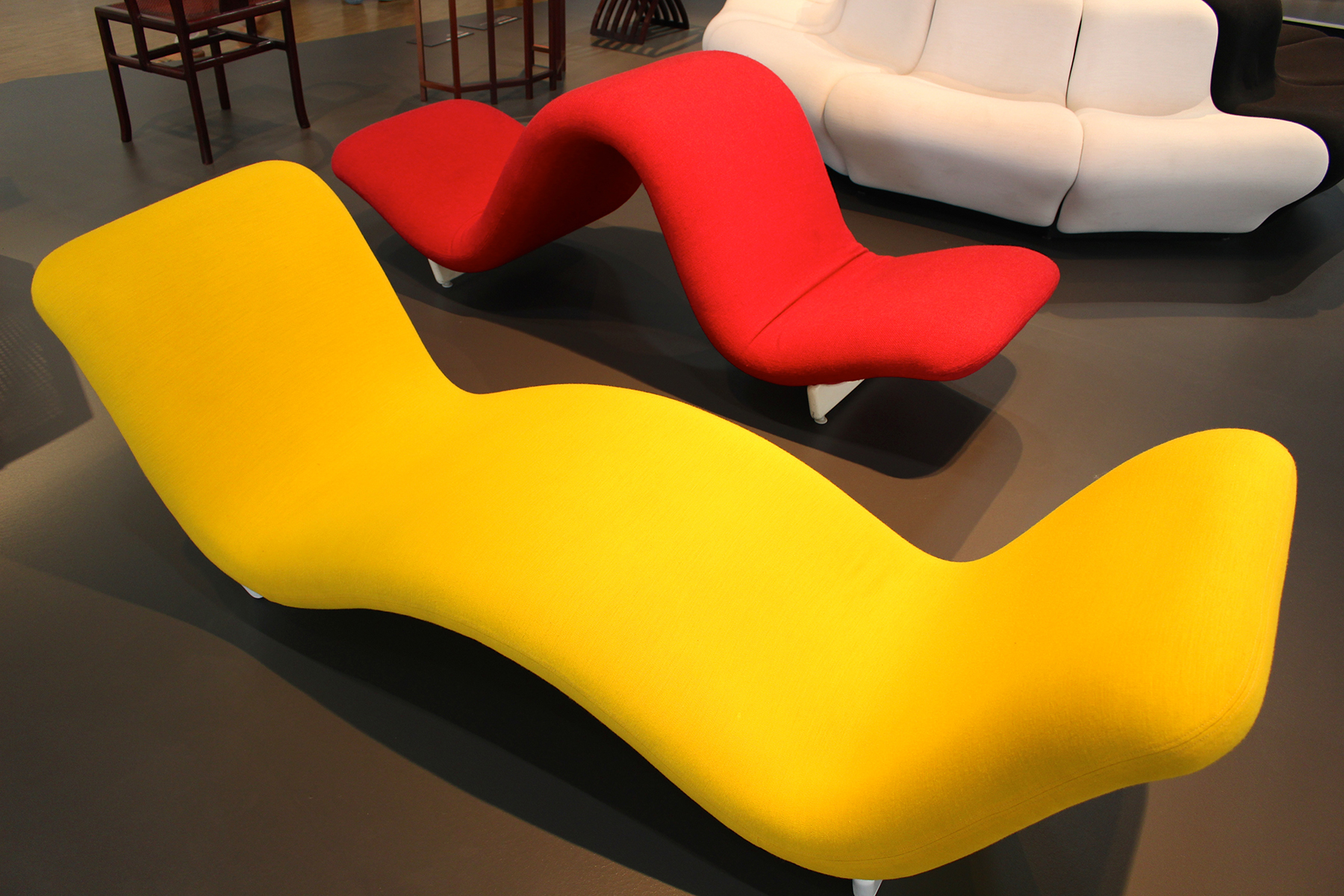
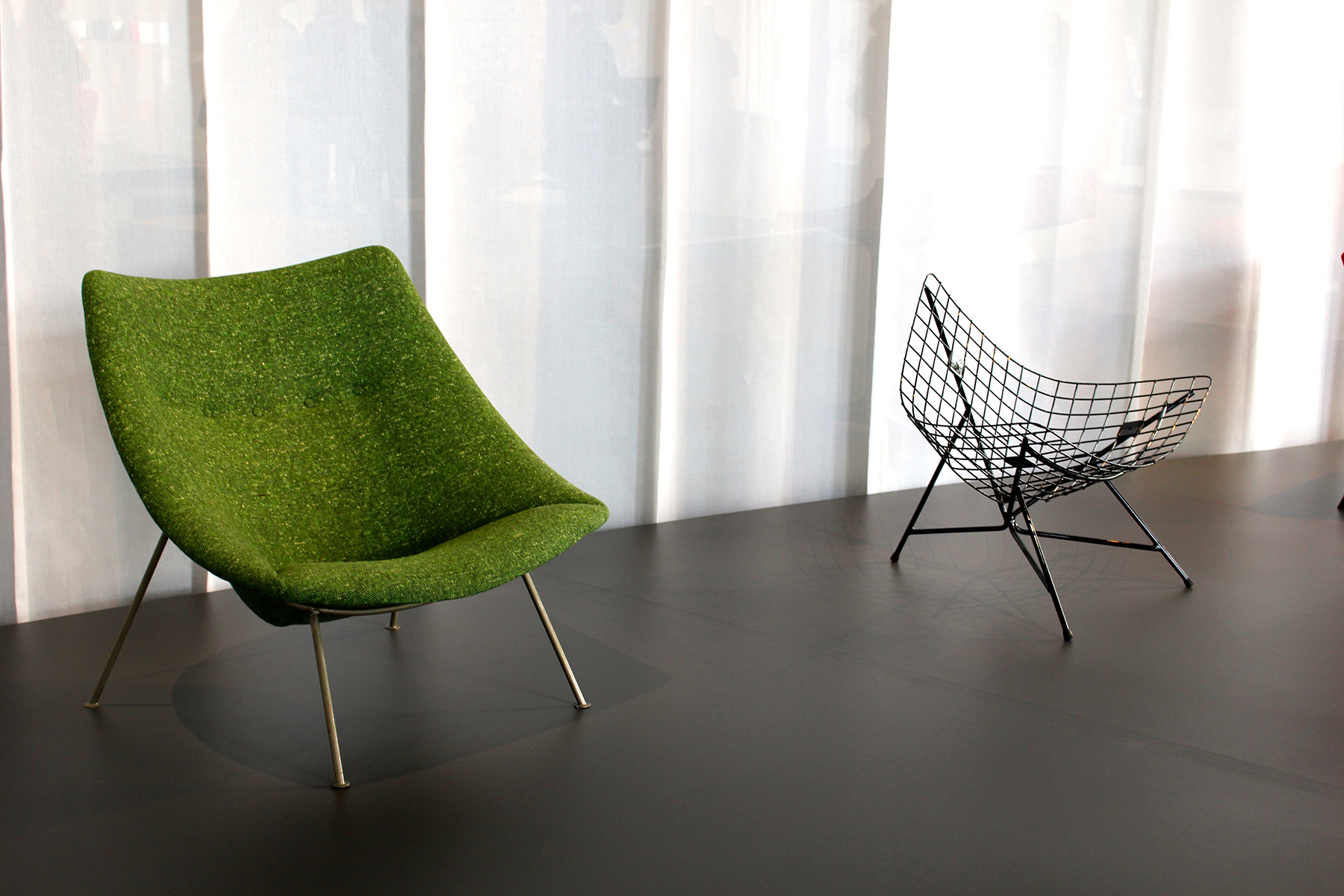
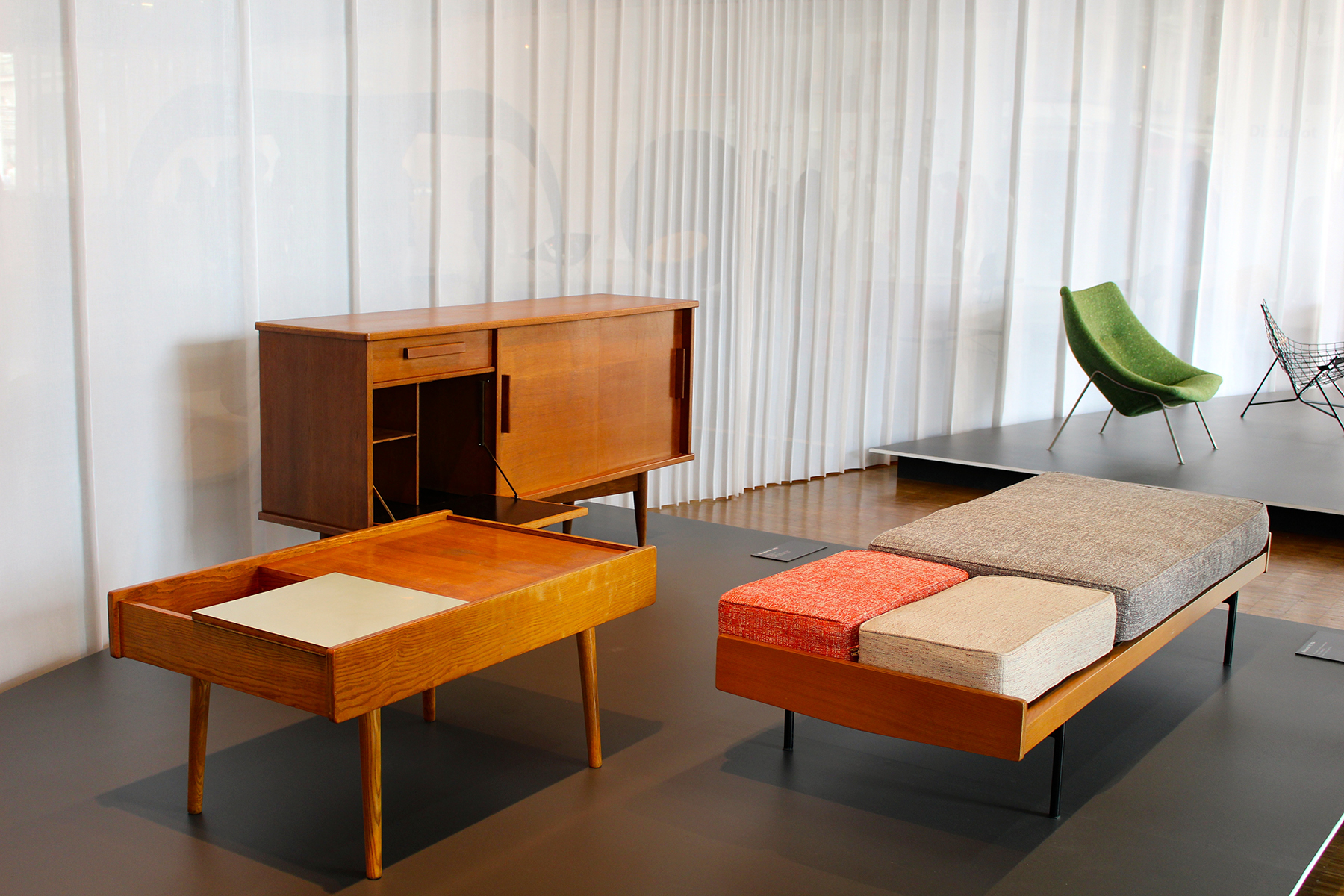
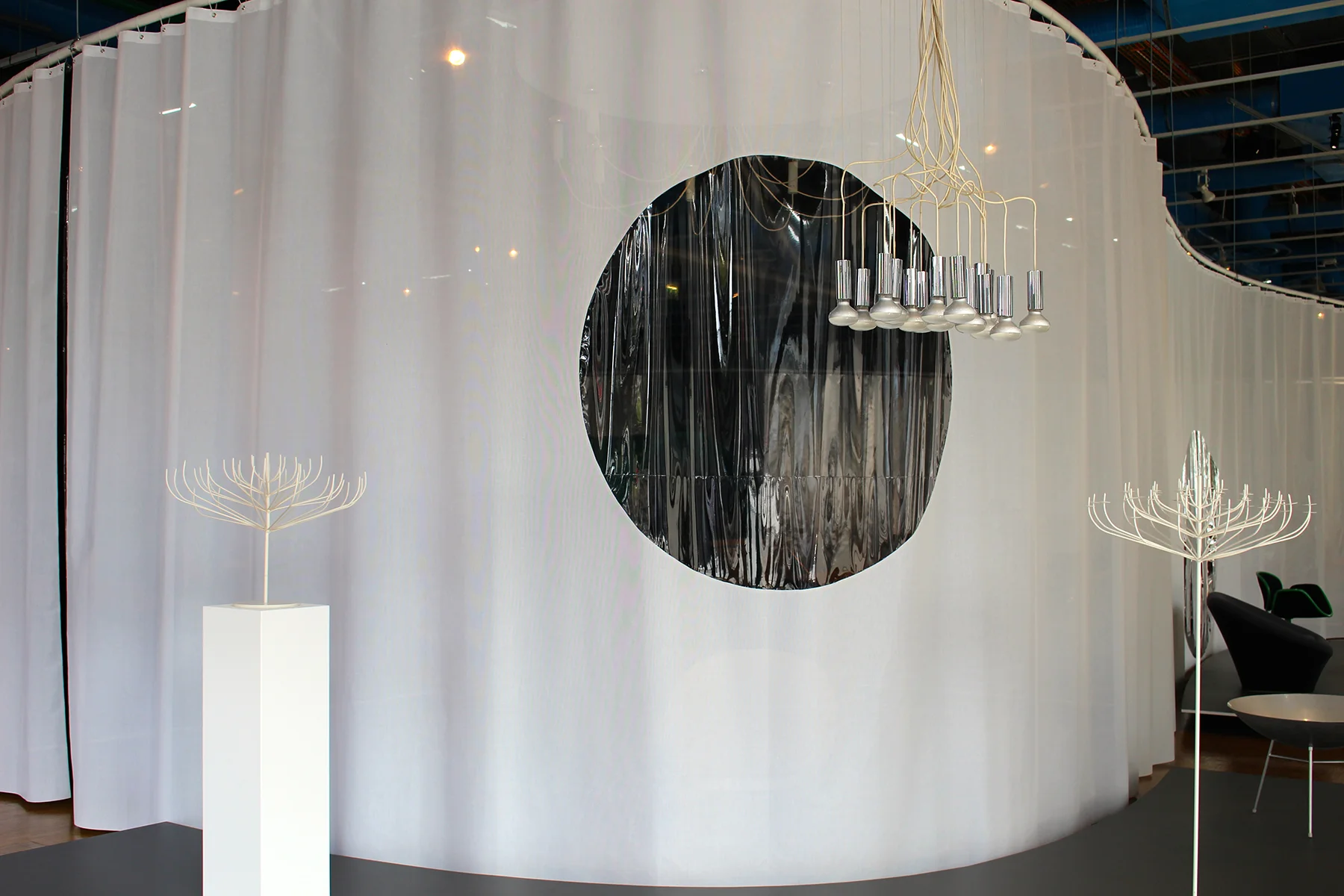
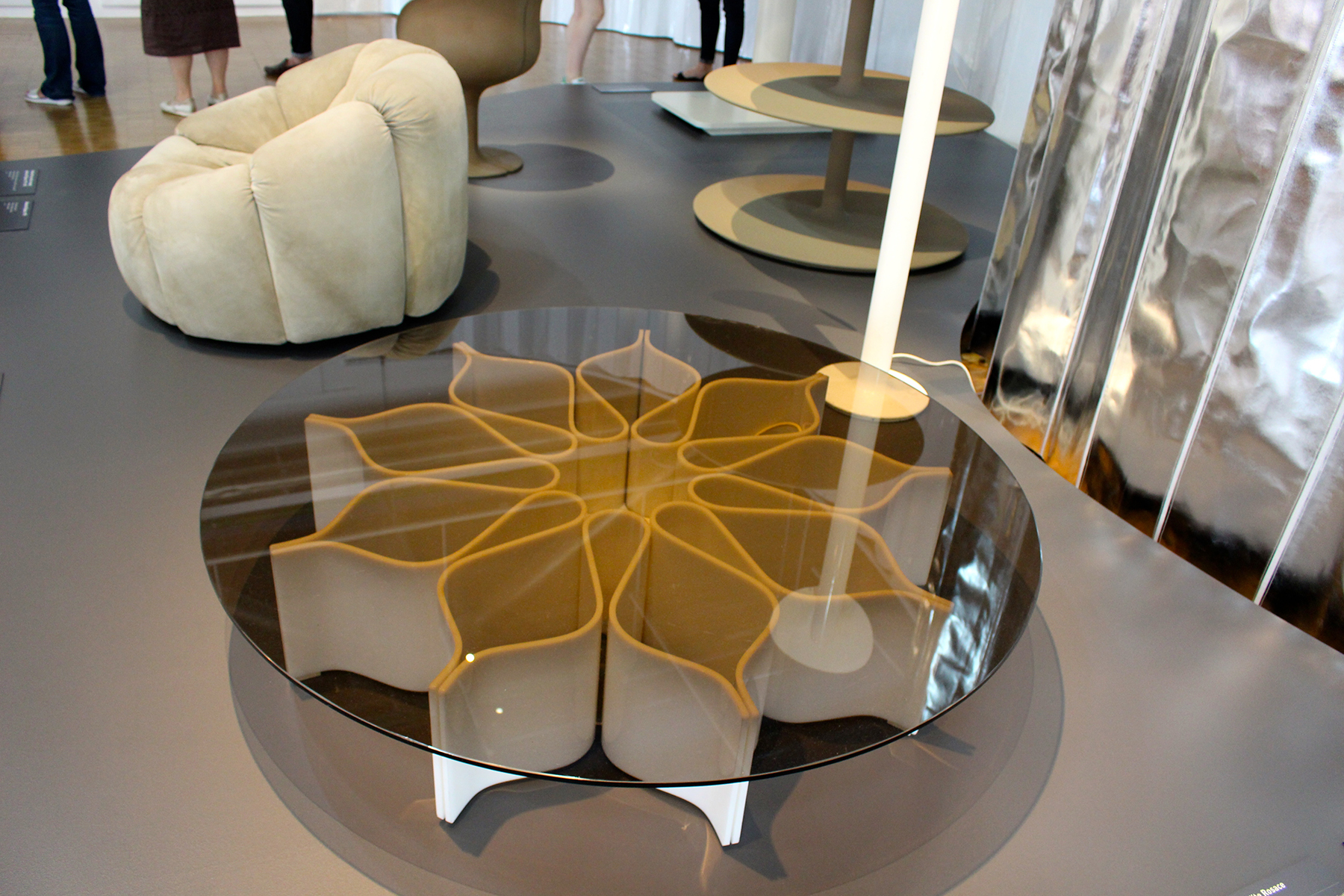
At Cooper Hewitt, the Smithsonian Design Museum in Andrew Carnegie’s former Upper East Side mansion, over 300 works consider the multisensory experience of music. Art of Noise analyzes the intersection of music and design, exploring how technology and graphics shape our consumption, understanding, and memories of music. 

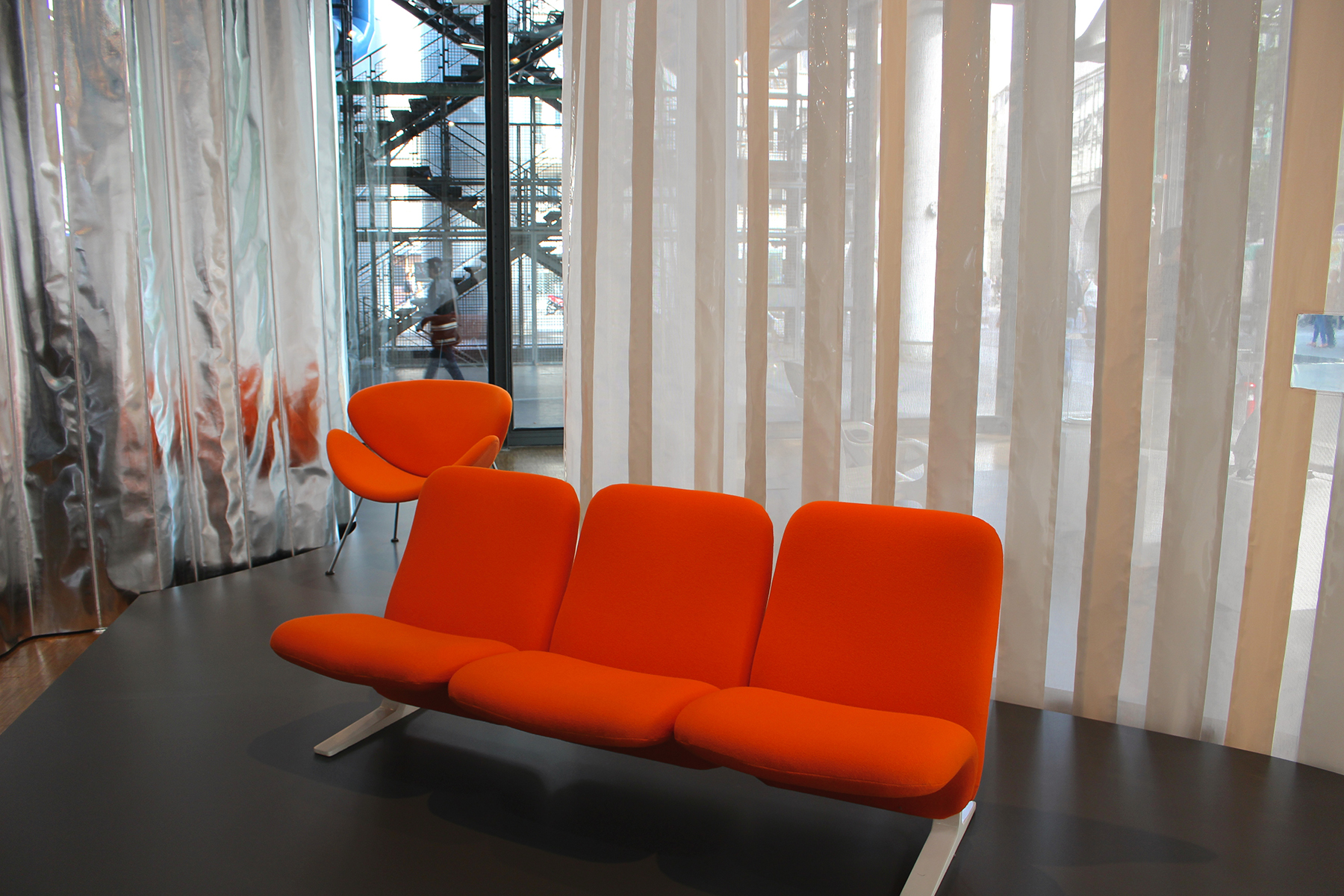
Although the exhibition provides only a few opportunities to listen to music, the radios, jukeboxes, and turntables function as works of art in their own right. The first room features a timeline of product design, from phonographs to MP3 players. We witness a familiar trend towards more affordable, versatile, and higher-fidelity products. (Bright colors seem to cycle in and out of fashion unpredictably.) The oldest device on display is Edison’s Fireside Model B cylinder phonograph, released in 1912. It cost $25 (roughly $766 today) and exclusively played four-minute celluloid records. Featured on Beastie Boys and LL Cool J album covers, the JVC RC-M90 Boombox (1981) became a commercial hit and remains coveted by collectors. Today, a blue tie-dye Gomi Bluetooth speaker, smaller and less flamboyant than its predecessors, can functionally stream an infinite supply of music.


Installation view. Photo: Thomas Barratt.


Music accompanies both public gatherings and moments of deeply personal introspection. Accordingly, a divergence between communal and personal players began in the 1950s. The Regency TR-1 was the first device to make music easily portable for a large audience. Its rectangular handheld form seems particularly prescient, hardly different from modern portable electronics. Sony’s Walkman and Apple’s iPod further normalized the experience of listening on the go and provided greater freedom to curate personalized playlists. 

Stereos and speakers occupy space in our homes and thus must accommodate evolving popular cultural aesthetics. The trumpet-style horns on the earliest phonographs resemble instruments. Later, minimalist styles sat more comfortably with home decor, reflecting the futurism of the ‘70s (including the white spherical Rosita Vision 2000, which celebrates the moon landing) and chrome and steel in the ‘80s. The influence of Dieter Rams’ mantra “less, but better” design is obvious both in his own work and that of later designers. Many of his “Ten Principles of Good Design” are exemplified by his 1963 SK 55 Radio-Phonograph, with its simple rectangular shape and clearly-labeled knobs and buttons. These remind us of the tactile ways we experience music—the turning of knobs, clicking of buttons, the weight and texture of the devices. 

Installation view. Photo: Thomas Barratt.

The exhibition’s second half focuses on two-dimensional art: album covers, posters, and flyers. The 1948 introduction of commercial LPs established a new canvas for visual artists. Early on, they often featured title blocks and portraits of artists, but by the ‘60s, many embraced bolder choices in typography and abstraction that attempted to represent the music’s essence. Familiar sights include the electric colors and bubbly, distorted typefaces characteristic of psychedelic rock; and the elegant portraits of jazz musicians.


Installation view. Photo: Thomas Barratt.


The exhibition, first shown at SFMOMA, has adapted to New York by highlighting five genres that developed in the city: folk revival, salsa, disco, punk and new wave, and hip-hop. Associated works reveal how the cultures of genres and their audiences differed and changed over time. Early punk art, for example, often projected a DIY vibe, with hand-drawn and photocopied work, whereas later new wave graphics became more stylized and less defiant. To capture the genre’s raw energy, hip-hop imagery merged graffiti aesthetics with disco chic. 


Installation view. Photo: Thomas Barratt.


Some of the most compelling implications lie in what remains unsaid. Before the late nineteenth century, recorded music did not exist; music could only be experienced through live performance, making it an inherently communal but also cumbersome and infrequent activity. The now nearly universal experience of listening to music in solitude—while driving, exercising, or studying—did not become common until the rise of portable audio technology in the mid-twentieth century.

Art of Noise offers a time capsule of a possibly foregone era of specificity. Today, people often listen to music on their smartphones, devices also used for communication, gaming, and innumerable other daily activities. But the vast majority of objects on display were designed only for the function of listening. Likewise, a rapidly-evolving lineage of physical formats—records, 8-track tapes, cassettes, CDs—has coalesced into invisible digital files. Thus the specialized designs, even if obsolete, may stay fixed in our cultural memory as visual symbols of music. 


Art of Noise is on view through August 16 at Cooper Hewitt, 2 East 91st Street, New York

Designing Motherhood Is a Spotlight on the Designs That Shape Women's Health

DialPak Contraceptive Dispenser, ca. 2001
Invented by David P. Wagner in 1964
Photo: Erik Gould

Fisher-Price Nursery Monitor, 1983
Photo: Erik Gould

text by Hank Manning

Everyone is born, but the tools that facilitate (or prevent) this process are generally neglected by museums, the very institutions meant to chronicle the human experience. Our male-dominated society has placed more value on the female form—one of the more common sights at most art museums—than the wellbeing of women. Designing Motherhood: Things That Make and Break Our Births, at the Museum of Arts and Design, inverts this to consider how objects, from IUDs to forceps to cradles, have supported, and at times threatened, the wellbeing of mothers and their children. It highlights, furthermore, how disparity of access to these tools has reinforced racial and economic inequality.

The exhibition occupies the museum’s entire fourth floor. Walking clockwise from the elevators around the perimeter, the objects generally follow the timeline of motherhood, from conception to postpartum. Immediately apparent is the sheer multitude of items designed for each stage. 

These inventions have provided some women with the freedom to delay, prevent, or end a pregnancy. A schematic banner shows dozens of patents issued for contraceptives. Older band and ring designs have gradually shrunk and evolved into T-shaped inserts. Tools to procure abortions have also shrunk, from a foot-pump connected to two jars circa 1960 to Mifepristone tablets, in an unassuming white box, today.

Installation view. Photo: Jenna Bascom

Designs for commercial products consider both style and utility. The wooden Tripp Trapp chair features a minimalist form in the shape of an italicized L. The Resus-A-Cradle, created by a midwife, with the appearance of a mummy’s sarcophagus, positions a newborn’s body for easy breathing. Some stroller innovations have sought ease of use, like the six-pound aluminum-framed “Umbrella” stroller, while others, in hot pink and baby blue, sell as eye candy. 

Installation view. Photo: Jenna Bascom

In the center of the exhibition, mannequins adorn clothes for “temporary bodies.” Corsets and girdles, popular from the 15th century onwards, reshaped pregnant women’s bodies to conform to beauty standards without concern for comfort or safety. The Page Boy skirt defied norms, in a society that still considered pregnancy something to hide, upon its 1938 release by allowing wearers to freely adjust for and reveal the curves of their growing waists. Since the 1960s, elastic clothing, like the velvet unitard Bumpsuit, has become popular. Today, pregnant women hold a wide variety of jobs: a US Army maternity uniform, with a camouflage green shirt and pants, looks hardly different from any other military outfit, except for its looser midsection. These outfits, always visible in our peripheral vision, suggest a model of progress for the other sections: designs should make mothers’ lives more comfortable and accessible. 

Deborah Willis
I Made Space for a Good Man, 2009
Lithograph

Photographs evoke mothers’ attitudes towards their rites of passage. Intimate stills show tender love as well as fatigue experienced caring for newborns. In three self-portraits titled I Made Space for a Good Man, Deborah Willis reclaims a spiteful comment that she took up the space of a “good man” by working as a professor while pregnant, declaring that she made space in her body for a “good man,” her son and fellow artist Hank Willis Thomas. 

Birth control pills, cesarean sections, baby formula, and many other innovations have saved countless lives, but access remains unequal. Over time, the universal experience of birth has become less natural and more varied. A National Call for Birth Justice and Accountability, on display, decries that the US suffers the highest rate of maternal death of any developed nation, with women of color disproportionately falling victim at a ratio of nearly 4:1 as compared to white mothers. Relatedly, medical bills reveal that childbirth in the US costs more on average than any other country. Barriers are not only economic but also political. In fourteen languages, green posters featuring the face of the Statue of Liberty describe abortions as “legal, safe, and available.”

By focusing on the designs that shape reproductive health, we recognize them as central to our shared human story.

Designing Motherhood: Things That Make and Break Our Births is on view through March 15 at the Museum of Arts and Design, 2 Columbus Circle, New York
Simin Jalilian Solo Exhibiiton at 68projects by Kornfeld in Berlin

Simin Jalilian, Installation view, 68projects by KORNFELD, 2025, Photo: Andrea Katheder

At 68projects by KORNFELD, Simin Jalilian’s solo exhibition is less a show and more a visceral confrontation. Marking her debut presentation of new paintings in Berlin, the Hamburg-based Iranian artist delivers works that are both urgent and introspective — a searing combination of the biographical and the political, filtered through a painterly language that resists containment.

Jalilian’s brushstrokes do not seek perfection; they pulse with immediacy. Her canvases feel alive, caught in a moment of transformation, where figures and emotions blur into a current of expressionist intensity. The visual tension is palpable: one moment teeters on the brink of despair, another radiates fleeting transcendence.

In Please Don’t Deport, the artist places herself at the heart of a haunting tableau — a deportation scene at an airport. “That’s me,” she says, directly implicating her own fears and the shadow of displacement that haunts many immigrants. Jalilian moved from Tehran to Germany in 2016, and her work speaks directly from that liminal space between belonging and exclusion. The painting is not a plea for pity but a fierce assertion of freedom — artistic, personal, and existential.

Her painting Refugees evokes another fragile threshold: a child being passed across a divide between land and sea. The moment is suspended in light, but not safety. Danger looms, and the ambiguity of survival is never resolved. In Integration, the political becomes intimate. A casual act — opening a beer bottle — becomes a coded ritual of assimilation. The moment is undercut by blood-red fractures beneath the figures, revealing how easily identity and land can break open.

Despite their rootedness in realism, Jalilian’s paintings reject photographic precision. She conjures bodies and landscapes from memory and emotion, not from reference material. The result is work that feels fiercely personal and painterly, drawing on the legacy of German Neo-Expressionism but evolving it with a distinctly female and diasporic urgency. Her mentors may include Werner Büttner, but her voice is unmistakably her own.

In The Wow Effect, even cinema-goers are caught between rapture and blindness — a metaphor for our digital age, perhaps, but also for the dissonance between spectacle and truth. Jalilian’s paintings offer no easy conclusions. Instead, they demand we remain present — alive to instability, beauty, and the enduring human will to remain free.

On view until August 23

Simin Jalilian, Installation view, 68projects by KORNFELD, 2025, Photo: Andrea Katheder

The Artistry of Azzedine Alaïa and Thierry Mugler meets in a celebration of their shared vision in Paris


Veste en astrakan d’Azzedine Alaïa, 1980. © Julien Vidal


text by Eva Megannety

The legacy of two fashion visionaries intertwines in a new exhibition at the Fondation Azzedine Alaïa, where the artistry of Alaïa and Thierry Mugler meets in a celebration of their shared vision. Running from March 3rd to June 29th, 2025, this retrospective honors the friendship and creative affinities between the two designers, offering a rare glimpse into their personal and professional bond.

Azzedine Alaïa found a kindred spirit in Thierry Mugler, whose larger-than-life creations and theatrical approach to fashion were as iconic as the silhouettes he designed. Their relationship began in 1979, when Mugler invited Alaïa to design tuxedos for his autumn-winter 1979-80 collection. The collaboration marked the beginning of a decade-long friendship that would leave an indelible mark on the fashion world.

In this exhibition, over forty works from Mugler’s archive are displayed alongside Alaïa’s own creations, allowing visitors to see how their shared creative spirit manifested in their designs. From Alaïa’s impeccable craftsmanship to Mugler’s bold experimentation with shape and form, the two designers were united by a mutual respect that transcended the runway. Both were masters of the female form, crafting garments that enhanced and empowered, each piece telling a story of elegance, strength, and sensuality.

Alaïa’s reputation as a perfectionist who favored intimate settings and close relationships with his clients contrasted with Mugler’s penchant for dramatic spectacles and larger-than-life fashion shows. Yet, together, they influenced each other in profound ways. Mugler’s theatrical flair found a new sophistication in Alaïa’s structured designs, while Alaïa’s meticulous attention to detail encouraged Mugler to refine his aesthetic and focus on the body’s natural lines. Their shared vision culminated in the 1980s, when both designers elevated glamour to new heights, drawing inspiration from the silhouettes of the 1930s and 1950s.

This exhibition is not only a celebration of two extraordinary designers but also a testament to the enduring power of collaboration. Alaïa’s dedication to preserving and enhancing his own work—through his foundation and vast personal archive—ensures that the dialogue between him and Mugler will continue to inspire future generations of designers and fashion lovers alike.

The Fondation Azzedine Alaïa, located at 18 rue de la Verrerie in Paris, remains a cultural beacon, housing not only Alaïa’s collections but also a space for art, design, and creative expression. The exhibition invites visitors to immerse themselves in the world of two legendary couturiers whose mutual admiration and creative exchange left an indelible mark on the fashion industry.


Thierry Mugler and Azzedine Alaïa 1980/1990: Two decades of artistic affinities is on view March 3 to June 29, 2025 at Saillard Fondation Azzedine Alaïa, 18 rue de la Verrerie, Paris 4e

Neo Classic Sueño: Works by Chris Wolston Shot by David Sierra


photography by David Sierra
artwork by
Chris Wolston
production by
Radha León
styling by
Santiago Alzate
modeling by
Loui, Cristian, & Cristian

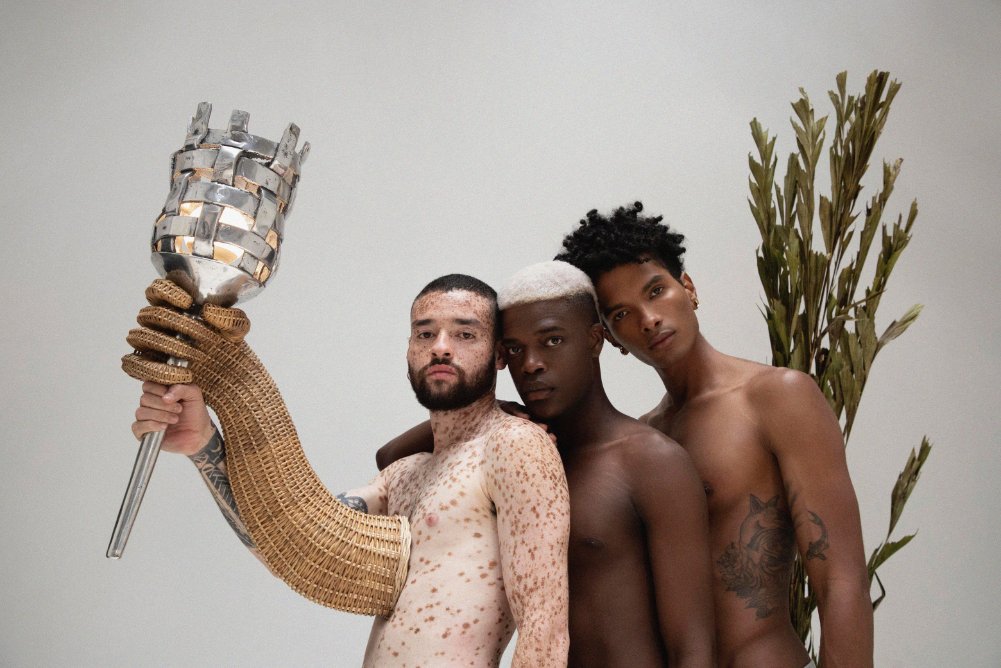
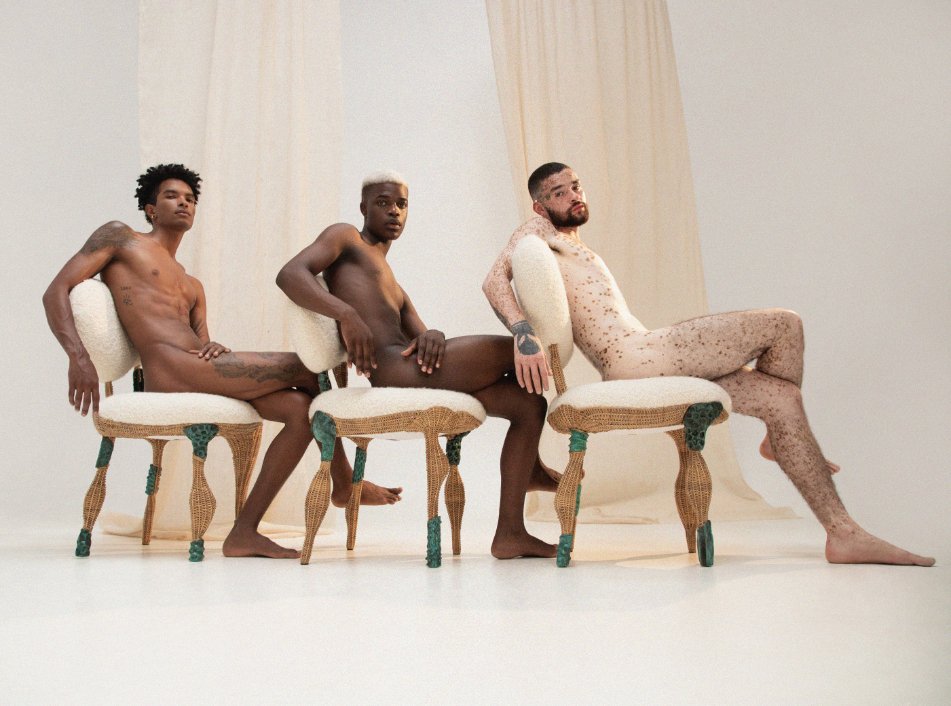
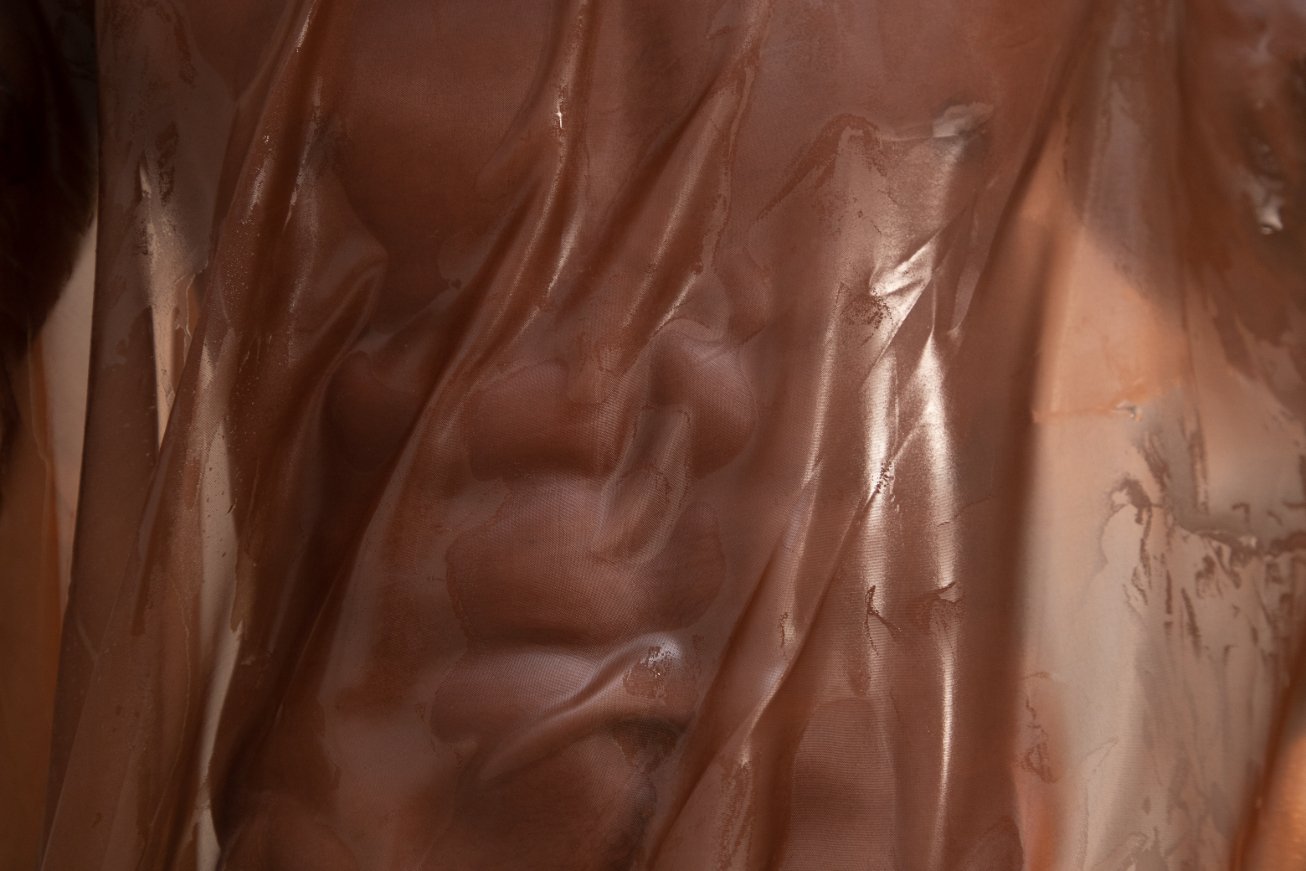
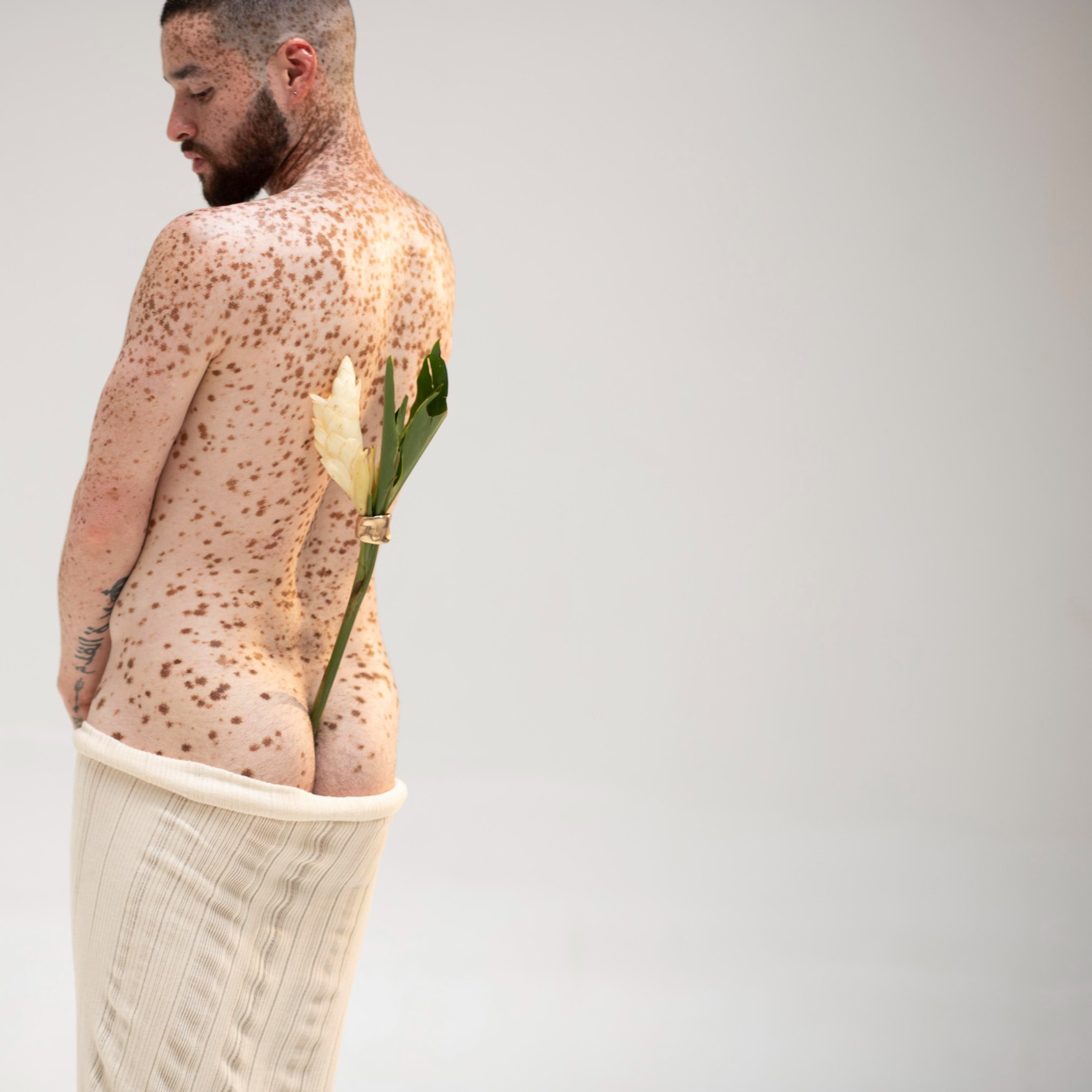
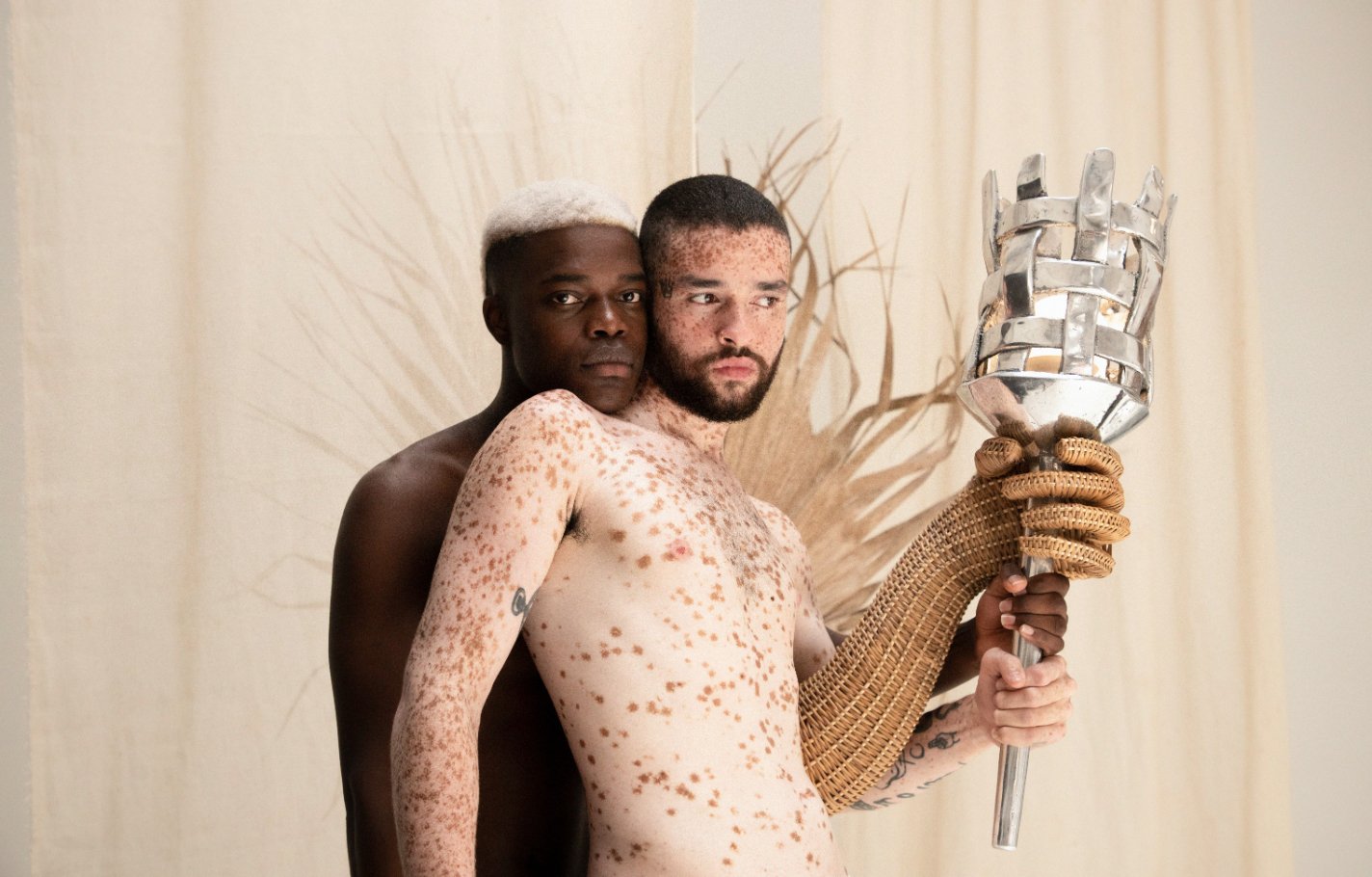
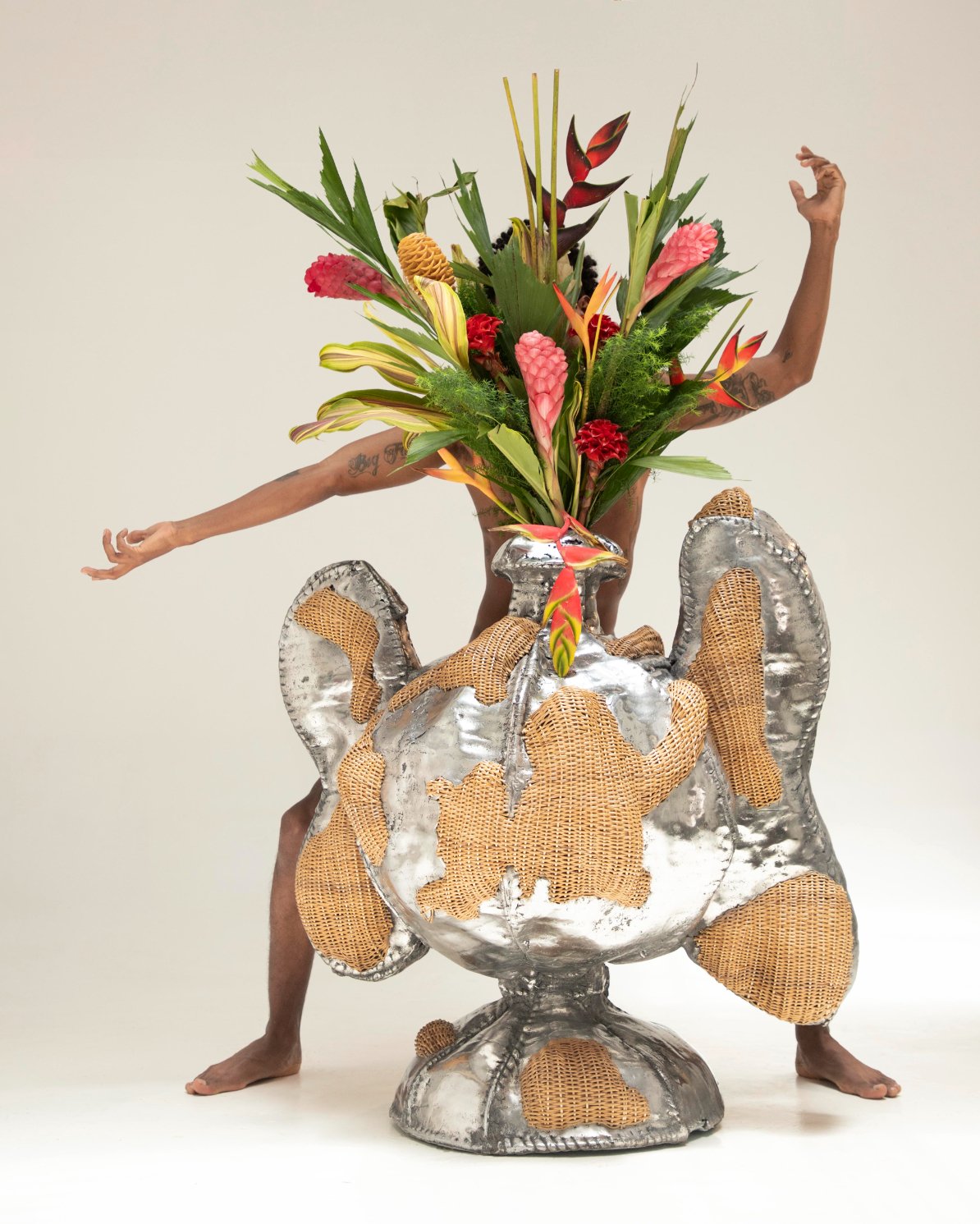
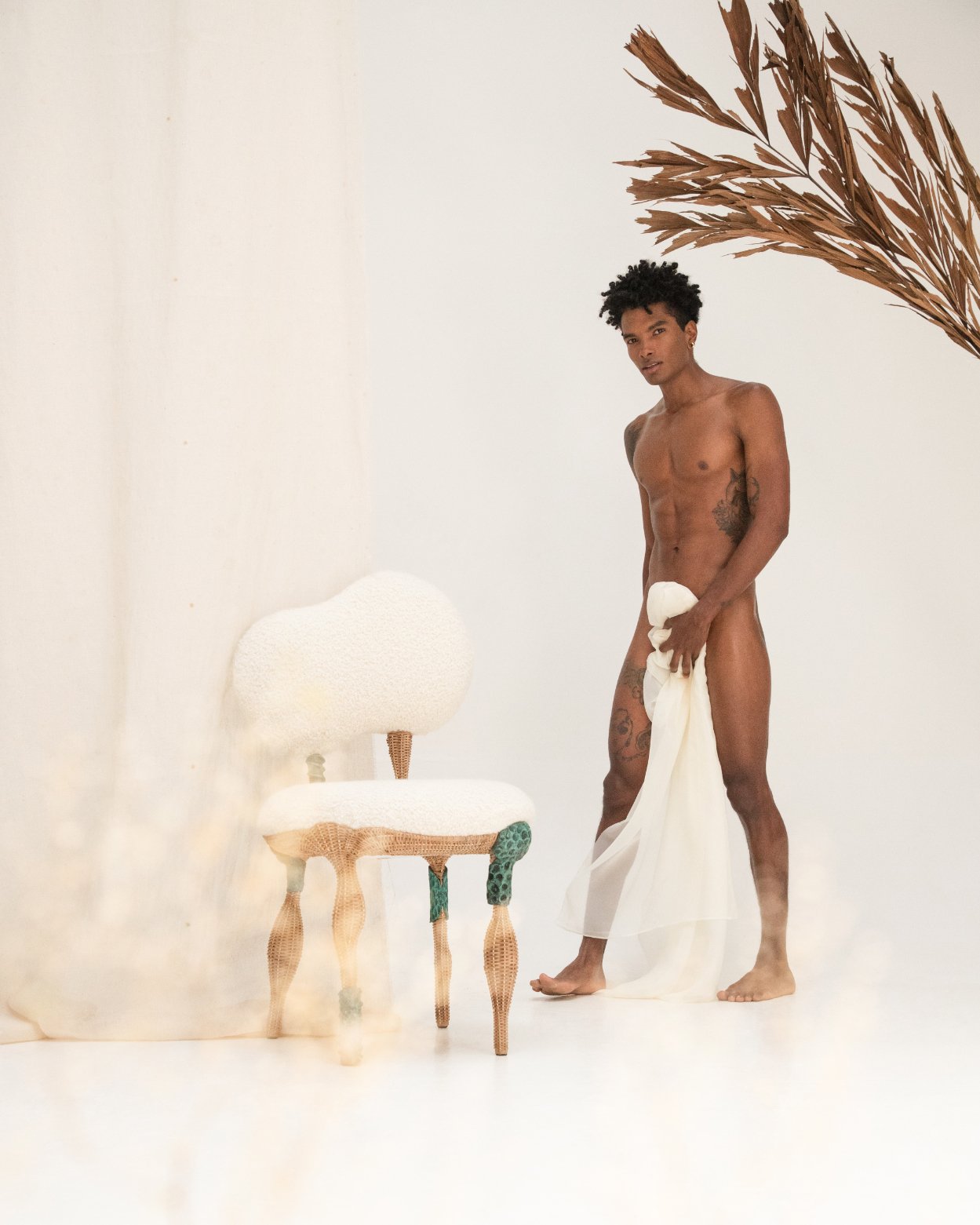
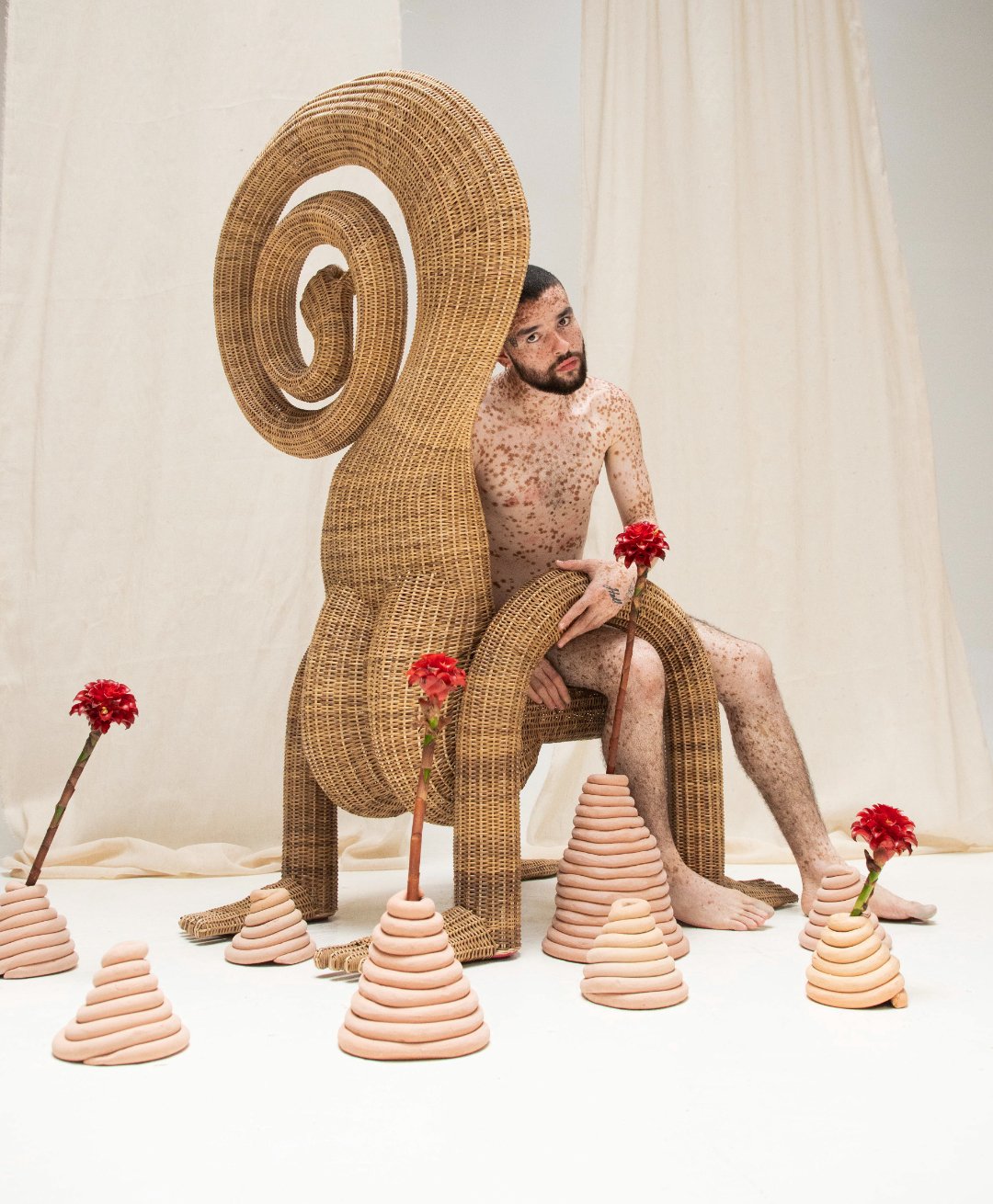
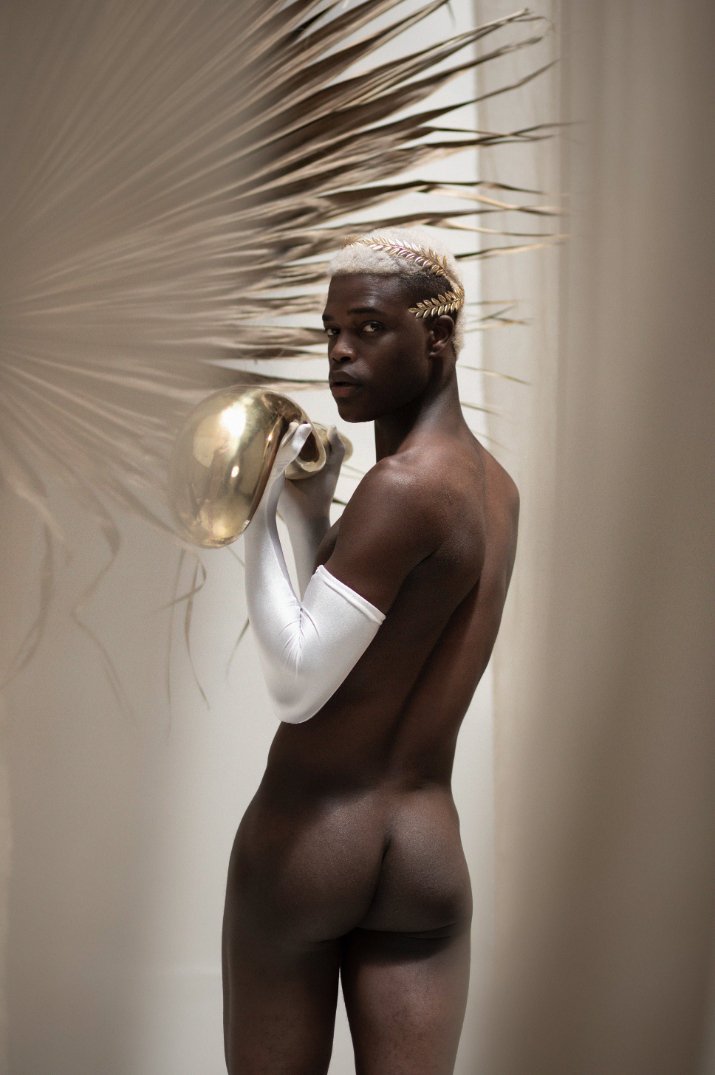
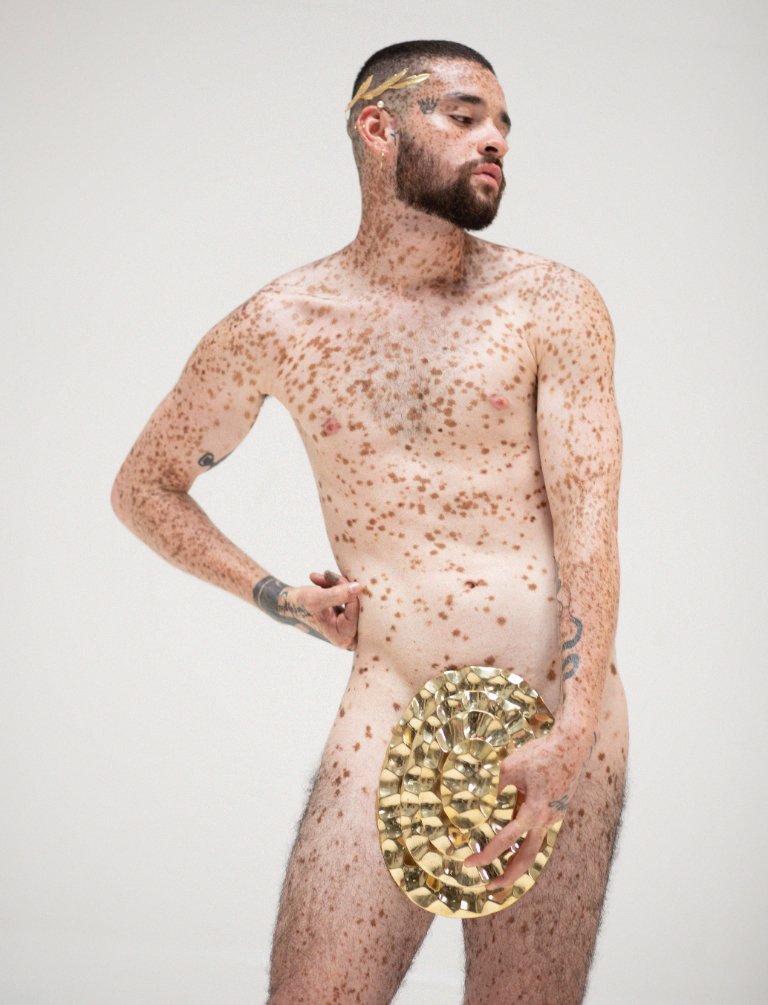
Photographer David Sierra captures forms that are tropical, sexy and oneiric. Taking inspiration from the work of Medellin-based artist/designer Chris Wolston and Neoclassical postures, these images center an appreciation for the body in its natural state. Relaxed figures that are visibly comfortable within their own skin interact casually with furniture and spatial elements in a fashion that is unpretentious and uplifting.

Look out for Chris Wolston’s furniture on view now with The Future Perfect @ Design Miami and watch the accompanying film on our instagram.


Dozie Kanu's World Building Tools: An Interview From The Biodiversity Issue


text by Oliver Kupper
portraits by
Parker Woods 

Dozie Kanu’s practice is a conceptual exploration of colonial and hegemonic politics, architecture, spatial narratives, and so much more. Born in Houston, Texas in 1993, and now based in Santarém, Portugal, Kanu’s investigation of cultural artifacts belies an America still grappling with not only its troubled past, but also its troubled present. Razor-sharp, anti-climb, raptor spikes, a visual and physical deterrent for vandals and undesirables, find their way onto one of his sculptures modeled as a baby crib, an emblematic nod to the countless divisions that are psychologically embedded at birth. There is something alchemical about Kanu’s reimagined objects of our urban visual landscape, like an ATM blasted with a thick layer of black epoxy sculpting clay, or a poured concrete chair in “crack rock beige” that sits on a spoked tire rim, that gives Kanu’s work a kind of authentic reclamation of power in a grief-stricken zeitgeist. We caught up with Kanu on a rare visit to Los Angeles, before the opening of his exhibition, to prop and ignore, at Manual Arts, to discuss tools for building a more socially equitable world. Read more.

House & Garden Is A World Of Domestic Bliss @ Stroll Garden In Los Angeles

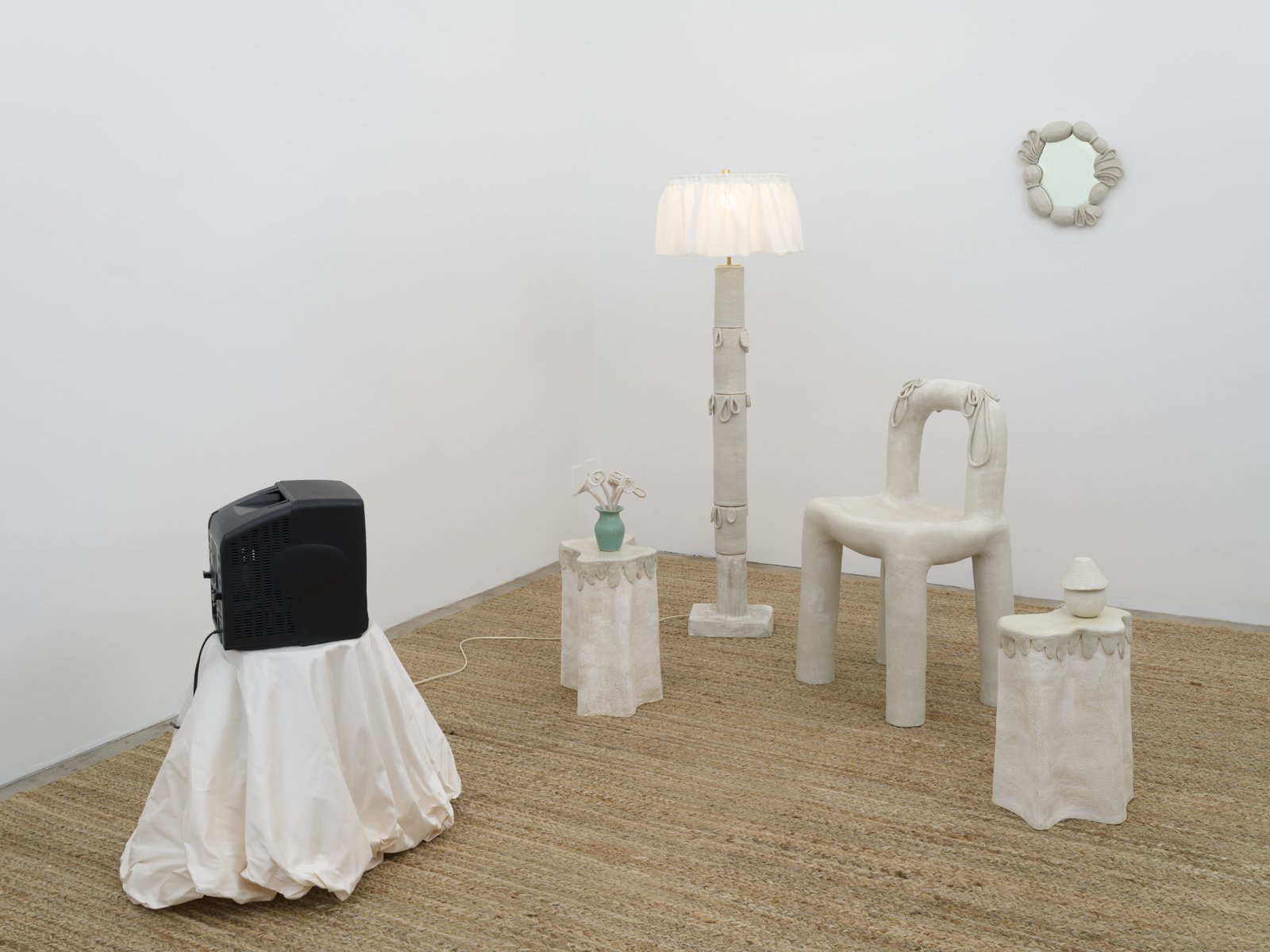
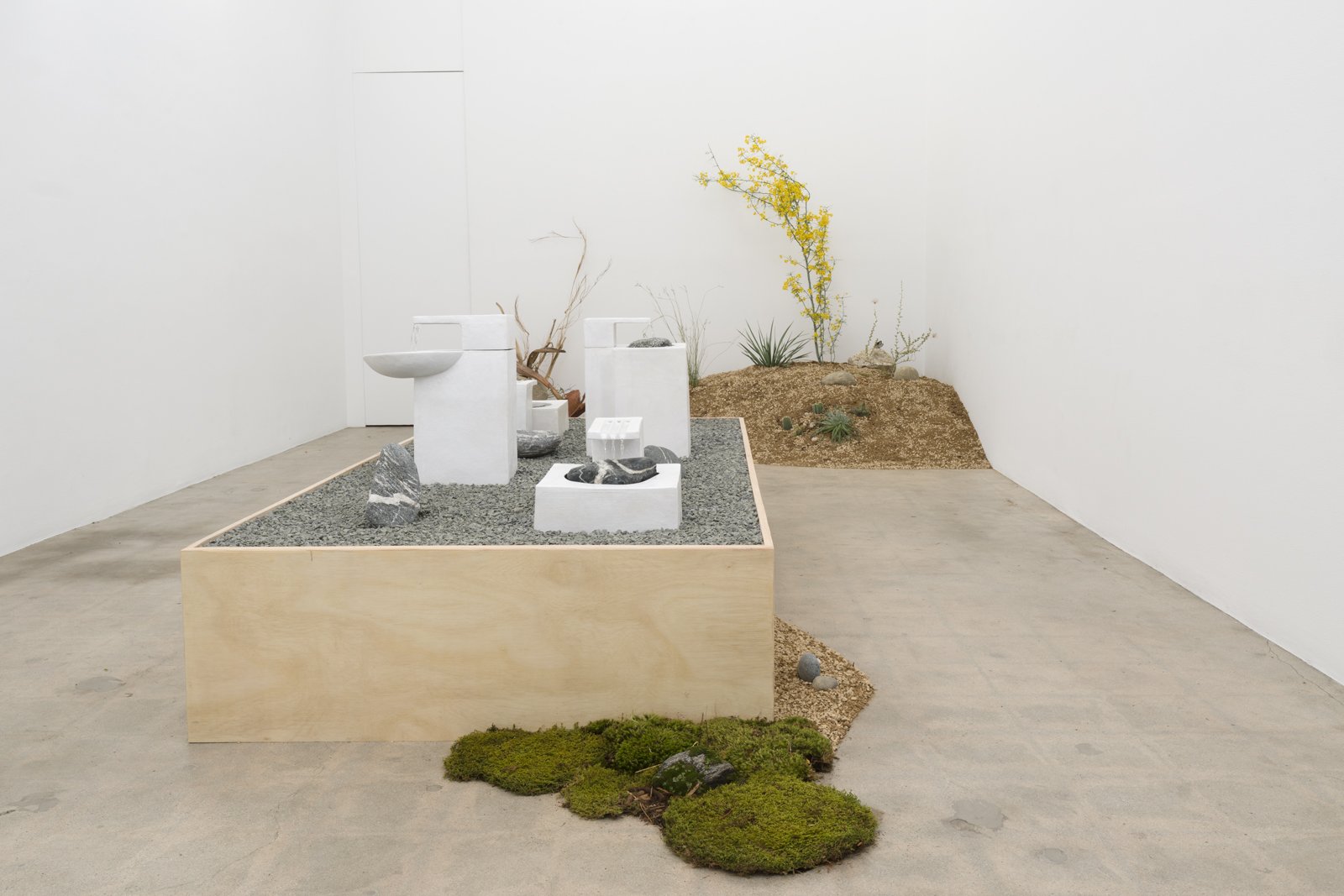
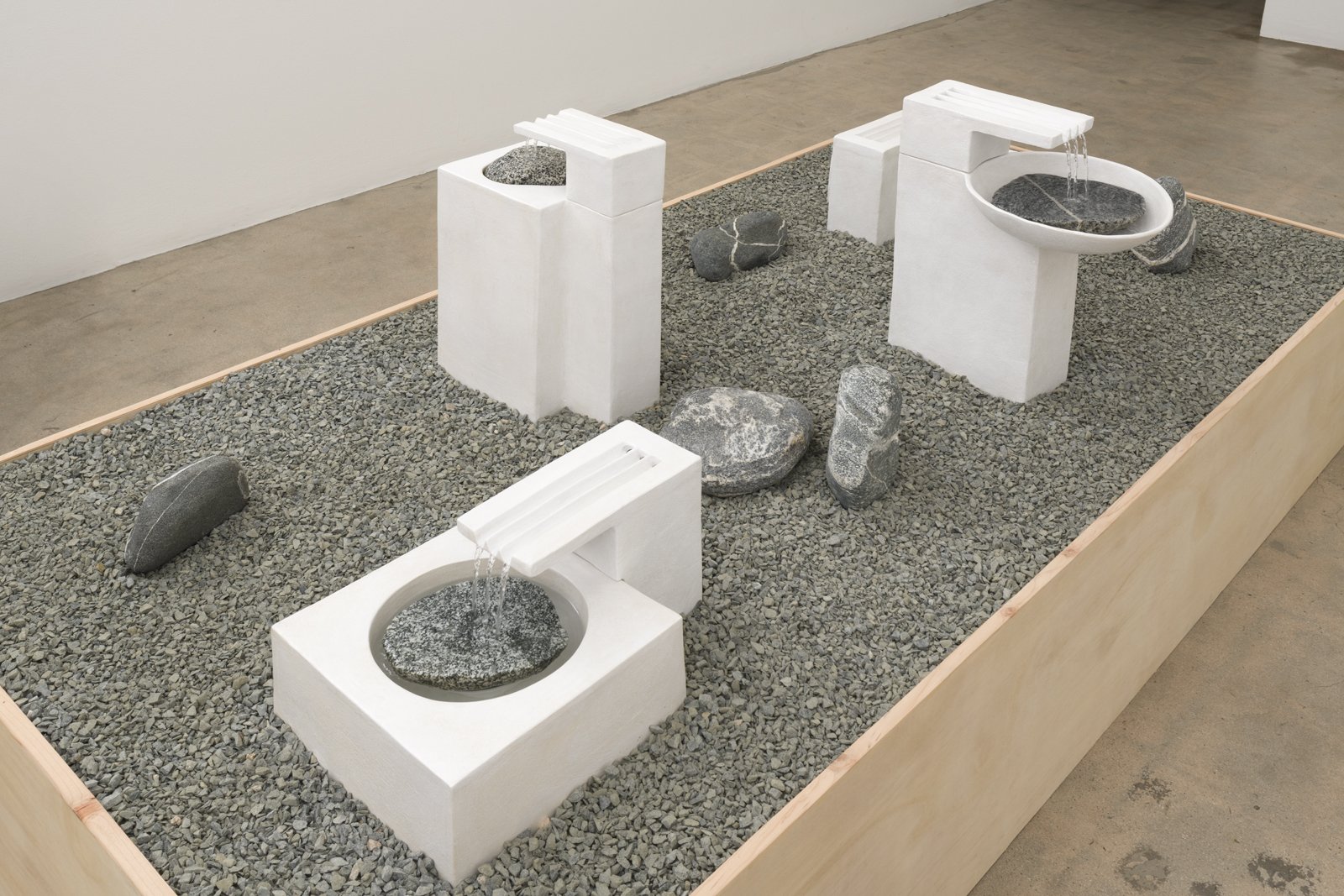
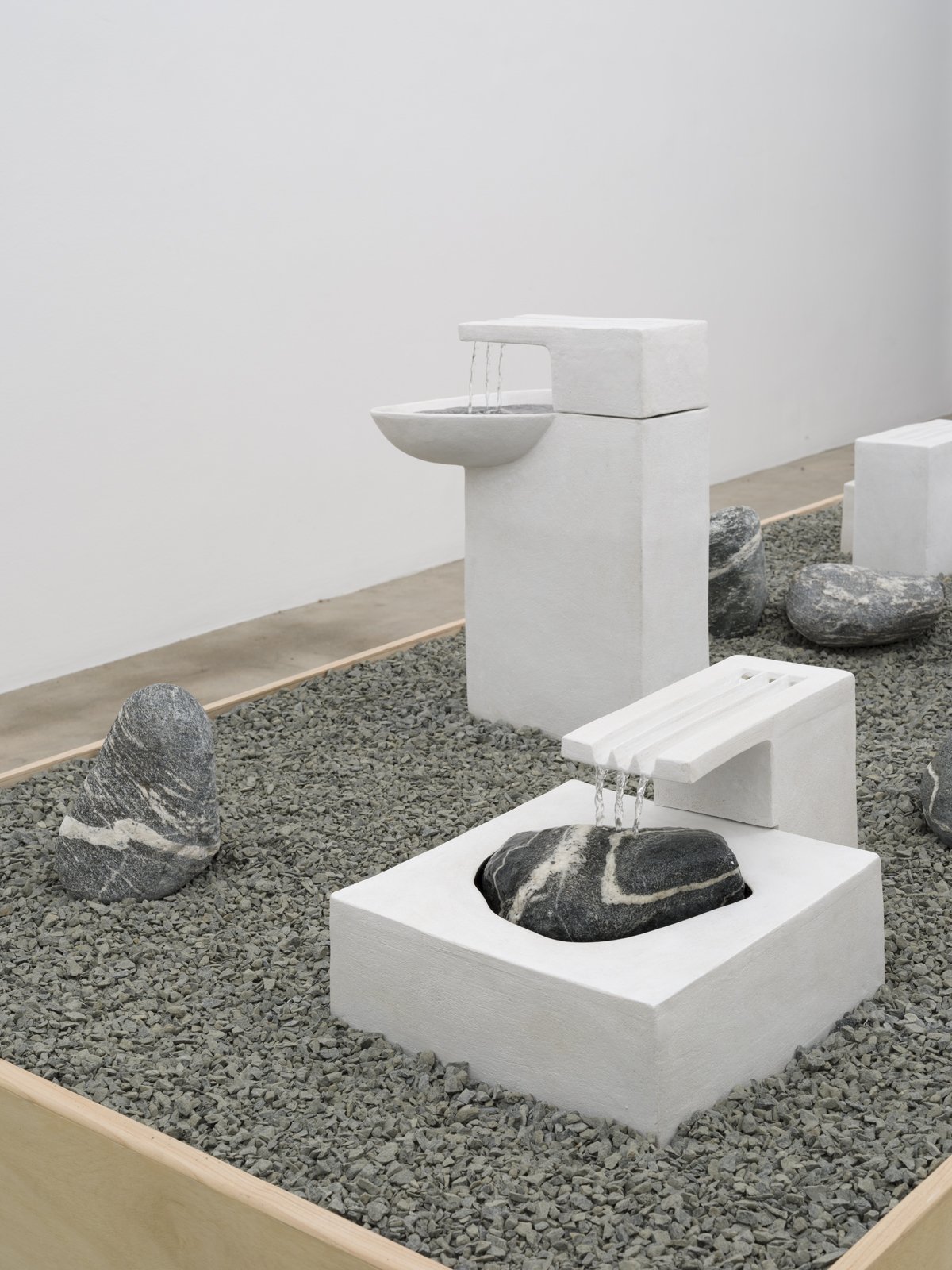
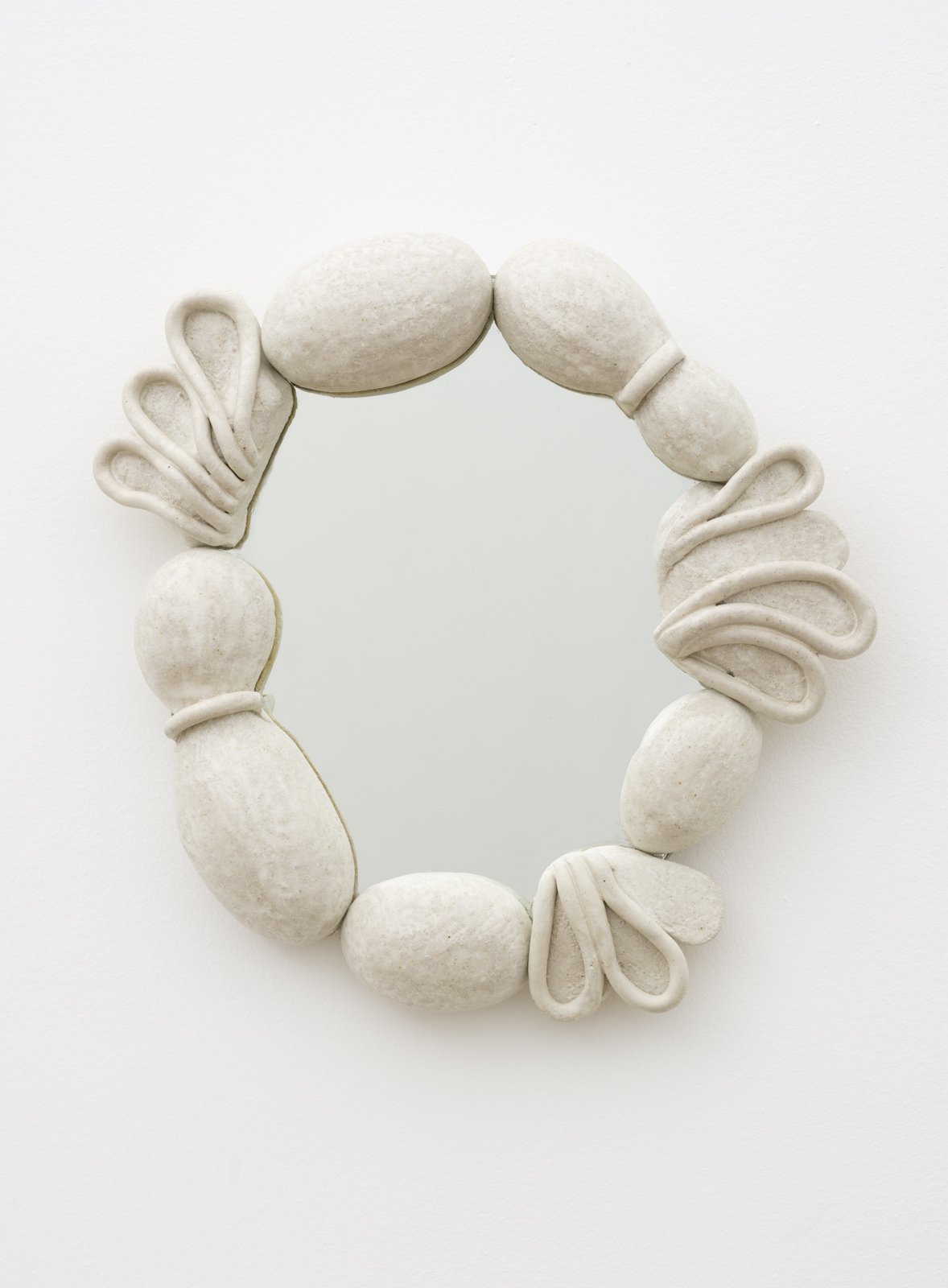
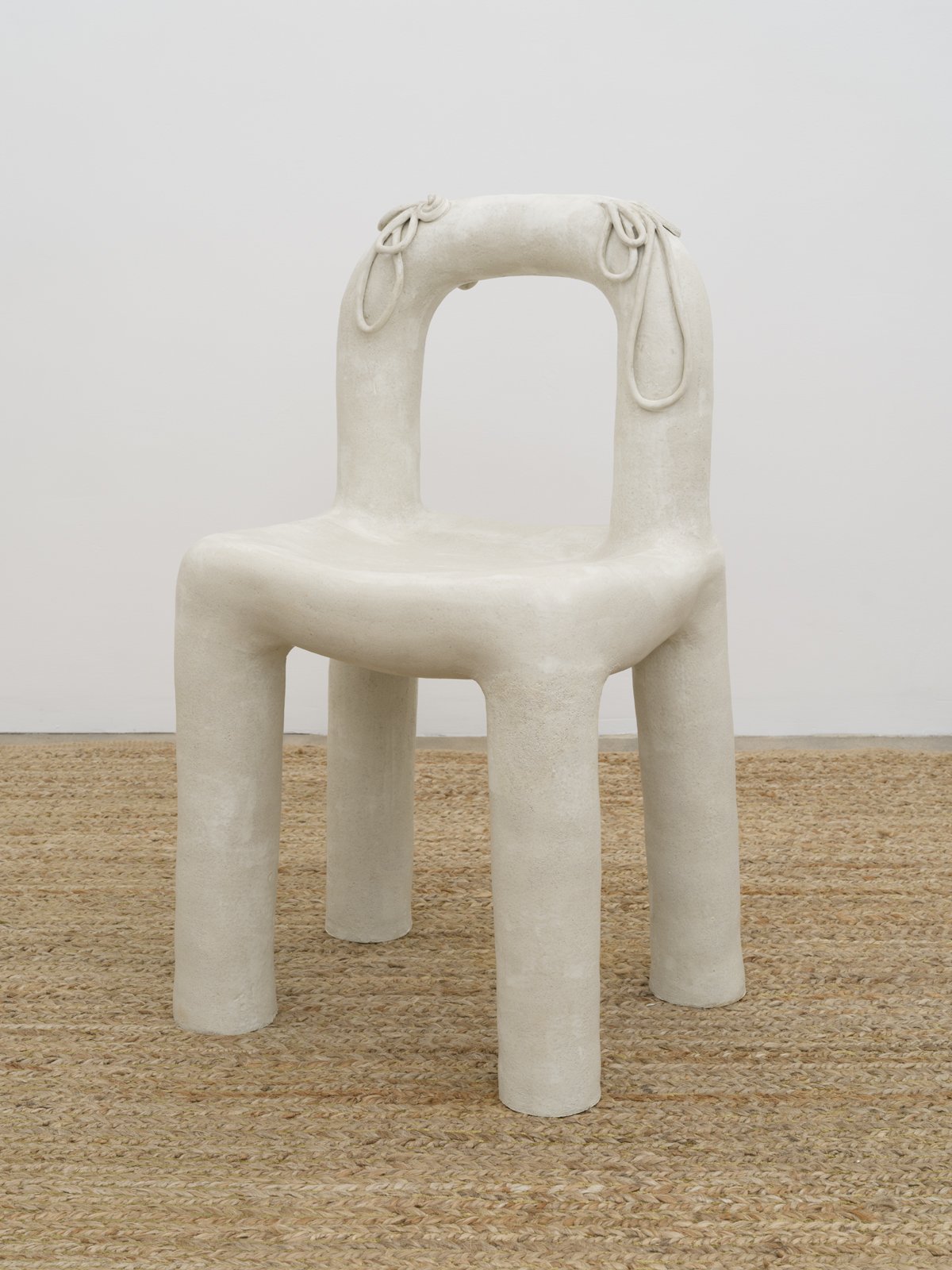
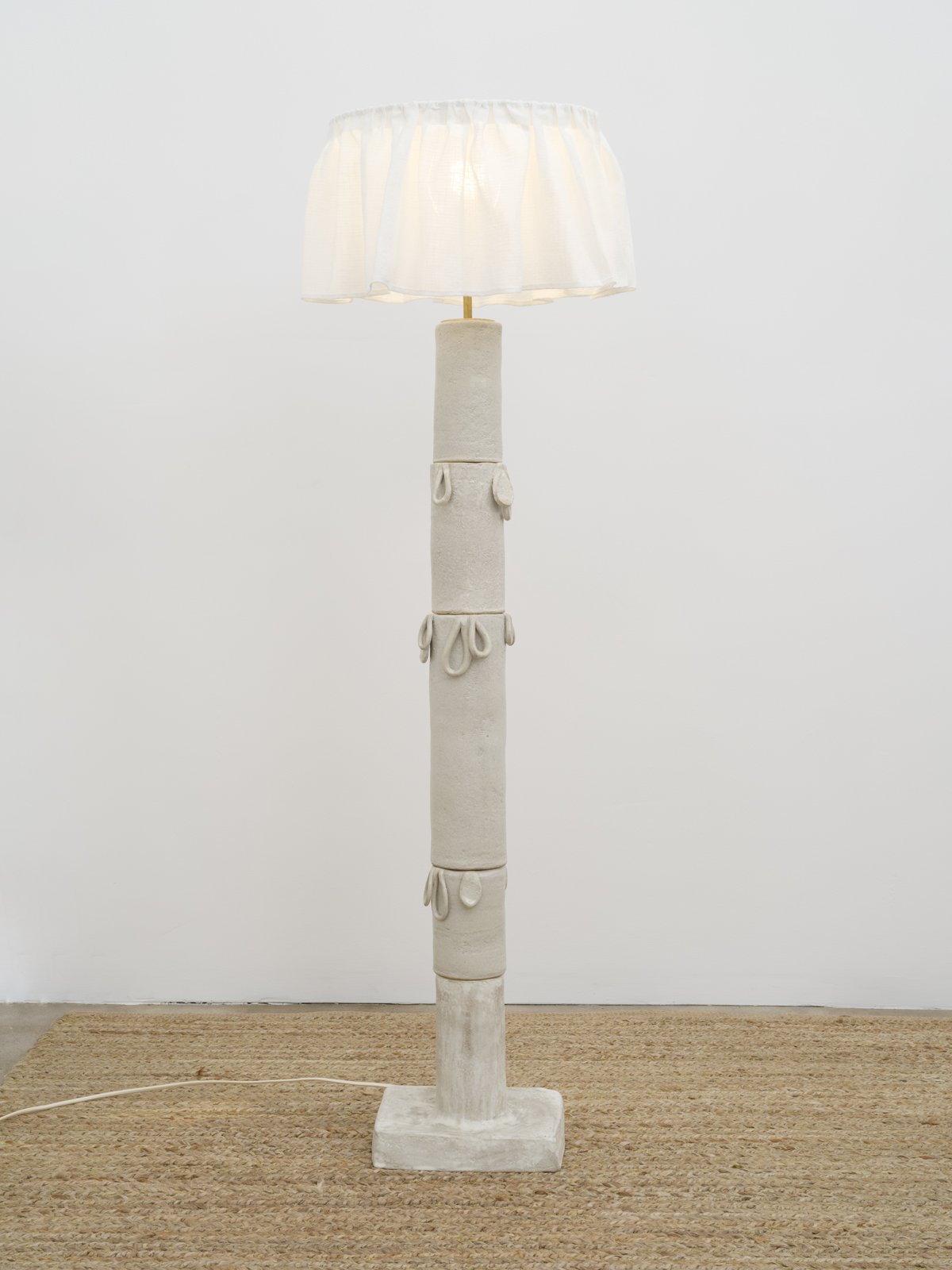
Conceived as a singular installation, House & Garden welcomes viewers into a home of domestic items rendered in clay by Analuisa Corrigan and a garden of working ceramic fountains by Lily Clark, complimented by live plant vignettes created by Alice Lam of A.L. BASA. In recontextualizing the familiar, the artists invite a moment of pause to reengage our senses and reconsider our relationship to often overlooked elements of the everyday, both domestic and elemental. Corrigan creates organic, figurative forms that unite material exploration and personal expression. Corrigan’s pieces are deceptively labor intensive, taking up to a month to make. After sketching and prototyping, each is carefully built up through a coil technique, then dried and sanded to achieve the desired silhouette. The resulting work feels simultaneously robust and delicate.

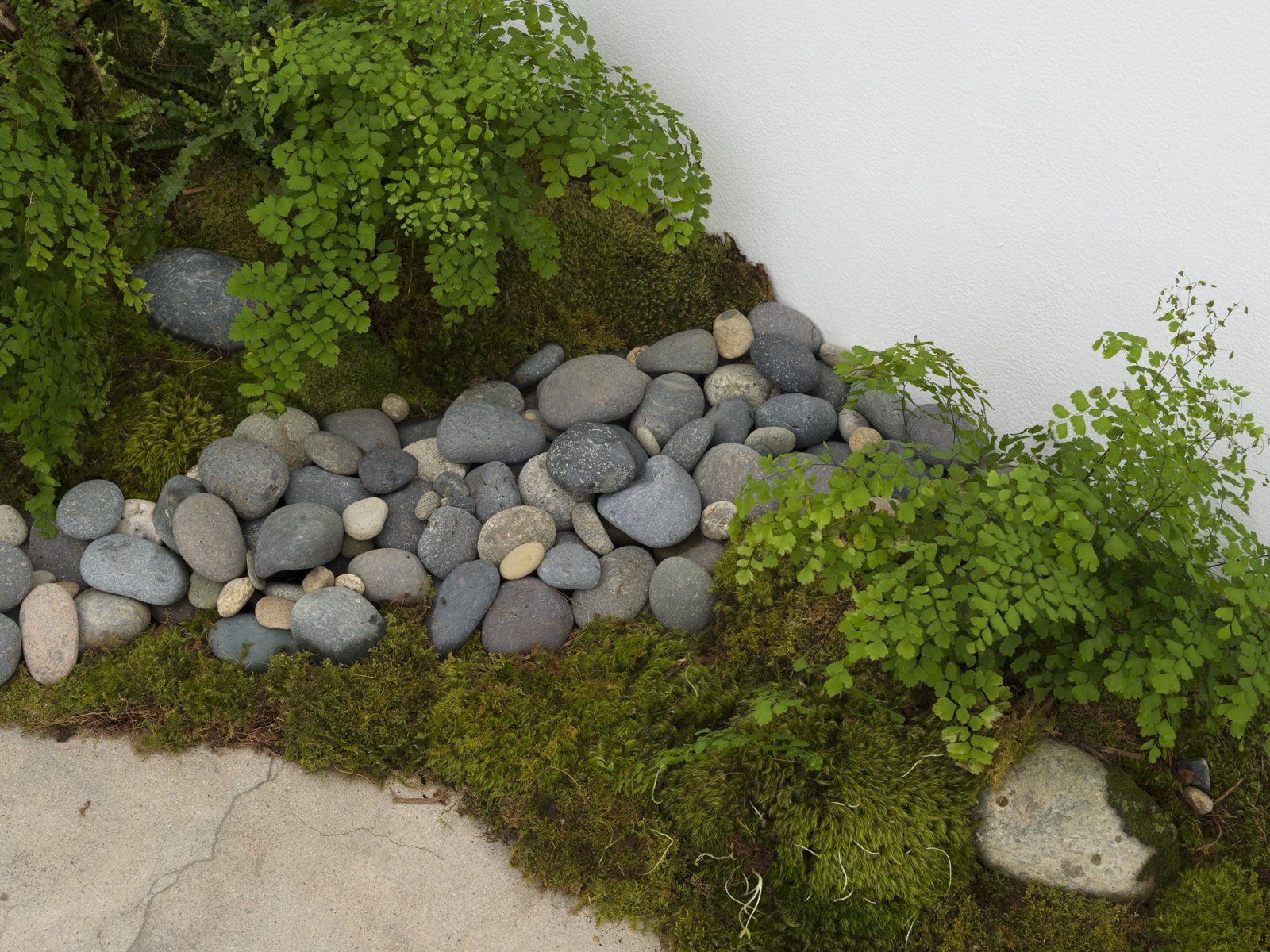
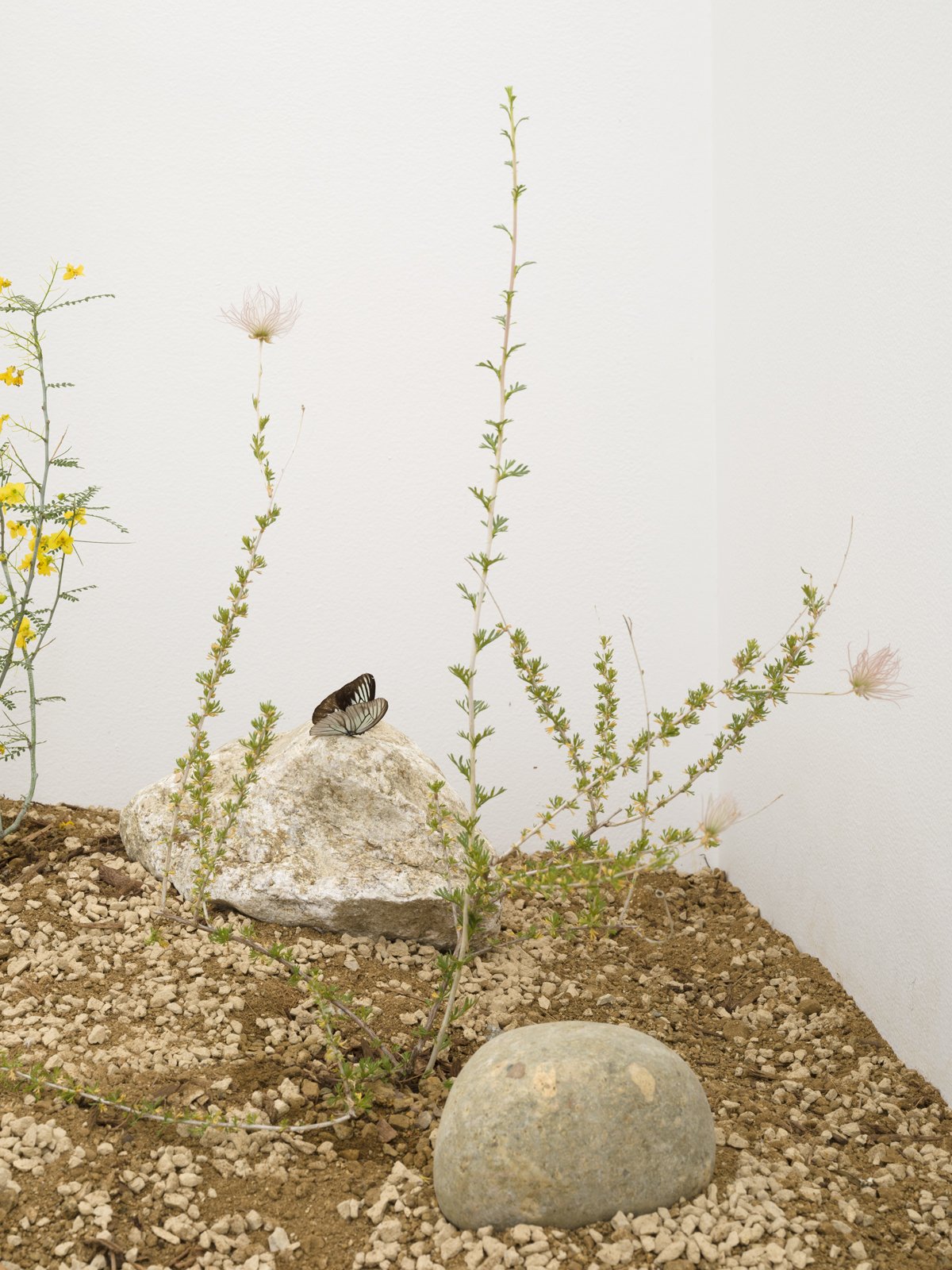
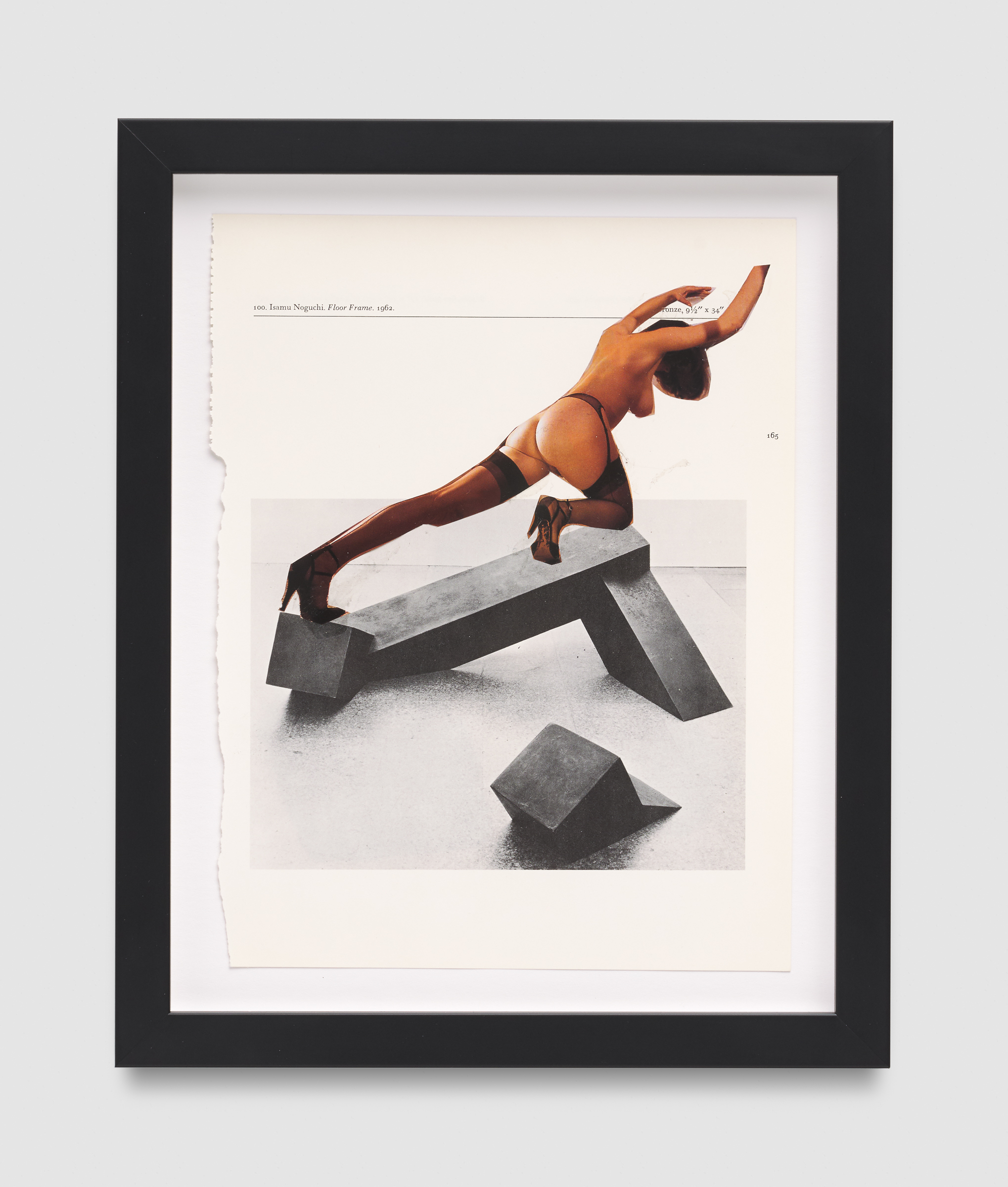
Whereas Corrigan works intuitively, Clark’s process embraces precision, reflecting her interest in engineering. After drafting a design, she rolls slabs of clay and cuts using a template, then carefully joins the seams. The surface is left unglazed to contrast with the water’s luster. For her large-scale fountains, Clark incorporates stones that she spent six months sourcing from the Whitewater quarry just outside of Palm Springs, fine tuning the design to achieve her desired water flow and sound. Clark’s fountains are arranged within an “indoor garden” by Alice Lam, whose Los Angeles-based creative studio A.L. BASA specializes in sculptural floral installations. Lam’s site-specific design references Buddhist Zen gardens created around works by Isamu Noguchi, as well as plants that are representative of California’s biodiversity. Immersive and temporal, House & Garden contemplates notions of interior and exterior — both somatic and psychological, experienced and subjective.

House & Garden is on view through June 11 @ Stroll Garden 7380 Beverly Boulevard.


Read A Conversation Between Ferrari Sheppard & Michèle Lamy On The Occasion Of His Solo Exhibition @ UTA Artist Space

IMG_0428.jpeg

Ferrari Sheppard is an enigmatic, multi-disciplinary artist whose practice defies classification, and lives firmly at the center of a three-dimensional venn diagram. Likewise, the work of Michèle Lamy is as fluid and instinctive as it is crystallized in her unmistakable and ever-expansive character. She is not just a maven of fashion, design, and art, or an innovator of music and former restaurateur. She is a cultivator of community and expression. Sheppard is not just a painter, writer, photographer and music producer. He is an activist who has worked to provide relief aid in Haiti, shape economic policy and development in South Africa, and shine light on the Israel-Palestine conflict. It makes perfect sense that the two of them would fortuitously meet at Mr. Chow’s while stepping outside for a cigarette. Sheppard’s recent solo exhibition of paintings, Positions of Power, at UTA Artist Space is a testament to the mistreatment of a generation for profit by the criminal justice system. They are love letters to those who carried the weight of the “war on drugs” and risked it all in pursuit of freedom in the United States. Their structural composition is the result of an almost unconscious, improvised dance. A process that the artist refers to as “walking while painting.” The figures are laid heavy with dark brown and black pigments that visibly absorb light, and are gilded with a reflective gold trim, creating a balance that feels harmonious and befitting. At the center of the gallery’s main space lies a brutalist, three-pronged elmwood bench of mythical giant proportions. A place to put everything down and spend some time with the work. A creation that could only come from the collective minds of Michèle Lamy and Rick Owens. And the perfect place for these two chameleonic masters of material, sound, and ceremony to discuss their work. Read more.

Students At The European Institute Of Design In Milan Are Innovating Inclusivity

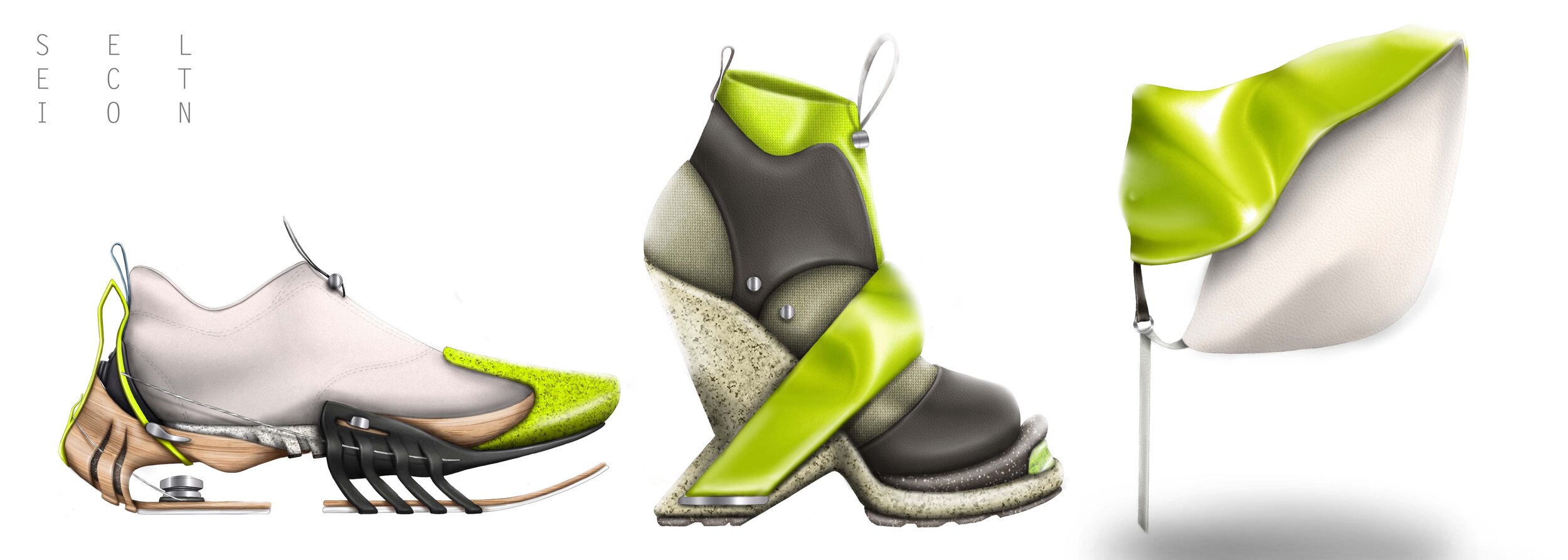
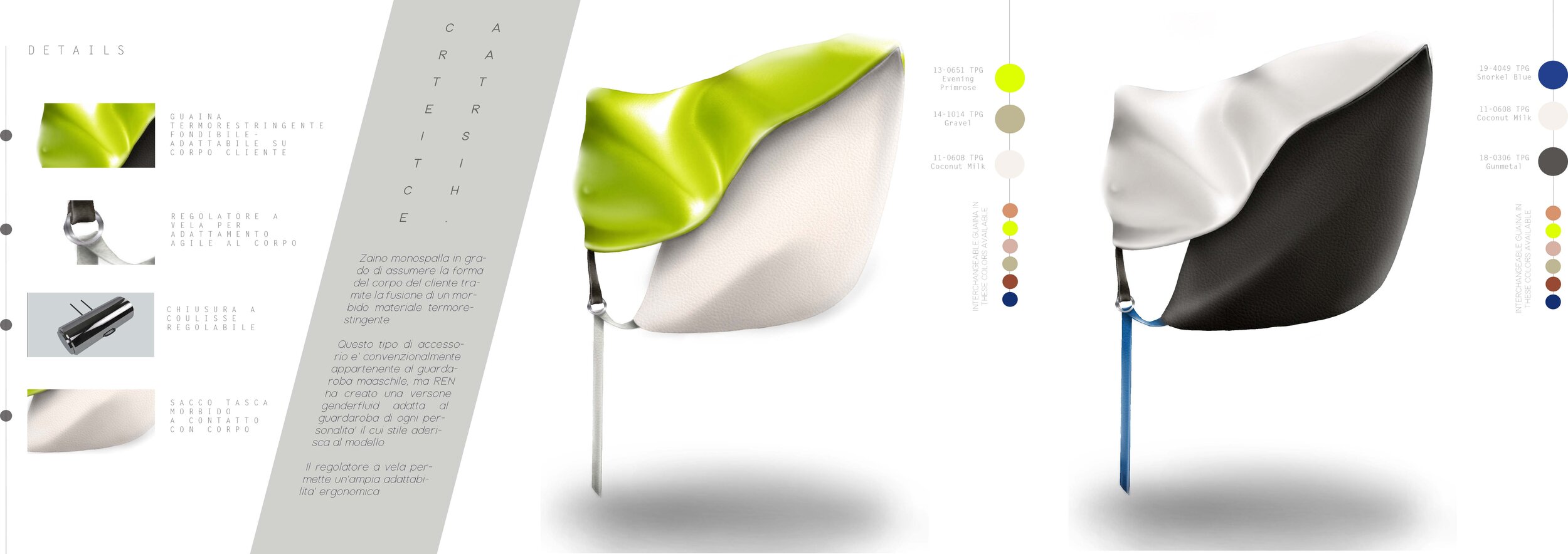
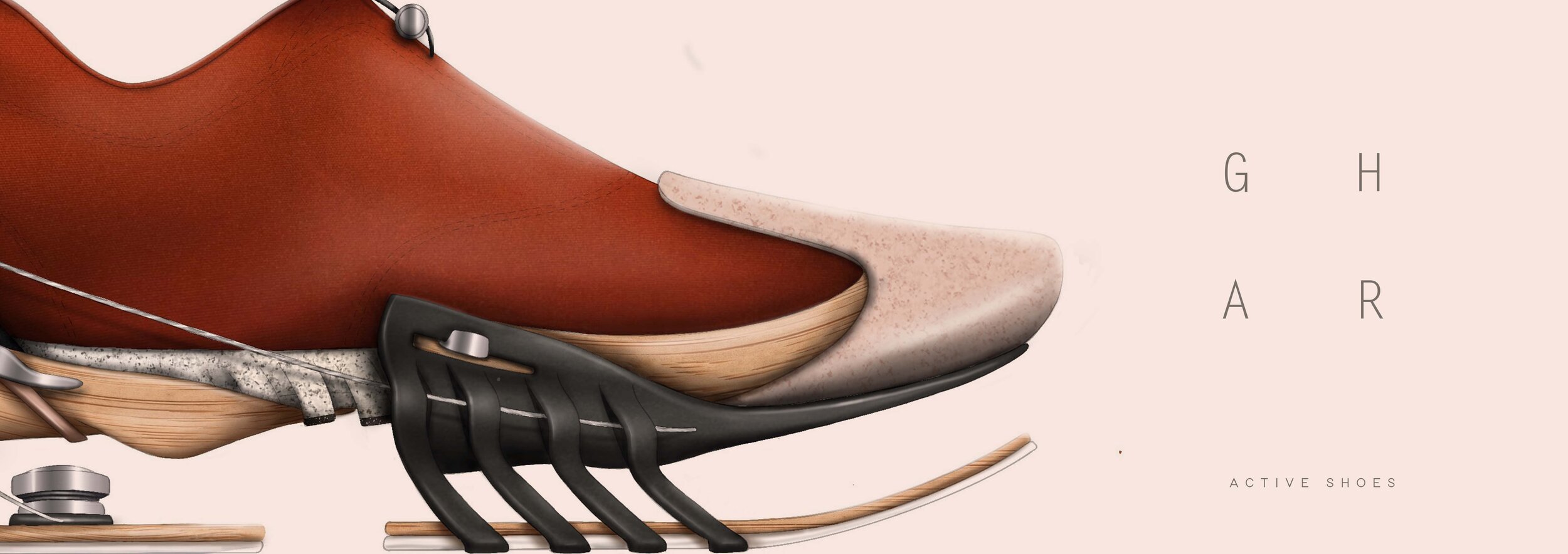
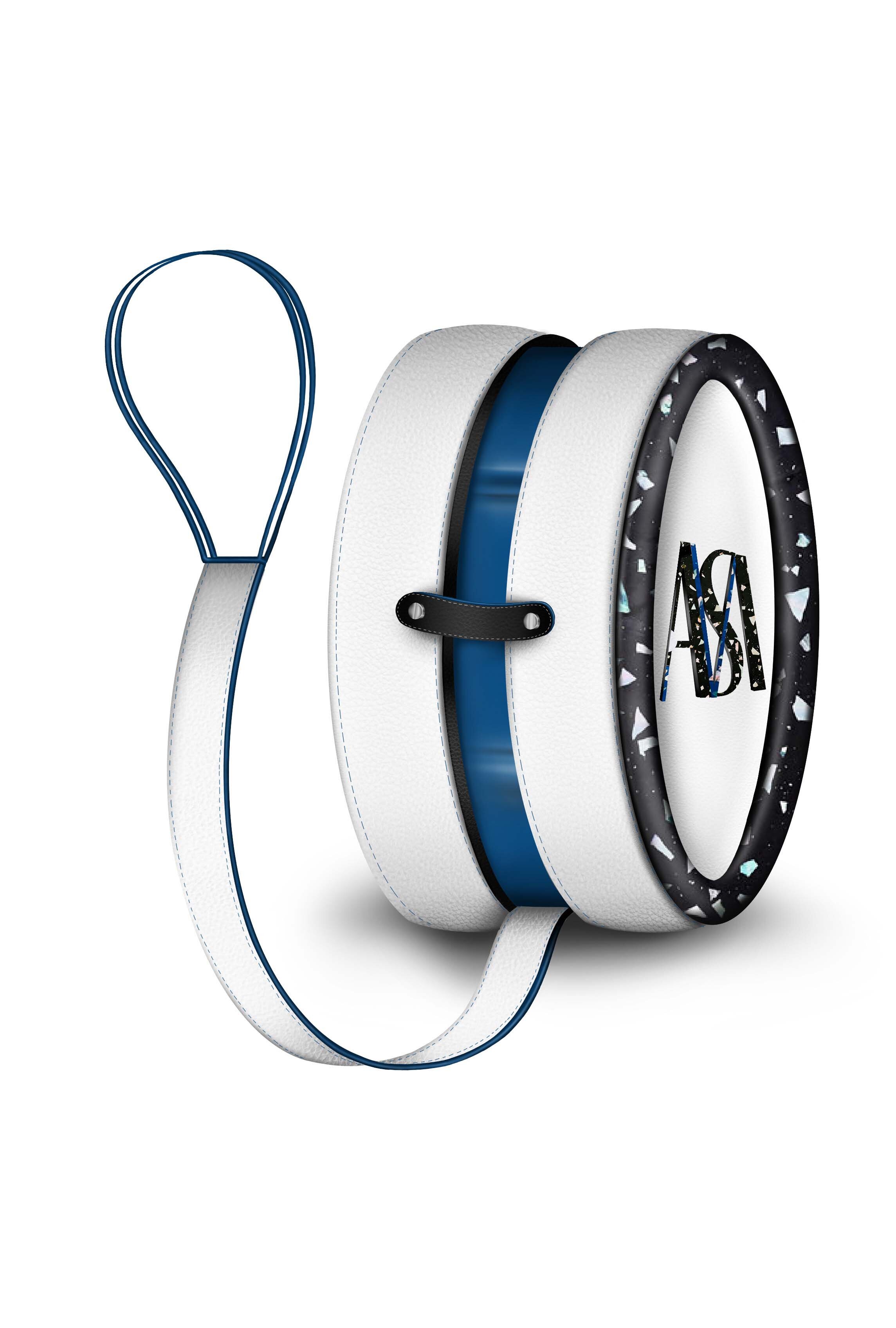
In their first semester of the 20/21 academic year, students of the European Institute of Design in Milan were asked to design in an inclusive way with gender, disability, ethnicity, and age in mind. Conducted by professors Mia Vilardo and Riccardo Polidoro, partners of Studio Elitre, the inclusive design course asked students to create original products capable of satisfying everyone's needs.

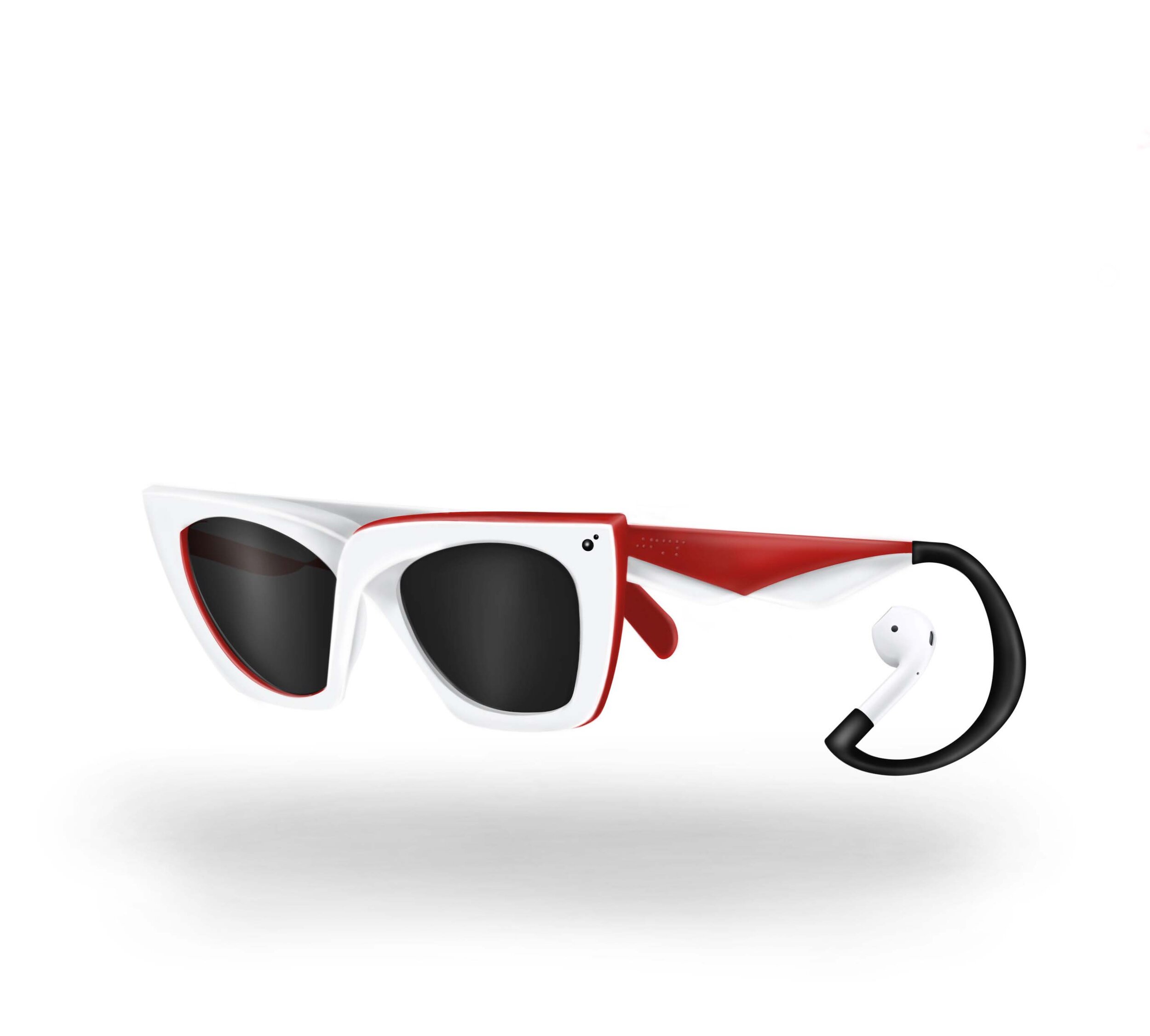
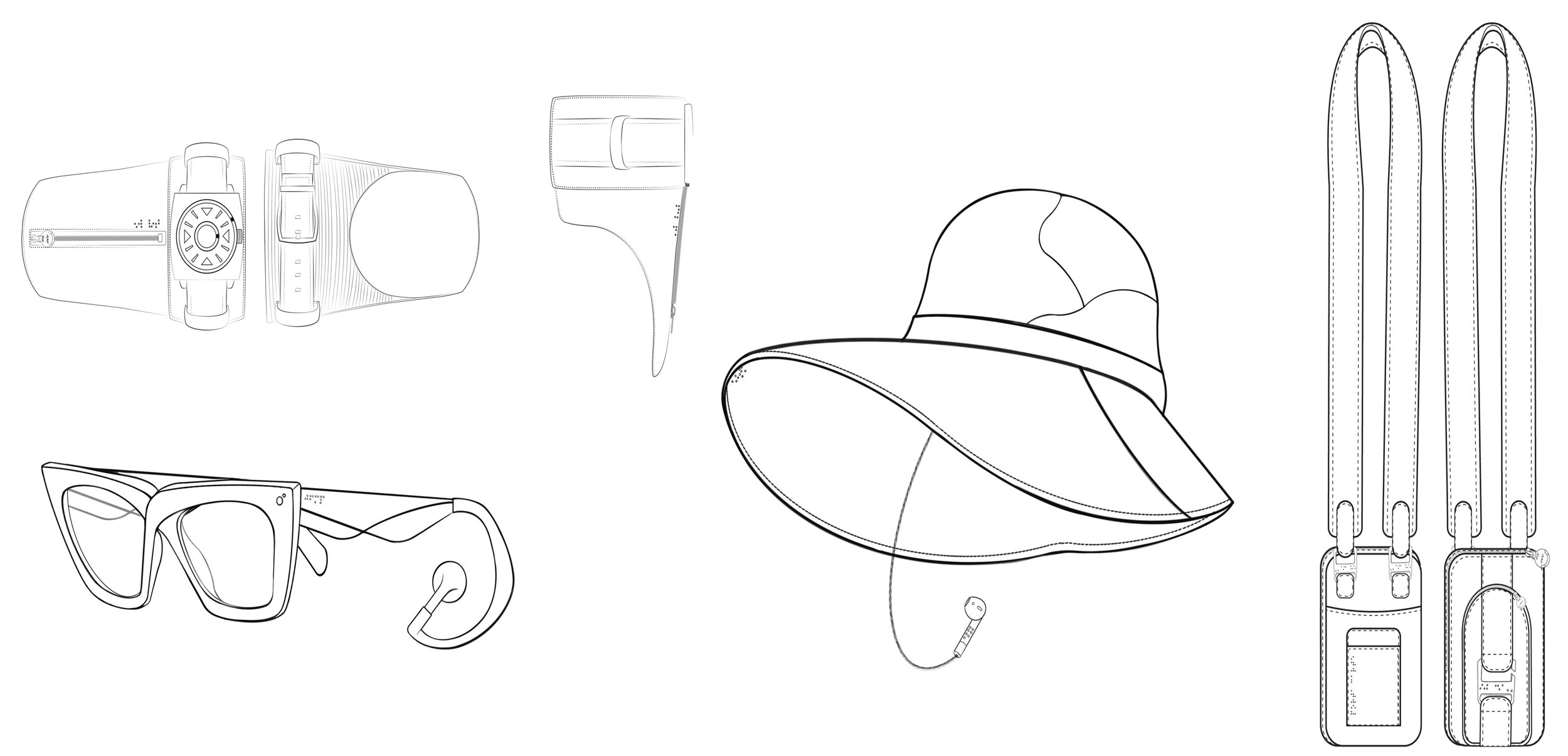
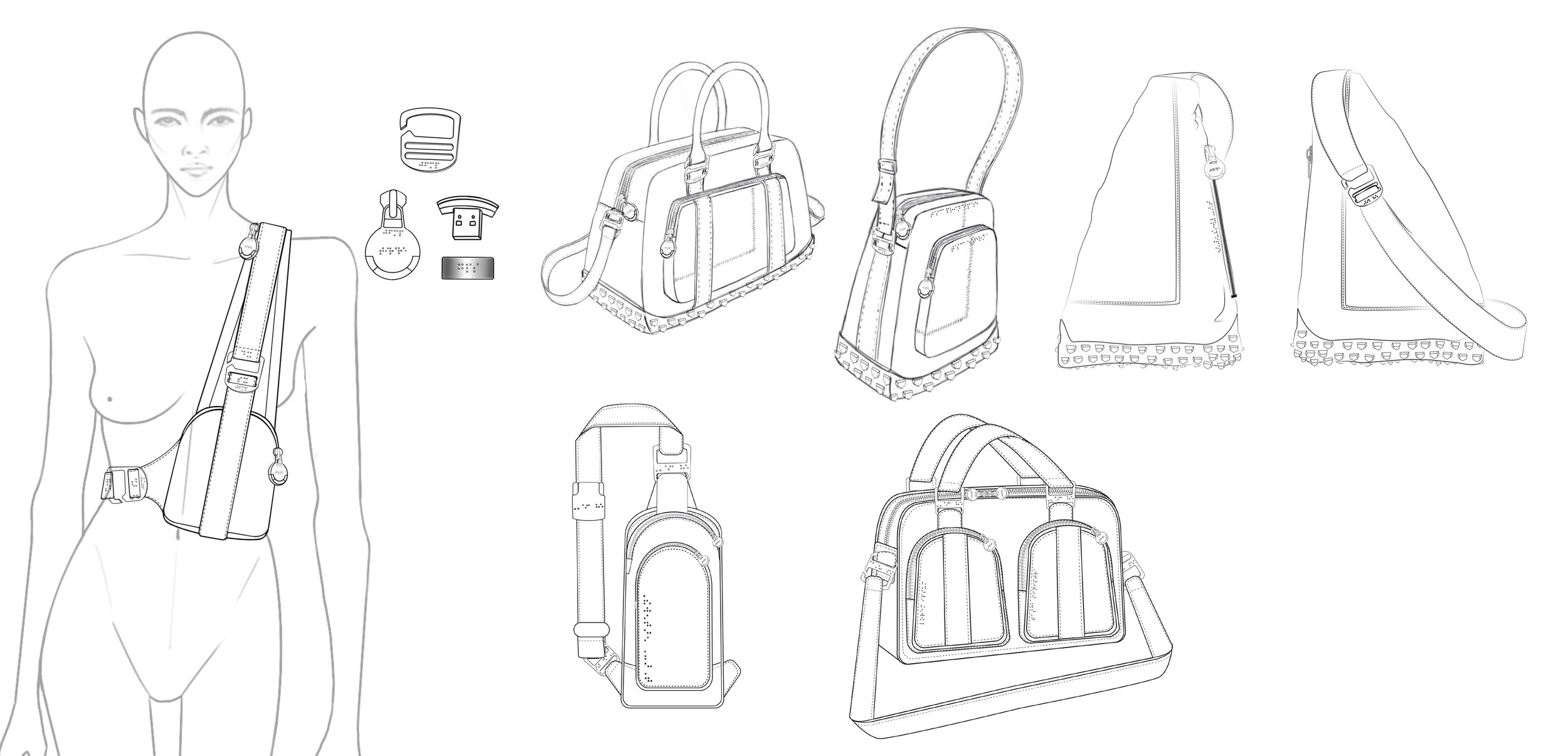
In terms of gender inclusiveness, the REN proposal goes to intercept the needs of those who do not identify with one of the two sexes and of those who feel unique through what they choose to wear: a mix of garments and accessories that reflects the person without distinction between man and woman. On the disability front, there are those who have imagined a fashion brand " for anyone who feels wrong or not fully represented ". JFMP - Joy for mistaken people (proposed by Penelope Bazzani, Michela Polo, Jennifer Rossi, Federica Santangelo) subverts the rules and looks at things in a different light, working specifically on blindness and low vision.

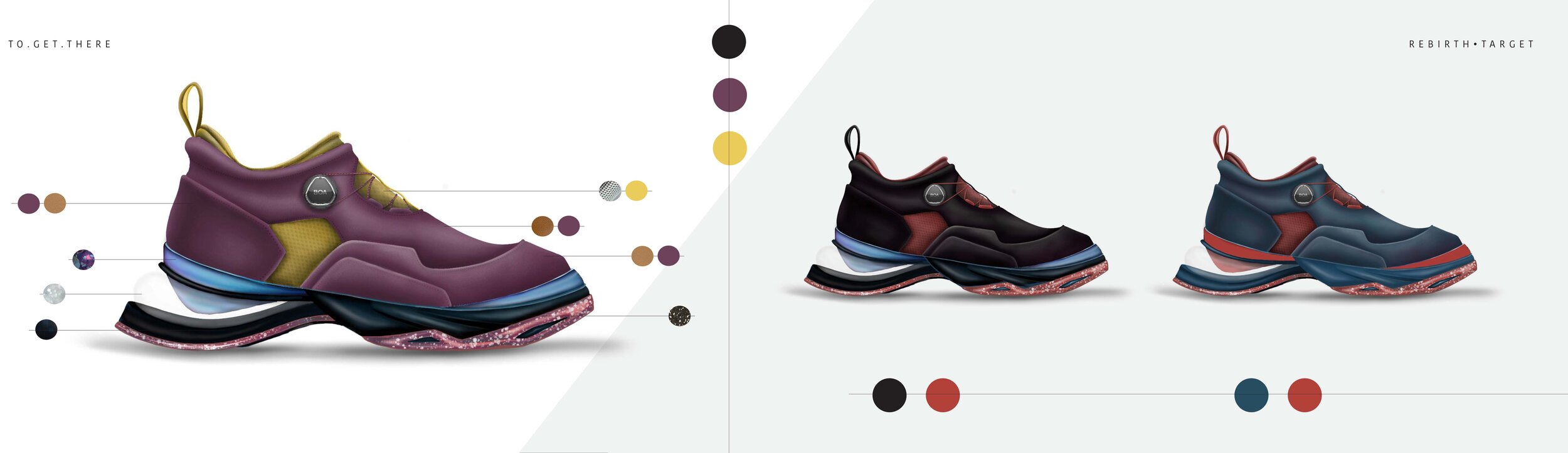
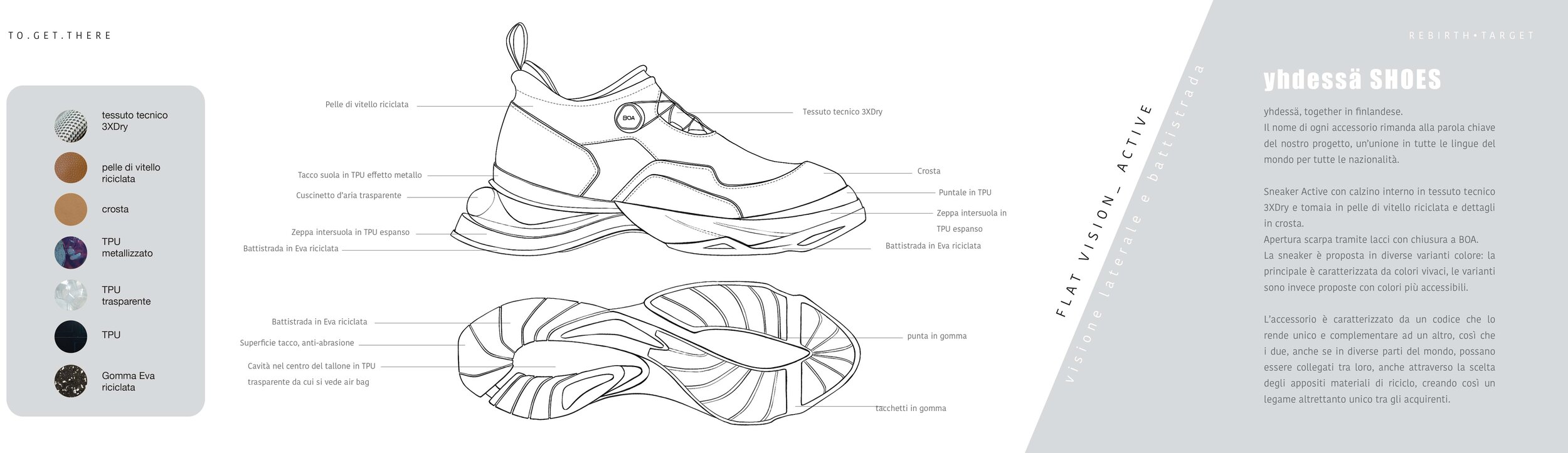
On the path of ethnic inclusion, the To.get.there - Rebirth project instead works conceptually to "unite" what is at the deepest roots of human experience, what unites all cultures (both physically and spiritually). This translates not only into the choice of fabrics made from elements present in nature, but also into the reuse, grinding and processing of industrial and production waste to obtain, with the appropriate binders, new design materials.

Good taste and being able to be inspirational have no age: thus, the working group on the ageless theme (Simone Ricetti, Alice Marchetti, Alessandra Natalino, Martina Sagliaschi) imagined AMAS, a range of accessories perfect for all seasons of the life.


Group Exhibition: Dark Fantasy @ UTA Artist Space In Beverly Hills

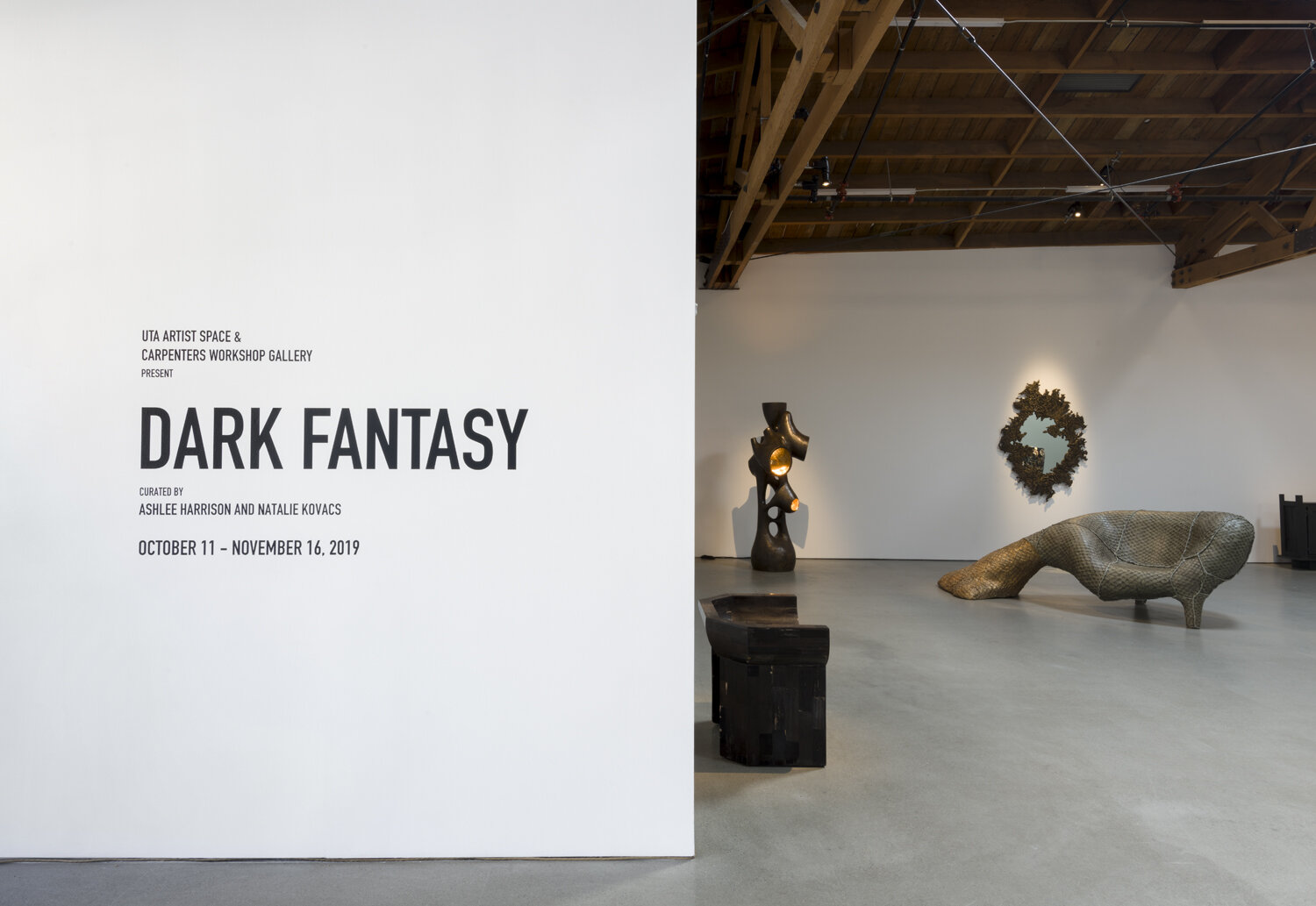
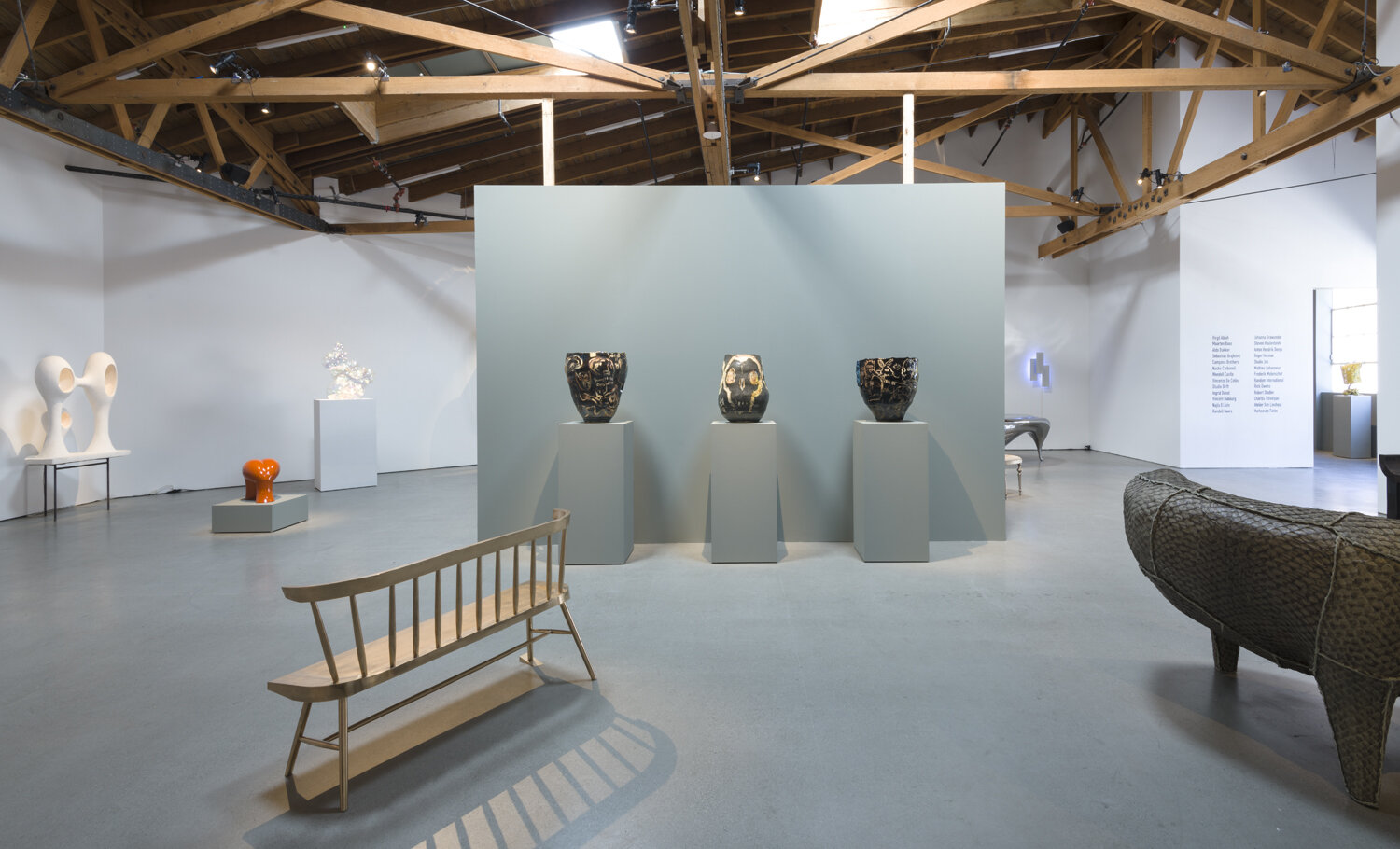
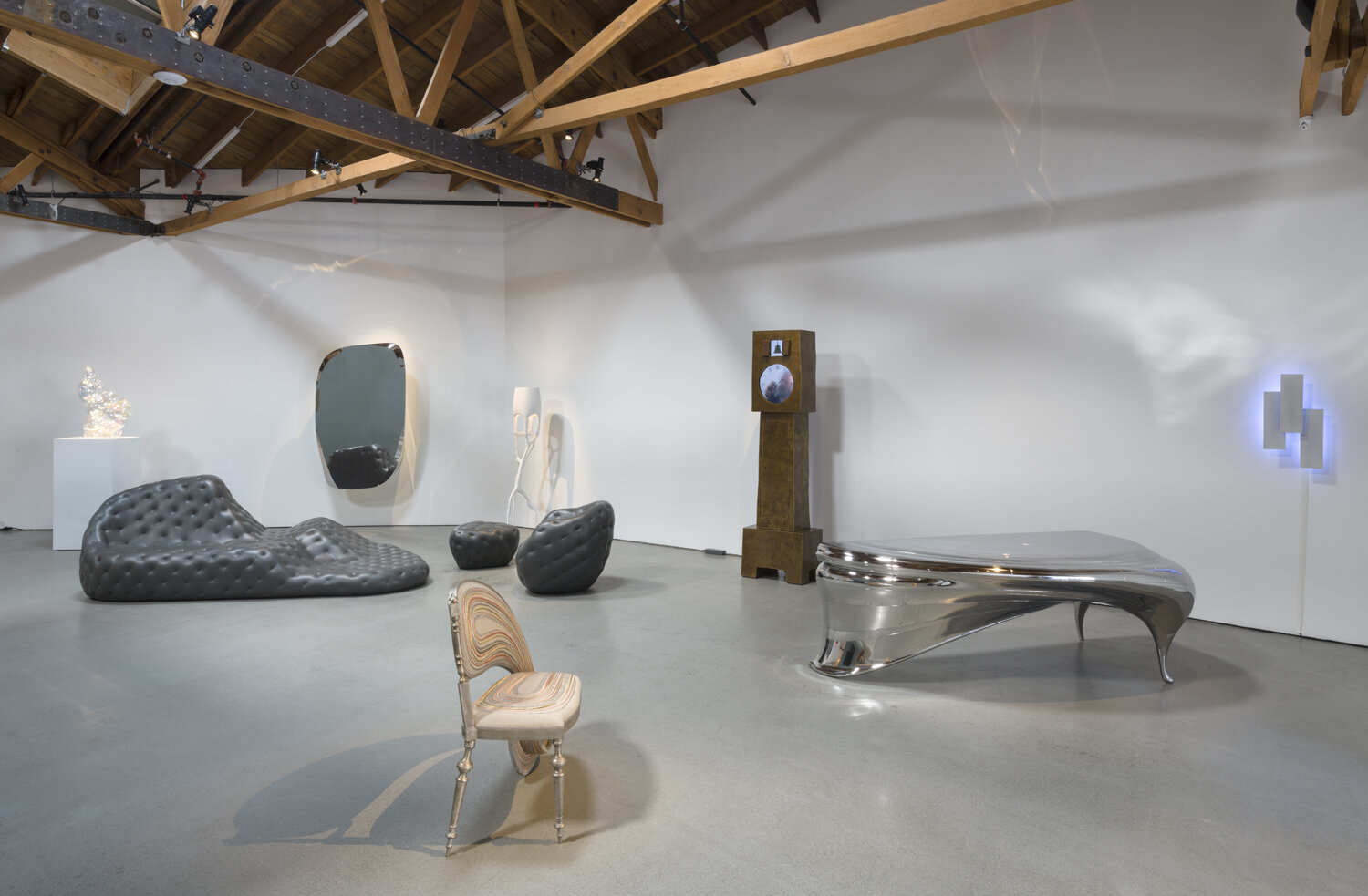
Based on the concept of Archeofuturism, which focuses on excavating forms of the past in order to shape future narratives of design, Dark Fantasy guides the viewer through a whimsical world of the fantastic and the obscure, questioning the constraints of reality and what it means to dream. By highlighting advanced techniques, traditional master craft, and new technology, Dark Fantasy brings to life organic and telluric forms that allude to bygone eras of production. The exhibition explores over a decade of functional art from 24 artists from Carpenters Workshop Gallery’s program, creating a dialogue between space, time and contemporary archeology.

The exhibition features over fifty pieces by Virgil Abloh, Atelier Van Lieshout, Maarten Baas, Aldo Bakker, Sebastian Brajkovic, Fernando and Humberto Campana, Nacho Carbonell, Wendell Castle, Vincenzo De Cotiis, Ingrid Donat, Vincent Dubourg, Najla El Zein, Kendell Geers, Steven Haulenbeek, Anton Hendrik Denys, Kostas Lambridis, Mathieu Lehanneur, Frederik Molenschot, Rick Owens, Random International, Robert Stadler, Studio Drift, Charles Trevelyan, and Verhoeven Twins. Dark Fantasy is on view through November 16 at UTA Artist Space 403 Foothill Rd. Beverly Hills, California

Punch, Curated By Nina Chanel Abney @ Jeffrey Deitch in Los Angeles

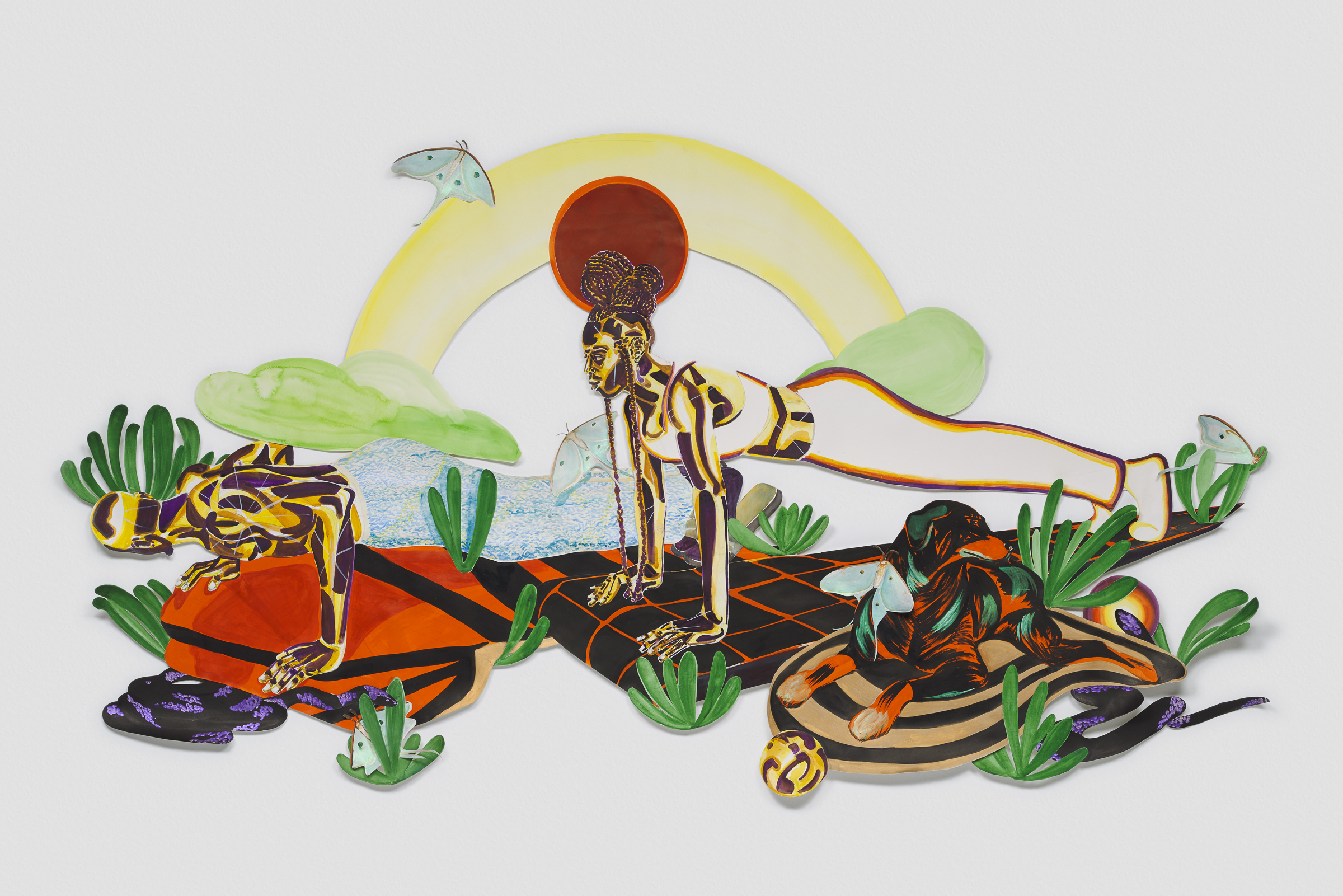
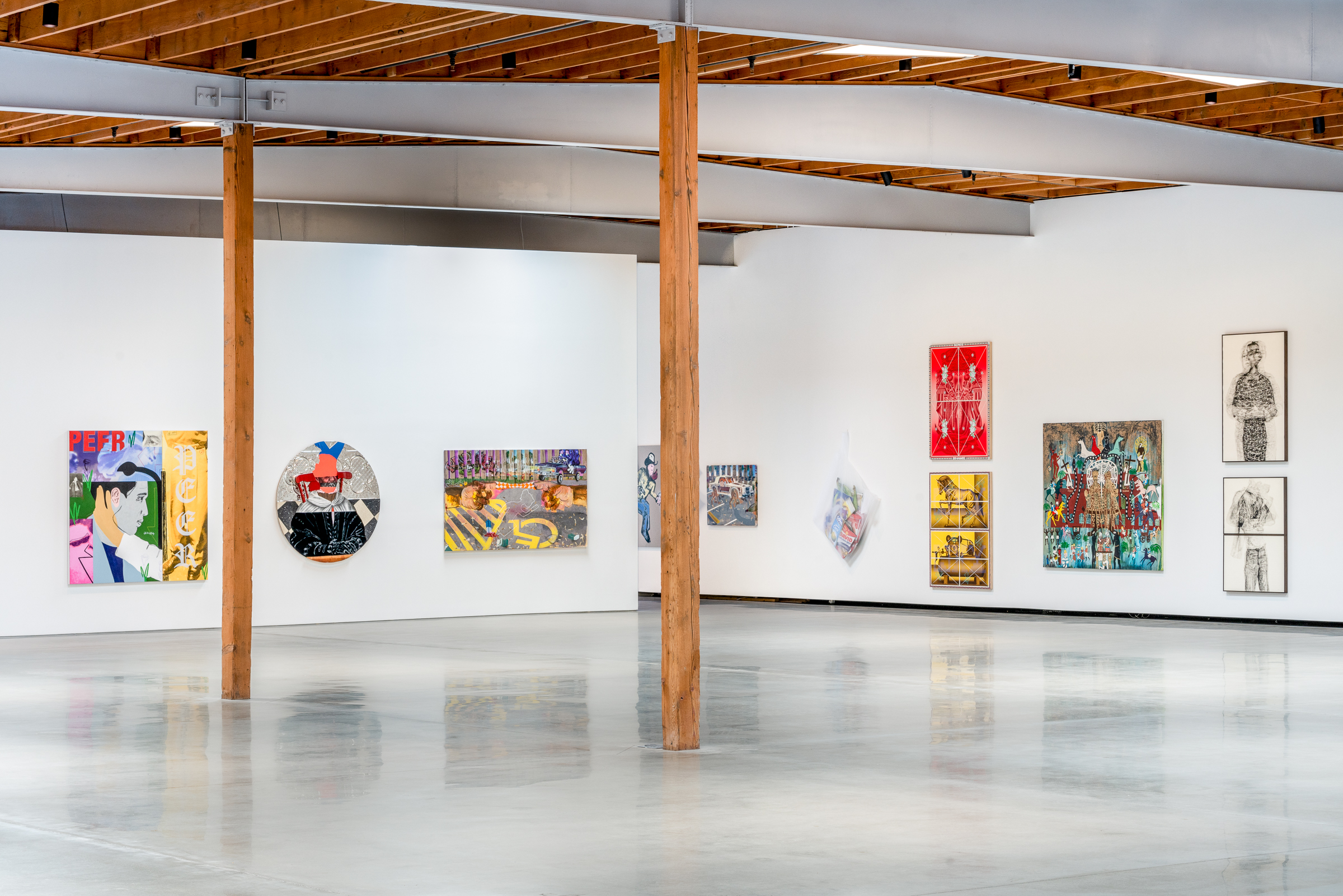
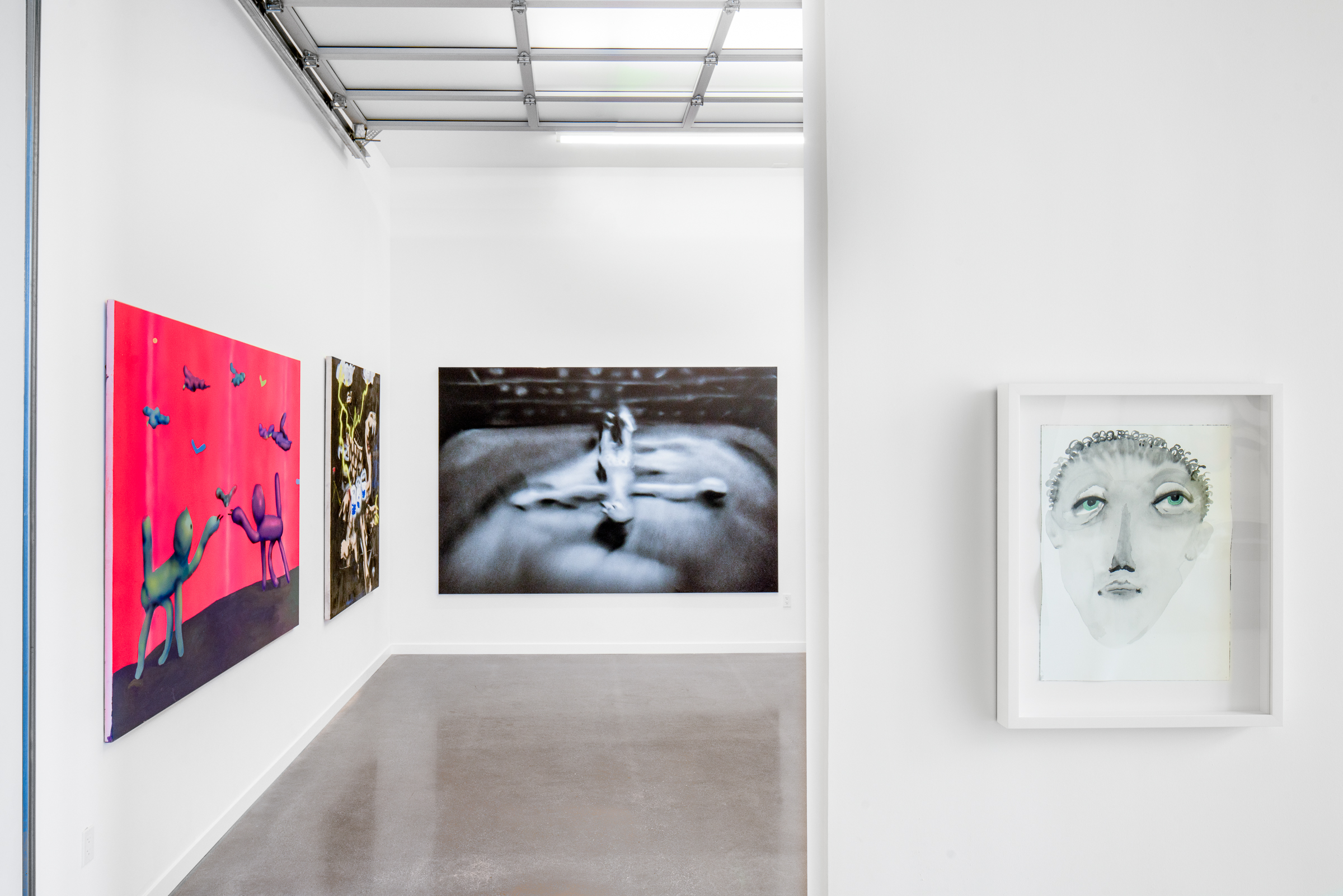
Punch, curated by artist Nina Chanel Abney, features thirty-three artists who examine contemporary culture and society through the lens of figuration. The exhibition focuses on artists primarily from Los Angeles in Abney’s circle who explore connections and disconnections between culture and subculture, figuration and abstraction, and the physical and the digital. The pieces featured in the exhibition contain references to art historical precedents such as Abstract Expressionism and Pop Art, as well as street art, while integrating elements of design, graffiti, cartoons, and satire. Using painting, sculpture, and performance as acts of defiance, these artists explore how they can create figurative and abstract representations with visual punch while portraying a society immersed in new media and pop culture.

Punch, Curated by Nina Chanel Abney is on view through August 17 at Jeffrey Deitch Los Angeles 925 North Orange Drive, Los Angeles. photographs courtesy of Jeffrey Deitch

Alexander Calder's "Nonspace" @ Hauser & Wirth In Los Angeles

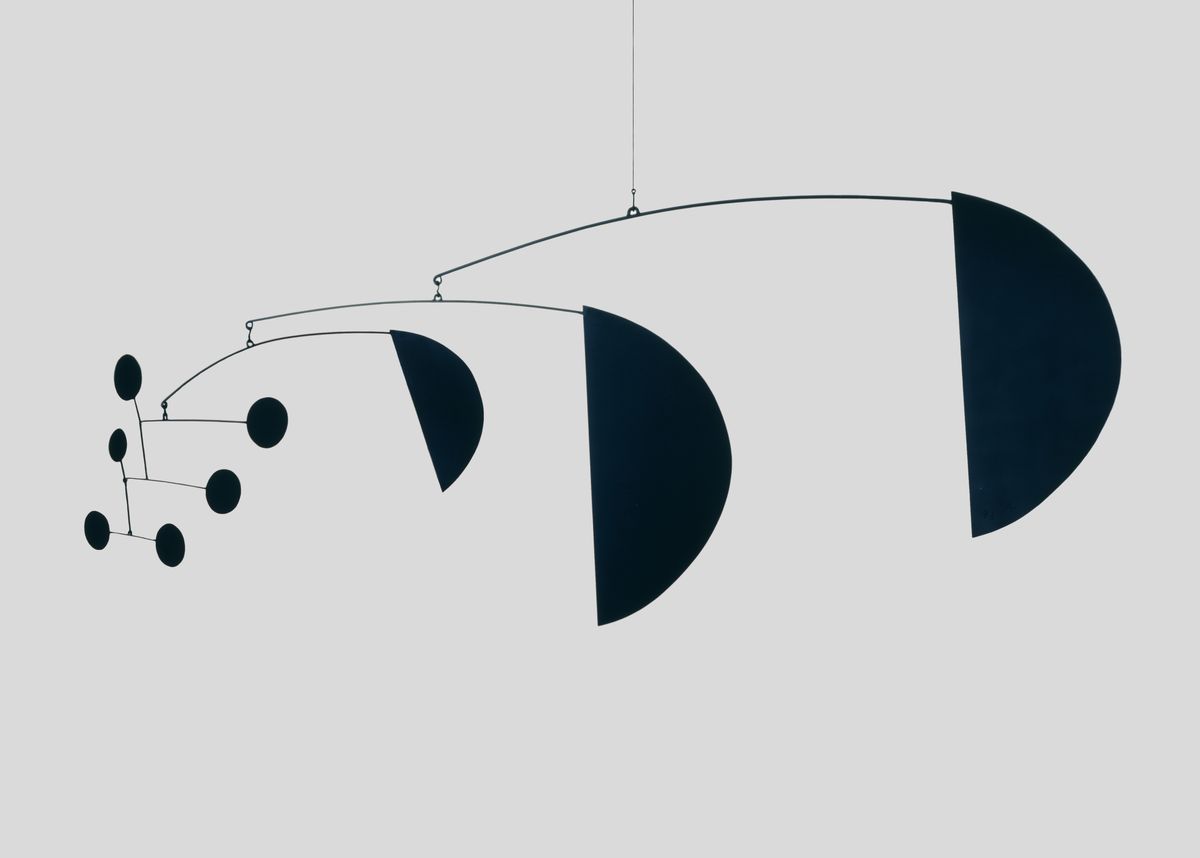
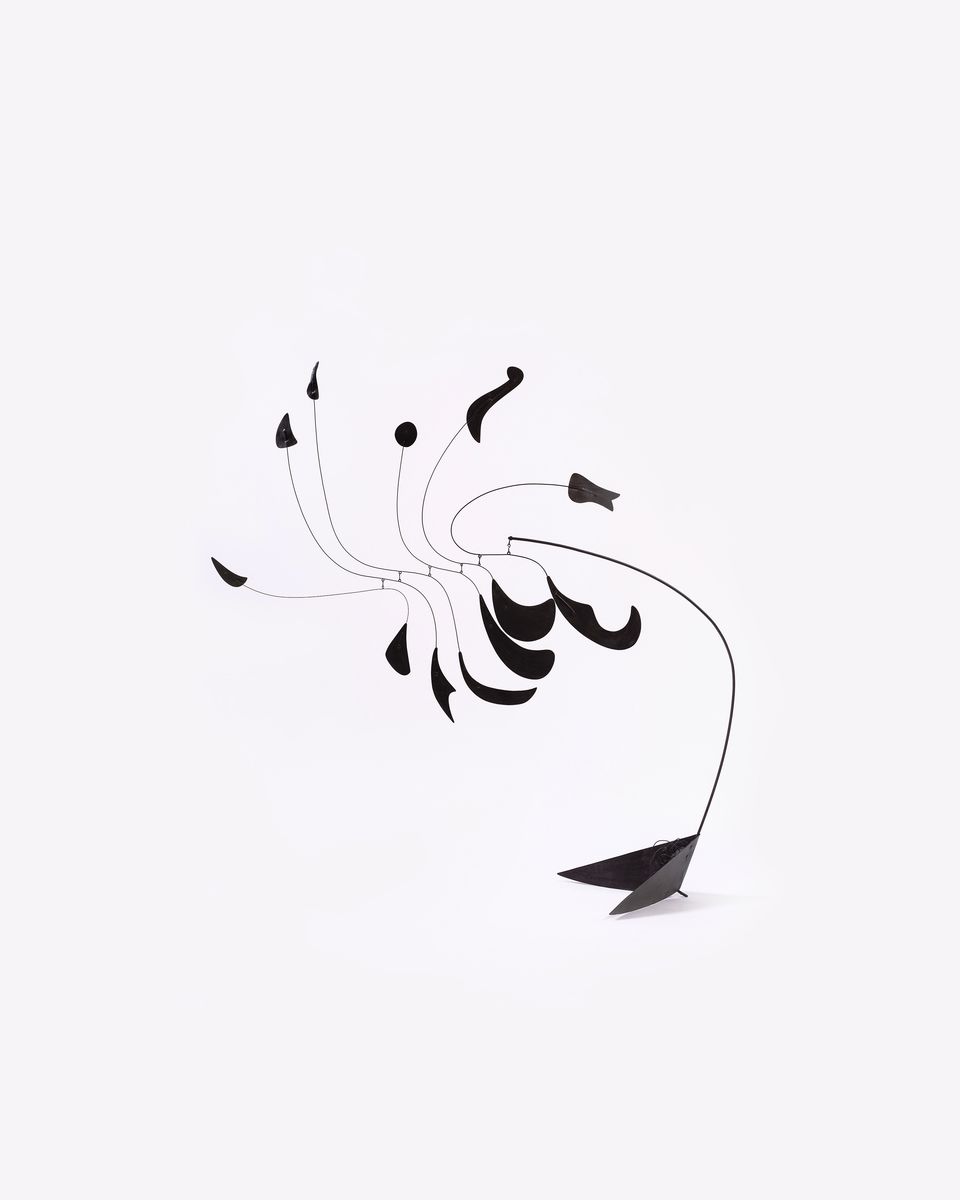
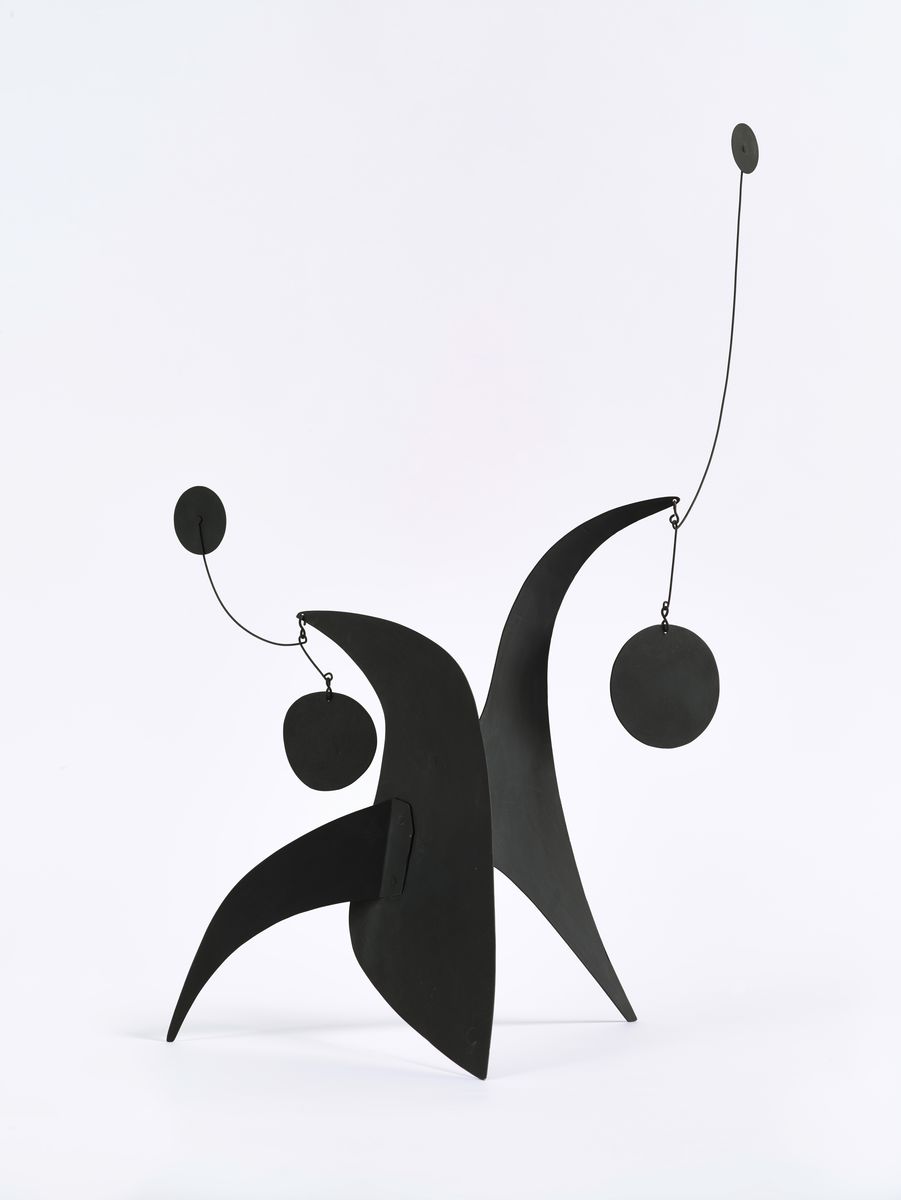
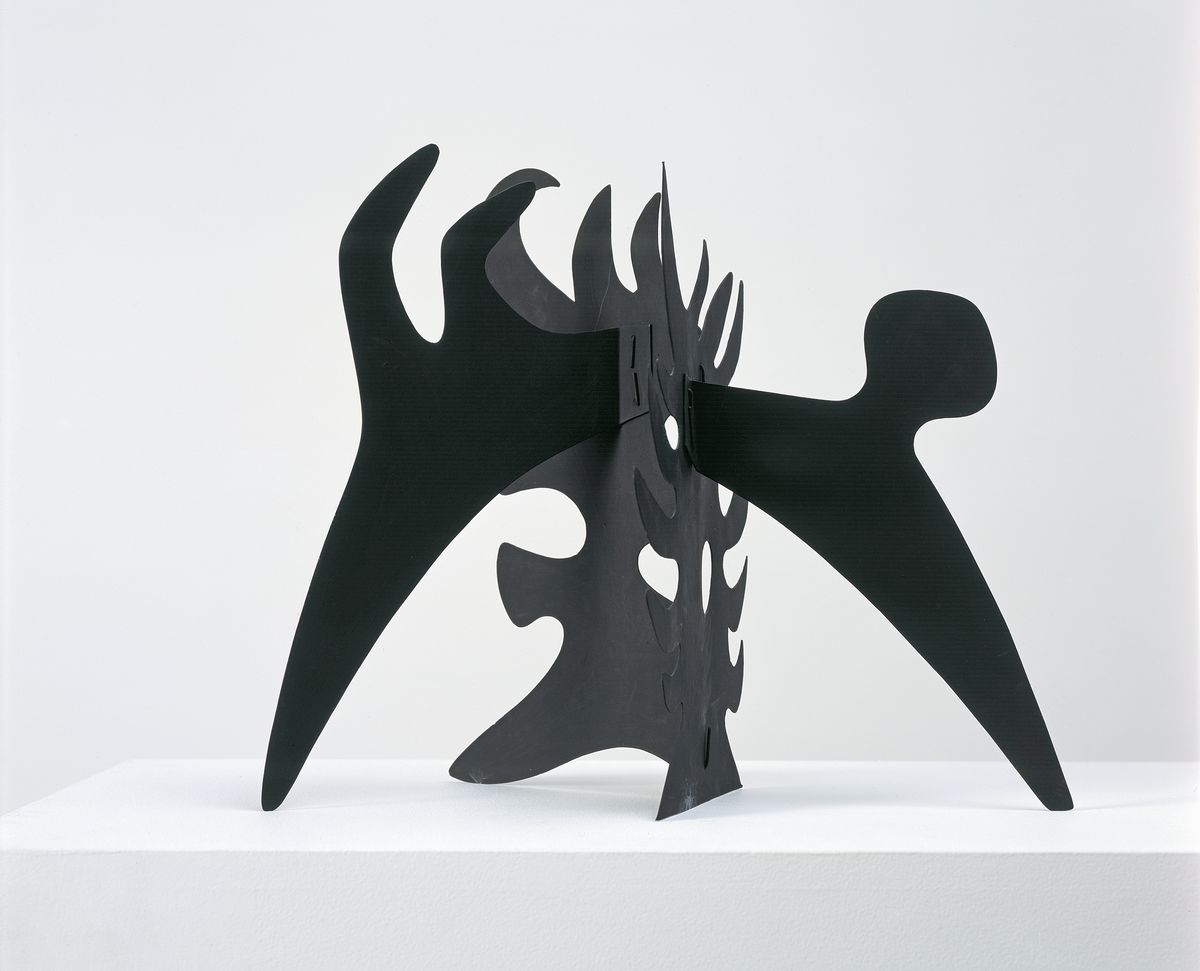
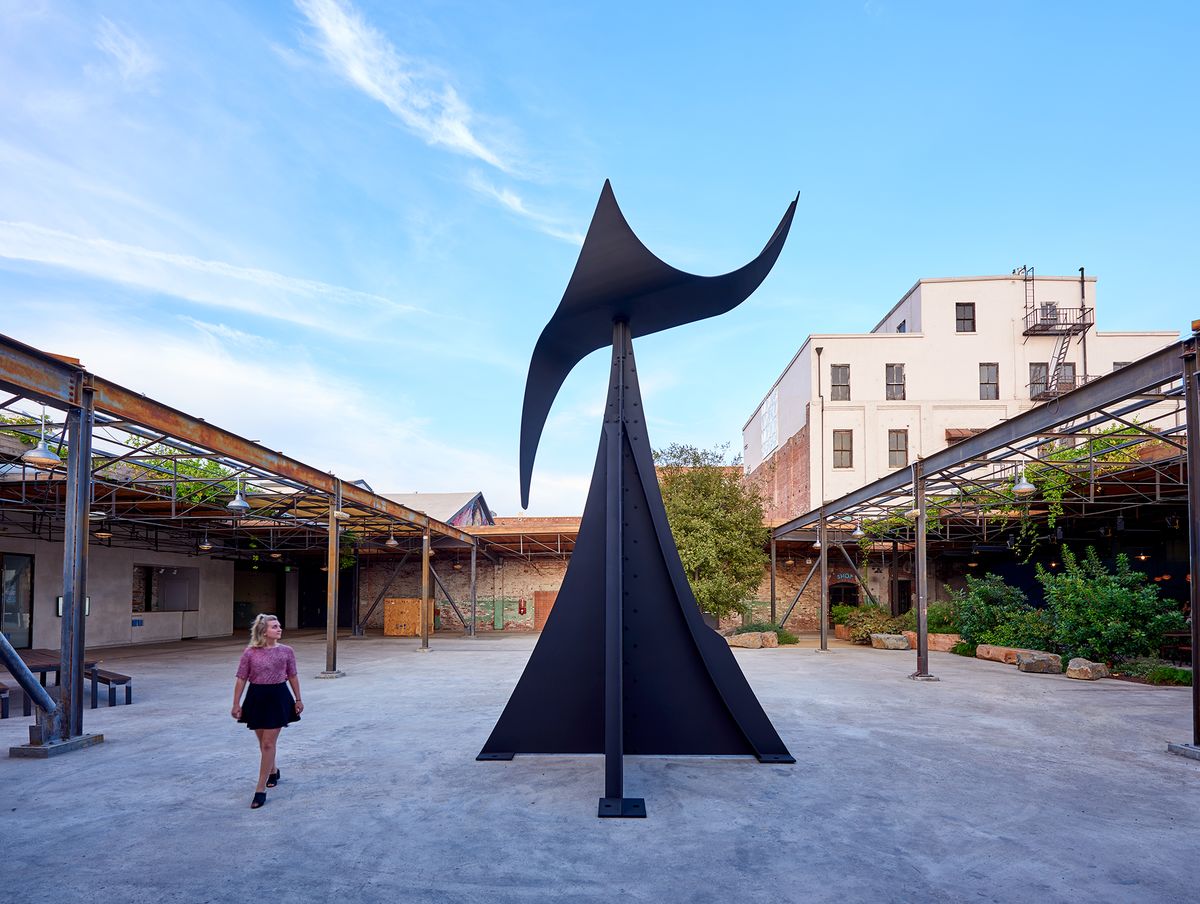
Nonspace marks Hauser & Wirth’s first exhibition in LA for world-renowned artist, Alexander Calder. Following the landmark Somerset exhibition From the Stony River to the Sky, the presentation in LA focuses on a radically different facet of the artist’s work with a two-part exhibition of primarily monochromatic, abstract sculptures that simultaneously fill space and coexist with it. Nonspace is on view through January 6, 2019 @ Hauser & Wirth 901 East 3rd Street, Los Angeles. photographs courtesy of Calder Foundation New York / Art Resource New York
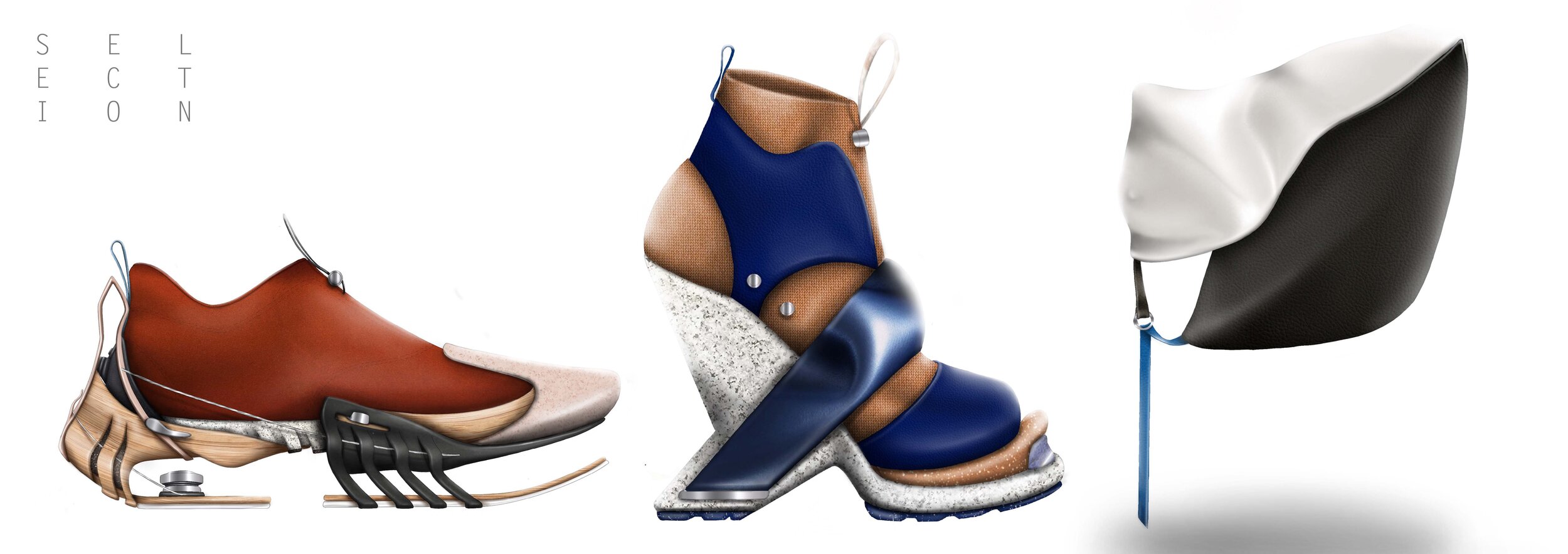
Fourth Annual MAK Games @ The John Lautner Designed Sheats-Goldstein Residence In Los Angeles

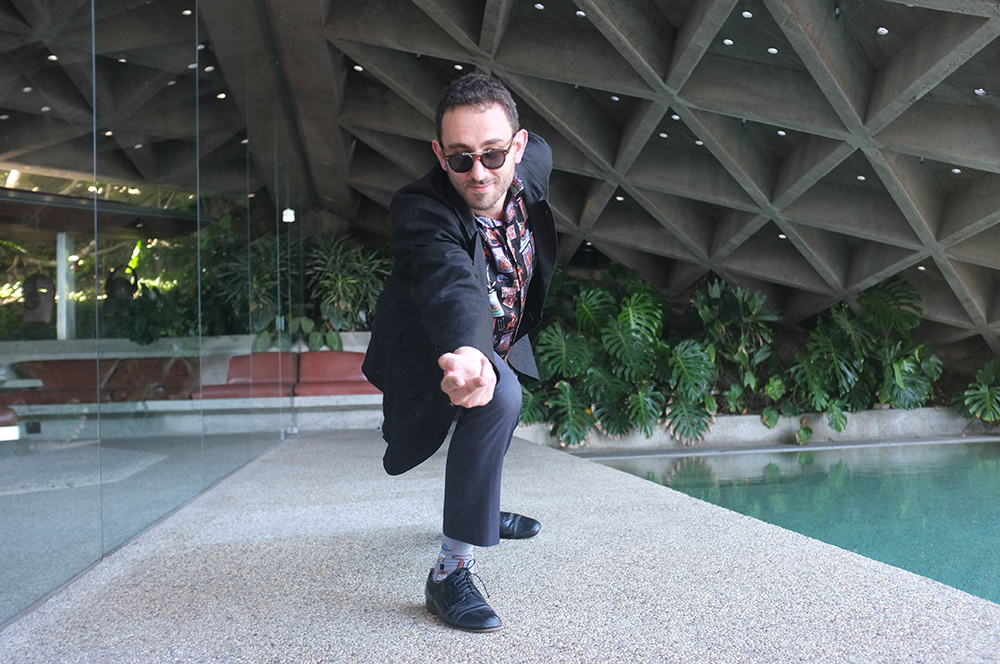
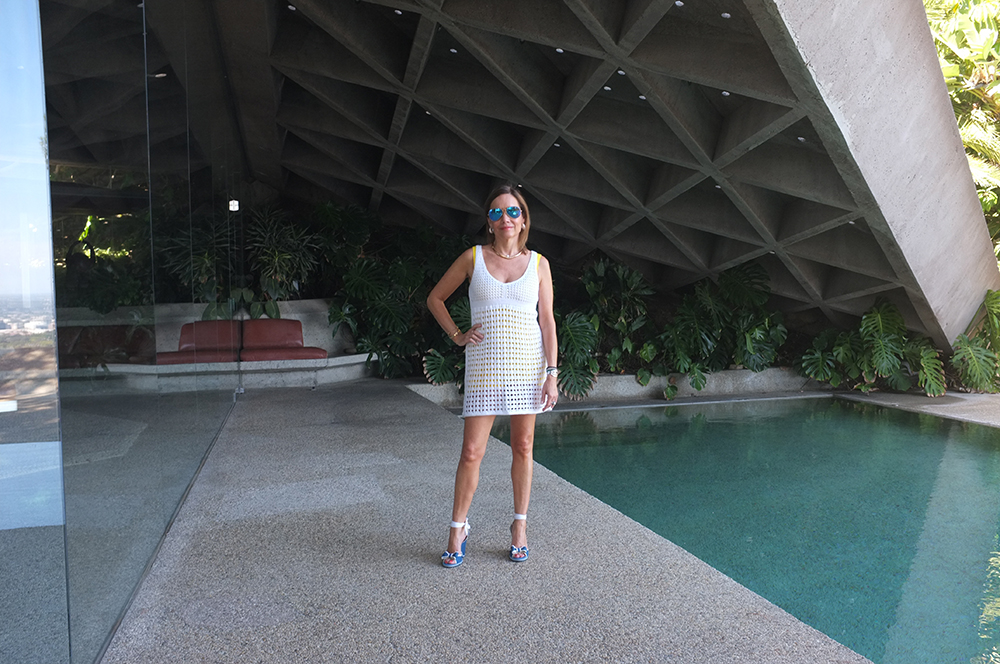
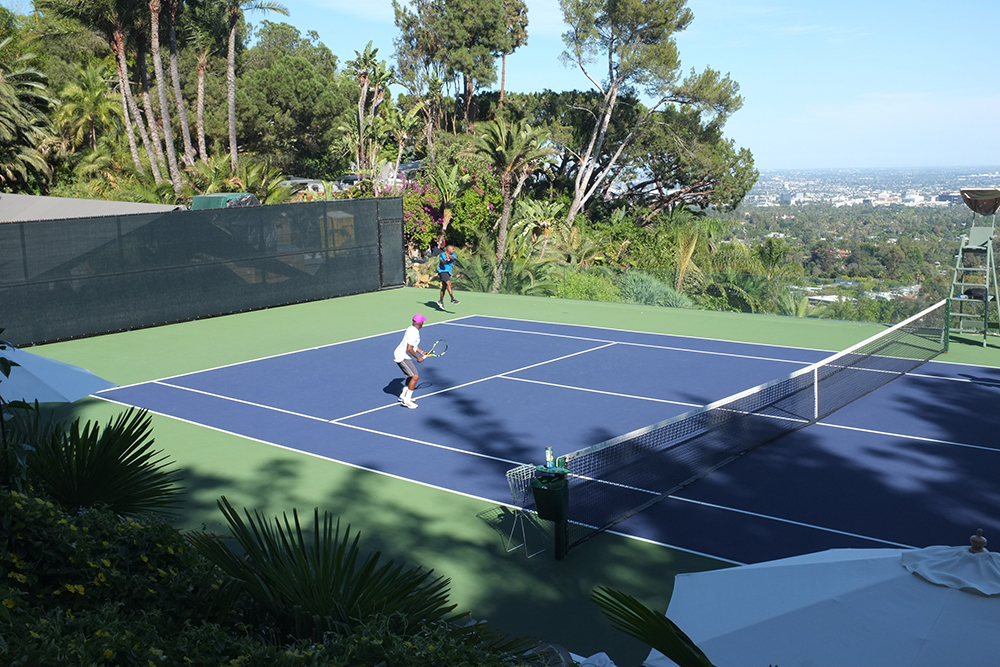
The MAK Games features semi-finals and final tennis tournament matches, followed by a Pro-Am match, followed by a dance party in the incomparable “Club James” hidden below the infinity tennis court. The players come from the worlds of art, design, architecture, and entertainment. photographs by Oliver Maxwell Kupper

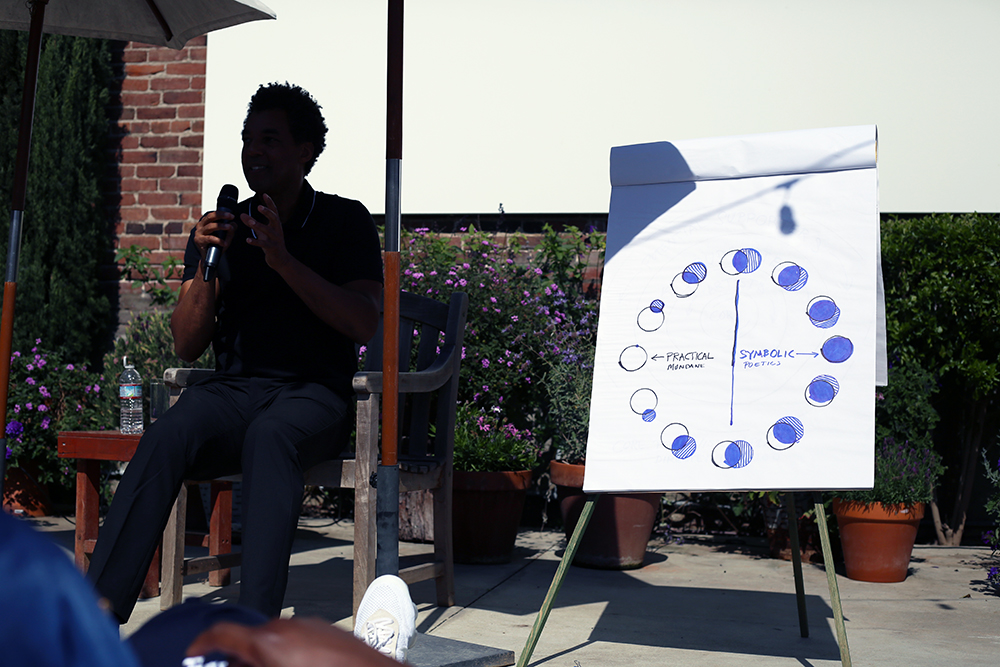
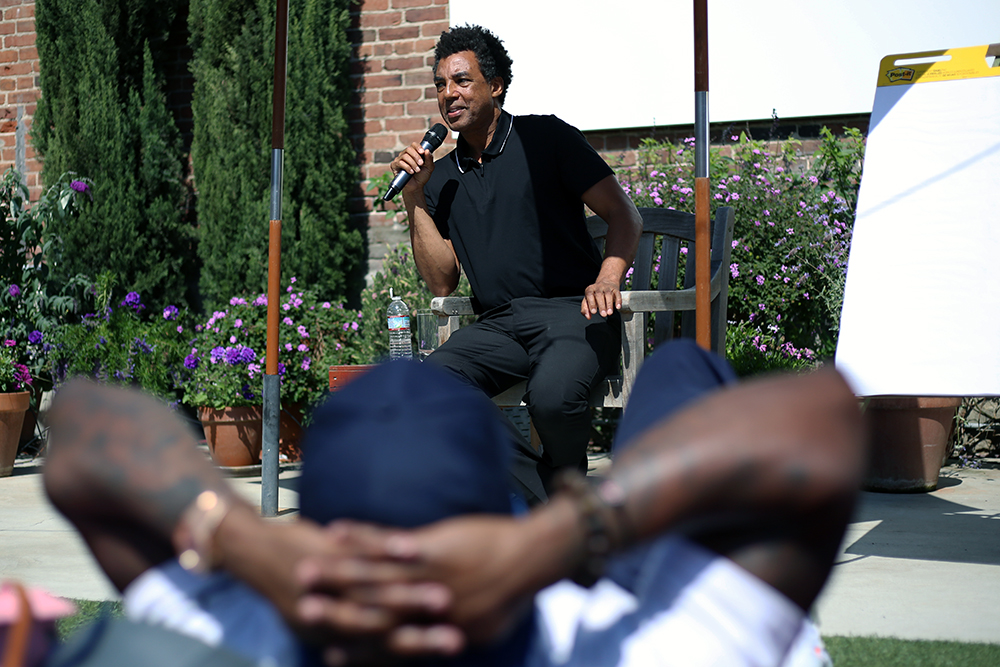
Underground Museum Hosts Rick Lowe Artist Talk As Part Of USC Roski's Public Lecture Series Social Practice Course
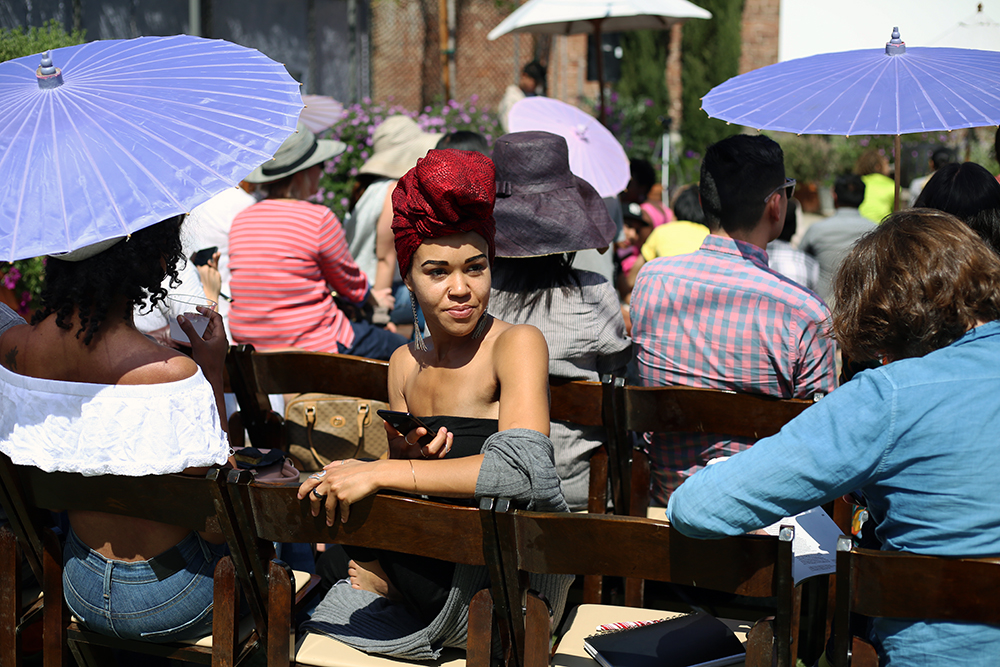
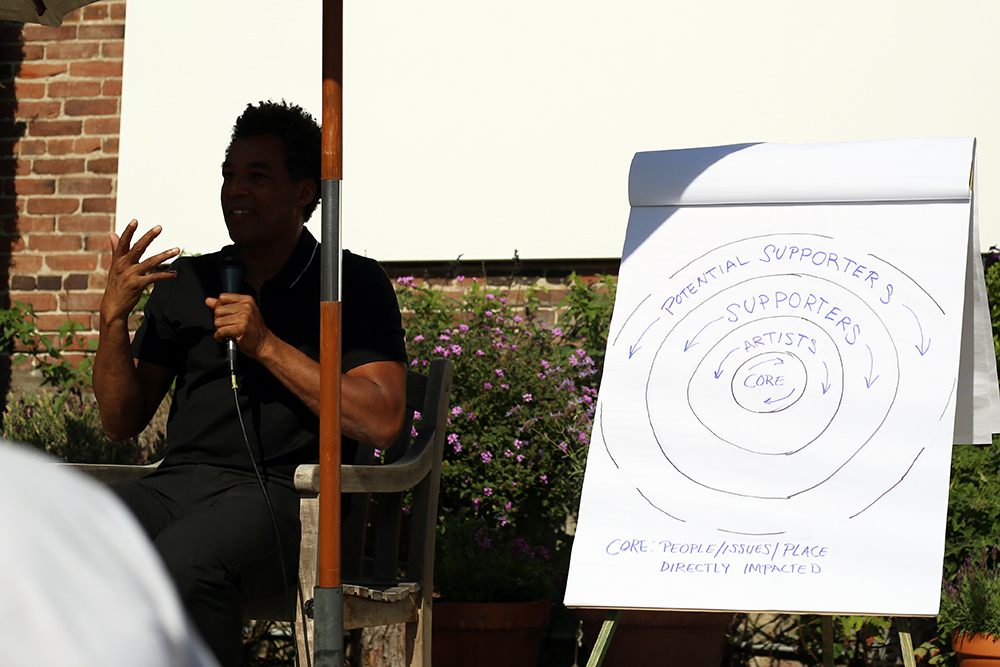
Rick Lowe is one of nearly a dozen artists invited to give lectures as part of USC Roski's *Culture in Action: Conversations in Social Practice Art. In this series students, international visitors and guest speakers consider an evolving practice in a seminar based on questions each participant brings to the classroom. What conditions apply to critical art practice in the public realm and how do these relate to the urban, social and political? What is the relationship between art and democracy? What is the long-term sustainability of community-based socially engaged art? How do informal pedagogic, public address and dialogic strategies apply to students’ own practices in art, design, theater, intermedia, cinema, communications and urban planning, among others? MA and Ph.D. candidates from schools outside of Roski are especially encouraged to apply to support their specific professional development goals. The course includes intimate conversations, public lectures, field trips, group dinners and an opportunity to study alongside Norwegian artists and curators. This intensive experience is a collaboration between Roski School of Art and Design and KORO, Public Art Norway in Oslo. For more information and full schedule of events visit Roskiphotographs by Lani Trock